华为

Search documents
剑指数智经济一线城市,武汉将力争人工智能产业规模三年翻番
21世纪经济报道· 2026-02-04 13:58
Core Viewpoint - Wuhan aims to become a leading city in the digital economy by 2028, focusing on artificial intelligence and data-driven development, with specific targets for industry scale and enterprise growth [1][2]. Group 1: Development Goals and Plans - The "14th Five-Year Plan" outlines Wuhan's ambition to achieve an artificial intelligence industry scale exceeding 200 billion yuan by 2028, with a target of over 15,000 P of high-performance computing power and 30 billion yuan in cumulative data transaction volume [1]. - The "Action Plan" for 2026-2028 includes three main paths and eight tasks to enhance technology, industry, and application, aiming for Wuhan to rank among the top cities in the digital economy [2]. Group 2: Data Infrastructure and Technology Foundation - Data is identified as the "fifth production factor" crucial for driving the digital economy, with Wuhan ranking 6th among data factor cities during the "14th Five-Year Plan" period [6]. - By 2026, Wuhan plans to enhance data governance and management, aiming to create a comprehensive digital resource management system and develop 30 data circulation scenarios [6][5]. Group 3: Strengthening Industrial Competitiveness - By 2025, the core industry scale of Wuhan's digital economy is projected to reach 1.1 trillion yuan, with 3,678 enterprises in the sector [9]. - The city aims to transition from "digital empowerment" to "intelligent driving," focusing on building a world-class intelligent industry cluster and promoting smart transformation across various sectors [9][10]. Group 4: Application-Driven Development - Scene-driven development is emphasized as a key to accelerating the application of AI technologies across various industries, with significant advancements in public safety and urban governance [12]. - The "Action Plan" includes initiatives to create a city-wide intelligent ecosystem, targeting the establishment of 50 major application scenarios by 2028 across different sectors [13].


长光华芯回应华为注资45亿传闻
21世纪经济报道· 2026-02-04 13:58
长光华芯对此表示,该文章虚构新闻"华为对公司进行45亿战略注资",内容毫无任何事实依据,属于虚假信息。目 前,该不实文章误导了国内外合作伙伴,对公司海外业务布局、市场拓展造成了负面影响,公司对此表示强烈谴责。 公司所有重大合作及资本运作均会通过官方渠道及时、准确披露,请以公司官方发布信息为准。 长光华芯表示,目前,公司已委托专业律师收集并固定相关证据,保留追究报道媒体及相关责任人全部法律责任的权 利,坚决维护公司的合法权益不受侵害。 记者丨 毕凤至 编辑丨黎雨桐 2月4日,《21辟谣》注意到,有投资者在互动平台提问长光华芯:网络平台流传"华为45亿战略注资长光华芯"相关文 章,请问该报道内容是否属实? 长光华芯成立于2012年,2022年4月在科创板上市。 长光华芯1月28日披露的业绩预告显示,预计2025年度实现营业收入4.69亿元,同比增长71.84%;净利润约1877.51万 元,与上年同期相比扭亏为盈。报告期内,公司持续深耕高功率半导体激光领域,凭借技术积累与产品性能优势,进 一步拓展了下游应用市场,推动该系列产品销售收入实现增长,成为公司营收的核心支撑。 据中国基金报,长光华芯招股书显示,华为旗下投 ...


三年百亿,京东中兴联手,友商无眠
3 6 Ke· 2026-02-04 12:51
Core Insights - The strategic agreement between JD.com and ZTE aims for a sales target of 10 billion yuan over three years, indicating a significant partnership beyond mere sales collaboration [2][5] - The collaboration reflects a shift towards "certainty" in business operations, with ZTE seeking to hedge financial risks and JD.com offering a comprehensive solution to ensure predictable revenue streams [2][12] Group 1: ZTE's Financial Strategy - ZTE is experiencing a duality in performance, with revenue growth of over 11% year-on-year but a significant drop in net profit by nearly one-third, indicating underlying financial instability [4] - The company's core business of network construction for telecom operators has seen its revenue share fall below 50%, marking a structural shift in its revenue model [4] - ZTE's new business ventures, while growing at 180%, have lower profit margins, leading to a situation where increased sales do not equate to higher profits [4][5] - The partnership with JD.com is viewed as a long-term income swap agreement, providing ZTE with a stable cash flow amidst declining traditional revenue sources [5][10] Group 2: JD.com's Strategic Positioning - JD.com has evolved from a simple online marketplace to a provider of comprehensive retail solutions, offering brands a package that includes guaranteed traffic, sales channels, logistics, and financial services [12][18] - The collaboration with ZTE serves as a model for JD.com to attract other brands facing similar market uncertainties, thereby expanding its ecosystem and reinforcing its competitive edge [19][20] - JD.com's strategy aims to transform its role from a mere platform to a "retail infrastructure supplier," enhancing its value proposition through a robust network effect [22][23] Group 3: Market Dynamics and Future Implications - The partnership may lead to a new market structure where brands align closely with a few dominant platforms, creating "symbiotic monopolies" that could reshape competition dynamics [27][29] - As brands increasingly rely on platforms like JD.com for stability, the market may shift from open competition to ecosystem-based alliances, limiting choices for consumers [30][32] - The focus on data-driven product development may enhance efficiency but could also stifle innovation, leading to a market that prioritizes short-term gains over long-term breakthroughs [40][41] - Regulatory frameworks may need to adapt to address the challenges posed by these new ecosystem dynamics, ensuring fair competition and consumer choice [47][48]



可以发图片了 苹果iPhone 18系列升级卫星功能
Xin Lang Cai Jing· 2026-02-04 12:37
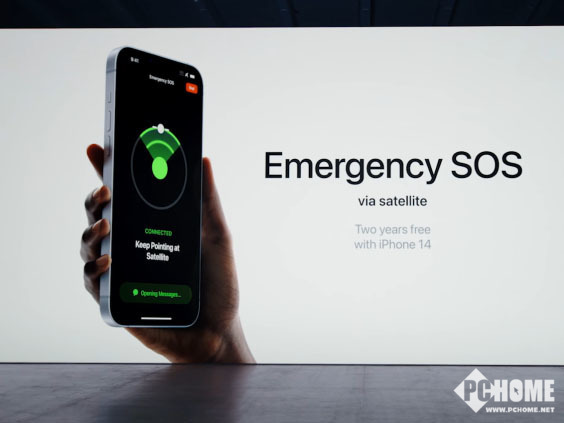
在iPhone 18系列中,苹果会对卫星通信功能进行大幅度升级,显著提升了卫星通信带宽,使其足以支 撑起发送图片的需求。因此用户在发起卫星救援时,还可以拍照后同步传送周围的环境信息,方便救援 人员搜救。 除了能发送图片之外,苹果还对卫星信号表现进行了改 善,在使用时无需将手机举起,甚至放在口袋中,也能 收发卫星信号。 在iPhone 18系列中,苹果会对卫星通信功能进行大幅度升级,显著提升了卫星通信带宽,使其足以支 撑起发送图片的需求。 苹果很早就提供了卫星通信功能,但官方提供的功能相对简单,只能在出现紧急情况下进行联络,大多 数使用都是呼叫救援,无法作为一种备份网络使用。 在iPhone 18系列中,苹果会对卫星通信功能进行大幅度升级,显著提升了卫星通信带宽,使其足以支 撑起发送图片的需求。因此用户在发起卫星救援时,还可以拍照后同步传送周围的环境信息,方便救援 人员搜救。 卫星图片功能对国产手机来说,早就实现了普及。华为 在2024年就实现了北斗卫星图片消息功能,用户可以在 任何时候给联系人发送卫星消息,还能附带精准定位信 息与图片。华为通过压缩算法,将图片高效压缩到 800Byte空间,相当于400个汉字 ...

国产AI下一站:生态高墙下,芯片与模型“双向奔赴”
2 1 Shi Ji Jing Ji Bao Dao· 2026-02-04 12:35
Core Insights - The Chinese AI industry is entering a new phase of commercial validation and large-scale application, with several companies recently listed on the Hong Kong Stock Exchange and the Sci-Tech Innovation Board [1] - Despite advancements, domestic chip manufacturers face significant challenges due to reliance on NVIDIA's ecosystem, which limits their competitiveness and market penetration [3][5] - The shift from centralized training to decentralized inference in AI models presents an opportunity for domestic chips to differentiate themselves through deep collaboration with AI model developers [7][10] Industry Challenges - The dependency on NVIDIA's technology has created a "NVIDIA dependency syndrome," with only a few domestic GPUs able to support a limited number of AI models compared to the vast offerings available globally [3][5] - The lack of a robust ecosystem for domestic chips leads to a cycle of low usage, slow feedback, and high development costs, making it difficult for these chips to gain traction in the market [5][6] - The rapid evolution of AI model architectures necessitates flexible and forward-looking chip designs to avoid obsolescence shortly after production [4][5] Collaborative Efforts - Companies are forming alliances, such as the "Model-Chip Ecological Innovation Alliance," to bridge the technological gaps between chips, models, and platforms, enhancing computational efficiency and application deployment [8] - Major firms like Alibaba and Tencent are pursuing strategies that integrate models, cloud platforms, and chips to achieve systemic advantages in efficiency and cost [9][10] - The focus on dual adaptation between models and chips is seen as a critical path to overcoming existing ecological challenges and enhancing competitiveness in the AI landscape [7][9]

L3量产“破冰”!行业激辩商业化前景
Mei Ri Jing Ji Xin Wen· 2026-02-04 12:26
Core Insights - The core focus of the articles revolves around the commercialization and strategic implications of L3 and L4 autonomous driving technologies in the automotive industry, highlighting the ongoing debate about the necessity and feasibility of L3 as a transitional phase towards full autonomy [1][2][3]. Group 1: Industry Trends and Developments - The penetration rate of L2 level assisted driving in China reached 64% with a year-on-year sales growth of 21.2% for new passenger cars equipped with such features in the first three quarters of 2025 [2]. - The Ministry of Industry and Information Technology (MIIT) of China issued the first batch of L3 conditional autonomous driving vehicle licenses in December 2025, sparking intense discussions about the commercial prospects of L3 technology [1][2]. - Companies like Xiaomi, XPeng, and GAC are actively pursuing L3 testing licenses, indicating a competitive race among automakers to establish their presence in the L3 segment [2]. Group 2: Strategic Perspectives - XPeng's CEO expressed that L3 is merely a transitional phase, suggesting that the industry may leap directly from L2 to L4, bypassing L3 altogether [3]. - The distinction between L3 and L4 is primarily based on the responsibility of the driver versus the vehicle, with L3 requiring the driver to take control under certain conditions, while L4 allows for full autonomy [3][5]. - The current regulatory standards for L3 certification are perceived as exceeding traditional definitions, necessitating that companies achieve near-L4 capabilities to obtain L3 licenses [5]. Group 3: Commercialization Challenges - The initial commercial value of L3 is challenged by restrictive operational scenarios, such as the limited use of the BAIC Arcfox Alpha S (L3 version) to specific road types and a maximum speed of 80 km/h, which may not attract average consumers [6]. - The integration of L2++ capabilities is seen as a prerequisite for achieving L4, indicating that the path to full autonomy may involve a gradual accumulation of data and experience in various driving scenarios [7]. - The automotive industry is experiencing rapid growth, with significant sales of vehicles equipped with advanced driving assistance features, which is fueling competition and innovation in the autonomous driving space [8].
华为前首席科学家陈亦伦:我们早在 2020 年就实现端到端自动驾驶技术突破,以 3 万行代码替代 200 万行规控系统
Xin Lang Cai Jing· 2026-02-04 12:21
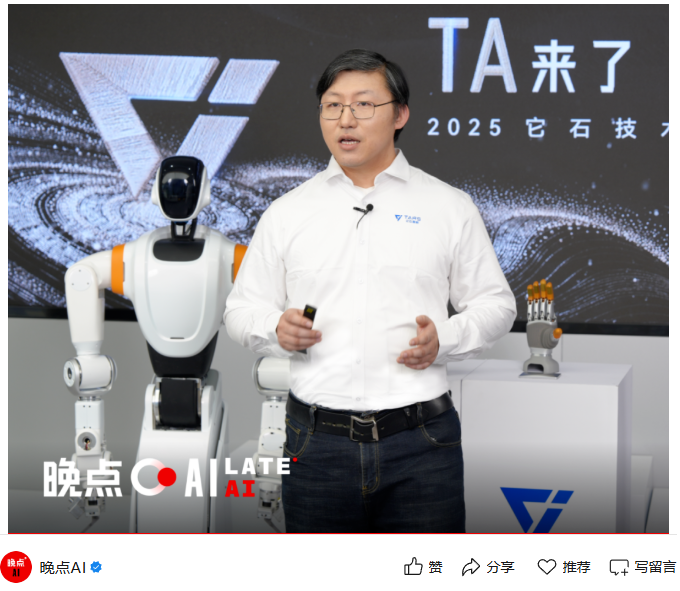
陈亦伦在访谈中提及,2020 年其团队在华为启动端到端自动驾驶技术研发。当时华为自动驾驶系统代码量达 200 万行,虽可应对复杂城市路况,但维护成 本高企。 IT之家 2 月 4 日消息,华为前首席科学家、具身智能创业公司它石智航创始人陈亦伦上周接受了《晚点 LatePost》专访,披露了其在华为任职期间的技术突 破细节。 陈亦伦毕业于清华电子系,后在美国攻读博士,毕业后曾先后在大疆和华为任职,攻坚无人机和无人车。在此次采访中,陈亦伦爆出了猛料:自己在 2020 年主导华为 ADS 时就已经实现端到端自动驾驶技术突破,比特斯拉还要早。 公开资料显示,陈亦伦曾任华为车 BU 首席科学家,主导开发 ADS 1.0 智能驾驶系统,该系统曾应用于极狐阿尔法 S 等车型。 为解决该问题,他与团队尝试用神经网络替代传统规控代码,最终以 3 万行代码构建出可规划车辆轨迹的端到端网络。该方案采用"两段式"架构:感知与规 控环节各为独立端到端网络。 针对"是否受特斯拉技术启发"的提问,陈亦伦回应称 2020 年特斯拉尚未提出端到端方案,当时特斯拉聚焦于感知层的鸟瞰视角(BEV)技术。其团队攻坚 重点在于闭环 AI 的规控难题 ...
赛力斯,需要浴“火山”重生
Sou Hu Cai Jing· 2026-02-04 12:20
Core Viewpoint - The company, Seres, is at a critical juncture as it faces market challenges despite strong financial and delivery performance, leading to the establishment of a new subsidiary, "Phoenix," focused on artificial intelligence and robotics [2][18]. Group 1: Market Position and Challenges - In early 2026, Seres' stock price showed a strange divergence despite impressive sales and delivery data, indicating market anxiety [1]. - The once-dominant position of Seres' vehicle, the AITO Wenjie, is being challenged by newer models from competitors, leading to a dilution of its market appeal [5][6]. - The shift in market perception is moving Seres from a "technology stock" valuation to a "manufacturing" valuation, which could significantly impact its market value [8][12]. Group 2: Strategic Responses - The establishment of Shanghai Seres Phoenix Intelligent Technology Co., Ltd. signifies a strategic pivot towards AI and robotics, aiming to diversify beyond traditional vehicle manufacturing [2][18]. - The collaboration with ByteDance's Volcano Engine indicates a defensive strategy to enhance capabilities in AI and human-robot interaction, while still maintaining ties with Huawei [20][24]. - Seres is pursuing a dual strategy: leveraging its existing vehicle sales for cash flow while investing in AI and robotics through Phoenix and partnerships [26]. Group 3: Future Outlook - The transition from a vehicle manufacturer to a provider of intelligent systems is fraught with risks, particularly given the longer development cycles in robotics compared to automotive [27]. - The urgency for Seres to adapt is underscored by the potential for its valuation to stagnate if it remains solely focused on traditional manufacturing [26]. - The company's future hinges on its ability to innovate and maintain relevance in a rapidly evolving market, where losing the "imagination" factor could be detrimental [27].

中国“捡钱”时代即将来临:如果手中只有10万,试试死啃这两条线
Sou Hu Cai Jing· 2026-02-04 12:20
中国经济这些年变化大,从2010年代移动互联网起步,到后来新能源汽车和人工智能接力,机会层出不穷。 记得2010年左右,智能手机刚普及,阿里巴巴和腾讯股价还低位徘徊,那时候买入的人后来赚翻。接着2015年国家推新能源政策,比亚迪从低谷爬起,股价 几年内翻倍。 2020年后,疫情加速数字化,华为和腾讯加大芯片算法投入,资金蜂拥而入。2024年股市震荡,低估股增多,散户转向长期策略。这些转变显示机会在增 多,可得小心路径选择。 第二种思路是跟踪产业发展趋势与市场动态。密切关注新能源产业转型、人工智能技术落地应用等行业结构性变化,在产业上行周期前期合理布局。 操作中可结合技术分析辅助判断入场节点,同时严格做好风险管理,提前设置止损线,若市场趋势发生反转及时止损离场。 例如 2020 年疫情期间,远程办公、线上协作需求大幅提升,带动相关软件服务行业发展,契合产业趋势的布局能收获相应红利。 执行这一思路时,需持续跟踪宏观政策导向、经济运行数据等核心指标,杜绝情绪化交易。这种思路需要承受一定的市场波动,适合具备一定投资经验、风 险承受能力较强的投资者。 当下市场竞争日趋激烈,各类投资风险也需要客观防范。部分投资者盲目追逐 ...

读懂人群战报:一场2026年手机厂商的“用户争夺战”
Xin Lang Cai Jing· 2026-02-04 12:20
Core Insights - The Chinese smartphone market has entered a phase of stock competition, with cost pressures and market differentiation posing core challenges [1] - The competition logic has fundamentally shifted from price wars to a focus on precise user targeting, emphasizing the importance of understanding consumer needs [1][30] - JD.com has launched innovative weekly smartphone sales rankings based on user demographics, providing valuable insights for both consumers and manufacturers [1][34] Group 1: Market Dynamics - The updated rankings reflect the competitive landscape among different consumer segments, showcasing brand recognition and product penetration in various demographics [4][34] - Huawei dominates the high-end business segment with its Mate 80 model, while vivo and OPPO have made significant inroads in the high-end market [4][35] - The competition among younger consumers is intense, with OPPO and vivo leading in the female and male college student categories, respectively [4][34] Group 2: Brand Strategies - Leading brands like Huawei, OPPO, and vivo are focusing on long-term, targeted user engagement strategies to build competitive advantages [8][37] - Huawei's user engagement is centered around its "Huawei Fan" ecosystem, which facilitates deep connections with core users and incorporates their feedback into product development [8][39] - OPPO employs a dual-series strategy with its Find and Reno lines to cater to high-end and younger demographics, enhancing brand recognition through targeted marketing efforts [8][43] Group 3: Collaborative Efforts - JD.com plays a crucial role as a collaborative partner for brands, leveraging its user data and resources to enhance user engagement and conversion rates [8][39] - The partnership between JD.com and Huawei has led to effective high-end user acquisition strategies, including targeted marketing events and exclusive offers [8][41] - OPPO's collaboration with JD.com has amplified its user engagement initiatives, resulting in significant growth in its high-end market presence [8][45] Group 4: Future Outlook - The smartphone market in 2026 is expected to see intensified competition, with brands needing to focus on deep user insights and emotional connections to succeed [30][56] - JD.com's unique position as a direct channel to high-quality users will be pivotal for manufacturers seeking to innovate and grow [30][56] - The key to success will be the ability of brands to build long-term, emotional relationships with users throughout the entire product lifecycle [30][56]