
阳光电源

Search documents
见证历史!A股年成交额突破406万亿,19股年成交额超万亿
Xin Lang Cai Jing· 2025-12-23 03:18
Core Insights - The total trading volume of A-shares in 2025 has exceeded 406 trillion yuan, marking a historical high for the market [2][6] - The average daily trading volume reached 1.72 trillion yuan, also a record for the year [5][6] - Notable trading days included August 25, 27, 28, and September 18, where trading volumes surpassed 3 trillion yuan on four separate occasions, setting an annual record [5] Trading Volume Data - As of December 22, 2025, the total trading volume was 405.55 trillion yuan, with a daily trading volume of 18.82 billion shares and 188.22 billion yuan [3][7] - The trading volume for December 19 was 17.49 billion yuan, and for December 18, it was 16.77 billion yuan [3][7] - A total of 19 stocks have recorded trading volumes exceeding 1 trillion yuan this year, with companies like Zhongji Xuchuang, Dongfang Caifu, and Xinyisheng surpassing 2 trillion yuan [3][7] Individual Stock Performance - Zhongji Xuchuang (300308.SZ) recorded a trading volume of approximately 24.18 trillion yuan with a price increase of 402.48% [4][8] - Dongfang Caifu (300059.SZ) had a trading volume of about 23.40 trillion yuan but experienced a decline of 10.35% [4][8] - Xinyisheng (300502.SZ) achieved a trading volume of around 22.26 trillion yuan with a significant increase of 463.08% [4][8] - Other notable stocks include Hanwujing-U (688256.SH) with 19.04 trillion yuan and a 95.25% increase, and Ningde Times (300750.SZ) with 18.92 trillion yuan and a 43.79% increase [4][8]






11月光伏组件出口额同比高增,海外需求持续旺盛 | 投研报告
Zhong Guo Neng Yuan Wang· 2025-12-23 03:05
Core Viewpoint - The report highlights a decline in the production and demand for photovoltaic components, with a notable decrease in both domestic and overseas markets, while also indicating a mixed performance in battery production and pricing trends across different segments [1][2]. Production - Photovoltaic component production in November 2025 decreased by 2.43% compared to October 2025, with domestic terminal installation progress falling short of expectations and rising component prices causing reluctance among downstream buyers [2] - In December 2025, the predicted production volume for power, storage, and consumer batteries in China is 220 GWh, reflecting a 5.3% month-on-month increase, with storage battery production accounting for approximately 35.3% [2] Pricing - As of December 17, 2025, the price of polysilicon remained stable at 52.00 CNY/kg, while the average price of 183N monocrystalline silicon wafers was 1.18 CNY/piece, and TOPCon double-glass components also held steady at 0.69 CNY/W [3] - In November 2025, the average price of lithium iron phosphate battery storage systems ranged from 0.4452 to 0.6828 CNY/Wh, with an average price of 0.5721 CNY/Wh, reflecting a 6.4% decrease month-on-month [3] Demand - In November 2025, the export value of photovoltaic components reached approximately 2.412 billion USD, marking a year-on-year increase of 34.08% and a month-on-month increase of 6.84% [4] - The cumulative export value from January to November 2025 was 25.885 billion USD, showing a year-on-year growth of 4.89% [4] - Domestic photovoltaic installations in October 2025 totaled 12.6 GW, representing a month-on-month increase of 30.4% but a year-on-year decrease of 38.3% [4] - The newly tendered capacity for EPC/PC (including DC-side equipment) and storage systems in November 2025 reached 21.8 GW/64 GWh, marking a monthly high for 2025 with a 65% increase month-on-month [4] Investment Recommendations - The report suggests focusing on companies related to the photovoltaic and storage sectors, recommending specific companies such as Sunshine Power, Nandu Power, Tongrun Equipment, Huashengchang, and Shouhang New Energy [5]



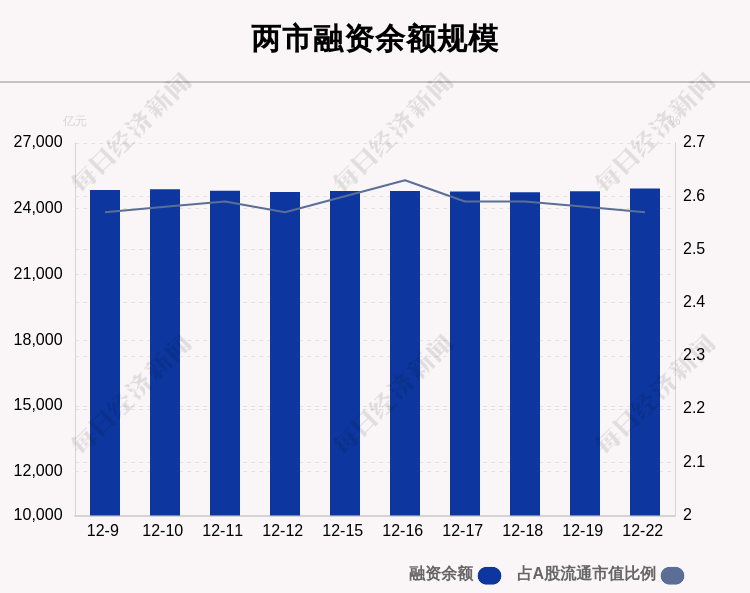
32股获融资客大手笔净买入
Zheng Quan Shi Bao Wang· 2025-12-23 02:46
Core Viewpoint - As of December 22, the total market financing balance reached 2.50 trillion yuan, reflecting an increase of 12.6 billion yuan from the previous trading day, indicating a positive trend in market financing activity [1]. Group 1: Market Financing Overview - The financing balance for the Shanghai Stock Exchange was 1.26 trillion yuan, up by 5.8 billion yuan; for the Shenzhen Stock Exchange, it was 1.23 trillion yuan, increasing by 6.7 billion yuan; and for the Beijing Stock Exchange, it was 7.82 billion yuan, rising by 0.07 billion yuan [1]. - A total of 2,094 stocks received net financing purchases on December 22, with 550 stocks having net purchases exceeding 10 million yuan, and 32 stocks exceeding 100 million yuan [1]. Group 2: Top Stocks by Net Financing Purchase - The stock with the highest net financing purchase was Zhongji Xuchuang, with a net purchase of 1.58 billion yuan, followed by Tianfu Communication and Sunshine Power, with net purchases of 900 million yuan and 478 million yuan, respectively [2]. - In terms of industry concentration, the sectors with the most stocks receiving net purchases over 100 million yuan were communication (9 stocks), electronics (8 stocks), and banking (2 stocks) [1]. Group 3: Financing Balance and Market Value Ratios - The average ratio of financing balance to circulating market value for stocks with significant net purchases was 4.30%, with Tongyu Communication having the highest ratio at 10.41% [2]. - Other stocks with high financing balance ratios included Yunnan Zhiye (8.79%), Sifang Precision (7.04%), and Kema Technology (7.03%) [2].

储能出海:必须去的远方,待坚守的漫长
Zhong Guo Hua Gong Bao· 2025-12-23 02:37
Core Insights - China's dominance in the energy storage market is highlighted, with a 90% share in energy storage batteries and a 70% share in energy storage systems globally, indicating a significant leadership position [1] - The overseas energy storage market is lucrative, with Chinese companies increasingly focusing on international expansion to tap into higher profit margins [1] Group 1: Market Dynamics - Major Chinese energy storage companies are actively signing overseas contracts, with significant orders reported: over 40GWh from "wind and solar" companies, over 60GWh from "power electronics" firms, and over 130GWh from "battery" enterprises [2] - Notable contracts include CATL with 49.65GWh, EVE Energy with 4.7GWh, and Trina Storage with 14.23GWh, showcasing the scale of international engagement [2] Group 2: Strategic Approaches - Long-term strategies are emphasized as essential for successful international operations, with companies focusing on product innovation and global supply chain development [3] - Safety and economic value are identified as core considerations for energy storage products, with companies like CATL prioritizing these aspects in their product development [3] Group 3: Future Trends - The future of energy storage is expected to see increased market share for sodium batteries, particularly in extreme temperature applications, as companies explore new technologies [4] - Solid-state batteries are viewed as needing further development to enhance energy density and performance in high-temperature environments, indicating ongoing innovation challenges in the sector [4]


423股获融资买入超亿元,中际旭创获买入47.8亿元居首
Di Yi Cai Jing· 2025-12-23 01:30
Group 1 - On December 22, a total of 3,745 stocks in the A-share market received financing funds, with 423 stocks having a buying amount exceeding 100 million yuan [1] - The top three stocks by financing buying amount were Zhongji Xuchuang, Xinyi Sheng, and Tianfu Communication, with amounts of 4.78 billion yuan, 3.346 billion yuan, and 2.277 billion yuan respectively [1] - 14 stocks had financing buying amounts accounting for over 30% of the total transaction amount on that day, with Jianyan Design, Mingde Biology, and Fanwei Network leading at 43.56%, 34.19%, and 34.07% respectively [1] Group 2 - 32 stocks had a net financing buying amount exceeding 100 million yuan, with Zhongji Xuchuang, Tianfu Communication, and Yangguang Electric leading at 1.582 billion yuan, 900 million yuan, and 478 million yuan respectively [1]
12月22日融资余额24919.13亿元,相较上个交易日增加125.34亿元
Sou Hu Cai Jing· 2025-12-23 01:21
| 股票代码 | 股票 | 收盘 | | 融资净买 融资净买入占比 | 涨跌幅 | | | --- | --- | --- | --- | --- | --- | --- | | | 简称 | 价 | 入额 | (%) | (%) | | | | | | (万元) | | | | | 301167.SZ | | 建研设 16.52 2296.12 | | 37.07 | 0.24 | 建筑 | | | 计 | | | | | 装饰 | | 600094.SH 大名城 4.25 | | | 6649.08 | 27.98 | 2.41 | 房地 | | 002932.SZ | 明德生 | 17.95 | 834.18 | 26.21 | -0.83 | | | | 物 | | | | | 生物 | | 600800 SH | 渤海化 | 4 55 | 788 72 | دي جي | -9 d | 计算 | | | 学 | | | | | 机 | | --- | --- | --- | --- | --- | --- | --- | | 301087.SZ | 可孚医 | 45.45 | 2000.28 | 2 ...
阳光慧碳周文闻:人工智能数据中心催生绿色电力需求
Zhong Zheng Wang· 2025-12-23 01:01
Core Viewpoint - The company, Sunshine Power, is focusing on green energy solutions for AI data centers through its subsidiary, Sunshine Huikang, which has launched the iCarbon for AIDC solution to enhance energy management and cooling systems using AI technology [1] Group 1: Company Initiatives - Sunshine Huikang's iCarbon for AIDC solution is being implemented in AI data centers across South China and East China, aiming to make operations more environmentally friendly [1] - The solution utilizes AI capabilities in energy management and cooling systems, combined with energy storage and key power electronic conversion devices, to optimize energy and cooling distribution within data centers [1] Group 2: Market Trends - AI data centers have significantly higher energy consumption compared to traditional data centers, leading to increased demands for power density and cooling methods [1] - The rapid development of AI data centers is shifting the requirements for power supply towards being safer, more economical, and greener [1]
谷歌再抛300亿大手笔收购,直指北美数据中心电力痛点
Xuan Gu Bao· 2025-12-22 23:28
Group 1 - Alphabet, Google's parent company, announced the acquisition of data center energy supplier Intersect for $4.75 billion (approximately 33 billion RMB) to enhance power supply for data centers [1] - Intersect specializes in power solutions for data centers, focusing on power supply optimization, energy efficiency, and emergency power support, which aligns with the extreme demand for power stability in AI data centers [1] - The acquisition aims to address the increasing power demand in the U.S. due to aging power grids and the surge in AI, new factories, and overall electrification of the economy [1] Group 2 - The North American power shortage is exacerbated by the rapid growth of AI computing power, with NVIDIA's CEO warning that power shortages are a critical bottleneck for AI development in the U.S. [1] - The U.S. public utility's summer net generation capacity for 2024 is projected at 1,230.4 GW, with a compound annual growth rate (CAGR) of only 1.42% over the past decade, and 8.1 GW of coal-fired power plants are set to retire in 2025, worsening the power gap [1] - New technologies in power supply systems are seen as key opportunities for domestic companies to expand internationally, with solid-state transformers (SST) expected to become the ultimate solution for AIDC power systems [2] Group 3 - Companies with supply capabilities for high-reliability power generation equipment, energy storage devices, and grid-related equipment are expected to benefit significantly from the growing power gap in North America [2] - The trend towards direct current and high voltage in data center distribution is confirmed, with solid-state circuit breakers accelerating in application due to their advantages in arc-free interruption [2] - Companies in the upstream and downstream supply chain, including power generation, storage, and distribution, will directly benefit, leading to increased demand for supporting materials like electrolytes and membranes [2] Group 4 - Sungrow Power Supply, a leading company in the domestic solar-storage sector, has a well-established global layout for its storage business and can meet the dynamic power supply needs of AIDC [3] - Jerry Holdings has recently secured over $100 million in generator orders from North American AI clients [4]
储能行业2026年度策略:全球开花,开启两年持续高增新周期-东吴证券
Sou Hu Cai Jing· 2025-12-22 18:09
Global Market Overview - The global energy storage industry is expected to enter a two-year high-growth cycle starting in 2026, driven by strong demand in both domestic and international markets, optimizing the industry chain structure, and highlighting the advantages of leading companies [1] - Global energy storage demand is projected to explode, with installed capacity reaching 236 GWh in 2025 (+69%), 428 GWh in 2026 (+82%), and 617 GWh in 2027 (+44%) [1][10] - China and the United States are the main markets driving this growth, with Europe and emerging markets also experiencing rapid penetration [1][11] Domestic Market Dynamics - In China, the energy storage market is benefiting from capacity price subsidies and innovative business models, with a tendering volume of 190 GWh from January to November 2025 (+138%) and a record filing volume exceeding 1 TWh [1][6] - The installed capacity in China is expected to reach 163 GWh in 2025 (+47%) and 265 GWh in 2026 (+60%) [1][6] - Independent energy storage is becoming mainstream, replacing mandatory storage requirements, with diversified revenue sources and an internal rate of return (IRR) generally between 6-12% [1][6] Segment Analysis - Large-scale energy storage (big storage) is the core growth driver, with global demand expected to continue high growth from 2025 to 2027 [3] - The demand for energy storage batteries is projected to reach 628 GWh in 2025 (+91%) and 663 GWh in 2026 (+61%), with prices rebounding from the bottom [3][6] - The user-side storage market is also growing steadily, with global installations expected to maintain a growth rate of 10-20% from 2025 to 2026, particularly in Australia and Europe [3][6] International Market Trends - In the United States, the surge in electricity demand from AI data centers and grid shortcomings is driving the adoption of solar-plus-storage systems, with expected installations of 53 GWh in 2025 and 80 GWh in 2026 (+51%) [2][6] - Europe is seeing significant policy support, with large-scale storage installations projected to reach 20 GWh in 2025 (+131%) and 42 GWh in 2026 (+109%) [2][6] - Emerging markets, including the Middle East, Australia, and Southeast Asia, are expected to contribute significantly, with large-scale storage installations projected to reach 34 GWh in 2025 (+220%) and 80 GWh in 2026 (+134%) [2][6] Investment Recommendations - The energy storage market in China and the U.S. is entering a new growth cycle, supported by multiple points of growth in Europe and emerging markets, indicating a sustained high growth potential for 2026-2027 [6] - Companies such as Sungrow Power Supply, CATL, Haibo Technology, and Yiwei Lithium Energy are recommended for investment in the large-scale storage sector, while companies like Deye Technology, Airo Energy, and Jinlang Technology are favored in the user-side storage segment [6]


2025 年能源行业 12 大核心要点-Bernstein Energy_ Twelve key takeaways in energy in 2025
2025-12-22 14:29
Key Takeaways from Bernstein Energy Conference Call Industry Overview - **Industry**: Energy Sector, focusing on oil, gas, and renewables - **Key Trends for 2025**: The report outlines significant trends and investment implications in the energy sector as it heads into 2025 Core Insights 1. **Energy Transition Timeline**: The transition to renewable energy will take longer than anticipated, with net zero targets being aspirational rather than achievable in the short term. The IEA has revised its peak oil demand forecast to 2040, indicating a need for continued investment in oil and gas [6][26] 2. **Oil Market Dynamics**: The oil market is oversupplied, with Brent prices declining from US$81/bbl to US$68/bbl. Demand growth is weak, particularly from China, which has reached peak gasoline and diesel consumption [7][8] 3. **Gas Supply Surge**: A significant increase in LNG supply is expected, with 150MTPA of new capacity coming online, while demand in major markets like China and Japan is declining. This could lead to a gas glut [12][26] 4. **Electricity Demand Growth**: Power demand is projected to double by 2050, driven by factors such as AI, electrification of transport, and increased cooling needs due to climate change. Electricity is becoming a larger share of final energy consumption [16][19] 5. **Investment in Renewables**: Despite some project cancellations, 2025 is expected to be a record year for solar and wind installations, particularly in China, which is leading in renewable capacity additions [26][27] 6. **Oil Majors' Investment Strategies**: Oil companies are scaling back investments in low-carbon technologies and focusing on core activities, with a resurgence in exploration and M&A activities [25][26] 7. **Critical Minerals and Supply Chains**: China’s dominance in critical minerals is crucial for clean energy technologies, and decoupling from China will take significant time and investment [34][36] 8. **AI and Power Supply**: The US and China are in an AI arms race, with China leading in power supply capacity but lagging in chip manufacturing. This creates investment opportunities in companies that address these bottlenecks [40][41] 9. **Energy Storage Market**: The energy storage market has seen unexpected growth, with demand for lithium-ion batteries increasing by nearly 50%. This trend is driven by energy storage systems (ESS) [45][46] 10. **Nuclear Power Resurgence**: Nuclear energy is experiencing a revival, particularly in China, which is expected to become the largest nuclear operator by the end of the decade [46][47] 11. **Grid Investment Needs**: Significant investment in electricity grids is necessary to support the growing demand from data centers and renewables, particularly in the US and Europe [51][52] 12. **Geopolitical Uncertainties**: Investors should remain cautious of geopolitical risks that could impact energy markets, as historical events have shown that surprises are inevitable [54][55] Additional Important Insights - **Market Performance Ratings**: Various companies in the energy sector have been rated based on their performance outlook, with notable mentions including CATL, CNOOC, and PetroChina [3][4] - **Investment Implications**: The report emphasizes the need for investors to adapt to changing market dynamics, particularly in oil and gas, as well as in renewable energy sectors [3][4][5] This summary encapsulates the critical insights and trends discussed in the Bernstein Energy conference call, providing a comprehensive overview of the current state and future outlook of the energy sector.