银河航天

Search documents
太空光伏行业深度3:从国内卫星制造产业链&价值链拆解展开
Guohai Securities· 2026-03-02 08:32
证券研究报告 2026年03月02日 机械设备 太空光伏行业深度3: 从国内卫星制造产业链&价值链拆解展开 评级:推荐(维持) 张钰莹(证券分析师) S0350524100004 zhangyy03@ghzq.com.cn 最近一年走势 相关报告 -19% -6% 8% 22% 35% 49% 2025/02/28 机械设备 沪深300 《机械行业专题报告:日系品牌摩托车系列2川崎:摩托车FY2023全球市占 率≈1%(推荐)*机械设备*张钰莹》——2026-02-25 《机械行业专题报告:日系品牌摩托车系列4本田:摩托车全球市占率40%如 何拆解?(推荐)*机械设备*张钰莹》——2026-02-25 《机械行业专题报告:日系品牌摩托车系列3铃木:摩托车FY2023全球市占 率≈4%(推荐)*机械设备*张钰莹》——2026-02-25 相对沪深300表现 | 表现 | 1M | 3M | 12M | | --- | --- | --- | --- | | 机械设备 | 4.5% | 25.6% | 38.3% | | 沪深300 | 0.1% | 4.3% | 18.7% | 请务必阅读报告附注中的风险提示和 ...






商业航天发展驶入快车道-如何把握布局机会
2026-03-01 17:23
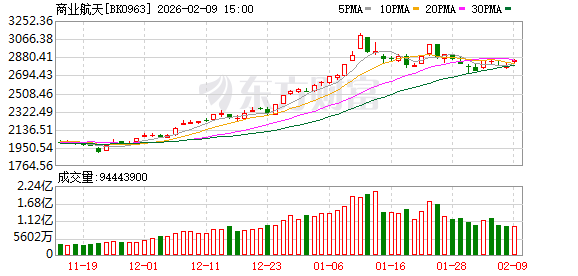
商业航天发展驶入快车道,如何把握布局机会? 20260226 摘要 全球太空资源争夺加剧,低轨卫星频段等资源有限,SpaceX 领先地位 倒逼各国加速商业航天建设。中国星网与垣信千帆二代星即将进入市场, 预计后续发星节奏与发星量将明显跃升,大运力民营火箭型号增多,火 箭回收技术进展显著。 2026 年有望成为中国商业航天加速发展元年,2025-2026 年估值驱动, 预计 2027-2028 年卫星发射加速放量,中上游卫星制造、卫星零部件、 火箭发射等环节公司有望进入业绩高速增长阶段。 国家航天局设立商业航天司,商业航天有望成为"十五五"期间重点。 四中全会公报新增"航天强国"表述,工信部提出到 2030 年发展超过 千万的卫星通信用户,多省份明确布局商业航天产业。 中国向国际电信联盟新增申请超过 20 万颗卫星的频轨资源,市场空间 进一步打开。2026 年星网二代星有望开启招标,规模预计远超一代星, 为卫星核心零部件企业带来较大订单增量。海南文昌千颗以上产能的卫 星超级工厂有望在 2026 年投产。 Q&A 2026 年商业航天板块在 1 月中旬冲顶后经历一个多月调整的原因是什么,行 业基本面是否出现不利变 ...

2026年开年融资热度攀升,商业航天成资本竞逐焦点
Sou Hu Cai Jing· 2026-02-24 00:47
2026年开年以来,国内商业航天领域投融资热度持续攀升,单笔融资金额不断刷新纪录,头部企业成为 资本竞逐的焦点。 融资热度走高的背后,政策端的推动是关键因素。2025年6月,证监会发布意见,明确支持商业航天等 前沿科技领域企业适用科创板第五套上市标准。同年12月26日,上交所进一步公布《商业火箭企业适用 科创板第五套上市标准》指引,为商业火箭企业登陆资本市场打通了制度通道。 上市通道的明确,直接激活了一级市场的投资热情。目前,蓝箭航天科创板IPO申请已获受理,中科宇 航已完成IPO辅导,星际荣耀、星河动力、微纳星空等企业也在推进IPO进程。华泰证券通信行业首席 分析师王兴表示:"伴随资本市场对硬科技支持力度持续加大,尤其是《指引》的发布,明确支持优质 商业火箭等企业登陆科创板,行业退出预期显著明朗化。在此背景下,一级市场资金快速转向,头部商 业航天企业成为机构重点布局方向,融资额度呈现争抢态势。" 2月12日,星际荣耀宣布完成D++轮融资,金额达50.37亿元,刷新我国商业火箭企业单笔融资最高纪 录,所募资金将主要用于可重复使用液氧甲烷运载火箭型号研制及商业化推进。同日,箭元科技完成由 多家头部机构参与的B轮 ...
谁在抢位商业航天?99笔融资、200亿资金 国资平台、产业资本争相入局
Xin Lang Cai Jing· 2026-02-16 03:37
同一周,银河航天完成C轮融资,新增投资方为京国瑞、顺禧基金、亦庄产投、博华资本。两笔融资, 间隔三天,吸引近三十家机构争相入局——这样的密集出手,正是过去两个月商业航天新周期的缩影。 据数据显示,从2025年1月至今,商业航天赛道共发生99笔融资,累计融资金额近200亿元。 一位中部省会负责商业航天招引的政府负责人表示,"我们已经连着几周没有休息,每天都有项目要 看、有资方要谈。现在不是我们挑项目,是项目在挑我们。"据他了解,有想法的城市都在往上加码, 抢时间、抢项目,有的地方国资临时成立了专班工作组,加班加点的找项目。这种紧迫感并非空穴来 风,数据显示,过去一年,国资在商业航天的参与度从41%跃升至59.8%,单笔10亿元以上的融资几乎 都由国资领投或主导。 格隆汇2月16日|据智通财经,2026年2月9日,在节前的最后一周,一笔打破了中国商业航天赛道记录 的融资悄然落定。星际荣耀完成D++轮融资,融资金额50.37亿元。这个数字不仅刷新了国内商业航天 领域的单笔融资纪录,更引人注目的是这轮融资的集结速度——早在今年1月,这笔交易就在市场里悄 然流传,短短一个月内,超过十家国资平台与产业资本相继入局,最终完 ...
中芯国际:存储器、BCD供不应求都在涨价 泰凌微:大基金持股比例降至5%以下
Xin Lang Cai Jing· 2026-02-12 13:14
Group 1: Industry Developments - The National Development and Reform Commission and other departments plan to establish a mandatory insurance system for unmanned aerial vehicles by 2027, enhancing low-altitude insurance products to meet various application needs [1] - Shenzhen's action plan aims to strengthen the semiconductor industry by leveraging AI technology in key areas such as chip design and software optimization, targeting high-performance AI chips for various applications [2] - The internet regulatory authority is intensifying efforts to combat the spread of false information generated by AI without proper labeling, having already addressed over 13421 accounts and 543,000 pieces of illegal information [3] Group 2: Company Updates - Semiconductor company Huahong Semiconductor reported a record fourth-quarter revenue of $659.9 million, a year-on-year increase of 22.4%, with a gross margin of 13.0% [6] - Semiconductor manufacturer SMIC anticipates continued growth driven by domestic product replacements and strong demand for AI-related storage, despite challenges in the low-end market [4] - Aerospace company Hangya Technology plans to raise up to 600 million yuan through convertible bonds to fund various projects, including an intelligent manufacturing base in Malaysia [8] - Hezhong Instrument may face delisting risk due to projected net losses of approximately 89 million yuan for 2025, with revenue expected to be around 97 million yuan [5]




护航万亿商业航天市场,保险业“徐徐前行”
Zhong Guo Jing Ji Wang· 2026-02-10 03:38
来源:经济参考报 张莫 叶健 陈旭 一边是商业航天突飞猛进,另一边是航天保险徐徐前行。《经济参考报》记者近日调研了解到,我国商 业航天保险需求呈爆发式增长,但不少企业仍面临费率高、保额低、定价难等现实挑战。 有人称,保险是商业航天的"隐形基础设施"。要让商业航天真正翱翔天际,离不开保险这双"安全之 翼"的护航。业内人士建议,推动航天保险发展,既需要政策支持与引导,也需要保险行业创新思路, 如采用共保体形式抱团发展,多方携手托起这片属于星辰大海的商业未来。 新需求爆发:万亿赛道呼唤更多保障 中商产业研究院数据显示,从2020年到2024年,我国商业航天行业产值由1万亿元增至2.3万亿元左右, 复合年增长率为22.9%,2026年有望突破3万亿元。2025年,我国共执行92次航天发射,其中商业发射 50次,占比首次超过50%。 "随着中国商业航天发射频率显著增加,保险需求呈现爆发式增长。"太保产险北京分公司相关负责人表 示,不仅投保及询报价项目增多,且单次发射保额需求也有所提升。 与此同时,商业航天企业的保险需求更加多样化。人保财险北京分公司相关负责人告诉记者,一是保险 需求逐渐延伸至产品研发和试验阶段;二是保险 ...
商业航天大年来了 广东、山东等多个地方争相布局
2 1 Shi Ji Jing Ji Bao Dao· 2026-02-09 23:21
Core Insights - The Chinese government is accelerating the development of a strong aerospace industry, with a focus on commercial aerospace as a key emerging pillar industry by 2026 [2][3] - Over 20 provinces have initiated discussions on commercial aerospace in their local government work reports, with many explicitly mentioning aerospace-related industries [2][3] - Key themes in local government plans include "full chain" and "industrial clusters," addressing the current shortcomings in collaboration and technology within the commercial aerospace sector [2][4] Full Chain Development - Guangdong aims to achieve breakthroughs in key technologies across various fields, including commercial aerospace, by 2026, targeting a scale of 300 billion yuan for its commercial aerospace and related industries [4] - Beijing has established over 210 commercial aerospace-related companies and plans to enhance its infrastructure, including a commercial aerospace measurement and control center [4] - The full chain approach is seen as essential for improving overall industry efficiency and reducing reliance on external supply chains [6] Industrial Cluster Development - Zhejiang is focusing on developing emerging pillar industries, including aerospace, with a goal for strategic emerging industries to account for approximately 35% of industrial output by 2026 [8] - Shandong is promoting four key emerging industries, including aerospace, and aims to integrate the Yantai Oriental Aerospace Port into the national commercial aerospace framework [9] - Local governments are encouraged to leverage their unique resources and capabilities to foster collaboration and avoid redundant developments in the aerospace sector [10] Industry Challenges and Innovations - The commercial aerospace industry in China is projected to reach a scale of 2.5 to 2.8 trillion yuan by 2025, with an annual growth rate exceeding 20% and over 600 companies involved [3] - Key challenges include high entry barriers, insufficient industry collaboration, funding gaps, and limited application scenarios [5] - Companies like Galaxy Aerospace and Hongqing Technology are focusing on technological innovation and the development of satellite communication technologies to address industry pain points [11][12]

商业航天迎来“决战时刻”
Jing Ji Guan Cha Wang· 2026-02-06 13:52
Core Insights - The Chinese commercial space industry is facing significant challenges, highlighted by the failures of both state-owned and private rocket launches on January 17, 2026, marking a critical moment in the sector's development [1][2][3] - Despite recent launch failures, investor enthusiasm for commercial space remains high, with multiple companies advancing towards IPOs and significant market activity in related stocks [2][16] - The industry is at a pivotal point, with a pressing need for liquid rocket capabilities to meet the ambitious goal of deploying 203,000 satellites [4][10] Industry Developments - On January 10, 2026, China submitted a large-scale application for frequency and orbital resources for 203,000 satellites, which spurred a surge in stock prices within the commercial space sector [4] - The production capabilities of companies like Galaxy Space have improved significantly, with a reported annual capacity of 100 to 150 medium-sized satellites [5] - The commercial space sector is experiencing a structural mismatch in launch capacity, as most private companies are still reliant on solid rockets, which are not suitable for large-scale deployments [6][10] Market Dynamics - The demand for launch services has led companies like Yuanxin Satellite to explore in-house rocket development due to dissatisfaction with existing commercial options [7][8] - High costs associated with launch facilities, such as the Hainan commercial space launch site, are pushing companies to consider alternative solutions like sea-based launches [9] - The urgency for private companies to demonstrate liquid rocket capabilities is underscored by the need to fulfill the ambitious satellite deployment plans [10][12] Financial Landscape - The IPO landscape for commercial space companies is becoming increasingly competitive, with several firms, including Blue Arrow Aerospace and Tianbing Technology, nearing public offerings [16][17] - The regulatory environment has shifted to support commercial space ventures, allowing companies to meet IPO requirements even with recent setbacks in rocket recovery [16][17] - Early investors are feeling pressure to exit, leading to a trend of share sell-offs as companies approach IPOs, highlighting the need for liquidity in the sector [18][19] Technological Challenges - The focus on reusable rocket technology is critical for reducing launch costs, with estimates suggesting that reusability could lower costs by 40% to 60% [11][12] - The industry is divided between two main propulsion technologies: liquid oxygen and kerosene versus liquid oxygen and methane, each with its own advantages and challenges [14][15] - Achieving successful rocket recovery remains a significant hurdle, with technical complexities involved in ensuring reliable performance during re-entry and landing [13][14]
南京“耐心资本”基金总规模超1300亿元 紫金山国际科创基金街区呼之欲出
Yang Zi Wan Bao Wang· 2026-02-05 14:08
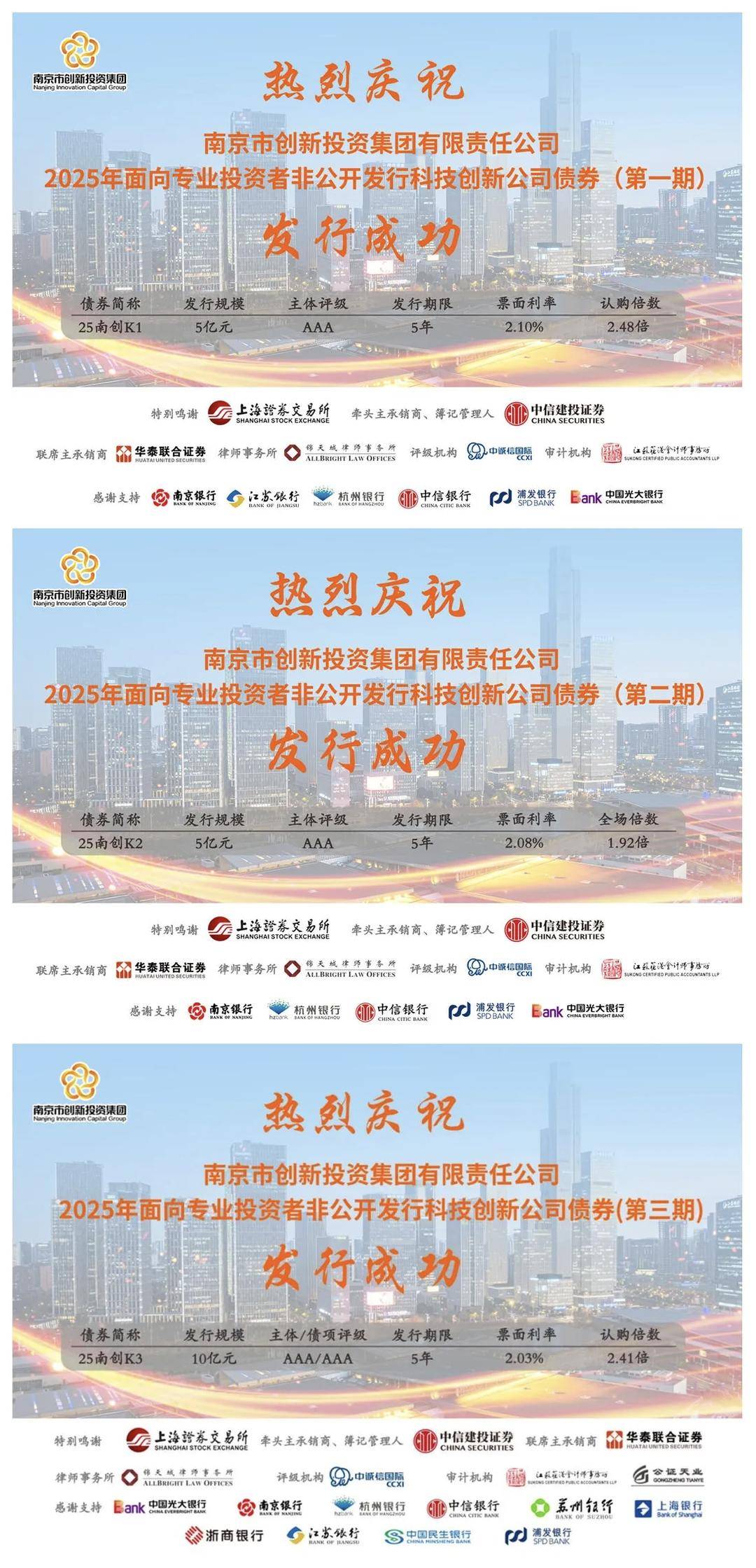
Group 1 - The core mission of the investment group is to make state-owned capital and fiscal funds the strongest support for technological innovation, fostering an industrial ecosystem through long-term investment strategies [4] - The "4+N" industrial fund cluster has established 52 funds with a total scale exceeding 130 billion yuan, aligning with major platform construction in Nanjing [4][5] - The establishment of the Zijinshan International Sci-Tech Innovation Fund District aims to create an international platform integrating policy support, capital empowerment, and industry-finance collaboration [4][5] Group 2 - Nanjing's investment in companies like Moer Thread and Muxi Co. has led to significant market performance, with Moer Thread's first-day increase exceeding 400% and Muxi Co. reaching a first-day increase of 692.95% [5] - The investment group has supported over 2,300 companies, including nearly 800 in Nanjing, with more than 320 high-tech enterprises and over 160 specialized and innovative enterprises [7] - The group has successfully hosted nine project roadshow events, attracting 104 quality projects in cutting-edge fields such as integrated circuits and intelligent manufacturing [6] Group 3 - The investment group has innovated financing channels by issuing three phases of technology innovation corporate bonds totaling 2 billion yuan, achieving historically low interest rates for similar bonds [8] - A new "investment-insurance linkage" model has been implemented, providing comprehensive insurance for technology research and development, effectively reducing the risk of R&D failures [8] - Digital transformation initiatives have enhanced the management capabilities of the group, integrating various systems for improved operational efficiency [9]
地方竞速商业航天
21世纪经济报道· 2026-02-04 04:56
Core Viewpoint - The article emphasizes the significant attention and expectations surrounding the development of China's commercial aerospace industry by 2026, driven by government initiatives and local policies aimed at fostering a comprehensive industrial ecosystem [1][4]. Group 1: Full Chain Layout - The concept of "full chain" is highlighted as a key strategy in various provinces, aiming to enhance the development of critical technologies in commercial aerospace and related fields [5][6]. - Guangdong aims for a comprehensive push in key technologies related to low-altitude and commercial aerospace by 2026, targeting an industry scale of 300 billion yuan [5]. - Beijing has established over 210 commercial aerospace-related enterprises and plans to significantly increase its rocket launch capacity by 2025, aiming for 90% of national commercial rocket launches [5][6]. Group 2: Industry Cluster Development - The term "industry cluster" is another focal point, with provinces like Zhejiang and Shandong emphasizing the development of emerging industries, including aerospace, to enhance regional economic growth [10][11]. - Shandong's Eastern Aerospace Port is noted as China's only commercial maritime launch base, with plans to support the entire aerospace industry chain and facilitate the launch of 137 satellites [10]. - Local governments are encouraged to leverage their unique resources and industrial bases to foster collaboration and avoid redundant construction, thereby creating a distinctive and complementary commercial aerospace development landscape [11]. Group 3: Corporate Initiatives - Companies are recognized as crucial players in advancing the aerospace industry, with specific firms like Tianbing Technology and Tianzhang Satellite receiving support to enhance their capabilities [12]. - Innovations in technology are being prioritized, with companies like Galaxy Aerospace focusing on developing satellite technology that connects directly to mobile phones, aiming for mass production of key devices [12][13]. - Hongqing Technology is also concentrating on integrating satellite platforms and rockets, enhancing efficiency in system delivery and communication networks [13].