SiTime Corporation

Search documents
MEMS,重新洗牌
半导体行业观察· 2026-02-14 01:37
Core Insights - The MEMS industry is undergoing an unprecedented wave of consolidation, marking a shift from chaotic growth to a structured reorganization, indicating a significant reshaping of the industry landscape [5][8][13]. Group 1: Recent Mergers and Acquisitions - STMicroelectronics acquired NXP's MEMS sensor business, focusing on automotive and industrial applications, to enhance its market position and expand into high-value segments [5][6]. - Infineon plans to acquire ams OSRAM's non-optical sensor product line for €570 million, aiming to strengthen its sensor portfolio and target emerging markets like humanoid robotics [6][10]. - SiTime's $1.5 billion acquisition of Renesas Electronics' timing business highlights the importance of timing technology in MEMS, with expected revenue generation of approximately $300 million within a year post-acquisition [7][10]. - Qorvo divested its MEMS sensor assets for $21.5 million to focus on its core RF and connectivity technologies, optimizing its asset structure [7][8]. Group 2: Market Dynamics and Growth Areas - The MEMS market is experiencing a bifurcation, with consumer electronics facing saturation and intense competition, while automotive, industrial, medical, and humanoid robotics sectors are witnessing explosive growth [11][12]. - Automotive applications are projected to become the fastest-growing segment, driven by electrification and advanced driver-assistance systems, with the number of MEMS devices per vehicle expected to exceed 70 [12][13]. - The industrial MEMS market is anticipated to surpass $10 billion by 2026, fueled by predictive maintenance and automation trends [12][13]. - The global MEMS market is forecasted to grow from over $15.4 billion in 2024 to over $33 billion by 2036, indicating strong demand in high-value applications [12][13]. Group 3: Industry Trends and Future Outlook - The ongoing consolidation is expected to continue, with more small to medium-sized MEMS companies likely to be acquired or divested, leading to increased industry concentration [27][28]. - Domestic MEMS companies in China are positioned to transition from "replacement" to "breakthrough," focusing on niche markets and enhancing their competitive edge [28][29]. - The competition in the MEMS industry is fundamentally about "technology + scale," with successful companies needing to balance both aspects to thrive [25][30]. - The integration of advanced technologies such as AI and new materials is driving the evolution of MEMS from standalone sensors to intelligent systems, creating new value propositions [14][15].


这些英伟达的“靠山”,赚翻了
半导体芯闻· 2026-02-12 10:37
Group 1 - Nvidia is a leading player in the AI wave, dominating the market with its GPU architecture and CUDA ecosystem, which are crucial for AI training and inference [1] - The rise of Nvidia is not an isolated event; it is part of a complex ecosystem involving wafer manufacturing, advanced packaging, storage bandwidth, network interconnects, power and cooling, materials, and equipment [1] - The AI infrastructure competition has shifted from a focus on computing power to overcoming connectivity bottlenecks, highlighting the importance of interconnect technologies [8] Group 2 - Credo, a lesser-known company, has seen its stock price surge due to its active electrical cables (AEC) that are essential for connecting GPUs in large AI data centers [2][4] - Credo holds an 88% market share in the AEC market, with revenues expected to double again by 2026, reaching nearly $1 billion [4] - The demand for optical fibers is increasing as they offer superior speed and energy efficiency compared to copper cables, with Corning emerging as a key player in this market [5][7] Group 3 - Lumentum is transitioning from a telecom supplier to a core enabler for AI data centers, with significant revenue growth driven by strong demand for optical devices [11][13] - Coherent is also innovating in the optical transceiver space, with a focus on high-speed devices that are essential for AI and machine learning applications [15] - SiTime specializes in precision clocks that are critical for synchronizing AI servers and networks, experiencing substantial revenue growth due to increased demand from data center clients [19][21] Group 4 - The supply chain supporting Nvidia's empire is both powerful and fragile, characterized by high technical barriers and single-point dependencies [27][28] - Companies like Corning, SiTime, and Nittobo are crucial for the reliability of AI systems, with their products being essential for maintaining system performance under extreme conditions [26][25] - The future of these companies is uncertain, as they face potential demand fluctuations and the risk of supply chain disruptions [27][28]

偷偷挣钱的芯片巨头
3 6 Ke· 2026-02-12 01:40
Core Insights - Nvidia stands out as a leading player in the AI wave, dominating the market with its GPU architecture and CUDA ecosystem, which are central to AI training and inference [1] - The rise of Nvidia is not an isolated event; it reflects a broader evolution in the AI infrastructure ecosystem, involving multiple components such as wafer manufacturing, advanced packaging, and network interconnects [1][8] - The competition in AI infrastructure has shifted from pure computational power to the ability to connect and manage vast numbers of GPUs effectively [8] Group 1: Nvidia's Market Position - Nvidia's data center revenue has reached new highs, with its latest GPU products being in high demand even before full release [1] - The company is perceived as defining AI infrastructure almost single-handedly, raising questions about the sustainability of relying on a single entity for foundational computing power [1] Group 2: The Role of Credo - Credo, a lesser-known semiconductor company, has seen its stock price surge by 245% in 2024 and is expected to double again in 2025, driven by the demand for active electrical cables (AEC) in AI data centers [2][4] - Credo holds an 88% market share in the AEC market, with analysts projecting its revenue to approach $1 billion by 2026 [4] Group 3: The Shift to Fiber Optics - Corning, a major player in fiber optics, is experiencing a resurgence as AI data centers increasingly require high-speed, reliable connections, with a significant contract from Meta for $6 billion [5][9] - The efficiency of fiber optics over copper cables is highlighted, with Corning's technology expected to dominate the internal networks of data centers [5][9] Group 4: Lumentum's Transformation - Lumentum is transitioning from a telecom-focused company to a key enabler for AI data centers, with a 58% year-over-year revenue increase [9][10] - The company is betting on three AI growth engines: optical circuit switches, co-packaged optics (CPO), and cloud transceivers [9][10] Group 5: SiTime's Importance - SiTime specializes in MEMS clock devices, crucial for maintaining synchronization in AI servers, with a 45% revenue growth in its communication and data center business [17][21] - The company’s technology is essential for ensuring the performance and efficiency of AI systems, especially as data center demands increase [21][22] Group 6: Supply Chain Vulnerabilities - The supply chain supporting Nvidia's empire is both powerful and fragile, with dependencies on specific technologies and materials that are difficult to replicate [23] - Companies like Nittobo, which supplies T-glass, face challenges in scaling production to meet the surging demand from AI companies [20][23] Group 7: The Future of AI Infrastructure - The AI infrastructure landscape is evolving, with a focus on connectivity and the ability to manage large-scale GPU deployments becoming as critical as computational power itself [8][24] - The sustainability of this supply chain and its ability to meet exponential growth in computational demand will be crucial for the future of AI [25]
偷偷挣钱的芯片巨头
半导体行业观察· 2026-02-12 00:56
Core Insights - Nvidia stands out as a leading player in the current AI wave, primarily due to its GPU architecture and CUDA ecosystem, which have positioned it at the center of the computing power competition [2] - The rise of Nvidia is not an isolated event; it is part of a broader evolution involving various components such as wafer manufacturing, advanced packaging, storage bandwidth, and network interconnects [2] - The AI infrastructure competition has shifted from a focus on computing power to addressing connectivity bottlenecks, highlighting the importance of interconnect technologies [10] Group 1: Nvidia and AI Infrastructure - Nvidia's data center revenue has reached new highs, with its latest GPU products being in high demand even before full release [2] - The AI computing power explosion is not solely dependent on GPUs but requires a complex ecosystem of interconnected technologies [2] - The emergence of companies like Credo, which specializes in active electrical cables, illustrates the hidden champions supporting Nvidia's growth [3][4] Group 2: Connectivity Technologies - Credo's active electrical cables have gained significant market share, with an estimated 88% of the active cable market, and are projected to double its revenue to nearly $1 billion by 2026 [6] - Corning's optical fibers are becoming the preferred choice for data center networks due to their superior speed and energy efficiency compared to copper cables [7][9] - The coexistence of copper and fiber technologies in AI data centers reflects a unique symbiotic relationship driven by the specific demands of AI workloads [9] Group 3: Optical Communication and Components - Lumentum is transitioning from a telecommunications provider to a core enabler for AI data centers, with significant revenue growth driven by data center demands [12][13] - Coherent is also innovating in optical transceivers, with a focus on high-speed communication driven by AI and machine learning [16] - The demand for optical components is expected to surge as AI workloads increase, but companies must be cautious of potential demand fluctuations once connectivity bottlenecks are resolved [19] Group 4: Precision Timing and Materials - SiTime specializes in MEMS-based timing devices, which are crucial for maintaining synchronization in AI data centers, showing significant revenue growth [20][23] - T-glass, a critical material for advanced chip packaging, is in high demand but faces supply constraints, highlighting the vulnerabilities in the supply chain [24][26] - The importance of precision timing and reliable materials underscores the foundational elements that support AI infrastructure, often overlooked in discussions about advanced technologies [27][28] Group 5: Supply Chain Dynamics - The supply chain supporting Nvidia's empire is characterized by both strength in technological barriers and vulnerability due to single-source dependencies [30] - Companies like Corning and SiTime have shown resilience and adaptability, indicating a long-term commitment to technological advancement despite market uncertainties [30][31] - The future of AI infrastructure will depend on the ability of these suppliers to meet the exponential growth in computing power demand while managing risks associated with supply chain dependencies [31]
AI需求、模拟芯片、存储全面升温!瑞银重磅解读美股半导体股
Zhi Tong Cai Jing· 2026-02-10 09:29
Core Viewpoint - UBS highlights the rising demand for AI, simulation chips, and storage, providing a comprehensive analysis of several US semiconductor stocks, including Texas Instruments, SiTime, and Seagate Technology [2] Group 1: Texas Instruments Management Meeting Insights - Texas Instruments announced a $7.5 billion acquisition of Silicon Labs, with shareholders receiving $231 per share in cash, expected to close in the first half of 2027 [3] - The acquisition focuses on enhancing Texas Instruments' core business in various long-term chip markets, including appliances, power, industrial, and medical devices [3] - Management believes investor sentiment is neutral to positive, as the transaction's small scale minimizes its impact on the overall company [4] Group 2: SiTime Acquisition of Renesas Electronics - SiTime is acquiring Renesas Electronics' timing business for $3 billion, aiming to capitalize on the unprecedented AI training and inference demand [5] - UBS forecasts SiTime's earnings per share to exceed $11 by 2028, but acknowledges significant uncertainty due to market share growth and revenue synergies [5][6] - The acquisition is not primarily driven by cost synergies; instead, SiTime plans to invest in R&D for faster growth [6] Group 3: Google and Amazon Financial Reports - Google and Amazon's spending growth exceeded market expectations by approximately $110-120 billion, with Google’s capital expenditure projected to grow by 100% in 2026 [7][8] - Google’s AI model, Gemini 3, is gaining significant market attention, with a notable increase in token generation [7] - Amazon anticipates $200 billion in total capital expenditure by 2026, primarily for AWS, with a 60% year-over-year growth in cloud business capital spending [8] Group 4: Semiconductor Earnings Season Insights - UBS evaluated the performance of analog chip companies, noting a 0.4% revenue increase in Q4 2025 and a 1.3% guidance increase for Q1 2026 [9] - The industrial sector showed positive performance, while the automotive and consumer electronics sectors faced challenges [10] - UBS raised its earnings forecasts for Seagate Technology following Western Digital's earnings call, predicting a gross margin above 50% [11][12] Group 5: Forward-Looking Statements for Analog Devices and Indie Semiconductor - Analog Devices is expected to report strong Q1 2026 earnings, with revenue projected at $3.17 billion, exceeding guidance [13] - UBS anticipates a modest increase in Analog Devices' gross margin and a significant rise in earnings per share [14] - Indie Semiconductor is expected to report revenues close to guidance, with a focus on resolving previous supply chain issues [15]

从数据中心到边缘AI:半导体收并购浪潮加速蔓延
2 1 Shi Ji Jing Ji Bao Dao· 2026-02-09 12:45
半导体行业的收并购浪潮,正从AI芯片厂商之间,进一步扩大到模拟芯片等多个领域。 仅在最近一周,就有德州仪器、英飞凌等厂商官宣新的收购动作,在业绩会上,高通则宣布上个季度完成了对Alphawave的收 购。 21世纪经济报道记者综合梳理发现,近期行业间发生的并购,已经从早期完善云端AI计算能力,进一步扩大到补全边缘AI落地 能力的阶段。 在当下这个AI应用加速之年,行业新一轮排位赛已悄然打响。 收并购加速 2月以来,多家模拟芯片巨头先后官宣了收购动作。 德州仪器宣布将以每股231美元的全现金交易方式收购Silicon Labs,旨在强化前者嵌入式无线连接解决方案的能力。 根据德州仪器分析,考虑到每天都有更多设备实现互联,此次交易将为公司新增约1200款支持多种无线连接标准和协议的产 品。 同时,德州仪器是IDM(垂直整合制造)模式厂商,旗下有自有晶圆生产制造厂,因此Silicon Labs此前的外部代工委托将完全 交给德州仪器完成,由此提高产品设计周期和上市速度。 该交易预计在2027年完成,德州仪器在公告中指出,此后三年内,该交易预计将产生约4.5亿美元的年度制造和运营协同效益。 记者查询Silicon La ...

MEMS,开启新整合
半导体行业观察· 2026-02-09 01:18
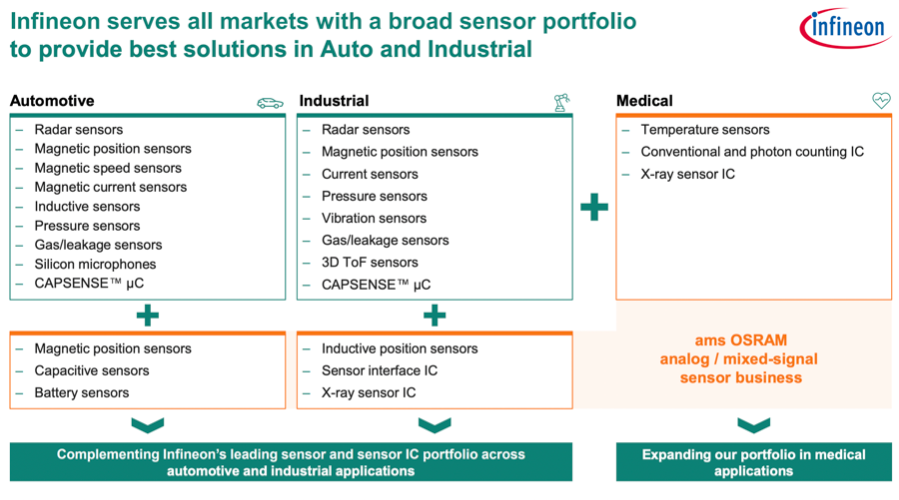
Core Insights - The global MEMS industry is entering a new phase of consolidation driven by increased technological complexity, higher capital intensity, and the need for clearer strategic positioning [2] - Recent transactions involving STMicroelectronics/NXP, Infineon/ams OSRAM, SiTime/Renesas, and Qorvo's asset divestiture illustrate a trend where semiconductor companies are actively adjusting their business portfolios by divesting non-core assets and investing in segments with long-term differentiation and scale advantages [2] Group 1: STMicroelectronics and NXP - STMicroelectronics completed the acquisition of NXP's MEMS sensor business in early 2026, positioning it as a way to expand its global sensor capabilities, focusing on automotive safety and industrial applications [5] - This acquisition is expected to enhance STMicroelectronics' scale and service range in markets with long design cycles and high customer stickiness [5] - NXP's decision to sell aligns with its cautious portfolio management strategy, concentrating investments in areas where it can achieve system-level differentiation [5] Group 2: Infineon and ams OSRAM - Infineon announced plans to acquire ams OSRAM's non-optical analog/mixed-signal sensor product portfolio for €570 million in February 2026 [6] - The acquisition will include products, R&D capabilities, intellectual property, and testing/laboratory equipment, enhancing Infineon's sensor product line and system capabilities in automotive, industrial, and medical sectors [6] - Infineon's CEO indicated that the acquisition aims to create a product portfolio that aligns well with emerging humanoid robotics, positioning the company favorably in the market [6] Group 3: SiTime and Renesas - SiTime's acquisition of Renesas' timing business for $1.5 billion highlights the consolidation trend, as timing technology is closely related to MEMS technology [7] - SiTime anticipates that the acquired business will generate approximately $300 million in revenue within 12 months post-transaction [8] - Renesas is actively simplifying its product portfolio to focus resources on core platforms that maximize strategic impact [8] Group 4: Qorvo's Strategic Shift - Qorvo has signaled a strategic shift by divesting its MEMS-based sensor solutions business, generating $21.5 million in revenue from the sale [9] - The company recognizes that certain MEMS-based activities no longer align with its long-term strategic focus, indicating a trend of asset transfer to "natural owners" with stronger strategic fit and economies of scale [9] - The ongoing consolidation wave is expected to continue, particularly in automotive, industrial, and medical sensing sectors, where scale is becoming essential due to certification, reliability, and supply chain security [9][10]

瑞萨,巨额亏损
半导体行业观察· 2026-02-06 01:33
Core Viewpoint - Renesas Electronics, a Japanese chip manufacturer, is expected to report its first net loss in six years in 2025 due to weak demand for automotive chips and low revenue from AI-related products [2][3] Group 1: Financial Performance - Renesas Electronics reported a net loss of 51.7 billion yen (approximately $330 million), contrasting sharply with a profit forecast of 219 billion yen for 2024 [2] - Revenue decreased by 2% to 1.32 trillion yen, while operating profit fell by 10% to 201.1 billion yen [2] - The company recorded a loss of 236.6 billion yen due to its U.S. power semiconductor partner Wolfspeed filing for bankruptcy [2] Group 2: Business Strategy - Renesas plans to sell its timing device business for $3 billion to SiTime, a U.S. semiconductor design company, to raise funds for core semiconductor business revitalization [2][3] - The timing device business generated revenue of 30.4 billion yen with an operating profit margin of 52%, indicating growth potential [3] - The company aims to shift focus from electric vehicle chips to AI, with plans to launch AI server power semiconductors using new gallium nitride materials by July 2025 [3] Group 3: Market Position and Challenges - Renesas has lost its position as Japan's leading chip manufacturer, overtaken by Kioxia Holdings in October 2025 [3] - AI-related products, including server power semiconductors and memory, account for only about 10% of Renesas's revenue, indicating a struggle to capitalize on the AI boom [3] - The company has not announced new customer acquisitions in advanced driver assistance and autonomous driving processor development since starting a collaboration with Honda in January 2025 [3] Group 4: Industry Trends - Demand for automotive semiconductors, which accounts for half of Renesas's revenue, is expected to bottom out by the end of 2024, but recovery may be weak [4] - There are concerns that rising memory prices and supply issues could impact the automotive market [4] - The capacity for memory and power semiconductors is being shifted to AI data centers, potentially extending delivery times for automotive semiconductors [4]
三大股指期货齐跌,“软件股末日”论甚嚣尘上,亚马逊(AMZN.US)盘后公布财报
Zhi Tong Cai Jing· 2026-02-05 14:09
Market Overview - US stock index futures are all down, with Dow futures down 0.30%, S&P 500 futures down 0.52%, and Nasdaq futures down 0.68% [1] - European indices also show declines, with Germany's DAX down 0.63%, UK's FTSE 100 down 0.40%, France's CAC40 down 0.06%, and the Euro Stoxx 50 down 0.41% [2][3] - WTI crude oil prices fell by 2.15% to $63.74 per barrel, while Brent crude oil dropped by 2.06% to $68.03 per barrel [3][4] Software Sector - The software sector is experiencing significant declines, with Goldman Sachs' software index falling for the seventh consecutive day, down 19% year-to-date, contributing to a 1.4% drop in the Nasdaq 100 index [5] - Major software companies like Microsoft, Oracle, Salesforce, and Palantir have seen year-to-date declines exceeding 10%, with Adobe's stock plummeting by 20% [5] - The software sector has lost $2 trillion in market value from last year's peak, and hedge fund net positions have dropped to a historical low of 4.2% [5] Trade and Geopolitical Developments - The US is planning to establish a protected trade zone for rare earths, using tariffs to set price floors, as announced by Vice President Pence [6] - A recent Markets Pulse survey indicates that most respondents believe stock returns will outperform bonds due to international policy dynamics, with over half citing trade and geopolitical developments as the main catalysts for market volatility [6] Individual Company Updates - Amazon faces a $70 million fine from German antitrust regulators for price control practices, coinciding with its upcoming earnings report [8] - Barrick Gold reported a 64% increase in Q4 revenue and a 140% increase in dividends, announcing plans for an IPO to spin off its North American gold assets [9] - SiTime's Q4 revenue reached $113.3 million, a 66% year-over-year increase, with a strong performance in its communication and data center business [10][11] - Qualcomm's stock fell over 12% after it provided a weak earnings forecast, raising concerns about smartphone demand due to chip shortages [12] - Arm Holdings' stock dropped over 7% after its revenue forecast fell short of investor expectations, despite a 26% year-over-year revenue increase in Q3 [13] - BBVA's net profit grew by 4.1% to €2.53 billion, but increased provisions in emerging markets raised concerns about future growth [14] - Shell's Q4 adjusted profit fell to $3.26 billion, below market expectations, due to low oil prices and poor performance in its chemical business [15] - Vodafone's stock hit a one-year low despite a 6.5% increase in Q3 revenue, as growth in its key German market fell short of expectations [16] - NIO forecasts an operating profit of RMB 700 million to 1.2 billion for Q4 2025, marking its first anticipated quarterly operating profit [17]

盘前大涨逾10%!SiTimeQ4营收同比激增66% !收购瑞萨计时业务冲刺10亿目标
美股IPO· 2026-02-05 13:54
Core Viewpoint - SiTime reported significantly better-than-expected Q4 2025 financial results and announced a strategic acquisition of Renesas Electronics' timing business assets for $1.5 billion in cash and approximately 4.13 million shares of common stock [1][3]. Financial Performance - Adjusted EPS for Q4 reached $1.53, exceeding the market expectation of $1.21; quarterly revenue was $113.3 million, surpassing the forecast of $101.91 million, with a year-over-year growth of 66% and a quarter-over-quarter increase of 36% [4]. - Gross margin improved to 61.2%, exceeding previous guidance; for the full fiscal year 2025, revenue was $326.7 million, a 61% increase from $202.7 million in fiscal year 2024 [4]. - The Communication, Enterprise, and Data Center (CED) segment was a standout, achieving over 100% year-over-year growth for the seventh consecutive quarter, with a 160% increase in Q4, contributing $64.6 million in revenue, accounting for 57% of total revenue [4]. Acquisition Announcement - SiTime announced the acquisition of Renesas Electronics' timing business, expected to contribute approximately $300 million in revenue within 12 months post-transaction, with a gross margin of 70% [6]. - Management indicated that this acquisition will significantly accelerate the company's path to achieving a $1 billion revenue target and is expected to enhance non-GAAP EPS in the first full year post-completion [6]. Future Outlook - For Q1 2026, the company provided a positive revenue guidance of $101 million to $104 million, representing an approximate 70% year-over-year growth; gross margin is expected to be around 62% [7]. - Non-GAAP EPS is projected to be between $1.10 and $1.17; the order shipment ratio at the end of Q4 was over 1.5, indicating strong visibility for the year ahead [7]. - The company maintains a long-term annual revenue growth target of 25% to 30%, driven by sustained demand in AI data centers and synergies from the Renesas acquisition [7].