交易式外交

Search documents
美国一天内安排多场会谈出于何种考虑 专家解读
Yang Shi Xin Wen· 2026-02-26 16:31
Group 1 - The core viewpoint of the article revolves around the United States' strategic shift in handling the Iran and Ukraine issues simultaneously, particularly in light of the upcoming midterm elections [3][5] - The U.S. is conducting multiple important meetings in Geneva to address both the Iran and Ukraine situations, indicating a more aggressive diplomatic approach [3] - The choice of Russia to send an economic affairs representative, Dmitryev, to communicate with the U.S. is based on his extensive connections in the U.S. economic circles, the focus on economic interests in Trump's "transactional diplomacy," and the desire to ease sanctions on Russia [5][9] Group 2 - The U.S. is pressuring Ukraine to make territorial concessions in exchange for a 15-year security guarantee, primarily supported by Europe, but achieving a resolution within a month is deemed unlikely [5][9] - Ukraine's reluctance to concede is influenced by the strategic importance of the Donbas region and its expectations for U.S. security guarantees [7][9] - The complexity of the ongoing conflict and the differing security guarantees sought by Russia and Ukraine suggest that resolving these issues within a month is highly challenging [9][10]


中方刚表态,美众议院430票压倒性通过,停止特朗普加税,一个时代落幕
Sou Hu Cai Jing· 2026-02-16 17:10
Group 1 - The article discusses the impact of U.S. tariffs on Canada and its allies, highlighting that rising costs in construction and retail are immediate consequences of these trade policies [1][3][20] - Canadian Prime Minister Carney's statement at the G20 reflects a shift towards seeking alternative partnerships, particularly with China, as a response to U.S. pressure [5][20][23] - The European Union is preparing a countermeasure plan worth €93 billion in response to U.S. tariffs, indicating a serious economic confrontation [3][11][28] Group 2 - The imposition of a 200% tariff on French wine and spirits could severely impact the French agricultural sector, which relies heavily on exports to the U.S. [3][11][18] - The article emphasizes that countries are increasingly looking to diversify their trade relationships to mitigate risks associated with U.S. unilateral actions [14][20][29] - The concept of "quietly building alternatives" is emerging, where nations like Canada and the EU are exploring partnerships outside of U.S. influence to ensure economic stability [23][26][30] Group 3 - The article suggests that the U.S. approach to trade is creating a new reality where allies are reconsidering their dependence on American markets [9][24][29] - The potential for Canada to enhance trade with China, India, and South Africa is highlighted as a strategic move to reduce reliance on the U.S. [20][23][28] - The ongoing trade tensions are prompting a reevaluation of global economic relationships, with countries seeking to establish parallel systems to safeguard their interests [20][30]
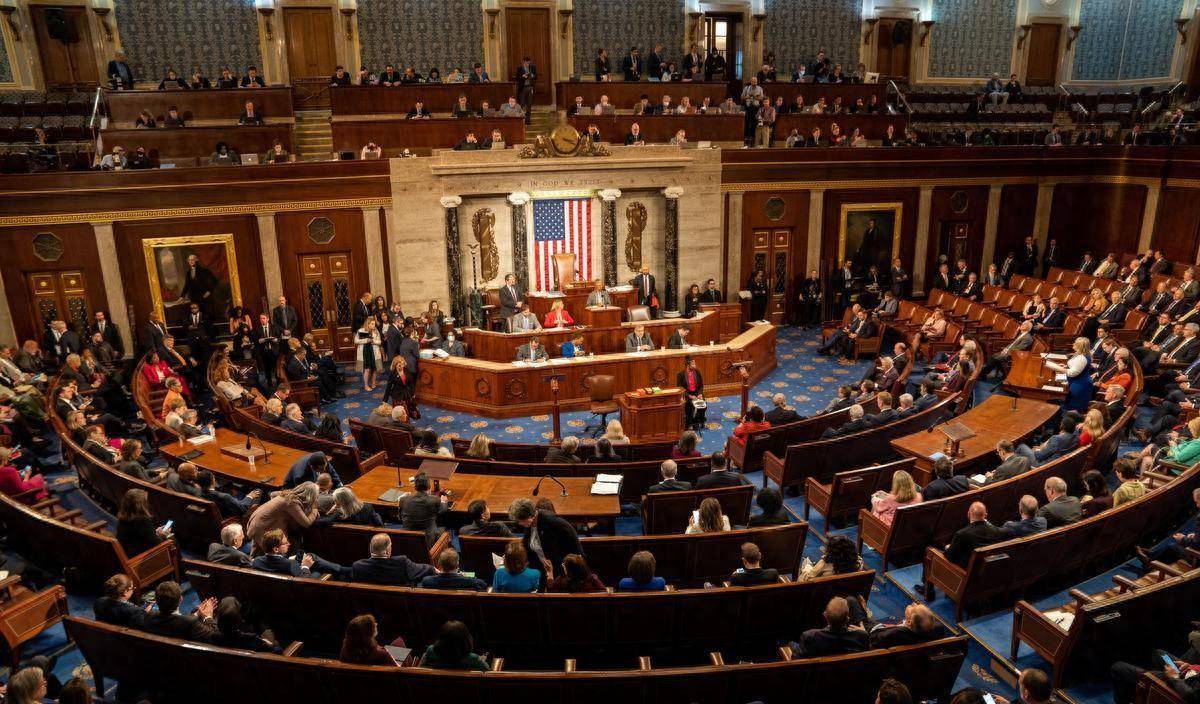
219票赞成211票反对!美国投票结果出来了,特朗普或再次“退群”
Sou Hu Cai Jing· 2026-02-13 07:47
Group 1 - The House of Representatives voted 219 to 211 to attempt to halt Trump's punitive tariffs on Canadian goods, revealing internal divisions within the U.S. political landscape [1][3][26] - Trump's tariffs, initially justified as a measure to combat fentanyl smuggling and protect American health, have led to increased costs for American industries reliant on Canadian materials, such as automotive parts and agricultural processing [5][7] - The imposition of tariffs has resulted in a 12% increase in steel costs for U.S. manufacturing, directly raising vehicle prices and burdening consumers [7] Group 2 - The vote's passage was aided by six Republican members who defied party lines due to local economic pressures, indicating that political representatives are sensitive to their constituents' economic concerns [8][10] - Public opinion is against the tariffs, with over 60% of American adults opposing the increased tariffs on Canadian goods, particularly in key states like Ohio, Pennsylvania, and Michigan [10][12] - Despite the House vote, Trump retains the power to veto the proposal, maintaining control over trade policy direction [13][15] Group 3 - Trump's strategy includes leveraging the threat of withdrawing from the USMCA trade agreement to strengthen his negotiating position, with the first review period for the agreement approaching in July 2026 [15][18] - The potential withdrawal from USMCA could have significant economic implications, with estimates suggesting a loss of over 1% of U.S. GDP and increased costs due to disrupted supply chains, particularly in the automotive sector [21] - The ongoing tariff dispute reflects broader concerns about the unpredictability of U.S. trade policy, which may undermine global trust in American leadership [25][23]
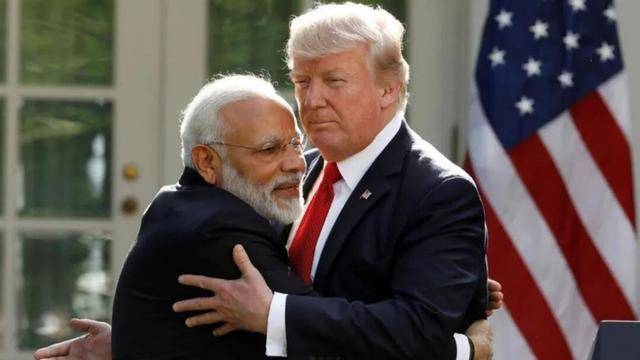
拿到莫迪把柄的特朗普,宣布彻底搞定印度,转头对中国喊出一句话
Sou Hu Cai Jing· 2026-02-07 06:57
Core Viewpoint - The announcement of a significant US-India trade agreement by Trump, which includes a reduction in tariffs on Indian goods from 25% to 18%, is seen as a strategic move to strengthen economic ties while also addressing geopolitical concerns regarding Russia [1][3]. Group 1: Trade Agreement Details - The US will lower tariffs on Indian goods from 25% to 18%, effective immediately, and will also eliminate a 25% tariff on Russian oil [1]. - Modi expressed gratitude for the agreement, highlighting that Indian-made goods can now enter the US market at a reduced tariff [1]. - The agreement comes shortly after India signed a free trade agreement with the EU, indicating India's strategic maneuvering between major economies [5]. Group 2: Geopolitical Implications - A key aspect of the agreement is India's commitment to stop purchasing Russian oil, which aligns with long-standing US objectives and could significantly impact Russia's energy revenue [7]. - India's recent reduction in Russian oil imports has already led to a surplus of Russian crude oil seeking new buyers, indicating a shift in energy dynamics [7]. - The agreement reflects a broader geopolitical strategy where the US seeks to leverage economic ties with India to counterbalance Russian influence [10]. Group 3: Domestic Reactions and Controversies - The announcement has been overshadowed by a controversy related to Modi's past visit to Israel, which has sparked domestic political backlash and calls for clarification from the Indian government [8]. - Despite the controversy, the agreement is expected to proceed, although it adds a layer of complexity to US-India relations [8]. Group 4: China's Position - In contrast to India's shift, China has rejected US calls to stop importing oil from Iran and Russia, maintaining its diversified energy import strategy [10]. - China's increased imports of Russian oil at favorable prices highlight its independent foreign policy and ability to navigate geopolitical pressures [10]. - The situation underscores the importance of strategic autonomy in international relations, as evidenced by China's approach compared to India's recent decisions [10].
特朗普为何高调重返达沃斯?专家称其三大核心意图值得关注
2 1 Shi Ji Jing Ji Bao Dao· 2026-01-21 09:03
Core Viewpoint - The participation of President Trump and a large U.S. delegation at the World Economic Forum in Davos is a strategic move aimed at reshaping perceptions of U.S. unilateralism into a more acceptable global governance framework [2][3]. Group 1: U.S. Delegation and Strategy - Trump will lead the largest U.S. delegation in the history of the forum, including key government officials and executives from major tech companies like Nvidia and Microsoft [1]. - The delegation's composition reflects a strategic priority on security and economic nationalism, with representatives focusing on alliance restructuring and supply chain reconstruction for critical minerals [3]. Group 2: Implications of Participation - Trump's return to Davos is seen as an attempt to normalize "America First" policies by integrating government officials with tech capital representatives, thereby legitimizing a transactional diplomacy approach [2]. - The high-profile participation may exacerbate feelings of alienation among participants from developing countries, highlighting the inclusivity of initiatives proposed by emerging powers like China [4].
特朗普威胁“吞并”格陵兰岛,六种棋局推演
Di Yi Cai Jing· 2026-01-08 02:32
Core Viewpoint - The article discusses the potential U.S. interest in Greenland, highlighting various scenarios for how this situation may unfold, with a strong emphasis on the improbability of a military takeover [1][3][15]. Group 1: U.S. Motivations for Interest in Greenland - The U.S. interest in Greenland is driven by national security concerns, as its strategic location is crucial for monitoring military activities in the North Atlantic and Arctic regions [4][16]. - Greenland is rich in mineral resources, including rare earth elements and potential oil and gas reserves, which are vital for U.S. high-tech industries [5][17]. - Climate change is making Arctic navigation more feasible, which could significantly shorten shipping routes between Europe and North America, further increasing Greenland's strategic importance [5][17]. Group 2: Historical Context of U.S. Interest - Historical attempts by the U.S. to acquire Greenland date back to 1868, with various administrations exploring the possibility of purchase, but none succeeded [6][18]. - In 1946, a proposal to buy Greenland for $100 million in gold was made but rejected by Denmark, indicating long-standing U.S. interest [6][18]. Group 3: Potential Scenarios for U.S. Control - The article outlines six potential scenarios for U.S. control over Greenland, with the "military takeover" scenario deemed highly unlikely due to international backlash [3][19]. - The most feasible scenarios include a "free association" model similar to Palau and Micronesia, allowing Greenland to maintain sovereignty while granting the U.S. certain rights [10][22]. - Another scenario involves a lease agreement for administrative control over Greenland, where sovereignty remains with Denmark but operational control is transferred to the U.S. [11][22]. Group 4: International Reactions - Denmark and other Nordic countries have issued strong statements against U.S. threats to annex Greenland, emphasizing the importance of respecting international law and territorial integrity [2][14]. - The collective response from Nordic foreign ministers underscores the need for NATO solidarity and adherence to the principles of the UN Charter [2][14].
特朗普威胁“吞并”格陵兰岛,六种棋局推演
第一财经· 2026-01-08 02:16
Core Viewpoint - The article discusses the geopolitical implications of the U.S. interest in Greenland, highlighting the reactions from Denmark and other Nordic countries, as well as potential strategies the U.S. might employ to assert control over the territory [3][4]. Group 1: U.S. Interest in Greenland - The U.S. government's interest in Greenland is driven by national security, military strategy, and resource acquisition [6][7]. - Geographically, Greenland is a strategic location for monitoring military activities in the North Atlantic and Arctic regions, making it crucial for U.S. defense [6]. - Greenland is rich in mineral resources, including rare earth elements and potential oil and gas reserves, which are vital for U.S. high-tech industries [7]. - Climate change is opening new shipping routes through the Arctic, further increasing Greenland's strategic importance for both commercial and military purposes [7]. Group 2: Historical Context of U.S. Interest - The U.S. has historically shown interest in acquiring Greenland, with attempts dating back to the 19th century, including proposals from various administrations [8][9]. - Trump's administration has revived this interest, with explicit statements about the importance of Greenland to U.S. national security and discussions of potential military options [9]. Group 3: Potential Strategies for U.S. Control - Six potential strategies for U.S. control over Greenland are outlined, with varying degrees of feasibility: 1. **Military Occupation**: Considered the least likely due to international backlash and potential NATO implications [11]. 2. **Incorporation through Independence**: If Greenland were to gain independence, it could choose to join the U.S., which would be legally permissible [11][12]. 3. **Purchase Agreement**: Similar to past U.S. territorial acquisitions, but complicated by Greenland's autonomy [12]. 4. **Free Association Model**: Allowing Greenland to retain its sovereignty while granting the U.S. certain rights, which aligns with public sentiment in Greenland [14]. 5. **Lease Agreement**: A temporary arrangement where the U.S. manages Greenland's administration while Denmark retains sovereignty [14]. 6. **Expanded U.S. Privileges**: Pressuring Denmark to grant the U.S. more rights in Greenland without formal annexation [14][15].

特朗普威胁“吞并”格陵兰岛 六种棋局推演
Di Yi Cai Jing· 2026-01-08 01:57
Core Viewpoint - The U.S. interest in Greenland has escalated, with President Trump emphasizing its importance for national security, leading to strong reactions from Denmark and other Nordic countries [1][3][6]. Group 1: U.S. Strategic Interests - The U.S. views Greenland as a critical geographical location for military strategy, particularly in monitoring naval activities in the North Atlantic and Arctic regions [3]. - Greenland is rich in mineral resources, including rare earth elements and potential oil and gas reserves, which are vital for U.S. high-tech industries [4]. - Climate change is making Arctic resource extraction more feasible, and new shipping routes could significantly reduce transportation times between Europe and North America [4]. Group 2: Historical Context - The U.S. has a long history of interest in acquiring Greenland, dating back to proposals in the 19th and 20th centuries, but these efforts have historically been met with resistance [5][6]. - Trump's administration has taken steps that indicate a shift from mere interest to a more aggressive pursuit of control over Greenland [6]. Group 3: Potential Scenarios for U.S. Control - Six potential scenarios for U.S. control over Greenland have been proposed, with the most likely involving pressure on Denmark and Greenland to grant the U.S. expanded rights without full sovereignty [2][10][11]. - The "Palau and Micronesia model" allows a small nation to retain its sovereignty while granting certain powers to a larger nation, which could be a feasible approach for Greenland [10]. - The "Panama Canal lease model" suggests a temporary administrative control arrangement, where the U.S. would manage Greenland while Denmark retains nominal sovereignty [10][11].
特朗普威胁“吞并”格陵兰岛,六种棋局推演|全球洞见
Di Yi Cai Jing· 2026-01-08 01:52
Core Viewpoint - The article discusses the U.S. interest in Greenland, highlighting the low likelihood of military annexation and presenting various potential diplomatic strategies for U.S. involvement in Greenland's governance and resources [2][3][4]. Group 1: U.S. Motivations for Interest in Greenland - The U.S. seeks control over Greenland primarily for national security and military reasons, given its strategic location between North America and Europe [4]. - Greenland is rich in mineral resources, including rare earth elements and potential oil and gas reserves, which are crucial for U.S. high-tech industries [5]. - Climate change is making Arctic resource extraction more feasible, and Greenland's location is pivotal for new shipping routes that could significantly reduce transportation times between Europe and North America [5]. Group 2: Potential Diplomatic Strategies - The article outlines six potential strategies for U.S. involvement in Greenland, with the "military annexation model" being the least likely due to international backlash [3][8]. - The "Palau and Micronesia-style Compact of Free Association" allows a small nation to retain its sovereignty while granting certain powers to a larger nation, which could be a viable option for Greenland [11]. - The "Panama Canal lease model" suggests that the U.S. could negotiate a lease for administrative control over Greenland while Denmark retains nominal sovereignty [12]. - The possibility of pressuring Denmark to expand U.S. privileges in Greenland, such as military bases and resource development, is also considered a feasible approach [12][13].
特朗普赚大了,达成协议拿下9000亿美元订单,但消费信心却三连降
Sou Hu Cai Jing· 2025-10-31 06:01
Group 1 - Trump's first Asian trip in five years resulted in nearly $900 billion in investment commitments from Malaysia, Japan, and South Korea [1][3] - The trip emphasized "transactional diplomacy," with a focus on economic negotiations rather than traditional diplomatic engagements [3][4] - In Japan, a significant discussion centered around a $550 billion investment, with Japan preparing a large procurement list to appease Trump [3][4] Group 2 - The U.S. consumer confidence index has declined for three consecutive months, indicating growing economic concerns among American households [5][6] - Despite Trump's diplomatic achievements abroad, domestic economic indicators reveal a stark contrast, with consumer sentiment worsening due to trade policies [5][8] - Walmart has raised prices on certain goods due to the impact of U.S. tariffs, reflecting the broader economic strain on American families [12][15] Group 3 - Historical precedents suggest that the investment commitments made during Trump's trip may not materialize, as seen in past agreements that failed to fully execute [12][13] - The ongoing U.S. government shutdown has created uncertainty, affecting the release of key economic data and further complicating the economic landscape [13][16] - The disparity between Trump's foreign diplomatic successes and the domestic economic challenges highlights the contradictions in his economic policies [13][16]