以旧换新补贴政策

Search documents
京东物流20260312
2026-03-13 04:46
Summary of JD Logistics Conference Call Company Overview - **Company**: JD Logistics - **Industry**: Logistics and Supply Chain Key Points Revenue and Profit Growth - JD Logistics expects revenue growth of **20% to 25%** for 2026, driven by: - Integration of Dada's business starting Q4 2025 - Expansion of international business focusing on overseas warehouses and cross-border logistics - Recovery in traditional business segments, particularly with DeBang expected to turn positive in 2026 after negative growth in 2025 - Kuayue Express projected to maintain over **20%** revenue growth [2][3] Profit Margin Expectations - Net profit margin is anticipated to improve from **3.1% in 2025** to **3.3% in 2026**, a **0.2 percentage point** increase - Profit margin recovery is expected across various business segments: - DeBang's margin is projected to turn positive - Kuayue Express's margin may slightly decline - JD Logistics's existing business margin is expected to remain stable [2][3] Market Sentiment and Profit Elasticity - Market sentiment suggests that JD Logistics's actual profit performance may exceed company guidance due to optimistic views on profit margin recovery - DeBang's margin could reach **2% to 3%** or higher, indicating potential for significant recovery beyond breakeven - Kuayue Express's margin is expected to remain stable around **8%** - Small fluctuations in profit margins can lead to substantial profit changes, with every **0.1 percentage point** change corresponding to approximately **300 million** in profit - Overall profit for the year could exceed **9 billion** if margins improve as expected [4] External Catalysts - Potential external catalysts for 2026 include: - Government policies such as "trade-in" subsidies, which historically boosted revenue in key categories like 3C and home appliances - The overseas business transitioning from investment to profit generation, with significant expansion in overseas warehouse space, doubling compared to 2024, benefiting from the rapid growth of China's cross-border e-commerce [5][6] Valuation Perspective - JD Logistics's current valuation is below **10 times PE**, indicating a strong safety margin - If profits reach **9 to 10 billion**, the valuation could drop to around **8 times**, suggesting a very low valuation level - The company’s diverse business model includes express delivery, freight, same-city delivery, cold chain, and supply chain services, comparable to SF Express, which maintains a valuation of over **12 times** even at historical lows - Given the current valuation and potential for exceeding performance expectations, JD Logistics presents a high investment upside and probability of success [7]
优信股价近7日下跌1.18%,政策利好二手车电商平台
Xin Lang Cai Jing· 2026-02-24 22:23
Group 1 - The core viewpoint of the article highlights the impact of government policies on the used car market, particularly benefiting companies like Uxin (UXIN.OQ) through increased demand for second-hand vehicles due to the "trade-in" subsidy policy, which offers up to 20,000 yuan for new energy vehicles [1] Group 2 - The recent stock performance of Uxin shows a fluctuation with a cumulative decline of 1.18% over the week from February 18 to February 24, with a maximum drop of 3.21% on February 23, reaching a low of $3.30 [1] - On February 24, Uxin's stock experienced a slight rebound of 1.20%, closing at $3.36, indicating volatility influenced by market sentiment and low liquidity, with an average daily trading volume of approximately $127,000 [1] - During the same period, the Nasdaq index rose by 1.26%, while the automotive retail sector, to which Uxin belongs, showed a minimal increase of 0.17%, suggesting that Uxin's performance is lagging behind both the broader market and its industry [1]
本市家电数码以旧换新补贴今起升级
Xin Lang Cai Jing· 2026-02-09 02:49
Core Viewpoint - Beijing's home appliance and digital product trade-in subsidy policy has been upgraded, providing a 15% subsidy on the final sales price for eligible products, effective immediately [3][5]. Group 1: Subsidy Details - The subsidy covers six categories of home appliances (refrigerators, washing machines, televisions, air conditioners, water heaters, and computers) and four categories of digital products (mobile phones, tablets, smartwatches, and smart glasses) [3][5]. - The maximum subsidy for home appliances is capped at 1,500 yuan per item, while for digital products, it is capped at 500 yuan per item [5][6]. Group 2: Implementation Rules - The policy includes rules for qualification validity, with online qualifications valid until 24:00 on the same day and offline qualifications valid until the end of the week [4][7]. - Consumers can only claim one subsidy per category, and if they fail to use their qualification four times, they will be ineligible to claim that category again during the policy period [6][7]. Group 3: Business Participation and Consumer Experience - The policy expands the range of participating businesses and simplifies the application process for small and medium enterprises [4][8]. - Physical stores will offer exclusive discounts and promotional activities to enhance consumer experience [4]. Group 4: Automotive Trade-in Subsidy - The automotive trade-in subsidy policy has also been launched, offering up to 20,000 yuan for eligible consumers purchasing new vehicles [9]. - The subsidy is divided into two categories: "scrapping and updating" and "selling and updating," with different subsidy rates for new energy vehicles and fuel vehicles [9][10].

汽车以旧换新补贴下周一启动
Xin Lang Cai Jing· 2026-02-07 06:21
Group 1: Automotive Subsidy Policy - The Beijing Municipal Government has officially released the 2026 automotive trade-in subsidy policy, which includes two types of subsidies: "scrapping and updating" and "trading and updating" [1] - Consumers can receive a maximum subsidy of 20,000 yuan for purchasing new vehicles under the "scrapping and updating" category, with 12% of the new vehicle sales price for electric vehicles and 10% for fuel vehicles with an engine size of 2.0 liters or less [1] - The "trading and updating" subsidy offers 8% of the new vehicle sales price, with a maximum of 15,000 yuan for consumers trading in old vehicles for new electric cars [1][2] Group 2: Application Process and Eligibility - The application system for the automotive subsidies will open on February 9 at 10 AM, and consumers must submit their applications online through designated platforms [1] - Eligibility requirements include that the old vehicle must be registered in the applicant's name by January 8, 2025, and the necessary documentation must be obtained from January 1, 2026 [2] - Each consumer can only receive one "scrapping and updating" subsidy or one "trading and updating" subsidy in 2026 [2] Group 3: Home Appliance and Digital Product Subsidy Policy - The Beijing Municipal Government has announced an upgrade to the home appliance and digital product trade-in subsidy policy, effective February 9, 2026, with a subsidy standard of 15% of the final sales price after discounts [3] - The policy covers six categories of home appliances and four categories of digital products, with a maximum subsidy of 1,500 yuan for home appliances and 500 yuan for digital products [3] - Consumers can apply for subsidies through the "Jingtong" mobile app and must ensure that any previously obtained but unused subsidy qualifications will expire on February 8, 2026 [3][4] Group 4: Optimization of Subsidy Implementation Rules - The subsidy implementation rules have been optimized to enhance consumer participation and improve funding efficiency, with a unified qualification retrieval time starting at 10 AM daily [4] - Online subsidy qualifications will be valid until 24:00 on the same day, while offline qualifications will be valid until 24:00 on the following Sunday [4]
巴州税务全力保障以旧换新新政顺利实施
Sou Hu Cai Jing· 2026-02-04 14:02
Core Insights - The Xinjiang region has launched an upgraded subsidy policy for replacing old consumer goods, which has significantly boosted consumer enthusiasm in the Bayingolin Mongol Autonomous Prefecture [1][2] - The local tax authority is actively facilitating the implementation of this policy to ensure that consumers and businesses can effectively benefit from the subsidies [1] Group 1: Policy Implementation - The Xinjiang Uyghur Autonomous Region's Commerce Department announced the new subsidy policy on January 14, 2026, leading to a noticeable increase in foot traffic and sales in appliance, digital, and automotive markets [1] - The Bayingolin tax bureau has focused on optimizing service measures to ensure taxpayers understand the policy, can operate effectively, and enjoy the benefits [1] Group 2: Business Impact - Local businesses, such as the Yili County Haitong Trading Company, reported a significant increase in customer traffic and order volume since the launch of the national subsidy program [1] - The tax department has provided targeted guidance to businesses on tax-related matters, including subsidy applications and invoicing, to help them mitigate tax risks and ensure the effective release of subsidy benefits [1][2] Group 3: Consumer Response - Consumers have shown a marked increase in inquiries and purchases at sales outlets, indicating a positive response to the subsidy policy [2] - Business owners have expressed satisfaction with the increased sales and the support from tax authorities in navigating tax compliance, enhancing both consumer and merchant confidence [2]
大行评级|小摩:预计今年以旧换新政策继续利好金属商品市场,建议买入紫金矿业
Ge Long Hui· 2026-01-20 08:00
Group 1 - The main trend in the commodity market for 2025 will continue into 2026, with global demand-driven metals (such as gold, copper, and lithium) expected to outperform domestic demand-driven sectors (such as coal and steel) [1] - Supply disruptions and accelerated industry consolidation are anticipated to persist throughout the year [1] - The old-for-new subsidy policy is expected to continue until 2026, with incentives becoming more targeted and efficiency-focused, providing substantial support for overall commodity demand [1] Group 2 - The preferred order for the basic materials sector in 2026 is gold and copper, followed by aluminum, lithium, coal, and steel [1] - The materials sector is expected to continue outperforming the MSCI China Index in 2026, with recommendations for investors to buy Zijin Mining and to accumulate China Aluminum and China Hongqiao on dips [1] - Luoyang Molybdenum may experience a temporary pause due to the issuance of convertible bonds [1]

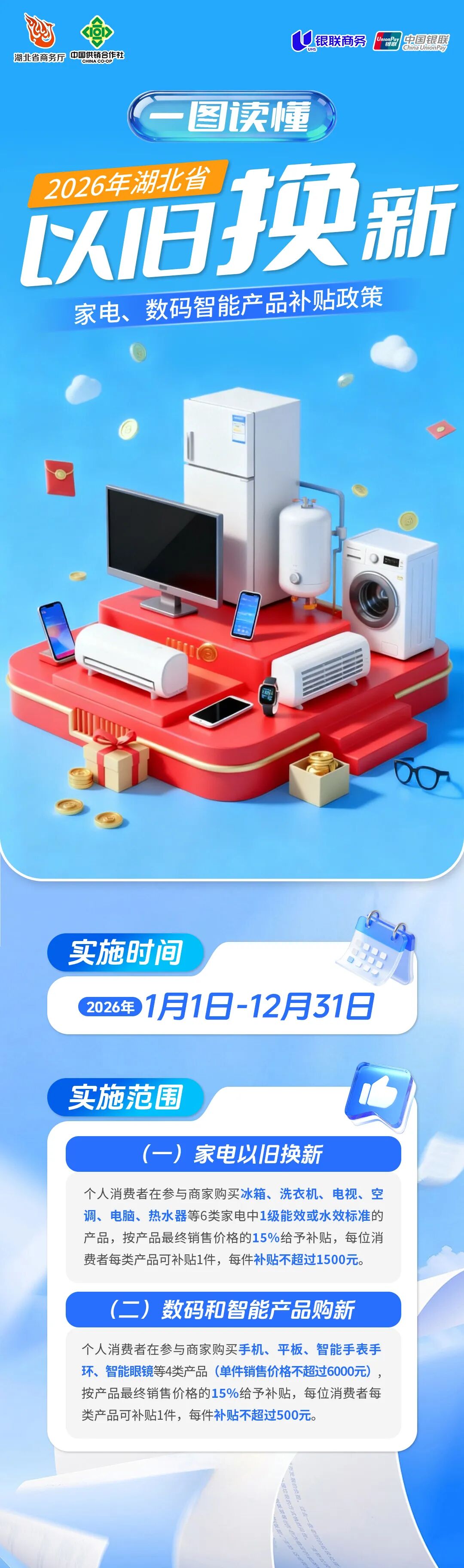
最高补贴1500元!湖北以旧换新最全攻略来了
Xin Lang Cai Jing· 2026-01-18 04:03
Core Viewpoint - The Hubei province has launched a "trade-in" subsidy policy for home appliances and digital smart products, effective from January 1, 2026, to December 31, 2026, aimed at encouraging consumer spending and upgrading household electronics [5][7][8]. Group 1: Subsidy Details - Consumers can receive a subsidy of 15% of the final sales price for purchasing energy-efficient home appliances, with a maximum subsidy of 1,500 yuan per item, limited to one item per category [7]. - The eligible home appliances include refrigerators, washing machines, televisions, air conditioners, computers, and water heaters [7]. - For digital smart products, consumers can receive a subsidy of 15% of the final sales price, with a maximum of 500 yuan per item, also limited to one item per category [8]. - Eligible digital products include smartphones, tablets, smartwatches, and smart glasses, with a single item price cap of 6,000 yuan [8]. Group 2: Implementation and Access - The subsidy program is accessible through participating merchants, and consumers must follow specific steps to claim their subsidies via the "Hubei Trade-in" WeChat public account [12][15]. - The program is designed to operate daily from 00:00 to 24:00, with the subsidy vouchers valid only for the day they are claimed [12]. - Consumers can check their eligibility and receive assistance through the WeChat mini-program dedicated to the trade-in program [15][21].
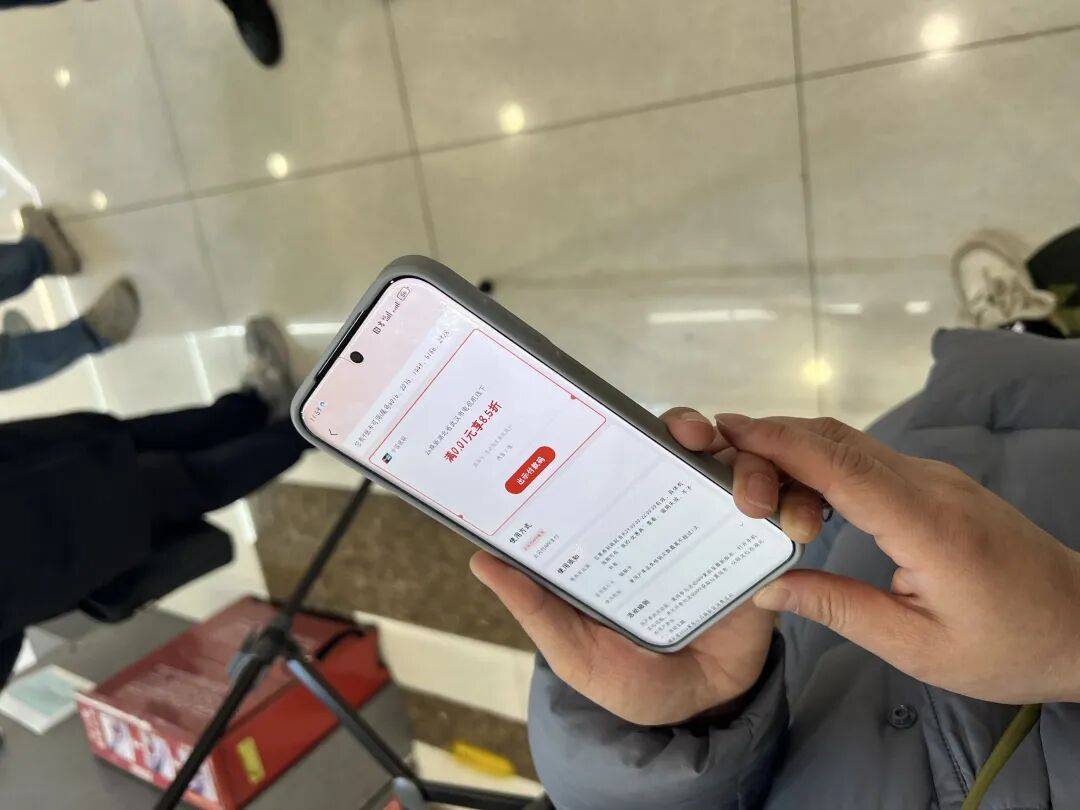
武汉今天开始了!刚刚就有人省了4000元
Sou Hu Cai Jing· 2026-01-16 15:59
Core Viewpoint - The implementation of the 2026 home appliance and 3C trade-in subsidy policy in Wuhan aims to enhance consumer purchasing power and promote the sale of energy-efficient products, with a focus on quality and efficiency improvements in the home appliance sector [1][3][5]. Group 1: Policy Details - The 2026 subsidy policy allows consumers to receive a 15% subsidy on the purchase price of energy-efficient home appliances, with a maximum subsidy of 1,500 yuan per item, applicable to six categories: refrigerators, washing machines, televisions, air conditioners, computers, and water heaters [1][3]. - Consumers who received subsidies in 2025 can continue to enjoy the benefits when purchasing similar products in 2026 [3]. - The number of subsidized product categories has been reduced from 12 in 2025 to 6 in 2026, focusing on high-efficiency products only [5][7]. Group 2: Market Impact - The trade-in subsidy policy has significantly boosted sales, with a reported increase of over 60% in home appliance sales in the province during the previous year [3]. - In 2025, the policy led to the replacement of 2.58 million home appliances and 1.63 million digital products, indicating a strong market response [7]. - The policy has also contributed to a notable increase in consumer spending quality, with significant growth in categories such as communication equipment (15.7%), furniture (174.8%), and cultural office supplies (12.2%) [7]. Group 3: Future Developments - The 2026 policy includes the addition of smart glasses to the list of subsidized digital products, expanding the scope of the trade-in program [7]. - The initiative aims to transition smart glasses from niche products to everyday practical items, thereby lowering consumer barriers [7]. - The total number of participating businesses and stores is expected to increase as more companies apply to join the program [5].
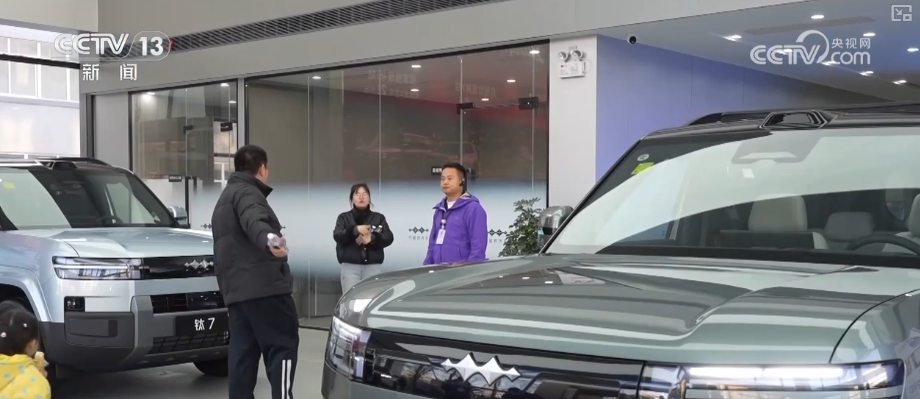
视频丨“新国补”政策落地 消费市场热力全开
Sou Hu Cai Jing· 2026-01-14 07:38
Group 1 - The core viewpoint of the articles highlights the positive impact of the new subsidy policies in China, particularly in Henan and Sichuan provinces, which have stimulated consumer spending in the automotive and electronics sectors [1][6][7] - The "National Subsidy" policy has shifted to a model where subsidies are calculated as a percentage of the new vehicle price, attracting consumer interest and leading to increased sales [2][6] - Various car manufacturers are offering additional promotions, such as tax rebates and extra subsidies for trade-ins, which complement the national policies and further boost market sales [2][6] Group 2 - In Sichuan, the new subsidy policy for home appliances and digital products has been implemented, allowing consumers to receive a 15% subsidy on eligible products, which has significantly increased market activity [7][13] - The focus of the subsidy policies is on promoting energy-efficient and smart products, with new categories like smart glasses and smartwatches appealing to younger consumers [9][13] - The implementation of these policies has not only benefited consumers but also encouraged retailers to upgrade their product offerings, enhancing the overall vitality of the consumer market [13]
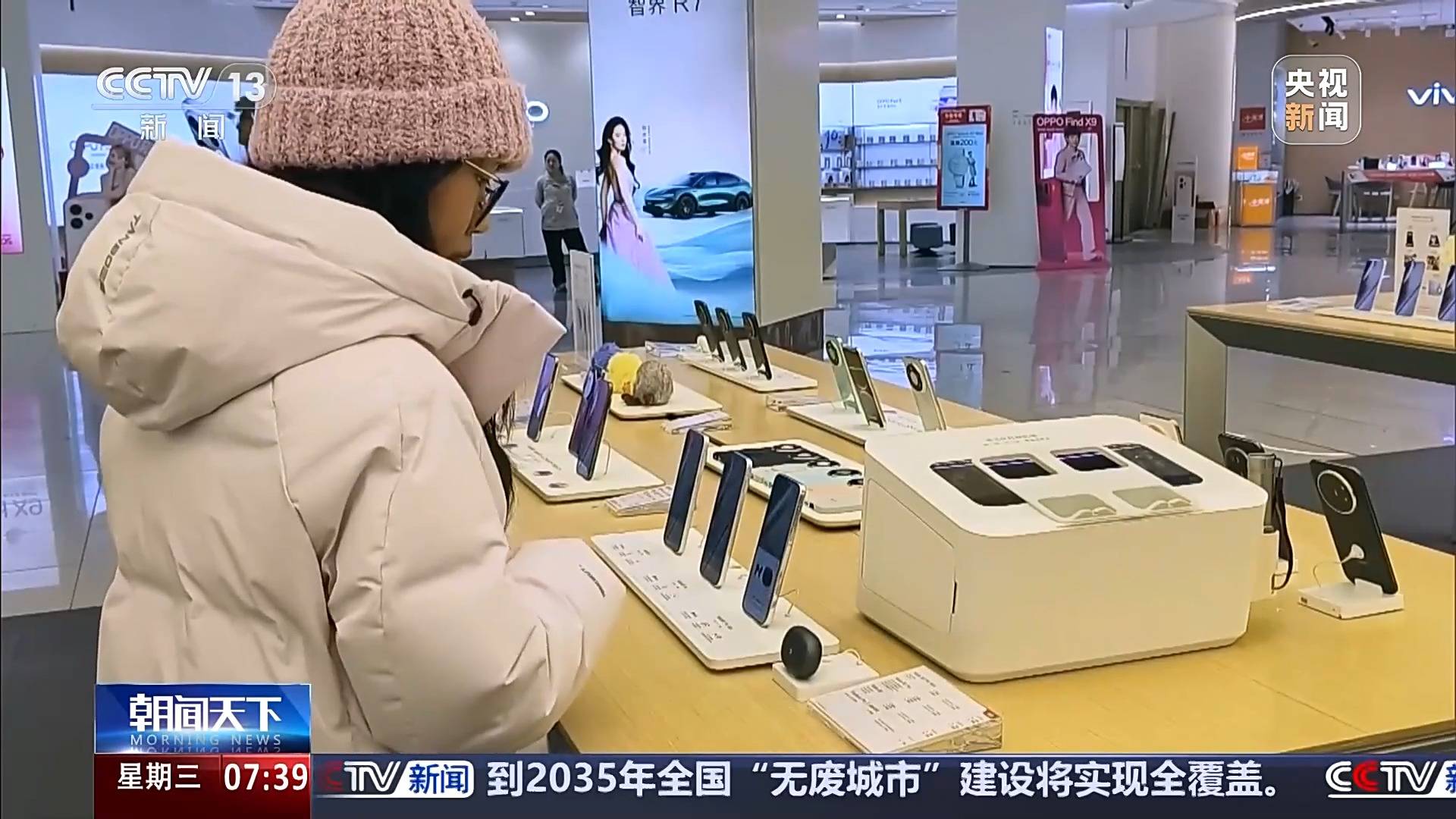
“真金白银”优惠礼包释放焕新消费热力 补贴品类向“智”向“新”激发年轻群体消费热潮
Yang Shi Wang· 2026-01-14 06:52
Group 1 - The core viewpoint of the articles highlights the positive impact of the new subsidy policies in China, particularly in Henan and Sichuan, which have stimulated consumer spending in the automotive and electronics sectors [1][8][22] - In Henan, the new national subsidy policy for vehicle trade-ins has led to increased consumer interest, with many taking advantage of the subsidies to purchase new cars [1][3] - Consumers in Henan reported significant savings, with one individual noting a total discount of over 40,000 yuan when combining national and manufacturer subsidies [3] Group 2 - Sichuan's new subsidy policy for home appliances and digital products has also been implemented, offering a 15% discount for consumers who trade in old products [8][11] - The policy has resulted in a surge in consumer activity, particularly in cities like Chengdu and Deyang, where many consumers are actively purchasing new appliances [14][20] - The focus on energy-efficient and smart products has led to a shift in consumer preferences, with younger demographics showing increased interest in new categories such as smart glasses and watches [17][22]