
光波导技术

Search documents
当AI眼镜走向规模化,「广纳四维」是如何重构光学赛道
3 6 Ke· 2026-01-30 09:06
Core Insights - The AI glasses market is experiencing significant growth, with CES 2026 showcasing a surge in demand and innovation, marking a shift from niche products to mainstream consumer electronics [1][2] - The global smart glasses market is projected to exceed 23.687 million units by 2026, indicating a pivotal moment for industry scalability [1] - Companies are facing challenges in product innovation and capacity expansion, as competition intensifies not only at the consumer level but also in core upstream technologies [1][4] Industry Trends - The integration of AI and AR technologies is a key trend driving the development of smart glasses, with optical waveguide devices being crucial for product performance [4][12] - The industry is witnessing a "arms race" in core technology capabilities, where only companies with self-designed, self-researched equipment and materials can maintain competitive advantages [4][5] - The demand for rapid response to market needs is critical, as traditional R&D cycles can hinder timely product launches [5][6] Company Highlights - Guangna Siwei, a leading supplier of optical waveguide devices, has rapidly expanded its production capacity to nearly one million units annually and aims to exceed one million units by 2026 [2][5] - The company has achieved a 61.4% global market share in waveguide devices, with significant revenue growth over a short period [5][9] - Guangna Siwei's IDM (Integrated Device Manufacturing) model allows for complete control over the design, manufacturing, and testing processes, enabling faster product iterations and cost efficiencies [9][10] Technological Innovations - Guangna Siwei has developed advanced technologies, such as the SEEVerse optical design software, which enhances computational efficiency and reduces sample delivery times to 68 hours [9][10] - The company has introduced innovative nanoprinting techniques that significantly lower production costs while maintaining high optical performance, making advanced AR technology more accessible to consumers [13][15] - The C25C nanoprinting single-layer full-color waveguide has set industry records for thickness and weight, achieving superior optical clarity and performance [15][20] Future Directions - The industry is moving towards full-color displays as a necessary condition for making AI glasses "Always On" devices, which will enhance user experience and information accessibility [12][17] - The exploration of SiC (Silicon Carbide) materials is seen as a potential game-changer for achieving high-performance AR displays, although challenges in cost and processing remain [17][19] - Guangna Siwei's early investments in SiC technology and partnerships have positioned it as a leader in the development of next-generation AR optical solutions [18][20]

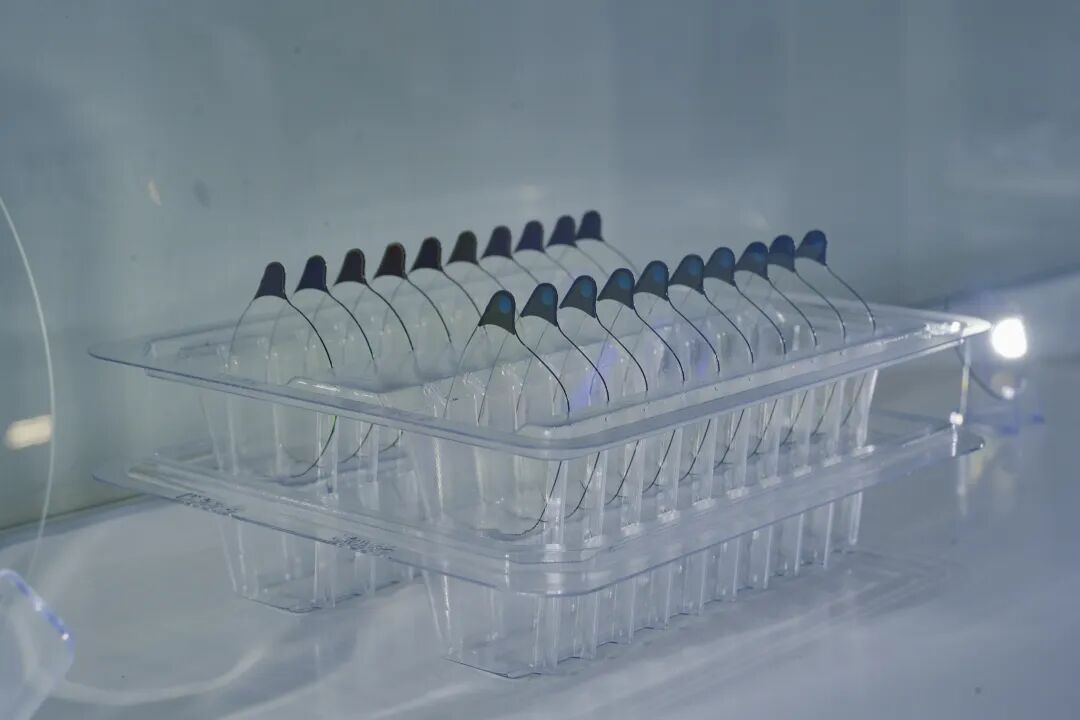
“百镜大战”渐入深水区——智能眼镜产业一线观察
Xin Hua Cai Jing· 2025-12-31 02:33
Market Overview - The smart glasses market is expected to transition from concept to reality in 2025, with competition intensifying in 2026 as multiple companies enter the "hundred glasses battle" [1] - Following the launch of Google Glass in 2013, the market has seen fluctuations, but recent advancements in AI have reignited interest in smart glasses [2] Key Players and Production Capacity - Meta and EssilorLuxottica have set market benchmarks with their products, Ray-Ban Meta and Meta Ray-Ban Display, with over 2 million units sold by February 2025 and plans to increase annual production capacity to 10 million units by the end of 2026 [2] - Domestic manufacturers like Rokid aim for a shipment target of 1 million units in 2025, supported by strategic partnerships for automation and production efficiency [2][3] - Companies like Luxshare Precision and Goertek are also expanding their presence in the smart glasses market, with Luxshare being the manufacturer of Quark AI glasses [3] Product Development and Features - Rokid is focusing on refining product details, including nose pad iterations and power optimization, to prepare for large-scale shipments [3] - Smart glasses are being integrated into various use cases, such as business communication and smart home applications, enhancing their practicality [4] - The market is witnessing a trend towards building offline retail channels to improve consumer experience and reduce return rates, which are a concern due to comfort and aesthetic factors [5][6] Technological Advancements - The competition is driving rapid technological advancements, particularly in optical technologies like waveguide technology and the use of silicon carbide materials for better product performance [7][8] - Waveguide technology is becoming the mainstream solution due to its advantages in size, weight, and image quality, with different manufacturers adopting various approaches [8] - Meta is leading in color display technology, with a roadmap for product iterations from monochrome to dual-color displays, while domestic brands are exploring similar advancements [8] Future Outlook - The smart glasses industry is at a critical juncture, evolving from "voice companions" to "augmented reality (AR) terminals," with major players like Google and Apple expected to launch new products by the end of 2026 [9] - The success of the "hundred glasses battle" will depend on balancing technology, cost, and user experience, as consumer demand and price sensitivity remain significant factors [9]
谷东科技曹炳辰:轻量化光波导技术是AR+AI头显的终极方案
2 1 Shi Ji Jing Ji Bao Dao· 2025-11-27 13:44
Core Insights - The article discusses the advancements in AR+AI glasses, highlighting the importance of lightweight optical waveguide technology as a key solution for the industry [1][2] - The industry is experiencing accelerated technological iterations, expanded market scale, and emerging ecological patterns, driven by breakthroughs in AI models and optical technologies [1] Group 1: Company Overview - Gu Dong Technology is positioned as a unique player in the industry, possessing comprehensive capabilities in array waveguide and holographic waveguide technology, along with full-chain coverage from optical materials to AI algorithms [2] - The company has successfully developed new optical materials for waveguide modules, breaking the long-standing monopoly of international giants like Covestro and Digilens [2] Group 2: Technological Advancements - The core hardware technology breakthroughs in AR+AI glasses are laying the foundation for industry growth, with ultra-thin waveguide lenses achieving mass production and thickness reduced to 0.7mm [2] - Gu Dong Technology has made significant advancements in addressing challenges such as outdoor brightness visibility, rainbow effect, and external light leakage, which are critical for the performance of AR+AI glasses [2][3] Group 3: Cost Control and Market Expansion - The company has achieved substantial cost reductions in optical waveguide production, with self-developed GDPA3 optical orientation dye costing only 1/10 of imported products, and production costs for single waveguides reduced by 60%-90% compared to imports [3] - Due to the explosive growth in the consumer market, Gu Dong Technology is expanding its production lines, with expectations to ship around 10,000 units of AR+AI glasses by the end of the year [3]

水晶光电(002273) - 2025年11月26日投资者关系活动记录表
2025-11-27 07:20
Group 1: Project Progress and Business Development - The "No. 1 Project" of the reflective waveguide golden line is currently in a critical phase, with key process optimization underway, exceeding initial expectations [2][3] - The coating filter business has entered stable mass production, with market share targets for 2025 expected to be met, and a growth phase starting in 2026 [2][4] - The company is accelerating infrastructure construction for the second phase of its factory in Taiwan to ensure capacity meets customer demand [2][4] Group 2: Technology Pathways in AR Glasses - Reflective and diffractive waveguide technologies are both essential for the AR glasses industry, with no absolute replacement relationship, but rather a collaborative advancement [3] - The company focuses on large-scale production breakthroughs in reflective waveguide technology while also developing diffractive waveguide holographic solutions [3] Group 3: Product Supply and Market Position - The company has completed a diverse product layout in the AR glasses sector, with various optical components in different stages of mass production [4] - The reflective waveguide golden line is currently in a critical construction phase, while other products have achieved batch supply to downstream manufacturers [4] Group 4: Future Business Growth Guidance - Key growth drivers include stable performance in the North American market for optical film panels and the transition of production lines to Vietnam [5][6] - The company aims to maintain its position as a primary supplier for micro-prism business and increase market share in coating filter products [5][6] - Engagement with multiple end customers in the AR optical field is ongoing, with positive market feedback on reflective waveguide solutions [6]

双十一智能眼镜选购指南:买光波导、拍摄还是音频?一文全说清
3 6 Ke· 2025-10-23 03:21
Core Insights - The annual Double Eleven e-commerce event is a significant opportunity for consumers to purchase digital products, particularly smart glasses, which have matured in functionality and technology [1][8] - Smart glasses are categorized into three main types: waveguide AI glasses, shooting glasses, and audio glasses, each catering to different consumer needs and budgets [9][16] Waveguide AI Glasses - Waveguide AI glasses, such as Rokid Glasses and StarV Air2, are positioned as high-end products with advanced features, including integrated cameras and enhanced interaction capabilities [3][5] - Rokid Glasses stand out for their complete input-output experience, allowing users to capture images with a simple framing interface [5][8] - Despite advancements, waveguide technology still faces challenges, including limited field of view, brightness inconsistencies, and high production costs, making them less accessible to average consumers [7][8] Shooting Glasses - Shooting glasses focus on the concept of "recording life" and are generally lighter and more affordable than waveguide glasses, with products like Thunder V3 and BleeqUp Range being notable options [9][11] - Thunder V3 is highlighted for its lightweight design and decent AI capabilities, while BleeqUp Range is tailored for sports enthusiasts with extended battery life and superior video stabilization [15][11] Audio Glasses - Audio glasses, such as those from Jiehuan and Mijia, are the most affordable option, integrating Bluetooth headset functionality and offering lightweight designs with long battery life [16][18] - These glasses serve as an entry point for consumers interested in smart eyewear, although they are seen as a compromise due to current technological limitations [18][20] Market Trends - The smart glasses market is evolving, with a clear distinction between high-end multifunctional devices and more accessible, specialized products [9][16] - The future of smart glasses is anticipated to shift towards more advanced models as technology improves, potentially leading to a market upgrade similar to the evolution seen in smartphones [18][20]
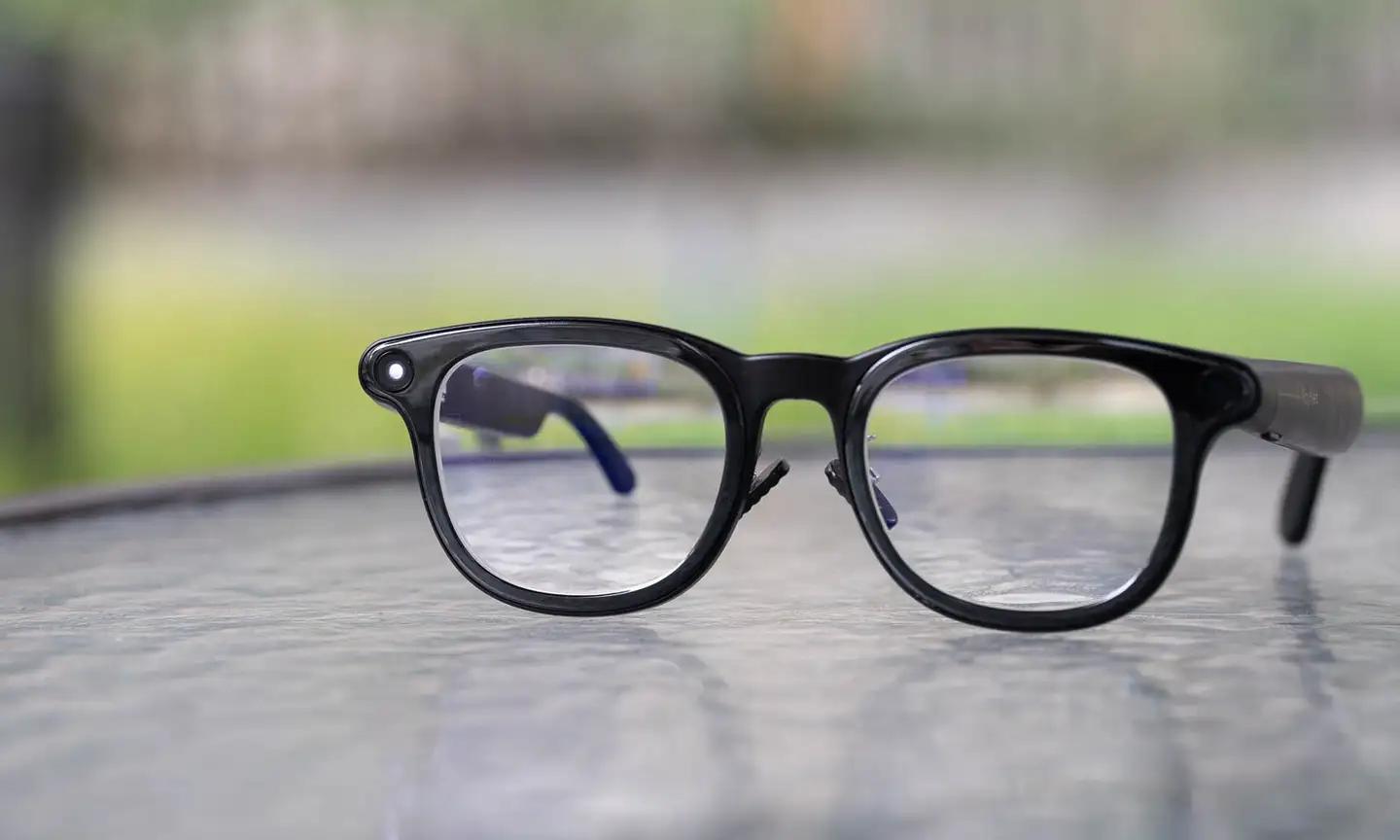
国泰海通|中小与股权研究:Rokid Glasses光波导智能眼镜正式开售
国泰海通证券研究· 2025-09-17 12:48
Core Viewpoint - Rokid Glasses, an all-functional AI smart glasses, will officially launch on September 1, 2025, with a price of 3,299 yuan, showcasing a unique integration of voice, photography, and display capabilities [2][3]. Product Overview - Rokid Glasses features a lightweight design of approximately 49 grams, utilizing a single optical machine with dual display technology and a diffraction waveguide solution, achieving a maximum brightness of 1500 nits for clear visibility outdoors [3]. - The device is powered by the Qualcomm AR1 chip and NXP RT600 dual-chip architecture, balancing high performance with low power consumption [3]. - It includes a 210 mAh battery, supporting various functionalities such as 6 hours of music playback, 4 hours of voice calls, 2 hours in always-on mode, and 30 minutes of intensive photography [3]. Design Philosophy - The glasses support voice control, real-time translation, and navigation prompts, with a dual-direction real-time translation feature that syncs with mobile screens, enhancing cross-language communication [2]. - Equipped with four-array microphones, it can achieve precise voice capture and positioning, distinguishing it from competitors [2]. Product Combination - Rokid Glasses stands out in the market due to its comprehensive functionality, combining voice, photography, and display capabilities, making it one of the most complete AI smart glasses available [2][3]. - The product's pre-sale performance is notable, with over 40,000 units sold within five days, indicating a strong consumer demand for display-enabled smart glasses [3]. Future Outlook - The adoption of waveguide technology has significantly improved the display quality and lightweight design, positioning Rokid Glasses as a leader in the industry [3]. - However, challenges remain in the AR glasses market, particularly regarding the high BOM costs associated with MicroLED and waveguide technologies, which can account for up to 50% of the total cost [4]. - Current diffraction waveguide technology still faces issues such as rainbow patterns and light leakage, limiting its application to basic functions like translation and notifications [4].

蓝思科技午前涨超7% 注册成立AR研究领域子公司 机构看好光波导技术引领AR产业升级
Zhi Tong Cai Jing· 2025-09-17 05:46
Group 1 - The core viewpoint of the article highlights the significant stock price increase of Lens Technology, which rose over 7% to HKD 27.78, with a trading volume of HKD 519 million [1] - Lens Technology has established a wholly-owned subsidiary, Lens Optoelectronics Technology (Changsha) Co., Ltd., focusing on optical instruments, virtual reality devices, display components, new optical materials, and eyewear manufacturing [1] - As a key module supplier for several leading AI eyewear clients and the assembler for Rokid devices, Lens Technology has achieved full-process coverage from optical lenses to functional modules and complete assembly, showcasing its technological advantages [1] Group 2 - According to a report by Industrial Securities, the projected sales of AR devices in China for 2024 is 180,000 units, while overseas sales are expected to reach 320,000 units, with global AR sales anticipated to grow by 30% to 650,000 units by 2025 [1] - The growth of AR eyewear is primarily driven by the consumer market's penetration, with advancements in waveguide and micro-display technologies expected to lead to lighter and more cost-effective AR glasses [1] - By 2027, global AR sales are forecasted to exceed 1.5 million units, indicating a robust growth trajectory for the AR eyewear market [1]

魔飞光电:预计2028-2030年,全球AR眼镜年出货量将达数千万
Tai Mei Ti A P P· 2025-09-12 07:09
Core Insights - The AI/AR glasses market is experiencing significant growth, with a projected shipment of 262,000 units in the first half of 2025 in China, representing a 73% year-on-year increase, and an expected total shipment of 900,000 units for the year, a 133% increase [2] - The market is expected to exceed 100 billion yuan in three years, driven by advancements in technology and cost reductions [2] Industry Trends - Light guide AR glasses are anticipated to become the dominant form due to their lightweight and integrated design, gradually replacing heavier models [3] - The BirdBath technology is positioned for the budget segment, while light guide technology is gaining traction among manufacturers, spurred by AI advancements [3] - Major suppliers like GoerTek and Lens Technology are increasing investments in the supply chain to support the growth of AR glasses [3] Market Opportunities - The global new display industry is projected to grow by 17% in 2024, reaching $219.8 billion, with China accounting for approximately half of this market at around $108 billion [3] - Morphotonics, a Dutch company specializing in large-area nanoimprint technology, has established a subsidiary in Suzhou, China, to enhance its local presence and focus on cost reduction, capacity increase, and rapid response [3] Technological Challenges - Current wafer-level technology faces challenges such as high costs and low production capacity, while roll-to-roll nanoimprint technology struggles with precision and yield [4] - The roll-to-plate nanoimprint technology combines advantages of both methods, offering higher production capacity while meeting precision requirements [4] Production Capacity - Morphotonics has commercialized products like the Portis series for small-scale production and the Aurora series for large-scale manufacturing, with plans to introduce a new device, 'Cypris', capable of producing 6 million light guides annually [4] - A recent production run achieved a yield of 93%, with a target of maintaining yields between 90%-95% for large-scale production [4] Future Projections - The global annual shipment of AR smart glasses is expected to reach tens of millions by 2028 to 2030, contingent on reducing production costs [5] - Initial price increases of 20%-40% may be acceptable, but long-term market acceptance will require further price reductions [5]
水晶光电(002273):光学龙头多维布局,光学升级与AR共筑成长新引擎
Caixin Securities· 2025-08-13 09:10
Investment Rating - The report maintains an "Accumulate" rating for the company [5] Core Views - The company has established a diversified business structure with five major segments: optical components, film optical panels, semiconductor optics, automotive electronics (AR+), and reflective materials, all showing good growth momentum [6][21] - In 2024, the company achieved a revenue of 6.278 billion yuan, a year-on-year increase of 23.67%, and a net profit attributable to shareholders of 1.030 billion yuan, up 71.57% year-on-year, marking a historical high [6][26] - The automotive electronics segment, particularly AR-HUD, is rapidly penetrating the mid-range market, with a projected shipment of over 300,000 units in 2024, maintaining a leading position in the domestic industry [6][36] Summary by Sections Financial Performance - The company reported a revenue of 6.278 billion yuan in 2024, with a compound annual growth rate of 18.14% from 2020 to 2024 [26] - The net profit attributable to shareholders reached 1.030 billion yuan in 2024, reflecting a significant increase in profitability [26][42] - In Q1 2025, the company achieved a revenue of 1.482 billion yuan, a year-on-year increase of 10.20% [28] Business Segments - **Optical Components**: In 2024, this segment generated 2.884 billion yuan, accounting for 45.94% of total revenue, with a gross margin of 36.31% [30] - **Film Optical Panels**: This segment achieved 2.472 billion yuan in revenue, representing 39.38% of total revenue, with a gross margin of 26.65% [34] - **Reflective Materials**: Revenue reached 394 million yuan, contributing 6.27% to total revenue, with a gross margin of 30.87% [35] - **Automotive Electronics (AR+)**: This segment generated 300 million yuan, accounting for 4.78% of total revenue, with a gross margin of 13.53% [36] - **Semiconductor Optics**: Revenue was 129 million yuan, contributing 2.06% to total revenue, with a gross margin of 40.29% [37] Strategic Developments - The company has focused on R&D innovation, with a total investment of 1.165 billion yuan from 2022 to 2024, maintaining an average R&D expense ratio of 7.49% [46] - The establishment of a central research institute in 2017 has driven the development of new products and technologies in optical components, automotive electronics, and AR/VR [46][47] - The company has built six production bases and is actively expanding its global market presence, enhancing its ability to serve overseas customers [47][50]
A股电声龙头大手笔 拟不超1亿美元间接投资微显示巨头Plessey
Zheng Quan Shi Bao Wang· 2025-08-08 11:20
Core Viewpoint - GoerTek announced a significant investment through its subsidiary Hong Kong GoerTech, providing up to $100 million in a secured loan to Haylo Labs Limited for the acquisition of Plessey Semiconductors Limited, aiming to advance Micro-LED technology and support AI smart glasses and AR business development [1][2] Group 1: Investment Details - The loan from Hong Kong GoerTech to Haylo has an annual interest rate of approximately 6.34%, with a five-year term and interest paid annually [2] - Haylo must sign a share transfer agreement with Plessey's original shareholders as a condition for using the loan funds [2] - In the event of Haylo or Plessey being acquired or going public, Hong Kong GoerTech will recover the loan principal and interest, plus 25% of the total acquisition value or market capitalization [2] Group 2: Plessey Overview - Plessey, established in 2000, is recognized in the Micro-LED sector and has developed a high-brightness Micro-LED display specifically for AR glasses [3] - Plessey's projected revenue for the fiscal year 2024 is $74.79 million, with a net profit of $12.41 million, and for fiscal year 2025, revenue is expected to be $72.72 million with a net profit of $2.80 million [3] - As of June 30, 2025, Plessey's total assets are estimated at $119 million, with shareholder equity of $2.33 million [3] Group 3: Financial Assessment - GoerTek believes Plessey's debt repayment capability is better than indicated by its balance sheet, with fair value of assets covering the loan amount [4] - Plessey is currently profitable and is expected to improve its financial performance as the global market for AI smart glasses and AR products grows rapidly [4] - GoerTek, a leader in the acoustic industry, has a strong presence in smart hardware sectors, including VR, MR, and AR, and anticipates a new wave of rapid development in AR products in the coming years [4]
