
新能源汽车普及

Search documents
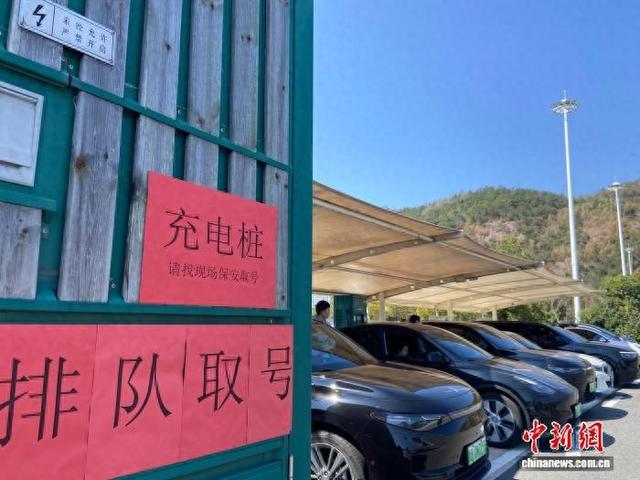
(新春走基层)述评:从排队加油到取号充电 春节自驾游变了什么?
Xin Lang Cai Jing· 2026-02-22 06:37
Core Viewpoint - The shift from fuel vehicles to electric vehicles (EVs) during the Spring Festival travel season reflects a significant transformation in China's transportation, energy, and automotive industries, highlighting the growing prominence of EVs as the main choice for self-driving trips [3][4]. Group 1: Changes in Travel Behavior - The transition from fuel vehicles to EVs has altered the travel experience, with charging times requiring drivers to slow down and engage more with their surroundings, such as dining and shopping at service areas [5]. - The once prevalent "fueling anxiety" among EV owners is gradually being alleviated due to the expansion of charging infrastructure, making long-distance travel more feasible and comfortable [4]. Group 2: Infrastructure Development - The National Energy Administration has announced plans to establish 71,500 charging stations across the country by the end of December 2025, covering over 98% of service areas and achieving "full coverage" in 19 provinces [4]. - The development of a dense charging network from highways to rural areas has transformed the perception of long-distance travel with EVs, allowing for a more relaxed travel experience [4]. Group 3: Market Dynamics - The increasing demand for EV charging during peak travel times indicates a shift from policy-driven adoption to market-driven normalization of electric mobility in everyday life [5]. - Future advancements in ultra-fast charging technology and battery swapping models are expected to further reduce waiting times for charging, enhancing the overall travel experience [5].

乱世的黄金,转型的铜与未来的“镍锂锡” 你的仓位该如何调频?
Xin Lang Cai Jing· 2026-01-28 02:16
Group 1 - The global market is experiencing significant changes with the U.S. officially withdrawing from the Paris Agreement, leading to a drop in the dollar index to a four-year low, which has reshaped asset allocations [1] - Gold prices have surged to historical highs due to increased risk aversion, while the U.S. stock market shows a divergence, with tech stocks supporting the S&P index at record levels, while the Dow Jones faces significant declines due to policy concerns [1] - The commodity market is experiencing a split, with precious metals soaring while most industrial metals are under pressure due to demand concerns [1] Group 2 - The upcoming focus for the market includes the Federal Reserve's first meeting of 2026 and earnings reports from major tech companies like Tesla and Apple, which will influence short-term market sentiment and capital flows [2] - The basic metals market is expected to show a pattern of strong precious metals and increasing divergence in industrial metals, with gold and silver likely to lead due to a weak dollar and risk aversion, while copper and tin will be influenced by demand outlook and macro policies [2] Group 3 - Investment strategies for metals should follow a framework of "short-term focus on decisions, mid-term structural opportunities, and long-term core themes" [3] - In the short term (1-3 days), caution is advised before the Federal Reserve decision, with potential buying opportunities in precious metals if dovish signals are indicated post-decision, while maintaining a watchful stance on aluminum and nickel [3] - For the mid-term (1-4 weeks), structural opportunities should be seized, particularly in gold, silver, copper, and tin, while avoiding weak supply-demand metals like aluminum and zinc [3] - Long-term (over 1 year) strategies should focus on key metals related to global energy transition and electric vehicle proliferation, including copper, nickel, lithium, and tin, while also incorporating gold for macro risk hedging [3]

新能源汽车销量占比过半,石油还重要吗?
Ren Min Ri Bao· 2026-01-28 00:05
Group 1 - The core viewpoint emphasizes that while the popularity of electric vehicles (EVs) is increasing, oil remains crucial due to its diverse applications beyond fuel, particularly in the chemical industry [1][2] - By 2030, the proportion of oil consumption for transportation fuels in China is expected to decrease from approximately 48% in 2025 to around 40%, indicating a shift in energy consumption patterns [1] - The current ownership of EVs in China is about 12%, suggesting that there is still a significant demand for oil from traditional fuel vehicles [1] Group 2 - Oil's role as a raw material is expected to strengthen, with its share in chemical feedstock consumption projected to rise from about 26% in 2025 to 36% by 2030, potentially exceeding 50% in the future [1] - Innovations in oil and gas supply capabilities are anticipated, with China's crude oil production expected to reach 216 million tons by 2025, marking a historical high [3] - The integration of technology, such as CCUS (Carbon Capture, Utilization, and Storage), is expected to enhance oil recovery rates and improve the sustainability of the oil industry [3]
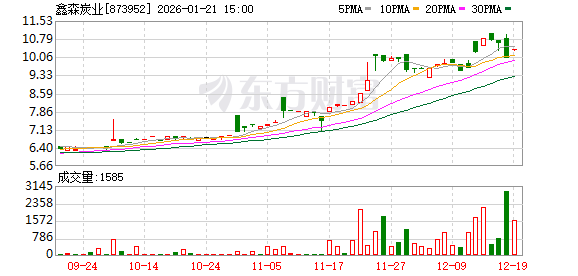
鑫森炭业冲刺北交所上市 对赌协议“沉睡”数年未解
Mei Ri Jing Ji Xin Wen· 2026-01-21 12:56
Core Viewpoint - Fujian Xinsen Carbon Industry Co., Ltd. has finally submitted its listing application to the Beijing Stock Exchange after 15 years of preparation, but faces scrutiny over its performance and a dormant gambling agreement with investors [2][3][4] Group 1: Company Overview - Xinsen Carbon focuses on the research, production, and sales of high-performance porous carbon materials, with functional activated carbon accounting for over 70% of its revenue during the reporting period [6] - The company reported revenues of 280 million, 269 million, 302 million, and 161 million yuan for the years 2022 to 2025, with net profits of 47.97 million, 31.21 million, 48.22 million, and 28.47 million yuan respectively [6] Group 2: Financial Performance - In 2023, the company's net profit decreased by 34.94% year-on-year, attributed to short-term factors in the downstream industry, including reduced income from solvent-based activated carbon and decreased procurement from major customers due to environmental policy changes [6][7] - Despite challenges, Xinsen Carbon's performance recovery post-2023 is notable, especially as many peers have reported continuous losses [6][7] Group 3: Market Challenges - The core product, automotive activated carbon, faces declining demand due to the shift towards electric vehicles, which do not require such components [7] - Regulatory inquiries have focused on the sustainability of the company's growth and its strategies to address the risks associated with the shrinking market for traditional automotive activated carbon [7] Group 4: Fundraising and Expansion Plans - Xinsen Carbon plans to raise 256 million yuan, with 214 million yuan allocated for a new production project that will significantly increase its capacity by over 70% [8] - The company has also proposed to use 42 million yuan for working capital, despite having over 100 million yuan in cash as of mid-2025, raising questions about the necessity of this funding [8] Group 5: Governance and Compliance Issues - The company has faced regulatory penalties for failing to disclose shareholding conditions and internal control deficiencies, leading to corrective measures and warnings issued to several executives [8]
得到3个承诺,卡尼放心了:中国比美国可靠!美国说加方必将后悔
Sou Hu Cai Jing· 2026-01-18 06:45
Group 1 - Canada will eliminate the 100% additional tariff on Chinese electric vehicles and replace it with an import quota system, allowing 49,000 Chinese electric vehicles to be subject to a 6.1% most-favored-nation tariff rate [1] - The decision is expected to enhance economic cooperation between Canada and China, benefiting both countries [1][3] - The Canadian government anticipates significant economic benefits from the return of canola oil exports to China, potentially generating billions of Canadian dollars in revenue for farmers [5] Group 2 - The entry of Chinese electric vehicles into Canada will provide consumers with more cost-effective options and accelerate the adoption of electric vehicles in the Canadian market [7] - The collaboration will also aid in the development of charging infrastructure and after-sales service networks in Canada, strengthening the electric vehicle industry chain [7] - China's electric vehicle companies will gain a crucial entry point into the North American market, facilitating their expansion [9] Group 3 - The cooperation signifies a strategic shift for Canada, showcasing its diplomatic independence and reducing reliance on the United States [7][10] - The U.S. response has been mixed, with former President Trump expressing dissatisfaction while acknowledging the potential benefits for Canada [10] - The introduction of Chinese electric vehicles may further challenge U.S. automakers in the Canadian market, which has already seen a decline in market share [10]

乘联分会崔东树:2025年1-10月中国新能源车占全球市场份额68%,出口与渗透率双领跑
Huan Qiu Wang· 2025-12-04 06:00
Group 1 - The core viewpoint of the articles highlights China's dominant position in the global new energy vehicle (NEV) market, contributing 68% of global sales in the first ten months of 2025, with a total of 17.36 million units sold, reflecting a 30% year-on-year growth [1][2] - In October 2025, global NEV sales reached 2.11 million units, showing a 17% year-on-year increase but a 3% month-on-month decline, with China's market share rising to 75% [1] - The overseas expansion of Chinese NEV manufacturers is notable, with October's overseas market sales share reaching 17.7%, up 3 percentage points from September, and a cumulative share of 13.8% for the first ten months of 2025, significantly higher than 8.7% in 2024 [1] Group 2 - The global penetration rate of NEVs is accelerating, projected to reach 25.2% by Q4 2025, with China achieving a remarkable 49% penetration rate in the same period [2] - In the global NEV market, China's contribution to the incremental growth is substantial, accounting for 68% of the global increase from January to October 2025, while Germany and the UK only contributed 5% and 4%, respectively [2] - The uneven regional development in NEV penetration is evident, with Norway leading at 76%, while the US and Japan lag significantly at 7% and 1.7%, respectively [2]

我省新能源汽车保有量首次突破50万辆
Hai Nan Ri Bao· 2025-11-12 01:24
Core Insights - The report highlights that from January to October, Hainan Province has promoted the application of over 104,000 new energy vehicles, marking a year-on-year growth of 13.76% [1] - The new energy vehicle market in Hainan has entered a "popularization" phase, with the total number of new energy vehicles surpassing 500,000 by the end of October, accounting for 22.64% of the total vehicle ownership, ranking second among provincial regions in the country [1] - Since the start of the 14th Five-Year Plan, Hainan has initiated several new projects in the new energy vehicle industry, including the Hainan Remote New Energy Commercial Vehicle Project, which is set to be completed and put into operation in 2024 [1] Industry Development - The new energy vehicle industry in Hainan is gradually expanding, with projects such as high-end medical specialty vehicles currently undergoing completion and product qualification application stages [1]
海南新能源汽车快速普及:10月新车渗透率达67.14%
Zhong Guo Xin Wen Wang· 2025-11-10 12:59
Core Insights - The penetration rate of new energy vehicles (NEVs) in Hainan reached 67.14% in October, indicating strong adoption in the region [1] - Hainan aims to phase out fuel vehicles by 2030, and the province has seen significant growth in NEV promotion, with over 104,000 units sold from January to October, a year-on-year increase of 13.76% [1] - As of the end of October, Hainan's NEV ownership surpassed 500,000, accounting for 22.64% of the total vehicle ownership, ranking second among provincial regions in China [1] Infrastructure Development - Hainan is building a comprehensive charging and battery swapping infrastructure network to support NEV adoption [2] - As of September, all 45 highway service areas in Hainan have been equipped with charging facilities, meeting the charging needs for self-driving trips around the island [2] - The province has installed a total of 21,850 charging piles and 4,815 centralized charging stations, with a NEV to charging pile ratio of 2.12:1, which is better than the national average [2] Industry Initiatives - Hainan is leveraging tax exemption policies for domestic sales to strengthen its NEV industry layout [2] - During the 14th Five-Year Plan period, Hainan plans to launch several NEV industrial projects, including those for new energy commercial vehicles, recreational vehicles, and high-end medical specialty vehicles [2]
油价跌了,三桶油却各有各的难处
Sou Hu Cai Jing· 2025-11-09 22:42
Core Viewpoint - The domestic oil giants, referred to as the "Three Oil Companies" (China National Petroleum Corporation, Sinopec, and CNOOC), are facing profit pressures due to fluctuating international oil prices, but they are responding to transformation and change in different ways [1][4]. Group 1: International Oil Price Trends - International oil prices have generally declined, with Brent crude oil averaging $70.93 per barrel, down 14.3% year-on-year, and West Texas Intermediate crude oil down 14.1% [3]. - The drop in oil prices has significantly impacted corporate profits, akin to an invisible constraint on their earnings [3]. Group 2: Financial Performance of the "Three Oil Companies" - China National Petroleum Corporation reported a profit of 126.29 billion yuan, a year-on-year decline of 4.9% [4]. - Sinopec's profit was 29.98 billion yuan, marking the most significant decline among the three [4]. - CNOOC's performance was relatively stable, with a profit of 101.97 billion yuan, down 12.6% year-on-year [4]. Group 3: Net Profit Margin Differences - CNOOC boasts a net profit margin of 32.63%, significantly higher than China National Petroleum's 5.82% and Sinopec's 1.42% [6]. - The differences in profit margins are attributed to each company's unique business structure, which influences their risk resilience [6]. Group 4: Business Models and Challenges - CNOOC focuses on upstream exploration and production, with oil and gas sales accounting for over 80% of its total revenue, allowing it to maintain high profit margins despite price fluctuations [8]. - In contrast, China National Petroleum and Sinopec have a full industry chain layout, facing challenges from refining profitability and chemical sector pressures due to market demand and oversupply [8]. - Sinopec's chemical sector reported a loss of 7.43 billion yuan in the first three quarters, exceeding last year's losses, while China National Petroleum's chemical profits were nearly halved [8]. Group 5: Future Outlook and Strategies - Despite challenges, Sinopec remains optimistic about the chemical industry's recovery, anticipating market balance as the economy stabilizes and outdated capacities are eliminated [9]. - Both China National Petroleum and Sinopec are pursuing transformations towards higher-end refining and chemical production, which will require time and investment [9]. - The sales of refined oil products have also declined, with China National Petroleum's gasoline sales down 3.1% and Sinopec's domestic refined oil sales down 3.6% year-on-year, influenced by the rise of electric vehicles [9]. - CNOOC is utilizing futures and derivatives trading for hedging to stabilize earnings and mitigate risks from price volatility [10]. Group 6: Industry Challenges and Opportunities - The performance of the "Three Oil Companies" reflects the broader challenges and opportunities facing the oil industry amid energy transition [11]. - Traditional oil companies must actively seek new growth points to remain competitive in a rapidly changing market [11].



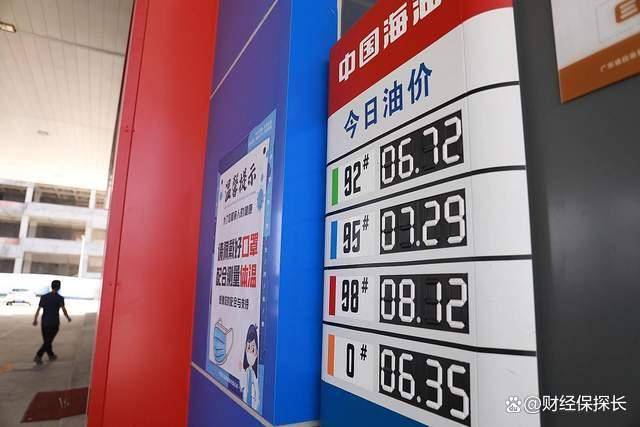
对话比亚迪刘学亮:中国车企出海没有从零开始的机会
Feng Huang Wang· 2025-10-30 07:03
Core Insights - BYD has demonstrated the strength of Chinese brands by achieving success in both affluent and underdeveloped markets, proving that electric vehicle (EV) adoption is a global trend [8][6]. Group 1: Market Entry and Strategy - BYD's entry into the Japanese market was surprising to many, but the company has been preparing for this move for 20 years, establishing a presence in Tokyo as early as 2001 [2][3]. - The company has not set specific sales targets in Japan, focusing instead on building a dealer network, with a goal of 100 dealerships by 2025 [3]. - BYD's approach in Japan includes adapting vehicles to local needs, such as lowering vehicle height to fit parking regulations and adding safety features to prevent child lock-ins [3]. Group 2: Performance and Recognition - In Japan, BYD has sold 7,123 vehicles over three years, which, while modest compared to domestic sales, represents a significant acceptance by Japanese consumers [2]. - The company has achieved a ten-year zero-failure record with its electric buses in Japan, showcasing reliability and quality [3]. Group 3: Regional Impact and Expansion - In Thailand, BYD has created a phenomenon where consumers are queuing overnight to purchase vehicles, disrupting the long-standing dominance of Japanese brands in the region [5]. - BYD plans to establish a comprehensive presence across all 77 provinces in Thailand within six months, ensuring accessibility and service availability [5]. Group 4: Global Market Position - BYD has become the top-selling EV brand in both Singapore, one of the wealthiest countries, and Nepal, one of the least developed, highlighting its versatile appeal [6][8]. - The company emphasizes that achieving the number one position in any market elevates the focus on EV adoption in that region, contributing to environmental improvements [6][9]. Group 5: Brand Development and Future Outlook - Brand building is viewed as a long-term endeavor, with BYD acknowledging that it is still in the early stages compared to established Japanese brands [7]. - The company is committed to its lithium iron phosphate battery technology, prioritizing safety as a fundamental aspect of its product offerings [7].
