硅光子学

Search documents
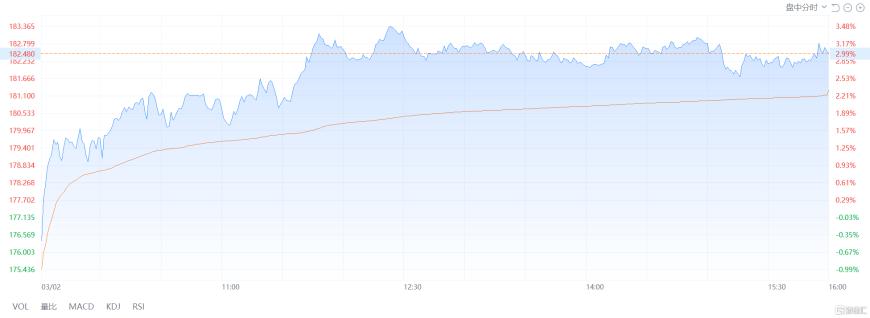
40亿砸向光学!英伟达为AI按下“光速键”
Ge Long Hui· 2026-03-03 04:04
AI芯片巨头英伟达周一宣布大手笔投资,向两家光学技术公司Coherent和Lumentum各投20亿美元,总计40亿美元,继续加 码AI基础设施。 英伟达CEO黄仁勋表示:"借助Coherent的技术,英伟达正在开创下一代硅光子学,以更大规模、更快速度、更高能效实现 AI基础设施。"他还称,与Lumentum携手推进全球最先进的硅光子技术,目标是"构建下一代千兆瓦级AI工厂"。 随着AI模型规模持续扩大,芯片间的数据传输逐渐成为算力瓶颈。传统铜线互联已逼近物理极限,而以硅光子为核心的光 互连技术,可实现更高带宽、更低时延与更低功耗,成为下一代算力架构的关键方向。 英伟达指出,光互连和先进的封装集成是下一代人工智能基础设施的基础,能够为人工智能工厂带来超高带宽、高能效的 连接。此次合作充分利用了英伟达在AI、加速计算和网络领域的领先地位,以及两家公司在光技术创新和先进制造方面的 专长。 英伟达CEO黄仁勋表示:"计算方式已经发生了根本性的变化。在人工智能时代,软件运行依赖于人工智能,而人工智能工 厂会针对每一次交互和每一个场景实时生成令牌,借助Coherent的技术,我们正在开创下一代硅光子学,以前所未有的规 ...


硅光,大爆发
半导体行业观察· 2026-02-10 01:14
Core Viewpoint - Silicon photonics technology is transforming data centers, with significant changes expected in the future, particularly in the transition from copper cables to fiber optics for both scale-out and scale-up networking [2][4]. Group 1: Market Growth and Projections - The fiber optic device market has grown from several billion dollars in 2003 to approximately $13 billion in 2023, with projections to reach $25 billion by 2030, driven primarily by the development of AI networks [4]. - Coherent's investor report predicts that the market for pluggable optical devices will grow from $6 billion in 2023 to $25 billion by 2030, with data rates primarily at 1.6T and 3.2T [16]. - The silicon photonics wafer foundry revenue is expected to grow eightfold from 2026 to 2032, with horizontal scaling currently being the main driver [35]. Group 2: Technological Advancements - Silicon photonics integrates disparate photonic devices into improved CMOS processes, enabling higher bandwidth and lower power consumption compared to traditional copper cables [10][16]. - The transition from copper to fiber optics is facilitated by pluggable optical transceivers, which connect to electrical interfaces on switches or servers, allowing for high-speed data transmission [16]. - Co-packaged optics (CPO) are emerging as a more efficient alternative to pluggable optical devices, offering higher density and lower power consumption [21]. Group 3: Key Players and Innovations - Major players in the silicon photonics foundry market include GlobalFoundries, Tower Semiconductor, and TSMC, with TSMC expected to become the leading foundry due to its extensive capabilities in AI accelerator production [28][37]. - Companies like Nvidia and Broadcom are set to launch Ethernet switches using co-packaged optical devices by 2025, indicating a shift in market dynamics [21]. - Startups such as iPronics, nEye, and Salience are developing compact silicon photonics technologies for optical circuit switching systems, which may offer more economical and reliable solutions [20]. Group 4: Challenges and Future Directions - Signal loss remains a significant challenge in silicon photonics, necessitating precise control over signal integrity during design [45]. - The integration of silicon photonics with CMOS technology is still in its early stages, but advancements are expected to bring more structure and foundational knowledge to the field [39]. - The industry is likely to see a transformation in manufacturing structures, with TSMC poised to leverage its experience in AI accelerator manufacturing to become a dominant player in silicon photonics [53].


比尔盖茨押注硅光突破:旗下Neurophos首款光子芯片性能达英伟达AI超算十倍
Sou Hu Cai Jing· 2026-01-27 10:18
Core Insights - Neurophos, an AI chip startup backed by the Gates Frontier Fund, has made significant advancements in silicon photonics, developing an optical processing unit (OPU) that is approximately 10,000 times smaller than existing technologies and capable of a 1000×1000 pixel scale photonic computing matrix on a single chip [1] Group 1: Technology Advancements - The first optical accelerator, Tulkas T100, achieves AI computing performance that is ten times greater than NVIDIA's latest Vera Rubin NVL72 supercomputer at FP4/INT4 precision, while maintaining similar power consumption levels [3] - Key technologies contributing to this performance include a 1000×1000 photonic tile, which significantly exceeds the mainstream GPU matrix size of 256×256, and a clock frequency of 56 GHz, which is much higher than the 9.1 GHz of Intel's Core i9-14900KF and 2.6 GHz of NVIDIA's RTX Pro 6000 GPU [3] Group 2: Manufacturing and Future Prospects - The CEO of Neurophos, Patrick Bowen, stated that traditional optical transistors produced in silicon photonic factories are about 2 millimeters long, making high-density integration challenging. Their technology miniaturizes optical transistors to a scale compatible with CMOS processes, enabling large-scale parallel optical computing [3] - The Tulkas T100 chip contains only one "optical tensor core" with an area of approximately 25 square millimeters, significantly fewer than the 576 digital tensor cores integrated into NVIDIA's Vera Rubin chip, yet achieves higher effective throughput through greater matrix dimensions and clock frequency [3] - Despite these advancements, Neurophos acknowledges that the technology is still in the engineering validation stage, with mass production not expected before 2028, and several challenges remain, including on-chip SRAM capacity, vector processing unit expansion, and optoelectronic co-design [4]
盖茨押注硅光突破:旗下Neurophos首款光子芯片性能达英伟达AI超算十倍
Huan Qiu Wang Zi Xun· 2026-01-27 09:02
Core Insights - Neurophos, an AI chip startup backed by the Gates Frontier Fund, has achieved a significant breakthrough in silicon photonics with its optical processing unit (OPU), which is approximately 10,000 times smaller than existing technologies and features a 1000×1000 pixel scale photonic computing matrix on a single chip [1][3] Group 1: Technology Advancements - The first optical accelerator, Tulkas T100, boasts AI computing performance that is ten times that of NVIDIA's latest Vera Rubin NVL72 supercomputer at FP4/INT4 precision, while maintaining similar power consumption levels [3] - Key technological advancements include a 1000×1000 photonic tile, significantly larger than the current GPU standard of 256×256, and a clock frequency of 56 GHz, which is much higher than the 9.1 GHz of Intel's Core i9-14900KF and 2.6 GHz of NVIDIA's RTX Pro 6000 GPU [3] Group 2: Production and Challenges - The CEO of Neurophos stated that traditional silicon photonic transistors are about 2 millimeters long, making high-density integration difficult, but their technology miniaturizes these transistors to a scale compatible with CMOS processes, enabling large-scale parallel optical computing [3] - Despite the advancements, the technology is still in the engineering validation stage, with mass production not expected before 2028, and several challenges remain, including on-chip SRAM capacity, vector processing unit expansion, and optoelectronic co-design [4]
光芯片,一些看法
3 6 Ke· 2026-01-07 03:36
Group 1 - The rapid development of generative artificial intelligence has accelerated the deployment of large-scale AI clusters globally, leading to a significant energy crisis due to increased energy consumption associated with data processing and transmission [1] - The only effective way to address the energy issue is to develop technologies that decouple energy growth from data growth [1] Group 2 - Photonics has immense potential as it allows for scalable functionalities without increasing energy consumption, with silicon photonics having developed into a nearly ideal platform over the past two decades [3] - Silicon photonics can provide efficient high-density interconnects, low-energy optical switching, and optical neural networks that can accelerate AI computations [3] Group 3 - The energy efficiency of optical transceivers has kept pace with Moore's Law, achieving over 5 pJ/bit, while the scalability of switch ASICs has lagged behind [4] - ASIC switch power consumption increases with throughput, exceeding 1000W at 100Tbps, whereas optical switches maintain low and stable power consumption [6] Group 4 - Optical switches cannot directly replace ASIC switches due to their inability to process data packets, requiring a complete system redesign and optimization [8] - Google is currently the only company capable of implementing optical circuit switches (OCS) at scale in its data centers and AI infrastructure [8] Group 5 - The AIST has developed a large-scale silicon photonic switch that offers 32 x 32 non-blocking connections and can be expanded to 131,072 x 131,072 connections, demonstrating a 75% reduction in network power consumption [9] Group 6 - Silicon photonic devices, based on standard CMOS technology, are crucial for photonic neural networks (PNN), which can perform matrix-vector multiplications at high speed without energy consumption [12] - PNNs can alleviate the computational load on high-energy digital processors like GPUs, although they currently lack effective nonlinear activation functions [12] Group 7 - Several AI models based on electro-optic nonlinearity have been proposed, demonstrating effective classification capabilities using silicon photonic chips [13] - The proposed models ensure low power and low latency computation by utilizing passive photonic circuits for signal propagation [13] Group 8 - The architecture of the proposed models allows for associative memory effects, enabling the recall of stored patterns even with partially damaged input [18] - The concept of a streaming PNN is introduced, which optimally operates with both electrical and optical I/O [20] Group 9 - Significant advancements in silicon photonic technology have the potential to enhance the sustainability of AI infrastructure through high-density I/O, bandwidth-independent circuit switching, and optical speed AI accelerators [21] - Integrating photonic functional devices into traditional digital infrastructure presents challenges that require further research into overall system design and implementation [21]

CPO,过热了?
半导体行业观察· 2025-12-25 01:32
Core Viewpoint - The article discusses the current state and future potential of Co-Packaged Optics (CPO) technology in the AI infrastructure landscape, emphasizing that while CPO is seen as a next-generation technology, its widespread adoption is not imminent due to existing technological limitations and market dynamics [1][24]. Group 1: Current Industry Sentiment on CPO - Broadcom's CEO Hock Tan stated that silicon photonics will not play a significant role in data centers in the short term, indicating that CPO is not a leapfrog technology but rather a last resort when existing technologies reach their limits [1][24]. - Major industry players, including Arista, Credo, Marvell, and Lumentum, echoed similar sentiments at the Barclays Global Technology Conference, suggesting a cautious approach towards CPO adoption [1][24]. Group 2: Shift in Industry Focus - The AI industry has shifted its focus from merely increasing computing power to addressing interconnectivity and system-level architecture, as the bottleneck has moved from computational capacity to interconnect capabilities [3][4]. - Companies are now prioritizing terms like Scale-Out, Scale-Up, and Scale-Across, indicating a deeper understanding of the infrastructure bottlenecks in AI [4]. Group 3: Horizontal and Vertical Scaling - Horizontal scaling (Scale-Out) is currently dominated by pluggable optics, with CPO technology not yet widely adopted due to the existing 800G and 1.6T technologies still being the main focus [7][8]. - Vertical scaling (Scale-Up) was initially seen as a promising application for CPO, but its timeline has been pushed back, with large-scale deployment expected around 2027-2028 [9][10]. Group 4: Challenges Facing CPO - CPO faces significant challenges, including higher costs, reliability issues, and power consumption concerns, which have delayed its mass production [18][24]. - The complexity of system design and the need for a mature supply chain are also major obstacles to the widespread adoption of CPO technology [19][24]. Group 5: Alternative Solutions - Transition solutions like LPO, AEC, and ALC are increasingly being recognized as viable alternatives to CPO, with many companies focusing on these technologies to meet current demands [15][25]. - LPO technology has already seen large-scale deployment, providing cost and power advantages, while AEC and ALC are being developed to offer reliability similar to copper cables with the bandwidth of optical solutions [15][25]. Group 6: Future Outlook - Industry predictions suggest that CPO will begin to see deployment in specific high-density systems around 2028, but the current focus remains on optimizing existing technologies [26][27]. - The industry consensus is that CPO will not be the immediate solution until existing technologies reach their limits in terms of power, density, and reliability [27].




“中国激光雷达公司,落后了!”
半导体行业观察· 2025-12-23 01:18
Core Viewpoint - The article discusses the declining reputation of LiDAR sensors in the automotive industry and explores the potential for Western LiDAR companies, particularly Voyant Photonics, to innovate with new technologies like FMCW LiDAR based on silicon photonics [1][4]. Group 1: Industry Trends - The investment boom in the LiDAR sector was driven by the autonomous vehicle craze, leading to the rise of SPACs [2]. - Chinese LiDAR suppliers, such as Hesai and RoboSense, have gained significant momentum, capturing 93% of the passenger vehicle market and 89% of the overall LiDAR market [4]. - The attempts of Western companies to penetrate the Chinese market have largely failed, as the market is considered inaccessible [4]. Group 2: Technological Innovations - FMCW LiDAR is viewed as superior to traditional ToF LiDAR due to its ability to directly measure speed, better sunlight interference resistance, and higher distance resolution [10]. - Voyant Photonics aims to leverage silicon photonics technology to create compact and affordable LiDAR sensors for various applications beyond automotive [7][10]. - The company has developed six generations of silicon photonic technology and plans to release its Carbon series FMCW LiDAR products in 2025, which will feature advanced capabilities [12]. Group 3: Competitive Landscape - There are 15 to 20 companies developing silicon photonic FMCW LiDAR, with American firms being particularly active [14]. - SiLC Technologies stands out among competitors for its maturity in FMCW development, while Voyant focuses on integrated beam control to eliminate complex mechanical components [15]. - The potential for Voyant to enter the automotive market remains uncertain, with suggestions that it could sell packaged photonic chips to existing LiDAR manufacturers [16].

三星大举杀入硅光赛道
半导体行业观察· 2025-12-03 00:44
Core Viewpoint - Samsung is heavily investing in silicon photonics technology to disrupt the AI chip foundry landscape and challenge TSMC by enhancing data transmission speeds using light [1][2][3]. Group 1: Technology Overview - Silicon photonics is seen as a disruptive technology for the future AI semiconductor market, utilizing light for information transmission, which offers advantages such as higher speed, lower heat generation, and reduced energy consumption [1][2]. - The technology combines silicon, a primary semiconductor material, with photonics, allowing for faster and more efficient data transmission by using light instead of electrical signals [3][4]. - The capacity for data transmission is expected to increase from gigabytes (GB) to terabytes (TB), with speed improvements exceeding 1000 times [3]. Group 2: Market Dynamics - Major semiconductor companies like NVIDIA, AMD, and Intel are shifting towards silicon photonics to meet the growing demand for rapid data processing in AI applications [2][3]. - The silicon photonics market is projected to grow to $10.3 billion (approximately 15 trillion KRW) by 2030, indicating significant market potential [2]. - TSMC is currently the leader in the Co-Packaged Optics (CPO) market, with NVIDIA actively developing silicon photonics technology [6][7]. Group 3: Samsung's Strategy - Samsung has identified silicon photonics as a key technology to attract more large foundry customers and to compete effectively against TSMC in advanced packaging markets [7]. - The company is expanding its global R&D network, particularly in Singapore, to enhance its capabilities in silicon photonics [6][7]. - Samsung plans to commercialize CPO technology by 2027, with competition against TSMC expected to intensify from that point onward [7].

格罗方德宣布:已完成收购!
国芯网· 2025-11-18 04:50
Core Viewpoint - GlobalFoundries has acquired Advanced Micro Foundry (AMF), a Singapore-based chip manufacturer specializing in silicon photonics, a rapidly growing field relevant to AI data centers and quantum computers [1][3]. Group 1: Acquisition Details - The financial details of the acquisition have not been disclosed by GlobalFoundries [1]. - The acquisition is expected to position GlobalFoundries as the largest manufacturer of silicon photonic devices globally [3]. Group 2: Technology and Market Implications - Silicon photonics technology integrates traditional computing chip technology with optical network technology that uses light pulses for data transmission [3]. - Companies like NVIDIA are collaborating with TSMC to package network chips with optical connections, indicating a trend towards advanced data transmission technologies [3]. - Several well-funded Silicon Valley startups, including Ayar Labs, Celestial AI, and Lightmatter, are focusing on optical interconnect technology, with some choosing GlobalFoundries as their chip manufacturer [3]. Group 3: Future Developments - GlobalFoundries plans to establish a new R&D center in Singapore following the acquisition of AMF [3]. - The CEO of GlobalFoundries, Tim Breen, emphasized the importance of high-speed, precise, and energy-efficient data transmission for AI data centers and advanced telecom networks [3].

Tower半导体,市值翻番
半导体芯闻· 2025-11-11 10:17
Core Viewpoint - Tower Semiconductor, a chip manufacturer that nearly sold for $5 billion to Intel two years ago, has seen its market value double to $10 billion, indicating strong performance and growth potential in the semiconductor industry [2][3]. Financial Performance - Tower Semiconductor reported a strong Q3 performance with revenue of $396 million, a 6% increase from the previous quarter, and a net profit of $54 million, equating to $0.48 per share, both exceeding market expectations [3]. - The company generated $139 million in cash flow from operations during the same quarter [3]. Future Outlook - Tower Semiconductor plans to invest $300 million to expand production capacity across four global manufacturing facilities, including one in Israel, to increase the output of next-generation analog chips that support AI applications [2]. - The company anticipates reaching a record revenue of $440 million by Q4 2025, driven by a 14% compound annual growth rate, projecting annual revenue of $1.5 billion by the end of 2025 [3]. Market Reaction - On November 10, Tower Semiconductor's stock surged by 16.69% to $98.10, marking the highest price since 2004, with a year-to-date increase of 90.45% [3].