补贴政策

Search documents
1月中国智能手机销量排名:华为/苹果/OPPO前三
Ju Chao Zi Xun· 2026-02-13 08:10
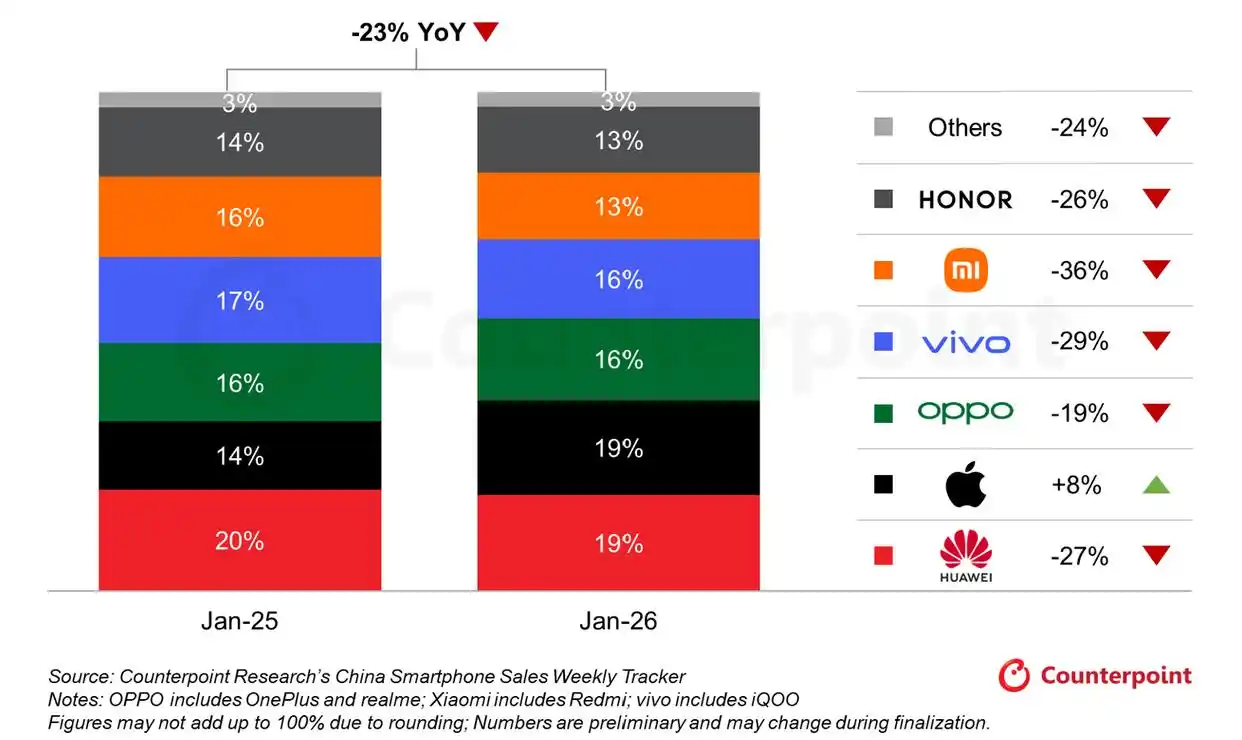
Core Insights - The overall smartphone market in China is projected to decline by 23% year-on-year in January 2026, primarily due to the high base effect from subsidy policies in early 2025, reduced subsidy intensity in 2026, and the impact of the Lunar New Year on consumer spending [1][3] Group 1: Market Performance - Huawei leads the market with a 19% share but faces a 27% year-on-year decline in sales, influenced by high base effects and underperformance of the Nova series [1] - Apple is the only major brand to achieve growth, with an 8% increase in sales and market share reaching its highest level in nearly five years, driven by the popularity of the iPhone 17 series [3] - Other domestic brands experienced significant declines: Xiaomi (including Redmi) down 36%, vivo (including iQOO) down 29%, OPPO (including OnePlus and realme) down 19%, and Honor down 26% [3] Group 2: Market Dynamics - The decline in sales for many brands is attributed to the "overdraft effect" of the subsidy policy from early 2025, which pulled forward demand due to the timing of the Lunar New Year promotions [3] - Despite the January market slump, there is an optimistic forecast for February, as seasonal consumption during the Lunar New Year is expected to boost sales, providing a critical window for inventory clearance and performance improvement for manufacturers [3]


刚刚,利好来了!国家最新发布
中国基金报· 2025-12-31 07:13
一、明确享受补贴品类、范围和标准 2026年1月1日起,按照全国统一的品类和标准,对个人消费者购买1级能效或水效标准的冰 箱、洗衣机、电视、空调、热水器、电脑6类家电产品,以及单件销售价格不超过6000元的 手机、平板、智能手表(手环)、智能眼镜4类数码和智能产品给予补贴。补贴标准为上述产 品扣除各环节优惠后最终销售价格的15%,每人每类可补贴1件,其中,家电产品每件补贴不 超过1500元,数码和智能产品每件补贴不超过500元。 来源:商务部网站、央视新闻客户端 商务部等部门12月31日发布关于做好2026年家电以旧换新、数码和智能产品购新补贴工作的 通知。 通知明确,2026年1月1日起,按照全国统一的品类和标准,对个人消费者购买1级能效或水 效标准的 冰箱、洗衣机、电视、空调、热水器、电脑 6类家电产品,以及单件销售价格不超 过6000元的 手机、平板、智能手表(手环)、智能眼镜 4类数码和智能产品给予补贴。 补 贴标准为上述产品扣除各环节优惠后 最终销售价格的15% ,每人每类可补贴1件,其中,家 电产品每件补贴 不超过1500元 ,数码和智能产品每件补贴 不超过500元 。 全文如下: 商务部等5部门 ...

商务部等5部门:2026年家电产品每件补贴不超过1500元 数码和智能产品每件补贴不超过500元
智通财经网· 2025-12-31 04:36
智通财经APP获悉,12月31日,商务部等5部门办公厅(室)印发关于做好2026年家电以旧换新、数码 和智能产品购新补贴工作的通知。2026年1月1日起,按照全国统一的品类和标准,对个人消费者购买1 级能效或水效标准的冰箱、洗衣机、电视、空调、热水器、电脑6类家电产品,以及单件销售价格不超 过6000元的手机、平板、智能手表(手环)、智能眼镜4类数码和智能产品给予补贴。补贴标准为上述 产品扣除各环节优惠后最终销售价格的15%,每人每类可补贴1件,其中,家电产品每件补贴不超过 1500元,数码和智能产品每件补贴不超过500元。 通知提出,各地要科学制定补贴资金使用及兑付计划,按月均衡使用,并做好月内每周和跨月、跨季度 之间的平稳衔接。在省级层面加强统筹,对经营主体申请参与补贴政策、资金兑付等具体事项,提出统 一明确的材料清单、申请方式、办理流程、审核程序等要求。在做好风险防控前提下,可结合当地实 际,采用预拨部分资金、滚动拨付资金等方式,简化资金审核流程,加快拨付进度,减轻政策参与经营 主体垫资压力,确保符合条件的补贴资金及时全部完成兑付。 全文如下: 商务部等5部门办公厅(室)关于做好2026年家电以旧换新、 ...
五部门发文:做好2026年家电以旧换新、数码和智能产品购新补贴工作
Xin Lang Cai Jing· 2025-12-31 04:29
商务部等5部门办公厅(室)关于做好2026年家电以旧换新、数码和智能产品购新补贴工作的通知 各省、自治区、直辖市及新疆生产建设兵团商务、发展改革、财政、市场监管、邮政主管部门: 为深入贯彻落实党中央、国务院决策部署,更好发挥消费品以旧换新政策在惠民生与促消费方面的积极 作用,把发展经济的着力点放在实体经济上,按照《国家发展改革委 财政部关于2026年实施大规模设 备更新和消费品以旧换新政策的通知》(发改环资〔2025〕1745号)要求,现就做好2026年家电以旧换 新、数码和智能产品购新补贴有关事项通知如下: 一、明确享受补贴品类、范围和标准 三、保障农村居民享受补贴政策 各地要通过增加农村地区线下经营主体、引导线上渠道向农村地区倾斜等方式,保障好农村地区居民特 别是偏远地区农村居民参与补贴政策,提高农村地区消费便利度。通过线上渠道参与补贴的平台主体, 须切实保障农村地区居民线上补贴消费需求。支持县城综合商贸服务中心、乡镇商贸中心等县域商业多 元主体参与补贴政策。鼓励大型商超、品牌专卖店、专业店等下沉农村市场的经营主体,采取流动"大 篷车"下乡、农村市集、现场展销等方式将服务网络延伸至农村偏远地区。 四、优化 ...
新能源汽车和电池进入下行周期了吗?
3 6 Ke· 2025-12-12 04:07
一夜之间,似乎"中国新能源内忧外患"、"汽车市场承压巨大"的论调又席卷整个行业。 先是摩根士丹利两次发布预测,认为中国汽车市场明年将再次出现滑坡,同比跌幅或达6%。同时,新能源产业链传来噩耗,碳酸锂等材料涨价,成本压 力已经传导至电池制造端。 还有风声鹤唳的消息,海湾六国对中国和马来西亚生产的铅酸蓄电池征收反倾销税,被混淆了蓄电池和动力电池的读者,当作"中国新能源再遭沉重打 击"的又一例证。 《新能源汽车进入下行周期》,类似的文章大行其道,说不清是忧国忧民还是贩卖焦虑。 然而就在12月11日,消息传来,"两新"政策将优化实施——大规模设备更新和消费品以旧换新,其中消费品以旧换新常被称为"国补"。 对于汽车行业来说,补贴政策从来都是强心针式的作用。但仍有声音在反驳"政策市并非自然发展,会透支需求"。 那么,补贴提振的中国汽车市场,就当真缺少含金量吗?为什么国家会接连又出补贴政策?背后深意,并不是动动嘴皮子那么简单。 01 撕裂的分析报告 摩根士丹利关于"中国汽车市场将显著滑坡"的预测,可能刚一出来就要作废。 先来说说这份报告,原名叫《中国汽车&共享出行:同时身处衰退和创新的边缘》(China Autos & S ...

中国重汽午后涨超4% 全年国内重卡销量或破百万 后续景气度有望再超预期
Zhi Tong Cai Jing· 2025-12-01 06:30
Core Viewpoint - China National Heavy Duty Truck Group (China National Heavy Truck) shares rose over 4%, indicating positive market sentiment driven by strong sales data and favorable industry outlook [1] Company Summary - As of the latest report, China National Heavy Truck's stock price increased by 4.36%, reaching HKD 28.24, with a trading volume of HKD 67.15 million [1] - The company is positioned to benefit from a robust domestic heavy truck market, with significant sales growth anticipated [1] Industry Summary - In October 2025, approximately 93,000 heavy trucks were sold in China, representing a month-on-month decline of about 12% but a year-on-year increase of approximately 40% compared to 66,400 units sold in the same month last year [1] - Cumulative sales for the first ten months reached 916,000 units, with expectations for annual sales to exceed one million, potentially reaching 1.1 million units [1] - CITIC Securities highlighted a stable outlook for domestic heavy truck sales and continued export growth, emphasizing the importance of ongoing domestic subsidies and the performance of leading companies [1] - The industry is expected to benefit from the release of replacement demand in 2026 and sustained export growth, which could support high-level stability in overall industry volume [1] - The continuation of subsidy policies and macroeconomic measures to boost domestic demand are critical factors to monitor for potential industry upside [1]

港股异动 | 中国重汽(03808)午后涨超4% 全年国内重卡销量或破百万 后续景气度有望再超预期
智通财经网· 2025-12-01 06:29
Core Viewpoint - China National Heavy Duty Truck Group (China National Heavy Truck) shares rose over 4%, indicating positive market sentiment towards the company amid strong sales forecasts in the heavy truck sector [1] Industry Summary - In October 2025, approximately 93,000 heavy trucks were sold in China, representing a month-on-month decrease of about 12% from September 2025, but a significant year-on-year increase of around 40% compared to 66,400 units sold in the same month last year [1] - Cumulative sales for the first ten months reached 916,000 units, with annual sales expected to exceed one million, potentially reaching 1.1 million units [1] - CITIC Construction Investment released a report highlighting a stable domestic demand outlook and continuous export growth for heavy trucks, emphasizing the importance of ongoing domestic subsidies and the potential for leading companies to exceed performance expectations [1] - The report also noted that the release of replacement demand in 2026 and sustained export growth could support a high and stable industry total [1] - If subsidy policies continue, the industry's prosperity may exceed expectations, with recommendations to monitor domestic subsidy policy continuity, macroeconomic demand expansion policies, and the sustainability of export growth [1]
日本物价飙升吃不消!国民负担加重?各地新补贴你能领到吗?
Sou Hu Cai Jing· 2025-08-23 13:50
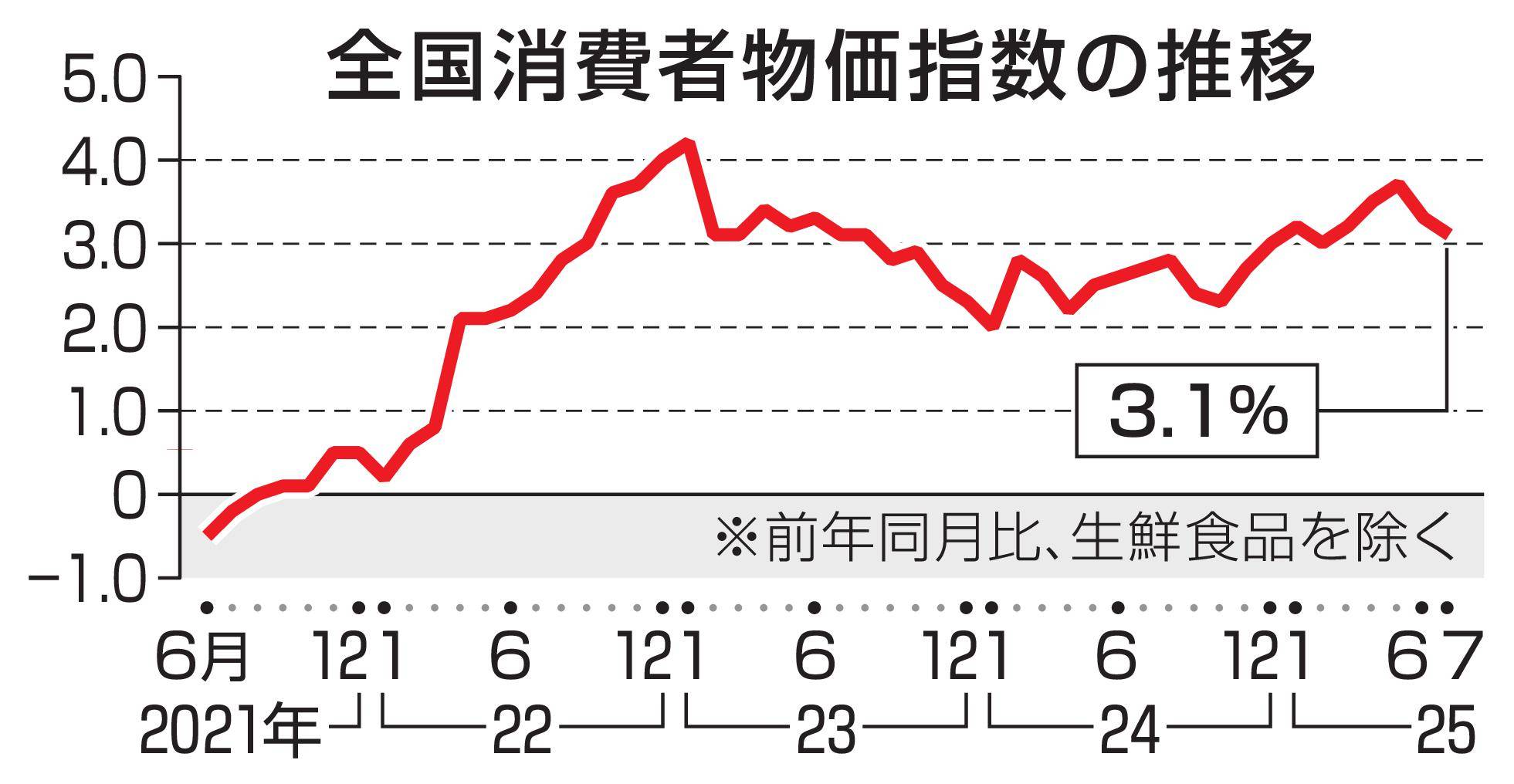
Group 1: Consumer Price Index and Inflation - The overall consumer price index in Japan, excluding fresh food, is reported at 111.6 (2020=100), reflecting a year-on-year increase of 3.1%, maintaining above 3% for the eighth consecutive month [1] - Food prices, excluding fresh agricultural products, have risen by 8.3%, marking a continuous increase for 12 months; rice prices have surged by 90.7%, nearly doubling from the previous year [3] Group 2: Impact of Weather and Agricultural Prices - Extreme summer heat has led to poor harvests of rice and vegetables, driving up fresh food prices; the average price of a 5-kilogram bag of rice reached 3737 yen, an increase of 195 yen from the previous week [6] - The average price of tomatoes is 40% higher than the average over the past five years, with other vegetables like cucumbers, eggplants, and carrots also seeing sustained price increases [8] Group 3: Government Subsidies and Support Measures - Local governments are implementing subsidy policies to alleviate the financial burden on residents due to rising prices [8] - Fukui Prefecture's Wakasa Town is distributing local shopping vouchers worth 10,000 yen to all residents, usable from August 9 to December 31, as part of ongoing welfare initiatives [18]
受需求疲软和补贴放缓的影响,2025年Q2中国智能手机出货量同比下降2%
Counterpoint Research· 2025-07-23 09:15
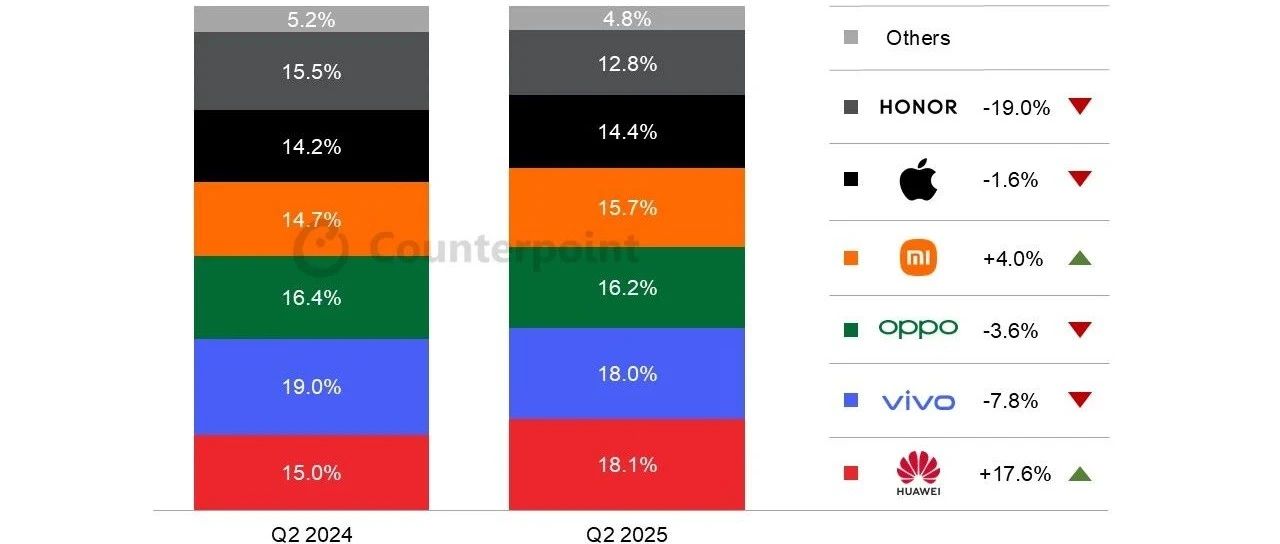
Core Viewpoint - The Chinese smartphone market experienced a year-on-year decline of 2.4% in Q2 2025, influenced by seasonal factors and demand front-loading due to subsidies [2][3]. Market Performance - Huawei maintained its leading position with a market share increase from 15% to 18.1% year-on-year, driven by strong sales of the mid-range nova 14 series and significant price reductions on high-end models [2]. - Vivo ranked second in shipments, supported by its strong offline channel network and the successful performance of its Y series in lower-tier cities [6]. - OPPO's Reno 14 series launched before the 618 shopping festival, continuing the strong sales momentum from the previous series, appealing particularly to young female consumers [6]. - Xiaomi achieved a market share of 15.7%, with growth driven by price reductions on popular models like Redmi K80 and Xiaomi 15, despite not launching new mid-range products during the promotional period [6]. - Apple saw strong performance from the iPhone 16 series, particularly the Pro models, due to unprecedented price cuts, although this may pressure sales of the iPhone 17 in the latter half of the year [7]. Future Outlook - The demand for smartphones in China is expected to remain weak, consistent with previous forecasts, but sales stability is supported by promotions and subsidies [8]. - Counterpoint anticipates a slowdown in growth for the Chinese market in 2025, with summer promotions and early flagship releases in Q3 expected to boost sales and lay a solid foundation for Q4 performance [8]. - The company will continue to monitor the evolving global market landscape, particularly regarding tariff policies, rising component costs, and changes in consumer demand [8].
车企都不好过,谁特别不好过?以及,围攻比亚迪
虎嗅APP· 2025-07-14 10:01
Core Insights - The Chinese automotive market in the first half of 2025 is characterized by intense competition, with significant growth in overall sales but high sales pressure on manufacturers [1][2]. Overall Market Performance - The wholesale volume of passenger cars reached 13.279 million units, a year-on-year increase of 12.2%, while retail sales totaled 10.9 million units, up 10.8% [4]. - Exports showed strong performance, with 2.16 million units exported from January to May, reflecting a 15% year-on-year growth, indicating robust international competitiveness [4]. - New energy vehicle (NEV) exports reached 1.16 million units, a 33% increase year-on-year, accounting for 43% of total exports [4]. - Sales growth is heavily reliant on promotions, with traditional fuel vehicle discounts stabilizing at 23.3% and NEV promotions slightly reduced to 10.2% [4]. - The dependency on government policies remains significant, with 4.12 million applications for vehicle trade-in subsidies by the end of June [4]. Dealer Inventory and Sales Pressure - Dealers face significant inventory pressure, with the inventory warning index reaching 56.6%, indicating high levels of unsold stock [5]. - Only 27.5% of 4S dealerships met their sales targets in the first half of the year, suggesting ongoing challenges in achieving sales goals [5]. Traditional Domestic Brands - The competition among traditional domestic brands is fierce, with promotional efforts intensifying, leading to an average discount rate of 18.3% for fuel vehicles in June [9]. - BYD remains a central player in the NEV market, with its sales reaching 2.146 million units, a 33% increase year-on-year [7]. - Other brands like Geely and Chery are also adjusting strategies to compete directly with BYD, with Geely's NEV sales growing by 126% [9]. New Forces and Market Dynamics - New energy vehicle startups face significant operational pressures, with only 3 out of 12 companies meeting industry standards for sales targets [13]. - The market is increasingly demanding comprehensive cost-performance advantages from new energy vehicle brands, as seen with Leap Motor and XPeng [13]. - Traditional joint ventures are beginning to recover, with a 11% increase in wholesale volume for mainstream joint venture brands in the first half of 2025 [14]. Future Market Outlook - The competitive landscape is expected to intensify, with traditional brands shifting towards homogenized competition based on cost-performance [16]. - The reliance on subsidy policies will be crucial for market demand in the second half of the year, as previous incentives have largely been exhausted [18]. - The evolution of electric vehicles is moving towards a more diversified value proposition, challenging brands to innovate beyond just product offerings [18].