
软件定义汽车(SDV)

Search documents
10BASE-T1S,悄然崛起
半导体行业观察· 2026-02-19 02:46
Core Viewpoint - The article discusses the emergence and significance of the 10BASE-T1S standard in the automotive and industrial sectors, highlighting its advantages over traditional communication protocols like CAN and LIN, particularly in the context of evolving vehicle architectures and increasing sensor integration [2][3][5][33]. Group 1: Background and Industry Opportunity - 10BASE-T1S is a new physical layer standard for automotive and industrial control, established by IEEE 802.3cg in February 2020, featuring a transmission rate of 10 Mbps and designed for short-distance connections of up to 25 meters [3]. - The shift towards zonal architecture in vehicles, which consolidates multiple functions into fewer controllers, necessitates a more efficient communication protocol like 10BASE-T1S to manage the increasing number of sensors and actuators without overwhelming bandwidth [5][6]. - The trend of unifying vehicle networks under Ethernet protocols is driven by the need for over-the-air updates, centralized data processing, and software upgrades, making 10BASE-T1S a suitable choice for modern automotive applications [6][10]. Group 2: Advantages of 10BASE-T1S - 10BASE-T1S supports multi-drop connections, allowing multiple devices to connect over a single pair of wires, significantly reducing wiring complexity and costs, which is crucial for electric vehicles [6][10]. - The limitations of CAN FD in terms of scalability and protocol integration are becoming apparent, prompting manufacturers to consider 10BASE-T1S for long-term platform design [6][10]. - Compared to traditional buses like CAN, RS-485, and RS-232, 10BASE-T1S offers a more integrated and efficient solution, addressing issues of protocol fragmentation and complexity in industrial applications [11][12]. Group 3: Competitive Landscape - Major chip manufacturers are actively developing 10BASE-T1S products, with strategies ranging from simplifying Ethernet integration to completely rethinking edge node architectures [12][19][20]. - Microchip and TI focus on making Ethernet as user-friendly as CAN, integrating MAC and PHY in single packages to facilitate easier adoption in low-end microcontrollers [13][14]. - ADI's E²B technology aims to centralize control by offloading software burdens from edge nodes, enhancing communication efficiency and reducing system costs [19]. - Infineon and NXP emphasize high integration and safety for complex zonal architectures, with Infineon’s BRIGHTLANE switch and NXP’s TJA1410 designed for reliability in safety-critical applications [20][26]. Group 4: Future Outlook - The adoption of 10BASE-T1S is seen as a gradual transition rather than an outright replacement of existing protocols like CAN and LIN, driven by the need for a unified communication framework in the software-defined vehicle era [33]. - The article concludes that 10BASE-T1S is a crucial component in the evolution towards a fully integrated Ethernet architecture in vehicles, addressing the challenges of protocol fragmentation and enhancing overall system efficiency [33].



汽车存储告急,如何破局?
半导体行业观察· 2026-02-12 00:56
Core Viewpoint - The article highlights the increasing importance of storage solutions in the automotive industry, particularly in the context of smart vehicles and the growing demand for AI capabilities, which is leading to a supply crisis in automotive-grade storage components [1][3][19]. Group 1: Market Dynamics - Starting from the second half of 2025, the surge in AI computing infrastructure is igniting a cycle of price increases and shortages in the storage market [1]. - The automotive sector is facing a "storage crisis" due to the rising demand for AI in smart cockpits and advanced driver-assistance systems, coupled with a global shift of suppliers towards AI production [1][3]. - The cost of automotive-grade memory is skyrocketing, with quarterly increases reported as high as 50%, and some forecasts predicting that the supply satisfaction rate for automotive-grade storage could fall below 50% by 2026 [1][4]. Group 2: Storage Requirements in Smart Vehicles - The demand for storage in smart vehicles has evolved from basic functions to becoming a critical component for real-time data processing from various sensors, making it essential for the development of software-defined vehicles (SDVs) [3][4]. - High-end smart vehicles typically require 4-16 DRAM chips and 2-6 NAND Flash chips, with costs rising from $40-90 in early models to $90-220 in current mid-to-high-end models, and potentially exceeding $500 for advanced models [4][7]. Group 3: Competitive Landscape - The disparity in capabilities among storage suppliers is evident, with many only able to provide consumer-grade storage that does not meet the stringent requirements of automotive applications [1][10]. - Jiangbolong, a company with seven years of experience in automotive-grade storage, is positioned to fill this critical gap by transitioning from a background player to a front-line provider [1][19]. Group 4: Jiangbolong's Strategic Positioning - Jiangbolong has developed a comprehensive range of automotive-grade storage products, having established deep partnerships with over 20 OEMs and 50 Tier 1 automotive clients, ensuring high market recognition and collaboration [8][19]. - The company has implemented a dual business model (TCM and PTM) to enhance supply chain stability and provide customized solutions, addressing the challenges posed by the current supply crisis [10][13][16]. Group 5: Future Outlook - The rise of edge AI is transforming the role of storage in vehicles, making it a vital component for processing vast amounts of sensor data in real-time [19][20]. - Jiangbolong aims to leverage its proprietary technology and collaborative ecosystem to ensure a stable supply of high-performance storage solutions, even as demand shifts towards data centers [19][20].
汽车芯片巨头,集体唱衰
3 6 Ke· 2026-02-06 04:17
Core Insights - The automotive chip industry is experiencing a prolonged and complex adjustment period, with major companies expressing caution about market stability and demand recovery [1][2][3][4] - A new crisis is emerging as memory chip manufacturers shift capacity to higher-margin products, leading to a rapid depletion of previously abundant memory chip supplies for the automotive sector [1][6] Financial Performance - NXP's automotive chip revenue for Q4 2025 was $1.88 billion, a mere 4.8% year-over-year increase, falling short of analyst expectations [2] - STMicroelectronics reported a significant operating loss of $133 million in Q2 2025, indicating a lack of clear recovery timeline despite a forecasted revenue exceeding analyst expectations [2][21] - Texas Instruments highlighted a 6%-9% year-over-year growth in its automotive segment for Q4 2025, but downplayed its contribution to overall performance [3] - Infineon's automotive business revenue for Q1 2026 was €1.821 billion, showing a 5% quarter-over-quarter decline, with cautious outlook on demand recovery [3][4] Supply Chain Challenges - The DRAM price surged by 172% year-over-year in Q3 2025, driven by strong demand from AI infrastructure, leading to a significant supply shortage for the automotive sector [6][7] - Analysts predict that DRAM prices could increase by 70%-100% in 2026, severely impacting the cost structure for automotive manufacturers [7][32] - By 2028, the supply of older generation DRAM is expected to rapidly decline, posing a risk to automotive manufacturers relying on these components [8][32] Strategic Responses - Texas Instruments is adopting a conservative strategy, focusing on maintaining inventory levels and capitalizing on its robust production capabilities [16][17] - NXP is restructuring by laying off 5% of its workforce and making strategic acquisitions to enhance its position in the software-defined vehicle market [18][19] - STMicroelectronics is concentrating resources on automotive microcontrollers (MCUs) to stabilize its market position amid ongoing adjustments [21][22] - Infineon is heavily investing in AI-related technologies, aiming for significant revenue growth in this sector while also adjusting its automotive strategies [23][24] Market Outlook - The automotive chip market is facing a dual challenge of cyclical downturns and structural constraints, with recovery timelines uncertain [11][30] - The transition to electric vehicles and the increasing complexity of automotive electronics are expected to drive long-term growth, despite current market challenges [27][28] - Companies are exploring new growth avenues, such as data center markets and industrial IoT, to mitigate risks associated with the automotive sector [29][30]


2026,车企反攻智能硬件
3 6 Ke· 2026-01-18 23:37
Core Viewpoint - The rise of smart glasses, particularly from automotive companies, signifies a shift in the automotive industry towards integrating AI and smart hardware, transforming traditional business models from one-time vehicle sales to ongoing subscription-based services [1][3][9]. Group 1: Transition from Hardware to Smart Hardware - The transition from hardware to automotive manufacturing began in 2019, driven by a peak in smartphone sales and a surge in electric vehicle sales, leading hardware manufacturers to explore automotive opportunities [3][5]. - Companies like Xiaomi and Huawei have either entered the automotive market directly or partnered with automakers to develop smart driving and vehicle integration solutions [3][5]. - The evolution of smart hardware in vehicles is seen as a natural progression, with the automotive industry now embracing AI to create a unified smart ecosystem [1][3]. Group 2: New Profit Models for Automotive Companies - The introduction of smart glasses, such as Li Auto's Livis, illustrates a shift towards products that enhance brand loyalty and provide continuous data collection, which can improve AI model capabilities [10][11]. - The automotive industry is moving towards a model where vehicle sales become part of a broader consumer lifestyle platform, focusing on software services that offer higher profit margins compared to traditional vehicle manufacturing [13][14]. - The integration of AI into both vehicles and smart hardware allows for shared components and reduced costs, enhancing overall efficiency and profitability [14][16]. Group 3: Challenges in the AI Transition - The transition to AI-driven models presents significant challenges, including high costs associated with data, algorithms, and computational power, which create barriers to entry for new players [17][19]. - Successful companies in this space must have substantial financial resources, technical expertise, and the ability to scale operations to effectively compete [18][19]. - The competitive landscape is likely to solidify around a few leading brands capable of leveraging their existing consumer base and data to enhance their AI capabilities [19].


HERE 与 TomTom 在 2026 年定位平台竞争力评估指数中脱颖而出,成为先锋
Counterpoint Research· 2026-01-12 02:45
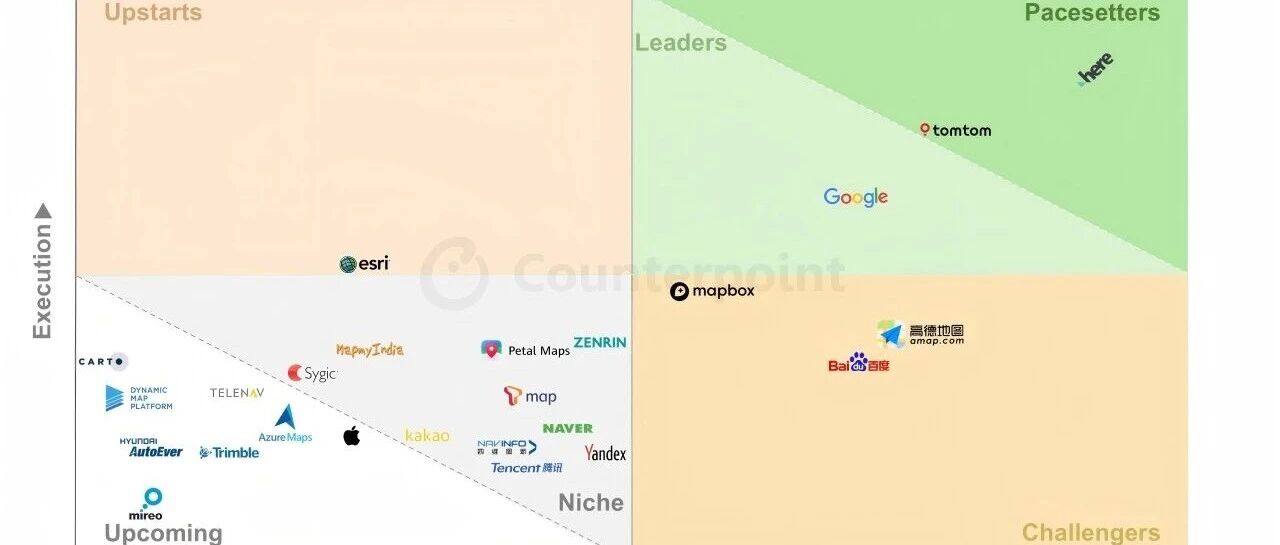
Core Insights - The article discusses the findings of the "2026 Positioning Platform Competitiveness Assessment Report" by Counterpoint Research, highlighting HERE and TomTom as "Pacesetters" in the positioning platform competitiveness index [4][7] - The report emphasizes the transformation of positioning platforms from traditional mapping solutions to AI-driven data platforms, enhancing user experience through real-time intelligence and personalized services [4][5] Group 1: Positioning Platform Competitiveness - HERE and TomTom are recognized as "Pacesetters" in the positioning platform competitiveness index, while Google is categorized as a "Leader" [4][7] - Baidu, Gaode, and Mapbox are classified as "Challengers" due to their strong platform capabilities but limited market coverage [4][8] - ESRI is noted as an "Upstart" for its execution capabilities, although it still lags behind leading companies in certain dimensions [4] Group 2: HERE's Performance - HERE excels in both platform capability and execution, supported by a comprehensive service product portfolio and a robust partner ecosystem across various verticals like automotive and logistics [5] - The company is leading the transition towards software-defined vehicles (SDVs) and collaborates closely with automakers to guide their transformation [5] - HERE is increasing its R&D investment in product technology and innovation, particularly in AI solutions for the automotive and logistics sectors [5] Group 3: TomTom's Innovations - TomTom has made significant strides with its Orbis map in 3D visualization and traffic analysis, earning its place alongside HERE as a "Pacesetter" [5] - The company is the second global entity, after Google, to launch a Model Context Protocol (MCP) server, facilitating rapid deployment of navigation systems for automakers [5] Group 4: Market Dynamics - The proliferation of location-aware AI features like "search" and "nearby" is leading to hyper-localized and highly personalized user experiences becoming mainstream [7] - Google Maps benefits from its strong core mapping capabilities and vast crowdsourced data from billions of monthly active users, solidifying its "Leader" status [8] - Baidu and Gaode are recognized as regional leaders in China, while Mapbox stands out for its developer-centric approach, offering customizable SDKs for users focused on personalization and visualization [8]


汽车芯片巨头,全力反击!
半导体行业观察· 2026-01-09 01:53
Core Viewpoint - The automotive chip discussion is shifting towards software-defined vehicles (SDV), with a focus on centralized and domain-controlled architectures, leading traditional chip manufacturers to adapt their strategies and technologies to remain competitive in the evolving market [1][9]. Group 1: Traditional Automotive Electronics - The traditional automotive electronic architecture is highly distributed, with high-end models using dozens to hundreds of ECUs, each serving specific functions like engine control and safety systems [3][4]. - Major players like TI, NXP, and Infineon have dominated the MCU market, which reached $6 billion in 2020, accounting for 40% of the global MCU market share [4][3]. - The rise of intelligent vehicles has disrupted this balance, as companies like Qualcomm and NVIDIA have entered the market with high-performance computing solutions, challenging traditional chip manufacturers [4][5]. Group 2: Emergence of High-Performance Computing - Qualcomm has established a strong presence in the cockpit chip market, with a 67% share in the Chinese passenger vehicle cockpit chip market as of 2024, driven by its advanced Snapdragon series [5][6]. - NVIDIA has dominated the autonomous driving sector, with its Orin chip achieving 508 TOPS of computing power, and its latest Thor chip reaching 2000 TFLOPS [6][7]. - The complexity of software and the need for high computing power in both cockpit and autonomous driving systems have made traditional MCUs less competitive [6][7]. Group 3: Strategic Response from Traditional MCU Manufacturers - Traditional MCU manufacturers are launching new products to regain control in the SDV landscape, focusing on high integration, advanced processes, and software architecture [9][10]. - NXP's S32N7 processor, based on 5nm technology, aims to be a system-level coordinator for core vehicle functions, emphasizing hardware isolation and software-defined partitioning [12][11]. - Renesas introduced the R-Car Gen 5 X5H, the first multi-domain automotive SoC built on 3nm technology, supporting ADAS and infotainment systems [15][16]. Group 4: Competitive Landscape and Value Reassessment - The shift from distributed to centralized architectures is redefining the roles of MCU manufacturers, transforming them from background players to key players in vehicle core functions [21][20]. - The strategic significance of this transition includes differentiated competition focusing on real-time reliability and safety, leveraging decades of experience and established relationships in the automotive industry [21][22]. - Cost control through high integration and efficiency is a common goal among MCU giants, with estimates suggesting potential cost reductions of up to 20% for NXP's S32N7 [22][21].



AI“统治”CES 2026:车企加码全域智能
Mei Ri Jing Ji Xin Wen· 2026-01-07 13:16
Core Insights - The 2026 Consumer Electronics Show (CES) highlights the automotive electronics sector, showcasing advancements in AI applications across various automotive domains, including smart driving assistance and intelligent cockpit experiences [1][2] - AI remains a central theme at CES 2026, driving breakthroughs in autonomous driving and industrial automation, reshaping lifestyles and work environments [1] Automotive Technology Showcase - Automakers focus on demonstrating technological roadmaps and electronic architectures rather than just vehicle models at CES [2] - Geely introduced its AI 2.0 technology system, which integrates various domains such as intelligent driving and cockpit systems, enhancing collaboration among different AI agents [3] - BMW showcased its AI-driven personal assistant integrated with Amazon's "Alexa+", allowing intuitive interaction between passengers and vehicles [3] Advanced Driver Assistance Systems (ADAS) - The popularity of advanced driver assistance systems remains strong, with many exhibitors presenting the latest developments in this field [7] - Nvidia's CEO unveiled the Alpamayo series of open-source AI models, which include advanced reasoning and simulation capabilities [7] - Geely and Qianli Technology launched the G-ASD brand, a high-capacity driving assistance solution covering levels from L2 to L4 [8] Robotics Integration - Human-like robots are transitioning from novelty to practical applications, with companies like Hyundai showcasing production versions of robots capable of performing real tasks [10][11] - Hyundai plans to integrate its Atlas robot into its global production network, starting with simple tasks and expanding to more complex operations by 2030 [11] - Companies are increasingly investing in robotics, with a focus on enhancing capabilities in various sectors, including automotive and smart devices [10][11]


采埃孚出售ADAS业务
半导体芯闻· 2025-12-23 10:35
Core Viewpoint - Samsung Electronics is accelerating its automotive electronics business, viewing it as a future growth engine, and has acquired ZF's Advanced Driver Assistance Systems (ADAS) business through its subsidiary Harman, marking a significant expansion into core autonomous driving technology [2][3]. Group 1: Acquisition Details - The acquisition of ZF's ADAS business is valued at €1.5 billion (approximately 2.6 trillion KRW), representing Samsung's first automotive electronics acquisition in eight years since acquiring Harman in 2017 [2]. - The acquisition process for the ADAS business is expected to be completed by 2026 [5]. Group 2: Market Potential and Growth - The ADAS and centralized controller market is projected to grow from 62.6 trillion KRW in 2025 to 97.4 trillion KRW by 2030, reaching 189.3 trillion KRW by 2035, indicating a compound annual growth rate (CAGR) of 12% [4]. - Harman's CEO emphasized the strategic importance of the acquisition, stating it adds ADAS to Harman's product portfolio and provides a strategic foothold for supplying centralized integrated controllers to the automotive market [4]. Group 3: Technological Integration - The acquisition will enable Harman to integrate ADAS technologies, such as front cameras and ADAS controllers, into its flagship digital cockpit product, ensuring leadership in the rapidly evolving automotive landscape [3]. - The centralized controller architecture supports over-the-air (OTA) software updates, enhancing customer experience and streamlining maintenance and development cycles [3].
“关键先生”的二次本土化:博世以全栈解决方案应对商用车变革
经济观察报· 2025-12-08 07:19
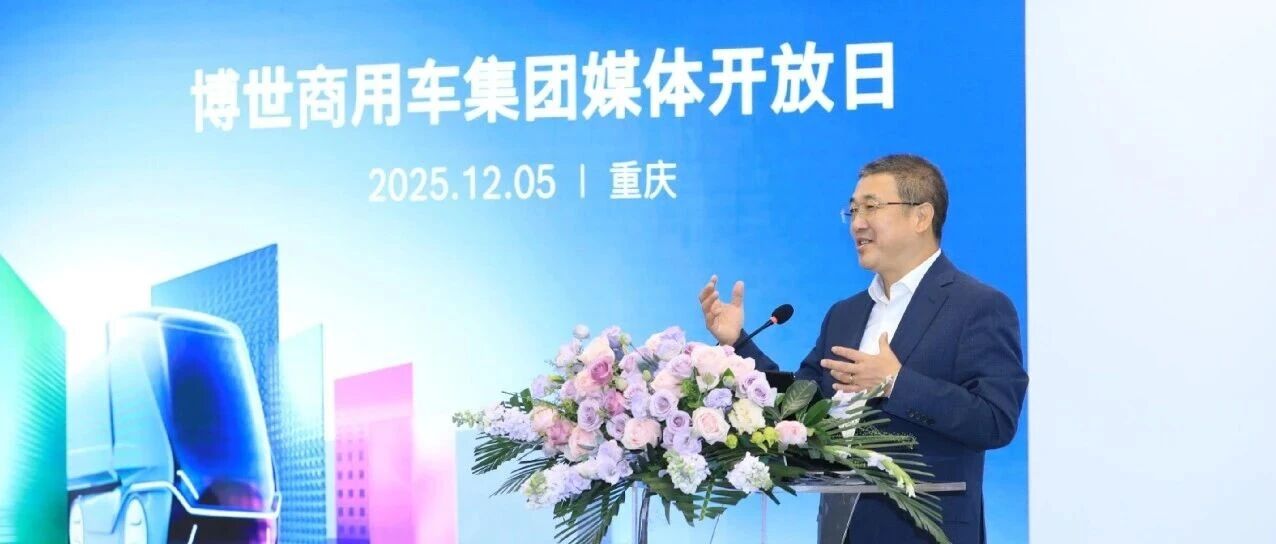
Core Viewpoint - Bosch Commercial Vehicle Group emphasizes three core principles: "Rooted in China, Adapt to Trends, and Co-create Value" to navigate the evolving automotive landscape [2][3]. Strategic Developments - On December 5, Bosch Commercial Vehicle Group held a media open day at Bosch Hydrogen (Chongqing) Co., Ltd., unveiling an upgraded strategy and comprehensive technology solutions, highlighting the shift towards diverse powertrains, including hydrogen [2]. - The penetration rate of new energy in commercial vehicles has surged from single digits to 30% in recent years, presenting both challenges and opportunities for manufacturers and suppliers [2]. Technological Innovations - Bosch is focusing on Total Cost of Ownership (TCO) as a key decision-making factor for commercial vehicle users, emphasizing the need for tailored solutions based on specific application scenarios [5][7]. - The company is integrating various technologies, including power systems, electric drive, thermal management, steering, and driver assistance systems, to provide customized solutions for different operational contexts [7][9]. - Bosch has developed a new Electric Brake System (EBS) to enhance safety in new energy commercial vehicles, aligning with China's evolving safety standards [13]. Market Positioning - Bosch aims to transition from a traditional supplier role to a strategic partner in the industry, collaborating closely with manufacturers for synchronized development and innovation [7][18]. - The company is committed to a multi-technology approach, supporting diesel, natural gas, methanol, pure electric, and hydrogen fuel technologies to meet diverse market demands [21]. Organizational Changes - Bosch has restructured its automotive business, forming the Bosch Intelligent Mobility Group and subsequently the Commercial Vehicle Group, to enhance efficiency and collaboration across various business segments [2][15]. - The company is deepening local partnerships in China to foster innovation and adapt to market needs, leveraging its extensive experience in the region [15][18]. Future Outlook - Bosch anticipates significant growth in hydrogen fuel cell commercial vehicles, projecting an increase from under 10,000 units to around 100,000 units by 2027, contributing to national targets [23]. - The company is embracing the concept of "software-defined vehicles," integrating software capabilities across various domains to enhance vehicle intelligence and performance [24].
“关键先生”的二次本土化:博世以全栈解决方案应对商用车变革
Jing Ji Guan Cha Wang· 2025-12-08 07:00
Core Insights - Bosch Commercial Vehicle Group is adapting to the significant transformation in the automotive industry by integrating hydrogen energy into its comprehensive technology solutions, emphasizing a future with diverse powertrains [1][2] - The penetration rate of new energy in commercial vehicles has surged from single digits to 30% in recent years, presenting both challenges and opportunities for manufacturers and suppliers [1] - Bosch is restructuring its technology system to meet the urgent transformation needs of customers, focusing on localized innovation and collaboration with Chinese partners [1][2] Group 1: Strategic Developments - Bosch is establishing the Bosch Intelligent Mobility Group, which will include the Commercial Vehicle Group, marking a significant organizational change to enhance its focus on automotive business [1][2] - The company has shifted its core philosophy from being a "concept enabler" to "rooted in China, adapting to trends, and co-creating value" [2] - Bosch is integrating various technologies such as power systems, electric drive, thermal management, steering, and driving assistance systems to provide customized solutions for different application scenarios [4][6] Group 2: Market Trends and User Needs - The commercial vehicle industry is evolving towards a focus on Total Cost of Ownership (TCO), with users increasingly prioritizing operational efficiency and investment returns [3][4] - The shift from "market segmentation" to "application scenario" driven development is reshaping the R&D and product planning processes in the commercial vehicle sector [5] - Bosch's research indicates that commercial vehicle manufacturers are transitioning their business strategies from "manufacturing and sales" to "full lifecycle solution providers" [8] Group 3: Technological Innovations - Bosch has developed an electric drive axle that integrates key components for direct control of wheel power, optimizing energy efficiency and space for battery systems [7] - The Electric Brake System (EBS) has been introduced to enhance safety standards in new energy commercial vehicles, aligning with China's evolving safety regulations [8] - Bosch is focusing on three main technology stacks: driver assistance, motion domain, and energy domain, combining hardware and software capabilities [6] Group 4: Collaborative Efforts and Local Innovation - Bosch is deepening its strategy of local innovation and collaboration in China, having established partnerships with local companies to enhance its technological offerings [9][11] - The company is leveraging local resources and channel advantages to accelerate the commercialization of new energy technologies [11][12] - Bosch's approach emphasizes the importance of collaboration with commercial vehicle manufacturers and academic institutions to drive innovation and scale [11][12] Group 5: Future Outlook - Bosch is committed to a multi-technology approach, supporting various powertrain technologies including diesel, natural gas, methanol, pure electric, and hydrogen fuel cells [13][14] - The company anticipates significant growth in hydrogen fuel cell vehicles, projecting an increase from under 10,000 units to around 100,000 units by 2027 [14] - Bosch is adapting its software architecture to align with future hardware developments, ensuring continuous upgrades and enhanced safety features [15]