高端制造出海

Search documents
首席展望|招商基金李湛:中国市场将迈入“盈利改善+估值抬升”的双重驱动阶段
Xin Lang Cai Jing· 2026-02-05 00:42
Core Viewpoint - The international capital market is optimistic about China's economic transformation and development prospects in 2026, with major foreign investment banks recommending increased allocations to A-shares and Hong Kong stocks, indicating a shift towards a dual-driven phase of profit improvement and valuation uplift [1][3]. Group 1: Investment Environment and Trends - In 2026, the investment focus is expected to be on "industrial innovation-driven + profit realization + resource supply-demand optimization," with emphasis on technology innovation, high-end manufacturing, and cyclical recovery [2][16]. - The global economic landscape in 2025 showed resilient growth amid uncertainties, with emerging markets becoming the main growth engines, which, combined with China's policy support and industrial upgrades, creates structural opportunities in the capital market [3][4]. - The investment environment is anticipated to shift from single valuation recovery to a dual-driven phase of profit improvement and valuation uplift [3][4]. Group 2: Capital Inflows and Funding Sources - The most certain source of incremental capital in 2026 is expected to be insurance funds, with foreign capital gradually shifting from trading to allocation, particularly in high-end manufacturing and technology sectors [2][7]. - Resident savings represent a significant potential slow variable, with some funds expected to migrate to equity markets through wealth management and public funds [2][7]. - The structure of incremental capital in 2026 is likely to be characterized by "multiple channels, low volatility, and long cycles," with insurance funds, foreign capital, and resident savings being the main contributors [7]. Group 3: Sector Opportunities and Focus Areas - The technology sector remains the main line of industry allocation, with a focus on the performance visibility and elasticity of computing infrastructure and key hardware being higher than that of application layers [8][10]. - High-end manufacturing and advanced industrial systems are expected to continue benefiting from manufacturing upgrades, while energy transition and new power systems are also important directions for investment [10]. - Industries related to resource security and supply chain safety, such as non-ferrous metals and key materials, are anticipated to have stable medium- to long-term demand support [10]. Group 4: Risk Assessment and Market Dynamics - The evolution of risks related to real estate and local government debt is transitioning from "emergency response" to "long-term management," while external demand uncertainty is identified as the most significant variable affecting the market in 2026 [5][6]. - The core of external demand uncertainty lies in the unpredictable external environment, which can directly disrupt domestic economic recovery and influence macro policy adjustments [6]. Group 5: Asset Allocation Recommendations - For balanced investors in 2026, an initial asset allocation recommendation is 55%-60% in stocks, 30%-35% in bonds, and 5%-10% in gold, focusing on capturing structural opportunities in hard technology, high-end manufacturing, and cyclical upgrades [12][13]. - Stocks should be the core allocation, while bonds can provide stability against market volatility, and gold should serve as a long-term strategic asset to hedge against geopolitical risks and external demand fluctuations [14][15].
帮主郑重:一边是“地狱”,一边是“天堂”!极端分化的市场教我们什么?
Sou Hu Cai Jing· 2026-02-01 10:47
Group 1: Market Overview - The market is experiencing extreme polarization, with significant declines in gold and silver prices alongside substantial profit increases in AI computing companies like New Yisheng and Zhongji Xuchuang, indicating a stark contrast between fear and opportunity [1][3][4] - Gold and silver's sharp decline is attributed to the nomination of a new Federal Reserve chairman and a strengthening dollar, representing a violent liquidation of previously crowded trades driven by emotional and leveraged positions [3][4] Group 2: Industry Insights - The surge in performance forecasts from leading optical module companies is linked to a global arms race in computing power, with clear capital expenditures from overseas cloud giants translating into tangible revenue and profits for these companies [4][5] - The current market dynamics highlight the importance of industry certainty and visible performance as a stabilizing factor against market volatility, suggesting a shift in investor focus from speculative narratives to companies with clear earnings visibility [4][5] Group 3: Investment Strategies - Investors are encouraged to assess the quality of their holdings in light of market panic, questioning whether they can maintain their positions during industry-wide emotional shocks [5] - A shift in focus from volatile prices to sustainable trends is recommended, emphasizing the importance of identifying long-term industry trends such as AI computing, high-end manufacturing, and energy transition [5] - Constructing a layered risk approach in investment portfolios is advised, allowing for some participation in market sentiment while ensuring core holdings are anchored in assets with clear trends and verifiable performance [5][6]


收评:沪指震荡小幅上涨0.27% 黄金、石油等资源周期股集体大涨
Xin Hua Cai Jing· 2026-01-28 07:39
Market Overview - A-shares showed mixed performance on January 28, with the Shanghai Composite Index and Shenzhen Component Index slightly up, while the ChiNext Index experienced a small decline. The Shanghai Composite Index closed at 4151.24 points, up 0.27%, with a trading volume of 13,655 billion yuan [1] - Resource stocks led the market, particularly gold stocks, with Sichuan Gold achieving four consecutive trading limits, and China National Offshore Oil Corporation rising over 6% to a new high [1] - The total trading volume in the Shanghai and Shenzhen markets reached 29.7 trillion yuan, an increase of 70.4 billion yuan compared to the previous trading day [1] Sector Performance - Key sectors that performed well included precious metals, oil and gas extraction, steel, combustible ice, rare earth permanent magnets, and coal [2] - Conversely, sectors that saw declines included photovoltaic equipment, medical services, education, recombinant proteins, avian influenza, and Sora [2] Institutional Insights - According to Jifeng Investment Advisors, the A-share market is expected to continue a volatile consolidation pattern in February, with support from policies and valuations, while facing pressure from profit verification. They recommend focusing on cyclical sectors, technology growth, and defensive assets [3] - CITIC Construction highlighted the booming commercial aerospace industry, particularly the advancements in reusable rocket technology, which are expected to drive significant growth in the satellite communication market, projected to grow from $25.2 billion in 2025 to $83 billion by 2035, with a compound annual growth rate of approximately 13% [3] Company Updates - Amazon Web Services (AWS) announced a price increase of approximately 15% for its EC2 machine learning capacity blocks, marking the first price hike in about twenty years. This adjustment reflects the high demand for AI computing resources and the increasing scarcity of supply [4] - Haizhou Intelligent, a subsidiary of Suzhou Keda, announced a price adjustment for certain products, with increases ranging from 10% to 30%, effective March 1, 2026. This adjustment affects a range of products including storage series, front-end cameras, and servers [8]
泓德红利优选混合(LOF)A:2025年第四季度利润249.87万元 净值增长率3.66%
Sou Hu Cai Jing· 2026-01-22 13:41
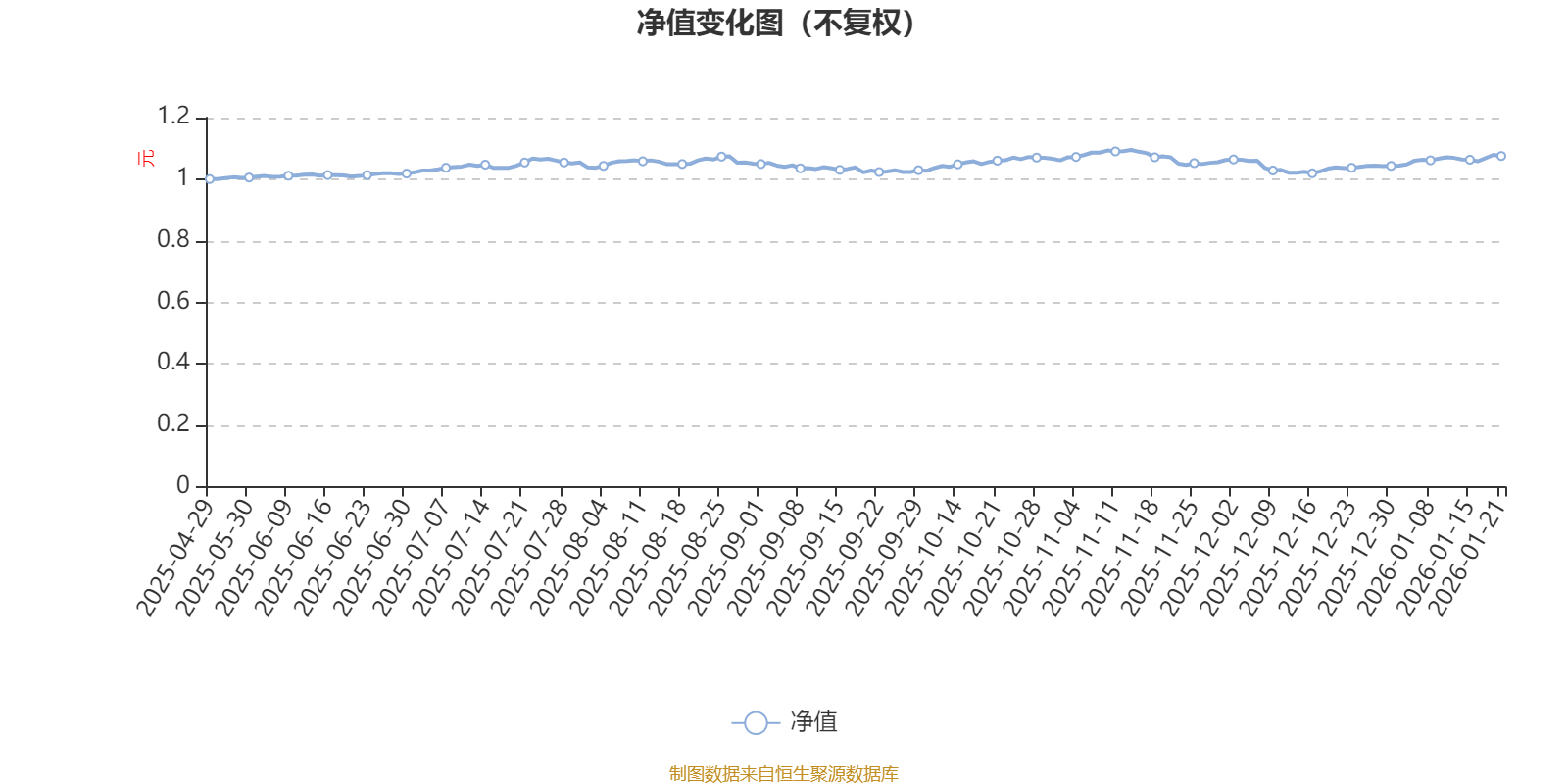
Core Viewpoint - The AI Fund Hongde Dividend Preferred Mixed (LOF) A (501227) reported a profit of 2.4987 million yuan for Q4 2025, with a weighted average profit per fund share of 0.0155 yuan. The fund's net value growth rate was 3.66%, and the fund size reached 206 million yuan by the end of Q4 2025. The fund manager anticipates a continued structural performance in the A-share market driven by technological innovation and long-term capital inflows, focusing on sectors with high growth and performance improvement [3][11]. Fund Performance - As of January 21, the unit net value was 1.075 yuan. The fund's three-month cumulative net value growth rate was 3.30%, ranking 507 out of 621 comparable funds, while the six-month growth rate was 5.90%, ranking 563 out of 621 [3]. - The fund's Sharpe ratio since inception was 0.1791 as of December 31 [4]. - The maximum drawdown since inception was 5.15%, occurring in Q4 2025 [7]. Investment Strategy - The fund maintains an average stock position of 71.83% since inception, compared to the peer average of 85.83%. The highest stock position reached 90.44% at the end of 2025, while the lowest was 51.24% at mid-2025 [10]. - The fund's top ten holdings include Jizhong Energy, Sichuan Road and Bridge, Hu Nong Commercial Bank, Shangfeng Cement, Yuntianhua, Shanghai Bank, Yunnan Agricultural Commercial Bank, Shaanxi Coal and Chemical Industry, COSCO Shipping Holdings, and Yanzhou Coal Mining [14].
主观多头管理人的年度回顾与展望
Xin Lang Cai Jing· 2026-01-15 14:15
Core Viewpoint - 2025 is expected to be a vibrant year for equity markets driven by policy shifts, ample liquidity, and the global AI wave, leading to a long-awaited valuation recovery and structural market trends [1][21] Group 1: Investment Strategies - Focus on identifying companies that exhibit both performance certainty and growth potential [22] - Emphasis on sectors with high growth prospects, particularly in new consumption and AI industries, while remaining cautious about valuation-driven stocks [23] - Investment in traditional industries like chemicals and aviation is seen as promising due to improved pricing power and demand recovery [22][24] Group 2: Sector Insights - The AI industry is viewed as a major support for the current industrial cycle, with a need to observe the iteration of AI models and their application effects [27][29] - The manufacturing sector's cyclical recovery is crucial for transitioning from valuation-driven to profit-driven market conditions [27][12] - The real estate sector is under scrutiny, with a focus on companies with low debt and high safety margins, while avoiding high-leverage developers [24][28] Group 3: Future Outlook - In 2026, the focus will be on new consumption, AI applications, and the benefits of the "anti-involution" policy, which is expected to enhance corporate profitability [20][35] - The investment landscape will prioritize structural opportunities and systematic allocation, with a shift from valuation recovery to profit growth as the main driver [34][35] - The potential for copper prices to reflect overall manufacturing sentiment is highlighted, alongside the need to monitor risks related to export barriers and domestic competition [36]
涌津投资谢小勇:2026年A股投资将聚焦四条核心主线
Zhong Zheng Wang· 2026-01-13 14:54
Core Viewpoint - In 2026, the investment focus of Yongjin Investment will be at the intersection of asset restructuring and industrial transition, identifying four core investment themes [1] Group 1: Investment Themes - The first theme is the technological revolution driven by the expansion of AI industries towards application endpoints [1] - The second theme involves high-end manufacturing transitioning from "selling products" to "building systems" for overseas markets [1] - The third theme highlights dividend and resource assets that can serve as "important bottom positions" for investors [1] - The fourth theme reflects a shift from "general growth" to "structural differentiation" in consumer upgrades and pharmaceutical advancements [1] Group 2: Market Context - The understanding of dividend and resource assets should evolve from "defensive allocation" to "important bottom positions during the asset restructuring phase" amid increased macro volatility and weakened "old asset anchors" [1] - In the consumer and pharmaceutical sectors, the focus is on "structural upgrades," with opportunities expected to concentrate on "supply sides with greater product strength and efficiency" [1]
25只基金业绩居同类前1/4,摩根基金主动权益2025年业绩亮眼!
Sou Hu Cai Jing· 2026-01-09 02:56
Core Viewpoint - The A-share market in 2025 demonstrated a structural trend, with actively managed equity funds achieving significant excess returns due to excellent stock selection and allocation capabilities [1]. Group 1: Fund Performance - As of December 2025, the Wind data shows that the annual return of the Wind Mixed Equity Fund Index was 33.19%, outperforming the CSI 300 Index (17.66%) and the CSI 800 Index (20.89%) [1]. - Morgan Fund, with over 20 years in the Chinese market, ranked in the top ten for active stock investment management across various time frames, achieving a one-year active management return of 58.14% [2]. - Morgan Fund's flagship product, Morgan China Advantage Mixed A, has delivered a cumulative return of 1471.81% since its inception 21 years ago, significantly exceeding the benchmark return of 244.76% [2]. Group 2: Investment Strategy and Market Outlook - Morgan Fund's investment team anticipates a continued long-term value reassessment of Chinese assets in 2026, identifying structural opportunities in sectors such as technology and high-end manufacturing [4]. - The investment team emphasizes the importance of focusing on quality assets with stable cash flows and sustainable growth, particularly in the context of rising global competitiveness of Chinese industries [4]. - The team sees potential in the AI industry, which is expected to expand from computing power to applications and hardware, and in cyclical value sectors like non-ferrous metals, which are showing improved cash flows and dividends [4]. Group 3: Global Asset Management Strength - Morgan Asset Management, a global leader under JPMorgan, manages nearly 30 trillion RMB in assets, with approximately 9 trillion RMB in equity investments as of September 2025 [3]. - The firm has the highest net inflow in active management and active equity globally in 2024, showcasing its strong market position [3]. - The investment team in China has an average experience of over 12 years, integrating global insights with local practices to ensure investment discipline and strategy stability [3].
四大证券报精华摘要:1月5日
Xin Hua Cai Jing· 2026-01-05 00:26
Group 1 - The core viewpoint of the news is that a series of key reforms in China's capital market are set to accelerate in 2026, focusing on enhancing new productive forces and improving investor protection [1][2][4] - The revised regulations on public fund sales, effective from January 1, 2026, aim to reduce investor costs significantly, with an expected annual savings of approximately 30 billion yuan [2] - The film industry in China is showing signs of recovery, with a total box office of 7.36 billion yuan during the New Year's holiday, indicating a diverse range of new film releases and a positive outlook for 2026 [3] Group 2 - The A-share market is expected to continue its upward trend in 2026, supported by positive market sentiment and improvements in corporate earnings, with the Shanghai Composite Index rising 18.41% in 2025 [5][10] - The commercial real estate REITs pilot program has been launched, emphasizing quality and stability in its initial phase, with a structured policy framework in place [6][7] - The automotive industry is experiencing a competitive landscape, with BYD surpassing Tesla in electric vehicle sales, while traditional automakers are accelerating their transition to new energy vehicles [11]
多维度掘金2026 26只潜力股出炉
证券时报· 2026-01-05 00:25
Core Viewpoint - The article highlights the optimistic outlook for the A-share market in 2026, emphasizing the selection of 26 potential stocks across various categories, driven by favorable earnings expectations and market conditions [2][5][11]. Group 1: Market Outlook - The A-share market is expected to experience a structural bull market in 2026, transitioning from a technology-driven focus to a more balanced growth across sectors [5][6]. - Major indices are projected to see significant gains, with the Shanghai Composite Index expected to rise by 12% by the end of 2026 [7]. - The overall market sentiment is supported by positive macroeconomic policies, improving fundamentals, and a steady influx of capital [6][9]. Group 2: Earnings Growth - Forecasts indicate that the net profit growth rates for the CSI 300 index are expected to reach 9.18% and 9.23% for 2026 and 2027, respectively, while the ChiNext index is projected to grow by 30.52% and 22.98% [9]. - The profitability of non-financial companies in the A-share market is anticipated to stabilize, driven by rising producer prices [9]. - Goldman Sachs predicts a more optimistic profit growth of 14% and 12% for 2026 and 2027, respectively [9]. Group 3: Selected Potential Stocks - Data Treasure has identified 26 potential stocks for 2026, categorized into six cyclical stocks, five AI technology stocks, five undervalued dividend stocks, five domestic recovery stocks, and five overseas chain stocks [2][11]. - The cyclical stocks are expected to benefit from price increases due to the Federal Reserve's interest rate cuts and recovering producer prices [11][13]. - AI technology stocks are selected based on their anticipated strong performance in the TMT sector, with companies like SiTwei-W and Hohhot Information being highlighted [14]. Group 4: Investment Themes - The investment themes for 2026 include AI technology, high-end manufacturing, cyclical recovery, and domestic consumption recovery, with dividend stocks serving as a stable foundation [12][17]. - The focus on dividend stocks is reinforced by their high predicted dividend yields, with companies like Jianghe Group expected to have a dividend yield close to 6% [15]. - The potential stocks exhibit diverse characteristics, balancing growth potential and defensive qualities to navigate market volatility [17].

2026年股市3大核心逻辑和3大核心主线(附龙头名单)
Sou Hu Cai Jing· 2026-01-04 15:20
Core Viewpoint - The 2025 A-share market experienced a bull market driven by "hard technology," characterized by significant structural differentiation and record-breaking performance in various metrics [8][10]. Market Performance Summary - Major indices saw substantial increases, with a typical pattern of "strong innovation, stable main board, and weak value" [9]. - The market scale achieved a historic leap, with active leverage and foreign capital participation, indicating a concentrated performance in high-growth sectors [10]. Leading Sectors - The top-performing sectors averaged a 47.61% increase, with notable performances in: - Non-ferrous metals: +92.64% driven by AI/new energy demand for copper and lithium, alongside gold as a safe haven [11]. - Communications: +87.27% due to the explosion of CPO optical modules and accelerated satellite internet [11]. - Electronics: +49.40% from breakthroughs in domestic AI chips and semiconductor equipment [11]. - A total of 533 stocks doubled in value, with 7 stocks increasing over 500%, and the TMT sector accounting for 33.31% of daily trading volume [12]. 2026 Market Outlook - The 2026 market is expected to shift from liquidity and valuation-driven growth to profit-driven performance, with three core logical drivers: 1. Intensive policy dividends from the "14th Five-Year Plan" and proactive fiscal policies [13]. 2. Continued domestic and international liquidity easing, with anticipated Fed rate cuts [13]. 3. Sustained corporate profit recovery, with nearly 60% of listed companies expecting positive earnings [13]. Core Investment Themes - The main investment themes for 2026 include: 1. Core offensive line: AI full chain and new productivity, driven by policy, technology, and performance [15]. 2. High elasticity line: High-end manufacturing going overseas, benefiting from global energy transition and a strong RMB [16]. 3. Defensive line: Consumption recovery and cyclical rebounds supported by domestic demand policies [19]. Key Industries and Focus Areas - Key industries to watch include: - New energy vehicles, photovoltaic + energy storage, and high-end equipment [20]. - Consumer sectors such as smart cars and high-dividend blue chips in pharmaceuticals [20]. - Industrial metals and energy sectors benefiting from global inventory replenishment [20]. Market Dynamics and Timing - The market is expected to follow a rotational rhythm, with specific focuses for each quarter, including AI computing and applications, overseas expansion, and high-dividend defensive stocks [20][22].