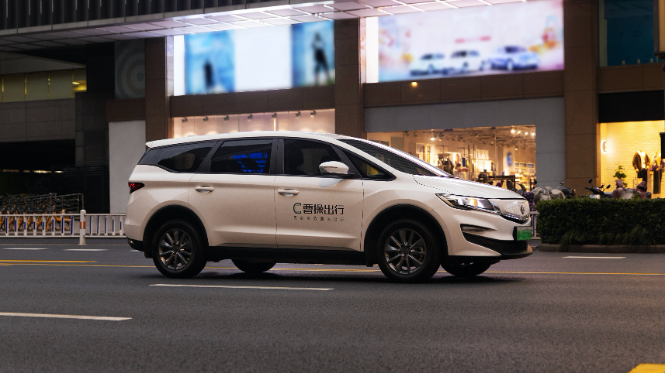
Robotaxi商业化

Search documents
国泰海通|汽车:AI应用重要阵地,Robotaxi还看中国
国泰海通证券研究· 2026-02-04 14:28
Group 1 - The core viewpoint of the article is that the Robotaxi market in China has the potential to reach 50 billion yuan, driven by cost reductions in hardware, software iterations, and policy openness, indicating that Robotaxi is nearing a commercial breakthrough [1] - The acceleration of Robotaxi penetration is highlighted, with recommendations for investing in Robotaxi hardware and algorithm companies [1] Group 2 - The article emphasizes the importance of L2 and L4 participants in advancing the Robotaxi industry [1]


Robotaxi进入“千辆时代”:规模扩张加速 盈利路径渐现端倪
Zhong Guo Jing Ying Bao· 2026-01-30 19:59
Core Insights - The Chinese autonomous driving industry is transitioning from technical feasibility to commercial viability, with significant advancements in Robotaxi operations and fleet sizes [1][6] - Major players like Xiaoma Zhixing and Didi Chuxing are expanding their fleets and partnerships, indicating a shift towards large-scale operations and deeper collaborations across the industry [2][4] Fleet Expansion - Xiaoma Zhixing's fully autonomous Robotaxi fleet has surpassed 1,159 vehicles, marking a significant milestone in the industry [2] - The platform of Ruoqi Chuxing has over 300 Robotaxi vehicles in operation, with a cumulative safe mileage of nearly 6 million kilometers, covering multiple cities in Guangdong [1][2] Partnerships and Collaborations - Didi Chuxing and GAC Aion's R2 model delivery showcases a closed-loop acceleration from R&D to mass production, highlighting the deepening division of labor within the industry [3][4] - Xiaoma Zhixing has signed significant agreements with partners like BAIC New Energy and Aitebo, focusing on co-creating products and exploring efficient monetization paths for Robotaxi services [4] Regional Advantages - Guangdong has emerged as a hub for the Robotaxi industry, with leading companies like Xiaoma Zhixing and Ruoqi Chuxing establishing a strong presence [5] - The region's policies have lowered the barriers for companies to enter new cities, facilitating quicker expansion and operational efficiency [5] Cost and Regulatory Challenges - High operational costs are identified as the primary constraint to commercial viability, overshadowing technical maturity and liability definitions [6][7] - The current regulatory framework is lagging, with unclear standards for commercial operation capabilities and liability definitions, complicating the industry's growth [7] Future Recommendations - Industry experts suggest standardizing vehicle models and expanding pilot areas to enhance operational efficiency and reduce costs [8] - Implementing a mixed scheduling model and promoting standardized mass-produced vehicles are recommended to lower per-vehicle costs and improve service delivery [8]
马斯克重塑特斯拉(TSLA.US)使命 聚焦AI与人形机器人 华尔街“一家欢喜一家愁”
Zhi Tong Cai Jing· 2026-01-29 15:40
Core Viewpoint - Tesla is shifting its strategic focus from being a traditional automaker to becoming a leader in autonomous driving, robotics, and energy solutions, which has received positive short-term feedback from the market [1]. Group 1: Strategic Direction - Tesla's CEO Elon Musk stated that the company has revised its mission to achieve "extraordinary abundance," emphasizing that AI and robotics will be central to Tesla's future rather than merely increasing vehicle sales [1]. - The company plans to exceed $20 billion in capital expenditures by 2026 to support this strategic transformation [1]. - Tesla will cease production of the Model S/X and convert its Fremont factory to produce the Optimus humanoid robot, aiming for an annual production capacity of up to 1 million units, with meaningful scale expected only after late 2026 [1]. Group 2: Product Development - The upcoming Cybercab autonomous taxi will eliminate the steering wheel and is expected to begin production around April this year, with plans for a driverless ride-hailing service to launch in select cities [1]. Group 3: Financial Outlook - Morgan Stanley has lowered Tesla's target price to $415, citing significant free cash flow pressures in the coming years, with an expected cash flow consumption of $8.1 billion in 2026, narrowing to $500 million in 2027, and returning to positive in 2028 [2]. - RBC Capital maintains an optimistic stance with a "Outperform" rating and a target price of $500, believing that increased capital expenditures align with market expectations and will drive innovation [2]. - Jefferies analyst Philippe Houchois remains neutral with a "Hold" rating and a target price of $300, expressing concerns over the lack of specific data supporting future projections beyond the capital expenditure plan [3].


小马智行联手爱特博 Robotaxi切入高端出行市场
Nan Fang Du Shi Bao· 2026-01-29 14:33
Core Insights - The collaboration marks the first clear entry of the Robotaxi industry into the high-end travel market, opening a new path for the commercialization of autonomous driving through a "technology + service" dual-drive model [1] Group 1: Partnership Overview - The partnership involves the establishment of a fleet of fully autonomous vehicles that have obtained L4-level testing and demonstration application licenses, allowing them to provide services to the public in first-tier cities [1] - The vehicles will connect to both the self-operated ride-hailing platform of Pony.ai and third-party cooperation channels, as well as fully integrate with Aitebo's Xinghui Travel platform, creating a closed loop of "orders-capacity-service" [1] Group 2: Strategic Logic - The core logic of the collaboration is the precise complementarity of both parties' strengths, with Pony.ai having built a mature fully autonomous driving service network in major cities and a fleet of over 1,000 vehicles, accumulating over 60 million kilometers of global autonomous driving test mileage, including over 15 million kilometers of fully autonomous driving [2] - Aitebo brings deep resources in high-net-worth clientele and high-end service experience, filling a gap in the Robotaxi market for high-end segments [2] Group 3: Target Market - The collaboration targets high-end travelers, such as business travelers and first-class airline passengers, who have extreme demands for travel quality [2][4] - The features of fully autonomous Robotaxis, including punctuality, privacy, and customizable in-vehicle environment adjustments, cater to the core needs of high-end clientele, transforming vehicles into "mobile third spaces" [4] Group 4: Business Model - This partnership represents another implementation of Pony.ai's "light asset + AI empowerment" strategy, aiming to enhance single-vehicle revenue value by entering the high-end market, thereby reducing operational costs through higher customer pricing [4] - The CEO of Pony.ai emphasized that the core of the collaboration is to explore efficient paths for the commercialization of Robotaxi services, which will open new value landscapes for the industry [4] Group 5: Previous Initiatives - This is not Pony.ai's first foray into the aviation travel scene, as it has already initiated shuttle tests at Beijing Daxing Airport in 2023, with services extending to major hubs like Guangzhou South Station and Shenzhen Bao'an Airport [4] - The current collaboration represents a "high-end upgrade" from "convenient travel" to "quality travel," building on existing foundations [4]
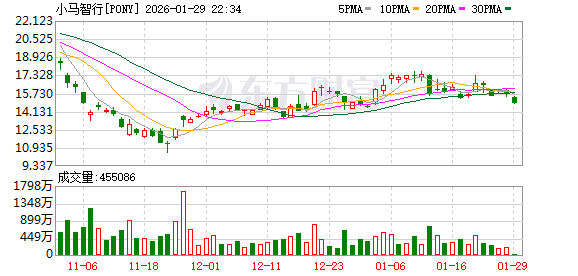
广汽集团:2025年4月23日,安滴科技在上海车展上发布全球首款前装量产L4级自动驾驶汽车
Zheng Quan Ri Bao Zhi Sheng· 2026-01-22 14:07
Core Viewpoint - GAC Group is actively developing a comprehensive L4 autonomous driving ecosystem, focusing on Robotaxi commercialization through strategic partnerships and investments in autonomous driving technology companies [1] Group 1: Company Initiatives - GAC Group is one of the early domestic automakers to systematically layout around Robotaxi, aiming to create a full chain from R&D, production to commercial operation [1] - The company has incubated a smart mobility platform, Qichuxing, which has launched Robotaxi commercial demonstration operations in multiple locations in the Greater Bay Area [1] - In 2024, GAC Aion and Didi Autonomous Driving will jointly establish Guangzhou Andi Technology Co., Ltd., focusing on L4 Robotaxi R&D and mass production [1] Group 2: Strategic Partnerships and Investments - GAC Capital, a wholly-owned subsidiary, has invested in several domestic autonomous driving technology companies, including Didi Autonomous Driving, WeRide, and Pony.ai, to deepen strategic cooperation around Robotaxi commercialization [1] - On April 23, 2025, Andi Technology will unveil the world's first mass-produced L4 autonomous vehicle at the Shanghai Auto Show, marking a significant milestone in Robotaxi commercialization [1] - The seventh-generation Robotaxi model, co-developed with Pony.ai, will also be officially launched on the same day, laying the foundation for large-scale commercialization of Robotaxi [1]

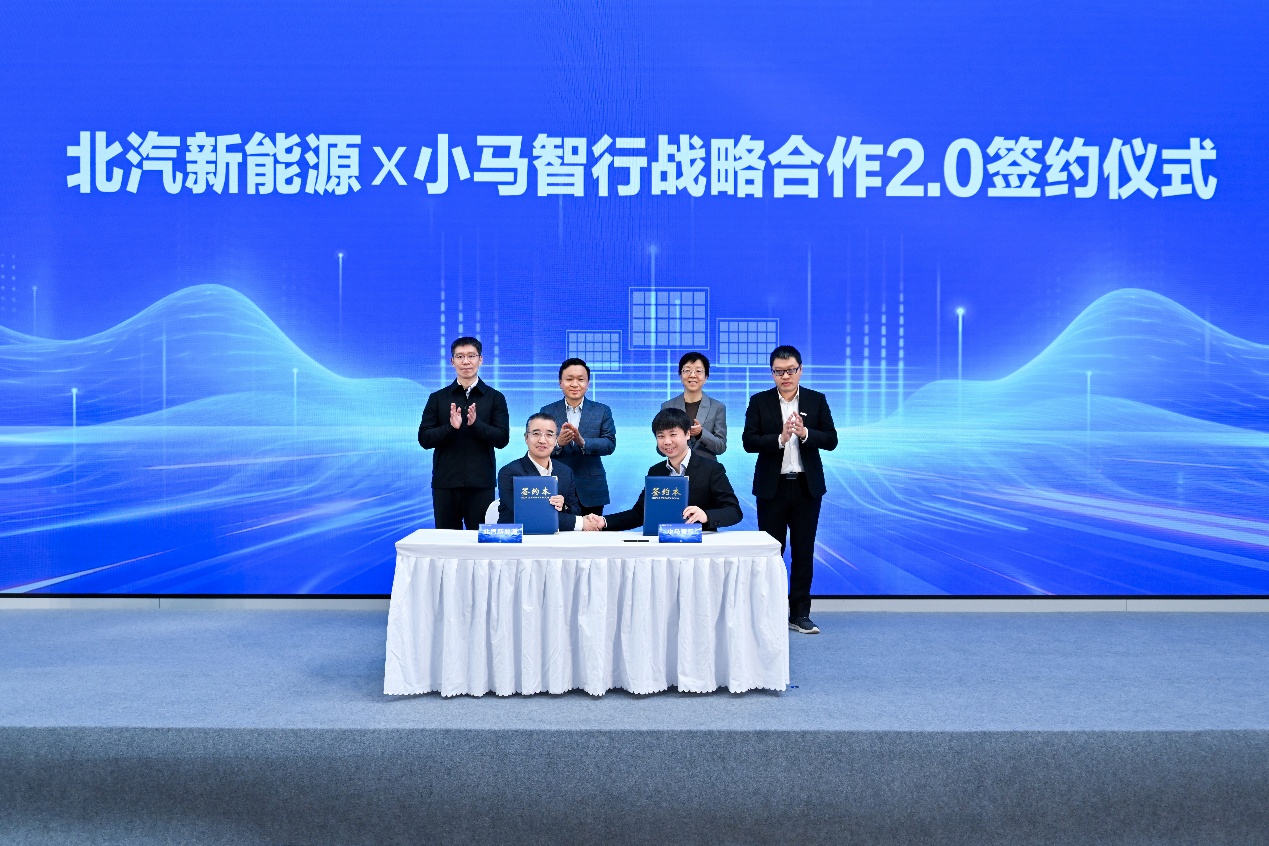
“五位一体”何以驱动Robotaxi加速商业化落地?北汽新能源与小马智行给出系统答案
Zhong Guo Qi Che Bao Wang· 2026-01-12 04:24
Core Insights - The commercialization of Robotaxi is a key indicator of the maturity of the autonomous driving industry, with a focus on breaking down barriers in technology, production, operations, and ecosystem to create a sustainable business model [1][17] - BAIC New Energy and Pony.ai have established a comprehensive strategic partnership to accelerate the commercialization of Robotaxi, setting a benchmark for collaborative innovation in China's intelligent driving industry [1][3] Group 1: Strategic Partnership - The strategic cooperation between BAIC New Energy and Pony.ai is built on the successful outcomes of their initial collaboration, which laid the groundwork for a comprehensive "five-in-one" collaborative model [4] - The partnership aims to integrate product development, market strategies, industrial support, ecosystem building, and capital investment to enhance the commercialization of Robotaxi [8][11] Group 2: Technological Advancements - The collaboration has achieved significant milestones, including the launch of the L4-level Extreme Fox Alpha T5 Robotaxi, which combines BAIC's hardware with Pony.ai's advanced software systems [4][10] - The Extreme Fox Alpha T5 Robotaxi has demonstrated a safety level exceeding human driving by over ten times, enabling it to operate in various complex driving scenarios [5] Group 3: Market Strategy - The partnership is focused on expanding the Robotaxi market both domestically and internationally, with plans to strengthen operations in key areas like Beijing and Shenzhen while targeting markets in the Middle East and Europe [10] - The strategic framework emphasizes a comprehensive approach to commercialization, addressing product reliability, market demand, and ecosystem integration [8][10] Group 4: Supply Chain and Cost Management - A key aspect of the collaboration is the initiative to optimize the supply chain for L4 autonomous vehicles, aiming to enhance local production capabilities and reduce reliance on external suppliers [13] - The partnership will focus on building a sustainable ecosystem that integrates various aspects of the Robotaxi business, from research and development to customer service [13] Group 5: Capital and Ecosystem Development - The strategic partnership will leverage capital to support technology development, supply chain construction, and global market expansion, ensuring long-term benefits for both companies [14] - The collaboration represents a shift from isolated efforts to a more integrated approach in the intelligent driving industry, fostering a competitive ecosystem [15][16] Group 6: Global Impact - The partnership is positioned to provide a replicable and sustainable "Chinese solution" for the global smart mobility market, showcasing China's advancements in both technology and business models [16][18] - The ongoing collaboration is expected to significantly influence the global landscape of intelligent driving, with Chinese companies emerging as key players in the transformation of mobility [18]

吉利出行业务加速整合!曹操出行斥资3亿收购耀出行和吉利商旅
Guo Ji Jin Rong Bao· 2025-12-31 16:09
Core Viewpoint - Geely's integration efforts are advancing as Caocao Travel announces two strategic acquisitions, acquiring 100% of Yaochuxing for 225 million yuan and 100% of Geely Business Travel for 65 million yuan, totaling nearly 300 million yuan [2][4] Group 1: Company Overview - Caocao Travel, founded in 2015 and headquartered in Suzhou, is a ride-hailing platform incubated by Geely Holding Group and is the second-largest shared mobility platform in China [4] - Yaochuxing is a high-end mobility brand co-created by Geely and Mercedes-Benz, while Geely Business Travel focuses on comprehensive travel management services [4][5] Group 2: Strategic Implications - The acquisition of Yaochuxing will enhance Caocao Travel's high-end service offerings and expand its vehicle lineup, while also providing a platform for international expansion [4][5] - Geely Business Travel's corporate client resources will facilitate cross-selling opportunities, aiding Caocao Travel in rapidly expanding its corporate client base and market share [5] Group 3: Market Position and Financial Performance - Caocao Travel is transitioning from a single ride-hailing platform to a comprehensive service provider, aiming to fill gaps in high-end business travel and corporate travel management [5][7] - In the first half of the year, Caocao Travel reported revenues of 9.456 billion yuan, a 53.5% year-on-year increase, with a net loss reduced by 34% to 330 million yuan and a gross margin improvement to 8.4% [7][8] Group 4: Competitive Landscape - The Chinese internet taxi market is projected to reach 83.4 billion yuan by 2025, with the business taxi segment growing at 18.4%, while Didi holds a leading market share of 62.9% [9] - The acquisition will allow Caocao Travel to directly access luxury vehicle capacity and high-end customer resources, enhancing its competitive edge in the market [10]
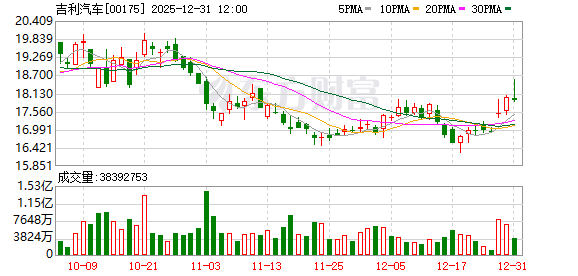
港股异动 曹操出行(02643)早盘涨超6% 公司拟收购耀出行及吉利商旅 打造一站式科技出行平台
Jin Rong Jie· 2025-12-31 03:09
Core Viewpoint - Caocao Travel (02643) announced two significant strategic acquisitions, acquiring 100% of Weixing Technology Co., Ltd. (referred to as "Yaotong Travel") and planning to acquire 100% of Zhejiang Geely Business Service Co., Ltd. (referred to as "Geely Business Travel") [1] Group 1 - Caocao Travel's stock rose over 6% in early trading and was up 2.32% at HKD 30.92 with a trading volume of HKD 326.03 million [1] - Following the completion of these acquisitions, Yaotong Travel and Geely Business Travel will become wholly-owned subsidiaries of Caocao Travel [1] - This move aims to enhance Caocao Travel's product matrix and create a one-stop technology travel platform [1] Group 2 - Caocao Travel is a key commercial vehicle for Geely Holding Group's Robotaxi initiative, focusing on building a leading global technology travel platform [1] - After the integration, Caocao Travel will further consolidate internal resources to create business synergy, positioning itself as the core platform for Geely Holding Group's mobility services and tapping into the growth of the business travel market [1]
网约车这一年:司机谋求打破低价,平台押注Robotaxi和出海
Di Yi Cai Jing· 2025-12-28 03:50
Core Insights - The ride-hailing industry is transitioning from a growth phase to a new stage of supply-demand balance, with platforms, drivers, and regulators facing challenges and actively working to optimize pricing mechanisms and driver rights [1] Supply and Demand Balance - Drivers are experiencing income pressure, with reported monthly earnings dropping from 8,000 yuan last year to under 7,000 yuan this year, despite unchanged online hours [2] - In Nanjing, a driver noted a decrease in monthly earnings from approximately 15,000 yuan in 2022 to around 9,000 yuan in 2025, indicating a broader trend of income decline amid increased competition [2] - Overall, while the number of ride requests is growing, the supply of drivers is increasing at a faster rate, leading to pressure on average daily orders per vehicle and driver income [2][4] Attempts to Break Low Pricing - Platforms have initiated measures to address low pricing issues, including reducing commission rates. For instance, Didi plans to lower its maximum commission from 29% to 27% by year-end [5] - T3 and Cao Cao have also announced similar reductions in their commission structures, with T3 aiming to decrease the proportion of orders with higher commissions [5][6] - Regulatory bodies have been actively involved, pushing for improvements in commission rates and driver rights, with multiple regions implementing new management guidelines for ride-hailing services [6][7] Expansion Opportunities - As the domestic ride-hailing market matures, platforms are exploring new avenues such as Robotaxi and international expansion. For example, Hello announced plans to enter the Robotaxi sector, aiming for mass production by 2026 [9] - Cao Cao has set ambitious global goals, planning to establish five operational centers worldwide and promote Robotaxi services in 100 cities, targeting a total transaction value of 100 billion yuan over the next decade [9][10] - Platforms are also expanding internationally, with Didi and Cao Cao forming partnerships in Abu Dhabi to advance autonomous driving technologies, and Gaode launching ride-hailing services in 24 countries [10][11]
年终盘点|网约车这一年:司机谋求打破低价,平台押注Robotaxi和出海
Di Yi Cai Jing· 2025-12-28 01:46
Core Insights - The domestic ride-hailing industry is transitioning from a growth phase to a mature market, prompting platforms to explore new avenues such as Robotaxi and international expansion [1][10][13] Market Dynamics - The ride-hailing industry is experiencing a new phase of supply-demand relationship, with platforms, drivers, and regulators facing challenges and actively working on price mechanism optimization, driver rights protection, and service model innovation [2][5] - Despite an increase in passenger orders, the rapid growth of supply has intensified competition among drivers, leading to a decline in average daily orders per vehicle and driver income [3][5] Driver Challenges - Drivers are facing income pressure, with reported monthly earnings decreasing from 8,000 yuan to below 7,000 yuan for some, while others have seen a drop from 15,000 yuan to around 9,000 yuan [3] - The average daily online hours for drivers have increased, indicating a higher workload without a corresponding increase in income [4] Pricing and Commission Adjustments - Platforms are attempting to alleviate low pricing issues by reducing commission rates, with major companies like Didi and T3 announcing lower commission caps [6][7] - Regulatory bodies have been actively involved in addressing high commission rates, leading to new guidelines that clarify the responsibilities of ride-hailing platforms in protecting driver rights [7][8] International Expansion and Robotaxi Development - Companies are increasingly focusing on international markets and Robotaxi services as a response to domestic market saturation, with plans for significant investments and deployments in these areas [10][12][13] - Didi and Caocao are establishing partnerships and launching services in various countries, indicating a strategic shift towards global operations [12][13] Future Outlook - Industry experts suggest that the price reduction space may be limited, and more measures will be needed to enhance driver income, including transparent pricing mechanisms and improved service offerings [9][13] - The successful commercialization of Robotaxi will require platforms to build technological barriers, control costs, and integrate the supply chain effectively [13]