VR/AR

Search documents
老街新春更有戏
Huan Qiu Wang· 2026-02-27 02:19
来源:人民日报海外版 "两岸数智非遗年"系列活动吸引市民游客驻足。 "人机共舞"科技感十足。本文配图均由厦门市思明区融媒体中心提供 始建于1925年的福建厦门中山路,一端深入城市商圈,另一端连着碧波大海,是厦门历史最悠久、人气 最旺盛的商业街之一。今年春节假期,"两岸数智非遗年"系列活动在此上演。两岸同胞携手传承中华优 秀传统文化,共创数智文旅新场景、新业态,用一场"科技+非遗"的文化盛宴,为老街带来浓浓年味。 活动一推出,中山路热度再次攀升,吸引游客纷至沓来。 打造沉浸场景 捏面人、吹糖人、传统大漆等技艺的现场展示,让市民游客近距离感受传统手艺;鱼灯天幕、巨型灯笼 装置与花车巡游交相辉映——春节期间,位于厦门市思明区的中山路,一步一景,尽显闽南侨乡风韵与 新春烟火气息。 "这个春节来厦门,太值了!"2月20日,农历正月初四下午,来自上海的游客陈女士一家刚踏入街区, 便被热闹的场景吸引。这是陈女士一家首次来厦,恰逢这场特色文旅活动举办。 据了解,"两岸数智非遗年"系列活动期间,中山路推出10大主题、百余场活动,街区内设置两岸非遗市 集,汇聚地道美食、民俗表演、科技产品展示等多元内容,为市民游客打造了一个沉浸式 ...


(新春走基层)“00后”赋能丝路潮玩 青年学子投身机器人文旅新场景
Zhong Guo Xin Wen Wang· 2026-02-26 04:08
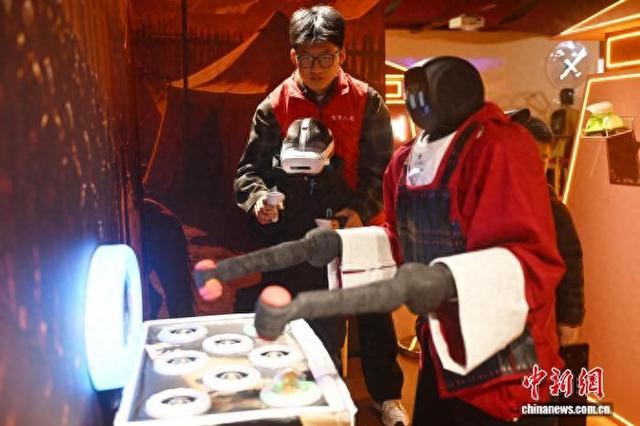
在兰州站,项目还原黄河古渡口漕运场景,游客化身漕运官,通过AR操控人形机器人搬运物资,在限 时任务中体验丝路物资转运的繁忙与重要。"小朋友排队体验,亲手操控大型机器人,和玩具完全不一 样。"岳森旺说,该环节重点让参与者直观感受机器人运动控制与协作能力。 武威站以霍去病河西之战为背景,游客佩戴VR眼镜,操控机器人打击3D打印建模的沙暴模型,交互模 拟沙场御敌,在虚实融合中感受历史人物的非凡气魄。 中新网兰州2月26日电 (记者 闫姣)黄河古渡口里机器人协同漕运、七彩丹霞赛道上机器狗越障、敦煌洞 窟内机械臂修复壁画、玉门关前AI机器人对诵边塞诗……马年春节期间,兰州市开启一场融合丝路文 脉与前沿科技的沉浸式体验,吸引大批年轻人前往。更有本地高校学子、青年工程师深度参与技术保障 与场景落地,为丝路科技文旅注入新活力。 由甘肃人形机器人创新中心联合兰州大学信息科学与工程学院、上海智元机器人、上海戏剧学院等机构 打造的移动机器人潮玩乐园,于2月13日在兰州城关区亮相,将持续开放至4月30日。项目以"钢铁信 使,时空守护"为主题,沿河西走廊五城脉络,把丝路文化与人形机器人技术深度融合,成为当地新春 科技文旅新晋打卡地。 ...

上市十年首亏!青岛城市传媒发布2025年业绩预告由盈转亏
Sou Hu Cai Jing· 2026-02-25 05:52
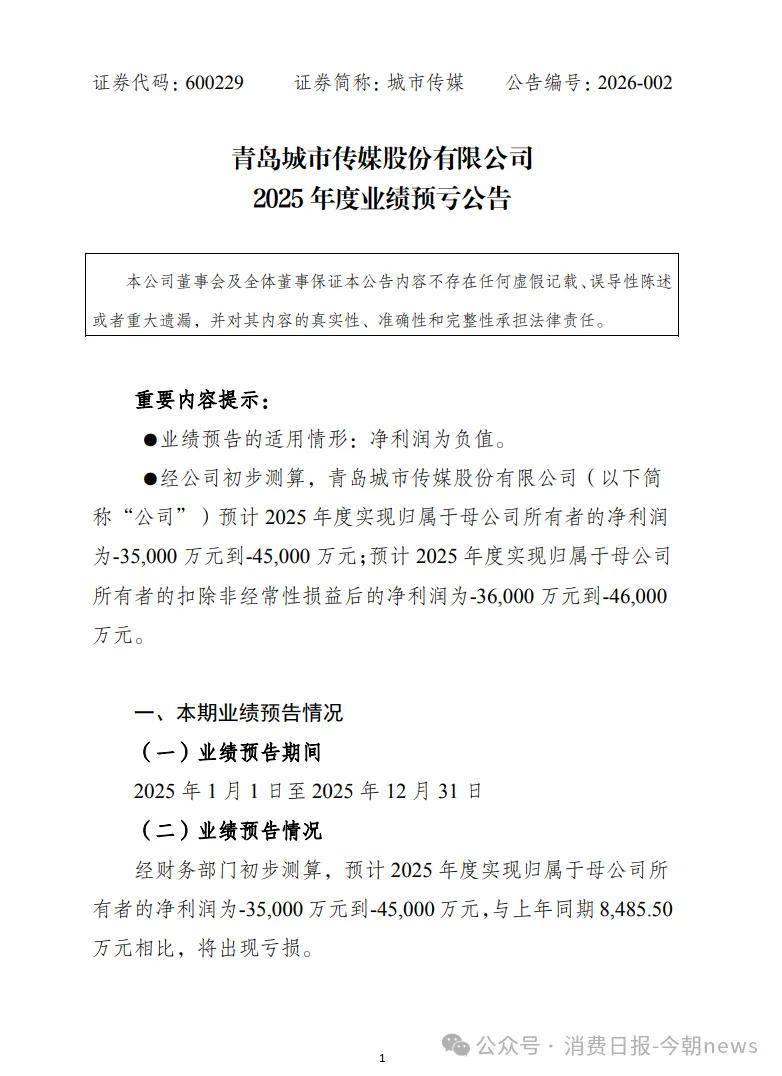
证券代码:600229 证券简称:城市传媒 公告编号:2026-002 青岛城市传媒股份有限公司 2025 年度业绩预亏公告 本公司董事会及全体董事保证本公告内容不存在任何虚假记载、误导性陈述 或者重大遗漏,并对其内容的真实性、准确性和完整性承担法律责任。 重要内容提示: 润为-3.5亿元至-4.5亿元,较2024年的8485.50万元净利润实现同比由盈转亏,利润降幅超4.3亿元,核心业务与 多元布局均面临严峻考验。 ●经公司初步测算,青岛城市传媒股份有限公司(以下简 称"公司")预计2025年度实现归属于母公司所有者的净利润 为-35,000万元到-45,000万元;预计 2025年度实现归属于母公司 所有者的扣除非经常性损益后的净利润为-36.000万元到-46.000 万元。 一、本期业绩预告情况 (一)业绩预告期间 2025年1月1日至2025年12月31日 (二)业绩预告情况 经财务部门初步测算,预计2025年度实现归属于母公司所 有者的净利润为-35,000万元到-45,000万元,与上年同期8.485.50 万元相比,将出现亏损。 2 公众号 · 消费日报-今朝news 2026年1月24日,青 ...

新春消费新体验!厦门通过AI赋能打造新业态新场景
Sou Hu Cai Jing· 2026-02-18 10:59
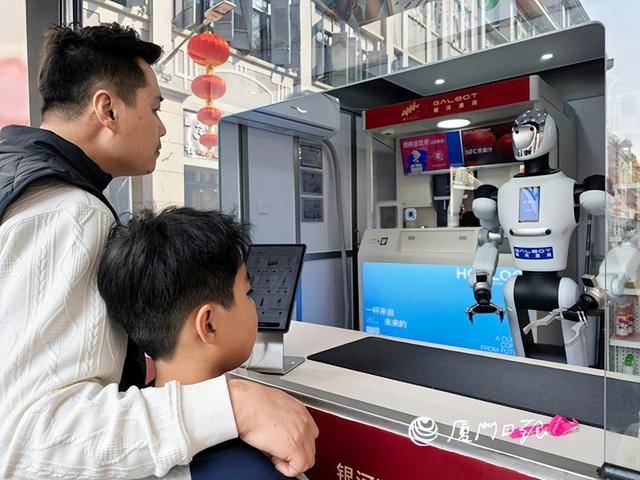
Core Viewpoint - Xiamen is integrating AI technology into daily life, enhancing the traditional experience of the Spring Festival with innovative digital interactions and smart services [1][11]. Group 1: New Business Models - AI robots are being deployed in various sectors, including tourism, retail, and service industries, creating new business models that enhance consumer experiences during the Spring Festival [2][4]. - The introduction of AI-powered guides and service robots in locations like Gulangyu Island provides personalized experiences, from storytelling to food recommendations, ensuring seamless digital tourism [2][4]. - Retail environments are evolving with the presence of robots that handle tasks such as order taking, payment processing, and product delivery, showcasing a new era of automated retail [4][6]. Group 2: New Experiences - The integration of traditional cultural performances with advanced technology, such as AI and robotics, creates immersive experiences that attract visitors and enhance cultural appreciation [7][9]. - Interactive digital experiences, including VR and AR, allow visitors to engage with historical narratives and cultural heritage in innovative ways, transforming traditional tourism into a tech-savvy adventure [9][10]. - Smart shopping experiences are being developed, where AI systems assist customers in navigating malls, recommending stores, and providing real-time support, making shopping more efficient and enjoyable [10]. Group 3: Enhanced Consumer Engagement - The use of AI technology in public spaces, such as smart shopping malls and waterfront attractions, offers consumers a blend of convenience and entertainment, enriching their overall experience [10][11]. - AI-driven services, such as intelligent coffee-making robots and automated customer service, are streamlining operations and enhancing customer satisfaction in retail environments [6][11]. - The combination of cultural events and technological innovations is redefining consumer engagement, making traditional festivities more vibrant and appealing to a tech-savvy audience [7][9].
这个春节,AI很忙
Xin Lang Cai Jing· 2026-02-11 18:46
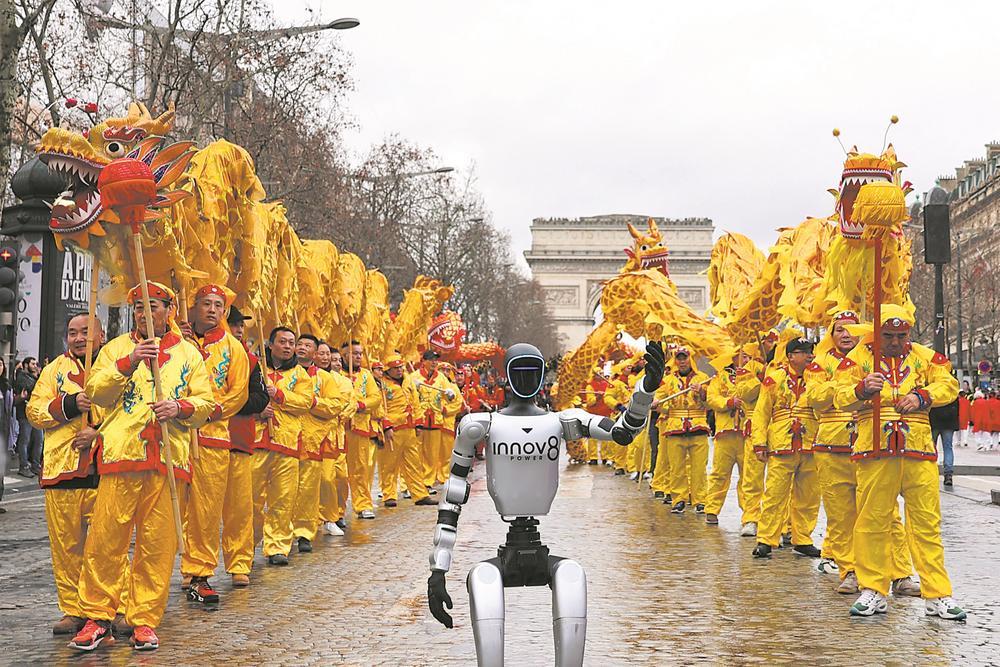
Group 1 - The integration of traditional customs with cutting-edge technology is creating new experiences for the upcoming Year of the Horse Spring Festival, showcasing AI, VR/AR, and big data in cultural activities [2] - Xi'an is leveraging digital technology to enhance historical experiences, with projects like "The Empire Code - Qin Shi Huang's Tomb" using XR technology to allow visitors to interact with virtual historical scenes [2] - The Beijing Technology Temple Fair is upgraded to attract public participation, featuring a "robot party" with over ten leading intelligent companies showcasing various robots performing traditional arts [3] Group 2 - The use of AI and robotics is enhancing travel experiences during the Spring Festival, with innovations like AI digital tour guides and climbing assistance robots in scenic areas [3] - The integration of technology in cultural presentations is accelerating the development of related technologies, preventing cultural dilution and enriching the "cyber Spring Festival" experience [4] - Robots are expected to play a significant role in performances during the Spring Festival Gala, indicating advancements in technology beyond mere entertainment [3][4]
华珠成立微短剧产业学院
Xin Lang Cai Jing· 2026-02-02 00:29
华珠党委副书记、校长王建武指出,学院将重点推进三方面工作:一是创新人才培养模式,积极与行业 头部企业资源共建共享实习实训基地,推广"项目驱动式"教学,着力培养应用型人才。二是强化技术赋 能与创新转化,致力于推动VR/AR、人工智能等新技术在微短剧创作中的应用研发。三是构建开放生 态,积极承接社会服务项目,举办行业论坛、专业赛事,开展职业技能培训,为区域微短剧产业发展贡 献力量。 据介绍,微短剧产业学院的成立,既是华珠深化产教融合的重要实践,更是服务区域文化产业高质量发 展的战略举措。未来,学院将持续探索"微短剧+实体经济"的创新模式,致力于成为国内微短剧领域产 学研合作的典范和重要的人才孵化器。 羊城晚报讯 记者陈亮、通讯员陈思华报道:华南农业大学珠江学院(以下简称"华珠")近日迎来重要 时刻——大湾区首所微短剧产业学院在肇庆(四会)校区正式成立。作为以影视传媒为发展特色的应用 型高校,华珠以"产教融合、服务区域"为使命,通过整合"湾区国际创作者生态谷""湾区国际微短剧发 展研究中心""大国乡村微短剧拍摄基地"等平台资源,构建微短剧全产业链生态闭环,为大湾区文化产 业发展注入新动能。 肇庆市委宣传部副部长、市 ...
创新怀旧经济,激活体验消费潜力
Xin Lang Cai Jing· 2026-01-21 13:24
Core Insights - The nostalgic economy in China is projected to reach a market size of 355.25 billion yuan in 2025, with a year-on-year growth of 11.7%, and is expected to reach 587.85 billion yuan by 2030 [1] - Nostalgic economy, driven by consumer sentiment, utilizes old items, traditional crafts, and classic IPs to evoke emotional resonance and meet consumers' spiritual needs while also providing practical value and social attributes [1][2] Group 1: Market Trends - The trend of nostalgia has transformed from mere emotional resonance into a significant business opportunity, with young consumers driving this change [2] - Sales of nostalgic products such as retro cameras, old gaming consoles, and nostalgic snacks have seen a 120% year-on-year increase, with 65% of orders coming from the 18 to 35 age group [1] Group 2: Consumer Behavior - In a fast-paced, uncertain world, nostalgia serves as a "psychological anchor," providing a sense of security, continuity, and identity, while experiential consumption translates this abstract comfort into tangible social moments [3] - Nostalgic experiences cater to emotional healing, allowing consumers to reconnect with childhood memories and cultural heritage, thus fulfilling deeper psychological needs [3] Group 3: Challenges and Innovations - The nostalgic economy faces challenges such as inflated prices, severe homogenization, counterfeit goods, and a lack of innovation [4] - To enhance the nostalgic experience, companies should leverage technologies like VR/AR to recreate classic scenes, explore local unique memories, and integrate contemporary aesthetics with retro elements [4]
十年前邮件分歧看Meta元宇宙困局:卡马克 vs 扎克伯格
Sou Hu Cai Jing· 2026-01-20 00:43
Core Insights - Meta's ten-year journey into the metaverse has faced significant challenges, resulting in over $70 billion in losses, layoffs, studio closures, and a strategic pivot towards AI and practical technology initiatives like smart glasses [1][9] - Despite setbacks, the existence of successful VR applications like "Gorilla Tag" and VRChat indicates that real social experiences in virtual reality are achievable, diverging from Meta's grand vision [1][9] Strategic Vision: Divergence Between Leaders - Mark Zuckerberg views VR/AR as the next major computing platform, aiming to reduce Meta's reliance on Apple and Google, while John Carmack emphasizes starting small with high-quality VR applications rather than building a vast ecosystem [2][4] - Zuckerberg's strategic goals include establishing a strong position in the next computing wave, while Carmack warns against the pitfalls of overambitious plans that may not yield immediate user benefits [2][4] Ecosystem Development: Acquisition vs. Collaboration - Zuckerberg argues for acquiring Unity to enhance Meta's VR strategy, believing it crucial for increasing platform service adoption and mitigating risks of being outpaced by competitors [5][6] - In contrast, Carmack advocates for leveraging existing successful companies' work rather than attempting to control all aspects of the ecosystem, suggesting collaboration with established services like Netflix [6][10] Technical Approach: Operating System and Practicality - Zuckerberg acknowledges the need for significant investment in hardware and systems to accelerate VR/AR development, while Carmack opposes the necessity of a proprietary operating system, arguing it could become a burden [7][12] - Carmack emphasizes the importance of focusing on user experience and practical applications rather than abstract technological frameworks [7][12] Cultural Perspective: Innovation vs. User-Centricity - Zuckerberg highlights the importance of innovation for Meta's brand, asserting that success in VR/AR will enhance the company's reputation and attract talent [8][30] - Carmack critiques the company's culture, noting a disconnect between product development and user needs, suggesting that Meta's focus on media over user experience has hindered its progress [8][10] Retrospective Analysis: Lessons from Past Communications - The emails from 2015 foreshadowed Meta's challenges in the metaverse, with Zuckerberg's vision of VR/AR as a dominant platform facing underestimation of technical challenges and timelines [9][10] - Carmack's warnings about the risks of ambitious projects and the need for a user-focused approach have proven prescient, highlighting the importance of practical solutions over grand narratives [9][10]


鲁酒文化大模型建设正式启动
Qi Lu Wan Bao· 2026-01-16 13:24
Group 1 - The "2025 Lu Liquor High-Quality Development Forum and Lu Liquor Classic Inheritance Brand Release" was held on January 15, 2026, in Jinan, marking the official launch of the Lu Liquor Cultural Model, which aims to be the first digital and intelligent cultural model in the liquor industry [1] - The Lu Liquor Cultural Model will systematically promote the protection, excavation, dissemination, and innovative transformation of Lu liquor culture through digital and intelligent means, injecting new momentum into the high-quality development of the core industry [1][2] - The construction of the Lu Liquor Cultural Model includes the establishment of a cultural gene bank, which will consist of five core databases: historical literature, brewing techniques, brand assets, production area ecology, and consumption scenarios, forming a complete "Lu Liquor Cultural Knowledge Brain" [1][2] Group 2 - The model will enable the transformation of static cultural information into a dynamic knowledge system through deep processing and knowledge extraction of vast cultural data, creating a Lu Liquor cultural knowledge graph [2] - The model will enhance cultural content creation by utilizing AIGC capabilities to automatically generate diverse cultural dissemination materials, significantly improving content creation efficiency and richness [2] - The construction of immersive cultural experience scenarios using digital twin and VR/AR technologies will allow users to remotely experience the brewing environment and interactively learn about brand history, greatly expanding the perception and dissemination of Lu liquor culture [2] Group 3 - The model aims to drive value creation and transformation upgrades in the industry by digitizing and modeling core cultural elements such as brewing techniques and flavor systems, providing data-driven decision support for process optimization and new product development [2] - The use of digital humans and intelligent marketing tools will deepen emotional connections with consumers, particularly younger demographics, enhancing brand loyalty and market competitiveness [3] - The establishment of digital archives for non-heritage brewing techniques and VR training systems will ensure the sustainable transmission of traditional skills, while a knowledge-sharing platform will promote collaboration among enterprises, enhancing the overall competitiveness of the Lu liquor industry [3]
兴证全球基金王品清仓卸任基金 任职表现“喜忧参半”
Xi Niu Cai Jing· 2025-12-30 05:20
Group 1 - Wang Pin has resigned as the fund manager of the Xingquan Global Vision Equity Fund due to personal reasons and will not take on any other positions within the company [1][2] - This marks Wang Pin's second resignation from a fund product in the year, having previously stepped down from the Xingquan He Yuan Two-Year Holding Mixed Fund in March [2] - Since Wang Pin's management began in September 2017, the Xingquan Global Vision Equity Fund has achieved a return of 102.20% [2] Group 2 - The Xingquan He Yuan Two-Year Holding Mixed Fund has experienced a return of -18.19% as of March 6, 2025, when Wang Pin left [2] - The fund was established in April 2021 with an initial net subscription amount of approximately 4.032 billion, but by the end of Q3 2025, its net asset value had decreased to about 1.949 billion [2] - As of December 24, 2025, the fund's unit net value has decreased by 6.41% since inception, with a 28.35% increase over the past year and an 11.35% decrease over the last three months [3] Group 3 - The fund's investment strategy focuses on trending sectors, with a significant allocation of 92.95% in stocks and 4.53% in bonds as of Q3 [3] - The fund has increased its allocation to the computing power-related industry chain and plans to focus on growth industries represented by AI, VR/AR, robotics, and innovative pharmaceuticals [3] - In Q2, the fund also increased its allocation to the innovative pharmaceutical sector while considering uncertainties related to tariffs [3]