
VR/AR技术

Search documents
六大“政策包”辐射带动 广东文化产业多点突破
Sou Hu Cai Jing· 2025-11-27 01:20
Core Insights - The Guangdong cultural industry has shown strong development momentum, leading the nation for over 20 years and achieving high-quality growth through new productive forces in the last five years [1][11]. Group 1: Industry Performance - In 2024, Guangdong's cultural industry revenue is projected to reach 30,252.10 billion yuan, marking a 9.9% increase from the previous year, outpacing the national growth rate by 2.8 percentage points [2][12]. - Guangdong's cultural industry has maintained its position as the national leader for 22 consecutive years, accounting for approximately one-sixth of the national total [2][13]. - In the first three quarters of 2025, revenue from large-scale cultural enterprises in Guangdong exceeded 20,000 billion yuan, with profits surpassing 2,000 billion yuan [2][13]. Group 2: Investment Advantages - The cultural industry in Guangdong boasts nine significant advantages, including a large industrial scale, leading cultural manufacturing, and a concentration of cultural services [2][13]. - Cultural manufacturing achieved a revenue of 12,639.86 billion yuan in 2024, growing by 11.4% and representing 25.5% of the national cultural manufacturing revenue [2][13]. Group 3: Technological Integration - The integration of technology into the cultural industry has led to innovative applications, such as the use of humanoid robots and AR technology during events [4][14]. - Over the past five years, investment in cultural technology integration has doubled, with AIGC technology driving a 200% increase in digital exhibitions [5][15]. Group 4: Cross-Industry Collaboration - The cultural industry and manufacturing sectors in Guangdong have become deeply intertwined, with cultural elements increasingly integrated into products, raising the proportion from 40% to 60% [6][16]. - The opening of new cultural tourism areas has significantly boosted local economies, exemplified by the Kaiping Diaolou and Overseas Chinese Cultural Tourism Area, which is expected to generate over 6 billion yuan in 2024 [6][16]. Group 5: Policy Impact - Guangdong has introduced six major policy packages aimed at supporting the cultural industry, including 87 policy measures across six sectors [7][17]. - In the first three quarters of 2025, Guangzhou's cultural industry revenue reached 4,776.3 billion yuan, while Shenzhen's reached 10,917.64 billion yuan, reflecting significant growth driven by these policies [7][17][18].
2025年中国空间设计软件行业壁垒、市场政策、产业链图谱、市场规模、竞争格局及发展趋势研判:市场集中度较高[图]
Chan Ye Xin Xi Wang· 2025-09-30 01:55
Core Insights - The space design software industry is experiencing rapid digital transformation across various sectors, with a projected market size of 340 million yuan in 2024, reflecting a year-on-year growth of 13.33% [1][8]. Industry Overview - Space design software refers to tools and digital platforms used for creating and managing residential, commercial, and other spaces, with CAD software playing a crucial role in enhancing design efficiency and visualization [2][4]. Market Barriers - The industry faces significant technical barriers due to the complexity of developing advanced technologies, such as high-speed 3D rendering and AI integration, which require specialized skills and knowledge [4][5]. Market Policies - The Chinese government has implemented various policies to support the development of the software industry, including space design software, creating a favorable environment for growth [5][6]. Industry Chain - The industry chain includes upstream hardware suppliers, midstream software developers, and downstream application markets, with varying demands across sectors like architecture, interior design, and gaming [6][7]. Competitive Landscape - The market is concentrated, with leading players like Qunhe Technology, Autodesk, and Zhongwang Software dominating the space. The CR3 market share is expected to exceed 60% in 2024 [9][10]. Company Profiles - Zhongwang Software specializes in CAD solutions and reported a total revenue of 334 million yuan in the first half of 2025, with a significant portion from standard software [10]. - Qunhe Technology, established in 2011, is a leading provider of cloud-native space design software, utilizing AI and GPU technology to enhance design capabilities [10][11]. Future Trends - The future of the industry will see AI-driven automated design generation and personalized recommendations based on user data, alongside the integration of VR/AR technologies for immersive client experiences [11].


2025年“辅助器具创新产品首发活动”在京举办|快讯
Hua Xia Shi Bao· 2025-09-12 09:01
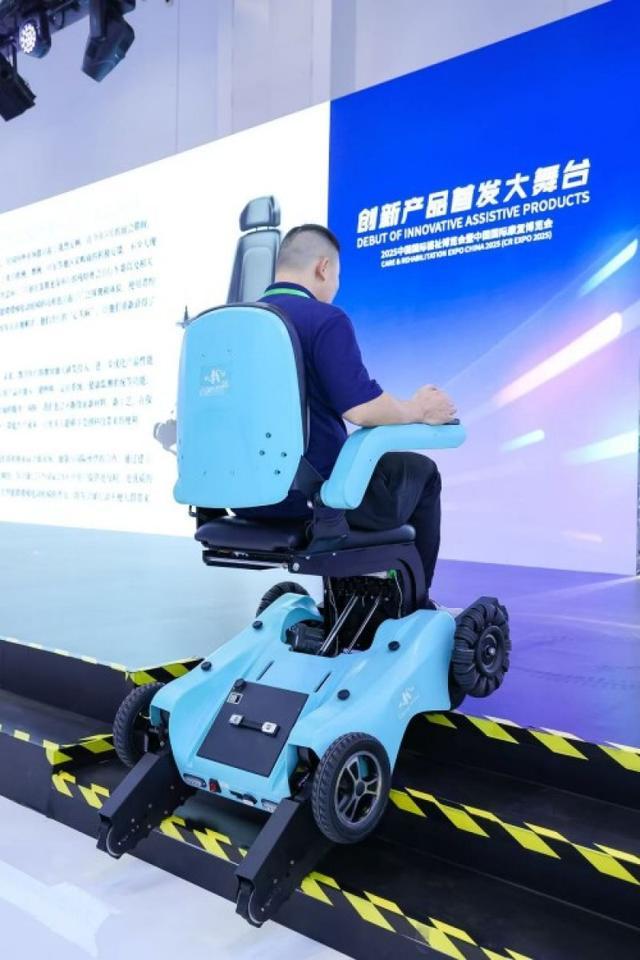
Core Insights - The "Assistive Devices Innovation Product Launch Event" was successfully held in Beijing on September 12, focusing on "Technology Empowerment, Shared Welfare" [2] - The event aimed to promote the integration of technological innovation and industrial innovation in the assistive devices sector, providing a platform for domestic and international companies to launch innovative products [3] Group 1 - A total of 59 products from 52 companies were launched, covering areas such as smart/multi-functional wheelchairs, smart prosthetics, exoskeleton robots, rehabilitation robots, brain-computer interfaces, information accessibility, VR/AR technology, and artificial intelligence [3] - Special sessions were held for key regions, including Suzhou, Changsha, Shenzhen, and Haidian District, to showcase their policies and achievements in technology-assisted disability support [3] Group 2 - The China Disabled Persons' Assistive Devices Center and the China Academy of Information and Communications Technology signed a framework cooperation agreement at the event, aiming for a strategic partnership in technology-assisted disability support and smart assistive devices [5] - The event showcased the application results of technological innovations in disability support, providing a platform for companies to promote their products and facilitating collaboration among various stakeholders in the industry [7]
直播间找0ffer 如何实现人岗“真实”匹配
Zhong Guo Qing Nian Bao· 2025-08-27 23:37
Core Viewpoint - The rise of live-streaming recruitment has transformed the job market, providing a new platform for real-time interaction between job seekers and employers, enhancing the efficiency of job matching [1][4][6]. Group 1: Live-streaming Recruitment Growth - Live-streaming recruitment has become a new digital recruitment product in the human resources service industry, with over 2.5 billion users seeking job opportunities on platforms like Kuaishou in 2023, and nearly 550 million live-streaming sessions held [1]. - By the end of 2024, various human resources departments have published 178,400 short videos related to recruitment activities and conducted 73,600 live-streaming sessions, accumulating 405 million viewers [1]. Group 2: Role of Live-streaming Recruiters - Live-streaming recruiters play a crucial role in bridging the gap between job seekers and employers, requiring them to understand both the employer's needs and the job seekers' expectations [2][4]. - Recruiters prepare extensively for each session, including creating presentations and filtering resumes post-event, to ensure effective communication of job opportunities [2][3]. Group 3: Interactive Features and Trust Building - The interactive nature of live-streaming recruitment allows for real-time Q&A, enhancing engagement and providing job seekers with immediate feedback on their inquiries [4][5]. - To build trust, all recruiting companies must register and undergo verification through official platforms, ensuring compliance and legitimacy [5][6]. Group 4: Challenges and Future Directions - Despite the popularity of live-streaming recruitment, challenges remain, such as the need for in-person job environment assessments and the potential for misinformation [6][7]. - The industry is moving towards incorporating AI and VR technologies to improve job matching accuracy and provide immersive experiences for job seekers [8].
活动策划行业发展报告:市场现状、发展概况及未来前景分析(2025版)
Sou Hu Cai Jing· 2025-08-08 03:22
Core Insights - The event planning industry in China is experiencing significant growth, driven by increasing demand from various sectors including government, enterprises, and individuals, with a projected market size of 3460.79 billion yuan in 2024, reflecting an 8.23% year-on-year growth [1][3][8]. Industry Overview - Event planning is defined as a systematic process of designing and executing themed events to achieve specific goals such as brand promotion and user interaction [1][6]. - The industry is supported by a diverse supply chain that includes venues, equipment providers, and human resources, while the demand side consists of corporate clients, government entities, and individual customers [3][6]. Market Dynamics - The number of registered enterprises in China reached 60.87 million by November 2024, marking a 5.4% increase year-on-year, which provides a broad growth opportunity for the event planning industry [3]. - The market is characterized by intense competition, with many small-scale companies and the entry of firms from related sectors such as advertising and entertainment [4]. Market Segmentation - The market is segmented into offline and online event planning, with offline activities accounting for approximately 60.34% and online activities for about 39.66% of the total market size in 2024 [8]. Future Trends - The integration of big data and smart analysis technologies is expected to enhance event planning processes, allowing for better prediction of trends and audience needs [4]. - Virtual and augmented reality technologies are anticipated to create innovative event experiences, particularly in exhibitions and educational training [4].
2025年入境旅游平台行业词条报告
Tou Bao Yan Jiu Yuan· 2025-08-04 12:55
Investment Rating - The report indicates a positive outlook for the inbound tourism platform industry, highlighting a rapid recovery and growth phase driven by policy support and market demand [4][5]. Core Insights - The inbound tourism platform industry is experiencing a significant recovery, with digital solutions enhancing the full-service experience for international tourists. The expansion of visa-free policies has directly contributed to an increase in tourist numbers. The market is diversifying, with emerging markets gaining traction. Technologies like AI and VR/AR are accelerating service upgrades and industry restructuring, improving tourist satisfaction [4][5][9][10][11]. Summary by Sections Industry Definition - The inbound tourism platform industry encompasses digital services for international tourists visiting China, including visa processing, itinerary planning, accommodation booking, local transportation, guiding services, and cultural experiences. The industry is benefiting from policies that facilitate travel, such as visa and payment simplifications, leading to a notable increase in market vitality [5]. Industry Characteristics - The industry is characterized by a deep interconnection between policy drivers and market recovery, a dual feature of traditional market segmentation and emerging market potential, and an accelerated digital transformation that enhances service quality and industry restructuring [9][10][11]. Development History - The industry has evolved through four stages: the nascent phase (1978-1991), the initiation phase (1992-2007), the rapid development phase (2008-2019), and the maturity phase (2020-present). Each phase reflects changes in technology, policy, and market dynamics [12][16][17]. Market Size - The inbound tourism platform market size grew from 24.285 billion RMB in 2019 to 26.967 billion RMB in 2024, with a compound annual growth rate (CAGR) of 2.12%. It is projected to expand from 33.902 billion RMB in 2025 to 84.676 billion RMB by 2029, with a CAGR of 25.71% [27][28]. Policy Analysis - Key policies include the expansion of visa-free access to 63 countries, which has significantly boosted inbound tourist numbers. The report emphasizes the importance of these policies in driving market growth and enhancing the overall tourist experience [29][33]. Competitive Landscape - The competitive landscape is characterized by a tiered structure, with leading companies like Shanghai Ctrip Business Co., Ltd. in the first tier, followed by companies like Tongcheng Travel and Zhejiang Fliggy Network Technology Co., Ltd. in the second tier. The report notes that competition is intensifying, particularly as leading firms leverage AI technologies to enhance user engagement and service offerings [35][36][37].
陕西发布《促进平台经济高质量发展若干措施》
Shan Xi Ri Bao· 2025-07-23 23:58
Group 1 - The provincial government is implementing measures to promote high-quality development of the platform economy, focusing on enhancing consumption and leading development [1] - Support will be provided for the construction and operation of online trading platforms, encouraging enterprises to expand sales through public networks and build vertical platforms to aid the digital transformation of SMEs [1] - The government aims to attract national platforms and cross-border e-commerce businesses, supporting the establishment of regional headquarters and operational centers [1] Group 2 - The initiative encourages the integration of live streaming with various sectors such as dining, commerce, exhibitions, and night economy to foster a vibrant commercial atmosphere [2] - There is a push for the deep integration of live streaming with traditional industries, promoting models that combine online reservations with offline experiences [2] - The government plans to enhance service levels across multiple business formats, guiding traditional malls to transform into community commercial centers [2]
将千年运河IP培育为文旅新增长极
Xin Hua Ri Bao· 2025-05-19 21:07
Core Viewpoint - The development of the Grand Canal in Jiangsu is emphasized as a cultural heritage that needs to be protected, inherited, and utilized effectively to foster a new growth pole in cultural tourism [1][3]. Group 1: Cultural and Historical Significance - The Grand Canal in Jiangsu has historically supported the livelihoods and prosperity of its people, with eight major cities and numerous cultural landmarks along its banks [2]. - The canal is home to 28 elements of world cultural heritage, covering a length of 325 kilometers, which constitutes one-third of the entire canal [2]. - There are 214 national key cultural relic protection units and 131 items of national intangible cultural heritage along the canal, highlighting its importance as a cultural heritage site [2]. Group 2: Challenges in Cultural Tourism Development - The cultural tourism development along the Grand Canal faces several bottlenecks, including insufficient depth in cultural resource exploration and ineffective resource conversion [3]. - There is a lack of systematic protection and promotion of cultural carriers such as ancient towns and historical sites, leading to a disconnect with the broader cultural narratives [3]. - The ecological protection efforts are hampered by inconsistent management across different cities, resulting in environmental degradation and challenges in balancing ecological preservation with tourism development [3]. Group 3: Strategic Recommendations for Development - To cultivate a cultural tourism super IP for the Grand Canal, a digital-enabled cultural value system should be established, integrating advanced technologies like blockchain and AI for resource management [4]. - An ecological governance model should be developed, focusing on coordinated efforts across regions to restore and protect the canal's ecological environment [4]. - A cultural and technological integration framework should be created to foster new business models in the cultural tourism sector, enhancing the overall tourism experience and promoting regional collaboration [4].
大力培育品质电商
Jing Ji Ri Bao· 2025-05-13 21:48
Group 1 - E-commerce has become a significant driver for the continuous expansion of the consumer market, with online retail sales reaching 36,242 billion yuan in Q1, a year-on-year increase of 7.9% [1] - The online retail of physical goods amounted to 29,948 billion yuan, growing by 5.7%, accounting for 24.0% of total retail sales of consumer goods [1] - The growth of e-commerce is supported by the increasing consumer groups such as the "post-00s," elderly population, and rural communities, breaking geographical barriers and enhancing shopping experiences through innovations like short videos and live streaming [1] Group 2 - The development of quality e-commerce requires strong policy support, including measures to enhance operational entities, innovation demonstration, and improvement of the business environment [2] - There is a need to establish strict quality control systems on e-commerce platforms and optimize regulatory methods using digital technologies for precise oversight and product traceability [2] - Encouragement for e-commerce platforms to invest in technologies like AI, big data, and blockchain to improve operational efficiency and enhance customer service through immersive shopping experiences [2] Group 3 - E-commerce platforms are encouraged to shift from price competition to differentiation by collaborating with quality brands and integrating with the real economy [3] - Emphasis on improving service quality throughout the sales process and establishing comprehensive governance and consumer protection systems to ensure consumer trust [3] - The industry should avoid excessive data collection and privacy breaches while promoting sustainable and healthy development through the integration of online and offline channels [3]
和顺科技(301237) - 2025年5月12日投资者关系活动记录表
2025-05-12 10:18
Group 1: Company Position and Core Competitiveness - The company has become a competitive provider of differentiated and functional polyester films, holding 66 patents, including 31 invention patents [2] - Core competitive advantages include technology R&D, product innovation, unique processes, and advanced quality control systems [2][3] Group 2: Future Development Strategy - The company will focus on "differentiation and functionality," aiming to enhance management, reduce costs, and pursue technological innovation [3] - Plans to explore high-performance carbon fiber and polymer materials [3] Group 3: Financial Performance and Measures - The gross profit margin decreased in 2024, but measures are in place to improve it through new product development and expanding product variety [3][4] - The company plans to distribute a cash dividend of RMB 1.00 per 10 shares, totaling RMB 781.76 million [5] Group 4: Market and Product Insights - Major products include BOPET films, with revenue shares of 50.92% for colored optical base films, 33.14% for transparent films, and 13.60% for other functional films [4] - The consumer electronics industry is driven by AI and 5G technologies, creating new product forms and enhancing market demand [4] Group 5: Cost Control and Market Expansion - Cost control strategies include monitoring raw material prices, inventory adjustments, and process improvements [3] - The company plans to implement customized BOPET film solutions and expand market coverage through online and offline channels [6] Group 6: Shareholder Rights and Product Ecosystem - The company ensures shareholder rights through transparent information disclosure and adherence to corporate governance [6] - Efforts to build a product ecosystem focus on high polymer materials, catering to downstream needs in consumer electronics and new energy sectors [6] Group 7: Challenges and Industry Trends - Net profit decline in 2024 attributed to price competition and inventory losses [7] - The global automotive industry is rapidly transitioning to electric vehicles, with significant growth in new energy vehicle production [7]