
美丽中国建设

Search documents
努力推动美丽中国建设取得新的重大进展(权威访谈·学习贯彻党的二十届四中全会精神)
Ren Min Ri Bao· 2025-11-24 22:31
Core Viewpoint - The construction of a beautiful China is a significant strategic task for the "14th Five-Year Plan" period, emphasizing the importance of ecological civilization and green transformation in achieving high-quality development and meeting the people's growing demand for a better living environment [2][3]. Group 1: Importance of Beautiful China Construction - The strategy reflects the central government's commitment to ecological civilization, guiding the comprehensive promotion of beautiful China construction [2]. - It is essential for embedding a green foundation in Chinese modernization, ensuring harmony between humanity and nature [2]. - The construction aims to achieve high-quality development through coordinated efforts in carbon reduction, pollution control, and green expansion [2][3]. - It addresses the need for quality ecological products to meet the public's demand for a better environment [3]. - The initiative contributes to global environmental governance, showcasing China's role in sustainable development [3]. Group 2: Achievements in Beautiful China Construction - Since the 18th National Congress, significant progress has been made in ecological civilization, with notable improvements in environmental quality [4]. - PM2.5 concentration in key cities has decreased by 56% compared to ten years ago, and the proportion of good-quality surface water has increased from 64.1% to 90.4% [4]. - The country has established the largest clean energy supply and steel production systems globally, with over 96% of coal-fired power units achieving ultra-low emissions [4]. - The forest coverage rate has risen to over 25%, and 90% of key protected wildlife species are effectively safeguarded [5]. Group 3: Future Directions and Challenges - The "14th Five-Year Plan" period presents new challenges for ecological protection, including high levels of pollution and structural issues in industry and energy [7][8]. - However, there are opportunities due to a stable economic foundation, a complete industrial system, and rapid development of green productivity [8]. - The government aims to enhance leadership in beautiful China construction, strengthen pollution prevention, and promote ecological protection and restoration [9][10]. - Efforts will focus on achieving carbon peak and neutrality, promoting green lifestyles, and integrating ecological considerations into various sectors [11][12].
新华时评丨江河恒久奔流,文明永续向前
Xin Hua She· 2025-11-21 13:43
Core Insights - The report titled "The Path of Prosperity and Benefit to the People through River Management" highlights the significance of river management strategies in promoting high-quality economic and social development in China [1][2] - The integration of river governance with regional development aims to address structural imbalances and optimize resource allocation across different regions [2] Group 1: River Management Strategy - The New Era River Strategy emphasizes the importance of ecological protection and green development, advocating for a holistic approach to managing mountains, waters, forests, fields, lakes, grasslands, and deserts [1] - The strategy promotes the idea of "coordinated protection and governance" to ensure ecological priorities are met while facilitating economic transformation and upgrading [1][2] Group 2: Regional Development Integration - The New Era River Strategy is closely linked with major regional development initiatives such as the Beijing-Tianjin-Hebei coordinated development and the Guangdong-Hong Kong-Macau Greater Bay Area [2] - It aims to create a high-quality regional economic layout by integrating river governance with regional development and high-level openness [2] Group 3: Cultural and Spiritual Significance - The strategy draws on traditional wisdom of shared resources, transforming it into a powerful driving force for national unity and modernization [2] - It reflects the innovative development of traditional cultural ecological wisdom and serves as a practical application of dialectical materialism [2]
“十四五”时期我国发展取得重大成就(学习贯彻党的二十届四中全会精神)
Ren Min Ri Bao· 2025-11-20 22:05
Core Viewpoint - The article emphasizes the significant achievements made during the "14th Five-Year Plan" period in China, highlighting the foundation laid for the upcoming "15th Five-Year Plan" period, with a focus on economic strength, technological innovation, and comprehensive reforms [1][2]. Economic Strength - China's economic total continues to grow, with a projected GDP of approximately 140 trillion yuan by 2025, and per capita GDP nearing high-income country levels. The annual labor productivity growth is around 6%, and China remains a major driver of global economic growth [2][3]. Technological Innovation - The country is prioritizing self-reliance in technology, with R&D spending expected to exceed 3.6 trillion yuan in 2024. The number of high-tech enterprises has surpassed 500,000, and significant advancements have been made in key technologies such as integrated circuits and artificial intelligence [2][3]. Comprehensive Reforms - Reforms are being deepened with a focus on institutional development, aiming for a more mature system by the centenary of the Communist Party. The establishment of a higher-level open economy and the implementation of free trade agreements are creating new opportunities for economic development [3][4]. Cultural Development - The cultural sector is thriving, with public cultural services expanding and the protection of cultural heritage being prioritized. Events like the Beijing Winter Olympics have enhanced China's cultural influence globally [4][5]. Social Welfare - Significant progress has been made in poverty alleviation, with the absolute poverty issue resolved. Employment levels remain stable, and the income ratio between urban and rural residents has improved to 2.34:1. The education and healthcare systems are among the largest in the world, with high coverage rates [5][6]. Environmental Protection - Efforts in environmental conservation have led to a forest coverage rate exceeding 25%, and air quality has improved significantly. The transition to a low-carbon economy is accelerating, with a substantial increase in non-fossil energy generation [5][6]. National Security - National security capabilities have been enhanced, with a focus on food security and energy supply stability. The country has also made strides in financial risk management and crime reduction [6][7]. Military Modernization - Significant advancements in military modernization have been achieved, with a focus on strengthening the military's operational capabilities and reforming defense structures [6][7]. Foreign Relations - China's diplomatic efforts have expanded, promoting a community with a shared future for mankind and advocating for multilateralism. The country is actively participating in global governance and enhancing its international influence [6][7]. Characteristics of Development - The "14th Five-Year Plan" period is characterized by a focus on high-quality development, effective pandemic response, and addressing complex international challenges. The government has implemented significant measures to stabilize the economy and enhance resilience [7][8]. Fundamental Reasons for Achievements - The achievements are attributed to the leadership of the Communist Party and the guiding principles of Xi Jinping's thought, emphasizing the importance of party leadership and strict governance [10][11]. Future Outlook - The "15th Five-Year Plan" period is seen as crucial for solidifying the foundation for socialist modernization, with a call for unity in thought and action towards the goals set by the central leadership [14].
孙金龙书记接受新华社权威访谈:努力推动美丽中国建设取得新的重大进展
Xin Hua She· 2025-11-19 06:16
Core Viewpoint - The construction of a beautiful China is a significant goal for the comprehensive modernization of the socialist nation and is essential for the realization of the Chinese Dream of national rejuvenation [1][2] Group 1: Strategic Importance - The "15th Five-Year Plan" emphasizes the acceleration of green transformation in economic and social development, highlighting the central government's commitment to ecological civilization [2] - This initiative is seen as a necessary path for achieving modernization in a way that harmonizes human and nature, moving away from the pollution-first model [2] Group 2: Achievements in Ecological Construction - Since the 18th National Congress, significant progress has been made in ecological civilization, with a 56% reduction in PM2.5 levels in key cities compared to ten years ago and an increase in the proportion of good-quality surface water from 64.1% to 90.4% [4] - The establishment of the world's largest clean energy supply and clean steel production systems, along with leading global sales in new energy vehicles for ten consecutive years, marks a shift towards green low-carbon industries [4] Group 3: Future Challenges and Opportunities - The "15th Five-Year Plan" period presents both challenges, such as the difficulty in improving ecological quality and the pressure to balance development and protection, and opportunities due to a stable economic foundation and rapid development of green productivity [6] - The commitment to peak carbon emissions by 2035 is expected to reverse the trend of resource consumption and pollution growth, aiding in the continuous improvement of ecological quality [6] Group 4: Key Focus Areas for Implementation - The ecological environment department will focus on strengthening leadership in beautiful China construction, enhancing pollution prevention efforts, and promoting ecological protection and restoration [7][8] - Specific measures include implementing a dual control system for carbon emissions, expanding the carbon trading market, and promoting green production and lifestyle practices [9]
努力推动美丽中国建设取得新的重大进展——访生态环境部党组书记孙金龙
Xin Hua She· 2025-11-19 05:33
Core Viewpoint - The construction of a beautiful China is a significant goal for the comprehensive modernization of the country and is essential for achieving the great rejuvenation of the Chinese nation [1] Group 1: Strategic Importance - The "15th Five-Year Plan" emphasizes the acceleration of green transformation in economic and social development, highlighting the central government's commitment to ecological civilization [2] - The construction of a beautiful China is seen as a necessary path for modernizing China in a way that harmonizes human and nature [2] Group 2: Achievements in Beautiful China Construction - Since the 18th National Congress, significant strategic deployments have led to historical changes in ecological civilization, with notable improvements in environmental quality [4] - PM2.5 average concentration in key cities has decreased by 56% compared to ten years ago, and the proportion of good-quality surface water has increased from 64.1% to 90.4% [4] Group 3: Green and Low-Carbon Transition - China has established the world's largest clean power supply and clean steel production systems, with renewable energy development leading globally [5] - The forest coverage rate has increased to over 25%, and a comprehensive ecological protection system has been established [5] Group 4: Global Environmental Governance - China has made commitments to peak carbon emissions and achieve carbon neutrality, contributing to global biodiversity frameworks and promoting green initiatives [6] Group 5: Challenges and Opportunities in the 15th Five-Year Plan - The 15th Five-Year Plan presents both challenges and opportunities for ecological protection, with increasing pressure to balance development and protection [7] - The robust economic foundation and rapid development of green productivity provide favorable conditions for high-level ecological protection [7] Group 6: Key Focus Areas for Beautiful China Construction - The ecological environment department will focus on strengthening leadership, pollution prevention, ecological protection, carbon peak realization, and promoting green lifestyles [8][9] - Specific measures include enhancing ecological protection systems, implementing carbon emission controls, and promoting green consumption [9]
贯彻落实党的二十届四中全会精神权威访谈丨努力推动美丽中国建设取得新的重大进展——访生态环境部党组书记孙金龙
Xin Hua She· 2025-11-19 02:59
Core Viewpoint - The construction of a Beautiful China is a significant goal for the comprehensive modernization of the country and is essential for the realization of the Chinese Dream of national rejuvenation [1][2]. Summary by Sections Strategic Importance - The "15th Five-Year Plan" emphasizes accelerating the green transformation of economic and social development, highlighting the central government's commitment to ecological civilization and providing fundamental guidance for advancing the construction of a Beautiful China [2]. High-Quality Development - High-quality development is characterized by green development, which involves coordinated efforts to reduce carbon emissions, pollution, and promote green growth, thereby enhancing the quality of life [3]. Achievements in Beautiful China Construction - Significant progress has been made since the 18th National Congress, with improvements in ecological environment quality, including a 56% reduction in PM2.5 concentration in key cities and an increase in the proportion of good-quality surface water from 64.1% to 90.4% [4][5]. Global Contributions - China has made commitments to peak carbon emissions and achieve carbon neutrality, contributing to global environmental governance and sustainable development [6]. Challenges and Opportunities in the 15th Five-Year Plan - The 15th Five-Year Plan presents both challenges, such as the difficulty in improving ecological quality and the pressure of balancing development and protection, and opportunities, including a stable economic foundation and rapid development of green productivity [7]. Key Focus Areas for Beautiful China Construction - The Ministry of Ecology and Environment will focus on five key areas: strengthening leadership in construction, advancing pollution prevention, enhancing ecological protection and restoration, achieving carbon peak goals, and promoting green lifestyles [8][9].
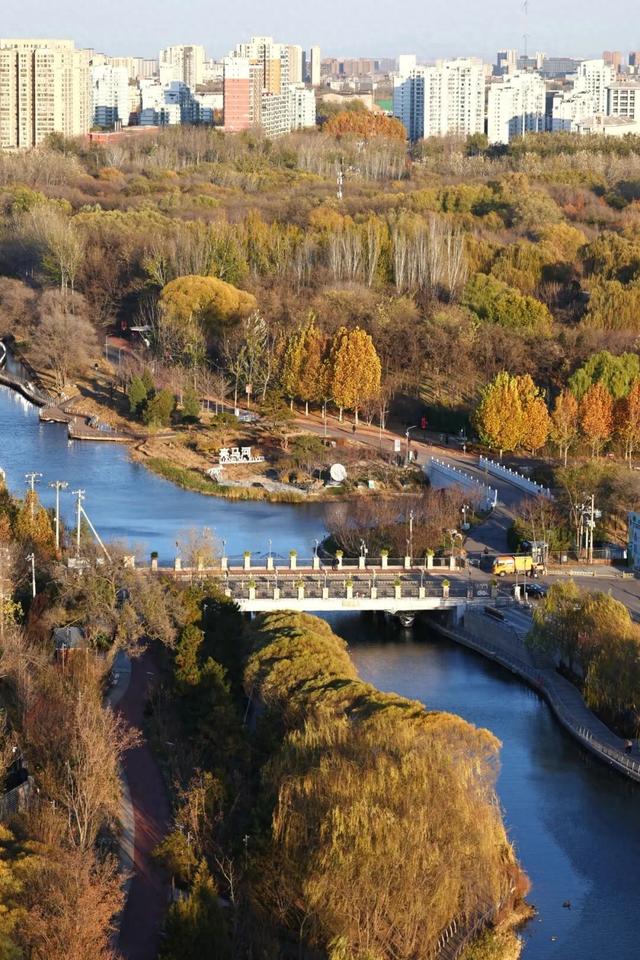
今年,朝阳有“加长版”秋日心动
Bei Jing Ri Bao Ke Hu Duan· 2025-11-19 01:07
Core Viewpoint - This year's autumn in Beijing has been characterized by a prolonged and stable season, attributed to favorable weather conditions and urban ecological improvements [3][21][26]. Weather and Climate - The typical autumn transition in Beijing has been altered this year, with a slower onset of cold air and more stable temperatures, leading to a gradual change in leaf colors [5][7]. - Meteorological data indicates that this year's rainfall has been higher than average, contributing to better soil moisture and more vibrant leaf colors [7][11]. Air Quality - Air quality in Chaoyang District has shown significant improvement, with PM2.5 concentrations at 27.1 micrograms per cubic meter, an 18.9% year-on-year improvement [11][23]. - The number of days with good air quality has increased by 24 days compared to the previous year, enhancing the visibility and overall aesthetic of the autumn landscape [11][23]. Urban Ecology and Governance - Chaoyang District has focused on integrating nature into urban planning, creating ecological corridors along rivers like Liangma River and Baba River, which enhances the urban environment [14][21]. - The district has added approximately 17,000 acres of afforestation since the start of the 14th Five-Year Plan, transforming urban greenery into a more diverse and visually appealing landscape [14][21]. Community and Lifestyle - The urban design encourages walking and enjoying the autumn scenery, with 310 kilometers of green pathways and numerous parks available for public use [16][18]. - The presence of popular cafes and recreational spaces in parks has attracted visitors, enhancing the community's engagement with the seasonal beauty [18][20]. Future Urban Development - The upcoming Five-Year Plan emphasizes the importance of ecological and green urban development, aiming for deeper integration of nature into daily life and improved air quality [21][23]. - The vision for a "Beautiful China" includes expanding green spaces and enhancing community-level ecological restoration, making nature more accessible to residents [21][23].

红领巾巡讲团为孩子们培育精神底色
Zhong Guo Qing Nian Bao· 2025-11-14 21:35
Core Points - The article discusses the immersive learning experience of the "National Red Scarf Lecture Group" members, focusing on enhancing their ability to convey the Party's innovative theories to young audiences [1][2] - The training program includes various teaching methods and emphasizes the importance of storytelling in engaging children with historical and political content [5][6] Group 1: Training and Learning Experience - The training program consists of specialized lectures, on-site teaching, experiential learning, interviews, and demonstration lectures, with participants grouped by their professional backgrounds [2][4] - Participants are tasked with creating a 20-minute lesson plan based on collective preparation, which will be tested through practical presentations to local youth [2][5] - The program aims to equip members with the skills to effectively communicate the Party's theories and historical narratives to children [1][3] Group 2: Participants' Background and Motivation - Members of the training group come from various sectors, including education, law enforcement, and environmental protection, highlighting a diverse representation [4][5] - Participants express a strong commitment to their roles, with many feeling the pressure to perform well in their presentations, indicating the significance of their responsibilities [2][5] - The training encourages participants to rethink how to relate national policies and historical events to the younger generation, fostering a deeper understanding of their relevance [3][9] Group 3: Practical Application and Impact - The program includes hands-on experiences, such as cooking traditional meals and reenacting historical events, to instill a sense of revolutionary spirit among participants [8] - Participants are encouraged to transform complex political concepts into relatable stories for children, emphasizing the importance of making history accessible and engaging [5][6] - The initiative aligns with the Party's goals to enhance the ideological education of youth and promote cultural confidence through active participation [9][10]
三江源的答卷:好生态如何变成好日子?
Ren Min Ri Bao· 2025-11-13 07:20
Core Viewpoint - The article emphasizes the importance of ecological protection in the Sanjiangyuan region, highlighting initiatives to enhance ecological barriers and promote sustainable development in the area [2][5]. Group 1: Ecological Protection Initiatives - The Sanjiangyuan National Park, covering over 190,000 square kilometers, is a pilot for the national park system, focusing on ecological barrier construction in the Qinghai-Tibet Plateau [2]. - A comprehensive waste management system is being developed, including source classification, efficient transportation, and green processing, to address waste issues in remote villages [5]. - The region has seen an increase in wetland area to nearly 50,000 square kilometers, with water quality in major rivers rated at Class II or above [5]. Group 2: Community Engagement and Economic Benefits - A points-based system for waste classification encourages local participation, allowing residents to exchange points for essential goods in "green supermarkets" [4][5]. - The local economy is benefiting from ecological tourism and sustainable livestock farming, with the "Yushu Yak" recognized as a geographical indication product [6][7]. - The community has received significant financial support, including 590,000 yuan for medical and pension insurance and over 1,600 yuan in dividends per villager [7]. Group 3: Government Commitment - Local government officials express a commitment to continue strengthening ecological barriers and achieving a balance between economic, social, and ecological benefits [7].
以林草事业高质量发展助力美丽中国建设
Ren Min Ri Bao· 2025-11-12 01:46
Group 1 - The core viewpoint emphasizes the importance of high-quality development in forestry and grassland sectors as an intrinsic requirement for building a beautiful China [1][7] - The 20th Central Committee's proposal highlights the need for a comprehensive green transformation in economic and social development, focusing on expanding the forestry and grassland industry [1][4] - Xi Jinping's ecological civilization thought serves as a guiding principle for the high-quality development of the forestry and grassland sectors, aiming to achieve significant progress in building a beautiful China [2][13] Group 2 - The "Three North" project is a key initiative for ecological civilization construction, with significant achievements in afforestation and desertification control, contributing to a forest coverage rate exceeding 25% [7][13] - The establishment of a natural protected area system, primarily based on national parks, is crucial for biodiversity conservation and ecological resource management [8][14] - Continuous reform of collective forest rights is essential for enhancing ecological benefits and increasing the economic output of collective forest land [9][10] Group 3 - The forestry and grassland industry is projected to reach a total output value of 10.17 trillion yuan in 2024, with a year-on-year growth of 9.6%, indicating robust growth potential [10] - The industry is becoming a significant contributor to the economy, with forest food production exceeding 200 million tons annually, ranking as the third major agricultural product in China [10] - The focus on disaster prevention and control in forestry and grassland is critical for maintaining ecological security, with measures in place to manage fire risks and pest invasions [11][17]