
硬科技

Search documents
上证指数十年来首触4000点 行情延续性具备基本面支撑
Zheng Quan Ri Bao· 2025-10-28 17:07
Core Viewpoint - The Shanghai Composite Index has reached the significant 4000-point mark for the first time since August 2015, indicating a fundamental shift in market dynamics and structural revaluation supported by the underlying economy [1][2] Group 1: Market Performance - As of October 28, the Shanghai Composite Index closed at 3988.22 points after a slight decline of 0.22% [1] - The margin trading balance has exceeded 2.48 trillion yuan, setting a new historical record, with a notable increase of 248.22 billion yuan from the previous trading day [1] - On October 27, the total margin trading balance reached 24,820.12 billion yuan, with financing balance at 24,642.88 billion yuan and securities lending balance at 177.25 billion yuan [1] Group 2: Market Drivers - The current market rally is driven by improvements in the industrial fundamentals and long-term policy support, rather than short-term sentiment [2] - The performance of technology sector companies is expected to exceed expectations, with significant revenue and net profit growth projected for the first three quarters of 2025 [2] - The central bank's resumption of government bond trading and regulatory enhancements for foreign investors are expected to bolster market confidence [2] Group 3: Investment Strategy - Analysts recommend focusing on three main investment themes: 1. "Hard technology" sectors, including semiconductors, AI computing power, industrial software, and high-end equipment [3] 2. Sectors benefiting from policy support and domestic demand recovery, particularly those with historically low valuations [3] 3. High dividend and low valuation defensive sectors, such as banking, electricity, and public utilities, which offer stable cash flows and valuation recovery potential [3]
科创板科创成长层首次“纳新” A股包容度未来将进一步提升
Di Yi Cai Jing· 2025-10-28 13:40
Core Points - The first three companies have been registered in the Sci-Tech Innovation Board's growth layer, marking a significant step in the capital market's support for technological innovation and the development of new productive forces [1][4] - The establishment of the Sci-Tech Growth Layer aims to enhance the inclusiveness and adaptability of the capital market, allowing unprofitable technology companies to access funding [5][7] - The introduction of the "1+6" policy framework has successfully facilitated the inclusion of unprofitable companies, with a total of 35 companies now listed in the growth layer [5][6] Group 1: Market Developments - The three newly listed companies, He Yuan Bio-U, Xi'an Yicai-U, and Bibete-U, represent the first batch of new registrations in the Sci-Tech Growth Layer, which aims to support high-tech industries [1][6] - The total number of companies listed on the Sci-Tech Innovation Board has reached 592, indicating a growing market [5] - The Shanghai Stock Exchange has completed necessary preparations for the listing of these companies within four months, demonstrating efficient regulatory processes [6] Group 2: Regulatory Insights - The China Securities Regulatory Commission (CSRC) emphasizes the importance of risk prevention, strong regulation, and promoting high-quality development in the capital market [4][12] - Future plans include enhancing the regulatory framework to better identify quality tech companies and support emerging sectors such as artificial intelligence and aerospace [12] - The CSRC aims to improve corporate governance and increase investor returns while fostering a market environment conducive to long-term capital investment [12] Group 3: Company Perspectives - Company leaders express gratitude for the new policies that have opened doors to capital markets, enabling faster technology commercialization and industrial capacity enhancement [6][11] - The focus for these companies will be on increasing R&D investment and delivering performance to reward investors [11] - The transition from a profit-oriented to a future-oriented evaluation approach reflects a shift in how companies are assessed for their potential in the capital market [9]

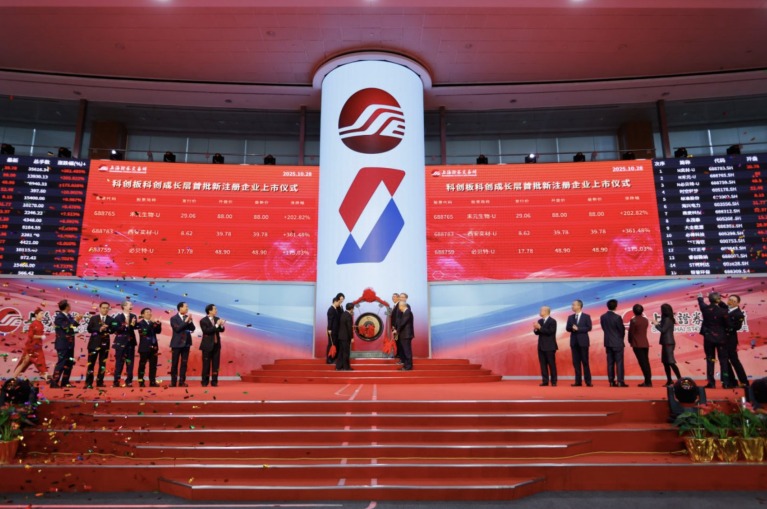
科创板科创成长层首次“纳新”,A股包容度未来将进一步提升
Di Yi Cai Jing· 2025-10-28 13:15
Core Insights - The listing of three unprofitable "hard technology" companies on the Sci-Tech Innovation Board marks a significant step in enhancing the capital market's support for technological innovation and new productivity development [1][3][5] - The establishment of the Sci-Tech Growth Layer aims to improve the inclusiveness and adaptability of the capital market, allowing unprofitable tech companies to access funding [4][6] Group 1: New Listings and Market Development - Three unprofitable companies, He Yuan Bio-U, Xi'an Yicai-U, and Bibet-U, have collectively listed on the Sci-Tech Growth Layer, increasing the total number of companies in this layer to 35 and the total number of listed companies on the Sci-Tech Innovation Board to 592 [1][5] - The introduction of the Sci-Tech Growth Layer is part of the broader "1+6" policy initiative aimed at enhancing the capital market's inclusiveness and adaptability [4][6] Group 2: Regulatory and Institutional Changes - The China Securities Regulatory Commission (CSRC) emphasizes the need for a strategic focus on risk prevention, strong regulation, and promoting high-quality development in the capital market [3][10] - The shift in listing standards from historical financial performance to future value creation reflects a new regulatory approach that supports the growth of "hard technology" companies [8][9] Group 3: Future Outlook and Strategic Goals - Companies listed in the Sci-Tech Growth Layer plan to leverage capital market platforms for business expansion, focusing on increasing R&D investment and delivering returns to investors [9][10] - The establishment of the Sci-Tech Growth Layer is expected to inject new vitality into the index system, providing a solid foundation for developing targeted indices focused on unprofitable, high-R&D enterprises [7][9]
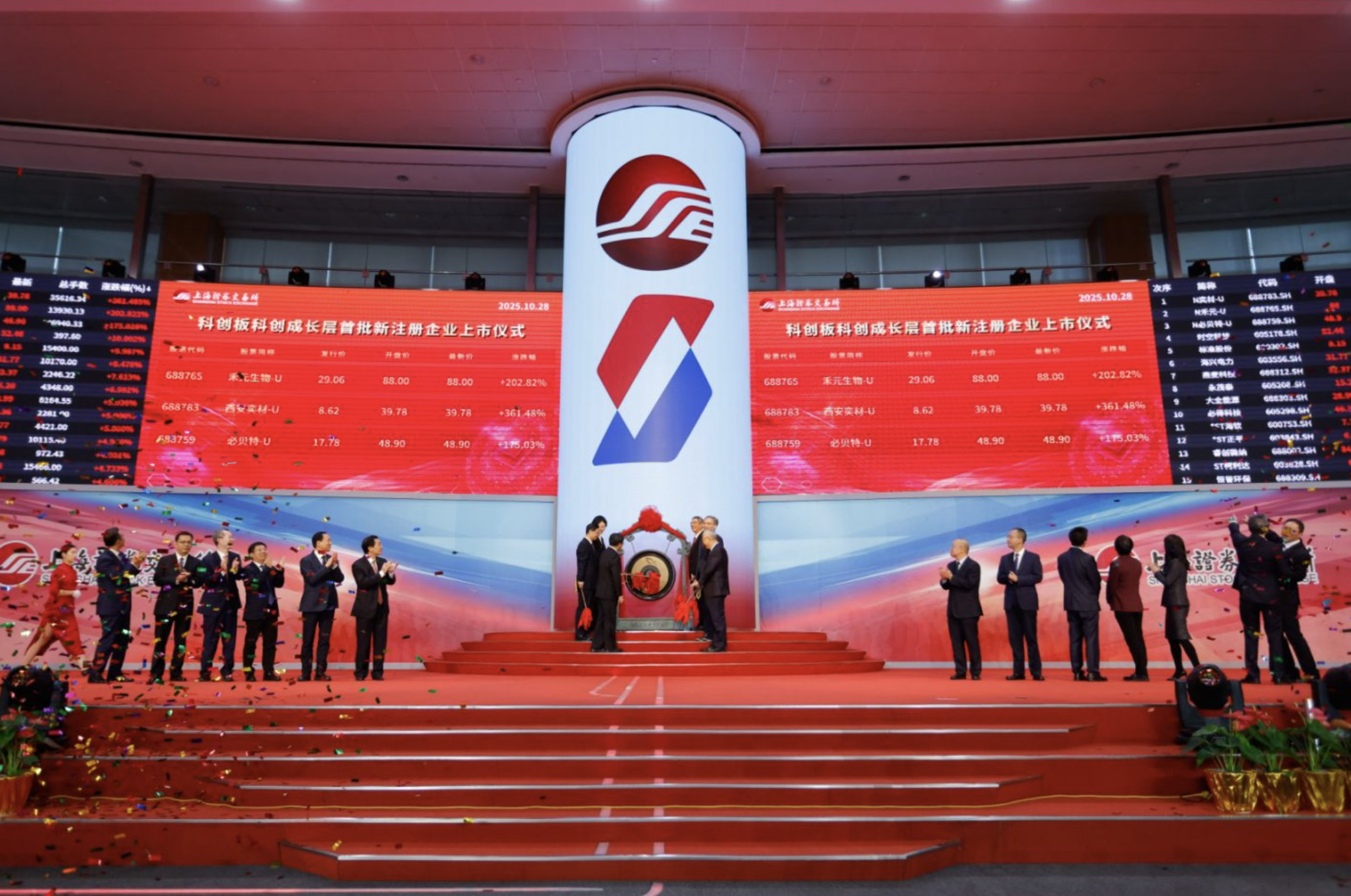
上海证券交易所理事长邱勇:支持人工智能、商业航天、低空经济等更多前沿科技领域适用第五套标准
Zheng Quan Ri Bao Wang· 2025-10-28 12:43
本报讯(记者毛艺融)10月28日,上海证券交易所理事长邱勇在科创板科创成长层首批新注册企业上市仪 式上致辞时表示:"今天,科创成长层首批新注册企业上市,这是科创板改革发展历程的又一重大进 展。在此,我谨代表上海证券交易所,向社会各界表示诚挚感谢,向首批企业表示热烈祝贺!" 目前,科创板已汇聚592家科技企业,总市值超9万亿元,科创板已成为中国"硬科技"企业上市"首选 地"。今年6月份,科创板改革"1+6"政策正式发布,上交所全力以赴抓落实,在四个多月时间内,完成 了规则、技术、市场就绪准备工作,今天迎来科创成长层首批新注册企业上市。 邱勇表示,下一步,上交所将坚决贯彻落实党中央决策部署,更好服务高质量发展。 二是坚持以改革促发展,提升制度包容性、适应性,深化发行承销、再融资、并购重组等领域的适配性 改革,引导各类要素资源加快向科创领域集聚。 三是坚持强监管,持续提升监管效能,切实做到严而有度、严而有方、严而有效,积极探索适应科技创 新规律的监管方式,不断增强市场对科创企业的信心和预期。 四是坚持以投资者保护为根本使命,推进投融资协调发展,提升市场吸引力、竞争力,持续深化投资端 改革,着力培育耐心资本、长期资本 ...
三七互娱前三季度归母净利润23.45亿元,持续稳健增长
Hua Xia Shi Bao· 2025-10-28 12:06
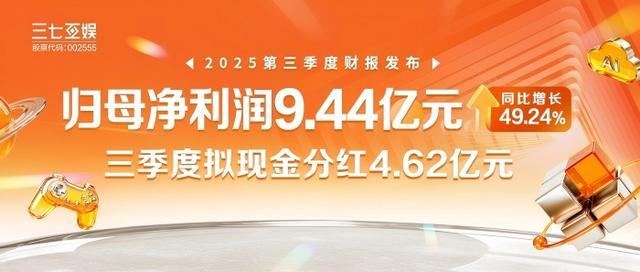
Core Viewpoint - The company reported strong financial performance for Q3 2025, with significant year-on-year growth in both revenue and net profit, driven by effective product management and successful game launches [2][3]. Financial Performance - For the first nine months of 2025, the company achieved a revenue of 12.461 billion yuan and a net profit of 2.345 billion yuan, marking a year-on-year increase of 23.57% [2]. - In Q3 2025, the company recorded a revenue of 3.975 billion yuan and a net profit of 944 million yuan, reflecting a year-on-year growth of 49.24% [2]. Shareholder Returns - The company plans to distribute a cash dividend of 2.10 yuan per 10 shares, totaling approximately 462 million yuan, with a cumulative dividend amount of 1.386 billion yuan for the year, representing about 59% of the net profit attributable to shareholders [3]. - The company has consistently increased its dividend payout ratio, moving from 5.2 yuan per 10 shares in 2021 to 10 yuan in 2024, and has shifted to quarterly dividends to enhance shareholder returns [3]. AI Integration - The company is actively integrating AI technology into game development and operations, with a focus on its proprietary AI model "Xiao Qi," which encompasses over 40 AI capabilities across various business functions [3][4]. - "Xiao Qi" has been registered with the National Internet Information Office and is among the first game-specific large models in Guangdong Province [3]. Technological Investments - The company is investing in hard technology sectors, including computing power, optical display, XR devices, entertainment content, semiconductors, and AI applications, aiming to build a complete industry chain from computing infrastructure to AI applications [4]. - The company is committed to driving innovation through AI, adhering to a strategy of "premium, diversified, and globalized" development to enhance user experience and share growth with shareholders [4].

上交所:坚持“硬科技”定位 不拘一格支持“硬科技”企业上市
智通财经网· 2025-10-28 12:03
原文如下: 上海证券交易所理事长邱勇在科创板科创成长层首批新注册企业上市仪式上的致辞 智通财经APP获悉,上海证券交易所理事长邱勇在科创板科创成长层首批新注册企业上市仪式上致辞时 表示,上交所将坚持"硬科技"定位,进一步发挥科创板"试验田"作用,把好准入关,更好识别优质科创 企业,支持人工智能、商业航天、低空经济等更多前沿科技领域适用第五套标准,不拘一格支持具有参 与全球竞争潜力的"硬科技"企业上市。 尊敬的李超副主席、吴伟副市长、陈平副省长、李运副省长、李钧副省长,各位领导、各位嘉宾: 目前,科创板已汇聚592家科技企业,总市值超9万亿元,科创板已成为中国"硬科技"企业上市"首选 地"。今年6月,科创板改革"1+6"政策正式发布,上交所全力以赴抓落实,在四个多月时间内,完成了 规则、技术、市场就绪准备工作。持续发挥科创板改革"试验田"作用,一系列创新制度率先在科创板落 地,科创板改革效应不断放大。 大家上午好!今天,科创成长层首批新注册企业上市,这是科创板改革发展历程的又一重大进展。在 此,我谨代表上海证券交易所,向社会各界表示诚挚感谢,向首批企业表示热烈祝贺! 上交所设立科创板并试点注册制是习近平总书记亲 ...
科创板彰显“硬科技”底色:12英寸硅片头部厂商西安奕材登陆科创板 加速提升全球竞争力
Zhong Zheng Wang· 2025-10-28 12:02
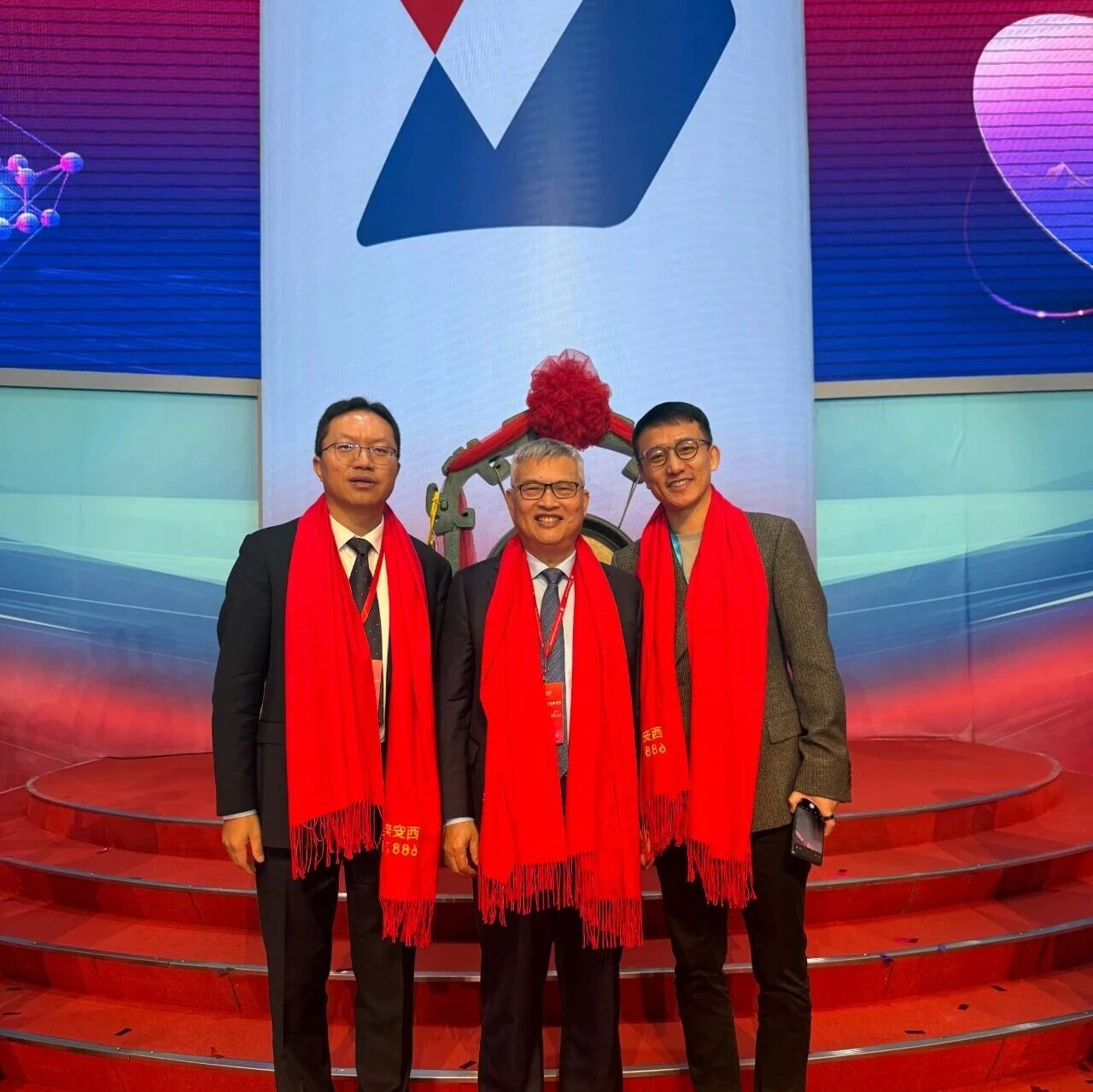
Core Viewpoint - Xi'an Yiswei Materials Technology Co., Ltd. successfully listed on the Shanghai Stock Exchange, marking a significant milestone for the company and the domestic 12-inch silicon wafer industry, with a market capitalization of 104 billion yuan at closing [1] Company Overview - Xi'an Yiswei is a leading manufacturer in the 12-inch silicon wafer sector, contributing to the growth of hard technology enterprises and enhancing new productive forces in the capital market [1] - The company aims to continuously drive technological innovation, improve product quality, and enhance management efficiency while adhering to regulatory requirements and improving corporate governance [2] Market Potential - The global demand for 12-inch silicon wafers is projected to exceed 10 million pieces per month by 2026, with China's demand expected to surpass 3 million pieces per month, indicating a vast market opportunity [3] - Xi'an Yiswei's production capacity is set to reach 1.2 million pieces per month by 2026, potentially fulfilling 40% of China's 12-inch silicon wafer demand and capturing over 10% of the global market share [3] Financial Performance - The company's revenue is expected to grow from 1.055 billion yuan in 2022 to 2.121 billion yuan in 2024, reflecting a compound annual growth rate of 41.83% [4] - In the first half of 2025, Xi'an Yiswei achieved a sales volume of 3.8435 million pieces, with revenue increasing by 45.99% year-on-year to 1.302 billion yuan, marking a record high for semi-annual revenue since its establishment [4] Research and Development - Xi'an Yiswei has invested 576 million yuan in R&D from 2022 to 2024, accounting for 12.39% of total revenue, with a compound growth rate of 33.15% [5] - The company holds 1,843 patent applications, with over 80% being invention patents, making it the leading firm in China for authorized invention patents in the 12-inch silicon wafer sector [5] Industry Position - As a key supplier in the 12-inch silicon wafer market, Xi'an Yiswei ranks first or second in supply volume among global manufacturers and is a preferred supplier for new 12-inch wafer fabs in China [4] - The successful listing of Xi'an Yiswei highlights the capital market's strong support for high-potential, technology-driven companies, with expectations of reaching profitability within two years [6]
科创成长层迎新:三家企业首日高涨,上交所全力支持“硬科技”
Bei Ke Cai Jing· 2025-10-28 12:02
Group 1 - The first batch of new registered companies, including Xian Yicai, Heyuan Bio, and Bibete, has been listed on the Sci-Tech Innovation Board, marking a significant step in capital market support for technological innovation and new productivity development [2][4] - On the first day of trading, the three companies experienced substantial gains, with Heyuan Bio and Xian Yicai both rising approximately 200%, and Bibete increasing by 74.41% [3][5] - The listing of these companies reflects a growing enthusiasm among institutional investors, indicating recognition of their long-term investment value, despite warnings about the risks associated with investing in unprofitable companies [5][4] Group 2 - As of October 28, the Sci-Tech Innovation Board has 592 listed companies with a total market capitalization exceeding 9 trillion yuan, showcasing the board's focus on "hard technology" enterprises [6] - Since the implementation of the "1+6" reform policy in June, the Sci-Tech Innovation Board has accepted 26 new companies, including 8 unprofitable ones, with a total IPO financing amount of 16.95 billion yuan, representing a 54% year-on-year increase [7] - The Shanghai Stock Exchange aims to enhance its support for high-quality development by identifying and supporting innovative companies in fields such as artificial intelligence and commercial aerospace, while also improving regulatory effectiveness [8][10]
八年,1600亿,一场国产大硅片的“硬核”马拉松
半导体芯闻· 2025-10-28 10:34
Core Viewpoint - The successful listing of Xi'an Yiswei Materials Technology Co., Ltd. on the Sci-Tech Innovation Board marks a significant milestone for the domestic semiconductor industry, enhancing the localization rate of 12-inch silicon wafers and providing a model for other tech companies in rapid development [1][3]. Group 1: Company Overview - Xi'an Yiswei's stock surged by 461% on its debut, reaching a market capitalization of 160 billion yuan, making it the first unprofitable company to go public after the "Eight Policies" were released [1]. - The company is positioned as a leader in the domestic 12-inch silicon wafer market, with a production capacity of 710,000 wafers per month, accounting for over 30% of the total domestic capacity [4]. Group 2: Investment Journey - The investment journey began in early 2019 when Sun Dafei and his team from Sanhang Capital and Zhonghang Capital invested in Yiswei Technology, which later evolved into Xi'an Yiswei Materials [3][5]. - Over the years, the company has undergone multiple rounds of financing, with a total investment exceeding 20 billion yuan and 10 billion yuan raised through financing [9]. Group 3: Market Context - The 12-inch silicon wafer market has been dominated by five international giants, holding a 92% market share, highlighting the significance of Xi'an Yiswei's entry into the market [4]. - The demand for 12-inch silicon wafers has surged due to the growth of AI computing power and the proliferation of electric vehicles, with domestic production capacity expected to reach 2.35 million wafers per month by 2024 [4]. Group 4: Technological Development - Xi'an Yiswei established a team of 20 Japanese and Korean experts in 2018 to cover all process stages, which has been crucial for its technological advancement and competitive edge in the market [4]. - The company has faced numerous challenges, including industry cycles and customer trust, but has demonstrated resilience and commitment to the semiconductor sector [9][10].
刷屏!科创板科创成长层“迎新”
Zhong Guo Ji Jin Bao· 2025-10-28 10:29
上交所理事长邱勇在致辞中表示,上交所将坚决贯彻落实党中央决策部署,更好地服务高质量发展。 一是坚持"硬科技"定位,进一步发挥科创板"试验田"作用,把好准入关,更好识别优质科创企业,支持 人工智能、商业航天、低空经济等更多前沿科技领域适用第五套标准,不拘一格支持具有参与全球竞争 潜力的"硬科技"企业上市。 二是坚持以改革促发展,提升制度包容性、适应性,深化发行承销、再融资、并购重组等领域的适配性 改革,引导各类要素资源加快向科创领域集聚。 三是坚持强监管,持续提升监管效能,切实做到严而有度、严而有方、严而有效,积极探索适应科技创 新规律的监管方式,不断增强市场对科创企业的信心和预期。 【导读】10月28日,科创板科创成长层首批新注册公司上市 10月28日,科创板科创成长层首批新注册企业上市仪式在上交所举行。禾元生物、西安奕材、必贝特三 家公司登陆科创板,成为科创板科创成长层首批新注册公司。 仪式现场,来自证监会、交易所、地方政府、上市公司、中介机构的领导、嘉宾齐聚一堂,共同见证这 一历史性时刻。 中国证监会副主席李超在致辞时表示,去年以来,证监会相继推出"科创板八条""并购六条"等重大政策 措施。今年6月实施的 ...