
绿色转型

Search documents
油气开发“守护者”绿色转型“先行军”
Qi Lu Wan Bao· 2025-11-28 07:02
Core Insights - The company has achieved a 34% year-on-year reduction in grid failure rates and a 45% decrease in crude oil production affected by grid issues, marking the best performance in nearly five years [1] - The transformation from a "professional guarantee unit" to a "value creation unit" has been pivotal in enhancing power supply reliability and efficiency in oil and gas development [1][2] Group 1: Power Supply Reliability - The company has introduced eight 220 kV external power sources over two years to strengthen grid reliability and support green energy consumption [1] - Nine new 110 kV lines have been constructed to improve power supply networks in unconventional areas, facilitating "plug-and-play" electricity access for shale oil development [1][2] Group 2: Operational Efficiency - A "three upgrades and three implementations" model has been adopted during maintenance periods, resulting in the precise diagnosis and repair of 5,517 equipment issues [2] - The company has improved power restoration efficiency by 45% through rapid recovery initiatives in isolated oil extraction sites [2] Group 3: Cost Reduction and Green Transition - The company has implemented a "cost reduction attack" strategy, achieving a 20% reduction in average power service costs per well through efficient resource utilization [3] - In the first three quarters, the company fully consumed an additional 33 million kWh of green electricity, with total self-generated green electricity consumption reaching 472 million kWh, a 2.6% year-on-year increase [3]
中国绿色转型成果日益普及 民企成主要"助推器"
Zhong Guo Xin Wen Wang· 2025-11-28 03:23
中新社北京11月27日电 从山川戈壁间林立的"大风车"、光伏板,到高速公路上奔行的电动汽车,再到 日常穿着中愈发常见的科技布料,绿色转型成果正深入中国人日常生活的方方面面,民营企业成为这一 进程的重要"助推器"。 近年来,中国风光新能源装机高速发展,民营企业是这些"大风车"和光伏板的主要制造者。据统计,在 风电整机制造企业中,民营企业约占60%,光伏设备制造企业绝大部分是民营企业。 光伏板把无穷尽的太阳能转化成绿色电能,是能源绿色转型的重要抓手。但中国光伏企业已不满足于 此,而是将"绿色"理念延伸到生产全流程。 在刚刚结束的《联合国气候变化框架公约》第三十次缔约方大会上,中国民营企业隆基绿能发布 《2024-2025隆基绿能气候行动白皮书》,提出"到2050年实现全价值链净零排放"的目标与实施路径。 在新能源车企中,民营企业数量众多、活力旺盛,比亚迪、理想汽车、小鹏汽车等民营车企成为推动电 动汽车普及的关键力量。 今年国庆中秋假期期间,中国高速公路新能源汽车充电量达到1.23亿千瓦时,日均充电量同比增长超 45%,创历史新高。 这一数据表明,随着主流新能源车型续航能力的不断提升以及充电基础设施的逐步推进,新能 ...
2025绿色金融生态大会在渝开幕
Zheng Quan Shi Bao Wang· 2025-11-27 22:54
Core Insights - The 2025 Green Finance Ecological Conference opened in Chongqing, focusing on "Green Transformation and Biodiversity Finance Empowering Beautiful China" with over 200 experts and representatives from financial institutions and enterprises attending [1] - Chongqing is the only provincial-level comprehensive green finance reform and innovation pilot zone in China, enhancing its service chain in "standard systems, financial products, project libraries, trading platforms, and information disclosure" to support green development [1] - The Chongqing Green Finance Ecological Innovation Alliance was established, launching the first batch of "Chongqing Green and Transformation Investment and Financing Opportunity List" and "Chongqing Green and Transformation Financial Service Product List" [1] Financial Initiatives - The People's Bank of China Chongqing Branch and the Chongqing Municipal Financial Office jointly released the "Chongqing Financial Support for Biodiversity Protection Action Joint Initiative" [2] - Various associations, including the Chongqing Banking Association and Insurance Association, launched initiatives to promote green consumption and low-carbon development [2] - New projects in ecological corridors, ecological tourism, and ecological fisheries were announced, showcasing the comprehensive strength and collaborative advantages of Chongqing's green finance reform and innovation [2] Financial Performance - As of now, the balance of green loans in Chongqing has exceeded 1 trillion yuan, with a growing product system including green investments, green bonds, and green insurance [3] - The conference aims to leverage Chongqing's role as a demonstration zone for green finance reform and innovation, promoting systemic and product innovation to contribute to national green finance development [3]


三度亮相进博会,国泰集团加速配置“中国增长”强力引擎
Huan Qiu Shi Bao· 2025-11-27 22:41
Core Insights - Cathay Group showcased its transformation and development achievements at the 8th China International Import Expo, emphasizing its strategy of being rooted in Hong Kong, backed by the mainland, and connected to the world [1][5] - The company is optimistic about the mainland market and aims to contribute to high-level opening-up and global economic interconnectivity [1] Group 1: Business Performance - Cathay Cargo reported a strong performance in the first half of the year, with a cargo volume increase of 11.4% to 801,000 tons and revenue growth of 2.2% to HKD 11.141 billion [2] - The company expects continued strong demand in the fourth quarter, which is traditionally a peak season for global air cargo [2] Group 2: Route Optimization and Cultural Exchange - Cathay's low-cost airline, Hong Kong Express, expanded its mainland routes from 1 to 6 in just two years, reflecting confidence in the mainland market [3] - The airline has announced or launched 21 new routes this year, with 5 focused on the mainland, enhancing connectivity between the mainland, Hong Kong, and the world [3] Group 3: Sustainable Development and Talent Localization - Cathay is committed to sustainable development, aligning with global aviation emission reduction goals and focusing on sustainable aviation fuel (SAF) [4] - The company is accelerating its localization strategy, with over 3,000 employees in the mainland, aiming to increase to 4,000 by year-end, and collaborating with local institutions to enhance cultural understanding [4] Group 4: Future Outlook - Cathay aims to achieve significant milestones by 2025, including being recognized as the "World's Best Airline" and enhancing its service offerings [5] - The company is aligning its investment and business strategies with national goals in civil aviation recovery, hub construction, and carbon neutrality [5]


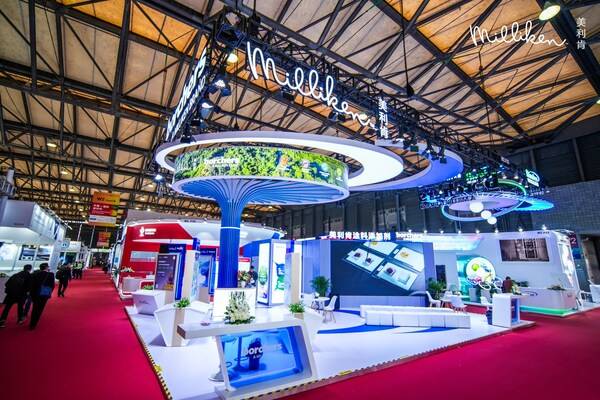
BORCHERS亮相中国国际涂料展,以本地化创新与全球技术推动行业可持续发展
Sou Hu Cai Jing· 2025-11-27 20:12
Core Insights - The 2025 China International Coatings Exhibition showcases Milliken's BORCHERS® brand, emphasizing its technological innovations and sustainable development capabilities in the Asian market [1][3] Group 1: Technological Innovations - BORCHERS® presents several industry-leading additive solutions aimed at enhancing quality, efficiency, and sustainability in industrial coatings [3] - Key product lines include dispersants, rheology modifiers, drying agents, and catalytic systems, addressing technical challenges in the industry [3][5] Group 2: Application Cases - BORCHERS® demonstrates its additive systems' value through various application cases, such as cobalt-free drying agents and zero VOC dispersants for water-based industrial coatings [5] - The showcased solutions aim to support customers in achieving greener formulations and improving application performance in complex scenarios [5][8] Group 3: Commitment to China - Milliken's BORCHERS® brand is committed to deepening its technical, supply chain, and customer service presence in China, which is a key market for green technology innovation [6][7] - The company is expanding its Shanghai technical service center to enhance formulation development and local supply capabilities [7][8] Group 4: Sustainable Development Strategy - Sustainability is a core strategic direction for BORCHERS® and Milliken, integrating the 3R principles of Reduce, Recycle, and Reuse into product design and operations [8] - The exhibition highlights core products such as cobalt-free drying agents and zero VOC dispersants, reflecting the brand's commitment to the Chinese market and its technological strength [8]

“中国石化在浙江”社会责任报告发布
Ren Min Wang· 2025-11-27 13:22
Core Insights - China Petroleum & Chemical Corporation (Sinopec) has significantly contributed to Zhejiang's economic development, achieving revenue of 1.3 trillion yuan and paying nearly 140 billion yuan in taxes during the 14th Five-Year Plan period [1] Group 1: Energy Security and Supply - Sinopec's enterprises in Zhejiang prioritize energy security, ensuring a continuous supply of clean oil products, including gasoline, diesel, and aviation fuel, supported by a comprehensive supply network of nearly 2,100 gas stations [2] - The Zhenhai Refinery has enhanced its crude oil processing capacity to 40 million tons annually, while Sinopec's Zhejiang branch serves over 1.1 million customers daily, supplying approximately 83 million tons of refined oil and 16.2 billion cubic meters of natural gas [2] Group 2: Strategic Collaborations - Sinopec Zhejiang has established strategic partnerships with 32 government units and 81 enterprises, focusing on key areas such as new energy infrastructure and rural revitalization [3] - Collaborations with research institutions like Zhejiang University and the Chinese Academy of Sciences aim to foster innovation and upgrade the petrochemical industry [3] Group 3: Green Transformation and Industry Upgrade - The Zhenhai base has launched high-end synthetic material projects, with products widely used in various sectors, including home appliances and renewable energy [4] - Sinopec has developed a hydrogen energy supply chain, with an annual hydrogen production capacity of 18,000 tons, and established 12 hydrogen refueling stations [4] - The company has also created China's first bio-jet fuel industrial facility, processing 100,000 tons of waste oil annually, contributing to sustainable aviation [4] Group 4: Technological Innovation - Sinopec is advancing smart factory initiatives, utilizing IoT and AI technologies for real-time monitoring and safety in operations [5] - Innovations in engineering and manufacturing processes have been recognized for their contributions to reducing coal consumption and carbon emissions [5] Group 5: Social Responsibility and Community Engagement - Sinopec has built 386 "Driver's Homes" across Zhejiang, providing essential services for truck drivers [6] - The company has invested nearly 23 million yuan in rural revitalization projects, significantly boosting local economies and transforming aid models from "blood transfusion" to "blood production" [7]

(经济观察)中国绿色转型成果日益普及 民企成主要“助推器”
Zhong Guo Xin Wen Wang· 2025-11-27 10:00
Core Viewpoint - The green transformation in China is significantly driven by private enterprises, which are becoming key players in the renewable energy sector and other industries, integrating sustainability into their operations and products [1][2][3] Group 1: Renewable Energy Sector - Private enterprises account for approximately 60% of wind turbine manufacturing and the vast majority of solar equipment manufacturing in China [1] - Longi Green Energy announced a goal of achieving net-zero emissions across its entire value chain by 2050, with a projected 37% reduction in operational carbon emissions in 2024 compared to the peak in 2023 [1] - The global presence of electric vehicles is highlighted, with half of the world's electric vehicles operating in China, indicating a strong market for renewable energy solutions [1][2] Group 2: Electric Vehicle Market - Private companies like BYD, Li Auto, and Xpeng are crucial in promoting the adoption of electric vehicles in China [2] - During the recent holiday period, the charging volume for electric vehicles on Chinese highways reached 123 million kilowatt-hours, with a year-on-year increase of over 45%, marking a historical high [2] - The improvement in electric vehicle range and charging infrastructure is alleviating "range anxiety" among consumers, leading to increased adoption [2] Group 3: Sustainable Fashion and Materials - The trend of sustainability is also reflected in consumer products, such as outdoor apparel made from advanced materials [2] - Anta, a private sportswear company, launched a carbon-capturing fiber jacket that reduces carbon emissions by approximately 35% compared to previous models, becoming the first brand in China to scale this technology in sportswear [2] Group 4: Broader Industry Trends - A consensus among private enterprises in China is emerging to seize opportunities in green transformation, with 83% of companies in the "2025 China Private Enterprises Top 500" list actively pursuing green initiatives [3] - Strategies for green transformation include the application of advanced low-carbon technologies, dual transformation of "green + intelligent," and collaborative carbon reduction across the entire industry chain [3] - The Chinese government's long-term carbon reduction goals and stable policy signals provide a predictable development space for private enterprises, enhancing their role as catalysts for green transformation [3]
全球石油需求峰值被延后,中国石化行业“绿色转型”如何加速
Di Yi Cai Jing· 2025-11-27 07:58
Core Insights - The global peak in oil demand is now expected to be delayed until after 2030, with projections indicating it may not occur until 2040, contrary to previous forecasts that suggested a peak before 2030 [2][3] - The shift in oil demand is influenced by the ongoing energy transition and the need for countries to meet climate goals, particularly the Paris Agreement's target of limiting global warming to 1.5 degrees Celsius [2][3] - The Chinese petrochemical industry is entering a new phase focused on quality and efficiency, with an emphasis on high-end, green, and intelligent transformation [2][4] Oil Demand Projections - Goldman Sachs has revised its forecast, predicting global oil demand will grow from 103.5 million barrels per day last year to 113 million barrels per day by 2040 [2] - The International Energy Agency (IEA) anticipates that oil and gas demand may continue to rise until 2050, with oil consumption expected to increase by 13% compared to 2024 levels [3] - OPEC's Secretary-General has also indicated that oil will still account for about 30% of the global energy mix by 2050, with daily consumption exceeding 120 million barrels [3] Factors Influencing Demand - Bottlenecks in low-carbon technology adoption and infrastructure development are contributing to the delay in peak oil demand [3] - The rise of artificial intelligence (AI) has led to increased electricity consumption, which is still largely dependent on traditional energy sources like coal and oil, further driving oil demand [3] Green Transition Imperatives - Traditional oil and gas companies must leverage their technological and financial advantages to diversify into green energy development [4] - China's new Energy Law emphasizes the equal importance of renewable and fossil energy, pushing petrochemical companies to adjust their capital expenditure towards clean energy projects [4] Petrochemical Industry Dynamics - The demand for petrochemical feedstocks is expected to become more resilient, with their share of oil demand projected to rise from approximately 15% to nearly 30% by 2050 [5] - China is transitioning from a chemical consumption powerhouse to a strong producer, with self-sufficiency rates for certain chemical products expected to exceed 130% to 140% by 2030 [5] - The industry must focus on eliminating outdated capacity, enhancing energy efficiency, and developing high-value products to improve resilience and international competitiveness [5] Future Outlook for China's Petrochemical Sector - During the "14th Five-Year Plan" period (2026-2030), significant changes in energy structure, technology routes, and market dynamics are anticipated in China's petrochemical industry [6] - The consumption of refined oil is expected to peak, while aviation kerosene will still have growth potential, and the share of green hydrogen will significantly increase [6] - The electrification rate is projected to rise from approximately 16%, although there will still be substantial decarbonization pressure in the heating sector [6]
【环球财经】宁德时代西班牙合资电池工厂奠基
Zhong Guo Jin Rong Xin Xi Wang· 2025-11-27 06:38
Core Points - The foundation ceremony for a lithium iron phosphate battery factory jointly invested by CATL and Stellantis took place in Zaragoza, Spain, marking one of the largest Chinese investments in Spain with a total investment of €4.1 billion [1][2] - The factory is expected to be powered entirely by renewable energy and aims to commence production by the end of 2026 [1] - The factory represents a significant milestone in Spain's electric vehicle supply chain and reflects the deepening technological and industrial cooperation between Spain and China [1][2] Investment and Economic Impact - The factory is projected to have an annual production capacity of 50 GWh, providing lithium iron phosphate batteries for electric vehicles [2] - The establishment of the factory is anticipated to enhance the region's position in the European electric vehicle supply chain and inject long-term momentum into local economic development [2] - The project is seen as a commitment from both China and Spain towards green transformation, industrial upgrading, and future development [2]


宁德时代西班牙合资电池工厂奠基
Xin Hua She· 2025-11-27 05:05
Core Points - The foundation ceremony for a lithium iron phosphate battery factory jointly invested by CATL and Stellantis took place in Aragon, Spain, marking one of the largest Chinese investments in Spain with a total investment of €4.1 billion [1] - The factory is expected to utilize renewable energy fully and aims to commence production by the end of 2026 [1] - The factory represents a significant milestone in Spain's electric vehicle industry chain and reflects the deepening technological and industrial cooperation between Spain and China [1] Investment and Economic Impact - The factory is projected to have an annual production capacity of 50 GWh, providing lithium iron phosphate batteries for electric vehicles [1] - The establishment of the factory is anticipated to enhance Aragon's position in the European electric vehicle supply chain and inject long-term economic momentum into the region [1] - The project is seen as a commitment to green transformation and industrial upgrading, with both countries aiming to share technology and opportunities for mutual development [1] Environmental Commitment - The joint venture aims to achieve complete carbon neutrality during its operations [1] - The project emphasizes the importance of collaboration in achieving green transformation, highlighting that no single country or enterprise can accomplish this alone [1]
