
绿色发展

Search documents
为蔚蓝港湾注入“绿色基因”,山东港口的全方位焕新记
Huan Qiu Lao Hu Cai Jing· 2025-12-03 14:12
Core Viewpoint - The article emphasizes the importance of green development in China's economic high-quality growth, highlighting Shandong Port's commitment to integrating green practices into its operations to address environmental challenges and enhance efficiency [1][2]. Group 1: National Strategy and Green Transition - China's "3060" dual carbon goals aim for peak carbon emissions by 2030 and carbon neutrality by 2060, making the port sector a critical area for green transformation [2]. - The construction of a strong marine economy requires a healthy marine ecology, underscoring the urgency of green transitions in ports [2]. Group 2: Shandong Port's Green Initiatives - Shandong Port is actively promoting green port construction as a response to national strategies and its own development needs, establishing a closed-loop system of planning and practice [3]. - The port has released the "14th Five-Year Plan for Green Low-Carbon Ports" and developed a comprehensive energy plan, creating a systematic framework for its green transition [3]. Group 3: Achievements in Green Transformation - Shandong Port has made significant progress in low-carbon energy structure, green transportation, resource utilization, and smart management, with notable examples including the reduction of CO2 emissions by 93.3% at Rizhao Port [4]. - Rizhao Port has achieved full coverage of shore power systems, improving air quality, and has seen a 70% reduction in CO2 emissions from new energy equipment compared to traditional diesel vehicles [4]. Group 4: Financial Support for Green Development - The Bank of Communications Qingdao Branch has provided comprehensive financial support to Shandong Port, including a credit approval of 20 billion yuan for green projects [5][6]. - As of September 2025, the green credit balance of the Bank of Communications Qingdao Branch reached 35.571 billion yuan, with a growth rate exceeding 12% [6]. Group 5: Diversification and Green Development - Shandong Port's green initiatives extend beyond traditional operations into logistics, shipping, equipment manufacturing, and cultural tourism, creating a multi-dimensional approach to green development [7]. - The port has invested in over 300 new energy vehicles and established a digital platform for resource recycling, promoting a circular economy within the port and shipping sectors [7]. Group 6: Innovations in Supply Chain and Logistics - Shandong Port is enhancing its supply chain by building green logistics channels and innovative service models, which help reduce logistics costs and carbon emissions [12]. - The launch of a cross-sea green route at Yantai Port facilitates the transport of new energy vehicles, promoting a zero-emission and intelligent transportation model [12][13]. Group 7: Digital and Green Financial Solutions - The "Port Easy Payment" platform integrates accounts receivable electronic vouchers and supply chain bills, providing a comprehensive service solution for upstream and downstream enterprises [13][14]. - The Bank of Communications has supported over 100 small and medium-sized enterprises with approximately 700 million yuan in credit through this platform, facilitating their green transformation [15].
晋能控股装备制造集团:多元路径强产业 协同创效拓新局
Zhong Guo Hua Gong Bao· 2025-12-03 03:03
Group 1 - The core viewpoint of the articles highlights the significant growth and transformation of Jin Energy Holding Equipment Manufacturing Group's chemical sector, achieving a revenue increase of 1.27% and a profit rise of 14.18% year-on-year by the end of October [1] - Haoyuan Company, a pioneer in the transformation of the chemical industry, has been recognized as one of the "Top 500 Private Enterprises in China's Manufacturing Industry" for four consecutive years, reflecting its effective strategic layout focused on efficiency and transformation [2] - The company has relocated to the Yingdong Chemical Park in response to government initiatives, which has been a key turning point for improving efficiency by shedding outdated capacities and optimizing industrial layout [2] Group 2 - Haoyuan Company has restructured its product value chain, focusing on high-value chemical new materials, with revenue from this segment accounting for 49% of total sales, including leading positions in the production of certain products in Asia [3] - Jin Control Gas Company has achieved significant production and efficiency gains through technological innovation, utilizing advanced processes for liquefied natural gas production, resulting in a total ammonia output of 814,200 tons by November 4, exceeding annual targets [4] - The company has implemented dual strategies of increasing production efficiency and reducing costs, achieving a revenue of 2.88 billion yuan and a profit of 141 million yuan since its inception [4] Group 3 - Yan Hua Company is focused on high-standard project construction, aiming for the production of 600,000 tons of synthetic ammonia and 800,000 tons of urea, while integrating green low-carbon principles throughout the project lifecycle [6] - The company has adopted an "EPC general contracting + professional supervision" model to ensure high-quality project execution and timely progress [6] - The successful outcomes of Haoyuan Company, Jin Control Gas Company, and Yan Hua Company exemplify the high-quality development of the chemical sector within the equipment manufacturing group, contributing to increased revenue and profitability across the industry [6]
陕西府谷:产业焕新筑根基 民生提质暖民心
Huan Qiu Wang· 2025-12-03 02:25
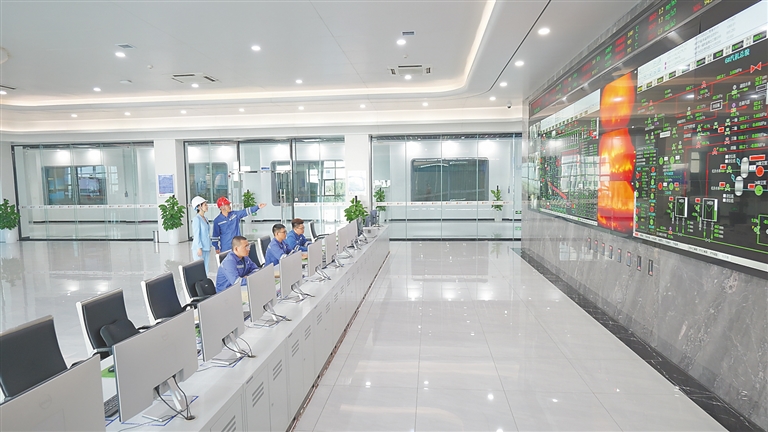
产业蝶变:从"黑煤"到"绿金"的高质量跃迁 在陕西奥维乾元化工有限公司中央控制室里,一块块电子屏幕上实时跳动着生产数据,工作人员只需通 过智能终端轻点操作,便可远程调控设备启停,用"数字化大脑"替代"传统人工巡检",使煤化工生产既 精准又高效。 "十四五"期间,府谷始终将能源产业升级作为发展重点,全力攻坚能源结构优化与产业转型,以创新动 能赋能产业发展。曾经,这里的煤炭大多以原煤形式直接外销,附加值低、资源利用率不高;如今,通 过不断升级技术、延伸产业链,煤炭实现了从"卖原料"到"卖产品"再到"卖技术"的跨越。依托秦创原 (府谷)创新促进中心等平台,全球首创金属镁冶炼精准脱硝等关键技术,发布8项镁行业标准,培育 高新技术企业40户、科技型中小企业109家,成功获评全省创新型试点县,越来越多企业摆脱"资源依 赖"老路,走上"技术引领"新途,仅陕西奥维乾元化工有限公司,五年间新增专利2项,昔日"黑煤"彻底 变成带动县域经济高质量发展的"绿金"。 来源:环球网 "十四五"期间,府谷地区生产总值成功突破千亿元大关,跻身全国千亿县区行列,县域经济综合实力稳 居全省前列;规模以上工业增加值年均增长6.1%,总量突破750 ...

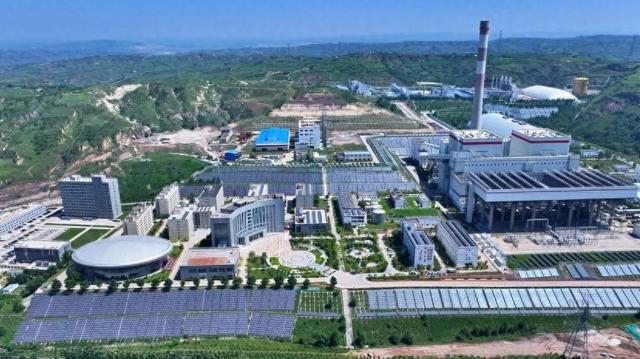
让垃圾“变废为宝”,这家企业有妙招
Hai Nan Ri Bao· 2025-12-03 02:22
Core Viewpoint - The company has successfully transformed waste into energy through advanced waste incineration technology, contributing significantly to environmental sustainability and energy production in Hainan [6][12]. Group 1: Company Overview - Established in December 2008, the company focuses on urban waste incineration and power generation, aligning its growth with Hainan's green development initiatives [7]. - The core project, located in Chengmai County, has a daily waste processing capacity of 600 tons per incinerator, with a total installed capacity of 88 megawatts [7][12]. - The company processes approximately 235 million tons of waste annually, generating around 1 billion kilowatt-hours of green electricity, enough to power 300,000 households for a year [12][14]. Group 2: Environmental Impact - The company employs advanced technologies to ensure emissions meet or exceed local standards, significantly reducing environmental impact throughout the waste processing cycle [8][11]. - The waste incineration process operates at temperatures above 850 degrees Celsius, effectively breaking down harmful substances [8]. - The company has also taken on the responsibility of processing legacy waste, contributing to local environmental management efforts [11]. Group 3: Economic and Policy Support - The implementation of tax incentives under the Hainan Free Trade Port policy has reduced operational costs and enhanced profit margins for the company [11]. - The company actively engages in social responsibility initiatives, including the safe disposal of confiscated illegal items [11]. Group 4: Future Plans - The company aims to expand its operations beyond waste incineration to include solid waste resource utilization and collaborative treatment of kitchen waste and feces [13][14]. - Future projects include the construction of new waste processing facilities to enhance waste disposal capabilities in the Hainan Free Trade Port area [14].
从都国际论坛“广州之夜”晚宴举行 广州智造闪耀“广州之夜”
Guang Zhou Ri Bao· 2025-12-03 02:17
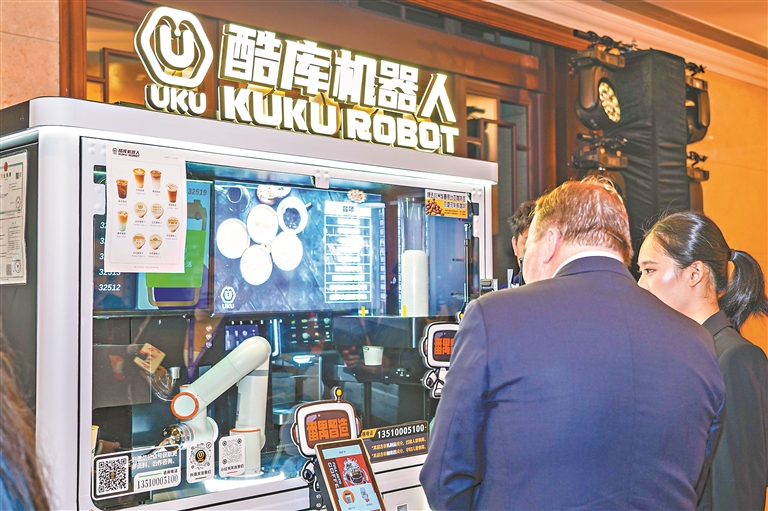
Group 1: Event Overview - The "Guangzhou Night" dinner showcased Guangzhou's unique charm and cultural heritage, emphasizing the city's blend of tradition and modernity [1] - Attendees expressed optimism about Guangzhou's development, highlighting its strong industrial foundation, vast market potential, and favorable business environment [1] Group 2: Cultural Performances - The event featured rich cultural performances, including the dance drama "Yong Chun," which showcased the essence of Lingnan culture [4] - Foreign dignitaries praised the performances, with Slovenia's former president noting Guangzhou's lasting impression on the world [4] Group 3: Technological Innovations - The event highlighted innovative products such as the "AI Barista," which can serve coffee in 90 seconds and print intricate designs on foam [8] - The "Land Aircraft Carrier," a flying car with a unique design, attracted significant interest from attendees, showcasing advanced technology [8] - Agricultural drones from XAG were also featured, capable of precision tasks with efficiency up to 80 times that of manual labor, indicating the integration of technology in modern agriculture [9]
全球能源转型分化 坤元资产FOF伙伴以“智慧”答卷回应绿色发展
Cai Fu Zai Xian· 2025-12-03 02:11
Core Viewpoint - The global energy landscape is undergoing significant transformation, with developing countries leading the clean energy trend, particularly China, which is set to surpass coal as the largest source of electricity by mid-2025 [1] Group 1: Strategic Divergence between the US and China - The US is restructuring its energy strategy by focusing on traditional fossil fuels and nuclear energy in response to the AI-driven electricity demand, which has strained its aging power grid [2] - The US Department of Energy plans to procure up to 10 new large nuclear reactors to ensure stable power supply, despite previously supporting a $2 trillion clean energy market [2] - In contrast, China is proactively developing a new energy system with a target of over 180 million kilowatts of new energy storage capacity by the end of 2027, aiming to address the stability issues of high renewable energy integration [3] Group 2: Investment Strategies of Kun Yuan Asset FOF Ecosystem Partners - Kun Yuan Asset's partners are employing a "layered response strategy" to adapt to the changing energy landscape, focusing on immediate certainty, mid-term competitive advantages, and long-term visionary investments [4] - Canadian Solar (Artes) is optimizing its global supply chain and expanding from solar module manufacturing to integrated solar + storage solutions, achieving a 120.9% year-on-year increase in operating cash flow to approximately 5.5 billion yuan [6] - Zhongxin Innovation is transitioning from a follower to a market leader by building a dual-driven model of "power + storage," with total assets projected to exceed 130 billion yuan by mid-2025 [7] Group 3: Technological Innovations and Future Outlook - Star Ring Fusion is pioneering controlled nuclear fusion technology with a cost-effective approach, aiming to achieve commercial viability by the early 2030s while maintaining strong self-sustaining capabilities through intermediate technology sales [8] - The energy revolution and technological advancements are converging, with Kun Yuan Asset focusing on long-term investments in companies that can navigate through cycles and define future energy landscapes [9] - The company aims to activate dual engines of green and digital transformation, collaborating with global partners to create a sustainable future while supporting China's carbon neutrality goals [10][11]
奋楫“十五五”,资本与国策共创
Sou Hu Cai Jing· 2025-12-03 01:52
Core Insights - The focus of national development is shifting from "quantitative recovery" post-pandemic to "qualitative leap" in the "15th Five-Year Plan" [1] - The "15th Five-Year Plan" emphasizes "high-level technological self-reliance" and aims for a dual goal of "effective qualitative improvement and reasonable quantitative growth" [5][11] Group 1: Economic and Industrial Strategy - The national strategy is entering a new cycle centered on innovation efficiency, industrial structure, and regional collaboration, marking a shift from "policy following" to "system co-creation" [4] - The plan aims to build a modern industrial system with advanced manufacturing as the backbone, focusing on future industries like quantum technology, biomanufacturing, and hydrogen energy [11] - The transition from "incremental manufacturing" to "efficiency manufacturing" indicates a shift in focus from merely increasing production to optimizing resource allocation [12] Group 2: Investment Opportunities - Hard technology investment, including semiconductors and advanced materials, is positioned as a foundational logic for "systematic breakthroughs" [10] - Investment institutions are encouraged to engage in pre-financing and result transformation for national technology tasks, fostering capital co-creation [10] - The emphasis on "entrepreneurial investment + risk-sharing mechanisms" presents opportunities for investment firms to participate in national innovation initiatives [10] Group 3: Green Development - The "15th Five-Year Plan" elevates green development from a secondary goal to a structural institution, influencing all industrial allocations [17] - The integration of green issues into financial and market mechanisms signifies a shift in perspective, making green development a capital issue [17] - Sustainable investment opportunities in green infrastructure and carbon asset management are expected to grow [20] Group 4: Consumer and Market Dynamics - The plan positions consumption upgrade as a core driver of economic structural transformation, moving from recovery to quality enhancement [22] - The "silver economy" is recognized as a significant industrial opportunity, transforming aging issues into growth engines [22][25] - Investment opportunities in healthcare, elder care, and technology-assisted living are anticipated to rise due to demographic shifts [25] Group 5: Regional Development - The focus of regional policy is shifting from "development gradient" to "structural coordination," promoting a unified market and efficient resource allocation [27] - Investment institutions are encouraged to collaborate with local guiding funds to strengthen project foundations and facilitate new industry development in less developed regions [30] Group 6: Financial Market Reforms - The "15th Five-Year Plan" emphasizes structural improvements in capital markets, transitioning from a focus on financing to a comprehensive investment-funding-exit cycle [32] - Direct investment institutions are identified as key players in building a strong financial nation, with multiple exit pathways being developed [35] - The plan aims to enhance the inclusivity and adaptability of capital market systems, promoting direct financing methods [31] Strategic Summary - The "15th Five-Year Plan" outlines new engines for China's economic growth, including technological innovation and green transformation, while establishing a more inclusive capital market system [36] - Investment institutions are encouraged to align their strategies with national planning, leveraging professional judgment to identify promising sectors and companies for investment [36]
中央督察组通报天津企业违法排污,市长:动真碰硬抓整改
Nan Fang Du Shi Bao· 2025-12-02 12:48
Group 1 - The core viewpoint emphasizes the need for strict enforcement of environmental regulations and accountability in addressing issues related to volatile organic compounds (VOCs) in Tianjin [1][2][3] - The Tianjin government is under scrutiny for its slow progress in VOCs management, with 45 out of 170 fuel storage tanks still not upgraded as of November 2025 [1] - Specific companies, such as Tianjin Dagu Chemical Co., have been identified for significant violations, including over 200 instances of illegal emissions totaling 374.3 tons from March to October 2025 [2] Group 2 - The Tianjin government is urged to enhance its environmental management practices, particularly in traditional industries and VOCs governance, to ensure timely and high-standard compliance [3] - There is a call for a systematic approach to environmental remediation, including the implementation of smart regulatory measures to prevent future issues [3] - The focus is on promoting green and safe development in the chemical industry, leveraging technology and improving processes while ensuring corporate social responsibility [2][3]
从跟随到引领,GeSI冯楠谈全球气候治理民企角色之变
Nan Fang Du Shi Bao· 2025-12-02 12:29
Core Insights - The article highlights the evolving role of Chinese enterprises in global climate governance, emphasizing their transition from followers to leaders in providing solutions and technologies for sustainable development [2][3]. Group 1: Chinese Enterprises in Global Climate Governance - Chinese private enterprises have undergone three stages in global climate governance: initial focus on social responsibility, active provision of solutions and technologies, and now becoming indispensable leaders in the field [2]. - The Chinese photovoltaic industry has seen significant growth, driven by a substantial reduction in global solar component costs over the past decade, allowing for broader access to Chinese manufacturing [3]. Group 2: New Cooperation Models - A new cooperation model is emerging in global governance, integrating the private sector as a crucial participant alongside governments and NGOs, which is essential for addressing supply and demand in climate governance [4]. - Companies must adapt to cultural differences and geopolitical risks to effectively engage in global climate governance, necessitating a new collaborative approach [4]. Group 3: Role of GeSI and Digital Solutions - The Global Enabling Sustainability Initiative (GeSI) serves as a platform for dialogue among enterprises, governments, and society to tackle sustainable development challenges through digital solutions [5][6]. - The participation of Chinese enterprises in GeSI has rapidly increased, with a tripling of leading companies in diverse fields [6]. Group 4: Advantages of the Greater Bay Area - The Greater Bay Area represents a complete supply chain system, essential for implementing low-carbon solutions and addressing complex climate challenges [8]. - Local enterprises must upgrade their operational models to align with international standards and establish a global supply chain strategy, leveraging the Greater Bay Area's experience in connecting with international markets [8]. Group 5: China's Stability in Green Development - Despite global economic uncertainties, China remains a stabilizing force in green development, with its pavilion at climate conferences being a focal point for engagement [9]. - Future collaboration with multilateral organizations is essential for enhancing Chinese enterprises' participation in global climate governance and promoting low-carbon development [9]. Group 6: Vision for Modern Urbanization - The article suggests that China's innovative practices in green development can serve as a global model, emphasizing the importance of aligning urban development with the needs of the people [10][11]. - The goal is to create governance solutions that can be shared globally, contributing positively to international discourse on sustainable development [10][11].
【图解】推动新兴产业、未来产业发展 12月起一批国家标准将实施
Zhong Guo Jing Ji Wang· 2025-12-02 08:06
Group 1 - A series of important national standards will be implemented starting in December, aimed at promoting the healthy development of emerging and future industries, creating a favorable consumer environment, and ensuring the safety of people's lives and property [3][4][5][6][7][8][9][10][11][12][13][14][15][16][17][18][19][20]. Group 2 - The standard for sensitive personal information processing (GB/T 45574-2025) establishes general and specific security requirements, further regulating the handling of sensitive personal information and protecting the rights of individuals [5]. - The e-commerce platform service quality evaluation standard (GB/T 31526-2025) introduces an evaluation index system to enhance service quality and optimize user experience on e-commerce platforms [6]. - The green packaging technical specifications for toys and children's products (GB/T 44869-2024) set basic requirements for packaging, aiming to reduce plastic waste and promote green development in the sector [7][8]. - The industrial instrument intelligence level requirements (GB/T 45727-2025) will drive technological innovation and industry upgrades in instrument manufacturing [9]. - The national standards for urban furniture (GB/T 45793-2025 and GB/T 45794-2025) will improve the performance and quality of public facilities, enhancing urban living environments [10][12]. - The ceramic tile quality grading standard (GB/T 45817-2025) aims to elevate product quality and promote the transformation of the ceramic tile industry towards mid-to-high-end development [13]. - The furniture recycling transaction technical specifications (GB/T 45697-2025) will standardize recycling practices, improving efficiency and transparency in the furniture industry [14]. - The guidelines for classifying and grading agricultural product wholesale markets (GB/T 46118-2025) will enhance management practices and support high-quality development in the sector [15]. - Standards related to business entity credit will improve credit levels and provide technical support for the construction of a social credit system [16][17]. - The technical guidelines for in-depth investigation of traffic accidents (GB/T 45645.1-2025) will support scientific determination of accident causes and enhance traffic safety management [18]. - The dynamic monitoring and early warning requirements for the safety performance of new energy vehicles (GB/T 45688-2025) will help standardize safety monitoring platforms [19]. - The technical specifications for remote service and management systems for electric vehicles (GB/T 32960.1-2025 and GB/T 32960.4-2025) will ensure safe and reliable operation of electric vehicles, promoting healthy development in the new energy vehicle industry [20].
