数智化转型

Search documents
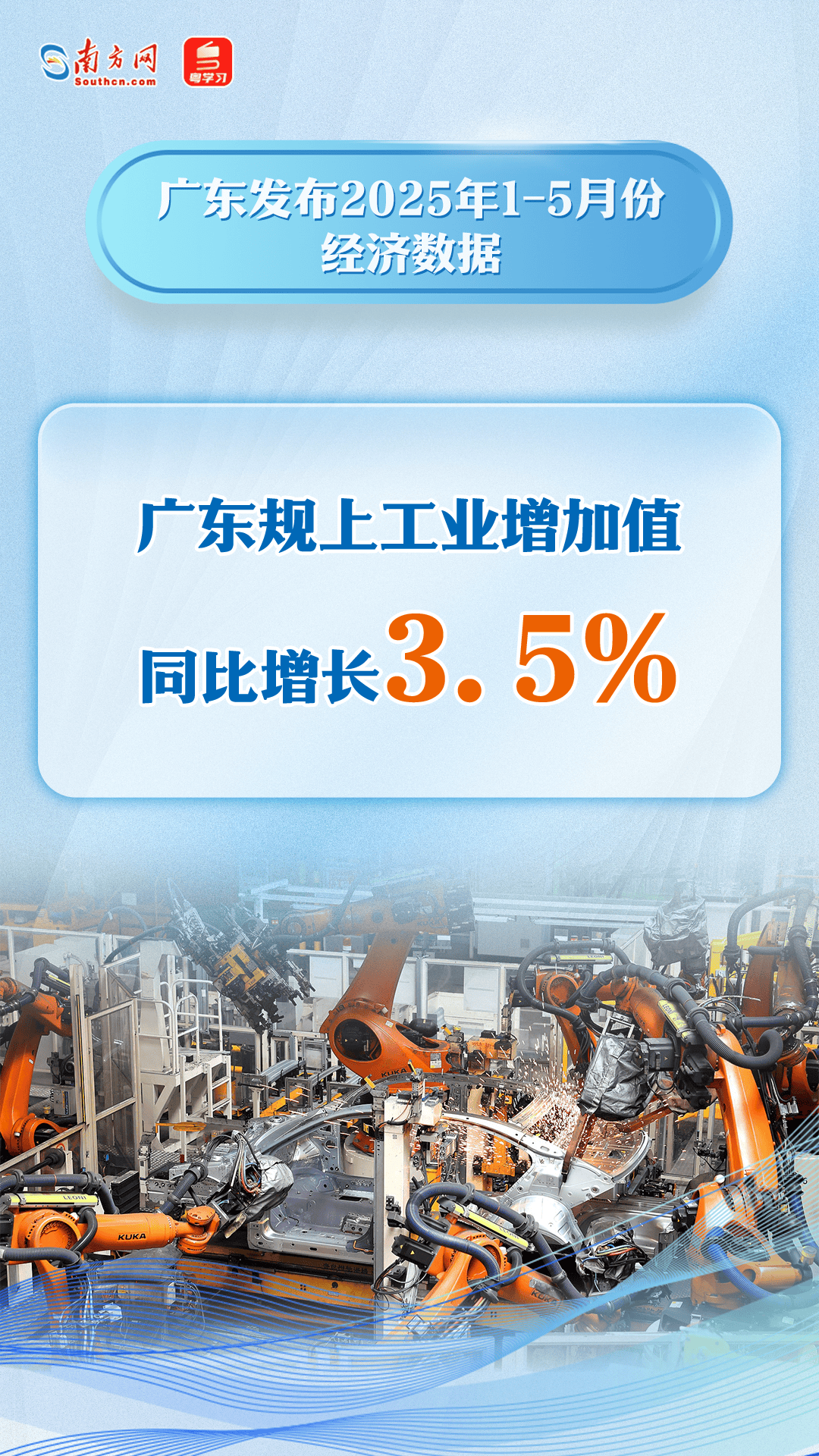
从前5月数据看广东经济的韧与劲
Sou Hu Cai Jing· 2025-06-23 17:03
Economic Overview - Guangdong's economy shows resilience and progress amid complex domestic and international environments, with key indicators reflecting a strong momentum for high-quality development [1][8] Manufacturing Sector - The manufacturing sector, a cornerstone of Guangdong's economy, demonstrates robust resilience with a 4.0% increase in industrial output from January to May, particularly in high-tech manufacturing [6] - Notable growth in specific industries includes a 7.4% increase in computer and electronic equipment manufacturing, a 7.8% rise in electrical machinery, and a 5.9% growth in automotive manufacturing [6] - High-tech manufacturing shows significant vitality, with civilian drone production surging by 66.7% and industrial robot production increasing by 33% [6] Investment Trends - Infrastructure investment rose by 4.5%, with industrial investment accounting for 37.2% of total investments, and automotive manufacturing investment increasing by 18.4% [6] - Industrial technology transformation investment grew by 5.1%, representing 35.9% of industrial investment, indicating a shift towards digital transformation [6] - The demand for productive services is increasing, with investments in information transmission and IT services rising by 10.0% [6] Consumer Market - Social retail sales reached 1.93 trillion yuan, a 3.7% year-on-year increase, with May's growth rate at 6.4% [7] - The "old-for-new" policy significantly boosted major consumer goods, with home appliances and furniture sales increasing by 52.5% and 67.7%, respectively [7] - Online retail sales grew by 23.5%, reflecting the vitality of new business models [7] Foreign Trade - Guangdong's foreign trade reached 3.75 trillion yuan from January to May, a 4% increase year-on-year, outpacing the national growth rate by 1.5 percentage points [7] - Strong export growth in electromechanical products, with "new three samples" and drone exports increasing by 29.8% and 27.1%, respectively [7] Conclusion - The positive performance in industrial, consumer, and foreign trade sectors lays a solid foundation for stable economic growth throughout the year, despite facing external challenges [8]

科技赋能,国诚投顾构建“AI+金融”生态矩阵
Zhong Guo Chan Ye Jing Ji Xin Xi Wang· 2025-06-23 09:09
Core Insights - The financial industry is undergoing a significant transformation from "digitalization" to "intelligentization" driven by AI technology, reshaping the underlying logic and competitive boundaries of financial services [2] - The key challenge for the industry is to convert AI technology into sustainable business value and to build an open and collaborative fintech ecosystem [2] - The recent Amazon Cloud Technology China Summit highlighted the importance of cloud adoption in the financial sector, emphasizing the need for speed, stability, and compliance in architectural decisions [4] Group 1 - The rapid development of the fintech industry has made cloud adoption a necessary path for digital transformation, with companies like Guocheng Investment Consulting recognizing the need to accelerate their digital transformation efforts [4] - Guocheng Investment Consulting is actively exploring innovative technologies and seeking collaborations to lay a solid foundation for comprehensive digital transformation [4] Group 2 - Guocheng Investment Consulting is deploying DeepSeek to explore more intelligent investment advisory applications and is leveraging national supercomputing internet for private deployment support [6] - The company has transitioned from traditional ECS architecture to a cloud-native Serverless architecture in collaboration with Alibaba Cloud, enhancing its core competitiveness in the fintech era [6] - The company aims to unlock new investment advisory service scenarios by relying on AI technology, continuously expanding the application boundaries of "AI + finance" [6]

2025年第25周:酒行业周度市场观察
艾瑞咨询· 2025-06-23 08:54
Core Insights - The Chinese wine industry lacks strong brand recognition despite high production levels, necessitating a shift towards brand building and market integration [2] - The rise of live-streaming e-commerce is reshaping the alcohol sales landscape, with a focus on top-tier influencers and a shift towards offline channels for smaller players [3][4] - The popularity of local sports events, such as the "Su Super" league, is driving alcohol consumption and marketing opportunities for brands [5] - Instant retail is transforming the white wine market, with significant sales growth during promotional events like 618 [6] - The white wine industry is targeting younger consumers, adapting products and marketing strategies to appeal to the Z generation [7] - The online and offline sales channels are increasingly integrated, with brands needing to adapt to changing consumer behaviors [9] - The focus on business consumption is growing, with leading brands targeting young professionals and customizing products to meet their needs [10] - The second-tier sauce liquor brands are facing challenges due to market adjustments and increased competition [11] - The banquet market is highly competitive, with brands employing aggressive promotional strategies to capture market share [12] - The trend of fan engagement through events is becoming crucial for brands to connect with younger consumers [14] - The low-alcohol beverage market is expanding, with domestic brands like Jingyu gaining significant traction [23] - High-end liquor brands are leveraging cultural and lifestyle marketing to enhance brand recognition and consumer engagement [24]






众致集团品牌全新升级,数智赋能开启中小企业健康发展星程
Zhong Guo Chan Ye Jing Ji Xin Xi Wang· 2025-06-23 07:07
Group 1 - The core event was the "Digital Empowerment and Healthy Development Forum for SMEs" held by Zhongzhi Group, focusing on sustainable development paths for small and medium-sized enterprises (SMEs) [1] - Zhongzhi Group has served over 100,000 enterprises since its establishment, leveraging national policies to support the innovative growth of SMEs [2] - The company has developed a "dual headquarters" strategy to enhance collaboration with government and enterprises, establishing itself as a benchmark for offshore financial and tax services [2][3] Group 2 - The company introduced a comprehensive service platform, "Enterprise Monkey APP," which processes over 100,000 data points daily with a 98% intelligent matching rate, providing one-stop services for enterprises [4] - Zhongzhi Group's investment division focuses on strategic emerging industries and infrastructure, creating a financial support ecosystem for sustainable development [4] - A new special fund was launched to provide financial support for SMEs, facilitating their growth and sustainability [4] Group 3 - The brand upgrade of Zhongzhi Group emphasizes four core areas: technology, finance and taxation, investment, and culture, aiming to enhance service quality for enterprises [5] - The event marked a significant step towards high-quality sustainable development for SMEs in China, aligning with national digital economy policies [5] - The company aims to lead the digital transformation of SMEs, promoting efficient operations and cost reduction through AI management [5]
华菱钢铁(000932) - 2025年6月18日投资者关系活动记录表
2025-06-20 08:20
Financial Performance - The company's income tax expenses increased year-on-year in Q1 2025 due to profit growth and tax reconciliation, while other income decreased, impacting overall profitability [2] - The effective corporate income tax rate remains at 15% for high-tech enterprises, with expectations for Q2 tax expenses and VAT deductions to stabilize [2] Market Strategy - The subsidiary Yangchun New Steel maintains a low-cost operational strategy, achieving a leading market share and sales price in Guangdong despite the downturn in the real estate sector [2][3] - The company has no immediate strategic adjustments planned, focusing on maintaining profitability in the rebar market [3] Export and Trade Impact - The company's export volume to the U.S. is minimal, accounting for only 0.8% of total exports in 2024, with overseas revenue making up about 7% of total income [4] - The company continues to monitor international trade policies and adjust its export strategies accordingly [4] Environmental Initiatives - The company is on track to complete ultra-low emission upgrades by the end of June 2025, aiming for an environmental performance rating of A by year-end [5] - Capital expenditures for 2025 are projected at 5.467 billion yuan, focusing on product structure upgrades and digital transformation [5] Product Development - The first phase of the silicon steel project has reached full production capacity, contributing positively to the company's performance [6][7] - The automotive sheet joint venture has achieved full production, with plans for further development and product certification [7] Financial Returns - For 2024, the company plans to distribute a cash dividend of 1.00 yuan per 10 shares, representing 34% of net profit, an increase of 2.7 percentage points from the previous year [5] - The total planned share buyback and dividend payout will account for 44%-54% of the company's net profit for 2024 [5]

聚焦年轻力,绝味第一季度财报稳中有进显韧性
Quan Jing Wang· 2025-06-20 02:37
Core Viewpoint - The company, Juewei Foods (603517.SH), demonstrated resilience and market competitiveness in the first quarter of 2025, achieving a revenue of 1.501 billion yuan and a net profit of 120 million yuan despite structural adjustments in the consumer market and intensified industry competition [1][2]. Group 1: Financial Performance - In Q1 2025, Juewei Foods reported a revenue of 1.501 billion yuan and a net profit of 120 million yuan, reflecting the challenges in the current consumer market [1]. - The company utilized 294 million yuan of its own funds for share repurchase and cancellation in 2024 to maintain market stability and enhance investor confidence [2]. - The annual dividend plan for 2024 included a cash dividend of 3.3 yuan per 10 shares, totaling approximately 200 million yuan, along with a mid-term dividend of 3 yuan per 10 shares, highlighting the company's commitment to shareholder interests [2]. Group 2: Strategic Initiatives - Juewei Foods is accelerating its digital transformation strategy, partnering with Tencent Smart Retail to leverage AI, cloud technology, and big data for enhancing retail operations [3]. - The company has implemented a comprehensive digital strategy across various platforms, including offline stores, takeout services, and social media, with AI-driven initiatives like "Xiao Huo Ya" improving customer engagement and decision-making speed [3]. - The AI applications have led to a 39% increase in store operational efficiency and significant improvements in marketing effectiveness, with click-through rates rising over 40% and conversion rates increasing by 25% [3]. Group 3: Targeting Young Consumers - Juewei Foods is focusing on the preferences of Generation Z, employing flexible product strategies and brand rejuvenation to strengthen its influence among young consumers [4]. - The company utilizes social media to enhance its youthful brand image, engaging in "listening to advice" marketing and collaborating with popular cultural IPs to resonate with younger audiences [4]. - In 2025, Juewei Foods plans to continue exploring AI and retail synergies while deepening its digital layout and expanding consumption scenarios targeted at younger demographics [4].


毕马威中国:企业激活AI价值潜力 要克服安全、数据隐私等问题
Zheng Quan Shi Bao Wang· 2025-06-20 02:05
Group 1 - The 2025 World Mobile Communication Conference will be held from June 18 to June 20, during which KPMG will release a report titled "Smart Technology: A New Blueprint for Digital Transformation Driven by Artificial Intelligence" [1] - The report highlights that AI is triggering a disruptive transformation wave, with a continuous emergence of AI-native startups and the feasibility of new SaaS models driven by intelligent agents [1] - Compared to traditional SaaS, the new SaaS models emphasize usage-based and outcome-based billing, driven by rapid cost reductions in advanced model usage and the expansion of automated scenarios powered by agent-based AI [1] Group 2 - The 2025 government work report emphasizes the ongoing promotion of the "AI+" initiative, aiming to better integrate digital technology with manufacturing and market advantages [2] - Many technology companies are leveraging AI capabilities to enhance operational efficiency, decision-making, and data management, although challenges such as data expansion, ethics, and talent shortages remain [2] - Key challenges limiting the potential value of AI for enterprises include security and data privacy issues, despite the benefits of cost reduction, accelerated data-driven decision-making, and improved data analysis [2] Group 3 - Technology companies are at a new starting point for AI-driven digital transformation, presenting both opportunities and challenges [2] - Many companies still lack clear AI strategies, implementation plans, technical infrastructure, and trust frameworks [2] - Companies need to integrate AI into key value streams and workflows, creating more attractive products and services, while also focusing on cybersecurity and planning for emerging technologies like quantum technology [2]
“金融为民”守初心 “数智赋能”结硕果 ——南海农商银行盛装亮相2025中国国际金融展
Zheng Quan Shi Bao Wang· 2025-06-20 00:30
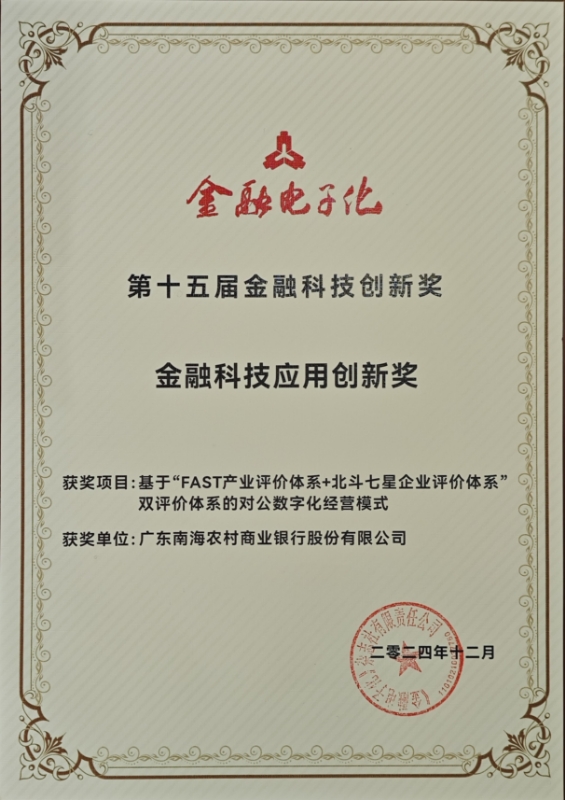
Core Insights - The 2025 China International Financial Expo commenced in Shanghai, showcasing top financial institutions and innovative technologies, with a focus on the digital transformation of regional financial institutions like Nanhai Rural Commercial Bank [1] - Nanhai Rural Commercial Bank highlighted its achievements in five key areas of financial innovation: technology finance, green finance, inclusive finance, pension finance, and digital finance, emphasizing its commitment to serving the real economy and contributing to the construction of a financial powerhouse [1][2] Group 1: Financial Innovation and Recognition - The "Citizen Loan" project by Nanhai Rural Commercial Bank was selected as a national-level case study for inclusive finance, recognized for its digital and intelligent service experience, making it the only financial institution in Guangdong to achieve this [2][3] - The bank's focus on financial technology research and development has been pivotal in its success, showcasing its innovative approach to meet the needs of the community [3] Group 2: Digital Transformation Strategy - Nanhai Rural Commercial Bank has established a high-quality development strategy that integrates digital and practical elements, aiming to create a smart financial system that enhances service efficiency and risk management [4][11] - The bank developed the "FAST + Beidou Seven Stars" dual evaluation system to address financing challenges faced by local enterprises, enabling precise identification of target clients and customized financial solutions [5][6] Group 3: Product Development and Market Impact - The bank has launched various tailored financial products, including "Citizen Loan," "Universal Loan," and "Digital Smart Loan," which have gained market recognition and significantly improved financing efficiency for local businesses [6][7] - The "FAST + Beidou Seven Stars" system has received multiple awards for its innovative application in financial technology, further establishing the bank's reputation in the industry [7] Group 4: Future Outlook and Commitment - Nanhai Rural Commercial Bank aims to continue its commitment to the "finance for the people" philosophy, leveraging technology to enhance financial services and support local economic development [12]
财经观察|时隔十年国际金融展归沪,掀起一场什么金融科技巨浪?
Qi Lu Wan Bao· 2025-06-19 10:44
Group 1 - The Shanghai World Mobile Communication Conference (MWC) and the Amazon Web Services (AWS) China Summit are overlapping this week, alongside the 2025 China International Financial Expo and the 2025 Lujiazui Forum, creating a significant financial technology event in Shanghai [1] - On June 18, the Chairman of the China Securities Regulatory Commission, Wu Qing, announced the establishment of a growth tier on the Sci-Tech Innovation Board, allowing unprofitable companies to list under the fifth set of standards [1] - The Shanghai Stock Exchange has drafted 12 guidelines for the growth tier, focusing on its positioning, scope, delisting conditions, information disclosure, and risk disclosure [1] Group 2 - Compared to ten years ago, the proportion of technology companies among A-share listed companies with a market capitalization exceeding 100 billion yuan has increased from 12% to 27% [2] - The State Financial Supervision Administration and the Shanghai Municipal Government have issued an action plan to support the construction of Shanghai as an international financial center, emphasizing the gathering of insurance institutions [2] - Shanghai currently has 1,782 licensed financial institutions, with foreign financial institutions accounting for about one-third, and foreign entities like Societe Generale Securities continue to establish operations in Shanghai [2] Group 3 - The 31st China International Financial Expo serves as an important window for observing the reform and opening-up of China's financial industry, having moved to Shanghai in 2015 [3] - Major global systemically important banks, including Deutsche Bank, HSBC, and Santander, participated in the expo [4] - The expo featured a signing ceremony for the Cross-Border Interbank Payment System (CIPS) with six foreign institutions, marking the first time CIPS has direct participants from Africa, the Middle East, Central Asia, and Singapore [4]
云载 AI·健行未来——火山引擎“AI+医药大健康”行业论坛圆满落幕
Cai Fu Zai Xian· 2025-06-19 09:13
Core Insights - The "AI + Healthcare" forum highlighted the transformative impact of AI in the healthcare sector, emphasizing the integration of cloud computing, big data, and AI technologies to enhance medical services and patient experiences [1][17] - The forum featured contributions from various experts, indicating a collaborative effort in advancing AI applications in healthcare, particularly in areas like disease prevention, diagnosis, and drug design [3][10] Group 1: AI Applications in Healthcare - AI is expected to address the increasing demands of life sciences and medicine due to rising life expectancy, with a focus on developing new AI technologies tailored for healthcare [3][10] - The collaboration between Volcano Engine and researchers has led to the development of Bio-OS-Co-Pilot, which significantly reduces research timelines from years to hours, enhancing efficiency in modeling and analysis [4] - Companies like Tianjin Pharmaceutical Group have reported a 14.3% increase in digital maturity through strategic digital transformation initiatives, showcasing the effectiveness of AI in optimizing workflows [6][8] Group 2: Future Directions and Challenges - The healthcare industry faces challenges such as high complexity and strict requirements for data governance, necessitating a shift towards sustainable iterative mechanisms for AI applications [12] - AI is positioned to enhance pre-consultation processes, patient education, and overall efficiency in healthcare delivery, while maintaining a supportive role rather than replacing human decision-making in high-risk scenarios [15] - Future efforts will focus on low-risk, high-value areas for AI implementation, such as research data analysis and logistics support, to ensure effective integration into healthcare systems [14]