一带一路

Search documents
记者Vlog丨“天空之国”莱索托 中非交流落地生根
Yang Shi Xin Wen Ke Hu Duan· 2026-01-11 14:07
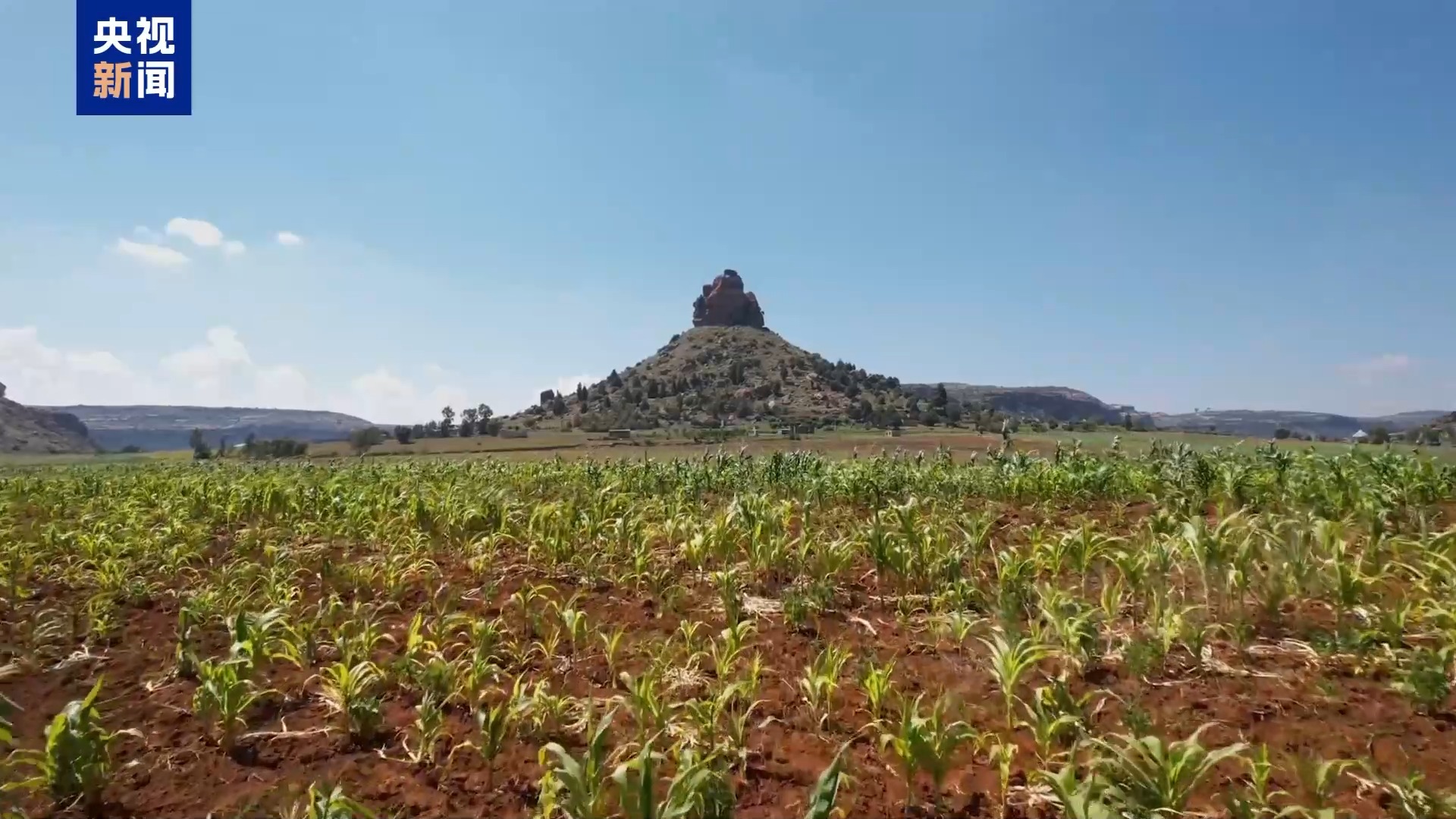
Group 1 - Lesotho is the only country in the world where the entire territory is located above 1,000 meters in elevation, shaping its geography and lifestyle [5] - The year 2026 marks the 32nd anniversary of the resumption of diplomatic relations between China and Lesotho, with ongoing cooperation in infrastructure, healthcare, water resources, and transportation [7] - The Polihali Water Transfer Tunnel project is a key component of the Lesotho Highlands Water Project, aimed at reallocating water resources in Southern Africa, often referred to as Africa's version of the South-to-North Water Diversion Project [8] Group 2 - The Polihali Dam and water transfer tunnel, constructed by a consortium of Chinese hydropower companies and local partners, serves as a vital link between Lesotho and South Africa, providing essential water supply to densely populated areas [10] - Infrastructure projects like the Moshoeshoe Road are connecting remote mountainous areas to urban centers, while Chinese-built hospitals in Maseru are providing modern healthcare services to local families [12] - Increasing numbers of Lesotho youth are studying in China and returning home to contribute to national development, fostering a cultural exchange that injects new energy into the country [14]

工程机械行业专题:中证全指工程机械指数型基金和广发中证工程机械主题ETF投资价值分析
Guoxin Securities· 2026-01-11 13:53
Investment Rating - The report rates the engineering machinery industry as "Outperform" compared to the market [1] Core Insights - The engineering machinery industry is experiencing a new development phase driven by domestic renewal demand, rapid overseas export growth, and accelerated electrification transformation [1][2] - The global engineering machinery market is projected to reach USD 237.6 billion in 2024, with a highly concentrated competitive landscape [1][21] - Domestic demand is stabilizing and recovering, supported by infrastructure investment and equipment renewal policies, while electrification is expected to initiate a new growth cycle [2][27] - Export growth is recovering, with significant potential for Chinese companies in overseas markets, particularly in regions involved in the Belt and Road Initiative [3][49] Summary by Sections Domestic Market - Excavator sales in China are showing signs of recovery, with a year-on-year increase of 18.60% from January to November 2025 [2][27] - The recovery is driven by three main factors: infrastructure investment, the arrival of the equipment renewal cycle, and the expansion of application scenarios [2][30] - The electrification of machinery is gaining momentum, with electric loader penetration reaching 23% in the first three quarters of 2025 [2][42] Overseas Market - From 2015 to 2022, excavator exports grew at a CAGR of 52.41%, with a recovery trend observed in 2024 [3][49] - The export volume of excavators increased by 14.90% year-on-year from January to November 2025, indicating a strong recovery [3][49] - The Belt and Road Initiative is providing strategic opportunities for Chinese engineering machinery companies to expand internationally [24][49] Competitive Landscape - The competitive landscape is stable, with leading companies dominating the market [3][49] - The report highlights that the top three global players hold over 30% market share, with Chinese companies gradually increasing their global market share [1][21] - The engineering machinery industry is transitioning from a traditional cyclical sector to a high-end manufacturing field characterized by globalization and electrification [4][49] Investment Value Analysis - The CSI Engineering Machinery Index reflects the overall market performance of leading companies in the engineering machinery sector, with a focus on large-cap stocks [4][8] - The index's valuation is currently at a historically high level, but with expected growth in domestic demand and global expansion, the industry is anticipated to experience significant profit growth [4][8] - The report emphasizes the long-term investment value of the index amid ongoing industrial upgrades and accelerated internationalization [4][8]
中国企业出海的风险纾解与应对思路︱问海·中企出海新观察
Di Yi Cai Jing· 2026-01-11 12:53
Core Insights - The article discusses the challenges faced by Chinese companies in their overseas expansion due to changing geopolitical landscapes, complex business environments, and potential cultural and technological barriers [1] - It emphasizes the need for companies to elevate risk management to a strategic level to ensure sustainable overseas operations, which is crucial for both corporate success and national development [1] Group 1: Development Stages and Dynamics of Chinese Companies Going Global - Since joining the WTO in 2001, Chinese companies have transitioned from tentative layouts to strategic actions, with foreign direct investment stock reaching $31,399.3 billion by the end of 2024, a 105-fold increase since 2002 [2] - China has risen from 25th to a stable position among the top three in global rankings for foreign direct investment, with the number of overseas enterprises growing at an average annual rate of 10.4% to 52,000 [2] - Investment distribution shows a stable concentration in Hong Kong (55%-60%) and rapid growth in Southeast Asia, while the share of traditional markets like the U.S. has decreased from 2.6% in 2015 to 1.1% in 2024 [2] Group 2: Evolution of Outbound Investment Models - The outbound investment model has evolved through three stages: cost-driven exports (2001-2010), brand expansion (2011-2020), and ecosystem export (from 2021 onwards), where companies are now exporting technology, standards, and management practices [3] - The transition is driven by three main forces: market saturation and competitive pressure, technological iteration and industrial upgrading, and the need for resource acquisition and strategic positioning [3] Group 3: Risks Faced by Chinese Companies Abroad - Political risks are the primary challenge, influenced by the stability of host countries, policy changes, and international relations, which can affect operations and lead to significant financial losses [4] - Economic risks include exchange rate fluctuations, inflation, and changes in economic cycles, which can impact profitability and investment returns [4] - Legal risks arise from differences in legal systems, intellectual property protection, and contract enforcement, potentially leading to compliance issues and financial penalties [5] - Cultural risks stem from differences in language, customs, and values, which can create communication barriers and management conflicts [6] - Market risks involve variations in market demand, competitive dynamics, and consumer behavior, which can affect product sales and profitability [6] - Technological risks relate to differing technical standards and the pace of innovation, which can hinder market access and competitiveness [6] Group 4: Recommendations for Risk Mitigation - Companies should prioritize compliance management by understanding local regulations and forming high-caliber legal teams to navigate complex legal environments [8] - Diversifying business layouts across mature and emerging markets can mitigate risks associated with over-concentration in a single market [8] - Establishing robust technology and intellectual property protections is essential for maintaining competitive advantages in international markets [9] - Companies should enhance their ability to utilize policy and financial tools to manage risks effectively, including leveraging government resources and financial products [9] - Focusing on deep localization and building sustainable ecosystems is crucial for integrating into local markets and reducing operational friction [9] Conclusion - In the context of complex international dynamics, companies must adopt a strategic approach to compliance, diversification, technology protection, policy utilization, and localization to navigate risks and achieve sustainable growth [10]
“天空之国”莱索托 中非交流落地生根
Yang Shi Xin Wen Ke Hu Duan· 2026-01-11 12:46
Group 1 - Lesotho is the only country in the world where the entire territory is situated above 1,000 meters in elevation, characterized by mountains, plateaus, and canyons that shape the landscape and lifestyle of its people [3] - The year 2026 marks the 32nd anniversary of the resumption of diplomatic relations between China and Lesotho, with ongoing cooperation in infrastructure, healthcare, water resources, and transportation under the Belt and Road Initiative [5] - The Polihali Water Transfer Tunnel project is a key component of the Lesotho Highlands Water Project, aimed at transforming the region's abundant water resources into a lifeline for development, often referred to as the "African version of South-North Water Diversion" [6] Group 2 - The Polihali Dam and water transfer tunnel, constructed by a consortium of Chinese hydropower companies and local partners, serve as a critical link between Lesotho and South Africa, providing essential water supply to densely populated areas like Johannesburg and Pretoria [8] - Infrastructure projects such as the Moshoeshoe Road are connecting remote mountainous areas with urban centers, while Chinese-built hospitals in Maseru are providing modern healthcare services to ordinary families for the first time [10] - Increasing numbers of Lesotho youth are studying in China, focusing on engineering, finance, governance, and technology, and returning to contribute to national development, reflecting a cultural exchange that is injecting new energy into the country [12]
商务部部署2026年重点工作
Xin Lang Cai Jing· 2026-01-11 06:30
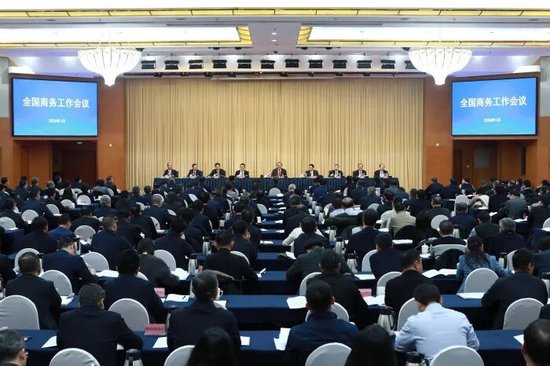
全国商务工作会议在京召开 1月10日至11日,全国商务工作会议在京召开。会议以习近平新时代中国特色社会主义思想为指导,深 入贯彻落实党的二十大和二十届历次全会精神,认真落实中央经济工作会议部署,坚持稳中求进工作总 基调,立足商务工作"三个重要"定位,总结2025年和"十四五"工作,研究"十五五"目标任务,部署2026 年工作。商务部党组书记、部长王文涛作工作报告,商务部党组副书记、国际贸易谈判代表兼副部长李 成钢主持会议。 会议指出,2025年是很不平凡的一年。在以习近平同志为核心的党中央坚强领导下,全国商务系统迎难 而上、奋力拼搏,推动党中央、国务院决策部署在商务领域落地见效,实现商务发展总体平稳、稳中有 进,提振消费加力显效,对外贸易顶压增长,利用外资结构优化,对外投资有序推进,为经济持续回升 向好作出积极贡献。 全国商务工作会议在京召开 会议认为,过去一年,商务部同各地方各部门密切配合、协同发力,扎实推动以下工作:一是大力提振 消费,加力扩围实施消费品以旧换新,推动服务消费提质惠民,创新打造消费场景,健全流通和市场体 系。二是千方百计稳外贸,大力开拓多元化市场,发展外贸新动能,提升服务贸易和数字贸易。三 ...
全球媒体聚焦|南华早报:从“世界工厂”到“投资大国”中国全球投资模式发生改变
Xin Lang Cai Jing· 2026-01-11 03:46
Group 1 - Foreign Direct Investment (FDI) has been a crucial pillar of China's economy since the reform and opening-up, contributing to its rise as the "world's factory" [1] - China's Outward Direct Investment (ODI) has rapidly expanded over the past two decades, making it one of the top three outward investment countries globally [1] - The growth of China's ODI is driven by the diversification of income sources sought by Chinese enterprises, with a trend towards targeting emerging markets amid increasing global trade uncertainties [1] Group 2 - The focus of China's overseas investments has shifted from single infrastructure projects to high-value sectors such as green energy and telecommunications, adopting a "chain transfer" model for local industrial clusters [2] - Chinese enterprises are increasingly emphasizing technology transfer and management experience, with significant training initiatives for local professionals in host countries [2] Group 3 - In developed markets, particularly Europe, greenfield investments by China are becoming predominant, especially in the electric vehicle sector, indicating a deepening of localization efforts [3] Group 4 - A growing number of Chinese enterprises are using the Renminbi for overseas investments, with 27.1% of surveyed companies reporting that over 50% of their ODI is in Renminbi, an increase of 2.2 percentage points from the previous year [4] - Nearly 67% of surveyed enterprises plan to increase the proportion of Renminbi used in their overseas investment projects, marking a recent high [4] Group 5 - This trend is accelerating the internationalization of Chinese financial institutions, necessitating product upgrades and more complex global risk pricing and compliance systems [5] - Recommendations for furthering the internationalization of Chinese financial institutions include enhancing innovation and strengthening cross-border regulatory coordination [5]
南华早报:从“世界工厂”到“投资大国”中国全球投资模式发生改变
Xin Lang Cai Jing· 2026-01-11 02:48
Group 1: Core Insights - Foreign Direct Investment (FDI) has been a crucial pillar of China's economy since the reform and opening-up, contributing to its rise as the "world's factory" [1] - China's Outward Direct Investment (ODI) has rapidly expanded over the past two decades, making it one of the top three outward investment countries globally [1] Group 2: Drivers of China's ODI Growth - The growth of China's ODI is driven by companies seeking diversified revenue sources, with a trend expected to continue in the coming years, particularly targeting emerging markets amid global trade uncertainties [1] - In 2024, China's direct investment in ASEAN is projected to increase by 36.8% year-on-year, primarily focused on the manufacturing sector, aiding Chinese companies in tapping into the region's growing domestic market [1] Group 3: Changes in Investment Patterns - Initially, China's overseas investments were concentrated on single infrastructure projects, but there has been a shift towards high-value sectors like green energy and telecommunications, adopting a "chain transfer" model for local industrial clusters [2] - Chinese companies are increasingly emphasizing technology transfer, management experience, and technical standards, with significant training initiatives for local professionals in regions like Africa [2] Group 4: Impact on RMB Internationalization - A growing number of Chinese enterprises are using RMB for overseas investments, with 27.1% of surveyed companies reporting that over 50% of their ODI is in RMB, an increase of 2.2 percentage points from the previous year [4] - Nearly 67% of surveyed companies plan to increase the proportion of RMB used in their overseas investment projects, marking a recent high [4] Group 5: Financial Institutions' Internationalization - The trend of increased RMB usage in overseas investments is accelerating the internationalization of Chinese financial institutions, necessitating product upgrades and more complex global risk pricing and compliance systems [5] - Recommendations for furthering the internationalization of Chinese financial institutions include enhancing innovation and strengthening cross-border regulatory coordination to support the transition from an "investment giant" to an "investment powerhouse" [5]
苏州市外贸开年一片繁忙 企业订单忙 出海通道畅
Su Zhou Ri Bao· 2026-01-11 00:44
Group 1 - Suzhou's foreign trade is experiencing a busy start in the first week of 2026, with companies ramping up production to meet orders [1] - Suzhou Grunther Electric Co., Ltd. has completed the final packaging of 100,000 vacuum cleaner units, which will be shipped to Istanbul, Turkey, marking a significant entry into the Turkish market [1] - The company has secured new orders worth 60 million yuan in January, with approximately one-third coming from the European market, attributed to customer resources accumulated through trade fairs [1] Group 2 - Jinlong Bus has prepared a shipment of 3,000 Higer buses for export to Algeria, with a total value exceeding 1.5 billion yuan, representing the largest single export order for Chinese buses to date [1] - The new V-series buses have undergone three years of development to adapt to Algeria's challenging environmental conditions, featuring advanced safety systems and dedicated service plans [1] - The "Shicaitong" platform has supported small and medium-sized enterprises (SMEs) in their export efforts, achieving over 30 million USD in service export value in the first week of January [2] - The platform has facilitated the export of goods, including vacuum cleaners and hair dryers, to Ho Chi Minh City, Vietnam, through efficient order matching and logistics services [2] - As of now, the platform has served over 46,000 SMEs, covering 183 countries and regions, with a cumulative export value exceeding 100 billion yuan [2]
【吉刻早报】“东北超”5月启动
Xin Lang Cai Jing· 2026-01-10 23:42
★1月10日,吉林省物流集团与长春兴隆综合保税区(简称兴隆综保区)共建吉林国际道路运输集结中心 合作框架协议签约仪式,在兴隆综保区举行。作为全国首个国际道路运输集结中心,该项目的落地标志着 长春市乃至吉林省深度融入"一带一路"建设、打造向北开放战略支点迈出关键步伐。 ★近日,"吉星"高分07系列卫星采用夜光成像模式成功获取了国内首张甚高分辨率彩色夜光遥感卫星影 像。 【天气】今天白天到夜间,全省多云转阴,部分地区有小雪。最高气温:全省大部-16~-12℃,最低气 温:白山-26℃,其他大部-23~-19℃。 【有礼】吉刻新闻"签到有礼"计划已启动。从2026年1月8日起至2027年1月8日,只需每日打开"吉刻新 闻"完成签到,即自动加入幸运池。每月8日,从上月签到满勤的用户中,抽取幸运读者赠送"吉林一号"宇 宙科普绘本。签到流程:1.手机安装"吉刻";2.注册登录后,点击"我的"页面找到"签到"按钮;3.点击"签 到"按钮。活动参与温馨提示:请确保您的吉刻新闻APP已更新至最新版本,方可顺利参与签到活动。 【招聘】吉林大学附属中学2026年公开招聘编制外合同制(劳务派遣)教师5名。每位应聘人员只可申请 一个岗 ...

吃中俄食品观美欧局势,中东雄狮伊朗缘何走到现在
Sou Hu Cai Jing· 2026-01-10 22:20
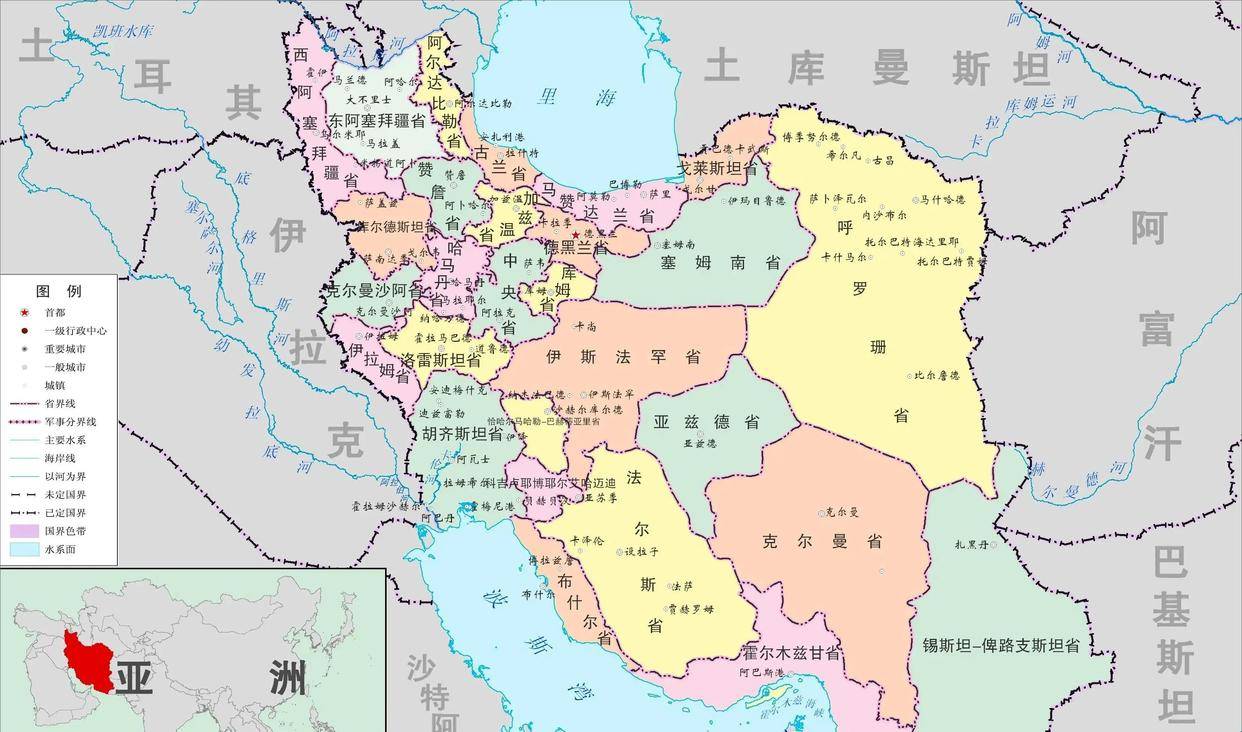
Core Viewpoint - The recent UN Security Council vote highlighted Iran's diplomatic isolation, with only four votes in favor of a resolution against sanctions, reflecting the consequences of its inconsistent foreign policy and strategic missteps [1]. Group 1: Iran's Diplomatic Challenges - Iran's attempts to balance relationships with both Western and Eastern powers have led to a lack of coherent strategy, resulting in missed opportunities for collaboration, particularly with China [1][3]. - The historical pride stemming from the Persian Empire has created a paradox where Iran seeks Western integration while simultaneously dismissing Eastern allies, leading to a sense of betrayal when Western agreements falter [3][11]. - The internal political structure complicates Iran's foreign relations, as the ruling clerical elite fears rising nationalism and prioritizes regime stability over genuine diplomatic engagement [5][7]. Group 2: Economic and Social Implications - The re-imposition of sanctions has severely impacted Iran's economy, with oil exports plummeting to 400,000 barrels per day and inflation soaring to 60%, leading to a depreciating currency and a volatile black market [13][14]. - A significant portion of the population, particularly the youth, is disillusioned with the current regime and seeks better opportunities, as evidenced by widespread protests and a desire for freedom and dignity [13][14]. - The internal economic landscape is hindered by powerful interest groups, such as the Revolutionary Guard, which complicates the implementation of international agreements, including the 25-year cooperation deal with China [9][14]. Group 3: Future Directions - Iran faces three potential paths: fully aligning with Eastern powers, capitulating to Western demands, or maintaining its current precarious stance, all of which present significant challenges [14]. - The energy transition away from oil diminishes Iran's leverage, and the patience of the younger generation is waning, raising questions about the country's future direction [14].