
产业升级

Search documents
民营企业迎来更广阔舞台
Jing Ji Ri Bao· 2025-12-14 21:49
Group 1 - The Hainan Free Trade Port will officially start its full island closure operation on December 18, providing a platform for enterprises to connect with global markets and gather quality resources [1] - The closure will implement a customs supervision model characterized by "one line open, two lines controlled, and free flow within the island," allowing for significant trade facilitation [1] - The "zero tariff" system for imports will expand to approximately 6,600 tax items, accounting for about 74% of all product tax items, enhancing the attractiveness for private enterprises [1] Group 2 - The policy provides greater flexibility for private enterprises in international trade and manufacturing, significantly reducing production costs and enhancing competitiveness in international markets [2] - The overall plan encourages high-end manufacturing and high-value-added processing industries to settle in Hainan, promoting the development of high-tech industries [2] - The dual 15% tax rate policy for enterprises and individual income tax is well-received, making Hainan an attractive location for talent and innovation [3] Group 3 - Companies are expanding cross-border asset operations, with measures to facilitate the free flow of foreign capital and the establishment of multi-functional free trade accounts [3] - The financial policies in Hainan align with the operational needs of enterprises engaged in international trade and capital settlement, enhancing efficiency [4] - The influx of international visitors has positively impacted traditional industries such as hospitality and modern service sectors, with a reported 20% annual growth in guest traffic [4]
哈森商贸(中国)股份有限公司发行股份购买资产并募集配套资金暨关联交易预案摘要(修订稿)
Shang Hai Zheng Quan Bao· 2025-12-14 20:25
Core Viewpoint - The company is planning to acquire 45% of the shares of Suzhou Langkes through a share issuance, aiming to enhance its control over the subsidiary and improve its profitability and management efficiency in the consumer electronics sector [31][32][33]. Group 1: Transaction Overview - The transaction involves issuing shares to purchase assets and raising supporting funds, with the total amount of supporting funds not exceeding 100% of the transaction price for the asset acquisition [33][42]. - The final transaction price will be determined based on an evaluation report from a qualified assessment agency [58]. Group 2: Impact on the Company - The acquisition will allow the company to control 100% of Suzhou Langkes, which specializes in precision metal components for consumer electronics, thereby enhancing the company's core competitiveness and profitability [8][31]. - The transaction is expected to improve the company's net profit and net assets, further deepening its strategic layout in the consumer electronics field [8][31]. Group 3: Industry Context - The consumer electronics industry is experiencing a recovery, with significant growth expected in smartphone and AI-related products, indicating a favorable market environment for the company's strategic expansion [29][30]. - Government policies are encouraging mergers and acquisitions to optimize the capital market and promote industry upgrades, aligning with the company's objectives [27][28].

弄潮江海 南通向新
Shang Hai Zheng Quan Bao· 2025-12-14 20:14
Group 1 - Nantong is positioned as an important growth pole for high-quality development in Jiangsu, aiming to become a central city in the northern Yangtze River Delta [2] - The city has a historical significance as a birthplace of modern national industry in China and was one of the first 14 coastal open cities, known for its textile and construction industries [2] - Nantong is leveraging multiple strategic opportunities and geographical advantages to accelerate its development, focusing on maritime economic growth [2] Group 2 - The article emphasizes the need for Nantong to stabilize its economic foundation while daring to pursue future growth opportunities [2] - Nantong is constructing a new highland for marine economic development, indicating a shift towards ocean-related industries [2] - The entrepreneurial spirit of Zhang Jian, a historical figure in Nantong's industrial development, is highlighted as a lasting influence on the city's business culture [2]


弄潮江海风正劲——解码万亿南通产业升级路
Shang Hai Zheng Quan Bao· 2025-12-14 19:43
Core Viewpoint - Nantong is accelerating its transformation into a significant growth pole for high-quality development in Jiangsu, leveraging its historical industrial foundation and geographical advantages to foster innovation and economic growth [5][13]. Economic Performance - Nantong's GDP reached 1 trillion yuan in 2020 and is projected to reach 1.24 trillion yuan in 2024, with a year-on-year growth of 6.2% [7]. - In the first three quarters of this year, Nantong's GDP was 978.89 billion yuan, reflecting a year-on-year increase of 5.4%, which is higher than the national average [10]. Industrial Development - Nantong is home to six major industrial clusters, with shipbuilding and high-end textiles recognized as national advanced manufacturing clusters, contributing significantly to the national output [11]. - The high-end textile industry is transitioning from "weaving" to "intelligent manufacturing," driven by technological innovation and global market expansion [11]. Historical Legacy - The legacy of Zhang Jian, a pioneer of modern industry in Nantong, continues to influence local entrepreneurs and the city's industrial ethos, emphasizing education and practical skills [8][10]. - The establishment of "Nantong Entrepreneur Day" and the "Zhang Jian Cup" awards institutionalizes the spirit of entrepreneurship in the region [9]. Strategic Initiatives - Nantong is focusing on coastal development as a key strategy for achieving the next trillion yuan in GDP, with a modern marine industry system being established [14][15]. - The city is enhancing its connectivity with Shanghai and Suzhou through multiple infrastructure projects, facilitating regional collaboration and industrial integration [16]. Innovation and Future Industries - Nantong is prioritizing future industries such as aerospace, marine technology, and renewable energy, aiming to capture technological advancements and drive economic growth [16]. - The establishment of "offshore incubators" in various districts is fostering innovation and attracting technology projects to the region [16].



解码万亿南通产业升级路稳住“压舱石” 敢摘“未来星”
Shang Hai Zheng Quan Bao· 2025-12-14 19:43
Core Viewpoint - Nantong is positioned as a significant growth pole for high-quality development in Jiangsu, leveraging its historical industrial roots and strategic geographical advantages to enhance its role as a central city in the northern Yangtze River Delta [2] Group 1: Historical Context - Nantong is recognized as one of the important birthplaces of modern national industry in China, igniting the spirit of industrial self-reliance [2] - The city was one of the first 14 coastal cities to open up, known for its textile industry and construction capabilities, thriving during the reform and opening-up period [2] Group 2: Current Development Strategy - Nantong is accelerating its development to become a key growth area in Jiangsu, focusing on high-quality economic growth [2] - The city aims to build a new highland for marine economic development, indicating a strategic shift towards leveraging maritime resources [2] Group 3: Future Outlook - Nantong is at a historical juncture, transitioning from the "14th Five-Year Plan" to the "15th Five-Year Plan," with multiple strategic opportunities emerging [2] - The city is set to write a new chapter in its development, emphasizing its geographical advantages and the integration of land and sea [2]
公募“固收+”业绩分化基金公司强化资产配置能力
Shang Hai Zheng Quan Bao· 2025-12-14 15:30
Group 1 - The core viewpoint of the articles highlights the growing popularity and performance differentiation of "fixed income plus" products in the investment market, with a significant increase in total market size and varying returns among different products [1][2]. - As of the end of Q3, the total market size of "fixed income plus" products reached 2.44 trillion yuan, an increase of over 500 billion yuan from the end of Q2, and a rise of 1.11 trillion yuan compared to the same period in 2024 [1]. - The average net value growth rate of "fixed income plus" products over the past year was 5.05%, with the top-performing product, Huazhang Zhilian LOF, achieving a net value growth of 50.40% [1]. Group 2 - Investors are increasingly favoring "fixed income plus" products due to declining interest rates and a growing demand for stable financial arrangements amid an aging population [2]. - The key to enhancing "fixed income plus" products lies in the strategic addition of various asset types, moving beyond simple stock-bond combinations to include diverse assets for better risk management and yield enhancement [2][3]. - The strategic asset allocation for "fixed income plus" products should consider market volatility and the current economic transition, focusing on controlling fluctuations while identifying investment opportunities in traditional cyclical sectors [3]. Group 3 - Three critical factors for large asset allocation in "fixed income plus" products include the development of AI technology and its impact on financial markets, changes in price levels, and geopolitical factors that are closely tied to industries like AI computing power [4].
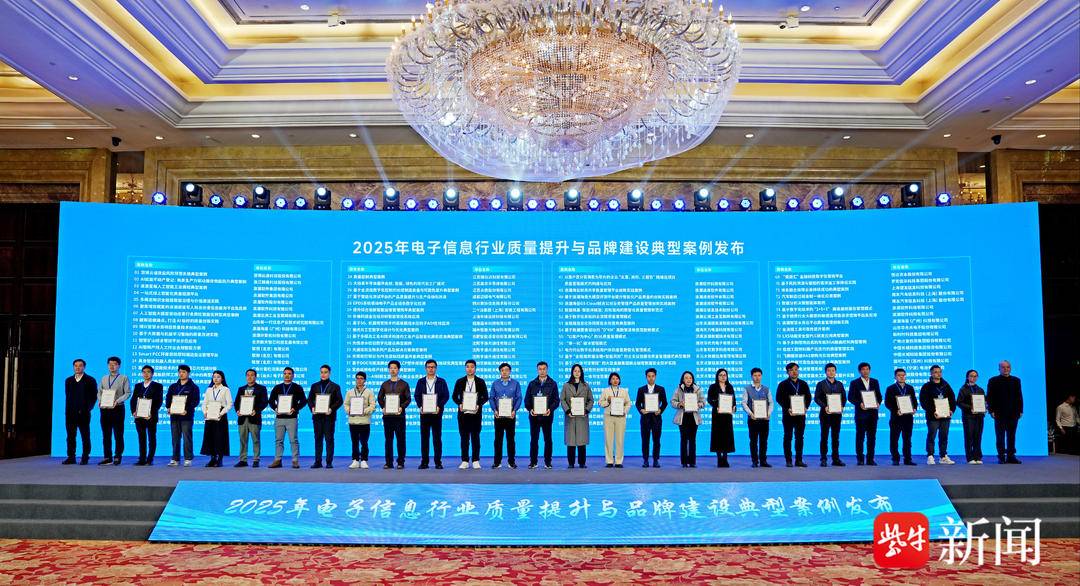
创新驱动产业赋能,2025电子信息行业发展大会在盐城盐都举行
Yang Zi Wan Bao Wang· 2025-12-14 15:03
Core Insights - The 2025 Electronic Information Industry Development Conference was held in Yancheng, focusing on "Innovation-Driven High-Quality Development" and aimed at discussing new opportunities for the electronic information industry [1][3]. Group 1: Conference Overview - The conference was co-hosted by the China Electronic Information Industry Association and the Yancheng Municipal Government, with significant participation from industry leaders and government officials [3][5]. - Nearly 300 representatives from the Ministry of Industry and Information Technology, provincial authorities, and key enterprises attended the event, emphasizing the conference's broad influence and high profile [3][5]. Group 2: Key Themes and Discussions - Leaders highlighted the importance of collaboration and innovation in driving industry upgrades and establishing a robust industrial ecosystem [5][6]. - The conference featured discussions on critical topics such as the development of China's electronic information manufacturing during the 14th Five-Year Plan and future considerations for the 15th Five-Year Plan [10]. Group 3: Regional Focus and Development Goals - Yancheng aims to strengthen its electronic information industry, viewing the conference as a bridge for deeper cooperation with industry associations and talent [8][11]. - The region plans to focus on advanced fields such as smart terminals, flexible electronics, and third-generation semiconductors to enhance its industrial scale and core competitiveness [11].




中国在美国定的规则里长大,如今却让美国胆颤,拉夫罗夫说了实话
Sou Hu Cai Jing· 2025-12-14 14:04
Group 1 - The article discusses the rise of China within the framework established by the U.S., highlighting that China has not sought to overthrow the existing international order but has instead thrived within it [3][5] - China's transformation from low-end manufacturing to high-tech and high-value sectors, such as high-speed rail, 5G, and renewable energy, has allowed it to exceed previous industrial capabilities and influence international standards [5][9] - The U.S. faces challenges in attempting to decouple from China, as many American companies are deeply integrated into China's production and consumer markets, making a complete separation economically unfeasible [7][9] Group 2 - The article suggests that the U.S. should reconsider its approach to competition with China, focusing on understanding the essence of development rather than merely attempting to contain China [11] - It emphasizes that the U.S. has historically believed that controlling the rules would ensure its dominance, but the emergence of China has disrupted this belief, as China has excelled within the established rules [3][9] - The narrative indicates that the U.S. must adapt to the reality of China's growth and the changing dynamics of global competition, rather than relying on outdated strategies [11]

资本周期与产业更迭专题:从美股产业更替看A股投资主线
Guoxin Securities· 2025-12-14 11:47
Group 1 - The report reviews the historical evolution of the U.S. stock market and establishes an A-share investment system based on the industrial lifecycle, which follows three financial stages: rapid growth, capital support, and maturity [2][3] - The key to this process is the full-cycle funding support and multi-channel exit strategies, with three long-term beta investment themes suggested: high complexity industries (biomedicine, semiconductors), high aggregation industries (new energy, consumer electronics), and high patent industries (high-end equipment) [2][3] Group 2 - The U.S. stock market has seen significant shifts in industry value distribution, moving from energy and industrial dominance to a focus on information technology and finance, reflecting the impact of technological revolutions and the transition from manufacturing to service-oriented economies [3][8] - The financial indicators of U.S. industries reveal a strong correlation with their lifecycle stages, characterized by distinct financial metrics that define each phase: rapid growth, capital market support, and maturity [8][9] Group 3 - In the rapid growth phase, industries experience peak revenue and capital expenditure growth, often exceeding 100%, while market valuations remain low due to high operational risks [9][10] - The capital market support phase is marked by rising company listings and industry value shares, with high valuation premiums and increased leverage, indicating a lag in market response to revenue growth peaks [10][12] - The maturity phase sees a shift towards efficiency, with stable net profit growth and return on equity (ROE), as companies begin to reward shareholders through dividends and buybacks [10][12] Group 4 - The report suggests that A-shares are currently in a critical transition period, moving from traditional real estate and infrastructure-driven growth to technology and innovation-driven growth, with long-term beta opportunities emerging in sectors that successfully navigate the technological "valley of death" [14][15] - Three sectors are identified as likely to replicate U.S. industry transformation: high complexity industries (biomedicine, semiconductors), high aggregation industries (new energy, consumer electronics), and high patent concentration industries (high-end equipment) [15][16] Group 5 - Financial analysis should adapt based on the lifecycle stage of industries, focusing on capital expenditure and revenue growth for high-growth tech firms, while emphasizing balance sheet health and valuation flexibility for industries in the capital support phase [17][18] - For mature industries, the focus should shift to cash flow stability and dividend policies, as reduced capital expenditure indicates a transition to profit harvesting [17][18]
时隔16年 我国再对钢铁实施出口许可证管理
Di Yi Cai Jing· 2025-12-13 06:29
Core Viewpoint - The Chinese government is reintroducing export license management for certain steel products starting January 1, 2026, marking a significant shift in steel export regulation after 16 years of deregulation, aimed at promoting high-quality development in the steel industry and maintaining global trade balance [1][2]. Group 1: Export License Management - The new export license management will cover 300 customs product codes, encompassing the entire steel industry chain from raw materials to finished products [1]. - This policy is a response to the challenges faced by the steel industry, including structural contradictions in export volumes and prices, and aims to optimize the export product structure [2][3]. Group 2: Export Volume and Pricing - In the first eleven months of 2025, China's steel exports reached 107.7 million tons, a year-on-year increase of 6.7%, with an expected total export volume of 115 million tons for the year, surpassing the historical high of 112 million tons in 2015 [2]. - Despite the increase in export volume, there is a notable decline in export prices, with the average export price dropping by 10.3% to $699.3 per ton in the first half of 2025 [3]. Group 3: Trade Friction and Market Strategy - The steel industry has faced over 50 anti-dumping cases since 2024, with countries like Vietnam, India, and South Korea imposing anti-dumping duties as high as 38.02% on Chinese steel products [3]. - The export license management is expected to compel companies to adjust their product structures and reduce reliance on traditional markets with high anti-dumping duties, while exploring emerging markets in Africa and Latin America [3]. Group 4: Recommendations for Companies - Companies are advised to familiarize themselves with the specific products under the new management and prepare necessary documentation for export licenses starting December 15, 2025 [4]. - There is a push for increased R&D investment in high-end steel products, with some leading companies already exporting "green steel" products that significantly reduce carbon emissions [4].