低碳化

Search documents
海信家电半年报:核心业务在报告期内“全面突破、高端领跑”
Cai Fu Zai Xian· 2025-08-06 06:16
Core Insights - Hisense Home Appliances reported strong growth in its core business, Hisense Central Air Conditioning, achieving over 20% market share in the multi-split central air conditioning segment [1][3] - The sales of the 5G series products increased by more than double digits year-on-year, reflecting the successful implementation of 5G technology in their offerings [1][3] Group 1 - Since 2015, the company has focused on the research and development of 5G central air conditioning, launching its first 5G IoT central air conditioning unit in 2019 and upgrading to the 5G+ Glory Home series in 2025 [3] - Hisense leads the fresh air air conditioning segment with a sales revenue market share of 43.9%, an increase of 12.3 percentage points year-on-year, establishing itself as a benchmark for healthy air solutions [3] Group 2 - In response to national carbon neutrality goals, Hisense Central Air Conditioning promotes green development with its "Photosynthesis & Direct Drive" series, leading the industry's green transformation [3] - The company has provided services to several projects, including the Jinan Changling Mountain Biomedical Industry Park and the Qingdao Baofeng Times Center, with ultra-level energy efficiency to create comfortable office environments [3] Group 3 - Hisense Central Air Conditioning's technological leadership in 5G, AI, and green innovation, along with its market dominance in multi-split and fresh air systems, positions it as a pillar of Hisense Home Appliances' performance [3] - The integration of whole-house air solutions further strengthens the company's core competitiveness based on technology, providing long-term growth momentum for the home appliance sector [3]


三一重工斥13.55亿回购超下限 连续6年实施员工持股彰显信心
Chang Jiang Shang Bao· 2025-08-04 23:49
Core Viewpoint - Sany Heavy Industry is actively repurchasing shares, demonstrating confidence in its future development and commitment to employee incentives through continuous employee stock ownership plans [2][11]. Group 1: Share Repurchase Plan - As of July 31, Sany Heavy Industry has spent 1.355 billion yuan on share repurchases, exceeding the lower limit of its repurchase plan [2][8]. - The repurchase plan, announced in April 2025, aims to use between 1 billion and 2 billion yuan for buying back shares for employee stock ownership plans or equity incentives [2][3][6]. - The company has been implementing employee stock ownership plans for six consecutive years since 2020 [10]. Group 2: Financial Performance - Sany Heavy Industry reported a net profit of 4.527 billion yuan in 2023 and 5.975 billion yuan in 2024, with year-on-year growth rates of 5.53% and 31.98%, respectively [16]. - Cumulative net profit since its A-share listing in 2003 amounts to approximately 94.3 billion yuan, with total cash dividends distributed around 29.3 billion yuan and an average dividend payout ratio of about 31% [16]. - The company's asset-liability ratio stood at 50.63% as of the end of the first quarter of 2025, indicating stable financial operations [16]. Group 3: Market Position and Strategy - Sany Heavy Industry is a leading player in the construction machinery industry, with products sold in over 180 countries and regions [2][12]. - In 2024, revenue from international markets reached 48.513 billion yuan, accounting for approximately 62% of total revenue [12][14]. - The company is advancing its plans for a Hong Kong stock listing to enhance its international market presence [14]. Group 4: Research and Development - The company has invested a total of 27.112 billion yuan in research and development from 2021 to 2024 [13]. - Sany Heavy Industry has established multiple R&D centers domestically and internationally, focusing on cutting-edge technology in the construction machinery sector [12][13].


2026加拿大温哥华国际矿业展全景解读:全球矿业精英的巅峰盛会
Sou Hu Cai Jing· 2025-07-29 09:32
Core Insights - The 2026 CIM Connect Convention & Expo will take place from May 3 to May 5, 2026, in Vancouver, Canada, organized by the Canadian Institute of Mining, Metallurgy and Petroleum (CIM) [1] - The event is expected to attract over 600 global exhibitors and between 7,000 to 11,000 professional attendees, covering an exhibition area of 25,000 square meters, making it Canada's largest mining industry event [1] Group 1: Event Overview - The CIM has a history of over 100 years and is one of the most authoritative organizations in the North American mining sector, with over 12,000 professionals from industry, government, and academia [1] - The event will alternate between Vancouver and Toronto, with odd years in Toronto or Montreal and even years in Vancouver [1] Group 2: Strategic Importance - Vancouver is a strategic location as it hosts 70% of the mining companies listed in North America, earning it the title of "Mining Financial Capital" [6] - The Vancouver Convention Centre is recognized as a sustainable building and has experience hosting large-scale events, including serving as the main media center for the 2010 Winter Olympics [6] Group 3: Core Values of the Event - The event serves as a global platform for technology display and capital-resource connection [6] - It will feature a world-class green venue with a 30,980 square meter exhibition space and 52 meeting rooms, along with a 6-acre ecological roof, the largest in North America [7] Group 4: Industry Trends and Opportunities - The Canadian mining sector is expected to see increased demand for nickel, lithium, and cobalt due to the government's push for 100% electric vehicle sales by 2030, leading to a 12% annual increase in nickel demand [12] - The global smart mining market is projected to reach $24.7 billion by 2026, with 80% of new Canadian mines requiring IoT-enabled equipment [12] - North American mining companies are actively seeking local technology partners to mitigate supply chain risks, providing opportunities for Chinese companies to establish partnerships or facilities in North America [12]
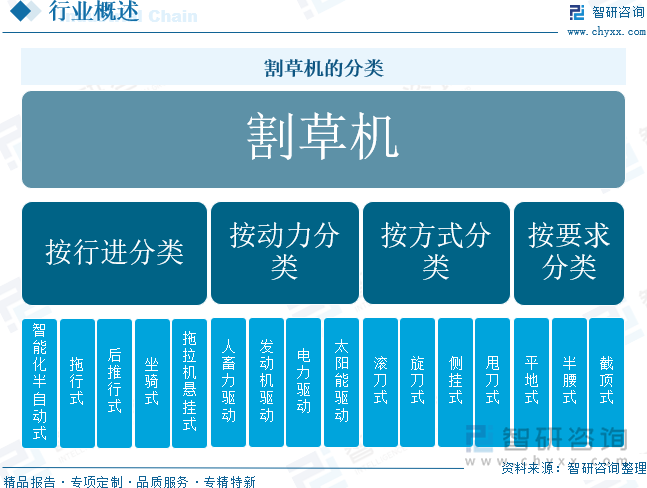
2025年中国割草机行业相关政策、市场规模、出口情况、重点企业及发展趋势研判:产品创新引领出口市场,国产割草机前五个月出口额增长超五成[图]
Chan Ye Xin Xi Wang· 2025-07-28 01:03
Industry Overview - The lawn mower industry plays a crucial role in agricultural planting, landscaping, public green space maintenance, and pasture management [1][16] - The Chinese lawn mower market is characterized by unique demand features, primarily used in public spaces due to the low proportion of private gardens in urban high-rise living [1][16] - The market size in China is projected to grow from 2.433 billion yuan in 2018 to 5.394 billion yuan by 2024, with a compound annual growth rate (CAGR) of 14.19% [1][16] Industry Development History - The lawn mower industry has evolved through three main stages: the manual mowing era (1830-1880), the mechanization era (1890-1950), and the intelligent era (1960-present) [5] - The first mechanical lawn mower was invented in 1830, leading to continuous improvements and innovations in design and functionality [5] Industry Policies - The development of the lawn mower industry in China is supported by national policies promoting agricultural mechanization and ecological protection [8] - Recent policies include increased subsidies for the replacement of agricultural machinery and support for the development of advanced agricultural equipment [10] Industry Supply Chain - The supply chain consists of upstream raw materials and components, midstream manufacturing, and downstream sales channels [11] - Key raw materials include steel, non-ferrous metals, rubber, and plastics, while components include engines and batteries [11] Current Market Trends - The global lawn mower market is expected to reach approximately $9.252 billion in 2024, with a projected growth to $10.195 billion by 2030 [15] - North America is the largest market, accounting for about 48.88% of global demand, driven by a strong culture of home gardening and landscaping regulations [15] Export Performance - In 2024, China's lawn mower exports reached 21.922 million units, a year-on-year increase of 59.6%, with export value rising by 50.26% to 17.589 billion yuan [18] - The first five months of 2025 saw exports of 13.6646 million units, reflecting a growth of 35.72% year-on-year [18] Competitive Landscape - The global lawn mower market is characterized by a competition between foreign brands and domestic players, with established brands like Husqvarna and Honda leading the market [21] - Chinese companies such as DAYE and Greebo are rapidly gaining market share through technological innovation and competitive pricing [21] Key Companies - Major companies in the industry include DAYE, Greebo, and others, with significant revenue growth reported in recent years [25][27] - For instance, DAYE's lawn mower revenue reached 1.558 billion yuan in 2024, a 93.3% increase [25] Future Development Trends - The industry is moving towards higher efficiency, with advancements in electric motor technology and lightweight materials expected to improve operational efficiency by over 30% [29] - Smart technology is becoming a key focus, with new products featuring AI algorithms for optimized mowing paths and remote control capabilities [30] - The shift towards low-carbon and environmentally friendly products is accelerating, with electric models increasingly replacing traditional gasoline-powered mowers [31]

冰轮环境(000811) - 000811冰轮环境投资者关系管理信息20250717-2
2025-07-18 00:40
Group 1: Company Overview and Product Offerings - The company focuses on providing advanced system solutions and lifecycle services in the energy and power sectors, with products including compressors and heat exchangers, covering a temperature range of -271°C to 200°C [2]. - The company has developed a full range of magnetic levitation compressor products, showcasing significant technological advantages and market performance, particularly noted during the Beijing Winter Olympics [2]. - The company participates in drafting national standards for centrifugal refrigerant compressors and oil-free suspended centrifugal chillers [2]. Group 2: Applications in Data Centers - The company’s subsidiaries provide cooling equipment for data centers, including variable frequency centrifugal chillers and integrated natural cooling function air-cooled screw chillers, which are listed in the Ministry of Industry and Information Technology's directory of advanced applicable technologies for national green data centers [2]. - Successful projects include major data centers for national supercomputing and various banks, with ongoing collaborations in North America, Australia, Southeast Asia, and the Middle East [2]. Group 3: Nuclear Power Industry Products - The company has developed innovative technologies for nuclear power applications, focusing on core scenarios such as nuclear island cooling and heat recovery [3]. - It has supplied products to several nuclear power stations in China, including Hongyanhe and Ningde, and is recognized for its extensive experience in the nuclear refrigeration market [3]. Group 4: Industrial Heat Management - The company is a pioneer in industrial heat pump technology, promoting a comprehensive solution for industrial heat control that integrates multi-source and multi-level system technologies [4]. - The subsidiary Beijing Huayuan Taime Energy Equipment has been recognized as a national-level specialized "little giant" enterprise, holding 96 patents and 33 software copyrights [4]. Group 5: Marine Economy Product Layout - The company is committed to high-quality development in the marine economy, providing comprehensive smart solutions for the fishing and seafood processing industries [5]. - Recent innovations include low-carbon energy systems for ships and offshore platforms, aligning with national low-carbon and intelligent development needs [5].

2025中国汽车论坛召开,话里话外都是要“团结”!
Zhong Guo Qi Che Bao Wang· 2025-07-11 10:34
Group 1 - The core theme of the 2025 China Automotive Forum is "Quality Improvement and Innovation for a Smart Future," focusing on industry transformation and international market expansion [2] - The Chinese automotive industry is urged to unite and collaborate for transformation, emphasizing electrification, intelligence, and low-carbon development as key directions [4][5] - The industry is experiencing a historic shift with new energy vehicles becoming the dominant market force, laying a solid foundation for becoming a strong automotive nation [9] Group 2 - The need for innovation in the automotive industry is highlighted, particularly in key technologies related to new energy and intelligent connected vehicles [7] - The establishment of a green low-carbon public service platform aims to standardize carbon footprint disclosure and promote green technologies [13] - The global automotive industry is undergoing unprecedented changes, with a focus on electric, automated, and smart mobility, creating both challenges and opportunities for cooperation between Europe and China [15] Group 3 - Companies are encouraged to build a unified front in the automotive industry, emphasizing quality and innovation over sales volume [17][18] - The importance of maintaining a balance between adhering to core values and adapting to changing consumer demands is stressed [20] - The role of artificial intelligence in various aspects of the automotive industry, including marketing and sales, is recognized as a significant trend for future development [26]

为打击盗版,泡泡玛特抢注“LAFUFU”商标|首席资讯日报
首席商业评论· 2025-07-09 03:20
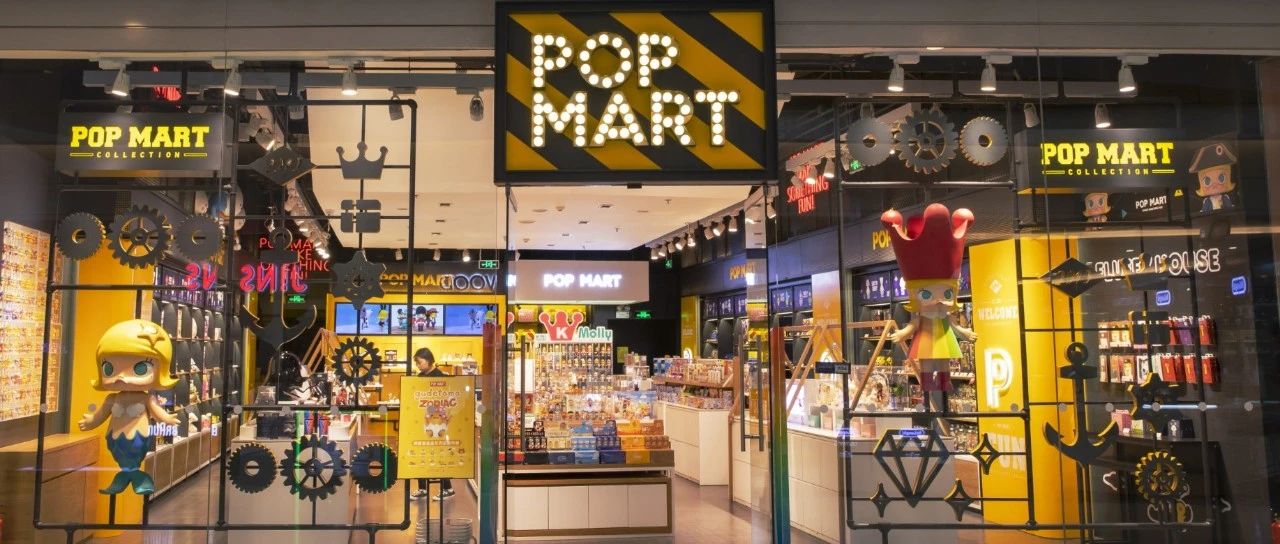
Group 1 - Bubble Mart has registered the "LAFUFU" trademark to combat piracy, indicating a strong brand protection awareness [1][2] - Bentley has reported that some institutions or individuals are impersonating "Bentley Headquarters" to issue low-price sales schemes, disrupting market order and harming the brand's reputation [3] - ByteDance has denied rumors regarding the sale of TikTok's U.S. operations to a consortium led by Oracle, reaffirming that the information is false [4][5] Group 2 - CoreWeave has agreed to acquire Core Scientific in a stock transaction valued at nearly $9 billion, aiming to enhance its data center infrastructure [5] - BYD's "Shenzhen" ship has completed its first transoceanic voyage, returning from Brazil with over 7,000 electric vehicles and preparing for another journey to Europe [6][7] - Musk criticized OpenAI's CEO Sam Altman for allegedly betraying the company's original mission, highlighting concerns over AI safety and transparency [8][9] Group 3 - Hikvision's Canadian subsidiary has sought judicial review of the Canadian government's decision to halt its operations, claiming compliance with local laws [10] - Wuliangye's chairman has visited Siemens' headquarters to explore long-term cooperation in digital planning, electrification, automation, and low-carbon solutions [11] - A survey revealed that only one-fifth of employees in Germany have received training in using artificial intelligence, raising concerns about compliance with EU regulations [12] Group 4 - ROMOSS has announced a halt in production, potentially incurring losses of up to 200 million yuan per month due to a significant recall of defective power banks [13][14] - Siemens has completed the acquisition of ebm-papst's industrial drive technology business, which will be marketed under the name "Mechatronic Systems" [15] - MicroStrategy reported an unrealized gain of approximately $14.05 billion on its Bitcoin holdings, with a total holding of 597,325 Bitcoins valued at $64.36 billion [16]




IPO研究|预计2029年全球PCB市场将达到946.61亿美元
Sou Hu Cai Jing· 2025-07-01 02:09
Company Overview - Hongban Technology Co., Ltd. has received approval for its IPO on the Shanghai Stock Exchange, with Minsheng Securities as the sponsor and Lixin Accounting Firm as the auditor [3] - The company focuses on the research, production, and sales of printed circuit boards (PCBs), targeting the mid-to-high-end application market [3] Industry Insights - The global PCB industry is the largest segment in the electronic components sector, with a total output value of $81.74 billion in 2022, which decreased to $69.52 billion in 2023, a decline of 15% due to weak demand and oversupply [4] - The global PCB market is expected to recover to $73.57 billion in 2024, driven by AI servers, high-speed network infrastructure, and a revival in the smartphone market, representing a year-on-year growth of 5.8% [4] - The PCB market is projected to grow at a compound annual growth rate (CAGR) of 5.2% from 2024 to 2029, reaching an estimated value of $94.66 billion by 2029 [4] Regional Market Dynamics - Historically, North America, Europe, and Japan dominated the PCB market, accounting for over 70% of global output before 2000 [5] - In the last two decades, production capacity has shifted to Asia, particularly mainland China, Taiwan, and South Korea, establishing a new manufacturing center in Asia [5] - By 2024, mainland China's PCB output value is expected to reach $41.2 billion, representing 56% of the global total, solidifying its position as the leading PCB production hub [7][8] Future Projections - The PCB industry in mainland China is forecasted to grow at a CAGR of 3.8%, reaching $49.7 billion by 2029 [8] - Other regions, such as Taiwan and South Korea, are also expected to see growth, with Taiwan's PCB market projected to grow at a CAGR of 6.9% and South Korea at 4.2% [7]
中节能国祯:以智能与低碳重塑水处理新范式
Xin Hua Cai Jing· 2025-06-27 13:59
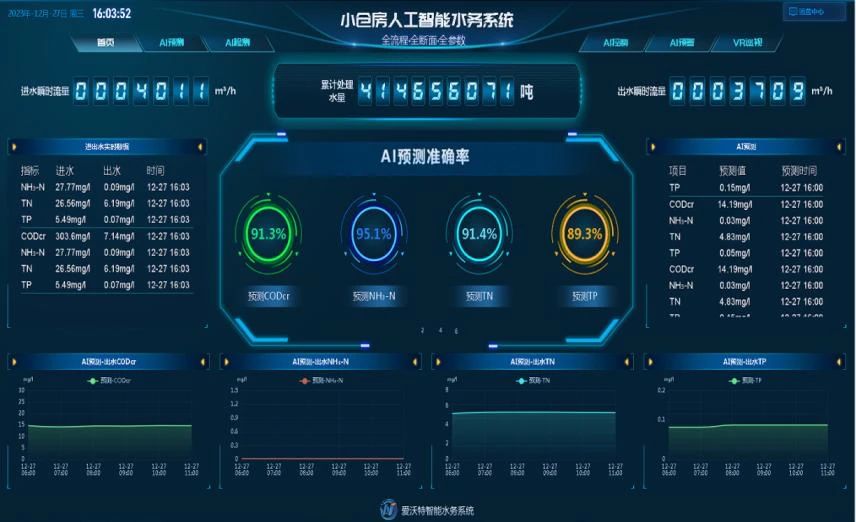
Core Viewpoint - The article highlights the advancements and achievements of China Energy Conservation's subsidiary, Zhongjie Energy Guozhen, in the field of low-carbon wastewater treatment, showcasing innovative technologies and sustainable practices in their facilities [1][8]. Group 1: Company Overview - Zhongjie Energy Guozhen has over 20 years of experience in the water industry, focusing on municipal, rural, and industrial wastewater treatment, as well as comprehensive water environment management [1]. - The company has developed a range of green and low-carbon smart water projects, demonstrating significant achievements in energy conservation, emission reduction, and resource recycling [1]. Group 2: Technological Innovations - The Hefei Xiaocangfang Water Treatment Plant, with a daily processing capacity of 400,000 tons, utilizes an AI water management system that integrates various monitoring and control modules, enhancing emergency response and management capabilities [3]. - The intelligent inspection system at Xiaocangfang has improved process control accuracy by over 30%, significantly reducing the need for manual intervention [3]. Group 3: Environmental Impact - The Xiaocangfang Water Treatment Plant features a 1.8 MW solar power station that generates 2 million kWh of clean electricity annually, transforming the facility into a "carbon reduction hub" [5]. - The carbon reduction achieved by the plant is equivalent to planting 110,000 fir trees each year, showcasing its commitment to sustainability [5]. Group 4: Innovative Facility Design - The underground Hu Daying Water Treatment Plant, with a daily capacity of 100,000 tons, saves nearly 67% of land resources compared to traditional plants, providing valuable space for urban development [7]. - This facility's design effectively manages noise and odor, challenging the perception of wastewater treatment plants as sources of pollution [7]. Group 5: Industry Leadership - Zhongjie Energy Guozhen is positioning itself as a leader in low-carbon wastewater treatment, developing replicable industry standards and spearheading the creation of a ranking system for low-carbon operation services in urban wastewater treatment plants [8]. - The company operates over 100 wastewater treatment plants nationwide, with a total processing capacity of 4.77 million tons per day, further enhancing its social recognition and influence [7].

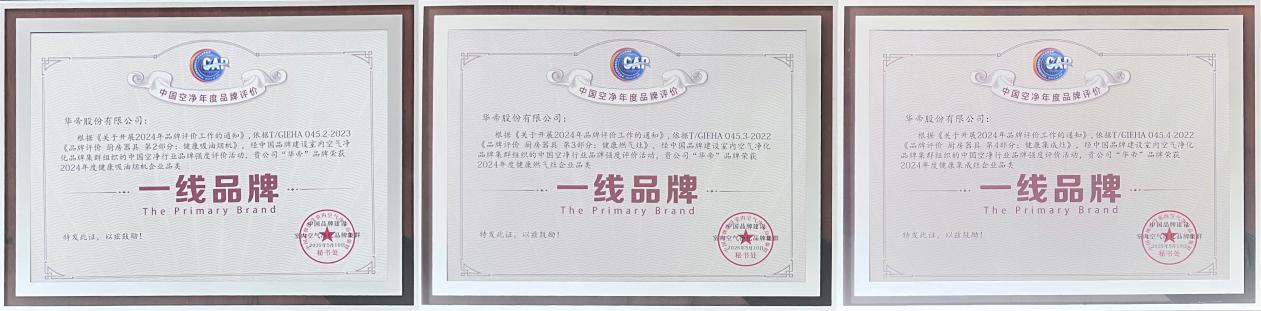
华帝三品类荣膺2024年度空净行业一线品牌 以技术创新守护健康人居
Zhong Jin Zai Xian· 2025-06-23 06:41
Core Viewpoint - The event highlighted the achievements of Vatti in the air purification sector, showcasing its innovative technologies and commitment to health and environmental standards [1][8]. Group 1: Awards and Recognition - Vatti won the "2024 Annual China Air Purification Brand Evaluation First-Line Brand" award in three categories: health range hood, health gas stove, and health integrated stove, marking it as a benchmark enterprise in the industry [1]. - The evaluation process was rigorous, adhering to national standards and involving multiple steps including self-declaration, big data collection, online voting, and expert review to ensure scientific and fair results [1]. Group 2: Air Quality Management - The chairman emphasized that indoor PM2.5 levels during cooking should be kept below 100μg/m³, while Vatti's J6200Z model recorded a dispersion concentration of only 76.8μg/m³, surpassing health kitchen air quality requirements [2]. - The J6200Z features an innovative air management system and a built-in PM2.5 sensor that monitors air quality in real-time, automatically activating ventilation when PM2.5 levels exceed safe limits [2][3]. Group 3: Energy Efficiency and Environmental Impact - Vatti's energy-efficient gas stove employs infrared gas combustion technology, significantly improving thermal efficiency while reducing pollutant emissions [5]. - The stove's CO emissions are 54% lower and NOx emissions are 93% lower than traditional stoves, with measured CO emissions at 0.005% and NOx at 0.002%, well below national standards [5]. - The stove is designed to meet the high-temperature cooking needs of Chinese cuisine, achieving a maximum temperature of 493℃ in tests, which is 76℃ higher than comparable models [5]. Group 4: Future Commitment - Vatti aims to continue its focus on technological innovation in air purification, emphasizing smart and low-carbon solutions to enhance user health and environmental sustainability [8]. - The company is committed to contributing to the health of families and the achievement of carbon neutrality goals in China [11].