供应链韧性

Search documents
【高端访谈】中国为亚太经合组织发展作出重大贡献——访亚太经合组织秘书处执行主任爱德华多·佩德罗萨
Xin Hua She· 2025-10-27 19:24
Core Insights - China has made significant contributions to the development of APEC, demonstrating its role as a responsible participant in APEC affairs [1][2] - The upcoming APEC meeting in South Korea will focus on key issues such as artificial intelligence and its role in enhancing supply chain transparency [2] Group 1: Contributions of China to APEC - China hosted the 22nd APEC Leaders' Informal Meeting in 2014, where discussions on the Asia-Pacific Free Trade Area took place, leading to the Beijing Roadmap, which remains a reference for ongoing work [1] - The meeting also approved the APEC Connectivity Blueprint, which outlines plans for infrastructure and personnel connectivity among member economies, highlighting China's important contributions [1] Group 2: Current Challenges and Focus Areas - The APEC region faces multiple challenges, including climate change, natural disasters, demographic shifts, and energy transitions, with a current emphasis on enhancing the resilience of global supply chains [1][2] - The aging population is identified as a significant issue across member economies, necessitating proactive measures despite varying levels of development and social security systems [2] Group 3: APEC's Role and Flexibility - APEC is characterized by its flexibility and respect for the interests of its members, serving as a platform for collaborative discussions on common issues [2] - In the face of global uncertainties, APEC promotes a cooperative approach based on voluntary participation, consensus, and gradual progress, providing more certainty for regional cooperation [2]
日本加入中美“稀土战争”,和中国针锋相对,站在了必败的那一边
Sou Hu Cai Jing· 2025-10-27 17:06
Core Viewpoint - The recent actions of the US, Japan, and Australia in the rare earth sector indicate a strategic effort to establish a supply chain independent of China, focusing on vertical integration and technological collaboration [1][3][5]. Group 1: Agreements and Collaborations - The US and Australia signed an $8.5 billion rare earth cooperation agreement, followed by a meeting between Trump and Japan's Prime Minister to finalize US-Japan rare earth collaboration [1]. - US company REAlloys and Japan's JOGMEC signed a memorandum to advance vertical integration from Canadian mining to US manufacturing, including a joint venture for a 100-ton gallium refining plant in Western Australia [3][5]. Group 2: Investment and Technology Transfer - Australia and the US plan to invest at least $1 billion each within six months, focusing on the entire rare earth supply chain, with $2.2 billion in financing from the US Export-Import Bank already in place [5]. - Japan's Ministry of Economy, Trade and Industry has committed to transferring rare earth separation and magnet manufacturing technology, although these technologies have not yet achieved practical production capacity [5]. Group 3: Challenges and Limitations - The US faces challenges in the midstream refining segment, as it relies on China for extraction and separation, while Australia primarily produces light rare earths, which do not meet high-end manufacturing demands [7]. - The gallium refining project in Western Australia encounters obstacles due to China's control over gallium production and export restrictions on key technologies [7][9]. Group 4: Industrial Ecosystem and Strategic Shortcomings - The US and its allies struggle with an "industrial ecological gap," as China's decades of experience in rare earth processing cannot be easily replicated through technology transfer or financial investment [9]. - The US Department of Defense's report highlights a significant dependency on critical minerals, including rare earths, for nearly 2,000 weapon systems, emphasizing the urgency of addressing supply chain vulnerabilities [9]. Group 5: Future Outlook and Cooperation - The collaboration among the US, Japan, and Australia may yield alternative production capacities for light rare earths, but the shortfall in heavy rare earths and high-end magnets will not be resolved in the short term [11]. - A pragmatic approach involves recognizing the need for coexistence within a compliant framework, moving away from the "decoupling" mindset, as rare earths are essential for global industrial development [11].

巴西大豆坐地起价,中国四招反击,130万吨大豆订单流向阿根廷
Sou Hu Cai Jing· 2025-10-26 01:50
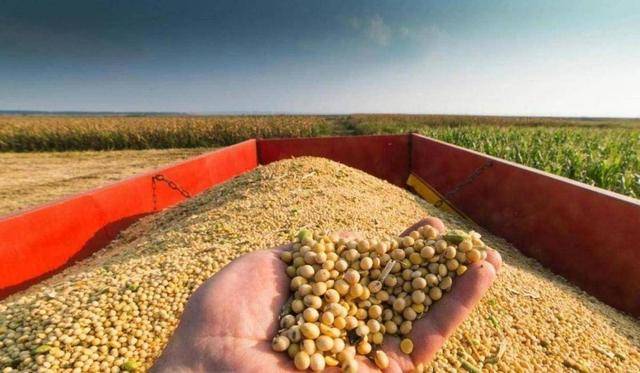
大豆涨疯了,谁都没想到巴西大豆价格在短短6天里暴涨了20%,一度把我国采购商逼到了"暂停键"。 然而,地球另一端的中国市场,却上演了令人瞠目结舌的一幕。面对这股扑面而来的涨价潮,国内豆粕的现货价格非但没有跟风暴涨, 反而在短短一周内,从高点急转直下,价格直接跳水了700元/吨。 2025年10月下旬,国际大豆贸易市场突发震荡:巴西对华大豆报价在短短22天内从565美元 / 吨飙升至650美元 / 吨,涨幅高达15%,部分 出口商报价甚至一度触及79.9%的极端水平,创下巴西大豆对华出口历史最高价。 这一远超市场正常波动的涨价行为,让中国国内压榨企业陷入困境,每加工一吨大豆就要面临超过200元的亏损,而巴西帕拉纳瓜港的报 价更是比国际基准价高出近 美元/蒲式耳,贸易天平出现明显失衡。 就在市场担忧中国会被动接受高价时,一系列精准有力的应对措施迅速落地,130 万吨大豆订单毅然转向阿根廷,这场国际贸易博弈的 走向被彻底改写。 巴西大豆此次涨价并非偶然,多重因素的叠加推高了市场价格。 从供应端来看,南美洲遭遇百年一遇的干旱天气,导致巴西大豆主产区产量下滑,市场供应本就偏紧。 与此同时,巴西国内生产流通成本持续攀升, ...
重磅协议签署,特朗普情绪激动:再也不怕了,以后稀土根本用不完
Sou Hu Cai Jing· 2025-10-24 13:01
Core Points - The agreement between the U.S. and Australia, valued at $8.5 billion, focuses on joint investment in rare earth resources, aiming to enhance supply chain security and reduce dependence on China [2][3][5] - The framework includes a $1 billion investment from each country for mining and processing projects, with over $3 billion to be invested in the next six months [2][3][8] - The agreement aims to establish minimum pricing for critical minerals, expedite permitting processes, and enhance geological resource mapping and mineral recovery cooperation [2][3][5] Industry Impact - The agreement is a strategic response to China's dominance in rare earth processing, which accounts for 90% of global supply, and aims to secure priority access to Australian resources [3][5][10] - Specific projects supported by the agreement include the Arafura Rare Earths project and Northern Minerals, with the U.S. Export-Import Bank providing over $2.2 billion in letters of intent [3][5] - The Pentagon plans to build a gallium refining facility in Western Australia with an annual capacity of 100 tons, indicating a significant investment in domestic supply chains [3][5][8] Market Reaction - Following the announcement, rare earth prices increased by 3% to 5%, and U.S. mining stocks like MP Materials rose by 2%, reflecting positive market sentiment [7] - The S&P 500 index rebounded by 0.5%, while the volatility index (VIX) decreased to 18.23, indicating a stabilization in market conditions [7] - Analysts expect additional funding and policy support from Congress for the critical minerals sector, highlighting a growing interest in domestic mining capabilities [8][10] Strategic Significance - The agreement is seen as a key component of the U.S. "America First" strategy, aimed at countering economic coercion from China and ensuring the security of technology and defense supply chains [5][10] - The collaboration is expected to expand U.S.-Australia mineral production capacity by 20%, facilitating a decoupling from reliance on Chinese resources [10] - The agreement also emphasizes the need for streamlined permitting processes for mining and processing operations, which could accelerate project timelines [8][10]

美国只能依赖关税政策吗?美国经济学家:条条大路通罗马
Sou Hu Cai Jing· 2025-10-24 02:48
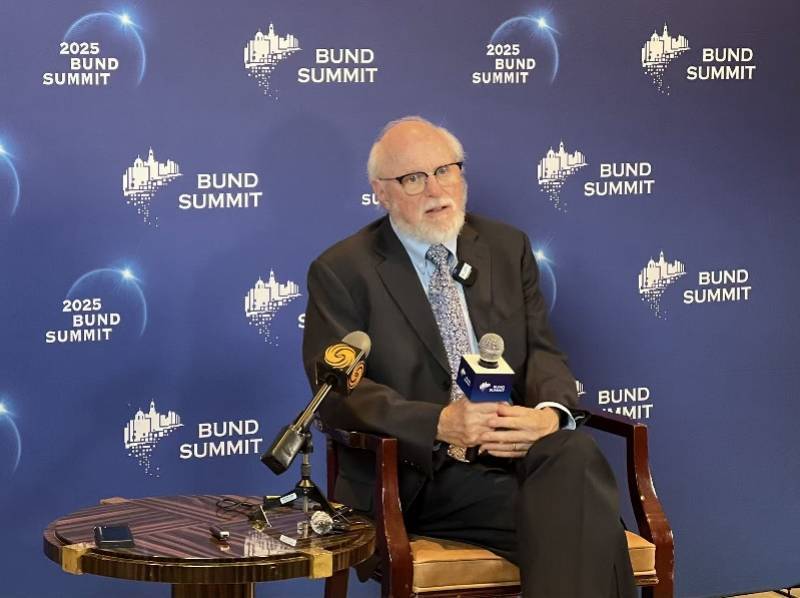
Core Viewpoint - Jeffrey Schott, a senior researcher at the Peterson Institute for International Economics, expressed that tariffs may not be the best policy for enhancing U.S. manufacturing productivity and achieving economic security and supply chain resilience [3]. Group 1: Tariff Policy Insights - Schott suggested that there are potentially better policy combinations than tariffs to boost U.S. manufacturing productivity [3]. - He emphasized the importance of considering the impact of tariffs on U.S. trade partners, including potential retaliatory actions that could arise from such measures [3]. - Schott noted that few countries currently retaliate against U.S. tariffs, as such actions can increase costs and distort markets for both parties involved [3]. Group 2: National Security and Trade - Schott criticized the broad interpretation of "national security" in the context of trade policies, arguing that it encompasses a wider range of economic activities than necessary [3]. - He mentioned ongoing discussions in the U.S. about narrowing the scope of "non-normal trade investment measures" to focus only on areas that genuinely concern national core security interests [3]. - The current tariff policy's extensive coverage needs to be re-evaluated according to Schott [3]. Group 3: Jeffrey Schott's Background - Jeffrey Schott has been with the Peterson Institute since 1983, focusing on international trade policy and economic sanctions [4]. - He has held academic positions at Princeton University and Georgetown University, and previously worked at the U.S. Treasury Department [4]. - Schott has authored numerous books and articles on trade, including works on the Trans-Pacific Partnership and the North American Free Trade Agreement [4].
破防的美财长,公然侮辱中方谈判代表,我商务部当场怼了回去
Sou Hu Cai Jing· 2025-10-20 06:15
Group 1 - The core issue revolves around the diplomatic tensions between China and the U.S., triggered by U.S. Treasury Secretary Besant's accusations against Chinese trade representative Li Chenggang during a press conference [1][4][8] - Li Chenggang's visit to the U.S. aimed to advance the implementation of agreements made by the leaders of both countries and address the U.S. Section 301 investigation into China's shipbuilding industry [2][4] - The U.S. mischaracterized Li's diplomatic visit as provocative, leading to strong rebuttals from China, which emphasized that the visit was in line with previously established consensus [4][12] Group 2 - China's response to U.S. accusations included countermeasures against the U.S. Section 301 investigation, such as imposing special port fees on U.S. vessels, which could increase operational costs at U.S. ports by 12% to 15% [4][12] - In agricultural trade, China demonstrated supply chain resilience by utilizing satellite technology to monitor soybean cultivation in Argentina, ensuring quality and transparency in its procurement processes [6][14] - The U.S. agricultural exports to China significantly declined from January to August 2025, leading to increased unemployment rates in agricultural states, highlighting the negative impact of U.S. trade policies [8][10] Group 3 - The U.S. court ruling against tariffs on steel and aluminum products during Li Chenggang's visit further supported China's position and exposed contradictions in U.S. trade policy [10][12] - China's strategic approach includes diversifying import sources and leveraging technology for supply chain security, which has weakened U.S. bargaining power in agricultural trade [12][16] - The evolving global trade landscape, influenced by China's Belt and Road Initiative and cooperation with emerging agricultural nations, is reshaping trade dynamics, with projected agricultural trade between China and Argentina expected to exceed $50 billion by 2030 [14][16][17]
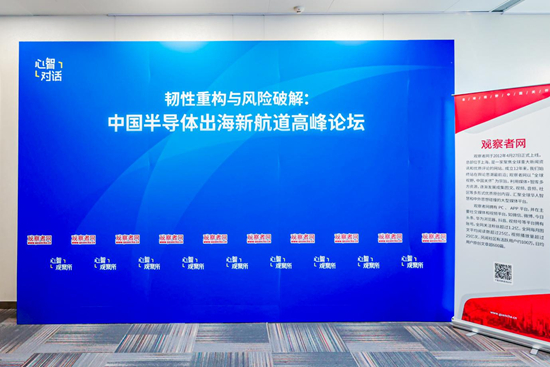
“中国半导体出海新航道高峰论坛”共探产业破局之路
Guan Cha Zhe Wang· 2025-10-17 11:29
Core Insights - The global semiconductor industry is undergoing significant restructuring due to geopolitical risks and supply chain challenges, with Chinese semiconductor companies transitioning from "scale expansion" to "quality improvement" [1][2] - The integration of new AI technologies and digital manufacturing is reshaping the ecosystem for Chinese semiconductor companies looking to expand internationally [1] - The "China Semiconductor Outbound New Route Summit" held in Shanghai focused on building supply chain resilience and addressing risks faced by the industry [1] Group 1: Industry Challenges and Opportunities - Chinese semiconductor companies are facing "dual choke points and supply chain breakage risks," exemplified by recent actions from the Dutch government against ASML [2] - Despite challenges, there are opportunities for Chinese firms to explore international markets and enhance supply chain resilience through AI technology [2][5] - The forum emphasized the importance of compliance and risk management in overseas operations, particularly regarding intellectual property and commercial secrets [8][10] Group 2: Key Contributions from Industry Leaders - Wu Jinwei from Gaon Electronics highlighted the shift in overseas risks from patent infringement to more severe commercial secret compliance issues, which can threaten national security and talent retention [8][10] - Zhang Wei from Avnet discussed the company's extensive global distribution network and its role in supporting Chinese chip manufacturers in entering Western markets [12] - Shen Donghui from Hehe Information presented AI-driven solutions for enhancing supply chain risk management, emphasizing the need for proactive risk identification and decision-making [14][15] Group 3: Strategic Insights on International Cooperation - Li Bo from Observer Network discussed the competitive landscape for Chinese semiconductor companies, suggesting that regional cooperation with ASEAN could provide significant opportunities [17] - The ongoing U.S.-China semiconductor competition is expected to last 8-10 years, presenting both challenges and opportunities for Chinese firms to innovate and collaborate [17][19] - The forum concluded with a consensus on the need for compliance, technological pathways, and cooperative strategies to navigate the evolving global semiconductor landscape [19]
在这个“铁幕”时代,优衣库的应对策略是教科书级的
3 6 Ke· 2025-10-17 02:09
Core Insights - The article discusses the impact of the U.S. protectionist tariff policies on multinational companies, particularly focusing on Uniqlo, a fast-fashion brand under Japan's Fast Retailing Group, which is facing challenges due to increased tariffs on goods from Asia [1][4]. Group 1: Tariff Impact on Uniqlo - By 2025, tariffs on goods from Southeast Asian countries like Vietnam and Bangladesh will range from 20% to 49%, and Japan will face a 24% tariff on non-automotive products, putting pressure on companies reliant on Asian supply chains [1][4]. - Uniqlo's global supply chain is heavily dependent on Asia, with approximately 30% of production in China and significant reliance on Southeast Asia, which will be affected by these tariffs [4][5]. - Fast Retailing expects a 1% profit erosion due to tariffs in the 2025 fiscal year, with a more pronounced impact in the second half of the year [5]. Group 2: Uniqlo's Business Strategy - Uniqlo's success is attributed to a model combining Japanese quality with Asian scale, allowing for high-quality products at affordable prices [6][8]. - The company plans to increase North American store count from 106 to 200 by 2027, capitalizing on a 24.5% revenue growth and a 35.1% profit increase in the North American market for the 2025 fiscal year [3][12]. - To mitigate tariff impacts, Uniqlo has stockpiled goods in advance and plans to raise prices by 10%-15% on certain products starting in the fall of 2025 [9][11]. Group 3: Leadership Perspective - Tadashi Yanai, Uniqlo's founder, views the U.S. market as a personal ambition and has expressed a commitment to maintaining the supply chain in Asia despite tariff threats [2][12]. - Yanai has criticized U.S. isolationist policies, arguing they are irrational and detrimental to global trade [5][12]. - The company’s strategy reflects a broader trend among global businesses to prioritize cost efficiency and supply chain resilience over local manufacturing [12][13].
突发!欧盟拟强制中企转让电池技术!
起点锂电· 2025-10-16 10:12
Group 1 - The article discusses the upcoming CINE2025 Solid-State Battery Exhibition and Industry Annual Conference, scheduled for November 6-8, 2025, in Guangzhou, with over 200 exhibitors and 20,000 professional attendees expected [1] - The event will feature the 2025 Qidian Solid-State Battery Golden Ding Award Ceremony and the SSBA Solid-State Battery Industry Alliance Council [1] - A list of first batch exhibitors and sponsors includes companies like Jin Na Technology, Ru Tian Technology, and Ningde Times, among others [1] Group 2 - The European Union plans to introduce new regulations that impose multiple restrictive conditions on Chinese companies entering its key markets, particularly focusing on forced technology transfer [2][3] - The new regulations, part of the "Industrial Accelerator Act," aim to increase local content requirements and mandate joint ventures with local firms, directly targeting Chinese companies in the electric vehicle and battery sectors [4][6][7] - The EU's strategy reflects its concerns over declining industrial competitiveness and reliance on imports for critical raw materials like lithium, cobalt, and nickel [10][12] Group 3 - The EU's proposed regulations are seen as a response to its own challenges, including a lack of local battery manufacturing expertise and high energy costs compared to China [11][12] - The EU has announced significant investments, totaling €22.5 billion (approximately 1843.5 billion RMB), to enhance local raw material production and reduce dependency on external sources [13][14] - Despite the EU's push for local production, there are internal disagreements regarding the implementation of technology transfer requirements, with some companies warning against losing competitive advantages [15][16] Group 4 - Chinese battery companies are strategically positioning themselves in Europe, leveraging their manufacturing capabilities and local partnerships to navigate regulatory challenges [18][19] - The article highlights that major Chinese firms like CATL and EVE Energy are establishing production facilities in Europe, with significant projects expected to come online by 2026 [18][19] - The ongoing competition and regulatory landscape suggest that Chinese companies may need to accelerate the development of next-generation solid-state batteries to maintain their market leadership [19]



芯片设备,产能过剩
半导体芯闻· 2025-10-13 10:26
Core Insights - The semiconductor industry is at a unique intersection of opportunities and uncertainties, driven by technological advancements and geopolitical factors affecting equipment procurement [1][3][6] - The WFE market is projected to reach $184 billion by 2030, with equipment shipments at $151 billion and service shipments at $33 billion, reflecting a stable growth trajectory despite challenges [1][15] Market Dynamics - The semiconductor industry is currently facing significant overcapacity, with foundries and IDMs experiencing low utilization rates and squeezed profitability, yet equipment investments continue [3][6] - Geopolitical factors are leading to redundant construction of fabs as regions seek to strengthen local manufacturing ecosystems, ensuring ongoing demand for WFE tools [6][15] Competitive Landscape - The market remains highly concentrated, with the "Big Five" companies—ASML, Applied Materials, Lam Research, Tokyo Electron, and KLA—projected to hold nearly 70% of the market share by 2024 [7][8] - This concentration reflects the capital intensity, technical expertise, and long-term relationships required to serve leading chip manufacturers, creating significant barriers to entry [9] Equipment Segmentation - In 2024, patterning equipment will dominate the market with a 26.5% share, followed by deposition, etching, cleaning, and measurement [9][12] - The compound annual growth rates (CAGRs) for various equipment segments from 2024 to 2030 are as follows: - Patterning: +4.7% - Etching and Cleaning: +5.5% (fastest growth) - Deposition: +4.0% - Measurement and Inspection: +4.3% - CMP: +4.3% - Ion Implantation: +2.0% (slowest growth) - Wafer Bonding: +10.4% (fastest in a smaller segment) [12] Innovation Drivers - The evolution of semiconductor devices is driving corresponding innovations in the WFE sector, with a focus on providing integrated process solutions that meet the changing demands of the industry [14][19] - Key innovations from 2024 to 2030 will include multifunctional, modular equipment architectures that can be reconfigured for various process needs [14][19] Future Outlook - The WFE market is expected to grow to $184 billion by 2030, supported by stable CAGRs of 4-5% in both equipment and services, with market leadership remaining concentrated among the "Big Five" [15][19] - The ongoing competition and technological advancements will continue to shape the market, particularly in patterning and deposition technologies, as well as emerging areas like wafer bonding and advanced packaging [15][19]