信息披露

Search documents
金融工程专题报告:公司治理专题系列报告一:公司治理对股票价格的影响
BOHAI SECURITIES· 2025-12-31 09:54
Quantitative Models and Construction Methods 1. Model Name: Corporate Governance Impact Model - **Model Construction Idea**: The model aims to analyze the impact of corporate governance on stock prices through multiple dimensions, including shareholder behavior, debt management, working capital management, litigation and compliance, ESG scores, and disclosure transparency[1][2][3] - **Model Construction Process**: - **Shareholder Behavior**: Analyzes the impact of major shareholders' increase/decrease in holdings, stock pledges, and the sensitivity of management compensation to profits on stock prices[16][17][18] - **Debt Management**: Evaluates the impact of debt governance on stock prices through indicators such as asset-liability ratio, interest-bearing debt ratio, current ratio, and cash flow interest coverage ratio[21][22][23] - **Working Capital Management**: Assesses the impact of working capital management on stock prices through indicators such as accounts receivable turnover, inventory turnover, working capital turnover, and cash turnover[32][33][34] - **Litigation and Compliance**: Measures the impact of corporate violations and litigation events on stock prices through the number of violations and litigation cases within a certain period[38][39][40] - **ESG Scores**: Evaluates the impact of ESG performance on stock prices through environmental management scores, social management scores, and governance management scores[41][42][43] - **Disclosure Transparency**: Assesses the impact of information disclosure on stock prices through the evaluation of information disclosure and whether the company discloses ESG reports[49][50][54] - **Model Evaluation**: The model comprehensively evaluates the impact of corporate governance on stock prices through multiple dimensions, providing a complete analysis framework[56] Model Backtesting Results - **Corporate Governance Impact Model**: - **Shareholder Behavior**: Major shareholders' increase in holdings positively impacts stock prices, while high stock pledge ratios negatively impact stock prices[16][17][18] - **Debt Management**: Reasonable asset-liability ratios and low interest-bearing debt ratios positively impact stock prices, while high ratios negatively impact stock prices[21][22][23] - **Working Capital Management**: High accounts receivable turnover and inventory turnover positively impact stock prices, while low turnover rates negatively impact stock prices[32][33][34] - **Litigation and Compliance**: Fewer violations and litigation cases positively impact stock prices, while frequent violations and litigation cases negatively impact stock prices[38][39][40] - **ESG Scores**: High ESG scores positively impact stock prices, while low scores negatively impact stock prices[41][42][43] - **Disclosure Transparency**: High-quality information disclosure and ESG report disclosure positively impact stock prices, while poor disclosure negatively impacts stock prices[49][50][54] Quantitative Factors and Construction Methods 1. Factor Name: Shareholder Behavior - **Factor Construction Idea**: Analyzes the impact of major shareholders' increase/decrease in holdings, stock pledges, and the sensitivity of management compensation to profits on stock prices[16][17][18] - **Factor Construction Process**: - **Major Shareholders' Increase/Decrease in Holdings**: Evaluates the impact of major shareholders' increase/decrease in holdings on stock prices through the signal transmission mechanism[17] - **Stock Pledges**: Assesses the impact of stock pledges on stock prices through the risk transmission mechanism[18] - **Management Compensation Sensitivity to Profits**: Measures the impact of management compensation sensitivity to profits on stock prices through the interest binding mechanism[20] - **Factor Evaluation**: The factor effectively captures the impact of shareholder behavior on stock prices through multiple mechanisms[16][17][18] 2. Factor Name: Debt Management - **Factor Construction Idea**: Evaluates the impact of debt governance on stock prices through indicators such as asset-liability ratio, interest-bearing debt ratio, current ratio, and cash flow interest coverage ratio[21][22][23] - **Factor Construction Process**: - **Asset-Liability Ratio**: Measures the impact of the overall debt burden and long-term solvency risk on stock prices[22] - **Interest-Bearing Debt Ratio**: Assesses the impact of the proportion of interest-bearing debt on stock prices[26] - **Current Ratio**: Evaluates the impact of short-term solvency on stock prices[28] - **Cash Flow Interest Coverage Ratio**: Measures the impact of operating cash flow's ability to cover interest expenses on stock prices[31] - **Factor Evaluation**: The factor comprehensively evaluates the impact of debt management on stock prices through multiple indicators[21][22][23] Factor Backtesting Results - **Shareholder Behavior**: - **Major Shareholders' Increase/Decrease in Holdings**: Positive impact on stock prices when major shareholders increase holdings, negative impact when they decrease holdings[17] - **Stock Pledges**: Negative impact on stock prices when stock pledge ratios are high[18] - **Management Compensation Sensitivity to Profits**: Positive impact on stock prices when compensation is reasonably sensitive to profits, negative impact when sensitivity is too high or too low[20] - **Debt Management**: - **Asset-Liability Ratio**: Positive impact on stock prices within a reasonable range, negative impact when too high or too low[22] - **Interest-Bearing Debt Ratio**: Positive impact on stock prices when low, negative impact when high[26] - **Current Ratio**: Positive impact on stock prices within a reasonable range, negative impact when too low or too high[28] - **Cash Flow Interest Coverage Ratio**: Positive impact on stock prices when high, negative impact when low[31]
事关董秘,证监会征求意见
Zhong Guo Zheng Quan Bao· 2025-12-31 09:45
Core Viewpoint - The China Securities Regulatory Commission (CSRC) has released a draft for public consultation on the "Regulatory Rules for Board Secretaries of Listed Companies," marking the first dedicated regulatory framework for board secretaries, aimed at clarifying their responsibilities and enhancing corporate governance [1][2]. Group 1: Clarification of Responsibilities - The new rules emphasize the dual responsibility of board secretaries in information disclosure and corporate governance, as highlighted in the State Council's opinions on strengthening regulatory oversight [2]. - Board secretaries are recognized as essential figures in corporate governance, with their roles evolving over nearly 30 years to include significant responsibilities in information disclosure and internal communication [2][3]. - The rules clarify that board secretaries should not be seen merely as administrative staff but as key management personnel responsible for critical tasks such as organizing information disclosure and ensuring compliance with governance structures [3][4]. Group 2: Mechanisms for Support and Accountability - The rules establish mechanisms to support board secretaries in their roles, including timely access to information and the establishment of communication channels with various stakeholders [5][6]. - A multi-faceted support system is mandated, requiring companies to provide dedicated resources and ensure effective communication among supervisory bodies [6]. - The rules also introduce a reporting mechanism for board secretaries facing obstacles in their duties, allowing them to report issues to regulatory authorities to enhance their independence [6]. Group 3: Professional Standards and Qualifications - The rules stipulate that companies must ensure board secretaries possess the necessary professional qualifications and knowledge of securities regulations to fulfill their roles effectively [7]. - Companies are required to review the qualifications of board secretaries and replace those who do not meet the standards, ensuring that only qualified individuals hold these positions [7]. - Board secretaries are prohibited from holding conflicting positions that may hinder their ability to perform their duties independently [7]. Group 4: Strengthening Accountability - The rules enhance accountability for board secretaries by requiring companies to implement regular evaluations of their performance and establish mechanisms for internal accountability [8]. - Companies must initiate internal accountability procedures for board secretaries who fail to fulfill their responsibilities, with severe cases leading to dismissal [8]. - External regulatory measures will be intensified for board secretaries who do not diligently perform their duties, particularly in cases of delayed or false information disclosure [8].
福能股份:目前公司生产经营一切正常
Zheng Quan Ri Bao Zhi Sheng· 2025-12-30 13:12
Core Viewpoint - Fuzhou Energy Co., Ltd. (福能股份) stated that its stock price is influenced by multiple factors including macroeconomic environment, industry cycles, and market sentiment, while confirming that its production and operations are normal and there are no undisclosed significant matters [1] Group 1 - The company is currently operating normally and does not have any undisclosed significant events [1] - The stock price is affected by various factors such as macroeconomic conditions and market emotions [1] - The company adheres to information disclosure rules and fulfills its obligations [1]

新规吹散银行理财“信息迷雾”
第一财经· 2025-12-30 01:22
Core Viewpoint - The recent issuance of the "Management Measures for Information Disclosure of Asset Management Products by Banking and Insurance Institutions" aims to address long-standing issues in the wealth management sector, such as distorted yield displays and opaque valuation methods, by standardizing information disclosure practices and enhancing transparency [3][5][12]. Summary by Sections Information Disclosure Regulations - The new regulations provide a systematic framework for the information disclosure of asset management trust products, bank wealth management products, and insurance asset management products, establishing uniform standards across similar business types [5][6]. - The measures cover the entire lifecycle of products, from fundraising to existence and termination, ensuring comprehensive regulation of information disclosure [5]. Key Provisions - The regulations specify requirements for disclosing performance benchmarks during the fundraising phase, including the rationale for benchmark selection and calculation methods, while clearly stating that performance benchmarks are not expected yields [6][7]. - During the product's existence, there are enhanced requirements for regular information disclosure, including accurate reporting of net asset values, yield performance, and investment asset conditions, along with a mechanism for transparent disclosure of underlying asset structures [6][7]. Impact on Industry Practices - Industry experts believe these regulations directly address long-standing pain points, such as frequent adjustments to performance benchmarks and selective historical performance displays, which have previously obscured risk assessments [7][10]. - The emphasis on high-quality information disclosure is expected to become a competitive differentiator for asset management institutions, as it will enhance transparency and accountability [9][10]. Transition Period and Future Implications - The regulations will take effect on September 1, 2026, allowing an approximately eight-month transition period for banking and insurance institutions to adjust their disclosure practices [12]. - The new rules are anticipated to elevate compliance costs in the short term but may fundamentally alter the competitive landscape of the asset management industry, with a greater focus on regulatory compliance, research depth, and management professionalism [12][13]. Long-term Industry Transformation - The standardization of information disclosure is expected to shift from merely a compliance requirement to a core competitive advantage for institutions, fostering a culture of transparency and professionalism within the asset management sector [12][13].


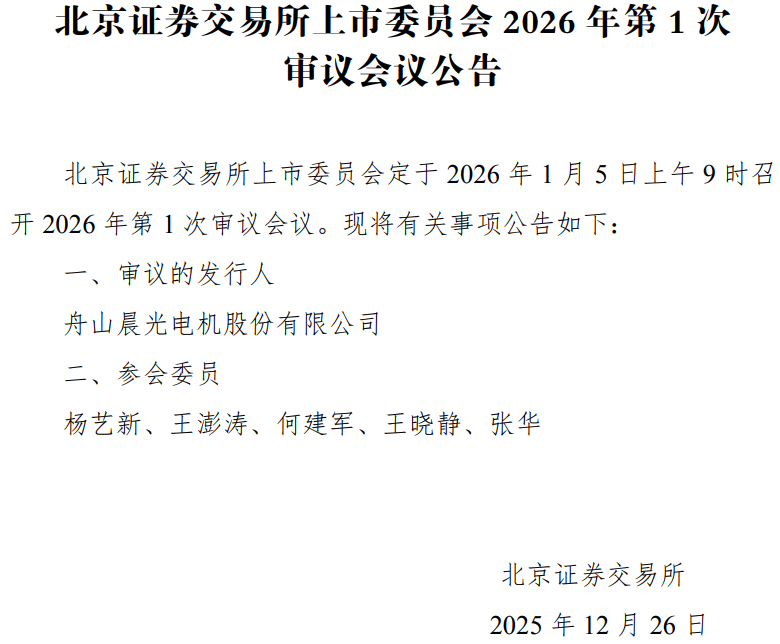
上市委审议前夕,晨光电机的“自愿限售”真能掩盖内控缺陷吗?
Sou Hu Cai Jing· 2025-12-30 01:10
Core Viewpoint - The listing process of Zhoushan Chenguang Electric Machine Co., Ltd. has reached a critical moment, with the Beijing Stock Exchange's listing committee scheduled to review its application on January 5, 2026 [1] Group 1: Regulatory and Governance Issues - The company and its executives received an administrative regulatory decision from the Zhejiang Securities Regulatory Bureau in June 2025, which raised concerns about its corporate governance [4][7] - The latest prospectus lists 21 "risk factors," including market competition and reliance on tax incentives, but the direct warnings from regulatory bodies highlight deeper issues in corporate governance and internal controls [6] - A significant violation involved undisclosed non-operational fund transactions with related parties totaling 6.2448 million yuan, which were not reported in a timely manner [9][11] Group 2: Delayed Disclosures and Internal Management Concerns - The company delayed the disclosure of its Q3 2024 report, which coincided with the receipt of the regulatory warning, raising suspicions about its internal management [13][15] - The combination of delayed disclosures and regulatory warnings suggests a systemic issue in corporate governance and operational standards [16] Group 3: Shareholder Actions and Market Perception - Four shareholders voluntarily agreed to lock up a total of 15.425 million shares, representing 24.879% of the company's total equity, which is interpreted as a sign of confidence in the company's long-term prospects [17][19] - However, the concentrated ownership structure, with the actual controllers holding over 93% of the shares, raises questions about the true intent behind the voluntary lock-up [21] Group 4: Business Dependency and Financial Performance - The company's revenue heavily relies on a single product line, the AC series motor, which accounted for over 60% of its revenue, primarily used in vacuum cleaners [25] - The sales price of the AC series motor decreased by 10.64% in 2023, and major clients have shown declining sales, indicating potential vulnerabilities in customer relationships [26][28] - The company's net profit showed a significant decline of 20.84% in 2024 compared to the previous year, despite revenue growth [29] Group 5: Financial Discrepancies and Cash Flow Issues - The company's accounts receivable surged by 59.39% at the end of 2024, significantly outpacing the 16.05% revenue growth, indicating potential cash flow issues [30] - The cash collection ratio has been below 1 for three consecutive years, suggesting that revenue growth may be driven by relaxed credit policies, raising concerns about the quality of earnings [32] Group 6: Investment and Capacity Utilization Concerns - The company plans to raise 520 million yuan for expansion projects, but its capacity utilization has declined from 85.89% in 2023 to 76.76% in the first half of 2025, questioning the rationale behind the expansion [33][35] - Regulatory inquiries have raised concerns about the market's ability to absorb the new capacity, which could lead to underperformance of the investment [37]
新规强化全周期披露责任,吹散银行理财“信息迷雾”
Di Yi Cai Jing Zi Xun· 2025-12-29 12:48
Core Viewpoint - The recent issuance of the "Measures for the Management of Information Disclosure of Asset Management Products by Banking and Insurance Institutions" aims to address long-standing issues in the wealth management sector, such as distorted yield displays and non-transparent valuation methods, by standardizing information disclosure practices [1][2][6]. Group 1: Regulatory Framework - The new regulations establish a unified standard for information disclosure across three types of asset management products: asset management trusts, bank wealth management products, and insurance asset management products [2][6]. - The regulations emphasize the importance of protecting investors' rights to information and choice, which is a fundamental obligation of asset management institutions [2][6]. - The measures require clear disclosure of performance benchmarks, including the rationale for their selection and calculation methods, while explicitly stating that performance benchmarks are not expected yields [2][3]. Group 2: Disclosure Requirements - The regulations enhance periodic disclosure requirements, mandating accurate reporting of product net values, performance, and investment asset conditions, while introducing a mechanism for transparent disclosure of underlying asset structures [3][4]. - Specific rules for cash management products prohibit the display of annualized returns for products that have been established for less than seven days, aiming to curb misleading marketing practices [3][4]. - The regulations also require that all parties involved in the asset management process, including product managers and sales institutions, share responsibility for ensuring the accuracy and completeness of disclosed information [4][6]. Group 3: Industry Impact - The new rules are expected to elevate the quality of information disclosure, potentially becoming a key competitive differentiator for asset management institutions [4][6]. - The introduction of a "dual-channel" disclosure principle aims to simplify investor access to information, thereby enhancing transparency and consistency across different disclosure platforms [4][6]. - The regulations are anticipated to drive asset management companies towards greater professionalism and specialization by mandating the disclosure of investment strategies, portfolio structures, and performance benchmarks [5][6]. Group 4: Future Outlook - The regulations will take effect on September 1, 2026, allowing an eight-month transition period for banking and insurance institutions to adapt [6]. - The increased compliance requirements may raise operational costs for asset management firms, necessitating a comprehensive review and upgrade of their disclosure systems and product documentation [6][7]. - Long-term, the standardization of information disclosure is expected to reshape the competitive landscape of the asset management industry, with a focus on transparency and professional management becoming essential for maintaining a competitive edge [6][7].
蓝盾光电:公司所有信息均以公司在指定的信息披露媒体上披露的内容为准
Zheng Quan Ri Bao Wang· 2025-12-26 11:43
Group 1 - The company, Blue Shield Optoelectronics (300862), confirmed its compliance with legal and regulatory requirements regarding information disclosure [1] - All information provided by the company is based on content disclosed in designated information disclosure media [1]

荣科科技(300290.SZ):控股股东、实际控制人不存在涉及公司应披露而未披露的重大信息
Ge Long Hui· 2025-12-26 07:30
格隆汇12月26日丨荣科科技(300290.SZ)在投资者互动平台表示,经向控股股东核实,公司控股股东、 实际控制人不存在涉及公司应披露而未披露的重大信息,包括但不限于重大资产重组、股份发行、重大 交易类事项、业务重组、股份回购、股权激励、重大业务合作、引进战略投资者等重大事项。 ...

田轩:我们需要什么样的资本市场
Zheng Quan Ri Bao· 2025-12-26 05:19
Core Viewpoint - The report emphasizes the need for a capital market that supports technological innovation and the development of the real economy, focusing on two main aspects: a more inclusive venture capital market and a "less aggressive" secondary market [2][13]. Group 1: Inclusive Venture Capital Market - A more inclusive venture capital market is essential to support technological innovation, which is characterized by long cycles, high uncertainty, and high failure rates [4]. - The report highlights the importance of being tolerant towards entrepreneurs and venture capital funds, allowing for failures and encouraging early-stage investments [5]. - The comparison of venture capital fund durations between the U.S. (10-12 years) and China (5-7 years) indicates a need for longer investment horizons to support early-stage and high-risk projects [5]. Group 2: Less Aggressive Secondary Market - The secondary capital market is crucial, with approximately 600-700 million individuals involved, and the central government has emphasized its importance in recent policy discussions [6]. - A "less aggressive" secondary market is proposed to provide a quieter environment for high-growth and innovative companies, reducing short-term pressures from investors and analysts [6][7]. - Mechanisms such as strong anti-takeover provisions and controlled board member turnover are suggested to maintain stability and encourage long-term innovation [8]. - The report argues that excessive stock liquidity can attract short-term investors, which may negatively impact a company's innovation efforts [9]. - Long-term institutional investors are needed to better support innovative companies, as they can provide stability and oversight, especially during periods of failure [10]. - Reducing analyst pressure and the frequency of earnings disclosures can help alleviate short-term performance pressures on companies, allowing them to focus on long-term innovation [11][12]. Conclusion - A well-designed capital market that is both inclusive and less aggressive is essential for fostering an environment conducive to technological innovation and supporting the real economy [13].

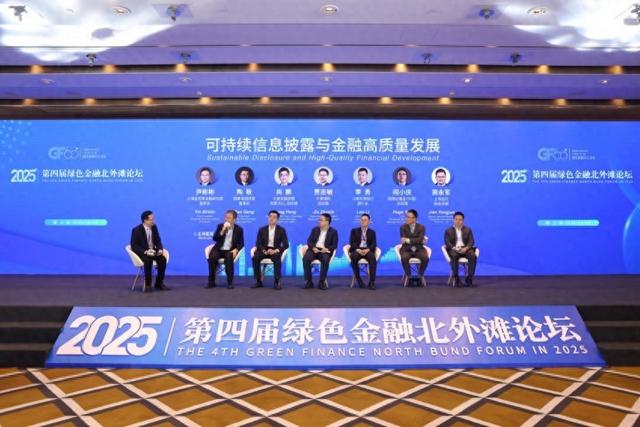
迈向“十五五”:以高质量信息披露驱动绿色金融提质增效
Guan Cha Zhe Wang· 2025-12-26 02:49
Core Viewpoint - The article emphasizes that green finance has become a core strategy for financial institutions, driven by sustainable information disclosure, which guides funds towards low-carbon sectors and promotes high-quality development in the industry [1]. Group 1: Sustainable Information Disclosure - Sustainable information disclosure is effectively driving financial institutions to integrate green development concepts and implement green innovation practices [1]. - There is a need for a systematic and mandatory information disclosure system to enhance transparency and comparability in ESG disclosures, which are currently mostly voluntary [5]. - The future focus of ESG work should revolve around institutionalizing information disclosure, integrating international standards, and leveraging technology to address data quality issues [5]. Group 2: Green Investment Practices - Companies like Guotai Junan Asset Management have integrated ESG indicators into their investment research systems across various financing businesses, achieving recognition in green financial innovation [5]. - ICBC-AXA Asset Management has seen significant growth in green investment, focusing on sectors like energy storage and renewable energy, while also expanding their green product offerings [7]. - Huaxia Wealth Management has incorporated ESG principles into their product design, ensuring that at least 80% of the underlying assets in green financial products are genuinely green [10]. Group 3: Risk Management and Innovation - Roadmap for risk assessment frameworks is crucial, as identifying and managing risks associated with ESG and climate transition is a key challenge for fund management companies [13]. - Jiangnan Rural Commercial Bank has developed a green finance risk management system to support business expansion and enhance risk control through innovative credit products [16]. - Shanghai Trust emphasizes the flexibility of trust systems in supporting green industries, with a focus on long-term capital and sustainable returns [19]. Group 4: Industry Collaboration and Future Directions - The forum highlighted the need for continuous breakthroughs in information disclosure, standard integration, risk management, and technological empowerment to direct financial resources efficiently towards green low-carbon sectors [21]. - Collaboration with various organizations, including NRDC and WBCSD, indicates a collective effort to advance sustainable finance practices [21].