
扩大高水平对外开放

Search documents
第一观察 | 展现一个负责任大国的时代担当
Xin Hua She· 2025-10-29 16:53
Core Points - Xi Jinping's visit to South Korea from October 30 to November 1 is significant as it marks his first foreign trip after the 20th Central Committee's Fourth Plenary Session [1] - The session highlighted the complex changes in China's development environment and emphasized the importance of international relations on domestic development [1] - The "15th Five-Year Plan" aims to expand high-level opening up and create a new situation of win-win cooperation, signaling China's commitment to share development opportunities with the world [1] Group 1 - The visit to South Korea is part of a series of diplomatic engagements in the region, including trips to Southeast Asia, Russia, and Central Asia earlier this year [2] - The relationship between China and South Korea is improving, with Xi Jinping's visit expected to provide direction for future development [3] - The global landscape is changing rapidly, with rising unilateralism and protectionism posing challenges to international economic order [3] Group 2 - Xi Jinping emphasized the role of the Asia-Pacific Economic Cooperation (APEC) in promoting economic globalization and called for inclusive and sustainable development [4] - A preliminary consensus has been reached between China and the U.S. on several important economic and trade issues, indicating a focus on major powers' economic relations [4] - The upcoming meeting between Xi Jinping and U.S. President Trump is expected to address strategic and long-term issues concerning China-U.S. relations [5]
一个稳定的中美经贸关系有利于两国,有利于世界
Guo Ji Jin Rong Bao· 2025-10-29 12:20
Core Points - The meeting between Chinese President Xi Jinping and U.S. President Donald Trump is scheduled for October 30 in Busan, South Korea, to discuss U.S.-China relations and mutual concerns [1] - Recent U.S.-China trade negotiations in Kuala Lumpur resulted in a basic consensus on addressing mutual concerns, with both sides agreeing to further detail and domestic approval processes [1] Group 1: Economic Relations - The U.S.-China economic relationship is characterized as mutually beneficial, with trade volume increasing from under $2.5 billion in 1979 to nearly $688.3 billion in 2024 [2] - The stability of U.S.-China economic relations is crucial for global economic stability, as the two countries account for over 40% of the world's economy [2] - The interdependence in manufacturing and consumption between the U.S. and China is significant, with both countries playing vital roles in global supply chains [4] Group 2: Cooperation and Future Outlook - The importance of cooperation and mutual respect is emphasized, with a call for both nations to work towards common prosperity and global benefits [5] - The recent trade negotiations are seen as a step towards achieving substantial progress in U.S.-China economic cooperation, with expectations for the U.S. to reciprocate China's efforts [4] - The Chinese government has reiterated its commitment to high-level openness and cooperation, aiming to create a win-win situation for both countries [5]

《中共中央关于制定国民经济和社会发展第十五个五年规划的建议》诞生记
Xin Hua She· 2025-10-29 11:56
Core Points - The article discusses the approval of the "15th Five-Year Plan" by the 20th Central Committee of the Communist Party of China, emphasizing its significance in advancing China's modernization efforts and national rejuvenation [1][16]. Group 1: Economic Goals and Projections - The "14th Five-Year Plan" aims for China's economy to reach approximately 140 trillion yuan by 2025, with per capita GDP exceeding $13,000, surpassing the world average and nearing high-income country levels [2][16]. - The plan outlines a strategic roadmap for achieving basic socialist modernization by 2035, requiring the implementation of three five-year plans, with the "14th Five-Year Plan" being the first [2][16]. Group 2: Strategic Focus Areas - The "15th Five-Year Plan" emphasizes the importance of foundational development and comprehensive efforts across various sectors, including economic growth, social development, and technological innovation [4][18]. - Key areas of focus include enhancing the national innovation system, promoting high-quality development, and addressing social inequalities to ensure common prosperity [19][23]. Group 3: Governance and Leadership - The plan underscores the necessity of strong centralized leadership from the Communist Party to navigate complex domestic and international challenges [5][20]. - It highlights the importance of public participation and democratic decision-making in the planning process, reflecting the need for a collective approach to governance [10][24]. Group 4: Implementation and Feedback Mechanisms - The planning process involved extensive consultations, gathering over 3.1 million public suggestions, which were integrated into the final document [11][12]. - The document underwent multiple revisions based on feedback from various stakeholders, ensuring it aligns with national interests and public expectations [14][26]. Group 5: Future Outlook - The "15th Five-Year Plan" is positioned as a critical step towards achieving a modern socialist country, with ambitious goals for economic strength, technological advancement, and improved living standards by 2035 [16][26]. - The plan aims to solidify China's position in the global landscape while addressing internal challenges, thereby fostering a resilient and sustainable development model [22][25].
罗志恒:“十五五”规划建议的十二大看点
Sou Hu Cai Jing· 2025-10-29 04:05
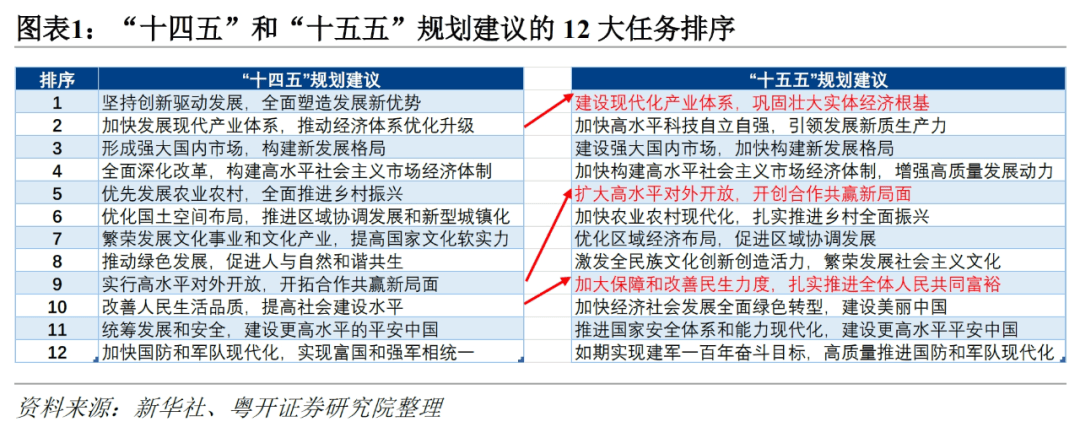
Core Insights - The "15th Five-Year Plan" emphasizes quality development, technological self-reliance, and the importance of domestic consumption, particularly in the context of changing external circumstances and US-China competition [1][2][5] - The plan outlines 12 major tasks categorized into optimizing supply, expanding demand, and ensuring security, aiming for a higher level of supply-demand circulation [1][5] Comparison with Previous Plans - The assessment of future risks and uncertainties is more pronounced in the "15th Five-Year Plan," shifting from a focus on strategic opportunities to a dual emphasis on opportunities and risks [2] - The development goals have expanded from six to seven areas, highlighting quality development, technological self-reliance, and increased international influence [2][6] Task Prioritization - The "15th Five-Year Plan" prioritizes the modernization of the industrial system and places technological innovation second, reflecting the current international emphasis on openness [3][6] - The plan includes a clear structure with three main sections: achievements from the previous five years, specific tasks, and the role of party leadership [5][6] Economic and Social Development Goals - The plan sets seven key development goals, including significant improvements in quality development, technological self-reliance, and social welfare [16][17] - The nominal GDP growth target is set at an average of 5% per year, with a focus on increasing the resident consumption rate from 40% to 43% [17][18] Industrial and Technological Development - The plan emphasizes the construction of a modern industrial system as the foundation for economic development, with a focus on maintaining a reasonable proportion of manufacturing [21][23] - It highlights the importance of technological self-reliance and innovation, particularly in key sectors such as integrated circuits and advanced materials [28][29] Domestic Demand and Consumption - The plan stresses the need to expand domestic demand and enhance consumption, aiming to create a robust domestic market to counter external uncertainties [30][31] - It outlines strategies to increase disposable income and improve consumer confidence, alongside optimizing the supply structure to meet evolving consumer needs [30][31][33] Macro-Economic Governance - The plan calls for improvements in macro-economic governance, emphasizing the need for coordinated fiscal and monetary policies to support sustainable growth [34][35] - It advocates for a shift from traditional fiscal policies to a more proactive approach that enhances the efficiency of existing assets and promotes strategic investments [38][39]
学习贯彻党的二十届四中全会精神丨为基本实现社会主义现代化而接续奋斗——党的二十届四中全会精神在各地引发热烈反响
Yang Guang Wang· 2025-10-29 02:42
贵州省黎平县肇兴镇党委第一书记杨秀智:全会提出,加快农业农村现代化,扎实推进乡村全面振 兴的工作目标。未来,我们牢记总书记的殷切嘱托,按照本次全会作出的系统全面部署,加快推进肇兴 侗寨宜居宜业宜游和美乡村建设。 央广网北京10月29日消息 据中央广播电视总台中国之声《新闻和报纸摘要》报道,连日来,广大 干部群众深入学习贯彻党的二十届四中全会精神。大家表示,全会审议通过的《中共中央关于制定国民 经济和社会发展第十五个五年规划的建议》,为做好"十五五"时期各项工作、开创中国式现代化建设新 局面提供了科学指南。新征程上,要把思想和行动切实统一到以习近平同志为核心的党中央决策部署上 来,以高质量发展开创中国式现代化新局面。 "十四五"时期是开启全面建设社会主义现代化国家新征程的第一个五年。全会高度评价"十四五"时 期我国发展取得的重大成就。广大干部群众表示,在以习近平同志为核心的党中央坚强领导下,中国式 现代化迈出新的坚实步伐,要乘势而上创造新的伟业。 辽宁省工业和信息化厅副厅长杜长征:回顾"十四五"以来我国取得的各项成就,其根本在于习近平 总书记的领航掌舵,在于习近平新时代中国特色社会主义思想的科学指引。我们将完整 ...
中共中央明确“十五五”规划建议重点任务
Bei Jing Shang Bao· 2025-10-28 16:40
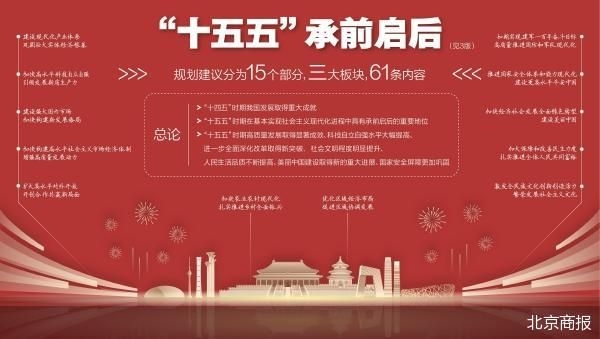
Core Viewpoint - The "Suggestions for Formulating the 15th Five-Year Plan for National Economic and Social Development" aims to significantly enhance China's economic, technological, defense, and comprehensive national strength by 2035, achieving a per capita GDP at the level of moderately developed countries and improving the quality of life for its citizens [1] Group 1: Modern Industrial System - Optimize and upgrade traditional industries to enhance their global competitiveness, focusing on sectors like mining, metallurgy, and machinery [3] - Cultivate and expand emerging and future industries, emphasizing innovation in sectors such as new energy and aerospace [4] - Promote high-quality development in the service industry by enhancing service capacity and quality [5] Group 2: Infrastructure Development - Strengthen the planning and integration of modern infrastructure, focusing on new types of infrastructure and digital transformation [6] Group 3: Technological Self-Reliance - Enhance original innovation and tackle key core technology challenges in critical fields like integrated circuits and advanced materials [7][8] - Promote the deep integration of technological and industrial innovation, establishing regional innovation systems [9] - Foster education and talent development to support technological innovation [10] Group 4: Domestic Market Expansion - Stimulate consumption through targeted actions and improve public service spending to enhance consumer capacity [12] - Maintain reasonable investment growth and optimize government investment structures [13] - Remove barriers to the construction of a unified national market [14] Group 5: High-Quality Development Dynamics - Activate various business entities by promoting diverse ownership and enhancing the competitiveness of state-owned enterprises [15] - Improve the market-oriented allocation of resources across various sectors [16] - Enhance macroeconomic governance effectiveness through coordinated policies [18] Group 6: Open Economy - Expand autonomous opening-up, focusing on service sectors and high-standard trade agreements [19] - Promote trade innovation and balance in imports and exports [20] - Create favorable conditions for foreign investment and ensure transparency [21] Group 7: Rural Revitalization - Improve agricultural production capacity and quality through modern agricultural practices [23] - Enhance rural living conditions and public services [24] - Strengthen policies to support farmers and ensure effective financial input for rural development [25] Group 8: Regional Economic Layout - Promote coordinated development across different regions, focusing on the western development and revitalization of the northeast [27] - Enhance inter-regional connectivity and collaboration [28] - Optimize land use and urbanization strategies [30] Group 9: Cultural Development - Foster a vibrant cultural ecosystem and enhance cultural production capabilities [31] - Develop the cultural industry through improved management and market systems [32] - Strengthen the international influence of Chinese culture [33] Group 10: Common Prosperity - Implement strategies for high-quality employment and improve the income distribution system [34][35] - Enhance social security systems to support citizens [36] - Promote high-quality development in the real estate sector [37] Group 11: Health and Environment - Advance health initiatives to improve public health and life expectancy [38] - Promote sustainable environmental practices and energy systems [41][42] - Encourage green production and lifestyle changes [43] Group 12: National Security - Establish a robust national security framework and enhance capabilities in key areas [44][46] - Improve public safety governance and emergency response systems [47] Group 13: Defense Modernization - Accelerate the development of advanced military capabilities and modernize military governance [48][49] - Strengthen the integration of national strategic systems and capabilities [50]
朱鹤新重磅发声!
Sou Hu Cai Jing· 2025-10-27 21:21
Core Insights - The speech emphasizes China's significant contribution to global economic resilience and trade, particularly in the context of high-level opening up and cooperation with other countries [2][3]. Group 1: Global Trade Resilience - Global trade has shown strong resilience despite challenges such as the pandemic and geopolitical tensions, with an average annual growth rate of 5.4% from 2019 to 2024, an increase of 4.6 percentage points compared to the previous five years [2][4]. - The World Bank predicts that global trade will exceed $33 trillion in 2024, marking a historical high [2][4]. Group 2: Technological and Cooperative Drivers - A new wave of technological revolution and industrial transformation is injecting new momentum into global trade, with semiconductor trade surpassing $1 trillion annually and green trade in new energy growing from $10 billion a decade ago to over $100 billion in recent years [4]. - The Regional Comprehensive Economic Partnership (RCEP) and other trade agreements have strengthened multi-level economic cooperation, maintaining a stable international economic landscape [4][5]. Group 3: China's Role in Global Trade - China, as the world's second-largest economy and largest goods trader, plays a crucial role in enhancing global economic resilience by stabilizing supply chains and providing a vast consumer market, with an average annual import of $3 trillion in goods and services over the past five years [5]. - The digital economy in China is projected to contribute around 10% to GDP by 2024, with digital service exports exceeding $400 billion, highlighting its importance in global digital trade [5]. Group 4: Foreign Exchange and Investment Reforms - China is advancing deep reforms in the foreign exchange sector, with a 37% increase in foreign exchange market trading volume and a 64% increase in foreign-related income and expenditure compared to 2020 [6]. - New policies are being introduced to enhance cross-border trade and investment facilitation, including expanding pilot programs for high-level opening up and optimizing foreign exchange management for new trade formats [7][8]. Group 5: Beijing's Economic Role - Beijing has maintained a goods trade volume exceeding 3.6 trillion yuan in recent years, with a service trade growth rate of nearly 10% annually, positioning it as a key player in global economic stability [9].
加快构建新发展格局,牢牢把握发展主动权——论学习贯彻党的二十届四中全会精神
Xin Hua She· 2025-10-27 15:33
Group 1 - The core viewpoint emphasizes the strategic decision made by the Central Committee, led by Xi Jinping, to accelerate the construction of a new development pattern, which is crucial for maintaining China's development initiative [1] - The "dual circulation" development pattern was conceived in response to the changes in the global environment due to the pandemic, highlighting the need for new development strategies [1] - The "14th Five-Year Plan" period has seen significant contributions from domestic demand, with an average contribution rate of 86.4% to economic growth from 2021 to 2024 [2] Group 2 - China's goods trade volume is projected to grow from 32.2 trillion yuan in 2020 to 43.8 trillion yuan in 2024, reflecting an annual growth rate of 8.0% [2] - The focus on strengthening domestic circulation is seen as essential for countering uncertainties in international circulation, with a strategic emphasis on building a robust domestic economic system [2] - The Central Committee's commitment to expanding domestic demand is aimed at enhancing the internal dynamics and reliability of the domestic circulation [3] Group 3 - The importance of a strong domestic market is highlighted as a strategic foundation for China's modernization, supported by a well-developed industrial and infrastructure system [3] - The plan includes promoting urbanization, rural revitalization, and improving living standards to stimulate investment and consumption [3] - The Central Committee's deployment for expanding high-level opening-up reflects China's confidence in open cooperation and mutual benefits, with a 4% year-on-year increase in goods trade in the first three quarters of the year [4] Group 4 - Despite challenges from unilateralism and protectionism, the commitment to high-level opening-up and the Belt and Road Initiative aims to enhance the efficiency of domestic and international market interactions [4] - Historical resilience against external risks has been a key factor in China's ability to navigate challenges, emphasizing the importance of focusing on domestic development [4]
“十五五”规划蕴含哪些资本市场改革密码?
Jing Ji Guan Cha Bao· 2025-10-27 14:38
Core Insights - The 20th Central Committee's Fourth Plenary Session has concluded, focusing on the formulation of the 15th Five-Year Plan, which will have profound impacts on China's and the global economy, with the capital market playing a more significant role during this period [1] Group 1: Capital Market Development - The capital market during the 15th Five-Year Plan aims to promote high-quality economic development, drive technological innovation, and enhance wealth for residents and society [2] - Reform and opening-up are identified as the two main lines for the development of China's capital market, emphasizing the importance of the capital market in economic and social development [2] - The capital market's core functions extend beyond financing to include incentive mechanisms and wealth management, which are essential for broader economic participation [2] Group 2: Market Growth Potential - The capital market is expected to grow from 100 trillion to 200 trillion yuan during the 15th Five-Year Plan, driven by a shift in asset allocation from real estate to stocks and funds [3] - The traditional economic growth model, reliant on real estate and infrastructure, is reaching its limits, necessitating a new engine based on "technology × capital" for sustainable growth [3] - Recent market trends show stock indices rising despite traditional economic data not exceeding expectations, indicating a shift in how the capital market perceives economic fundamentals [3][4] Group 3: Innovation and Risk Management - The capital market must adapt to price and underwrite innovation risks, which differ significantly from the predictable risks of the industrial era [6] - Current financial systems show weaknesses in recognizing and managing innovation risks, necessitating reforms to enhance tolerance for failure and support diverse financial and technological innovations [7] - The need for a robust mechanism to support innovation failures, such as improved bankruptcy laws and social safety nets, is emphasized to foster a more innovative environment [7] Group 4: Economic Confidence and Policy Directions - Despite external trade tensions and internal economic slowdowns, confidence in the economy and capital markets has significantly improved, driven by policy, corporate, and funding awakenings [8] - The upcoming 15th Five-Year Plan is expected to detail industry and technology policies, focusing on economic rebalancing and social security [8] - Key directions for breaking through during the 15th Five-Year Plan include adjusting performance assessments to prioritize consumption and service sectors, and reforming the fiscal system to reduce reliance on turnover taxes [9] Group 5: Internationalization and Openness - The strategic importance of "high-level opening up" has been elevated in the 15th Five-Year Plan, indicating a shift towards a more reciprocal international capital market [10] - The focus on dual-direction connectivity in capital markets aims to attract international capital while facilitating domestic enterprises' access to global markets [10] - Achieving breakthroughs in foreign investment access and optimizing listing systems could enhance China's capital market's internationalization and resource allocation efficiency [10]
人民日报评论员:加快构建新发展格局,牢牢把握发展主动权——论学习贯彻党的二十届四中全会精神
Xin Hua Wang· 2025-10-27 14:01
Group 1 - The core viewpoint emphasizes the strategic decision made by the central government to accelerate the construction of a new development pattern, which is crucial for maintaining China's development initiative [1] - The "dual circulation" development pattern was proposed in response to the disruptions in global supply chains caused by the pandemic, highlighting the need for new development strategies [1][2] - The average contribution rate of domestic demand to economic growth is projected to reach 86.4% from 2021 to 2024, indicating a strong reliance on domestic consumption [2] Group 2 - The total import and export volume is expected to increase from 32.2 trillion yuan in 2020 to 43.8 trillion yuan in 2024, with an annual growth rate of 8.0% [2] - The focus on strengthening the domestic circulation is seen as essential for countering uncertainties in international circulation, thereby enhancing economic stability [2][3] - The strategy includes expanding domestic demand and promoting a robust domestic market, which is vital for China's modernization efforts [3] Group 3 - The commitment to high-level opening-up is reflected in the 4% year-on-year growth in goods trade in the first three quarters of the year, with exports increasing by 7.1% [4] - Despite challenges such as unilateralism and protectionism, the trend of economic globalization remains strong, and China aims to maintain its open cooperation stance [4] - The focus on domestic development as a foundation for overcoming external risks has been a consistent theme in China's economic strategy [4]