低空经济

Search documents
纳入“十五五”四大新兴产业,低空经济加速“起飞”还有多远|“十五五”产业前瞻
Di Yi Cai Jing· 2026-01-22 10:18
Core Insights - The key to accelerating the low-altitude economy lies in transforming blueprints into actionable and valuable business scenarios, along with improving the related infrastructure network [1] Group 1: Government Initiatives - The recent guidelines emphasize the need to accelerate the development of strategic emerging industries, including low-altitude economy, with nearly 30 provinces incorporating it into their 14th Five-Year Plan [1] - The focus on low-altitude economy has been reiterated in multiple government reports, highlighting its significance in national economic planning [1] Group 2: Industry Development - The low-altitude economy is transitioning from early-stage applications to a critical phase of deep penetration, necessitating cluster development due to its extensive industrial chain [2] - As of now, nearly 1,000 companies have registered civil unmanned aerial vehicle products, with 3,191 types of products and over 478,000 units [2] - The eVTOL (electric vertical takeoff and landing) sector has received over 1,000 intent orders from domestic and international clients since 2025, showcasing its potential in low-altitude applications [2] Group 3: Application Scenarios - Current eVTOL applications are primarily in the testing phase, with limited commercial operations due to stringent operational certifications [3] - The low-altitude economy is expected to have three main application scenarios: manned low-altitude transportation, unmanned low-altitude logistics, and low-altitude digital applications [3][4] - Agricultural applications of low-altitude technology are showing promising trends, with over 300,000 agricultural drones and an operational area exceeding 46 million acres by 2025 [4] Group 4: Infrastructure Development - The construction of low-altitude infrastructure is accelerating, with plans to issue six types of unmanned aerial vehicle type certificates by 2025 and establish a flight service network covering 23 provinces [6] - The low-altitude economy faces challenges such as fragmented airspace management and the need for improved approval efficiency, which are critical for its commercial viability [6] - The current strict regulation of low-altitude airspace requires approvals from military and air traffic control, indicating a need for a comprehensive low-altitude traffic network [7] Group 5: Future Outlook - The goal is to have hub-type large unmanned aerial vehicle takeoff and landing sites operational by 2035, integrating manned and unmanned operations into a complex route network [7] - The large-scale commercial application of eVTOL and other low-altitude aircraft in urban air mobility may take up to ten years to realize [7]
爱施德(002416) - 2026年1月8日—22日 投资者关系活动记录表
2026-01-22 09:42
Group 1: Company Overview - Aishide Co., Ltd. was established in June 1998 and listed on the Shenzhen Stock Exchange in May 2010 [2] - The company is a leading digital smart distribution and retail service provider, focusing on mobile smart terminals, digital products, communication and value-added services, and fast-moving consumer goods [2][3] Group 2: Business Partnerships - Aishide is a national一级 distributor for major smartphone brands including Apple, Honor, and Samsung, serving over 2,000 Apple authorized stores, 7,000 Honor clients, and more than 4,300 Samsung stores [3] - The company operates 236 self-owned Apple Premium Reseller (APR) stores, maintaining the largest APR channel scale in the country [3] Group 3: Financial Performance and Investments - The company has a 5 billion RMB fund focusing on investments in smart terminals, artificial intelligence, and low-altitude economy, with current projects including Yunshen Technology and Saigan Technology [4] - Aishide has consistently paid dividends for several years, with plans to distribute 4 RMB and 5 RMB per 10 shares for the years 2023 and 2024 respectively [5] Group 4: International Expansion - Aishide's overseas business channels are expanding, targeting markets in Australia, Southeast Asia, the Middle East, and Africa, with a 30% year-on-year increase in overseas sales revenue in the first half of 2025 [5] - The company collaborates closely with Honor in various international markets, supporting its global expansion [4]

利好科创!深圳重要发布
Zhong Guo Zheng Quan Bao· 2026-01-22 08:13
Core Viewpoint - The Shenzhen Municipal Financial Management Bureau has solicited public opinions on the "Action Plan for the Insurance Industry to Support Technological Innovation and Industrial Development (2026-2028)", which sets quantitative goals for insurance in technology and emerging industries [1] Group 1: Quantitative Goals - The plan aims for an annual growth rate of over 10% in technology insurance premium income, providing risk protection exceeding 5 trillion yuan for tech companies each year [1] - It targets the launch of at least 30 innovative insurance products annually in emerging industries such as low-altitude economy and artificial intelligence [1] - The total assets of insurance entities in Shenzhen are expected to exceed 11 trillion yuan, with total premium income in the region surpassing 700 billion yuan over three years [1] Group 2: Focus Areas and Support Measures - The plan emphasizes the development of technology insurance, encouraging insurance institutions to research and innovate products in cutting-edge fields like humanoid robots, quantum technology, and commercial aerospace [2] - It proposes the development of specialized insurance products such as major technology equipment insurance, intellectual property insurance, and cybersecurity insurance to precisely serve the real economy and technological innovation [2] - In the realm of artificial intelligence, the plan encourages the establishment of AI insurance innovation centers and the development of comprehensive insurance solutions covering various risk layers [2] Group 3: Sector-Specific Insurance Development - For the biopharmaceutical industry, the plan suggests expanding insurance products to support R&D in pharmaceuticals and medical devices, including liability insurance for clinical trials [3] - It aims to accelerate the development of low-altitude insurance, including mandatory insurance for drones and the establishment of a classification management system [3] - The plan encourages insurance institutions to adapt to the trends of smart driving and collaborate with developers to refine insurance products for intelligent vehicles [3] Group 4: Cross-Border Cooperation and Support - The plan supports cooperation between Shenzhen and Hong Kong insurance institutions to develop medical and pension insurance products tailored to the Greater Bay Area [4] - It promotes the use of trade risk avoidance tools for cross-border e-commerce enterprises and encourages domestic insurance companies to optimize their overseas operations [4] Group 5: Strengthening Insurance Institutions - The plan supports the establishment of legal headquarters for financial enterprises in Shenzhen and encourages both domestic and foreign insurance institutions to set up subsidiaries in various sectors [5] Group 6: Service Improvement and Performance Metrics - The plan emphasizes enhancing underwriting and claims service levels, utilizing advanced technologies to improve efficiency and accuracy in insurance processes [6] - Data shows that Shenzhen's insurance premium income reached 179.74 billion yuan in the first three quarters of 2025, with a year-on-year growth of 12.8%, leading among first-tier cities [6] - As of September, the total assets of insurance entities in Shenzhen reached 9.1 trillion yuan, with a year-on-year growth of 22%, and net profits of 61 billion yuan, reflecting a growth rate of 15.5% [6]
江门获批首个机场项目 台山市斗山镇将建设A1类通用机场
Nan Fang Ri Bao Wang Luo Ban· 2026-01-22 08:10
Core Viewpoint - The Guangdong Provincial Development and Reform Commission has approved the construction of the Taishan General Airport project, marking the first airport in Jiangmen [1] Group 1: Project Overview - The project aims to enhance the regional comprehensive transportation system and improve emergency rescue and disaster relief capabilities [1] - The estimated total investment for the Taishan General Airport project is 351 million yuan [1] - The airport will be located in Doushan Town, Taishan, and is planned as an A1 class general airport with a target completion year of 2035 [1] Group 2: Infrastructure Details - The airport will feature a 1200-meter long and 30-meter wide non-instrument runway, a 75.5-meter long and 10.5-meter wide vertical taxiway, and 16 parking positions [1] - Additional infrastructure includes a 4000 square meter terminal building, a 3600 square meter hangar, a 1050 square meter special vehicle garage, and various other facilities totaling over 2000 square meters for operational use [1] - The project will also include visual navigation aids, air traffic control, communication, meteorological, security, firefighting, and utility facilities [1]
力推1万亿“险资入深” 深圳披露科技保险三个量化目标
2 1 Shi Ji Jing Ji Bao Dao· 2026-01-22 07:49
21世纪经济报道记者 黄子潇 深圳报道 1月22日,21世纪经济报道记者从深圳市地方金融管理局获悉,该局研究起草了《深圳市关于保险业助力科技创新和产业发展的行动方案 (2026-2028年)》(简称《行动方案》),于1月22日公开征求意见。 上述16条政策覆盖多个新兴科技领域,针对性地提出加快研发相适应的风险保障措施与产品。 《行动方案》提出,力争到2028年底完成三方面工作目标: 一是建立并完善与深圳经济社会发展水平相匹配的现代保险服务体系,推动保险业为"20+8"战略性新兴产业集群和未来产业发展、企业"走出 去"、深港金融合作提供坚实支撑,助力深圳建设具有全球重要影响力的产业科技创新中心、产业金融中心和全球海洋中心城市。 二是科技保险规模、质量与竞争力全面提升,科技保险保费收入年均增速超10%,每年为科技企业提供风险保障超5万亿元;低空经济、人工 智能等新兴产业保险服务实现突破,每年推出不少于30款保险创新产品。 三是保险业规模持续扩大,全市保险法人总资产规模超11万亿元,深圳地区三年保费收入超7000亿元。 这标志着,深圳保险业未来三年的重心或将落在"科技保险"领域。同时,深圳还最新提出推动"险资入深" ...


香港运输及物流局:多管齐下优化跨境互联互通 完善大湾区多式联运网络
智通财经网· 2026-01-22 07:39
Group 1: Hong Kong's Development Vision - The Hong Kong Transport and Logistics Bureau aims to deepen cooperation with cities in the Greater Bay Area to establish a cross-border low-altitude network, enhancing the interconnectivity of people, logistics, and information for high-quality development [1] - The national "14th Five-Year Plan" emphasizes consolidating and enhancing Hong Kong's status as an international shipping center, providing strong support for the development of Hong Kong's port and shipping services [1] - Significant progress is expected by 2025, including the establishment of a high-level Hong Kong Maritime and Port Development Bureau, successful LNG ship-to-ship refueling demonstrations, and the completion of the port community system [1] Group 2: Strategies for Shipping and Logistics - In 2026, the Transport and Logistics Bureau will adopt a multi-faceted strategy to enhance the resilience and competitiveness of Hong Kong's shipping industry, including the construction of a "rail-sea-land-river" intermodal transport system [1] - The government plans to revise relevant legislation to optimize existing tax incentives for the shipping industry and introduce half-tax incentives for commodity traders, as well as reform the ship registration system to attract more vessels to register in Hong Kong [1] Group 3: International Aviation Hub Development - Hong Kong will implement a series of policy measures to expand its aviation network, strategically attracting both local and non-local airlines to develop new routes and flights, focusing on regions with growth potential [2] - The government is committed to strengthening cooperation with cities in the Guangdong-Hong Kong-Macao Greater Bay Area to improve the multi-modal transport network [2] Group 4: Low-Altitude Economy Development - Hong Kong will actively respond to the national "14th Five-Year Plan" by developing the low-altitude economy, leveraging innovative technology to drive regional collaborative development [2] - The government is establishing communication mechanisms with mainland counterparts to discuss key issues such as cross-border low-altitude flight route planning and customs clearance mechanisms [2] - Hong Kong aims to standardize and institutionalize low-altitude economic development, providing a model for the national low-altitude economic industry to ensure safety, order, and sustainability [2] Group 5: Policy Alignment with National Development - Future policies in aviation, shipping, and logistics will align with national planning and integrate into the national development framework, enhancing the competitiveness of Hong Kong's shipping and aviation industries [3] - Hong Kong will continue to leverage its unique advantages to support the country's high-quality development [3]
万亿经济蓝海“起风了”,前海如何当好“桥头堡”?
Nan Fang Du Shi Bao· 2026-01-22 07:03
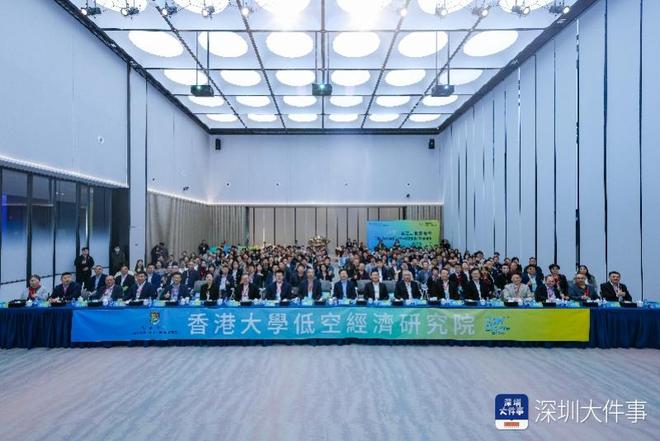
Core Insights - The second Low Altitude Summit held in Shenzhen and Hong Kong signals a transition from conceptual discussions to practical implementation of the low-altitude economy, with Qianhai positioned as a central hub for this transformation [1][4]. Group 1: Event Overview - The summit gathered over 300 participants, including government officials, scholars, and industry leaders, emphasizing the importance of collaboration between academia and industry [2]. - Key agreements were made, such as the establishment of a joint laboratory between the Hong Kong University Low Altitude Economy Research Institute and the Aviation Industry Corporation of China, indicating a commitment to innovation and practical applications [4]. Group 2: Strategic Importance of Qianhai - Qianhai's geographical location in the Greater Bay Area serves as a critical low-altitude flight corridor, enhancing its attractiveness for low-altitude economic activities [6]. - Experts highlight Qianhai's advantages in capital, openness, and talent, which are essential for achieving significant advancements in the low-altitude economy [7]. Group 3: Industry Development and Innovations - The summit underscored the necessity for the low-altitude economy to transition from theoretical discussions to tangible outcomes, with several companies already establishing operations in Qianhai [8][11]. - Qianhai has begun to form a comprehensive industrial chain encompassing technology research, manufacturing, application, and regulatory services, which is crucial for the sector's growth [11]. Group 4: Future Prospects and Policy Framework - The development of the low-altitude economy in Qianhai is seen as a pivotal moment, with the potential for significant advancements in regulatory frameworks and operational models [12][13]. - Qianhai aims to create a systematic approach to airspace rights, scene transactions, and cross-regional collaboration, positioning itself as a model for the national low-altitude economy [14].
地方两会丨广州市人大代表冯兴亚建言低空经济商业化
Zhong Guo Jing Ying Bao· 2026-01-22 06:48
Core Viewpoint - Guangzhou is accelerating the construction of a trillion-level automotive industry cluster, focusing on the integration of smart and electric vehicles, autonomous driving, and the localization of key components [1][2]. Group 1: Industry Development and Challenges - Guangzhou has established a robust automotive industry base with nine vehicle manufacturers and over a thousand parts suppliers, achieving an average annual growth rate of over 60% in new energy vehicle production over the past five years [2][3]. - Despite its strengths, the automotive industry in Guangzhou faces challenges in commercializing cutting-edge technologies, coordinating the supply chain, and improving infrastructure [2][3]. - The city has opened 2,601 kilometers of smart connected vehicle testing roads, with over 8.36 million kilometers of autonomous driving demonstration operations covering ten major application scenarios [3]. Group 2: Strategic Recommendations - The company suggests focusing on low-altitude economy and autonomous driving as core areas for future industry development, proposing to accelerate the commercialization of electric vertical takeoff and landing vehicles [4][5]. - Recommendations include enhancing vehicle-to-grid (V2G) policies, improving automotive export logistics, and making Guangzhou a pilot city for automotive aftermarket modifications to meet consumer demands [5]. - The Guangzhou government has set 2026 as a key year for industry development, planning to build a low-altitude industrial ecosystem and an intelligent connected vehicle industrial park [5]. Group 3: Innovation and Ecosystem - The automotive industry in Guangzhou is characterized by a collaborative ecosystem with local leaders like GAC Group driving transformation through integrated reforms and efficient operational systems [3][4]. - GAC Group has received nearly 2,000 orders for its GOVY AirCab flying car, with production expected to start soon, supporting the development of low-altitude economy applications [4]. - The company emphasizes the importance of technological innovation to overcome development bottlenecks and maintain Guangzhou's core position in the national automotive industry landscape [2][3].

广东宏大:国科宏惯投产 布局高端武器装备、商业航天等市场
Zheng Quan Shi Bao Wang· 2026-01-22 06:48
Core Viewpoint - Guangdong Hongda (002683) announced the successful production and signing ceremony of its subsidiary Guoke Hongguan, which focuses on the research and production of laser gyroscopes and related inertial navigation systems, indicating a strategic move into high-end defense equipment [1] Group 1: Company Developments - Guoke Hongguan specializes in laser gyroscopes and related inertial navigation systems, with applications in various fields including military and aerospace [1] - The company is positioned as a key player in the high-end defense equipment sector, supported by the innovation team from the National University of Defense Technology [1] - The establishment of Guoke Hongguan marks a significant step in Guangdong Hongda's strategy to expand into markets such as high-end weaponry, low-altitude economy, commercial aerospace, and geodesy [1]

从中科宇航IPO加速,看商业航天赛道突围逻辑
Sou Hu Cai Jing· 2026-01-22 06:44
Core Viewpoint - The company Zhongke Yuhang has officially changed its IPO status to "Acceptance of Guidance," indicating a critical phase in its IPO process, which began in August 2025 and has progressed rapidly in comparison to other companies in the commercial aerospace sector [2][5]. Company Overview - Zhongke Yuhang, established in December 2018, is a high-tech commercial aerospace enterprise incubated by the Chinese Academy of Sciences, focusing on medium to large rocket development, customized space launches, suborbital scientific experiments, and space tourism [4]. - The company is the first mixed-ownership rocket enterprise in China, with its core product being the self-developed "Lijian" series of launch vehicles [4]. - The major shareholder is Beijing Pengyi Junlian Space Technology Center, holding 27.7476% of the shares, with notable investors including Guangzhou Chantuo, CITIC Jianxin, and Yuexiu Industrial Fund [4]. IPO Progress - The IPO guidance work was initiated on August 8, 2025, and completed in approximately five months, similar to the speed of another company, Blue Arrow Aerospace [2][3]. - The expected issuance of shares and total share capital post-IPO is still under discussion, with the underwriting agency being Guotai Junan Securities [3]. Financial Performance - In 2024, Zhongke Yuhang reported an operating income of 243.29 million yuan and a net loss of 748.48 million yuan [7]. - For the first half of 2025, the company achieved an operating income of 36.24 million yuan, with a net loss of 31.10 million yuan, indicating ongoing financial challenges [6][7]. - The company has not yet covered the costs of a single rocket launch due to low launch frequency and underutilization of payload capacity, leading to high unit costs [6][8]. Industry Context - The commercial aerospace sector in China has over 600 companies, covering the entire industry chain from rocket development to satellite manufacturing and application services [5]. - Recent regulatory changes have facilitated the listing of unprofitable companies on the Sci-Tech Innovation Board, with commercial aerospace being one of the supported sectors [5]. - Despite the enthusiasm for commercial aerospace, challenges such as low launch frequency and high costs remain significant barriers to profitability [8].