国产替代

Search documents
审核历时207天!创业板首家未盈利企业注册生效
2 1 Shi Ji Jing Ji Bao Dao· 2026-01-25 09:48
Core Viewpoint - The approval of Shenzhen Dapu Microelectronics Co., Ltd. (Dapu Micro) for its IPO marks the first instance of an unprofitable company listing on the ChiNext board, reflecting a significant shift in the regulatory landscape for tech innovation firms in China [1][6]. Company Overview - Dapu Micro, established in 2016, specializes in the research and sales of enterprise-level SSD products, being one of the few domestic providers with full-stack self-research capabilities in "controller chips + firmware algorithms + modules" [3][4]. - The company has achieved a fourth-place ranking in the domestic enterprise SSD market with a market share of 6.4%, contributing to the localization of SSD production in China [3][4]. Financial Performance - Dapu Micro's revenue figures from 2022 to 2024 are as follows: 5.57 billion, 5.19 billion, and 9.62 billion yuan, with net losses of -5.34 billion, -6.17 billion, and -1.91 billion yuan respectively. The company anticipates an 88.73% year-on-year revenue growth in 2024 and expects to turn profitable by 2026 [4][6]. - The company has invested heavily in R&D, with a total of 7.37 billion yuan spent over the last three years, accounting for 36.15% of total revenue [4][5]. Market Context - The approval of the unprofitable listing standard on the ChiNext board is expected to facilitate more tech innovation companies to access the A-share capital market, with Dapu Micro being the first to benefit from this new policy [6][8]. - The Chinese government emphasizes the need for self-sufficiency in digital information infrastructure, particularly in the enterprise SSD market, which is currently dominated by foreign companies [5][6]. Future Prospects - Dapu Micro plans to raise approximately 1.878 billion yuan through its IPO, focusing on the development and industrialization of next-generation controller chips and enterprise-level SSDs, as well as establishing a mass production testing base [4][6].


神工股份(688233):硅零部件连续3年高增,刻蚀硅材料景气回归
Shenwan Hongyuan Securities· 2026-01-25 09:44
Investment Rating - The investment rating for the company is "Buy" (maintained) [1] Core Insights - The company has experienced a significant increase in revenue from silicon components over the past three years, with a notable recovery in the etching silicon materials market [1] - The company is expected to benefit from a resurgence in global storage semiconductor demand and accelerated domestic substitution in the second half of 2025 [8] - The company has adjusted its revenue and net profit forecasts for 2025, 2026, and 2027, reflecting a positive outlook due to increasing demand [8] Financial Data and Profit Forecast - Total revenue projections are as follows: - 2024: 303 million - 2025: 441 million - 2026: 764 million - 2027: 1,028 million - Year-on-year growth rates for total revenue are projected at: - 2024: 124.2% - 2025: 45.8% - 2026: 73.2% - 2027: 34.5% [7] - Net profit forecasts are as follows: - 2024: 41 million - 2025: 105 million - 2026: 222 million - 2027: 319 million - Year-on-year growth rates for net profit are projected at: - 2025: 155.4% - 2026: 110.8% - 2027: 44.0% [7] - The company’s gross margin is expected to improve, reaching 47.3% in 2026 [8]

突传重磅!三星NAND闪存,涨价100%!
Xin Lang Cai Jing· 2026-01-25 07:44
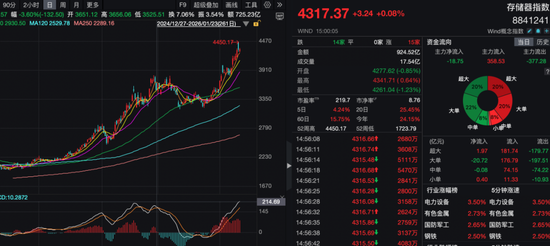
Core Viewpoint - Samsung Electronics has raised NAND flash supply prices by over 100% in Q1 2026, indicating a severe supply-demand imbalance in the semiconductor market [1][12]. Group 1: Price Trends and Market Dynamics - The storage market has seen rapid price increases since the second half of 2025, with the Wind storage index rising over 100% since June 2025 [1][12]. - The current price surge is driven by demand from AI servers and general servers, alongside structural capacity shifts and competitive demand across multiple dimensions [3][14]. - Samsung has completed negotiations for supply contracts with major clients by the end of 2025, implementing a new pricing system from January 2026, following a nearly 70% increase in DRAM prices [4][15]. Group 2: AI Impact on Storage Demand - AI innovations are causing structural changes in the market, with increasing data access needs requiring high-bandwidth, large-capacity, and low-latency DRAM and NAND Flash products [5][16]. - The overall storage industry value is projected to reach $551.6 billion in 2026 and $842.7 billion in 2027, reflecting a 53% annual growth [5][16]. Group 3: NAND Flash Market Projections - The NAND Flash market is expected to see a quarterly price increase of 55% to 60% in Q1 2026, with growth anticipated to continue through the end of the year [6][17]. - The overall storage market is unlikely to see relief from shortages, maintaining supplier pricing power [6][17]. Group 4: Company Performance and Capacity Constraints - Major cloud service providers are initiating bundled negotiations for 2027 supply contracts, indicating unprecedented tightness in storage capacity [8][18]. - The three major DRAM manufacturers (Samsung, SK Hynix, Micron) are expected to see a 5% increase in wafer output in 2026, which will still not meet market demand [9][19]. - Domestic manufacturers are expanding capacity to accelerate the process of domestic substitution in the semiconductor sector [9][19]. Group 5: Financial Performance of Storage Companies - Companies in the storage sector are experiencing significant revenue growth due to the price surge, with Baidu Storage forecasting revenues of 10 billion to 12 billion yuan in 2025, a year-on-year increase of 49.4% to 79.2% [10][20]. - Baidu Storage's projected net profit for 2025 is expected to be between 850 million and 1 billion yuan, reflecting a year-on-year increase of 427.2% to 520.2% [10][20]. - The company is actively securing inventory and long-term supply agreements to ensure stable supply of key materials [11][21].
突传重磅!三星NAND闪存,涨价100%!
证券时报· 2026-01-25 07:43
Core Viewpoint - The semiconductor market is experiencing a significant supply-demand imbalance, highlighted by Samsung Electronics raising NAND flash supply prices by over 100% in Q1 2025, exceeding market expectations [1]. Group 1: Market Trends - Since the second half of 2025, storage market prices have surged, leading to a more than 100% increase in the Wind storage index from June 2025 to the present [3]. - The current price increase is driven by demand from AI servers and general servers, alongside structural capacity shifts and competitive demand across multiple dimensions, suggesting that shortages and price hikes may persist for an extended period [4][5]. Group 2: Future Projections - The global storage industry, primarily focused on SSD/NAND Flash and including DRAM, is expected to be in a clear price upcycle until January 2026, with suppliers holding significant pricing power due to structural shortages [6]. - TrendForce forecasts that the storage industry value will reach $551.6 billion in 2026 and $842.7 billion in 2027, marking a 53% year-on-year increase [7]. Group 3: NAND Flash Demand - The demand for NAND Flash is expected to rise significantly due to AI's impact on data access needs, with predictions of a 55%-60% quarter-on-quarter increase in prices for Q1 2026, continuing through the end of the year [8]. - The overall storage market is unlikely to see relief from shortages, with contract prices expected to remain elevated due to ongoing AI advancements and the critical role of storage in AI infrastructure [9]. Group 4: Company Performance - Companies in the storage sector are experiencing substantial revenue growth, with predictions of a 49.4% to 79.2% increase in revenue for Baiwei Storage in 2025, alongside a projected net profit increase of 427.2% to 520.2% [13]. - Longxin Technology, a key domestic player, is advancing in technology and production capacity, with plans for an IPO to fund further expansion [12].

牛股业绩出炉!300475、688233、300503,预计盈利大增
天天基金网· 2026-01-25 07:00
Core Viewpoint - Multiple A-share companies are expected to see significant profit growth in 2025, driven by advancements in technology and market demand for their products [3]. Group 1: Shannon Chip Creation - Shannon Chip Creation (300475) anticipates a net profit of 480 million to 620 million yuan for 2025, representing a year-on-year increase of 81.77% to 134.78% [7]. - The company expects its enterprise-level storage product sales to grow significantly, with an overall revenue increase of over 40% in 2025, driven by rising product prices and demand from data centers [7]. - The brand "Haipu Storage" is projected to achieve sales revenue of 1.7 billion yuan in 2025, with 1.3 billion yuan expected in the fourth quarter alone [7]. Group 2: Shengen Co., Ltd. - Shengen Co., Ltd. (688233) forecasts a net profit of 90 million to 110 million yuan for 2025, marking a year-on-year growth of 118.71% to 167.31% [10]. - The company expects its annual revenue to reach 430 million to 450 million yuan, reflecting a growth of 42.04% to 48.65% compared to the previous year [10]. - The growth is attributed to a recovering global semiconductor market and increased demand for high-end logic and storage chips, particularly driven by artificial intelligence [12]. Group 3: Haozhi Electromechanical - Haozhi Electromechanical (300503) projects a net profit of 128 million to 165 million yuan for 2025, indicating a year-on-year increase of 54.4% to 99.03% [16]. - The growth is fueled by rising demand in the PCB market due to advancements in AI infrastructure and consumer electronics, alongside domestic substitution and technological innovation [18]. - The company anticipates a significant impact from non-recurring gains on its net profit, estimated between 33.5 million and 50 million yuan [20].



易方达产业机遇混合A:2025年第四季度利润412.61万元 净值增长率10.89%
Sou Hu Cai Jing· 2026-01-25 06:45
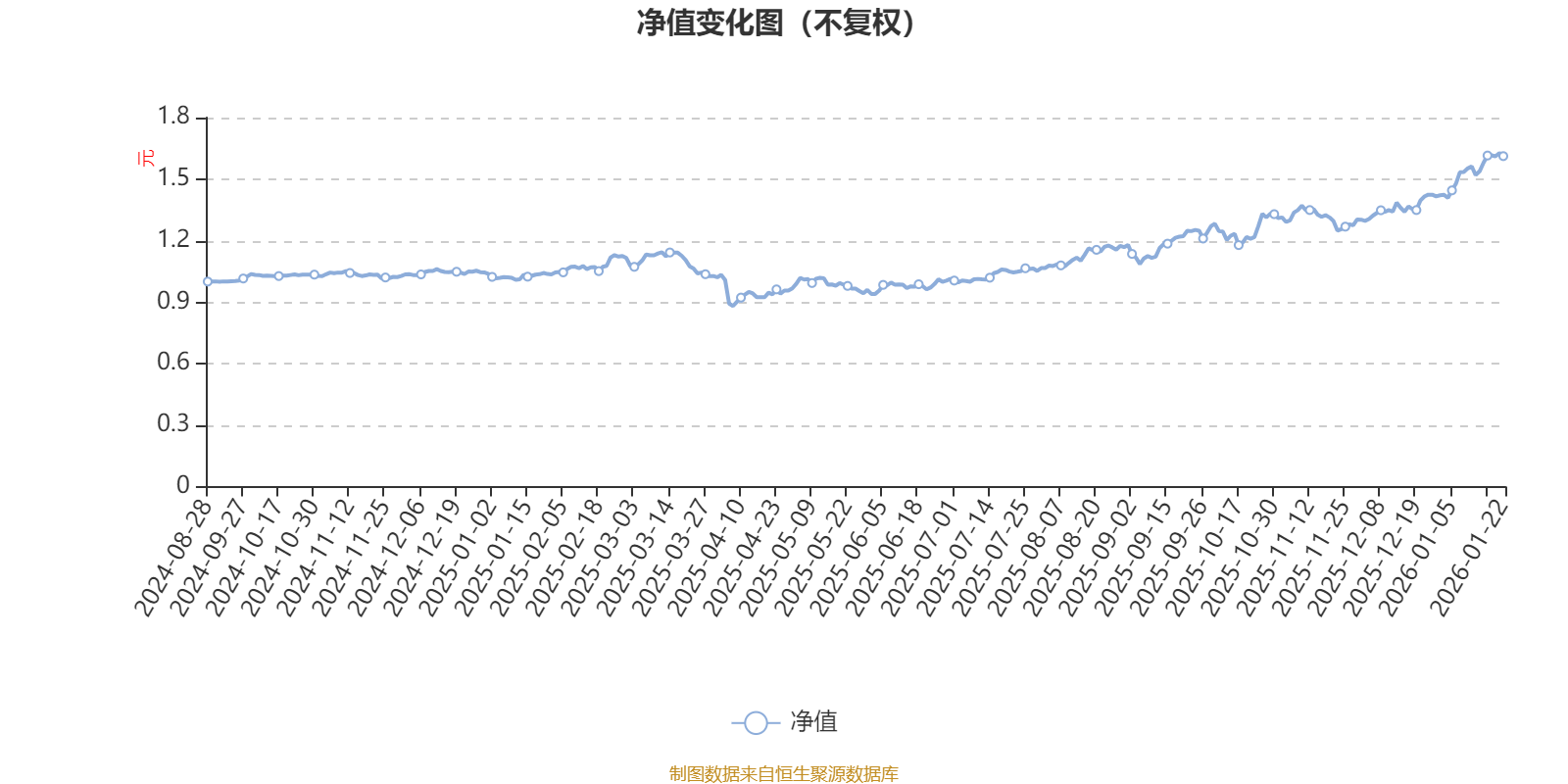
Core Insights - The AI Fund E Fund Industrial Opportunity Mixed A (021179) reported a profit of 4.1261 million yuan for Q4 2025, with a weighted average profit per fund share of 0.1396 yuan. The fund's net value growth rate for the reporting period was 10.89%, and the fund size reached 42.9818 million yuan by the end of Q4 2025 [2][15]. Fund Performance - As of January 22, the unit net value of the fund was 1.612 yuan. The fund manager, Yang Zongchang, oversees two funds that have both yielded positive returns over the past year. The highest growth rate among these funds was 70.29% for E Fund Supply Reform Mixed, while the lowest was 55.4% for E Fund Industrial Opportunity Mixed A [2][3]. Investment Strategy - In Q4, the fund continued to focus on technology innovation while adjusting its portfolio based on market changes since Q3. The overall allocation became more balanced, with significant reductions in holdings related to storage module companies and AI industry chain temperature control and power supply companies due to their substantial price increases and valuation improvements. The focus shifted towards semiconductor equipment and materials, particularly stocks affected by downstream storage customer expansions and areas with low domestic substitution penetration [3]. Sector Allocation - The fund increased its allocation to the coal industry and added positions in certain chemical stocks that had undergone sufficient adjustments and reasonable valuation recoveries. The automotive sector's allocation was maintained, and the fund continued to monitor opportunities arising from the recovery of the U.S. real estate market and overseas expansion [3]. Performance Metrics - As of January 22, the fund's net value growth rate over the past three months was 33.31%, ranking 13th out of 689 comparable funds. Over the past six months, the growth rate was 54.29%, ranking 53rd out of 689, and over the past year, it was 55.40%, ranking 145th out of 673 [3]. Risk and Return - Since inception, the fund's Sharpe ratio was 1.1162, indicating a favorable risk-adjusted return [8]. The maximum drawdown since inception was 22.95%, with the largest quarterly drawdown occurring in Q2 2025 at 14.72% [10]. Portfolio Composition - As of December 31, the fund's average stock position was 80.69%, compared to the industry average of 84.04%. The fund reached a peak stock position of 90.99% at the end of Q1 2025 and a low of 51.06% at the end of 2024 [13]. Top Holdings - By the end of Q4 2025, the fund's top ten holdings included Huayang Co., Changchuan Technology, Huafeng Technology, Zhongke Feicai, Juxing Technology, Weicai Technology, Geely Automobile, Jingyi Equipment, Shengong Co., and Jiaocheng Ultrasonic [18].
2026科创板首单终止!这家设备厂商 IPO折戟
是说芯语· 2026-01-25 01:27
Core Viewpoint - The case of Aidian Technology's IPO termination highlights the common challenges faced by domestic semiconductor equipment companies in capitalizing their businesses, including customer dependency, cash flow volatility, and imbalanced business structure [1] Group 1: Customer Dependency Risk - Aidian Technology's IPO faced significant risks due to extreme customer concentration, with 51.85% of its revenue from the photovoltaic business, and 51.91% of that from a single customer, Longi Green Energy, indicating a dual dependency on both the photovoltaic sector and a single client [3] - The company's top five customers consistently account for 80%-90% of its receivables, far exceeding the customer diversification levels of peers like Shengmei Shanghai and Zhichun Technology [3] Group 2: Cash Flow and Industry Cycle Risks - The company's cash flow was under severe pressure, with a net cash outflow of -0.71 billion in the first half of 2025, exacerbated by a lengthy payment cycle with photovoltaic clients [4] - As of June 2025, accounts receivable and contract assets totaled 2.02 billion, with Longi Green Energy accounting for 54.07% of this amount, raising concerns about cash flow stability amid an industry downturn [4] Group 3: Structural Imbalance and Hidden Risks - Aidian Technology's business structure showed significant imbalance, with semiconductor business revenue growing by 49.34% year-on-year, while the compound semiconductor segment declined by 30.02%, indicating insufficient competitive strength in core semiconductor technology [6] - The company faced uncertainties related to intellectual property litigation and a buyback obligation from its controlling shareholder, which could destabilize its equity structure [6][7] Group 4: Industry Warnings and Successful Cases - The case serves as a warning for domestic semiconductor equipment companies aiming for the Sci-Tech Innovation Board, as the global semiconductor wet equipment market remains dominated by international giants, with domestic firms holding less than 10% market share [8] - Successful companies like Shengmei Shanghai and Zhichun Technology have focused on core semiconductor business and diversified customer bases, achieving significant revenue growth and reducing dependency on single sectors [8] Group 5: Challenges for Domestic Semiconductor Equipment Companies - The challenges highlighted by Aidian Technology's failure are not an endpoint but a beginning of industry reshuffling, emphasizing the need for companies to break customer dependency and enhance their technological capabilities [9] - Companies must optimize their business structures to focus on core semiconductor sectors and improve resilience against industry cycles [10] - It is crucial to establish compliance foundations and manage sensitive issues like buyback agreements and government subsidies effectively [11]

研判2026!中国金属包装涂层材料行业政策、发展现状、市场需求及未来发展趋势分析:绿色转型赋能高端化,金属包装涂层规模将达265.9亿元[图]
Chan Ye Xin Xi Wang· 2026-01-25 01:19
Core Insights - The metal packaging coating materials industry is experiencing growth driven by stricter food safety regulations and a shift towards high-end products, with market size projected to increase from 171 billion yuan in 2020 to 222.6 billion yuan in 2024, and expected to reach 265.9 billion yuan by 2026 [1][13]. Industry Overview - Metal packaging coating materials are specialized functional coatings designed for metal packaging surfaces, providing protection against corrosion and chemical reactions, while meeting food contact and low VOC regulations [2][6]. - The industry is characterized by a clear division of labor within the supply chain, with upstream raw materials, midstream formulation and production, and downstream application in sectors like food and beverage, pharmaceuticals, and chemicals [7][9]. Market Dynamics - The market is witnessing a dual structure of stable demand in traditional sectors and expansion in emerging fields, with food and beverage being the core segment, accounting for 64% of the demand [9][10]. - The sales of two-piece and three-piece cans are projected to grow significantly, with two-piece can sales expected to rise from 45 billion units in 2020 to 70.73 billion units in 2024, and three-piece can sales from 39 billion to 61.2 billion units in the same period [10][11]. Regulatory Environment - Recent government policies have intensified scrutiny on food packaging materials, leading to the introduction of various standards that compel the industry to transition towards water-based and solvent-free high-end products [7][14]. Competitive Landscape - The industry exhibits a competitive landscape where foreign brands dominate the high-end market, while domestic companies are increasingly focusing on R&D to penetrate this segment [14][15]. - Key domestic players are making strides in developing water-based and powder coatings, aiming to break the monopoly of foreign companies in high-end markets [15]. Future Trends - The industry is expected to continue its shift towards environmentally friendly products, with a focus on water-based and solvent-free coatings becoming a core competitive advantage [16]. - Technological innovation will drive the development of multifunctional coatings, expanding into new application areas such as electric vehicle battery shells [16][17]. - The acceleration of domestic substitution will lead to a more concentrated and optimized industry structure, with increased collaboration across the supply chain [17].

华创医药周观点:医药行业ETF研究系列二之医药ETF2026年场景化配置框架 2026/01/25
华创医药组公众平台· 2026-01-24 16:13
Core Viewpoint - The article discusses the investment framework for the pharmaceutical industry ETF in 2026, emphasizing a dual-driven approach of demand and innovation to navigate the market recovery and differentiation after a prolonged bear market since 2021 [29]. Market Review - The CITIC Pharmaceutical Index decreased by 0.38%, outperforming the CSI 300 Index by 0.24 percentage points, ranking 25th among 30 primary industries [9]. - The top ten stocks by increase this week included ST Changyao, Hualan Biological Engineering, and Kangzhong Medical, with gains ranging from 6% to 70.38% [9]. - The bottom ten stocks by decrease included Kain Technology and Aidi Pharmaceutical, with declines of up to 45% [9]. Industry and Stock Events - The article highlights a shift in funding from active to passive management in the pharmaceutical sector, with passive funds becoming a significant part of the long-term funding structure [18]. - The article notes that the innovation drug sector is expected to see a transition from quantity to quality, focusing on differentiated products and internationalization by 2025 [12]. - The medical device sector is experiencing a recovery in bidding volumes, particularly in imaging equipment, and is benefiting from policies promoting home medical devices and accelerated overseas expansion [12]. - The article discusses the favorable conditions for the blood products industry, with relaxed approval for plasma stations and a clear growth path for the industry during the 14th Five-Year Plan period [13]. Investment Strategy - The article proposes a dynamic ETF configuration framework for the pharmaceutical sector, categorized into three layers: a core base of broad-based ETFs, a dual-driven layer focusing on innovative drugs and medical devices, and a defensive layer using traditional Chinese medicine and overseas biotech [22]. - The article emphasizes the importance of a systematic approach to ETF selection, considering liquidity, tracking quality, and cost [24]. - It suggests that the pharmaceutical sector is entering a new growth cycle driven by rigid demand and continuous innovation, necessitating a more structured and rhythmic ETF combination strategy [22].
2月北京站:头部智驾企业“盲盒”、天工机器人——芯之所驱 形之所塑
泽平宏观· 2026-01-24 16:06
Group 1: Smart Driving Industry - The smart driving industry is at a historical turning point, transitioning from L2 to L4 autonomous driving and from automobiles to general robotics [5][14] - The market for smart driving chips and solutions is expected to grow at a nearly 50% compound annual growth rate, heading towards a trillion scale [5][14] - The leading company in this sector holds a significant share of the Chinese smart driving market, benefiting from domestic substitution and technological inclusivity [5][14] Group 2: Humanoid Robotics - The Beijing Humanoid Robot Innovation Center, established in November 2023, is the first provincial humanoid robot innovation center in China and a comprehensive technology company covering both hardware and software [6][16] - The center has developed the "Tian Gong" series of humanoid robots, which are capable of performing in various scenarios such as industrial production, special operations, logistics sorting, and commercial guidance [6][16] - The "Tian Gong Ultra" humanoid robot has achieved multiple awards in competitions, showcasing its capabilities in high-dynamic running control and outdoor navigation [11][17]