多边主义

Search documents
南非总统呼吁推动全球治理体系改革
Xin Hua Wang· 2025-09-25 00:54
Core Points - South African President Ramaphosa emphasized the need for international cooperation to address global challenges and defend multilateralism during the 80th UN General Assembly [1] - He called for reforms in international financial institutions to support developing countries with fairer lending rules and highlighted the importance of maintaining the World Trade Organization's core role in global trade [1] - Ramaphosa pointed out the severe impacts of climate change on African nations, urging UN member states to adhere to their commitments in combating climate change [1] Group 1 - Ramaphosa criticized unilateral military actions and trade protectionism as threats to multilateralism and international law [1] - He highlighted the heavy debt burden hindering sustainable development in many African countries [1] - The President condemned Israel's actions in Gaza as "genocide" and called for the international community to implement the "two-state solution" [2] Group 2 - Ramaphosa stressed the need for nuclear disarmament and mentioned South Africa's role in the 2026 review conference of the Treaty on the Non-Proliferation of Nuclear Weapons [2] - He urged countries to reaffirm their commitment to equality, dignity, and collective security in the context of the UN's 80th anniversary [2]
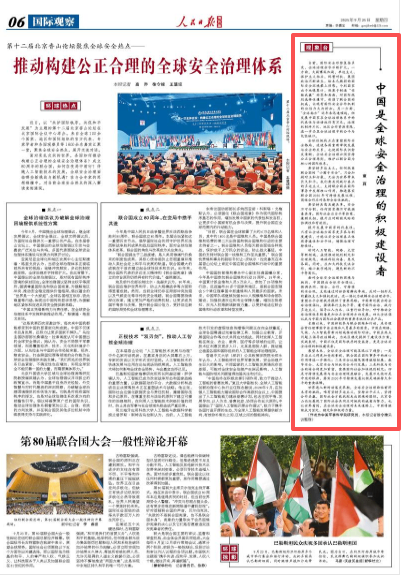
中国是全球安全治理的积极建设者(观象台)
Ren Min Ri Bao Hai Wai Ban· 2025-09-25 00:28
Group 1 - The article emphasizes the complexity and variability of the current international security situation, highlighting the rise of unilateralism and protectionism, which exacerbate the fragile international security environment [1] - It points out the insufficient representation and voice of developing countries in the global governance system, despite the rapid rise of the "Global South" [1][2] - The article advocates for multilateralism and the central role of the United Nations in international affairs, stressing that any security arrangements outside the UN will only increase division and conflict [1][2] Group 2 - The need to enhance the representation of developing countries in institutional building is highlighted, as this is essential for achieving universal and equitable security governance [2] - The article discusses the urgency of establishing rules and ethical norms in new fields such as artificial intelligence, cyberspace, and outer space to ensure technology benefits all nations [2] - China's global security initiative is presented as a significant approach to address security governance deficits and reshape a fair and reasonable order, emphasizing dialogue and cooperation [2][3] Group 3 - Future trends in global security governance are anticipated to include a greater emphasis on multilateralism and the strengthening of the UN's core role in international affairs [3] - The scope of security issues is expected to expand, with digital security and space security developing alongside traditional security concerns [3] - The integration of sustainable development with security governance is highlighted as crucial, with the implementation of the 2030 Sustainable Development Agenda seen as vital for lasting peace [3]

推动全球治理体系改革
Xin Hua Ri Bao· 2025-09-24 23:42
Core Points - South African President Ramaphosa emphasized the need for international cooperation to address global challenges and defend multilateralism during the 80th UN General Assembly [1] - He called for reforms in the UN Security Council to enhance its representativeness and effectiveness, citing its current inadequacies in maintaining international peace [1] - Ramaphosa highlighted the heavy debt burden hindering sustainable development in many African countries and urged for fairer lending rules from international financial institutions [1] - He stressed the importance of reforming the multilateral trading system to protect developing countries from unilateral trade policies that threaten global stability [1] - The impact of climate change on African nations was underscored, with Ramaphosa calling for adherence to the principle of "common but differentiated responsibilities" in addressing climate commitments [1] Peace and Security Issues - Ramaphosa condemned Israel's actions in Gaza as "genocide" and urged the international community to fully implement the "two-state solution" [2] - He advocated for advancing nuclear disarmament and announced that South Africa will host the 2026 review conference of the Treaty on the Non-Proliferation of Nuclear Weapons [2] - On the 80th anniversary of the UN, he called for countries to draw wisdom and build consensus to reaffirm commitments to equality, dignity, and collective security [2]
东西问·北京文化论坛|法国前总理拉法兰:文化始终是法中友好交往的核心
Zhong Guo Xin Wen Wang· 2025-09-24 12:47
Core Viewpoint - Cultural exchange is emphasized as the core of Franco-Chinese friendly relations, with a focus on enhancing mutual understanding through various cultural activities [3][6][7]. Group 1: Cultural Exchange Initiatives - The 2025 Beijing Cultural Forum features a series of events titled "Wind Moves, Shadow Changes - Sino-French Image Dialogue," including film concerts, salons, and lectures [4]. - Notable French filmmakers, such as Jean-Jacques Annaud and Juliette Binoche, engage in dialogues with Chinese filmmakers and scholars during the forum [4][6]. - Historical footage showcasing Sino-French friendship and cooperation is publicly screened for the first time during the forum [4]. Group 2: Importance of Cultural Understanding - Jean-Pierre Raffarin, former French Prime Minister, highlights that cultural exchanges are crucial for fostering mutual understanding between France and China [6][7]. - The long-standing cultural ties have allowed generations to build solid partnerships and deep friendships, giving the Franco-Chinese relationship a humanistic dimension [6][7]. Group 3: Global Governance and Cooperation - Raffarin discusses the need for France and China to collaborate on global governance, emphasizing the importance of multilateralism and the efficiency of global governance systems [9]. - He acknowledges China's significant efforts in poverty alleviation and modernization, which have had a substantial international impact [9]. - The promotion of peace culture is deemed essential for addressing global governance challenges, with China expected to play a larger role in promoting world peace [9].

(经济观察)以行动捍卫多边贸易 中国作出重要承诺
Zhong Guo Xin Wen Wang· 2025-09-24 10:13
(经济观察)以行动捍卫多边贸易 中国作出重要承诺 中新社北京9月24日电 (记者 尹倩芸)当地时间9月23日,中国国务院总理李强在纽约出席第80届联合国 大会相关活动时宣布,中国作为负责任的发展中大国,在世贸组织当前和未来谈判中将不寻求新的特殊 和差别待遇。 此间学者认为,这一郑重承诺不仅是中国坚定支持多边主义的实质性举措,也是对维护以世界贸易组织 为核心的多边贸易体制的重要贡献。 特殊和差别待遇反映在世贸组织各项协定之中,是发展中成员的重要制度性权利,也是多边贸易体制的 重要基础。自2001年以发展中成员身份加入世贸组织以来,中国在合理行使该权利的同时,始终积极承 担与自身发展水平相适应的义务。 中国商务部国际贸易谈判代表兼副部长李成钢提到,中方在享受特殊和差别待遇的同时,积极参与多边 贸易谈判,结合自身发展水平和能力,自主务实处理具体议题谈判中涉及的特殊和差别待遇问题,为达 成多项世贸组织谈判成果、促进全球贸易更自由更便利作出重要贡献。 从对所有建交的最不发达国家100%税目产品实施零关税,到对53个非洲建交国实施100%税目产品零关 税举措,对外经济贸易大学国际经贸学院教授崔凡称,作为最大的发展中国家, ...
中欧稀土合作破冰,欧盟刚获得好处,冯德莱恩转头就制裁中国企业
Sou Hu Cai Jing· 2025-09-24 06:55
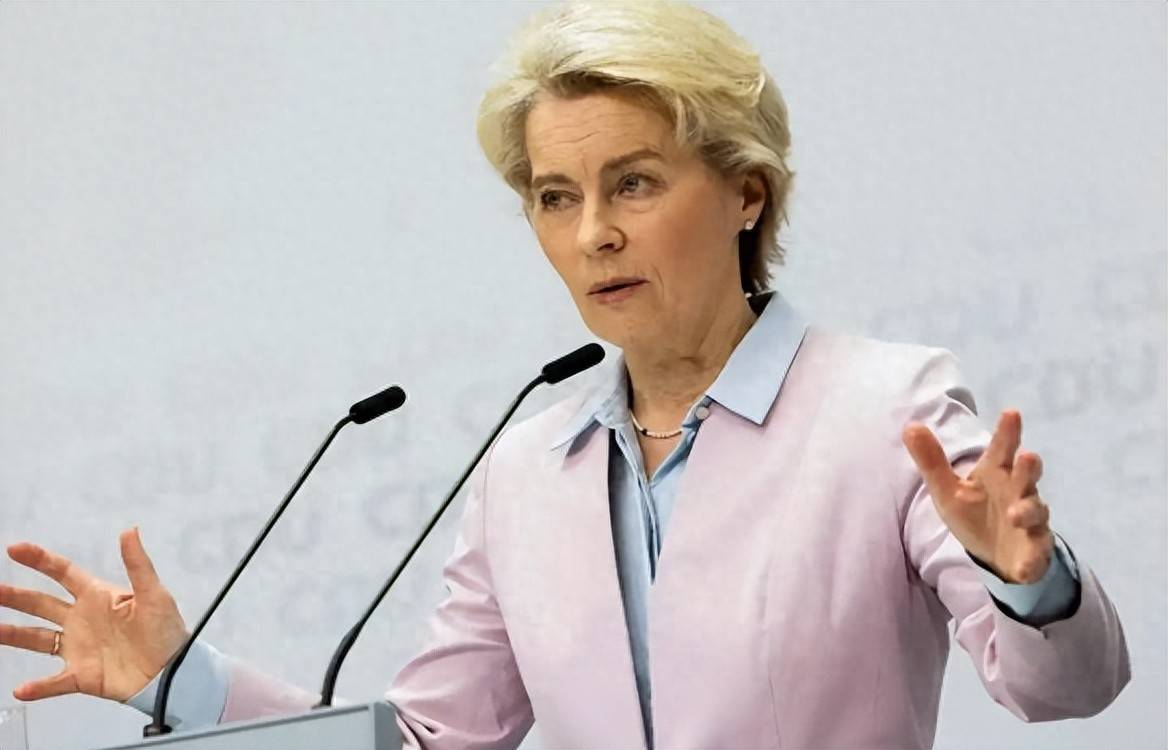
在当今国际舞台上,欧盟与中国的关系正经历一场复杂而微妙的博弈。随着俄乌冲突的持续升温,欧盟似乎选择了更加激进的对抗策略,不只对俄罗斯施加 制裁,最近还将目光转向了中国。这一切无疑让人们对欧洲委员会主席冯德莱恩的动机和后果产生了深刻的思考。 当冯德莱恩宣布将12家中国企业列入制裁名单时,声称这是为了"阻止资金流入"俄罗斯以支持战争。这种表面上的理由,实则隐藏着更深层的地缘政治操 作。近年来,欧盟一直在努力平衡与美国的关系与自身的利益。尤其是在特朗普政府的高压政策下,欧盟不得不不断地试图迎合美国,而这次制裁行动显然 是对美国要求的一种回应。 然而,这种单方面的举动显得不够理智。当前,欧盟不仅仅依赖俄罗斯的能源供应,同样也离不开中国的稀土资源。数据显示,欧盟90%的稀土精炼能力都 依赖中国,尤其是在电动车产业链中,德国汽车制造商等巨头无法承受失去中国供应的后果。因此,将制裁目标瞄准中国,无异于是自掘坟墓。 面对欧盟的挑衅,中国政府迅速做出了反应。商务部明确表示,将采取必要措施维护中国企业和金融机构的合法权益。这种态度不仅展现了中国的坚定立 场,更传递出一个信息:任何针对中国的制裁都将遭遇反击。令人关注的是,早在欧盟 ...
李强在全球发展倡议高级别会议上的讲话(全文)
证监会发布· 2025-09-24 06:42
Core Viewpoint - The article emphasizes the importance of global development and cooperation, highlighting China's commitment to the Global Development Initiative and the need for a collaborative approach to address current global challenges [2][3]. Group 1: International Development Environment - A stable and open international development environment is essential for prosperity, with multilateralism and free trade being crucial for a vibrant global economy [3]. - The rise of unilateralism and protectionism poses significant risks to international development cooperation and economic growth [3]. Group 2: Equitable Development Partnerships - The article points out the increasing disparity between the Global North and South, driven by unequal rights, opportunities, and rules [3]. - Developed countries are urged to fulfill their commitments to development financing and support for developing nations to address imbalances [3]. Group 3: Innovation and Future Development - The rapid advancement of technologies like AI and big data is seen as a strong driver for global development, necessitating international cooperation in technological innovation [4]. - Efforts should be made to eliminate digital and technological divides to ensure that innovation benefits all [4]. Group 4: Sustainable Green Development - Climate change and environmental degradation are major global challenges that require a collective effort for green transformation [4]. - The article advocates for enhanced collaboration in renewable energy and sustainable practices to achieve harmony between humanity and nature [4]. Group 5: China's Contributions to Global Development - China has mobilized over $23 billion in funding for global southern development initiatives over the past four years, supporting more than 1,800 cooperation projects [5]. - Future plans include launching 2,000 small-scale livelihood projects in developing countries and increasing health cooperation with relevant organizations [5][6]. - China aims to strengthen technological cooperation and has proposed initiatives to enhance digital capabilities in developing nations [6].
李强出席全球发展倡议高级别会议
证监会发布· 2025-09-24 06:33
李强强调,中国将始终做共同发展的支持者、促进者,更加积极开展行动、展现应有担当。中国 将继续加大对全球发展的投入,加强科技合作赋能全球发展,积极推动全球发展绿色转型。中国 作为负责任的发展中大国,在世贸组织当前和未来谈判中将不寻求新的特殊和差别待遇。中国政 府提出"人工智能+"国际合作倡议,欢迎各方积极参与。中国愿同各国以全球发展倡议为依托, 深化全球发展合作,共创世界更加繁荣美好的明天。 当地时间9月23日,国务院总理李强在纽约联合国总部出席由中方主办的全球发展倡议高级 别会议并致辞。新华社记者 刘彬 摄 新华社联合国9月23日电(记者夏林 孙奕)当地时间9月23日,国务院总理李强在纽约联合国总 部出席由中方主办的全球发展倡议高级别会议并致辞。联合国秘书长古特雷斯、哈萨克斯坦总统 托卡耶夫、伊拉克总统拉希德、安哥拉总统洛伦索、安提瓜和巴布达总理布朗、巴基斯坦总理夏 巴兹、尼日尔总理泽内以及30多国部长级官员、国际组织负责人与会。 李强表示,习近平主席2021年在联合国大会上提出全球发展倡议,着眼人类社会最广泛利益,呼 吁各方做到"六个坚持",为推进共同发展发挥了重要引领作用。这一重要倡议的落实机制已有 13 ...
英国驻广州总领事孟诗然:英方将继续加强与美国、欧盟、中国这三大重要贸易伙伴的关系
Feng Huang Wang Cai Jing· 2025-09-24 06:22
Group 1 - The "Phoenix Bay Area Financial Forum 2025" was held in Guangzhou on September 23-24, focusing on the theme "New Pattern, New Path" and gathering global elites from politics, business, and academia to explore development opportunities amidst changing circumstances [1] Group 2 - The British Consul General in Guangzhou, Meng Shiran, discussed the restoration of strategic dialogue between China and the UK after a seven-year hiatus, emphasizing the importance of this dialogue in addressing global challenges and fostering a stable bilateral relationship [3] - Meng welcomed the news of US private investors planning to invest over £1.25 billion in the UK financial services sector, indicating international confidence in the UK economy [3] - The UK aims to strengthen relationships with key trading partners, including the US, EU, and China, while promoting free trade and multilateral cooperation [3] - Meng highlighted the value of multilateralism in providing stability, certainty, and fairness in the trading environment, and noted the UK's commitment to collaborating with various members, including China, within the framework of the World Trade Organization (WTO) [3]

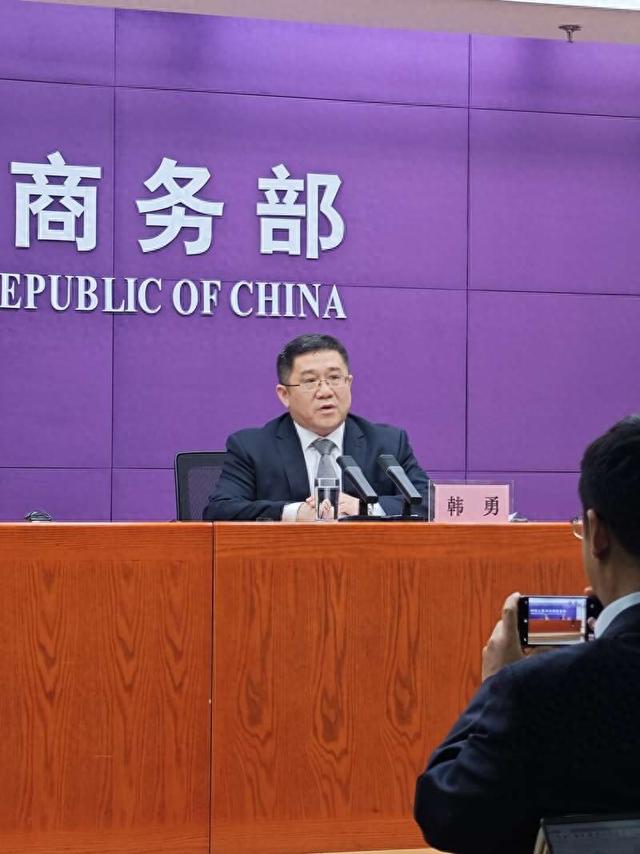
商务部:中方宣布不寻求世贸组织新的特殊和差别待遇将给全球经贸合作带来新机遇新动力
Zhong Guo Qing Nian Bao· 2025-09-24 06:06
Core Viewpoint - China, as a responsible developing country, will not seek new special and differential treatment in current and future WTO negotiations, which is expected to bring new opportunities and momentum for global economic cooperation [1][3]. Group 1: China's Commitment to WTO - China's announcement to not seek new special and differential treatment in WTO negotiations is a significant move that aims to support WTO reform and promote multilateral negotiations [1][3]. - This decision is seen as a strong signal of China's commitment to international cooperation and its willingness to work with the majority of WTO members to fulfill international commitments [3][4]. Group 2: Implications for Global Trade - The move is expected to enhance the inclusiveness and universality of international trade, helping to bridge the development gap between the Global North and South [4]. - The emphasis on multilateralism is highlighted as a necessary choice to address global challenges, with China's role as a key player in promoting the effectiveness of the WTO in global economic governance [3][4].