生成式AI

Search documents
华兰股份(301093.SZ):灵擎数智与深圳晶泰拟共同向科迈生物进行增资入股
Ge Long Hui A P P· 2025-11-14 08:07
灵擎数智与深圳晶泰拟共同向科迈生物进行增资入股。其中,灵擎数智计划使用自有资金人民币2,000 万元认购科迈生物新增的注册资本,进一步取得本次交易后科迈生物基于完全摊薄基础上9.53%的股权 (对应于本次交易完成后科迈生物人民币296,296元的注册资本,剩余计入科迈生物资本公积)。本次 协议签署完成后,灵擎数智将获得科迈生物一席董事会席位以及在同等条件下对科迈生物的优先收购 权。 格隆汇11月14日丨华兰股份(301093.SZ)公布,华兰股份全资子公司灵擎数智于近日与深圳晶泰、 XtalPi、晶泰智启、科迈生物、科迈数抗以及持股平台签署了增资协议。同时,灵擎数智与深圳晶泰、 科迈生物、科迈数抗、持股平台、XtalPi、晶泰智启、百奥赛图、Duckling、Vibrant签署了股东协议。 科迈生物成立于2021年,是由全球领先AI创新药研发企业—晶泰控股孵化的一家专注于利用生成式AI 模型进行抗体设计的生物科技企业。公司依托于内部湿实验产生的数百万对自有的高质量抗体-抗原配 对数据,依托自研的AI抗体设计算法与AI智能体等深度学习技术,面向抗体药物研发的核心需求,打 造出高效、精准的AI抗体设计平台。科迈生 ...
李飞飞长文火爆硅谷
投资界· 2025-11-14 08:01
Core Insights - The article emphasizes that spatial intelligence is the next frontier for AI, which can revolutionize creativity, robotics, scientific discovery, and more [6][10][14] - It outlines the three core capabilities that a world model must possess: generative, multimodal, and interactive [4][18][19] Group 1: Importance of Spatial Intelligence - Spatial intelligence is foundational to human cognition and influences how individuals interact with the physical world [11][14] - Historical examples illustrate how spatial intelligence has driven significant advancements in civilization, such as Eratosthenes' calculation of the Earth's circumference and Watson and Crick's discovery of DNA structure [12][13] Group 2: Current Limitations of AI - Current AI models, particularly large language models (LLMs), lack the spatial reasoning capabilities that humans possess, limiting their effectiveness in understanding and interacting with the physical world [15][16] - Despite advancements, AI struggles with tasks like estimating distances and navigating environments, indicating a fundamental gap in spatial understanding [15][16] Group 3: Future Directions for AI Development - The development of world models is essential for creating AI that can understand and interact with the world in a human-like manner [18][24] - World models should be capable of generating consistent virtual worlds, processing multimodal inputs, and predicting future states based on actions [18][19][20] Group 4: Applications of Spatial Intelligence - The potential applications of spatial intelligence span various fields, including creativity, robotics, science, medicine, and education [34][35] - In creative industries, tools like World Labs' Marble platform enable creators to build immersive experiences without traditional design constraints [28][29] - In robotics, spatial intelligence can enhance machine learning and human-robot collaboration, making robots more effective in various environments [30][31] Group 5: Vision for the Future - The article envisions a future where AI enhances human capabilities rather than replacing them, emphasizing the importance of aligning AI development with human needs [26][36] - The ultimate goal is to create machines that can understand and interact with the physical world, thereby improving human welfare and addressing significant challenges [38]


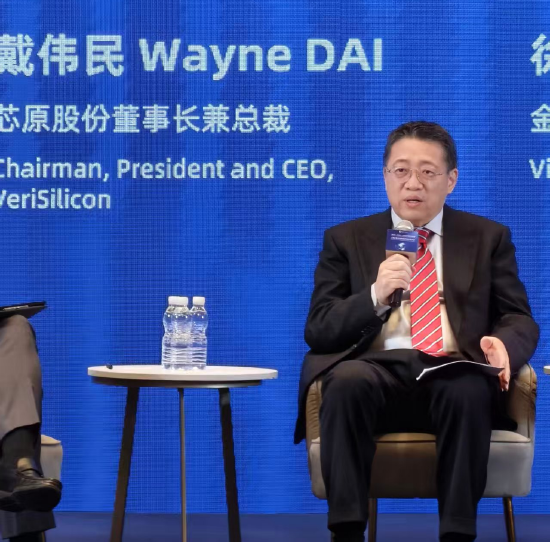
芯原股份董事长兼总裁戴伟民:AI定制化芯片(AI ASIC)需求正显著增长,AI正从云端走向端侧智能
Xin Lang Zheng Quan· 2025-11-14 03:58
Core Insights - The demand for AI customized chips (AI ASIC) is significantly increasing due to the rapid development of generative AI and spatial computing [1][3] - The evolution of AI is shifting from "cloud computing" to "edge intelligence," emphasizing the need for real-time computing power and energy efficiency in portable smart devices like AI glasses [3] Company Overview - Chipone Technology, known as "China's first semiconductor IP stock," has deep technical accumulation in the AI customized chip sector and is recognized as a leading enterprise in AI ASIC [3] - The company aims to explore new application forms such as AI glasses and AI toys, indicating a focus on innovative use cases in various fields [3] Future Trends - The future trend in AI will involve "on-device fine-tuning" of domain-specific models in sectors like education, healthcare, and finance, marking a significant transition from cloud to edge applications [3]

AI重塑消费决策,农企如何被选中?
Nan Fang Nong Cun Bao· 2025-11-14 03:00
Core Insights - The article discusses how generative AI is reshaping consumer decision-making, particularly in the agricultural sector, where being selected by AI has become a crucial factor for brand visibility and consumer trust [4][12][14]. Group 1: AI's Impact on Consumer Choices - Consumers are increasingly relying on AI for product recommendations, shifting from traditional search methods to asking AI for suggestions [3][10]. - The decision-making process has evolved, with AI recommendations serving as a "trust filter" that enhances consumer confidence in the suggested brands [13][12]. Group 2: Marketing Paradigm Shift - The emergence of a new marketing paradigm called Generative Engine Optimization (GEO) allows brands to be proactively recommended by AI [15][16]. - Brands need to create authoritative, structured, and relevant content to increase their chances of being selected by AI [18][20]. Group 3: Importance of Authority and Credibility - The article highlights the significance of authoritative sources, such as the "Top 50 Agricultural Brand Value in Guangdong" list, which enhances a brand's visibility and credibility in AI recommendations [21][26]. - The list, backed by rigorous evaluation methods, has become a key reference for AI, amplifying the influence of selected brands [27][29]. Group 4: Future Developments - The "Top 50 Agricultural Brand Value in Guangdong" list will be officially released on December 12, 2025, indicating ongoing efforts to evaluate and promote agricultural brands [36][37]. - Companies are encouraged to participate in the evaluation process to enhance their brand's visibility in the AI-driven market [38].

腾讯研究院AI速递 20251114
腾讯研究院· 2025-11-13 16:03
Group 1: OpenAI and AI Model Developments - OpenAI has launched the GPT-5.1 series models, emphasizing that effective AI should not only be intelligent but also engaging in conversations [1] - The GPT-5.1 Instant model is designed to be warmer, smarter, and better at following instructions [1] - The GPT-5.1 Thinking model focuses on advanced reasoning, performing faster on simple tasks and more persistently on complex ones [1] Group 2: 3D World Generation by Li Feifei's Team - Li Feifei's team, World Labs, has released the Marble model for 3D world generation, supporting various input modalities including text, images, and videos [2] - Marble introduces AI-native editing tools for local replacements and structural adjustments, with the Chisel feature allowing for style separation [2] - Subscription options range from a free version (7000 points/month) to a flagship version (120000 points/month), supporting multiple export formats for game engines [2] Group 3: Anthropic's Infrastructure Investment - Anthropic has announced a $50 billion partnership with Fluidstack to build customized data centers in Texas and New York [3] - This marks Anthropic's first significant investment in tailored infrastructure, aligning with its internal forecast of achieving $70 billion in revenue and $17 billion in positive cash flow by 2028 [3] - Fluidstack, established in 2017, has collaborated with companies like Meta and Mistral and is among the first third-party suppliers to receive Google's custom TPU [3] Group 4: Google Gemini Voice Upgrade - Google has upgraded its Gemini Live voice capabilities, introducing features like real-time speech rate adjustment and emotional tone responses [4] - The Gemini 2.5 Flash model has significantly improved the voice engine's ability to model nuances in tone, stress, pauses, and pitch variations [4] - The upgraded voice features are seamlessly integrated into the Google ecosystem, allowing for hands-free activation and ensuring that voice data is not stored by default [4] Group 5: Baidu's Wenxin 5.0 Release - Baidu has officially launched Wenxin 5.0, which focuses on a native multimodal approach, integrating language, images, video, and audio into a unified training framework [5] - The model supports full multimodal input and multi-output capabilities, achieving a score of 1432 on the LMArena text leaderboard [5] - With over 2.4 trillion parameters, the model employs a sparse activation design with an activation ratio below 3%, and is available on various platforms [5] Group 6: Tencent's Industrial-Grade Model - Tencent has introduced the industrial-grade native multimodal model, Mixed Yuan Image 3.0, available on LiblibAI [6] - This model can accurately interpret complex prompts and generate coherent content, supporting both Chinese and English text generation [6] - It excels in aspects like realistic lighting, material styles, and logical continuity in content generation [6] Group 7: Sina Weibo's VibeThinker-1.5B Model - Sina Weibo has released the open-source VibeThinker-1.5B model, which has 1.5 billion parameters and a training cost of under $8000 [7] - The model outperformed larger models in top mathematical competition benchmarks, showcasing its efficiency [7] - It utilizes an innovative principle to decouple training objectives, achieving a remarkable cost-effectiveness ratio [7] Group 8: Google DeepMind's AlphaProof - Google DeepMind's AlphaProof system has published its technical details after winning a silver medal at the 2024 IMO [8] - The core innovation combines Lean formal language with reinforcement learning, generating a vast number of formal statements from natural language math propositions [8] - The system employs "Test-Time Reinforcement Learning" to progressively tackle complex problems through easier variants [8] Group 9: New Coding Evaluation System - LMArena has launched a new coding evaluation system called Code Arena, which reconstructs the assessment of code performance and interaction quality [9] - The domestic model GLM-4.6 has topped the new rankings, tying with Claude and GPT-5, surpassing Gemini and Grok [9] - GLM-4.6 achieved a code modification success rate of 94.9%, narrowing the gap with Claude Sonnet 4.5 [9]





《绝地求生》开发商Krafton转型“AI优先”后,推自愿离职计划
Sou Hu Cai Jing· 2025-11-13 14:17
Group 1 - Krafton has transformed into an "AI-first" company and has introduced a voluntary resignation plan to reduce human positions [1][3] - The purpose of the voluntary resignation plan is not layoffs, but to help employees proactively plan their growth direction and explore new challenges in the AI transformation era [3][5] - All employees can choose to stay or accept severance compensation, with amounts based on tenure ranging from 6 to 36 months of salary [7] Group 2 - Krafton has frozen hiring and will only recruit for original IP and AI-related positions, emphasizing that the "AI-first" initiative is aimed at enhancing individual productivity rather than cutting costs [7] - Many game companies, including those in Japan, are investing in AI, with over half of Japanese game companies reportedly using AI in daily development [8] - Square Enix plans to delegate 70% of its QA work to generative AI by 2027, reflecting a broader trend in the industry towards AI integration [8]

阿里、百度鏖战AI眼镜,谁能点亮“第二块屏”?
3 6 Ke· 2025-11-13 11:14
Core Insights - AI glasses, once considered a "pseudo-demand," are now becoming a new entry point for internet giants, with Alibaba's Quark AI Glasses S1 and Baidu's Xiaodu AI Glasses Pro both entering the market within months [1][2] - The competition between Alibaba and Baidu in the AI glasses sector reflects their differing visions for the future ecosystem, with Alibaba focusing on practical service integration and Baidu emphasizing personal assistance and emotional connection [4][10] Group 1: Company Strategies - Alibaba's approach with Quark AI Glasses S1 emphasizes "life services + commerce," aiming to extend various service scenarios from mobile screens to the real world, thus creating a smart terminal that understands services [2][4] - Baidu's Xiaodu AI Glasses Pro leverages its voice interaction system and Wenxin large model, focusing on a comprehensive experience that includes recognition, assistance, and companionship, positioning itself as a "personal assistant" [4][7] - The fundamental difference in their strategies highlights Alibaba as the "AI tool faction," prioritizing practical efficiency, while Baidu represents the "AI companionship faction," focusing on human-machine relationships [4][12] Group 2: Technical and Market Challenges - The AI glasses market faces challenges not only in product design but also in the ability to integrate systems, requiring a balance of computing power, lightweight design, AI model capabilities, and cost control [5][8] - Key technical challenges for AI glasses include computing power, battery life, and visual recognition, with the need for high computing power often leading to issues with heat generation and battery life [5][7] - Both companies are exploring "edge-cloud collaboration" models, where some tasks are performed locally while core reasoning is handled by cloud models, testing their foundational strengths [7][8] Group 3: Market Dynamics and User Adoption - The ultimate test for AI glasses is not just technological but also about user acceptance, as they represent a shift in user behavior, social scenarios, and privacy boundaries [10][12] - AI glasses need a compelling reason for users to adopt them, such as efficiency improvement or emotional companionship; without this, they risk being seen as merely a novelty [12][13] - The commercial model for AI glasses remains unclear, with questions about whether profitability will come from hardware sales or through subscription and advertising services [12][13] Group 4: Strategic Implications - The value of AI glasses lies not in the hardware itself but in their potential to become new channels for data collection and user interaction with AI [13][14] - The competition is not merely between Alibaba and Baidu but represents a broader industrial race focused on content versus interaction [12][14] - The future of AI glasses as a significant market player will depend on understanding user needs in the AI era and finding the right applications that resonate with consumers [14][15]


聚焦AI制药赛道,英矽智能四度递表港交所
Cai Jing Wang· 2025-11-13 07:08
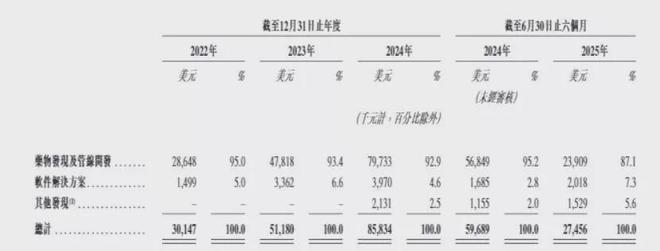
Core Viewpoint - The company Insilico Medicine has submitted its fourth listing application to the Hong Kong Stock Exchange since June 2023, focusing on AI-driven drug discovery and development. Group 1: Company Overview - Insilico Medicine, established in 2014, specializes in AI-driven drug development, featuring a generative AI platform with four modules: Biology42, Chemistry42, Medicine42, and Science42, providing end-to-end services from target identification to clinical outcome prediction [1] - The company's business model consists of three main segments: drug discovery and pipeline development, software solutions, and other discoveries related to non-pharmaceutical fields, with approximately 90% of revenue derived from drug discovery and pipeline development [1] Group 2: Financial Performance - Revenue figures for Insilico Medicine from 2022 to 2025 show a growth trajectory: $30.15 million in 2022, $51.18 million in 2023, $85.83 million in 2024, and $27.46 million in the first half of 2025, while net losses were $222.0 million, $212.0 million, $17.1 million, and $19.2 million respectively [3][4] - The company has faced significant cash outflows, primarily due to R&D activities, with operating cash outflows of approximately $47.52 million, $29.58 million, $57.40 million, and $36.84 million across the reporting periods [4] Group 3: R&D and Drug Pipeline - Insilico Medicine's most advanced candidate, Rentosertib (ISM001-055), has completed Phase IIa clinical trials in China and is expected to submit an IND application for kidney fibrosis treatment in the first half of 2026 [3] - The company has generated over 20 clinical or IND-stage assets through its Pharma.AI platform, with three assets licensed to international pharmaceutical and healthcare companies, totaling over $2 billion in contract value [3] Group 4: Challenges and Market Position - Insilico Medicine faces ongoing financial challenges, including high R&D expenditures and significant net losses, alongside a substantial debt burden with net liabilities reaching $681 million and current liabilities at $692 million as of mid-2025 [4] - The company has experienced a decline in cash reserves, with cash and cash equivalents decreasing from $208 million in 2022 to $126 million by the end of 2024, although a recent E-round financing increased cash reserves to approximately $212 million by mid-2025 [4][5]
AI商业模式要翻车?知名博主深扒OpenAI“财务黑洞”:烧钱速度是公开数据的三倍,收入被夸大且无法覆盖成本!
硬AI· 2025-11-13 07:06
Core Viewpoint - The financial health of OpenAI is under severe scrutiny due to claims of inflated revenue and significantly underestimated operational costs, raising questions about the sustainability of its business model and the entire generative AI industry [1][2][11]. Group 1: Financial Discrepancies - Ed Zitron's disclosures indicate that OpenAI's operational costs, particularly for model inference, may be three times higher than publicly reported figures, with inference costs exceeding $12.4 billion from Q1 2024 to Q3 2025 [5][6]. - In the first nine months of 2025, OpenAI's inference costs reached $8.67 billion, while previous reports suggested a much lower figure of $2.5 billion for the same period [5][6]. - The revenue generated by OpenAI is significantly lower than reported, with estimates suggesting a minimum revenue of $2.473 billion for 2024, compared to media predictions of $3.7 to $4 billion [7][10]. Group 2: Revenue Sharing and Complexity - OpenAI pays Microsoft a 20% revenue share, complicating the financial relationship and making it difficult to accurately assess OpenAI's total revenue [9][10]. - The dual revenue-sharing agreements between OpenAI and Microsoft further obscure the financial picture, as both companies share revenue from various services, leading to potential underestimations of OpenAI's income [9][10]. Group 3: Industry Implications - If Zitron's data is accurate, it raises alarms about the viability of OpenAI's business model, suggesting that it may take until 2033 for OpenAI's minimum projected revenue to cover inference costs, even before accounting for Microsoft's share [11][12]. - The findings prompt concerns about the financial stability of other generative AI companies, as they may face similar challenges in achieving profitability under current operational and pricing structures [12].

从凑单到决策,AI如何重塑“双十一”新逻辑?
Sou Hu Cai Jing· 2025-11-13 07:05
Core Insights - The application of AI tools, particularly generative AI represented by large models, is reshaping the operational logic of new e-commerce, becoming a highlight of this year's "Double Eleven" shopping festival [2][3] - AI has transitioned from being an auxiliary tool to becoming a core decision-making component for platforms, merchants, and consumers alike [3] Group 1: AI's Strategic Role in E-commerce - Major platforms have placed AI in the spotlight, marking a significant change in this year's "Double Eleven," with JD defining it as the "most technology-integrated edition" and Alibaba claiming it as the "first fully AI-implemented Double Eleven" [4] - Alibaba announced a 3-year investment of 380 billion yuan in cloud and AI infrastructure, focusing on e-commerce and cloud as core business areas [4] - JD has extended AI across its supply chain, utilizing its logistics super brain 2.0 and intelligent device clusters to enhance supply chain services [5] Group 2: AI's Impact on Business Growth - Both JD and Alibaba have made AI tools available for free to merchants, aiming to lower operational barriers and costs for small and medium-sized businesses [7] - AI has transformed the entire e-commerce process from "experience-driven" to "data-intelligent-driven," significantly reducing costs and opening new revenue channels for merchants [7] - Alibaba's AI tools have generated over 2 billion images and 5 million videos monthly, improving product click-through rates by 10% [7] Group 3: Consumer Engagement with AI - E-commerce platforms have launched AI features for consumers, with Alibaba introducing six AI shopping applications to enhance user experience [10] - JD has developed several consumer-facing AI applications, including a digital assistant capable of answering various queries and facilitating shopping [12] - Consumers are beginning to utilize AI tools for creating shopping lists and calculating discounts, although experiences vary widely [13] Group 4: Competitive Landscape and Challenges - The competition in e-commerce is shifting from broad traffic acquisition to deep user engagement and lifecycle value extraction driven by AI [14] - Platforms that effectively leverage AI will gain a competitive edge, while those lagging may struggle to adapt to the evolving landscape [15] - The accuracy of AI-generated information remains a concern, as inaccuracies in product recommendations could undermine consumer trust [16]