AI大模型

Search documents
万字长文|人形机器人应用趋势、挑战及建议
机器人圈· 2025-10-15 10:22
Group 1: Overview of Humanoid Robot Industry - The humanoid robot industry can be divided into three main components: "brain" (cognition and decision-making), "cerebellum" (motion control), and "limbs" (physical structure) [1] - The development of the "brain" focuses on enhancing cognitive abilities through advanced AI models, enabling robots to understand complex tasks and adapt to new environments [1][4] - The "cerebellum" emphasizes real-time response and motion control, allowing robots to react quickly to sensor inputs without external control [1][4] - The "limbs" aspect aims to optimize the physical structure and movement capabilities of robots, making them more adaptable in complex environments [1] Group 2: Current Development Status of Humanoid Robots - Internationally, leading tech companies are at the forefront of developing the "brain" and "cerebellum" systems, leveraging AI models and core computing power [2][5] - Companies like Tesla, NVIDIA, and Google are integrating advanced AI technologies into their humanoid robots, enhancing their cognitive and interactive capabilities [4][5][6] - In China, companies like X Square and UBTECH are making significant strides in developing unified AI models and advanced motion control systems [7][10] Group 3: Key Hardware and Execution Components - The humanoid robot hardware market is dominated by a few international companies that excel in high-end actuators and core components [12][13] - Boston Dynamics and Tesla are notable for their advanced actuator technologies, which enhance the mobility and adaptability of their humanoid robots [13][14] - Chinese companies are making progress in actuator technology but still rely heavily on foreign technologies for high-precision components [14][15] Group 4: Trends in Humanoid Robot Technology Development - The integration of embodied AI is becoming a core focus, allowing robots to learn and adapt through interaction with the physical world [26] - There is a significant push towards optimizing architecture and computing power, with a trend towards edge-cloud integration for enhanced performance [28] - Advances in core hardware are aimed at achieving higher power density, precision, and energy efficiency, which are critical for improving robot performance [29][30] Group 5: Application Status and Guidance for Humanoid Robots - AI is significantly enhancing the capabilities of humanoid robots in various applications, although the depth and breadth of application are still uneven [33][34] - In industrial settings, humanoid robots are expected to participate in complex assembly tasks, leveraging their dexterity and adaptability [38] - In domestic environments, humanoid robots are anticipated to provide various services, including household assistance and elder care, although challenges remain in terms of safety and market acceptance [39][40]






MPS人形机器人解决方案|“芯片+算法+系统”三位一体的创新驱控
机器人圈· 2025-10-15 10:22
Core Viewpoint - The humanoid robot industry is experiencing rapid development driven by technological advancements, policy support, and market demand, with MPS introducing innovative solutions to address key challenges in this field [3][5][54]. Group 1: Current Development Status of Humanoid Robots - Since the 21st century, humanoid robots have entered a phase of rapid development, with notable advancements from companies like Boston Dynamics and Tesla [2]. - The domestic market shows strong vitality, with companies like Yushu Technology and ZhiYuan launching humanoid robots with advanced capabilities [2]. - The global market for humanoid robots is expected to reach 6.339 billion by 2025 and may exceed 400 billion by 2035, with industrial applications leading the way [5]. Group 2: Technical Challenges - The humanoid robot industry faces significant technical challenges, including insufficient motion capabilities and stability, limited perception and cognitive abilities, and high manufacturing costs [6][8][11]. - Achieving embodied intelligence remains a long-term goal, with manufacturers increasingly relying on semiconductor suppliers to succeed in this competitive landscape [6][7]. Group 3: MPS Humanoid Robot Solutions - MPS has launched humanoid robot solutions that focus on high-performance motor drives, high-precision sensors, and integrated motor control systems to help manufacturers achieve embodied intelligence [13][54]. - The MP(Q)6547A and MP6543 motor driver chips are designed to enhance motion capabilities and stability, with features such as a wide voltage range and integrated fault detection mechanisms [14][16]. - MPS has introduced advanced sensors like the MA600A and MA900 to improve the precision and reliability of robotic movements, addressing the challenges of external interference and providing high accuracy [18][24]. Group 4: High-Performance Integrated Solutions - MPS offers a high-performance, highly integrated motor drive solution that combines MCU, driver, and power devices into a single module, catering to the compact design requirements of humanoid robots [32][33]. - The micro servo control algorithm embedded in MPS's driver chips enhances motion smoothness and reduces noise, crucial for achieving human-like movements [35][36]. - MPS's solutions include safety features such as overcurrent protection and fault reporting, ensuring reliable operation in humanoid robots [42][54].
辅助驾驶模型越做越大,小鹏、理想先进入70亿参数量级
3 6 Ke· 2025-10-15 10:15
Core Insights - The automotive industry's driver assistance systems are rapidly transitioning to AI, with leading new players approaching the parameter scale of many AI large models [1] - Xpeng Motors and Li Auto are both developing in-car large models with parameters reaching at least 7 billion, indicating a significant shift towards AI-driven solutions in the automotive sector [1][5] Summary by Sections Xpeng and Li Auto's AI Strategies - Xpeng's in-car large model is distilled from its cloud-based "Xpeng World Foundation Model," addressing limitations in computing power and storage for in-car deployment [2] - By the second half of 2024, Xpeng plans to transition to a cloud-based model with a foundational parameter count of 72 billion, set to be unveiled at the upcoming AI Technology Day [2] - Li Auto's current in-car model has over 4 billion parameters, with plans to exceed 7 billion next year following the deployment of its self-developed driving chip [5] Technical Developments - Xpeng's "Turing" AI driving chip, launched in June, is designed for AI needs and can handle models with up to 30 billion parameters, showcasing significant advancements in hardware [4] - Li Auto's approach involves a dual-system model combining fast and slow systems, with a focus on the VLA model, which has become the mainstream technology in embodied intelligence [6][5] Industry Trends and Comparisons - Despite the push for larger models, companies like Tesla have achieved superior driving assistance performance with fewer parameters, suggesting that model size does not directly correlate with effectiveness [7][8] - The emphasis on end-to-end technology, which mimics human driving behavior, contrasts with the logic reasoning capabilities of large models, indicating a potential misalignment in resource allocation [8] Motivations Behind AI Model Adoption - The drive for larger AI models is partly due to companies like Li Auto redefining themselves as AI enterprises, viewing vehicles as applications of artificial intelligence [9] - The marketing impact of AI models, influenced by the success of Chat-GPT, has led companies to promote their AI capabilities as a competitive advantage, although the primary goal should remain enhancing driving assistance experiences [11]


古根海姆:优步(UBER.US)有望成为自动驾驶长期赢家,外卖价值同样不容忽视
智通财经网· 2025-10-15 08:47
Core Viewpoint - Guggenheim initiates coverage on Uber (UBER.US) with a "buy" rating, projecting a potential upside of nearly 50% in the next 12 months due to Uber's leading multi-platform network and expected success in the autonomous driving sector [1][2] Group 1: Uber's Market Position and Growth Potential - Uber's exclusive multi-platform network is over three times larger than its closest competitor, positioning the company favorably for the adoption of fully autonomous driving technology [1] - By 2035, autonomous vehicles (AVs) are expected to account for 20% of the U.S. ride-hailing market, with Uber poised to benefit significantly from this demand surge [2] - Guggenheim sets a 12-month target price of $140 for Uber, indicating a potential upside of 48% from recent closing prices, supported by a 56% stock price increase since 2025 due to autonomous driving catalysts [2] Group 2: Industry Trends and Competitor Analysis - Major Wall Street firms, including Bank of America, highlight the importance of Uber and Lyft in the emerging autonomous driving market, predicting partnerships with major automotive manufacturers [3] - Morgan Stanley forecasts that the adoption rate of vehicles equipped with partial to fully automated driving will rise from 8% in 2024 to 28% by 2030, creating a market opportunity of approximately $200 billion [4] - Goldman Sachs predicts a compound annual growth rate of 90% for the U.S. Robotaxi ride-hailing market from 2025 to 2030, indicating strong growth potential for companies like Uber and Lyft [4]

小商品城(600415):Q3超预期,数贸城选位与新兴业务表现优异
NORTHEAST SECURITIES· 2025-10-15 07:20
Investment Rating - The report maintains a "Buy" rating for the company, indicating a strong expectation for stock price appreciation in the next six months [5]. Core Insights - The company reported Q3 results that exceeded expectations, with revenue of 5.348 billion yuan, a year-on-year increase of 39.02%, and a net profit of 1.766 billion yuan, up 100.52% [1][2]. - The growth in revenue and profit is attributed to successful leasing strategies and the strong performance of emerging businesses, particularly Chinagoods and cross-border payment services [1][2]. - The company has seen significant cash inflow and contract liabilities, with operating net cash inflow reaching 9.605 billion yuan in the first three quarters of 2025, a year-on-year increase of over 20 times [2]. Financial Summary - For the first three quarters of 2025, the company achieved total revenue of 13.061 billion yuan, a 23.07% increase, and a net profit of 3.457 billion yuan, up 48.45% [1]. - The projected revenue for 2025-2027 is 23.146 billion yuan, 28.965 billion yuan, and 34.766 billion yuan, respectively, with net profits of 4.792 billion yuan, 6.053 billion yuan, and 6.955 billion yuan [3][4]. - The company’s net profit margin improved to 26.47%, reflecting a 4.53 percentage point increase year-on-year [1]. Emerging Business Growth - The emerging business segment, particularly the Chinagoods platform and cross-border payment services, is expected to continue its high growth trajectory, with transaction volume exceeding 27 billion yuan, a year-on-year increase of over 35% [2]. - The integration of AI capabilities and the establishment of a closed-loop ecosystem for trade and payment services are anticipated to enhance service offerings and market competitiveness [2].

能做“马杀鸡”的机器人!越疆智能理疗机器人吸引外商现场体验
2 1 Shi Ji Jing Ji Bao Dao· 2025-10-15 03:28
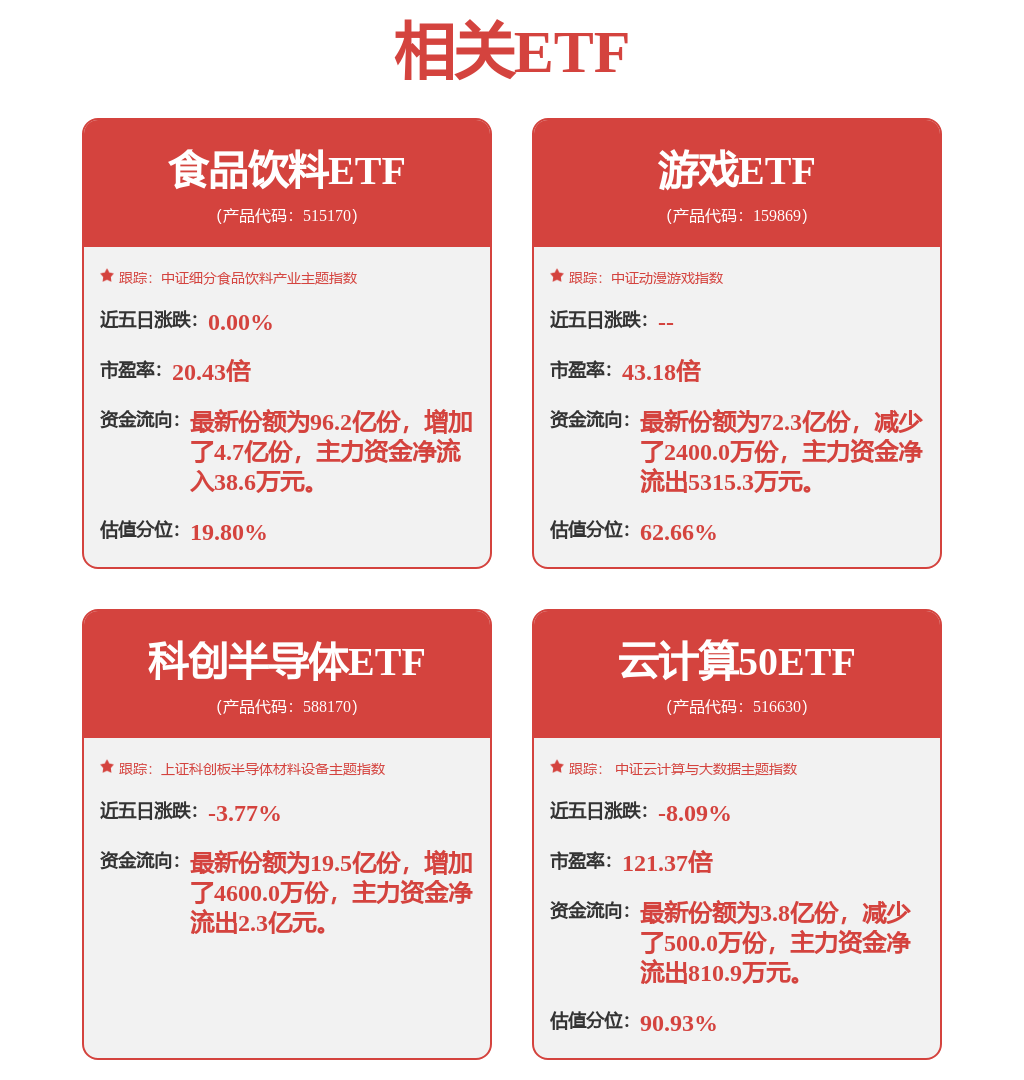
Group 1 - The 138th Canton Fair has opened its first phase, introducing a new smart healthcare section with 140 booths and 47 industry representative companies showcasing products such as medical robots, intelligent diagnostics, and smart rehabilitation care [1] - The Yujiang Intelligent Physiotherapy Robot attracted many foreign buyers, demonstrating its application in traditional Chinese medicine clinics, wellness centers, and sports rehabilitation venues, with capabilities to integrate with AI models for personalized therapy experiences [1] Group 2 - The Food and Beverage ETF (Product Code: 515170) tracks the China Securities Food and Beverage Industry Theme Index, with a recent share increase of 4.7 million to a total of 9.62 billion shares and a net inflow of 386,000 yuan [3] - The Gaming ETF (Product Code: 159869) tracks the China Securities Animation and Gaming Index, experiencing a decrease of 24 million shares to 7.23 billion shares, with a net outflow of 53.15 million yuan [3] - The Semiconductor ETF (Product Code: 588170) tracks the Shanghai Stock Exchange Science and Technology Innovation Board Semiconductor Materials and Equipment Theme Index, with a recent share increase of 4.6 million to 1.95 billion shares and a net outflow of 230 million yuan [3] - The Cloud Computing 50 ETF (Product Code: 516630) tracks the China Securities Cloud Computing and Big Data Theme Index, with a recent share decrease of 5 million to 380 million shares and a net outflow of 8.11 million yuan [4]

迈瑞医疗拟赴港上市 曾称今年三季度将迎来业绩拐点
Zheng Quan Shi Bao Wang· 2025-10-14 23:49
Core Viewpoint - Mindray Medical has announced plans to issue H-shares and list on the Hong Kong Stock Exchange to enhance its capital strength and support internationalization efforts [1] Group 1: Company Developments - The board of Mindray Medical approved the proposal for issuing H-shares and listing on the Hong Kong Stock Exchange to meet business development needs and advance its international strategy [1] - The issuance and listing are subject to approval from shareholders and relevant regulatory bodies, including the China Securities Regulatory Commission and the Hong Kong Stock Exchange [1] - Specific details regarding the issuance and listing are yet to be finalized, and there is significant uncertainty regarding the approval process [1] Group 2: Financial Performance - In the first half of 2025, Mindray Medical reported revenue of 16.743 billion yuan, a year-on-year decline of 18.45%, and a net profit of 5.069 billion yuan, down 32.96% year-on-year [2] - The company anticipates a positive year-on-year revenue growth in the third quarter, continuing a trend of quarter-on-quarter improvement [2] Group 3: Market Outlook - Mindray Medical expects the domestic market to show signs of recovery starting from the third quarter of 2023, following a period of significant decline due to healthcare reforms and industry adjustments [3] - The company believes the most challenging period for its domestic business has passed and is focusing on increasing market share, particularly in the IVD sector [4] - The company is optimistic about the growth potential of its minimally invasive surgical products and international business, projecting that the third quarter will mark a turning point in performance [4]

资管盛会,就在明天!
Sou Hu Cai Jing· 2025-10-14 12:05
二十余载风雨兼程 证券私募行业从萌芽到繁盛,格局一新 历经牛熊周期淬炼与监管规范洗礼 行业守正砺新,破局而立 一年一度的资管盛会即将到来 10月15日 深圳 2025私募基金高质量发展大会 将隆重举行! 今朝业内菁英再聚 纵论宏观格局,把脉投资机遇 分享真知灼见,凝聚共识智慧 携手擘画私募高质量发展新蓝图! 届时同步举办 "国信证券杯·第十六届私募金牛奖"颁奖典礼 盛况空前 本届大会主题为"固本 砺新 行远"。 今年以来,政策发力显效,A股市场展现出强劲韧性和活力。作为资本市场的重要组成部分,证券私募机构是资本市场发挥价值发现、资源配置和居民财 富管理等功能的重要力量,也是形成活跃资本市场合力的生力军。随着AI大模型横空出世,中国私募行业在技术创新与资本赋能领域迈入新阶段。 《私募证券投资基金运作指引》施行满一年,私募基金步入更加法治化、规范化的轨道,同时也将面临更激烈的竞争。行业整体结构持续优化,对机构专 业性及合规性提出更高要求。 未来,在全球宏观环境依然复杂、市场波动难以避免的背景下,如何平衡收益与风险,如何在策略趋同中保持独特性,如何在规模扩张中守护业绩初心, 是摆在每一家机构面前的现实课题。高质量发 ...

“十四五”答卷·创新驱动产业蝶变|人形机器人产业:迎来跨越发展 赋能千行百业
Ke Ji Ri Bao· 2025-10-14 03:08
Core Insights - The human-shaped robot industry in China is experiencing rapid development, transitioning from the "technology verification period" to the "scale commercialization period" by 2025, with the global embodied intelligence market expected to reach 19.525 billion yuan, nearly half of which will come from China [1][2] Industry Developments - The rise of human-shaped robots is attributed to breakthroughs in embodied intelligence technology, which integrates artificial intelligence into physical entities, enabling them to perceive, learn, and interact with their environment like humans [2] - The structure of embodied intelligence is categorized into "brain," "cerebellum," and "body," where the "brain" refers to AI models responsible for language interaction and task decision-making, while the "cerebellum" focuses on motion control algorithms [2] - Significant advancements in AI models have enhanced the perception, decision-making, and natural interaction capabilities of human-shaped robots, moving them from mere mechanical execution to intelligent agents [2] Technological Breakthroughs - Continuous improvements in core components such as perception algorithms, servo motors, and reducers have significantly increased the dexterity, stability, and autonomy of robots, laying a solid foundation for practical applications [3] - The development of end-to-end unified models allows for low-cost hardware to perform intricate tasks like grasping and folding clothes, showcasing the progress in the "brain" aspect of human-shaped robots [2] Real-World Applications - Human-shaped robots are now being deployed in various sectors, including factories, healthcare, and homes, demonstrating their ability to perform complex tasks autonomously, such as quality inspection and component sorting [4] - The "Galbot" robot from Galaxy General is a prime example, capable of visual perception-based object recognition and path planning, marking a shift from traditional industrial robots that rely on preset routes [4] - In the healthcare sector, exoskeleton robots are assisting stroke patients in relearning to walk, utilizing AI algorithms to provide personalized rehabilitation strategies [5] Future Outlook - The human-shaped robot market is expected to evolve from specialized to general-purpose robots, with companies focusing on developing versatile robots that can adapt to various unstructured environments [5] - As production scales and technology matures, the costs associated with human-shaped robots are anticipated to decrease, similar to the trend observed with industrial robots in the early 2000s [5] - Future general-purpose human-shaped robots are envisioned to be intelligent companions that understand human intentions and adapt proactively to their surroundings [5]
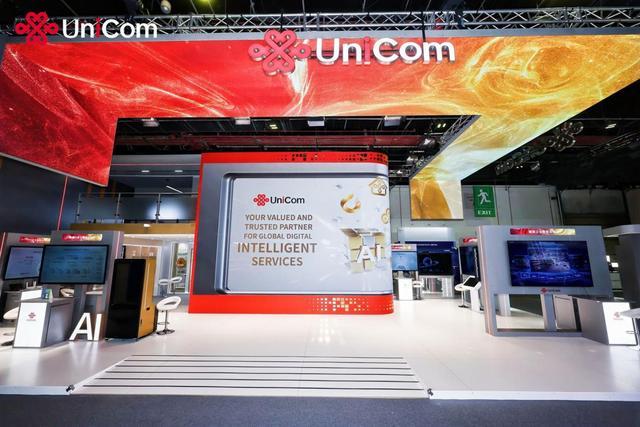
中国联通精彩亮相GITEX Global 2025
Huan Qiu Wang Zi Xun· 2025-10-14 02:21
Core Insights - China Unicom made its debut in the Middle East at the GITEX Global 2025, showcasing its upgraded international brand UniCom and emphasizing its transition from a "telecommunications service provider" to a "digital enabler" [2] Group 1: Digital Infrastructure - China Unicom highlighted its global digital information infrastructure, featuring over 60 international submarine cable systems that provide stable and efficient connectivity for global clients [3] - The company offers innovative products such as global dedicated lines, intelligent networking, and IP Transit to facilitate low-latency and high-stability digital channels for Chinese enterprises going abroad [3] Group 2: Cloud and Computing Services - In the cloud and computing services sector, China Unicom has established a "3+N+X" global resource system to enhance international computing supply capabilities [5] - The "Unicom Star Network" advanced computing scheduling platform 2.0 enables intelligent collaboration of massive computing clusters, supporting heterogeneous computing integration and standardized measurement transactions [5] - The "Smart Product Supermarket" has gathered over 150 intelligent products, providing convenient computing services and intelligent solutions to 360,000 enterprise clients [5] Group 3: IoT and AI Applications - China Unicom provides vehicle networking services for automotive companies, utilizing four global nodes for SIM card access and management, along with AI models to optimize design and usage predictions [5] - The company showcased its achievements in 5G and AI across various sectors, including smart manufacturing, logistics, and mining, demonstrating significant efficiency improvements [8] - The introduction of the U PLUS package offers a one-stop service for Chinese enterprises to expand into international markets, covering compliance, resource integration, and localization support [8] Group 4: Smart Applications and Digital Life - China Unicom launched innovative smart applications focusing on smart homes and digital lifestyles, creating a secure and intelligent home digital ecosystem [10] - The company has established a comprehensive global network for international roaming services, providing 5G and HD voice services in major countries and regions [10] Group 5: Cultural Innovation - A dedicated cultural innovation display area was set up to showcase unique cultural products, reflecting China Unicom's efforts to convey brand value and promote Chinese culture [11] - The "Smart Clothing" interactive experience area utilized the Yuanjing model to present traditional culture in a modern context, highlighting the integration of AI technology and cultural confidence [12]