智能驾驶

Search documents
【策略报告】智能汽车2026年策略报告:L4 RoboX爆发元年!
东吴汽车黄细里团队· 2025-12-13 15:42
Group 1 - The article discusses the evolution of the intelligent driving industry over the past decade, identifying it as a 0-1 introduction phase characterized by iterative development of hardware and software, with each major upgrade representing a paradigm shift [4][11][17] - The industry is segmented into three phases: 2015-2017 as the initial investment phase with high valuations for any involvement in intelligent driving; 2018-2019 as a downturn period with limited domestic alternatives; and 2020-2022 as a phase where companies like Tesla thrived due to hardware advancements [4][11][28] - The current phase from 2023-2025 is described as a "dark before dawn" period, lacking major trends but presenting annual opportunities, with a shift from an electric vehicle pricing model to an AI-driven pricing model [5][11][12] Group 2 - The outlook for the next five years (2026-2030) emphasizes 2026 as a pivotal year for intelligent driving, marking the transition to a B-end commercial model for autonomous vehicles, while consumer adoption is expected to ramp up by 2028 [6][46] - Key drivers for investment opportunities in L4 RoboX include advancements in technology, cost reductions in vehicle BOM and intelligent driving kits, and regulatory support for L4 licenses in major cities [6][8][46] - The article outlines a new valuation framework for intelligent driving, focusing on the revenue-generating capacity of intelligent vehicles based on their ownership and capability levels [6][8][46] Group 3 - The article highlights the differences in the 2026 market compared to previous years, noting a stronger emphasis on AI logic over automotive logic, and a shift in focus from hardware opportunities to software breakthroughs [7][14] - Important catalysts for 2026 include model iterations from major players like Tesla and Xiaopeng, the rollout of RoboX services, and the introduction of new national standards for L3-L4 vehicles [8][14] - Investment strategies should prioritize B-end software companies over C-end hardware firms, with specific recommendations for stocks in both H-shares and A-shares markets [8][14]


智能汽车2026年策略报告:L4RoboX爆发元年-20251213
Soochow Securities· 2025-12-13 07:52
Group 1 - The report identifies 2026 as a pivotal year for intelligent driving, marking the transition to a commercial model for B-end autonomous vehicles, with a potential explosion in C-end adoption expected by 2028 [3][45] - Three core drivers for L4 RoboX investment opportunities are highlighted: technological advancements, cost reductions, and operational improvements, particularly in first-tier cities [3][6] - The report proposes a new valuation framework for L4 RoboX, emphasizing the revenue-generating capacity of intelligent vehicles based on their ownership and capability levels [3][6] Group 2 - The past decade of intelligent driving is characterized as a 0-1 introduction phase, with significant hardware and software iterations leading to major capability upgrades [4][11] - The report outlines three distinct phases of intelligent driving development from 2015 to 2025, detailing the evolution from initial high valuations to a focus on performance and software opportunities [4][21] - The transition from hardware-centric to software-centric investment strategies is emphasized, with a shift towards AI-driven pricing models for intelligent vehicles [4][32] Group 3 - Key catalysts for 2026 include significant model iterations from major players like Tesla and Xiaopeng, as well as the acceleration of RoboX deployments by various companies [7][45] - The report suggests a focus on B-end software companies over C-end hardware companies for investment, highlighting specific stocks in both H-shares and A-shares markets [7][45] - The RoboX commercial model is expected to rely on a combination of technological breakthroughs, cost management, and effective operational strategies, including regulatory support [65][66] Group 4 - The report outlines the expected market dynamics for intelligent driving from 2026 to 2030, predicting a shift towards a new pricing system that values results over processes [47][48] - The intelligent vehicle market is anticipated to undergo significant transformations, with RoboX expected to redefine the automotive landscape and create new revenue streams [47][61] - The report emphasizes the importance of hardware sales as a precursor to software monetization in the intelligent vehicle sector, advocating for a focus on user value creation [51][53]
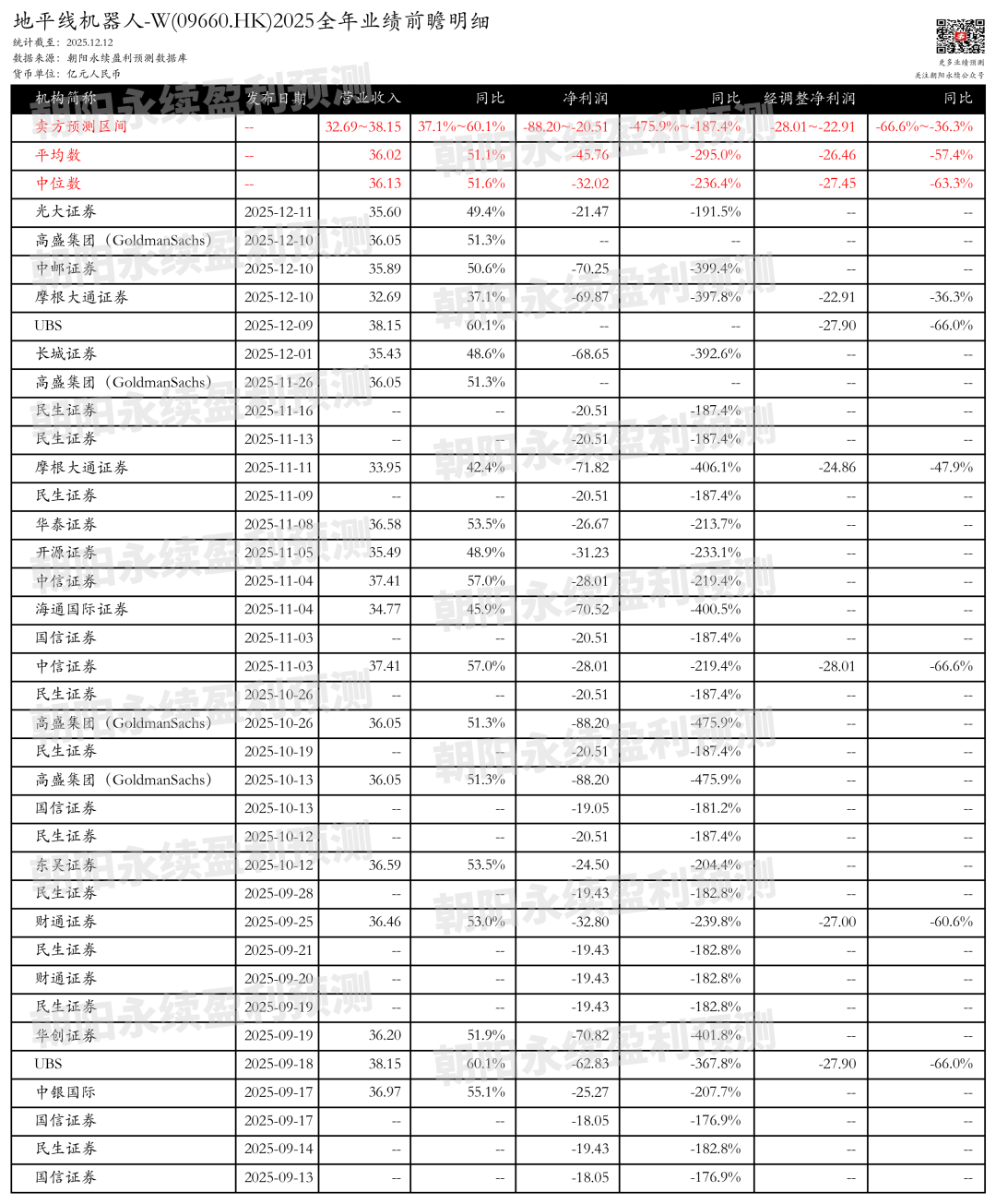
地平线机器人-W:智能计算升级,预测公司全年一致预期营收32.69~38.15亿元,同比37.1%~60.1%
Xin Lang Cai Jing· 2025-12-12 14:19
Core Viewpoint - Horizon Robotics-W is expected to report a significant increase in revenue for the year, but a substantial net loss, indicating potential challenges in profitability despite revenue growth [1][6]. Financial Performance Forecast - The projected revenue for Horizon Robotics-W is between 3.269 billion to 3.815 billion yuan, representing a year-on-year growth of 37.1% to 60.1% [1][6]. - The expected net profit is forecasted to be between -8.820 billion to -2.051 billion yuan, with a year-on-year change of -475.9% to -187.4% [1][6]. - The adjusted net profit is anticipated to range from -2.801 billion to -2.291 billion yuan, reflecting a year-on-year change of -66.6% to -36.3% [1][6]. Business Segment Insights - The Journey series intelligent computing solutions have surpassed 10 million units shipped, collaborating with over 40 automotive companies and covering more than 400 vehicle models, serving over 6 million car owners [4][8]. - The HSD technology, which employs an end-to-end architecture and reinforcement learning capabilities, has gained market recognition and has partnerships with 10 automotive brands, covering over 20 vehicle models [4][8]. - The new flagship solution, Journey 6P, supports HSD large-scale deployment with a computing power of 560 TOPS [5][9]. Strategic Partnerships - Horizon Robotics-W is collaborating with ZF Group to develop an L3-level intelligent driving system for the Chinese market, expected to achieve mass production by 2026 [5][9]. - This partnership enhances Horizon's algorithm adaptation and execution capabilities in system-level applications, with the Journey 6P chip meeting international Tier-1 integration standards [5][9]. - Horizon is projected to leverage ZF's global network to expand its overseas customer base, with expectations of overseas revenue accounting for approximately 10% by 2027 [5][9].

黑芝麻智能与元戎启行达成深度合作
Mei Ri Jing Ji Xin Wen· 2025-12-12 08:36
Core Viewpoint - Black Sesame Intelligence (02533.HK) has announced a deep cooperation with Yuanrong Qixing, establishing a close partnership through both capital and business ties [1] Group 1: Partnership Details - Black Sesame Intelligence will provide chip products and a complete application development toolchain [1] - Yuanrong Qixing will leverage its expertise in algorithms to jointly create a "chip + algorithm" integrated solution with Black Sesame Intelligence [1] Group 2: Strategic Focus - The partnership aims to collaborate with OEMs and upstream and downstream resources in the industry chain [1] - The primary focus will be on advancing L2+/L3 level assisted driving solutions for mass production applications in automotive companies [1] - The collaboration will also explore the implementation of these solutions in scenarios such as Robotaxi [1]

香港汽车ETF(520720)涨超1.6%,机构指智驾技术突破提振板块预期
Mei Ri Jing Ji Xin Wen· 2025-12-12 07:53
Group 1 - The core viewpoint of the article highlights the launch of the Xingtu ET5 model, which features the Horizon HSD and J6P, marking a significant milestone in China's smart driving experience [1] - The ET5 model's urban auxiliary driving system demonstrates a top-tier intelligent driving foundation that can be deployed at scale, enhancing the overall safety and efficiency of driving [1] - The model achieves a reaction time that is 42% faster than the average human response, utilizing a "human-like thinking" defensive driving strategy to proactively avoid risks [1] Group 2 - Companies such as WeRide and Pony.ai, representing the autonomous driving sector, have shown positive progress in the Hong Kong stock market, reflecting advancements in the automotive industry's transition towards intelligence and electrification [1] - The Hong Kong Automotive ETF (520720) tracks the Hong Kong Stock Connect Automotive Index (931239), which selects listed companies involved in vehicle manufacturing and components, focusing on smart driving and new energy vehicles [1] - This index highlights the high growth potential of the automotive industry in Hong Kong, showcasing the aggressive characteristics of the new energy vehicle supply chain [1]
地平线要把智驾做到售价 7 万元的车上|最前线
3 6 Ke· 2025-12-12 04:38
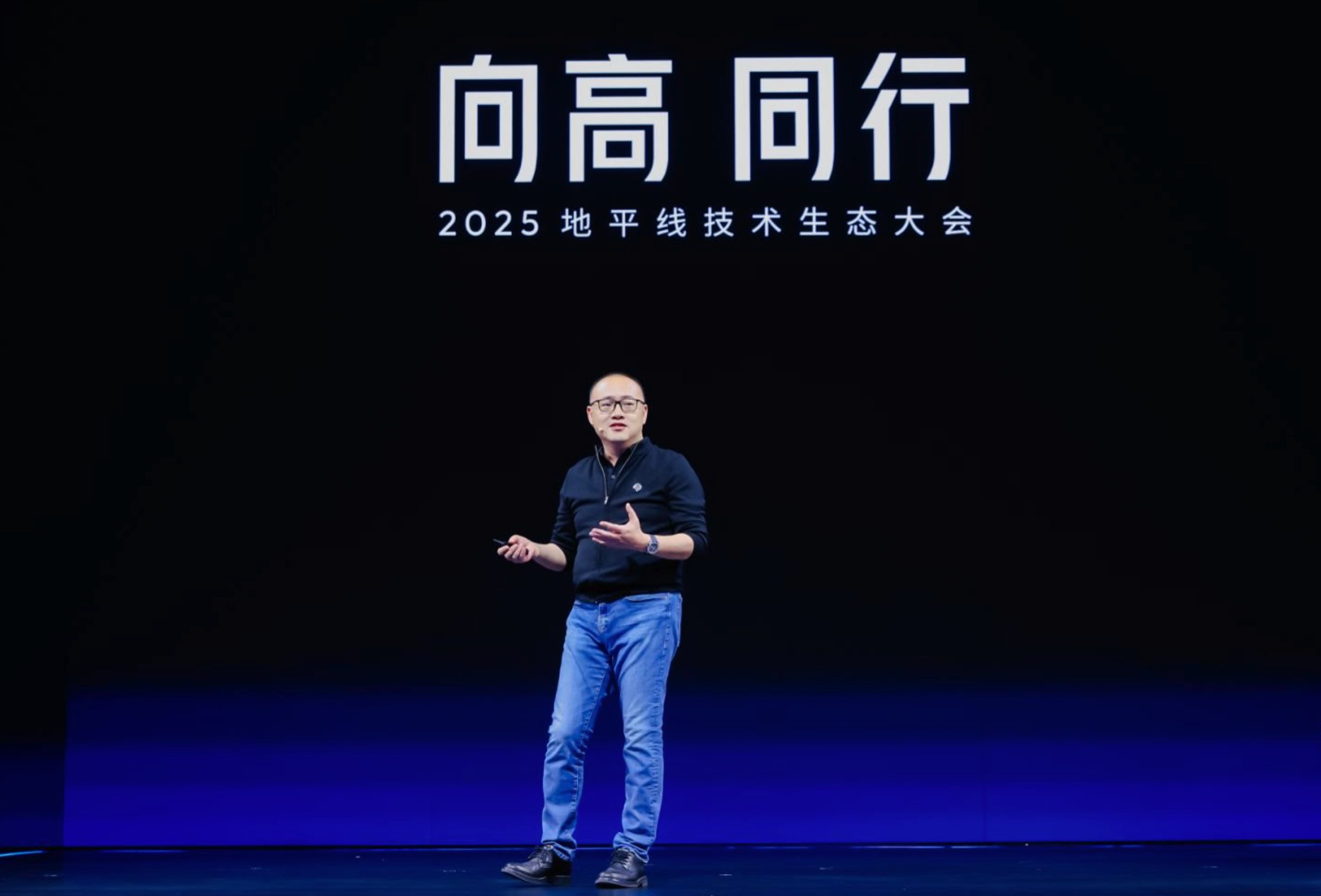
Core Insights - Horizon is attempting to create a "new ecosystem" to expand its business and attract more participants [3] - The CEO of Horizon, Yu Kai, stated that smart driving has not yet truly entered the mass market, with vehicles priced above 200,000 yuan accounting for 30% of the market share, while those below 130,000 yuan make up 50%, but the latter generally lack urban auxiliary driving capabilities [3] - Horizon's smart driving solution, HSD, has been integrated into vehicles priced at 130,000 yuan this year, with plans to extend urban auxiliary driving solutions to vehicles priced as low as 70,000 yuan next year [3] Business Model Evolution - Horizon has introduced a new business model called "HSD Together," transitioning from selling chips and solutions to selling algorithms and capabilities [4] - The previous mainstream business model included selling chips, toolchains, basic software, hardware reference designs, chip IP licensing, and algorithm IP licensing [4] - Horizon has partnered with companies like Denso and the joint venture CARIZON to implement the HSD Together model, while HCT has restructured to focus on Tier 2 solutions based on the 6M platform [4] Industry Dynamics - Horizon views smart driving as the "automatic transmission" of the new era, where functionality will converge, and differentiation will stem from branding rather than significant differences in underlying capabilities [5] - To support the evolution of smart driving capabilities, Horizon announced the development of the fourth-generation BPU architecture, Riemann, which increases the number of high-precision operators by over ten times and enhances efficiency [6] - The Riemann architecture will be integrated into the entire Journey 7 family and is set to launch alongside Tesla's next-generation AI5 chip [6] Ecosystem Challenges - Horizon aims to reshape the collaboration paradigm within the smart driving supply chain by adopting a more open and cooperative approach, inviting more Tier 1 and Tier 2 participants [6] - However, this new ecosystem introduces complexities, as the boundaries between Horizon and its partners are becoming blurred, creating both a community of interests and competitive dynamics [6] - The ability to maintain a healthy ecological tension between "co-building" and "competition" will determine the longevity of this model and Horizon's success in making smart driving mainstream [6]
“智驾神器”还是“凶器”?法规是不可逾越的红线!
Zhong Guo Qi Che Bao Wang· 2025-12-12 04:32
Core Viewpoint - The rise of "smart driving" technology is being undermined by the emergence of devices that deceive vehicle assistance systems, posing significant risks to road safety and legal compliance [3][4][5] Group 1: Industry Impact - The so-called "smart driving device" can trick the vehicle's assistance system into believing the driver's hands are on the wheel, allowing for hands-free driving without alerts [4] - Testing has shown that vehicles equipped with these devices can ignore traffic signals and fail to respond to obstacles, leading to severe accidents [4][5] - The use of these devices has been linked to a 70% increase in accident fatality rates when the assistance system is compromised [5] Group 2: Legal and Regulatory Aspects - The production, sale, and use of these devices are illegal under various laws, including the Criminal Law and the Road Traffic Safety Law [6] - Manufacturers and sellers of these devices face severe penalties, including imprisonment and fines, especially if their products lead to serious accidents [6] - Regulatory bodies are urged to enhance legislation and monitoring to prevent the sale and use of such dangerous products [7] Group 3: Technological Responses - Automotive companies are accelerating technological advancements to counter the challenges posed by these deceptive devices [8] - Some companies are implementing systems to monitor driver engagement with the steering wheel and using infrared cameras to assess driver attention [8] - There is a push for stricter technical standards to ensure the integrity and anti-tampering capabilities of smart driving systems [7]

L2+L4全线增长 佑驾创新力破“退通”传闻
Zhi Tong Cai Jing· 2025-12-12 04:23
Core Insights - The company, Youjia Innovation, showcased its latest achievements in L2 and L4 autonomous driving technologies at the 2025 Horizon Eco Conference, emphasizing its strong business momentum and addressing rumors about its withdrawal from the Hong Kong Stock Connect [1] - Youjia Innovation's average market value and liquidity metrics meet the Hong Kong Stock Connect review standards, countering claims of its exit from the program [1] - The company is experiencing a positive development phase, benefiting from the integration of "smart mobility" and "smart logistics" [1] Business Performance - Youjia Innovation has achieved a compound annual growth rate of over 50% in revenue, indicating its strong customer expansion and value realization capabilities in the pre-installation market [2] - As of June 30, 2025, the company has engaged in mass production for 42 automotive manufacturers, including major domestic brands like SAIC, Changan, and Chery [2] - The company has secured significant orders in the L2 and intelligent cockpit sectors, with a total order value of 320 million RMB for its intelligent cockpit solutions [2] L4 Business Development - The L4 business is entering a commercialization phase, contributing over 10 million RMB in stable revenue from operations in various cities and winning key projects worth over 10 million RMB [3] - The launch of the "Zhu" unmanned vehicle aims to explore new revenue streams in the unmanned logistics sector, with over 1,000 bulk orders already received [3] Market Position and Future Outlook - Youjia Innovation is one of the few companies in the Hong Kong market that has successfully commercialized both L2 and L4 autonomous driving technologies [4] - The company has maintained a healthy financial trend, with recent financing activities aimed at research and business expansion [4] - The competitive landscape in the smart driving industry is shifting from narrative-driven to performance-driven evaluations, highlighting Youjia Innovation's sustainable growth potential [4]
L2+L4全线增长 佑驾创新(02431)力破“退通”传闻
智通财经网· 2025-12-12 04:06
Core Insights - The article highlights the significant advancements and commercialization progress of Youjia Innovation (佑驾创新), showcasing its strong business momentum and addressing recent rumors about its withdrawal from the Hong Kong Stock Connect [1][4]. Group 1: Business Performance - Youjia Innovation has achieved a compound annual growth rate (CAGR) of over 50% in revenue, indicating its strong customer expansion and value realization capabilities in the pre-installation market [2]. - As of June 30, 2025, the company has completed mass production for 42 automotive manufacturers, including major domestic brands such as SAIC, Changan, and Chery [2]. - The company has secured a total order value of 320 million RMB for its intelligent cockpit solutions, reflecting its competitive edge in the high-end market [2]. Group 2: Technological Advancements - Youjia Innovation is the only partner at the 2025 Horizon Ecological Conference to showcase both L2 and L4 technology advancements, emphasizing its comprehensive product offerings [1]. - The company’s iPilot 4 Plus domain controller has been selected by leading domestic brands for dual model applications, reinforcing its position in the Advanced Driver Assistance Systems (ADAS) market [2]. - The launch of the Xiaozhu unmanned vehicle marks the company's entry into the unmanned logistics sector, with over 1,000 units ordered, demonstrating rapid business scaling [3]. Group 3: Market Position and Future Outlook - Youjia Innovation is positioned as a rare entity in the Hong Kong market, successfully commercializing both L2 and L4 autonomous driving technologies [4]. - The company’s recent financing activities are aimed at research and business expansion, indicating a commitment to long-term growth [4]. - The competitive landscape in the intelligent driving industry has shifted from storytelling to performance metrics, with Youjia Innovation showcasing sustainable growth potential through its expanding production base and rapid commercialization of L4 technology [4].
何小鹏打赌:明年VLA追不上FSD,负责人就裸奔;DeepSeek使用走私Blackwell?英伟达回应;魏牌CEO被曝「休假」
雷峰网· 2025-12-12 02:49
Key Points - Xiaopeng Motors' founder He Xiaopeng made a bet with his team regarding the performance of their VLA2.0 compared to Tesla's FSD by 2026, indicating confidence in the advancement of autonomous driving technology [4][5] - Nvidia responded to allegations that Chinese startup DeepSeek used smuggled Blackwell chips for AI model training, stating they have seen no evidence of such activities [7] - ZTE Corporation announced its commitment to anti-corruption and is currently in communication with the U.S. Department of Justice regarding compliance investigations related to overseas bribery [9][10] - Zhu Xiaohu commented on Tencent's cautious investment strategy over the past 20 years, emphasizing that the company waits for market clarity before making significant moves [11] - The Chinese government is expected to continue its "national subsidy" policy for consumer goods in 2024, with a focus on optimizing implementation by 2026 [19][20] - MiniMax and Zhizhu, two domestic AI unicorns, are reportedly planning to conduct IPOs in Hong Kong soon, aiming to become the first publicly listed company in the large model sector [21] - JD Industrial, a subsidiary of JD Group, officially listed on the Hong Kong Stock Exchange, raising approximately HKD 2.827 billion [22][23] - Meitu's CEO announced an internal venture initiative, allowing employees to apply for funding to develop AI projects, aiming to enhance organizational efficiency [24] - Lantu Motors' chairman emphasized the need for a breakthrough in the luxury car market, which has been dominated by foreign brands [25] - Xiaomi launched its first self-produced central air conditioning unit at its Wuhan smart home appliance factory, showcasing advancements in its manufacturing capabilities [26][27]