价值投资

Search documents
你是在投机,还是投资?
雪球· 2025-10-13 07:55
↑点击上面图片 加雪球核心交流群 ↑ 以下文章来源于ETF大白 ,作者ETF大白 ETF大白 . 三句话: 1.宁愿不说,只说真话。 2.ETF将是大多数散户的终极归宿。 3.投ETF,做自己的基金经理。 风险提示:本文所提到的观点仅代表个人的意见,所涉及标的不作推荐,据此买卖,风险自负。 作者: ETF大白 来源:雪球 大家好 , 我是(●—●) 。 01 你的投资信条是什么 ? 市场大跌 , 引发了本白一个有趣的思考 。 第一时间出了一道小题 , 考考家人们 。 如图 , 二选一 , 看看哪个更符合你的投资理念 : A : 梦想还是要有的 , 万一实现了呢 。 B : 我知道你会来 , 所以我会等 。 | FSID | 合类 详情 | | | --- | --- | --- | | 1 躺红利掩转债 | | 分红在手,心中元忧 | | 2 佛说ETF被影守息 | | 我等了三年,就是要等一个机会,我要争一口气、不是证明我有多了不起,而是要告诉别人、我失去的东面一定要拿回来! | | 3 红利三十年的图层 | | 用梦想(A) 去发现,用等待(B)去拥有。 | | 4 老男夜bro | B | 普通人还是选 ...


四年翻四倍,巴菲特押注日本股票超300亿美元
Hu Xiu· 2025-10-13 00:04
Core Insights - Warren Buffett is making significant investments in the Japanese market, particularly in five major trading companies, with the total value of Berkshire Hathaway's holdings surpassing $30 billion recently [2][3]. Group 1: Investment Growth - Berkshire Hathaway's holdings in the five Japanese trading companies have increased from approximately $6.3 billion at the time of initial disclosure in August 2020 to about $31 billion, representing a 392% increase [2][7][8]. - The stock prices of these companies have seen substantial growth, ranging from 227% to 551% during this period [9]. Group 2: Shareholding Changes - Berkshire Hathaway has increased its stake in Mitsui & Co. to 10.1%, with a market value of around $7.1 billion as of October 10 [4]. - Similarly, the stake in Mitsubishi Corporation has risen to 10.2% from 9.7% earlier this year [5]. - For Itochu, Marubeni, and Sumitomo, while there are no recent disclosures, it is widely expected that Berkshire's holdings may also be close to or exceed 10% [6]. Group 3: Investment Rationale - Buffett's initial attraction to these Japanese trading companies was due to their perceived undervaluation, especially considering the prevailing interest rates at the time [10]. - Initially, Buffett committed not to exceed a 10% stake without permission, but this limit was later adjusted to allow for increased holdings as the investment value became apparent [11][12].
两大指数走势极端分化,投资者如何应对?
Zheng Quan Shi Bao· 2025-10-12 22:54
Core Insights - The A-share market has shown extreme divergence in performance this year, with the Sci-Tech 100 Index rising over 60% while the Dividend Index has fallen nearly 8%, resulting in a nearly 70% difference between the two indices [1][2] - Approximately 500 stocks have doubled in value this year, accounting for nearly 10% of the market, indicating significant opportunities for investors [2] Market Performance - The Sci-Tech 100 Index and Sci-Tech 50 Index have increased by 61% and 56% respectively, while the Dividend Index has decreased by 7.19% [2] - The price-to-earnings ratios for the Sci-Tech 100 and Sci-Tech 50 indices are 300x and 200x, respectively, compared to just 7.5x for the Dividend Index [2] Investor Behavior - Many investors experience feelings of regret and jealousy when they miss out on high-performing stocks, which can lead to irrational investment decisions [2][3] - The mindset that others' gains equate to personal losses can be detrimental, causing investors to chase returns blindly [2][3] Investment Principles - Successful investing is not about achieving the highest returns but about reaching financial goals with the least risk [3][4] - Legendary investors emphasize the importance of adhering to fundamental investment principles, such as valuing stocks based on the underlying business rather than market price fluctuations [5][6][7] - Maintaining a critical mindset and emotional discipline is crucial for long-term investment success, regardless of market conditions [7]
巴菲特:黄金是糟糕的投资,可金价还在涨,黄金还值得买吗?
Sou Hu Cai Jing· 2025-10-12 22:12
Core Insights - The price of gold surpassed $4000 per ounce in October 2025, marking a historical high with an annual increase of over 50% [1] - Warren Buffett's long-standing criticism of gold as a poor investment contrasts with the recent surge in gold prices, raising questions about the validity of his views [1][3] Group 1: Investment Perspectives - Buffett categorizes assets into three types: monetary assets, non-productive assets like gold, and productive assets such as equities [3] - He argues that gold does not generate cash flow or dividends, making it less attractive compared to stocks like Coca-Cola [3] - Despite Buffett's skepticism, gold has maintained its allure for over 5000 years due to its physical stability and extreme scarcity [3] Group 2: Market Dynamics - Gold price fluctuations are influenced by market sentiment, dollar cycles, and monetary expansion [4] - The global debt has exceeded $307 trillion, and central banks purchased 1136 tons of gold in 2023, indicating a strategic shift towards gold [4] - Gold serves as a "ballast" in investment portfolios, with recommendations suggesting a 5-10% allocation [4] Group 3: Investment Risks and Opportunities - Ordinary investors are advised to be cautious with gold investments, with the World Gold Council recommending a maximum allocation of 5% [7] - The market shows significant divergence in gold price forecasts, with predictions ranging from $3525 to $4900 per ounce [7] - Gold's value is context-dependent, being seen as a safe haven during crises while also criticized for its lack of yield [8]

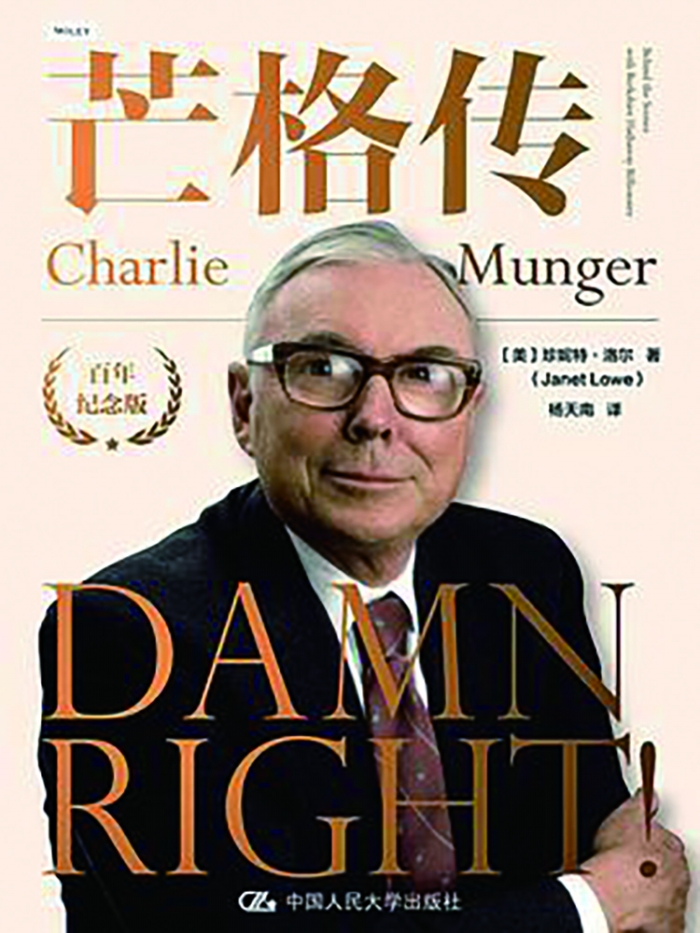
跨界思维如何创造投资奇迹——读《芒格传》
Shang Hai Zheng Quan Bao· 2025-10-12 17:14
Core Insights - The article explores the journey of Charlie Munger from a lawyer to a successful investor, highlighting the unconventional thinking that led to significant investment success [4][5][6][7][8][11]. Group 1: Munger's Early Life and Career - Munger faced numerous challenges in his early life, including wartime experiences and personal tragedies, which shaped his analytical mindset and emotional resilience [5][6]. - His transition to investment began after establishing a stable family life, leading him to explore opportunities beyond his legal career [5][6]. Group 2: Investment Philosophy Evolution - Munger's first investment experience was with a small transformer company, which taught him the importance of quality over price in investment decisions [6][8]. - The pivotal moment in Munger's investment philosophy came with the acquisition of See's Candies in 1972, which shifted his focus from seeking cheap stocks to investing in high-quality companies with strong competitive advantages [8][9][10]. Group 3: Key Investment Principles - Munger emphasizes "reverse thinking," where he anticipates potential failures before making investment decisions, allowing him to avoid significant losses [11][12]. - He advocates for concentrated investing, arguing that deep understanding of a few companies is safer than spreading investments too thin [12]. - Munger's investment strategy includes a focus on opportunity cost, prioritizing investments in truly exceptional companies and exercising patience [12][13]. Group 4: Long-term Success Metrics - Munger's investment approach has contributed to Berkshire Hathaway achieving a remarkable 19.2% annual compound growth rate over 51 years, demonstrating the effectiveness of his principles [11][13]. - The combination of correct investment philosophy, strict execution discipline, and continuous learning has been crucial to Munger's sustained success [13].
四年翻四倍,巴菲特押注日本股票超300亿美元!
美股IPO· 2025-10-12 16:38
Core Insights - Berkshire Hathaway's investment in Japan's five major trading companies has surged from approximately $6.3 billion to over $30 billion, quadrupling in value and surpassing the 10% ownership limit [1][4][6] - Warren Buffett has expressed a commitment to hold these Japanese stocks for the long term, potentially for "50 years or forever" [1][11] Investment Growth - The value of Berkshire's holdings in the five Japanese trading companies has increased by 392% from $6.3 billion on August 30, 2020, to $31 billion [4][8] - The stock prices of these companies have risen between 227% and 551% during this period, contributing to the overall investment success [4][9] Shareholding Details - Berkshire's stake in Mitsui & Co. has reached 10.1%, valued at approximately $7.1 billion, with an increase in shareholding from 9.7% earlier this year [5][11] - Similar increases have been reported for Mitsubishi Corporation, with its stake rising from 9.7% to 10.2% [5] - For the other three companies—Itochu, Marubeni, and Sumitomo—market expectations suggest that Berkshire's holdings may also be close to or exceed 10% [5] Investment Rationale - Buffett was attracted to these stocks due to their perceived low prices relative to interest rates at the time of investment [10] - Initially, Buffett committed not to exceed a 10% stake without permission, but this limit was later adjusted to allow for increased holdings as the investment value became apparent [11]

沪指十年新高,易方达等老牌权益大厂再现基金持久投资力
点拾投资· 2025-10-12 10:59
Market Overview - The market has shown a strong upward trend since the "9·24" rally last year, with the CSI 300 index surpassing 4600 points and the Shanghai Composite Index reaching a nearly ten-year high of 3732 points on August 18 [1] - The ChiNext index has experienced a robust surge, with an annual increase of nearly 50% in the second half of this year [1] Fund Performance - Active equity funds have demonstrated significant excess return capabilities, with nearly 3000 out of approximately 4300 funds achieving over 20% returns year-to-date as of September 26 [2] - Among these, over 700 funds have returned more than 50%, and 125 funds have exceeded 80% returns, with E Fund leading in the number of high-performing funds [2] Long-term Fund Performance - Over a one-year period, nearly 250 funds have doubled their performance, with notable contributions from firms like E Fund, which has over 10 doubling funds [4] - E Fund's products have primarily invested in high-performing sectors such as technology and healthcare, showcasing strong stock-picking abilities [4] Sustained Returns - From a medium to long-term perspective, over 850 active equity funds have annualized returns exceeding 10% over three years, with 158 funds achieving over 20% [5] - E Fund leads with 14 funds in the 20%+ category, indicating a strong performance relative to competitors [5] Investment Philosophy - E Fund's investment philosophy emphasizes deep research and value discovery, which has been a cornerstone of its strategy since its inception in 2001 [7] - The firm employs a "big platform + small team" management model, allowing for resource sharing while maintaining independent investment strategies [8] Research and Development - E Fund has developed a comprehensive research team covering various sectors, ensuring broad market coverage and a global perspective [9] - The firm emphasizes the importance of in-depth research and real-time tracking to ensure timely investment decisions [9] Technology Integration - E Fund is advancing its digital transformation, integrating workflows and data management to enhance process management and efficiency [10][11] Team Culture - The company promotes a collaborative team culture, encouraging knowledge sharing and interaction among research teams to enhance investment outcomes [12] - E Fund has established a robust talent development system, ensuring a continuous influx of skilled professionals into its investment teams [12] Notable Fund Managers - Several fund managers at E Fund have achieved remarkable performance, with some funds nearing a 100% return year-to-date [17][18] - The firm has produced multiple "double ten" fund managers, indicating a strong track record of long-term performance [20] Conclusion - E Fund's commitment to deep research, long-term investment strategies, and a systematic approach to talent development has positioned it as a leader in the asset management industry, capable of delivering sustainable returns [24][25]

两大指数走势极端分化,投资者如何应对?
证券时报· 2025-10-12 08:43
Core Viewpoint - The A-share market has shown extreme divergence this year, with the Sci-Tech 100 Index rising over 60% while the Dividend Index has fallen nearly 8%, indicating a significant disparity in performance among different sectors [1][3]. Group 1: Market Performance - The Shanghai Composite Index briefly surpassed 3900 points, reaching a 10-year closing high [1]. - The Sci-Tech 100 Index and Sci-Tech 50 Index have increased by 61% and 56% respectively, while the Dividend Index has decreased by 7.19% [3]. - Approximately 500 stocks have doubled in value this year, accounting for nearly 10% of the market [3]. Group 2: Investor Psychology - Many investors may feel distressed by underperforming in the market, leading to a detrimental mindset that equates others' gains with personal losses [3]. - This mindset can result in irrational behavior, prompting investors to buy stocks they should not hold, driven by the fear of missing out on potential gains [3][4]. - Legendary fund manager Peter Lynch noted that many investors suffer from the pain of missing out on top-performing stocks, which can lead to poor investment decisions [3]. Group 3: Investment Principles - Successful investing is not about achieving the highest returns but about reaching financial goals with the lowest possible risk [4]. - The principles of investing emphasize that stocks represent ownership in real businesses, and their value is not solely dependent on stock prices [9]. - Investors should focus on the future value of investments relative to their current prices, as higher prices generally lead to lower returns [10].

四年翻四倍,巴菲特押注日本股票超300亿美元!
Hua Er Jie Jian Wen· 2025-10-12 07:46
Core Insights - Warren Buffett is making significant investments in the Japanese market, with Berkshire Hathaway's holdings in five major trading companies exceeding $30 billion recently, marking a 392% increase from $6.3 billion disclosed on his 90th birthday in August 2020 [1][3] Group 1: Investment Growth - Berkshire Hathaway's investment in Japanese trading companies has grown from $6.3 billion to $31 billion, representing a 392% increase [3] - The stock prices of these five companies have surged between 227% and 551% during this period [1][3] Group 2: Shareholding Increase - Berkshire Hathaway has increased its stake in Mitsui & Co. to 10.1%, with a current value of approximately $7.1 billion [2] - The shareholding in Mitsubishi Corporation has also risen from 9.7% to 10.2% [2] - There is speculation that Berkshire's stakes in Itochu, Marubeni, and Sumitomo may also be approaching or exceeding 10% [2] Group 3: Investment Rationale - Buffett was attracted to these Japanese stocks due to their perceived low prices relative to interest rates at the time [4] - Initially, Buffett committed not to exceed a 10% stake without permission, but this limit was later adjusted to allow for increased holdings [4] - Buffett has indicated a long-term commitment to these investments, suggesting that Berkshire plans to hold these shares for "50 years or forever" [4]
3900点成为A股分水岭!三大利空压顶,203只股票被踢出融资标
Sou Hu Cai Jing· 2025-10-11 16:17
Core Viewpoint - The adjustment of margin financing rates to zero for SMIC and BAWI Storage has significant implications for investors, cutting off leverage and potentially leading to increased volatility in stock prices [1][3][5]. Group 1: Impact on Stocks - SMIC's static P/E ratio reached 303, while BAWI Storage's was 301, triggering the margin financing rate adjustment as per the rules set by the exchanges [3]. - Following the announcement, SMIC's stock experienced a volatility of over 11%, with a trading volume exceeding 24.2 billion yuan [3]. - A total of 203 stocks were affected by this adjustment, predominantly in the technology sector due to high valuations [3]. Group 2: Market Reactions - The adjustment directly severed the "leverage supply" for high-valuation stocks, which previously had margin rates between 30% to 100% [5]. - The financing balance for SMIC surged from 7.5 billion yuan to 15 billion yuan within two months, indicating a significant influx of leveraged funds that may now face withdrawal [5]. - The semiconductor sector faced a broader sell-off, with leading companies like CATL experiencing significant declines [7]. Group 3: Broader Economic Context - The Ministry of Commerce announced export controls on various materials, including rare earths and lithium batteries, effective November 8, indicating a strategic shift from raw material exports to finished product exports [5]. - The retail sector showed signs of growth, with a reported 7.9% year-on-year increase in social retail sales, although consumer spending patterns are shifting towards more experiential purchases [7]. - The overall market sentiment was affected by external factors, including foreign capital withdrawal and tightening global liquidity, leading to a significant drop in major indices [9].