
创新药研发

Search documents
“十四五”创新药“成绩单”:210个获批,多项指标均位居世界前列
Yang Shi Wang· 2025-09-17 03:15
Group 1 - The core point of the article highlights that from January to July this year, the National Medical Products Administration (NMPA) has approved 50 innovative drugs, surpassing the total of 48 approved in the entire previous year, indicating a strong growth trend in drug approvals [1][5] - During the "14th Five-Year Plan" period, the NMPA has approved a total of 210 innovative drugs, maintaining an accelerated growth trajectory [1] - China ranks among the top globally in terms of the number of innovative drug pipelines and clinical trial projects, reflecting a robust momentum in pharmaceutical innovation [1][7] Group 2 - Among the 50 newly approved drugs this year, several high-profile products have gained significant public attention, including the country's first stem cell therapy drug and treatments for rare diseases [3] - The NMPA's Director of Drug Registration Management, Yang Ting, noted that many of the approved drugs target major diseases such as cancer, metabolic disorders, and immune diseases, including the first gene therapy product for Hemophilia B [5] - The shift in drug development focus from similar and improved drugs to original innovations is attributed to the NMPA's policies aimed at clinical value, with China currently holding about one-quarter of the global innovative drug development pipeline [7]

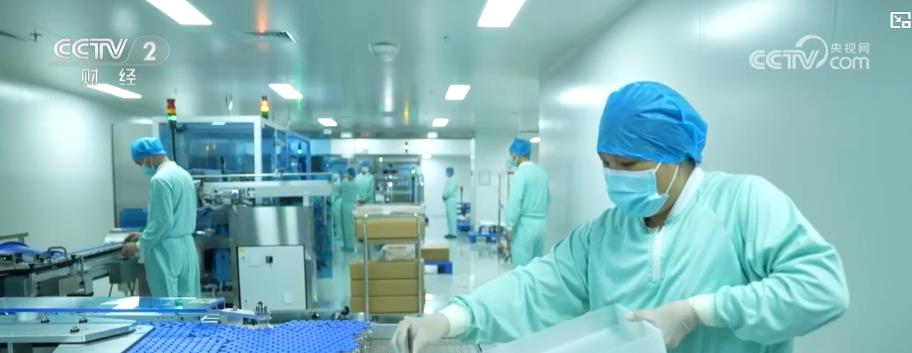
贝达药业三度冲击港股IPO:资金链承压、研发缩水与产品困局
Sou Hu Cai Jing· 2025-09-17 02:06
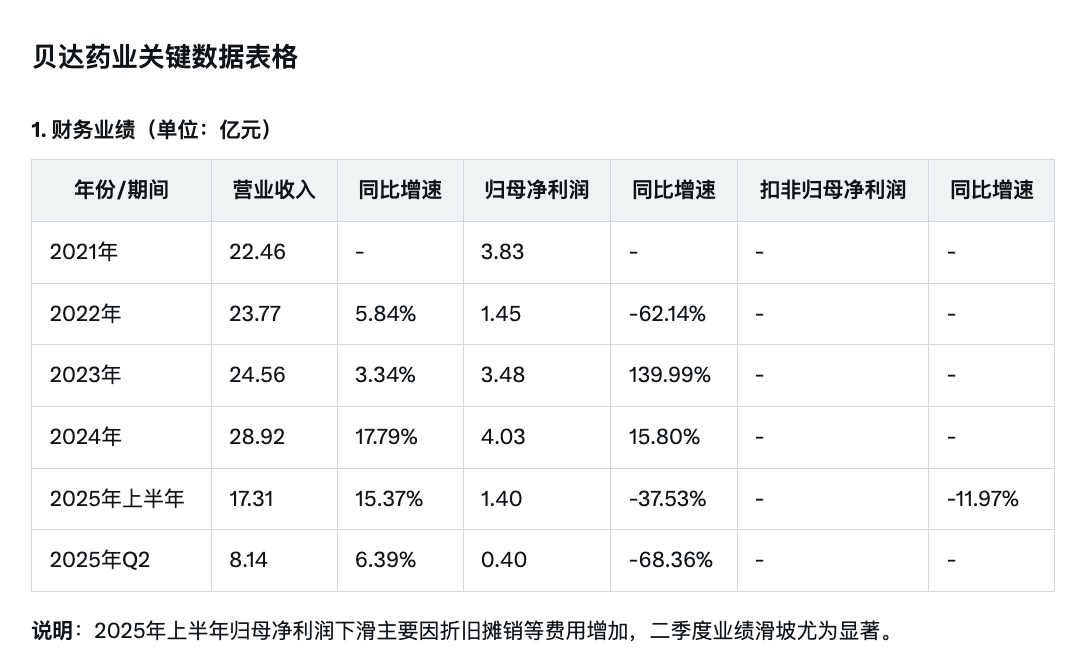
Core Viewpoint - Beida Pharmaceutical (300558.SZ) is seeking a third attempt for an IPO in Hong Kong to enhance its capital strength and support its internationalization process, following two previous unsuccessful attempts in 2021. The primary motivation appears to be alleviating the company's increasing financial pressure rather than solely supporting long-term R&D [2][3][4]. Financial Performance - In 2025 H1, Beida reported revenue of 1.731 billion, a year-on-year increase of 15.37%, but the net profit attributable to shareholders was only 140 million, down 37.53% year-on-year. In Q2 2025, net profit was 40 million, a significant decline of 68.36% [6]. - The company's revenue heavily relies on its cornerstone product, Kaimena, which has annual sales exceeding 1 billion, accounting for more than half of its main business revenue [5][6]. - The company’s operating cash flow in H1 2025 was 445 million, reflecting a year-on-year decrease of 14.70%, indicating tightening liquidity [3][6]. Capital Structure and Liquidity - As of the end of 2023, Beida's cash balance was 527 million, a significant drop from 792 million at the end of 2021. The current assets were 1.359 billion, while current liabilities stood at 1.757 billion, highlighting short-term debt pressure [2][3]. - The company plans to allocate 40% of the IPO proceeds for R&D, 30% for potential acquisitions, and the remainder for marketing network construction and working capital [3]. R&D and Product Pipeline - Beida's R&D investment has decreased from 700 million in 2022 to 255 million in H1 2025, with the R&D team size halved from 647 in 2022 to 327 in 2024. This reduction may hinder new drug development and weaken the company's competitiveness in the innovative drug sector [7]. - The company has eight marketed products, but the performance of new products like Beifutini has been disappointing, with sales in H1 2025 not reaching 10% of main business revenue [5][6]. Market Position and Challenges - The competitive landscape for third-generation EGFR-TKIs is intense, with seven products already on the market, which may further squeeze Beida's market space if more competitors are included in the medical insurance [5][6]. - Beida's stock performance has been weak, with a year-to-date increase of about 30%, and the current stock price of 70.73 per share is significantly lower than its historical high of 160.66 [7][8].
中国医疗健康行业-创新需求为锚,早期研发为帆:生命科学上游企业的核心成长驱动力
2025-09-17 01:51
Summary of the Conference Call on China's Healthcare Industry Industry Overview - The conference call focused on the **China Healthcare Industry**, specifically the **life sciences sector** [1][6]. - A strong wave of **innovation drug asset licensing** and a new round of **interest rate cuts** are revitalizing the Chinese life sciences industry after years of consolidation [1]. Key Companies Covered - **Acrobiosystems** (百普赛斯) - Rated **Overweight** with a target price of **RMB 102.50** [11][12]. - **Tofflon** (东富龙) - Rated **Equal-weight** with a target price of **RMB 16.77** [13][15]. Core Insights - The current upcycle in the industry is driven by the **globalization of early-stage innovative drug assets**, leading to increased demand for early drug discovery and development services [2]. - Preference is given to companies that directly serve early drug development needs over those focused on late-stage commercial production, which face challenges such as limited overseas demand and prolonged equipment replacement cycles [2]. - **Acrobiosystems** is considered undervalued due to its unique operational platform, focus on industrial clients, and strong growth potential driven by innovation drug development [2][11]. - **Tofflon** is expected to maintain a reasonable valuation despite moderate terminal market demand and a complex domestic replacement process [13][14]. Financial Metrics - **Acrobiosystems**: - Expected **CAGR** of **55%** from 2024 to 2027, with a current **P/E** ratio of **34x** for 2026 [11][12]. - Anticipated **net profit margin** expansion due to strong sales growth and operational leverage [11]. - **Tofflon**: - Expected **CAGR** of **42%** from 2024 to 2027, with a current **P/E** ratio of **22x** for 2026 [14][15]. - Revenue projections show a gradual increase from **RMB 5.01 billion** in 2024 to **RMB 6.24 billion** in 2027 [15]. Risks Identified - **Downside Risks**: - Geopolitical uncertainties, unexpected regulatory changes, price competition, and delays in domestic replacement processes [3]. - **Upside Potential**: - Accelerated domestic replacement processes, increased demand from a growing drug pipeline, and easing geopolitical concerns could enhance valuations [3]. Conclusion - The Chinese life sciences sector is poised for growth driven by innovation and favorable financing conditions, with specific companies like **Acrobiosystems** and **Tofflon** positioned to capitalize on these trends. The analysis suggests a favorable investment environment, albeit with certain risks that need to be monitored closely [1][2][3].

京新药业20250916
2025-09-17 00:50
Summary of Jinxin Pharmaceutical Conference Call Company Overview - **Company**: Jinxin Pharmaceutical - **Industry**: Pharmaceutical Key Points Business Performance - Jinxin Pharmaceutical's finished drug business has shown continuous improvement in hospital, outpatient, and formulation export sectors, providing a solid performance guarantee for the company [2][3] - Profit is expected to achieve double-digit growth in 2025, with growth rates exceeding double digits in 2026 and beyond [2][3] - The pressure from accelerated depreciation is expected to decrease significantly after 2025, releasing approximately 100 million RMB in profit [2][3] - The main business profit is projected to reach 800 million RMB in 2025, leading to a potential company valuation of 12 billion RMB based on a 15x price-to-earnings ratio [2][3] Innovation Drug Commercialization - Significant progress has been made in the commercialization of innovative drugs, with the peak sales expectation for Tidasini raised from 1 billion RMB to 1.5 billion RMB [2][4] - The peak sales expectation for Kailaqin has also been increased from 500 million RMB to 1.5 billion RMB, providing substantial valuation flexibility for the company [2][4] Early Research and Development Focus - Jinxin Pharmaceutical is focusing on early-stage research in the cardiovascular and central nervous system (CNS) fields [2][5] - The company is developing LPA small molecule inhibitors, which have gained attention following Eli Lilly's successful Phase II clinical trial at the end of 2024 [2][5] - Other pharmaceutical companies, such as CSPC and Hengrui Medicine, have engaged in significant business development (BD) transactions related to LPA small molecule inhibitors, indicating the market's potential [2][5] - Pfizer is currently in concentrated BD negotiations with Jinxin regarding LPA small molecule inhibitors, which could lead to significant valuation flexibility if successful [2][5] Market Potential - The market potential for LPA small molecule inhibitors is highlighted by the substantial upfront payments and total licensing fees offered by major pharmaceutical companies [2][5] - Continuous monitoring of clinical progress and subsequent BD transactions is essential for assessing future opportunities [2][5]

CXO 2025H1业绩综述:海外和国内需求共振
2025-09-17 00:50
Summary of CXO Industry and Company Insights Industry Overview - The CXO sector demonstrated exceptional performance in the first half of 2025, with revenue growth of approximately 15% year-on-year and a scale growth exceeding 60% [1][5] - The CDMO industry benefited from increased capital expenditures and improved capacity utilization, leading to a non-GAAP net profit growth of 26%, significantly outpacing revenue growth [1][5] - The overseas CDMO companies saw a notable improvement in orders in the second and third quarters of the previous year, translating to a revenue growth of around 20% in the first half of this year [6] Key Insights - WuXi AppTec contributed over 40% of the CXO sector's revenue and more than 60% of its profits, serving as a major growth driver [1][5] - The gross profit margin for overseas businesses is significantly higher than domestic counterparts, with an increase in capacity utilization further enhancing profitability [6] - The trend of overseas biopharmaceutical investment and financing is negatively correlated with the Federal Reserve's interest rates, with a 20% increase in quarterly average investment amounts compared to 2021 [7][8] Domestic Market Dynamics - The domestic innovative drug R&D landscape is on an upward trend, with increased funding availability and improved channels for capital sourcing [9] - The resurgence of IPOs in the Hong Kong market reflects an improved capital environment, which is expected to sustain the growth of domestic innovative drug R&D [2][10] - The A-share market's allowance for unprofitable companies to list has significantly expanded the fundraising capabilities of pharmaceutical companies, enhancing their cash reserves [11] Financial Performance - The overall performance of the innovative drug industry chain, including CRO and life sciences services, showed approximately 10% revenue growth in both the first and second quarters of 2025, with profits exceeding revenue growth [3][4] - The CRO companies, such as Kanglong Chemical and Hongbo Pharmaceutical, returned to double-digit revenue growth in the first half of the year [16] - The clinical phase CRO companies experienced a smaller decline in performance compared to the preclinical phase, with improving orders and revenue expected to enhance overall industry performance in the latter half of the year [18] Investment Trends - The second quarter saw external BD upfront payments become a significant and reliable source of R&D funding, exceeding twice the amount of China's biopharmaceutical investment and financing [12] - The biopharmaceutical investment market in China showed signs of recovery, with significant improvements in funding levels observed in July and August [13] - The new BD business model has shifted focus towards early-stage clinical projects, increasing the proportion of early R&D investments compared to previous years [14][15] Conclusion - The CXO sector and innovative drug R&D in China are poised for growth, driven by improved capital conditions, increased funding sources, and a favorable investment environment. The performance of key players like WuXi AppTec highlights the potential for continued success in this dynamic industry [1][9][10]

23家科创板公司共话创新药发展新机遇
Shang Hai Zheng Quan Bao· 2025-09-16 18:32
Core Insights - The innovation drug industry in China is experiencing significant advancements in product research and development, with companies actively discussing their progress and strategies during the recent performance briefing session [1][2][3]. Group 1: Product Innovation and R&D Progress - Companies like Fudan Zhangjiang and Olin Bio are making notable advancements in their product pipelines, focusing on photodynamic therapy and vaccines for "super bacteria" [1][2]. - Fudan Zhangjiang is developing several drugs targeting conditions such as severe acne and bladder cancer, with ongoing clinical studies [2]. - Olin Bio is researching multiple vaccines for "super bacteria," aiming to initiate clinical trials for flu vaccines by mid-2025 [2]. Group 2: Business Expansion and Market Strategy - Companies are planning to expand their production capacity to support product commercialization, with Baiyao Tai focusing on launching several products that have completed Phase III clinical trials [3][4]. - Shian Bio is set to contribute significant revenue from its various vaccine products, including those for swine fever and other diseases [4]. Group 3: Internationalization and Market Entry - The trend of "going global" is a major focus for the domestic biopharmaceutical industry, with companies exploring diverse international pathways [5]. - Yuantong Bio is awaiting FDA approval for its naloxone nasal spray, marking a step towards international market entry [5]. - Aidi Pharmaceutical has received regulatory approval for its HIV treatment in Zanzibar, highlighting its international expansion efforts [6]. - Companies like Ailis and Haichuang Pharmaceutical are actively pursuing overseas partnerships and clinical trials to enhance their global presence [6][7].


一日之内,这只医药股从暴涨超60%到暴跌54%
Di Yi Cai Jing Zi Xun· 2025-09-16 12:16
本文字数:756,阅读时长大约2分钟 作者 |第一财经 林志吟 在经历了四个交易日连续暴涨后,今日,药捷安康(02617.HK)股价上演了一场"高台跳水"行情。 今日早盘,该公司股价最大涨幅超过60%,冲到670港元/股以上;午后开盘后,股价又一路滑落,最后 以暴跌53.73%收盘,股价仅剩下192港元/股,市值跌回千亿港元以下,为762.04亿港元。 药捷安康于2025年6月23日才在港股市场挂牌交易,彼时公司IPO首发价只有13.15港元/股,公司当前股 价较首发价涨幅仍高达13.6倍。上一交易日,即9月15日,公司收盘价曾高达415港元/股,股价较IPO首 发价涨幅约30.6倍,总市值达到1647.13亿港元。 药捷安康是一家处于注册临床阶段的创新药公司,专注于发现及开发肿瘤、炎症及心脏代谢疾病小分子 创新疗法。截至2025年6月30日,公司主要管线包括六款临床阶段候选产品及多款临床前阶段候选产 品。替恩戈替尼是药捷安康研发进度最快的产品,同时也是公司的核心产品,这是一款选择性聚焦多激 酶抑制剂,主要靶向三个关键通路——FGFR/VEGFR、JAK和Aurora激酶,但进度最快的适应症为胆管 癌,为小癌 ...

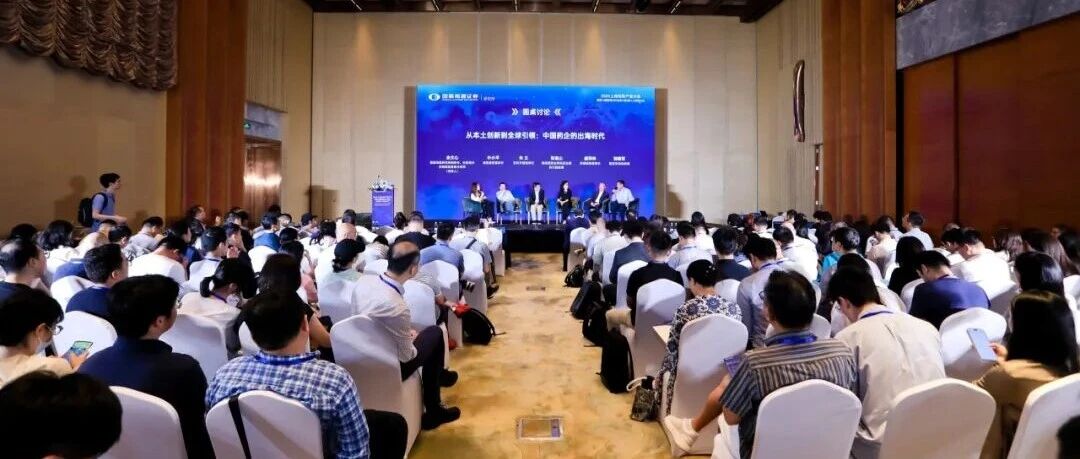
国泰海通2025上海先导产业大会成功举行
国泰海通证券研究· 2025-09-16 12:02
Core Viewpoint - The recent Shanghai Leading Industry Conference and the 14th Pharmaceutical CEO Forum, along with the 5th Artificial Intelligence Conference, successfully highlighted the forefront trends and cross-industry opportunities in the biopharmaceutical and technology sectors [2][8]. Group 1: Conference Overview - The conference gathered nearly 100 industry leaders, representatives from around 200 listed companies, and close to 1,000 investors, creating a platform for deep industry insights and investment value [2]. - Chen Zhongyi, Vice President of Guotai Junan, emphasized the company's role as a "witness and companion" in the leading industry since the first Pharmaceutical CEO Forum in 2012, which has evolved alongside China's innovative drug industry [4]. Group 2: Key Themes and Discussions - The biopharmaceutical sessions focused on three main themes: innovative drug development, medical technology innovation, and global layout, featuring nearly 10 roundtable discussions with executives from about 50 leading pharmaceutical companies [5]. - The technology sessions concentrated on the disruptive impact of AI on industries, discussing breakthroughs in large-scale AI chips, intelligent computing centers, and high-performance switches, as well as innovative applications in gaming, video content generation, and health management [5]. Group 3: Future Directions - The conference is recognized as a significant platform for understanding trends in biopharmaceuticals and technology, aiming to further promote the integration of these sectors [8]. - Guotai Junan Research Institute plans to leverage its professional strengths and company resources to contribute to the high-quality development of leading industries [8].

一品红:公司合作方Arthrosi是一家致力于代谢类疾病创新药物研发的公司
Zheng Quan Ri Bao Wang· 2025-09-16 11:41
Core Viewpoint - The company Yipinhong (300723) is collaborating with Arthrosi, a US-based company focused on innovative drug development for metabolic diseases, to develop a new generation of selective uric acid transporter (URAT1) inhibitor, AR882, aimed at treating gout and gout stones [1] Group 1 - The drug AR882 is designed to normalize uric acid salt excretion in urine by inhibiting uric acid reabsorption, thereby lowering serum uric acid (sUA) levels [1] - The global Phase III clinical trial for AR882, excluding mainland China, is expected to complete participant enrollment by August 2025, with ongoing multi-center clinical trials progressing steadily [1] - Drug development is characterized by long cycles, high investment, and significant risks, prompting investors to make cautious decisions [1]

医药行业2025年中报总结:持续看好创新药、AI医疗、脑机接口等方向
Southwest Securities· 2025-09-16 11:34
Investment Rating - The report maintains a positive outlook on innovative drugs, AI healthcare, and brain-computer interfaces [1]. Core Insights - The report analyzes 362 pharmaceutical listed companies, including those on the Sci-Tech Innovation Board, reporting a total revenue of 1,084.5 billion yuan in H1 2025, a decrease of 2.1% year-on-year. The net profit attributable to shareholders was 103.64 billion yuan, down 1.1%, while the net profit excluding non-recurring items was 88.905 billion yuan, down 9.4% [3][17]. - In H1 2025, 165 companies achieved revenue growth, accounting for 46% of the total, while 165 companies also reported positive net profit growth, also 46% [17]. Summary by Relevant Sections Overall Industry Performance - The pharmaceutical industry faced pressure from policies and macroeconomic conditions, leading to a decline in performance in H1 2025 [19]. - The overall revenue for the industry decreased by 2.1%, with a net profit decline of 1.1% [46]. Subsector Analysis - **Innovative Drugs and Formulations**: Revenue was 194.6 billion yuan (-2.0%), with net profit at 25.8 billion yuan (+1.2%) [5]. - **Medical Devices**: Revenue decreased to 96.8 billion yuan (-5%), with net profit down 16.9% [5]. - **CXO Services**: Revenue increased by 13.8% to 44.85 billion yuan, with net profit rising 64.6% [5]. - **Active Pharmaceutical Ingredients**: Revenue remained stable at 52.88 billion yuan, with net profit increasing by 19.1% [5]. - **Life Sciences**: Revenue was 3.9 billion yuan (-1.8%), with net profit down 3.6% [7]. - **Medical Services**: Revenue grew by 0.9% to 28.3 billion yuan, but net profit fell by 10.2% [7]. - **Blood Products**: Revenue was approximately 11.7 billion yuan (-0.3%), with net profit down 14.4% [7]. - **Retail Pharmacies**: Revenue was 57.8 billion yuan (+0.1%), with net profit up 0.9% [9]. - **Pharmaceutical Distribution**: Revenue increased by 0.9% to 404.57 billion yuan, with net profit rising 12.4% [9]. - **Traditional Chinese Medicine**: Revenue decreased by 4.8% to 173 billion yuan, with net profit slightly up by 0.6% [9]. - **Vaccine Sector**: Revenue plummeted by 58.0% to 10.5 billion yuan, with a net loss of 0.5 billion yuan [11]. Financial Metrics - The overall gross margin for the industry was 32.4%, with a decline in the four expense ratios [46][49]. - The report highlights that the CXO sector showed the highest growth in both revenue and net profit, indicating a strong recovery trajectory [34][37].