多边贸易体制

Search documents
世贸组织成立三十周年—— 维护多边贸易体制 推动共同发展繁荣(权威论坛)
Ren Min Ri Bao· 2025-11-25 00:00
Core Insights - The World Trade Organization (WTO) has played a crucial role in promoting global trade, economic growth, and enhancing the participation of developing countries over the past 30 years [1] - The current global trade landscape is facing significant challenges from unilateralism, protectionism, and geopolitical conflicts, necessitating a strong commitment to a multilateral trade system centered around the WTO [1] Group 1: Trade Growth and Economic Impact - Global trade volume has increased nearly fivefold from 1995 to 2023, outpacing the growth of global GDP during the same period [2] - The WTO has established a rules-based multilateral trade system that has facilitated this growth, with 166 members creating strong economic ties [2][3] - The share of middle and low-income countries in global exports rose from 17% in 1995 to 32% in 2022, contributing to a significant reduction in extreme poverty from 40% to 10% [3] Group 2: China's Role in the WTO - China has been a significant beneficiary of the multilateral trade system, joining the WTO in 2001 after extensive negotiations, and has utilized this platform to achieve remarkable economic growth [3][4] - As a major contributor to global economic growth, China has maintained an average contribution rate of about 30% to world economic growth [4] - China actively participates in WTO reforms and negotiations, advocating for new rules and supporting the interests of developing countries [5][9] Group 3: Challenges to Multilateralism - The rise of unilateralism and protectionism poses serious threats to the multilateral trade system, disrupting global supply chains and trade flows [6][7] - The WTO's dispute resolution mechanism has been weakened since December 2019, undermining its authority and effectiveness [6] - There is a pressing need for WTO members to reaffirm their commitment to multilateralism and address contentious issues like subsidy rules to restore trust in the system [7][8] Group 4: Reforming the WTO - Necessary reforms should focus on enhancing the efficiency and effectiveness of the WTO rather than undermining its core principles [8] - China emphasizes the importance of maintaining non-discrimination and openness in the multilateral trade system while ensuring the development interests of emerging economies are protected [9] - The ongoing challenges in global trade require a collective effort to strengthen the WTO and adapt to new trade dynamics and issues [6][8]
维护多边贸易体制 推动共同发展繁荣(权威论坛)
Ren Min Ri Bao· 2025-11-24 22:31
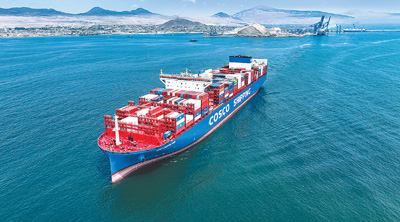
中远海运"秘鲁"轮驶出秘鲁钱凯港(无人机照片)。 梅 涵摄(新华社发) 上海洋山海关关员查验从南非进口的牛油果。 沈春琛摄(影像中国) 中国常驻世贸组织代表团供图(新华社发) 加迪贾·布朗:世贸组织是经济全球化和贸易自由化的基石。它确立了以规则为基础的多边贸易体制, 通过设立统一的贸易规则和争端解决机制,为国际贸易发展提供了法律保障。世贸组织一直将争端解决 作为其核心职能之一,已受理成员间600多宗贸易争端,有效防止了成员间贸易冲突的升级与风险外 溢,维护了国际贸易环境的稳定性和可预见性。 2025年是世界贸易组织成立30周年。30年来,世贸组织在推动全球贸易发展、促进经济增长、提升发展 中国家参与度等方面发挥了重要作用。当前,单边主义、保护主义与地缘冲突等多重挑战相互交织,将 全球贸易推向了深度重构的十字路口。国际社会应坚定维护以世贸组织为核心、以规则为基础的多边贸 易体制,推动建设开放型世界经济,为全球发展增添确定性与稳定性。 屠新泉(对外经济贸易大学中国世界贸易组织研究院院长) 加迪贾·布朗(南非副总统特别经济顾问) 夏华生(巴西瓦加斯基金会经济学家) 乔苏亚·帕尔代德(印度尼西亚佩尔马塔银行首席经济学 ...

让各成员共享贸易发展红利(国际观澜)
Ren Min Ri Bao· 2025-11-24 22:31
Group 1 - The World Trade Organization (WTO) is at a critical juncture, facing unprecedented pressure on the multilateral trade system, yet global merchandise trade volume is projected to grow by 2.4% this year [1] - Most economies are not imposing restrictions on each other's goods and services, and members are actively expanding new cooperative ties while consolidating existing trade relationships [1] - Exporters are diversifying markets, and importers are seeking new sources of goods, indicating that the global trade system is adapting, restructuring, and expanding despite pressures [1] Group 2 - Reforms must be based on the effective foundation of the global trade system, as the WTO plays a crucial role in setting trade rules, facilitating member dialogue, and providing dispute resolution mechanisms [2] - The need for reforms includes updating rules and optimizing mechanisms to prevent decision-making deadlocks and to enhance the participation of all members in sharing the benefits of trade development [2] - The WTO's last major reform occurred over 30 years ago, and current economic changes necessitate new approaches, particularly in response to the digital revolution and the reshaping of trade by services, data flow, and artificial intelligence [2] Group 3 - The upcoming WTO Ministerial Conference in March 2026 will focus on reform topics, with the majority of members viewing reform as essential for maintaining the WTO's credibility and its role in the global economy [2] - China has announced that it will not seek new special and differential treatment in current and future negotiations, demonstrating the necessary commitment to reform and confirming that progress is being made [2]
中国期货每日简报-20251119
Zhong Xin Qi Huo· 2025-11-19 01:26
Report Industry Investment Rating No relevant content provided. Core Viewpoints - On November 18, equity index futures fell while CGB futures rose slightly; most commodities declined, with the energy & chemicals remaining weak and J and JM leading the losses [2][10][12][13]. - The top three gainers in commodity futures are Iron Ore, Chinese Jujube, and Lithium Carbonate, while the top three decliners are Coking Coal, SCFIS(Europe), and Coke [11][12][13]. - TSR 20 rose by 0.5% on November 18, with supply - side factors including overseas seasonal output increase and domestic factors like停割and warehouse receipt changes, and demand showing no significant change [16][17][19]. - Coking Coal fell 3.9% on November 18, with fundamentals still providing strong support and expected to trade with fluctuation [24][26]. - Coke fell 2.9% on November 18, with supply - demand remaining tight in the short - term, cost support weakening, and prices expected to fluctuate alongside coking coal [29][31]. Summary by Directory 1. China Futures 1.1 Overview - On November 18, equity index futures (IH fell by 0.23%, IF dropped by 0.41%) fell while CGB futures (TL rose by 0.06%) rose slightly; most commodities declined, with energy & chemicals weak and J and JM leading losses [10]. - In commodity futures, top gainers are Iron Ore (up 1.4% with - 2.1% month - on - month position change), Chinese Jujube (up 1.2% with - 0.8% month - on - month position change), and Lithium Carbonate (up 0.9% with - 14.0% month - on - month position change); top decliners are Coking Coal (down 3.9% with + 2.1% month - on - month position change), SCFIS(Europe) (down 2.9% with - 0.1% month - on - month position change), and Coke (down 2.9% with + 2.4% month - on - month position change) [11][12][13]. 1.1 Daily Raise - TSR 20 rose by 0.5% to 12,345 yuan/ton on November 18. Supply - side: overseas seasonal output increase is smooth, raw materials are firm, domestic停割in November and RU warehouse receipt deregistration and NR warehouse receipt increase have impacts. Demand - side: no significant change in the past two weeks, downstream purchasing sentiment is good after price decline, but lack of strong directional drivers. Market is range - bound, with rubber prices having bottom resilience but no one - sided trending market [16][17][19]. 1.2 Daily Drop - Coking Coal fell 3.9% to 1,159 yuan/ton on November 18. Futures pressure weakened sentiment, increasing online auction failure rates and causing some coal price corrections. Fundamentals haven't deteriorated significantly, and prices are expected to trade with fluctuation. Supply: main producing area mines' production rhythm is mostly stable, overall supply recovers slowly; import: Mongolian coal clearance at Ganqimaodu Port is high but prime coking coal at the port is tight. Demand: coke output drops month - on - month, mid - and downstream purchases slow after replenishment, but mines have many advance orders, and upstream mines have slight inventory accumulation with little overall pressure [24][26]. - Coke fell 2.9% to 1,649.5 yuan/ton on November 18. In the off - season, supply and demand are both weak, downstream steel mills may increase maintenance but significant production cuts are unlikely, so demand support remains. Short - term supply - demand is tight, inventory is decreasing, cost support has weakened, and futures are expected to fluctuate alongside coking coal. Supply: coking profits improve after four rounds of price hikes, and supply remains stable with relaxed environmental requirements in Henan. Demand: steel mills' profits shrink but willingness to cut production actively is low, molten iron output is high. Inventory: steel mills maintain strong purchasing momentum and upstream coking enterprises hold low inventories [29][30][31]. 2. China News 2.1 Macro News - On November 17, the 4th China - Germany High - Level Financial & Economic Dialogue was co - chaired by Chinese Vice Premier He Lifeng and German Vice Chancellor and Federal Minister of Finance Christian Lindner. Both sides will strengthen macroeconomic policy coordination, enhance financial and economic cooperation, expand two - way market opening, and support the multilateral trading system [34]. - A Japanese Foreign Ministry official visited China from November 17. On the 18th, the Chinese Foreign Ministry's Asian Affairs Department Director - General met with him, and China made solemn representations to Japan [34]. 2.2 Industry News - The 4th China - Germany High - Level Financial & Economic Dialogue joint statement mentions that both sides support strengthening exchanges and cooperation in securities, futures and derivatives sectors, encourage cross - border investment and operation of qualified financial institutions, and promote exchanges between regulatory and self - regulatory organizations. They also note the signing of a cooperation MoU by industry associations [35].
第四次中德高级别财金对话达成27项共识
Xin Hua Wang· 2025-11-18 10:47
Group 1 - The core viewpoint of the fourth China-Germany high-level financial dialogue is the establishment of 27 consensus points aimed at enhancing macroeconomic policy coordination and financial cooperation between the two countries [1][2] - Both parties reaffirmed the importance of the dialogue mechanism as a platform for bilateral communication and policy coordination on strategic, comprehensive, and long-term issues in the financial sector [1] - The consensus emphasizes the commitment to uphold international and multilateral cooperation, opposing unilateralism and trade protectionism, and maintaining a multilateral trading system centered on the World Trade Organization [1][2] Group 2 - The dialogue includes agreements to strengthen regulatory cooperation in the banking and insurance sectors, with Germany welcoming China's role in global commodity trading, particularly through the Shanghai Gold Exchange [2] - China encourages qualified German institutional investors to participate actively in the Chinese interbank market, while both sides promote financial technology cooperation between their respective financial institutions [2] - The first China-Germany high-level financial dialogue took place in 2015, resulting in 21 consensus points, with subsequent dialogues in 2019 and 2023 yielding multiple mutually beneficial outcomes [2]
第四次中德高级别财金对话联合声明发布
证券时报· 2025-11-17 15:00
Core Viewpoint - The dialogue between China and Germany emphasizes the importance of bilateral cooperation in finance and economics, aiming to enhance global economic recovery, sustainable development, and financial stability through multilateral frameworks [1][2]. Group 1: Bilateral Cooperation and Multilateral Frameworks - Both parties reaffirmed their commitment to maintaining international and multilateral cooperation, opposing unilateralism and trade protectionism, and supporting the G20 as a key forum for international economic cooperation [2]. - The importance of a rules-based multilateral trading system centered around the World Trade Organization (WTO) was highlighted, with both sides agreeing to support WTO reforms [2]. - There is a commitment to close cooperation within the International Monetary Fund (IMF) framework, advocating for a strong, quota-based, and resource-rich IMF to enhance global financial security [2][3]. Group 2: Development and Debt Management - Both parties aim to address debt vulnerabilities in low- and middle-income countries effectively and comprehensively, supporting the implementation of the G20 Debt Service Suspension Initiative [3][4]. - The dialogue recognized the contributions of the International Bank for Reconstruction and Development (IBRD) in providing global public goods, particularly in climate action and health [3]. Group 3: Financial Infrastructure and Market Access - There is a mutual interest in enhancing financial infrastructure connectivity between China and Germany, including the issuance of Global Depositary Receipts (GDRs) and Chinese Depositary Receipts (CDRs) to improve market liquidity [7][8]. - Both sides welcome the participation of qualified financial institutions in each other's markets, particularly in the areas of trade, investment, and small and medium-sized enterprise financing [13][14]. Group 4: Sustainable Finance and Green Initiatives - The dialogue emphasizes the importance of sustainable finance, with both parties committing to enhance cooperation in green finance and support the development of standards for green bonds [11][15]. - There is a focus on mobilizing private sector funding for climate action and sustainable development, with initiatives to build capacity in sustainable finance [6][11]. Group 5: Regulatory Cooperation and Financial Technology - Both parties agreed to strengthen regulatory cooperation in the banking and insurance sectors, exploring the possibility of signing memorandums of understanding [12][19]. - The importance of fintech collaboration was acknowledged, with encouragement for financial technology service providers to enhance innovation and development in this sector [10].

第四次中德高级别财金对话联合声明
券商中国· 2025-11-17 13:49
Core Viewpoint - The fourth high-level financial dialogue between China and Germany emphasizes the importance of bilateral communication and policy coordination in the financial sector, aiming to promote global economic recovery and sustainable development while enhancing financial stability [1]. Group 1: Bilateral Cooperation and Multilateral Frameworks - Both parties commit to maintaining international and multilateral cooperation, opposing unilateralism and trade protectionism, and supporting the G20 as a key forum for international economic cooperation [2]. - The significance of a rules-based multilateral trading system centered around the World Trade Organization (WTO) is highlighted, with both sides supporting WTO reforms to create a fair and transparent trade environment [2]. - Continued close cooperation within the International Monetary Fund (IMF) framework is agreed upon, advocating for a strong, resource-rich IMF that reflects member countries' relative positions in the global economy [2]. Group 2: Development and Debt Management - Both parties aim to address debt vulnerabilities in low- and middle-income countries effectively and support the implementation of the G20's debt treatment framework [3]. - The importance of the International Development Association (IDA) is reaffirmed, with expectations for the World Bank Group to fulfill its commitments regarding IDA replenishment [4]. - Cooperation under the Asian Infrastructure Investment Bank (AIIB) framework is set to enhance sustainable operations and support member countries in achieving sustainable development [4]. Group 3: Financial Market Connectivity - The dialogue encourages qualified companies from both countries to issue Global Depositary Receipts (GDRs) and Chinese Depositary Receipts (CDRs) to enhance market liquidity and connectivity [7]. - The issuance of Panda bonds is recognized as crucial for the financial operations of German enterprises in China, with support for qualified German institutions to issue these bonds [7]. - Both parties acknowledge the importance of a developed derivatives market for enhancing market depth, liquidity, and stability, welcoming participation from qualified enterprises [10]. Group 4: Financial Technology and Regulatory Cooperation - Financial technology cooperation is encouraged to foster further development and innovation in the sector [11]. - Strengthening regulatory cooperation in the banking and insurance sectors is emphasized, with discussions on potential memorandums of understanding to enhance communication mechanisms [12]. - The importance of insurance institutions in improving market inclusivity and economic resilience is recognized, with commitments to facilitate licensing applications [12]. Group 5: Sustainable Finance and Green Initiatives - Both parties welcome significant progress in green finance and sustainable financial infrastructure, committing to deepen cooperation under the Central Banks and Supervisors Network for Greening the Financial System (NGFS) [6]. - Joint efforts to enhance the interoperability of standards in sustainable finance are agreed upon, aiming to mobilize private sector funding for climate action and sustainable development [6]. - The dialogue encourages innovation in green bond disclosure standards and joint research on climate risks by financial institutions [15].
第四次中德高级别财金对话联合声明:中方欢迎并将继续审核包括德国机构在内的外资机构申请债券通“南向通”资质
智通财经网· 2025-11-17 12:58
Core Points - The fourth China-Germany high-level financial dialogue was held in Beijing, focusing on deepening financial cooperation and promoting bilateral investment [1][2] - Both sides emphasized the importance of multilateral trade systems and committed to opposing unilateralism and trade protectionism [2][3] - The dialogue aims to enhance macroeconomic policy coordination and support sustainable global economic recovery [2][4] Financial Cooperation - China welcomes qualified German institutional investors to participate in the interbank market and related businesses [1][6] - Both countries agreed to deepen offshore RMB market cooperation and facilitate cross-border investment between their capital markets [1][6] - The dialogue highlighted the significance of a developed derivatives market for enhancing market depth and stability [6][7] Multilateral Trade and Economic Governance - Both parties reaffirmed their commitment to a rules-based multilateral trading system centered around the World Trade Organization (WTO) [3][4] - They support reforms of the WTO and aim to create a fair, open, and transparent trade environment [3][4] - The dialogue emphasized the importance of international cooperation within the framework of the International Monetary Fund (IMF) [4][5] Debt and Development Cooperation - Both sides are committed to addressing debt vulnerabilities in low- and middle-income countries and implementing the G20 Debt Service Suspension Initiative [4][5] - They recognized the importance of the International Development Association (IDA) and expect the World Bank Group to fulfill its funding commitments [5][6] - The dialogue also focused on enhancing international development cooperation to achieve the United Nations Sustainable Development Goals [5][10] Green Finance and Sustainable Development - Both countries welcomed progress in green finance and sustainable financial infrastructure [5][10] - They agreed to deepen cooperation under the Central Banks and Supervisors Network for Greening the Financial System (NGFS) [5][10] - The dialogue encouraged innovation in green bonds and the sharing of best practices to mobilize private sector funding for climate action [10][11] Regulatory Cooperation - Both parties agreed to strengthen regulatory cooperation in the banking and insurance sectors [6][7] - They discussed the possibility of signing a memorandum of understanding to enhance communication mechanisms [6][7] - The dialogue also highlighted the importance of fair competition and timely processing of licensing applications for financial institutions [9][10]
第四次中德高级别财金对话联合声明发布
Xin Jing Bao· 2025-11-17 12:46
Core Points - The fourth high-level financial dialogue between China and Germany was held on November 17, 2025, focusing on strategic and long-term issues in the financial sector [1] - Both countries reaffirmed their commitment to multilateral cooperation and opposition to unilateralism and trade protectionism, emphasizing the importance of the G20 as a platform for international economic cooperation [2] - The dialogue resulted in agreements to enhance cooperation in various areas, including macroeconomic policy coordination, international financial institution reform, and sustainable development [2][3] Group 1: Bilateral Cooperation - Both parties committed to maintaining international and multilateral cooperation, opposing unilateralism and trade protectionism, and supporting the G20's role in international economic cooperation [2] - They emphasized the importance of a rules-based multilateral trading system centered around the World Trade Organization (WTO) and agreed to support WTO reforms [2] - Both sides agreed to continue close cooperation within the framework of the International Monetary Fund (IMF) and support a strong, resource-rich IMF [2][3] Group 2: Financial Stability and Development - The dialogue highlighted the need to address debt vulnerabilities in low- and middle-income countries and to implement the G20's debt treatment framework [3] - Both countries recognized the importance of the International Development Association (IDA) and supported its funding commitments [4] - They expressed a commitment to enhancing cooperation under the Asian Infrastructure Investment Bank (AIIB) framework to support sustainable development [4] Group 3: Financial Market Connectivity - Both parties welcomed the issuance of Global Depositary Receipts (GDRs) and Chinese Depositary Receipts (CDRs) to enhance market liquidity and connectivity [7] - They acknowledged the significance of Panda bonds for German enterprises in China and supported qualified German institutions in issuing Panda bonds [7][8] - The dialogue recognized the importance of a developed derivatives market for enhancing market depth, liquidity, and stability [7] Group 4: Regulatory Cooperation - Both sides agreed to strengthen regulatory cooperation in the banking and insurance sectors and explore the possibility of signing a memorandum of understanding [6][8] - They recognized the role of fintech in enhancing financial services and encouraged cooperation between financial technology institutions [9] - The dialogue emphasized the importance of timely and efficient processing of relevant licensing applications to facilitate market access for financial institutions [9][10]
全球对美关税谈判加速,多国在博弈中寻求破局
Sou Hu Cai Jing· 2025-11-14 18:21
Core Viewpoint - The recent trade framework agreements between the United States and several Latin American countries, along with potential tariff reductions for Switzerland, signify a new phase in the global tariff negotiations, driven by domestic inflation pressures and the need for economic resilience [1][3][7]. Group 1: Trade Agreements - The U.S. has reached trade framework agreements with Argentina, Guatemala, Ecuador, and El Salvador, focusing on reducing tariffs on agricultural products such as bananas, coffee, and cocoa, which are not sufficiently produced domestically [5][6]. - The agreement with Argentina is the most comprehensive, offering preferential market access for U.S. pharmaceuticals, chemicals, machinery, IT products, medical devices, and automobiles [6]. Group 2: Domestic Influences - The acceleration of tariff negotiations is partly due to rising domestic inflation, particularly in food prices, which has created pressure on the government following recent local elections [7][9]. - The U.S. government is considering adjustments to tariffs on food-related imports, indicating a more flexible approach to tariff strategies [9]. Group 3: Legal and Political Context - The U.S. government faces legal challenges regarding the president's authority to impose tariffs under the International Emergency Economic Powers Act, which could impact existing tariffs on Canada, Mexico, and China [11]. - Despite these legal uncertainties, negotiations continue as countries seek favorable agreements, driven by the fear of falling behind competitors who have already secured deals [11]. Group 4: Global Trade Responses - In response to U.S. tariff policies, countries are actively seeking diversified trade partnerships to reduce reliance on the U.S. market [13][14]. - The European Union is expanding trade partnerships globally, while ASEAN countries are leveraging regional agreements to enhance economic integration [15]. - Multilateral trade systems are being reinforced, with initiatives aimed at strengthening global trade frameworks amidst current trade disruptions [15].