夜经济

Search documents
永旺时代谢幕 鑫嘉汇购物中心如何打好“家庭牌”
Bei Jing Shang Bao· 2025-10-16 13:55
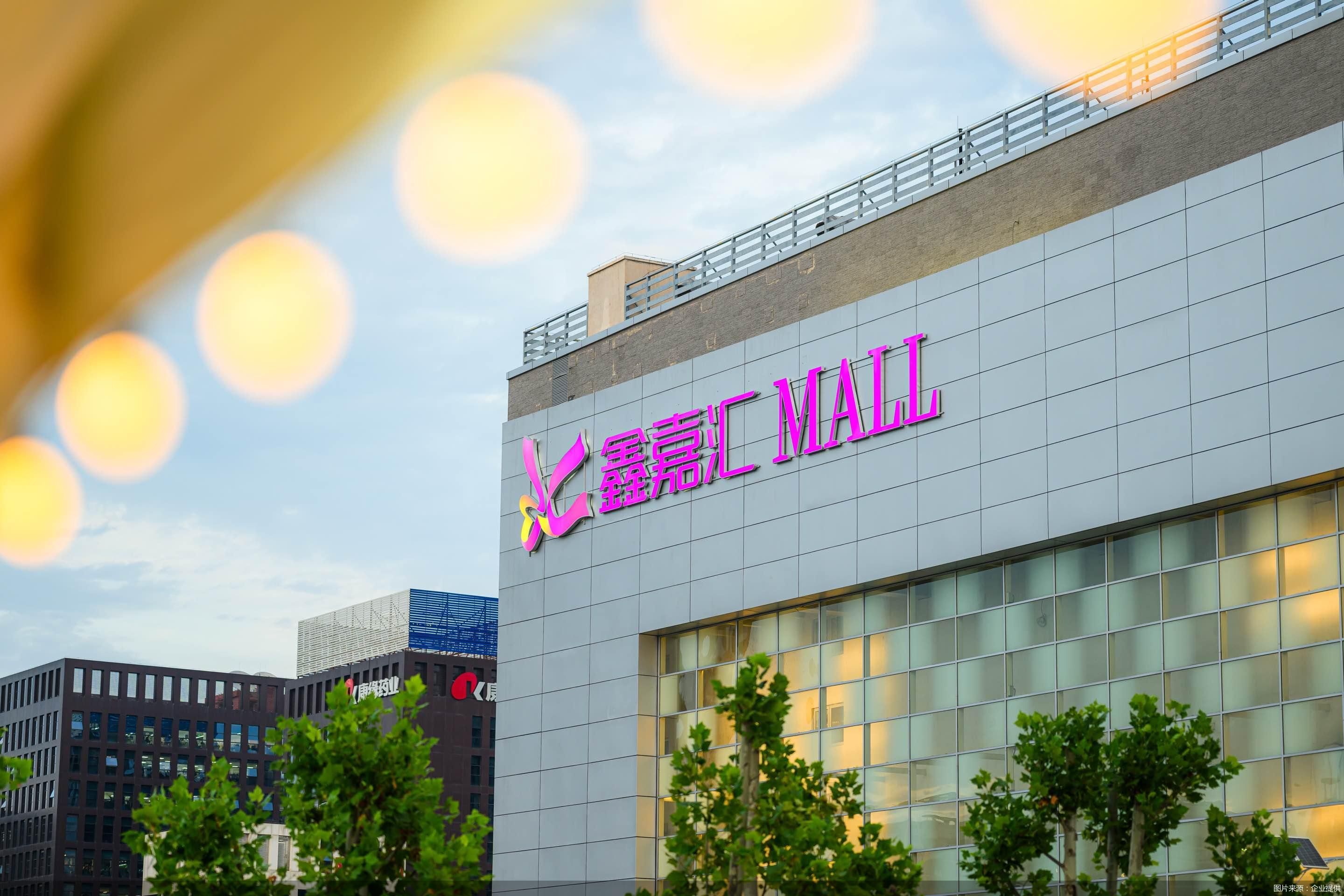
Core Insights - The official opening of Beijing Xinjiahui Shopping Center marks the exit of Aeon Mall from the commercial scene in Fengtai after ten years of operation [1] - The shopping center aims to position itself as a "family gathering place," focusing on parent-child and family consumption to invigorate the regional commercial landscape [1][10] Project Development - The renovation of Xinjiahui Shopping Center is accelerating, with the completion of lighting projects and the introduction of new brands, achieving a brand signing rate of over 95% [4] - Facilities are being upgraded to cater to both young and elderly customers, including the installation of age-friendly restrooms and nursing rooms [4] - The project is located in Fengtai Technology Park, which has a population of approximately 340,000 within a 3-kilometer radius, with nearly 70% being core consumers [4] Market Positioning - The shopping center's strategy includes enhancing service quality and optimizing consumer experience, aiming to become a recognizable commercial landmark in the region [10] - The center will focus on introducing first stores, concept stores, and experiential stores, particularly in dining categories [4][10] Industry Trends - The shift in consumer behavior is moving from mere shopping to shared experiences, emphasizing emotional connections and family interactions [11] - The commercial space is evolving towards multi-functional lifestyle experiences, where shopping centers serve as venues for relaxation, social activities, and cultural engagement [5][11] Future Outlook - The shopping center's operational strategy will prioritize long-term engagement and continuous innovation to attract families, ensuring a dynamic and appealing environment [12] - The focus will be on creating emotional value through space design, brand mix, and service logic, rather than just traffic or sales metrics [11][12]

商圈焕新消费场景,普陀区商业高质量发展
Sou Hu Cai Jing· 2025-10-13 04:08
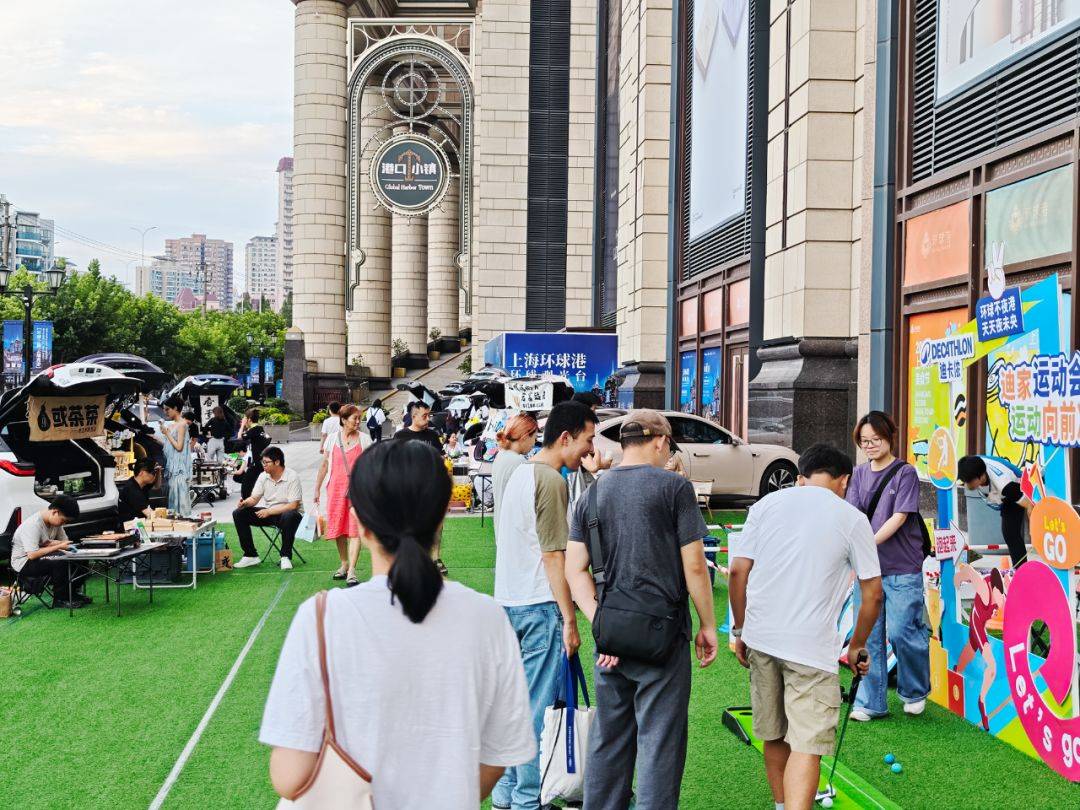
Group 1 - The core focus of the news is on the vibrant commercial activity in the Putuo District of Shanghai, highlighting the successful integration of new retail formats and night economy initiatives to boost consumer engagement and sales [1][2]. - In the past year, over 150 high-profile flagship stores have opened in the Putuo District, contributing to a significant increase in foot traffic and sales during the recent National Day holiday, with a 5.7% year-on-year increase in visitor numbers and a 9.1% increase in sales [1]. - The "Shanghai Summer" international consumption season has seen the Global Harbor shopping center leverage a dual strategy of flagship store clusters and night economy, extending operating hours to 2 AM and introducing free night parking, enhancing its status as a key nightlife destination [4]. Group 2 - The Hongshufang shopping center, celebrating its second anniversary, has seen 20% of its merchants extend their operating hours, creating new outdoor consumption spaces and hosting events that have boosted both revenue and foot traffic [6]. - Shanghai Zhenru Huanyu City MAX has adopted a POD (PARK+TOD) model, integrating ecological parks with commercial spaces, leading to a retail growth rate that ranks among the top three in the city for the first half of the year [6]. - The Revive Hui shopping center has redefined its positioning as a community gathering place, focusing on themes like children's growth and pet socialization, resulting in a 23% increase in foot traffic and a 54% increase in sales year-on-year [11].
人头攒动人气爆棚 加长版黄金周辽宁消费活力“满格”
Sou Hu Cai Jing· 2025-10-10 19:04
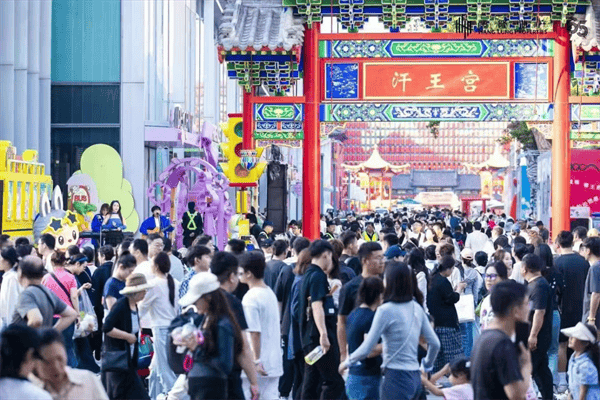
Core Insights - The "Golden Week" in Liaoning province has seen a significant increase in consumer activity, with over 300 promotional events boosting market vitality [1] - Key metrics indicate a rise in revenue for the accommodation and catering sectors, with accommodation revenue up 16.7% and catering revenue up 15.3% compared to the previous year [1] Group 1: Consumer Activity and Trends - Popular shopping districts like Shenyang Zhongjie and Dalian Tianjin Street are bustling with crowds, reflecting a vibrant consumer atmosphere [1] - The province has launched various creative consumption events that cater to diverse age groups, enhancing the overall shopping experience [1] Group 2: Government Subsidies and Promotions - Local governments are implementing cash subsidies to stimulate consumer spending, with initiatives such as a billion-yuan auto consumption subsidy in Shenyang and 1 million yuan in retail vouchers in Dalian [2] - Other cities like Fushun and Anshan are also distributing consumption vouchers across multiple sectors to lower costs for residents and boost market potential [2] Group 3: Cultural and Entertainment Events - Local cultural and tourism resources are being leveraged to create attractive consumer experiences, such as the popular Bubble Mart exhibition in Shenyang and the Anime Carnival in Dalian [4] - Events like the "Kirin Mecha Fireworks Night" in Huludao and various local festivals are driving foot traffic and sales, with Dan Dong's An Dong Old Street seeing a 42% increase in sales [6] Group 4: Night Economy and Dining Trends - Dining experiences have surged, with a 14.9% increase in restaurant dining and a 62.7% increase in sales for time-honored brands during the holiday [7] - Night economy initiatives, including esports events and food festivals, are extending consumer engagement and driving additional revenue streams [7] Group 5: E-commerce and Online Integration - Online shopping has also thrived, with events like the first live streaming competition in Dan Dong promoting local products and enhancing online sales [8] - The integration of online and offline sales channels is creating a robust consumer environment, significantly contributing to economic growth during the holiday period [8]
双节一线城市消费账本:京深客单价降,广州“最会花钱”
Sou Hu Cai Jing· 2025-10-10 14:16
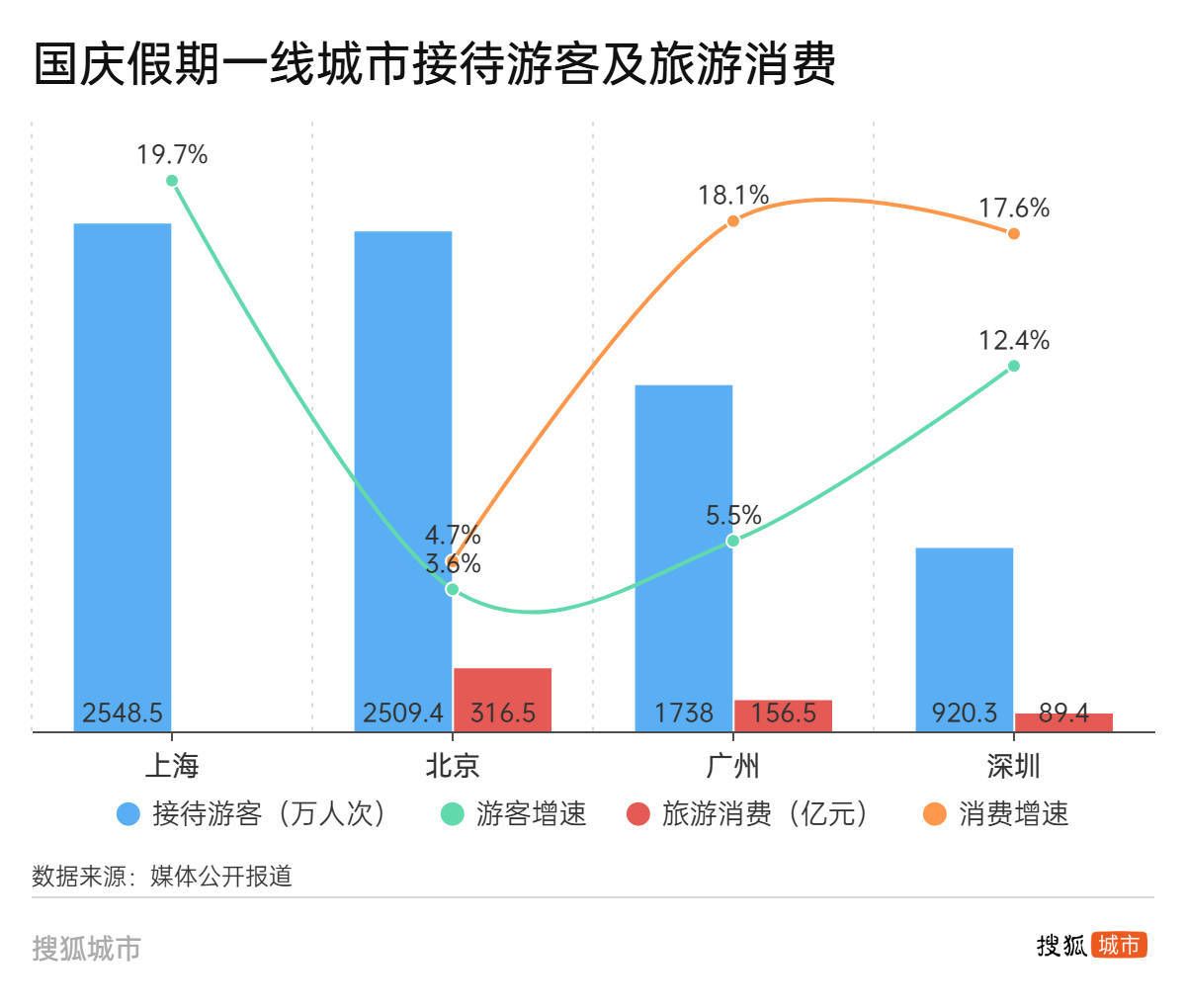
Core Insights - The overlapping of National Day and Mid-Autumn Festival provided a unique opportunity to observe consumer vitality in China's first-tier cities, with all four cities reporting a positive overall consumption performance during the eight-day holiday [1] - While total visitor numbers and consumption amounts increased, there was a nuanced differentiation in per capita spending, with Beijing and Shenzhen experiencing declines, while Guangzhou showed a slight increase [1][5] Group 1: Visitor Statistics - Shanghai received 25.485 million visitors, a year-on-year increase of 19.7%, making it the leading city in terms of visitor numbers [5] - Beijing followed closely with 25.094 million visitors, a 3.6% increase, while Guangzhou welcomed 17.38 million visitors, up 5.5% [5] - Shenzhen had over 9.2 million visitors, marking a 12.4% increase [5] Group 2: Consumption Data - Beijing led in total tourism spending with 31.65 billion yuan, a 4.7% year-on-year increase [5] - Guangzhou reported 15.65 billion yuan in spending, an 18.1% increase, while Shanghai's total payment volume reached 79.6 billion yuan, reflecting a 3% increase [5] - Per capita spending in Beijing decreased to 157.66 yuan, down 20 yuan from last year, while Shenzhen's per capita spending fell to 121.43 yuan, a decline of 11.3 yuan [5] Group 3: City-Specific Trends - Guangzhou's per capita spending increased slightly from 111.63 yuan to 112.56 yuan, indicating resilience supported by strong sectors like gold, automobiles, and real estate [6] - Beijing's holiday theme revolved around "events and culture," with significant increases in hotel bookings and cultural performances, showcasing a vibrant cultural economy [9][11] - Shanghai emphasized "fusion" and "international flair," with high-end events and art exhibitions driving sales growth in key commercial areas [13][14] - Shenzhen focused on "new" and "trendy" experiences, with innovative attractions like the ice world and immersive dining experiences appealing to younger consumers [16] Group 4: Year-to-Date Retail Performance - Shanghai's retail sales reached 1.0926 trillion yuan in the first eight months, a 3.7% year-on-year increase, positioning it for a strong annual performance [21] - Beijing's retail sales totaled 866.1 billion yuan, down 5.1%, indicating a need for recovery strategies [21] - Guangzhou's retail sales were approximately 723.7 billion yuan, up 4.9%, but faced challenges from changing consumer behaviors [21] - Shenzhen's retail sales were about 856 billion yuan, lagging behind Chengdu, which has seen rapid growth in consumption [21][22]
(经济观察)上海夜经济激发“全域活力”
Zhong Guo Xin Wen Wang· 2025-10-10 08:30
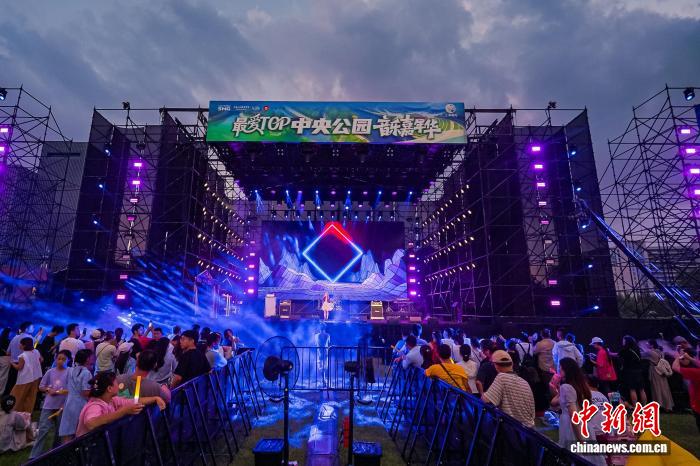
Core Insights - Shanghai's night economy is continuously evolving, enhancing urban vitality and contributing to overall city development [1][5] - The city has maintained the highest night economy index in China for five consecutive years, indicating its strong position in this sector [1] - Night economy serves as a significant complement to daytime economic activities, driving commercial consumption from city centers to regional and suburban areas [1][5] Group 1: Night Economy Development - Various districts in Shanghai are exploring night economy models tailored to their unique characteristics, such as international tourism and local cultural integration [5] - Events like the "TOP Central Park Music Carnival" and "Spring Shen Beautiful Life Season" are examples of initiatives aimed at boosting night activities [1][5] - The transformation from "Night Market 1.0" to a more integrated "Night Economy 3.0" reflects the diversification of offerings, including dining, entertainment, and cultural experiences [5] Group 2: International Influence - The popularity of the Seoul Night Market has increased due to Shanghai's night economy development, attracting both Korean and Chinese customers [2] - Shanghai's Old Foreign Street, known for its diverse international dining options, exemplifies the city's vibrant nightlife and its appeal to expatriates [4] - The presence of a large expatriate community in Shanghai contributes to the city's unique night culture, enhancing its attractiveness as a nightlife destination [4]
商圈人气旺 消费活力足
Liao Ning Ri Bao· 2025-10-10 00:59
Group 1 - The core viewpoint of the article highlights the significant increase in consumer activity during the National Day and Mid-Autumn Festival holidays in Liaoning Province, driven by various promotional activities and innovative consumer experiences [2][3] - The provincial business system organized over 300 promotional activities under the theme "Enjoy Shopping in Liaoning" to stimulate consumer vitality, resulting in a 16.7% increase in revenue and a 10.3% increase in accommodation guests for key accommodation enterprises [2] - Key dining enterprises saw a 15.3% increase in revenue, while pedestrian street traffic increased by 7.2% year-on-year, indicating a robust recovery in the hospitality and retail sectors [2] Group 2 - Emotional consumption emerged as a hot trend, with new business formats like cultural creations and blind box toys gaining popularity among consumers [2] - The restaurant industry also performed well, with a 14.9% increase in dine-in consumption and a 14% increase in order volume, particularly among "time-honored" brands, which saw a 62.7% increase in sales and a 37.2% increase in order volume [2] - Various localities innovated themed dining experiences, such as Huludao's "Bring Parents to Taste Delicious Food" campaign, which was well-received by consumers [3] Group 3 - The integration of commerce, tourism, and sports was emphasized in promotional activities, with cities like Shenyang and Dalian hosting events that combined cultural performances, sports events, and product sales [3] - Night economy and e-commerce live streaming became focal points for driving consumption, with cities like Fushun and Dandong organizing themed events to promote local products and attractions [3] - The overall consumer sentiment during the holidays indicates a positive trend in the local economy, with various sectors benefiting from the increased foot traffic and innovative marketing strategies [3]

“双节”同辉!国庆中秋假期交出活力满满“成绩单”
Xin Hua She· 2025-10-09 23:12
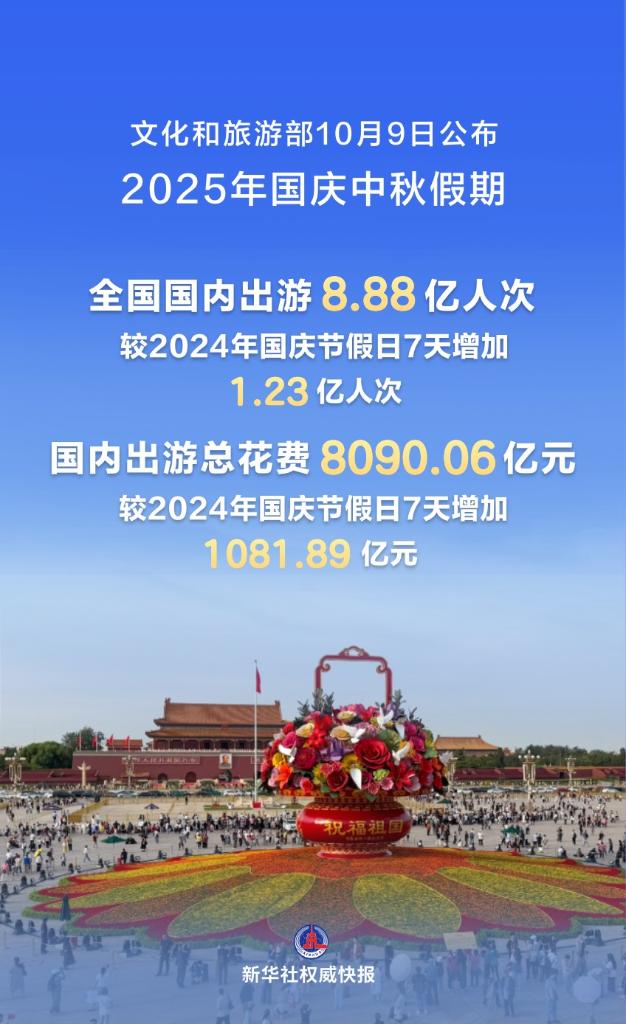
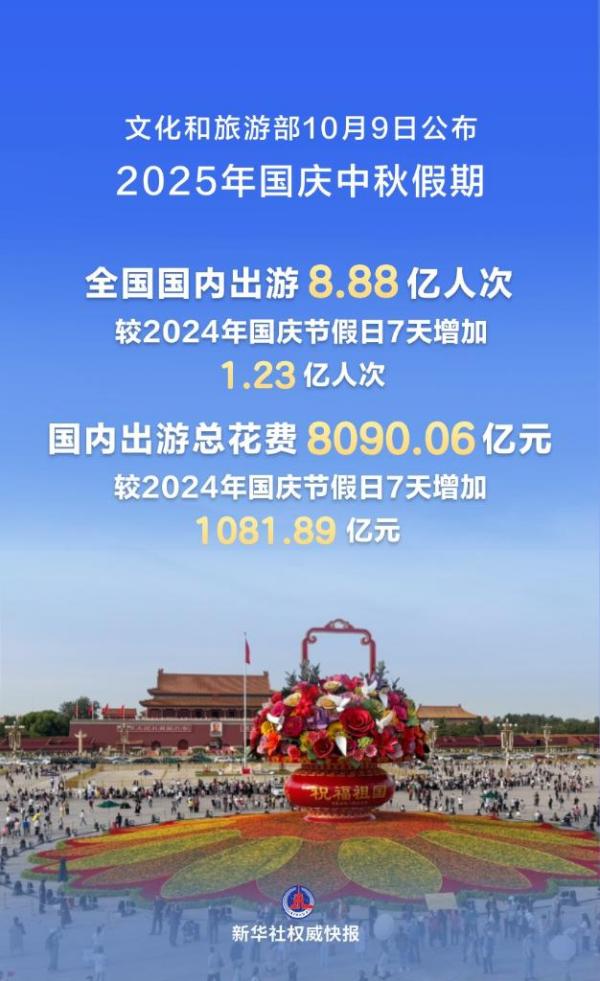
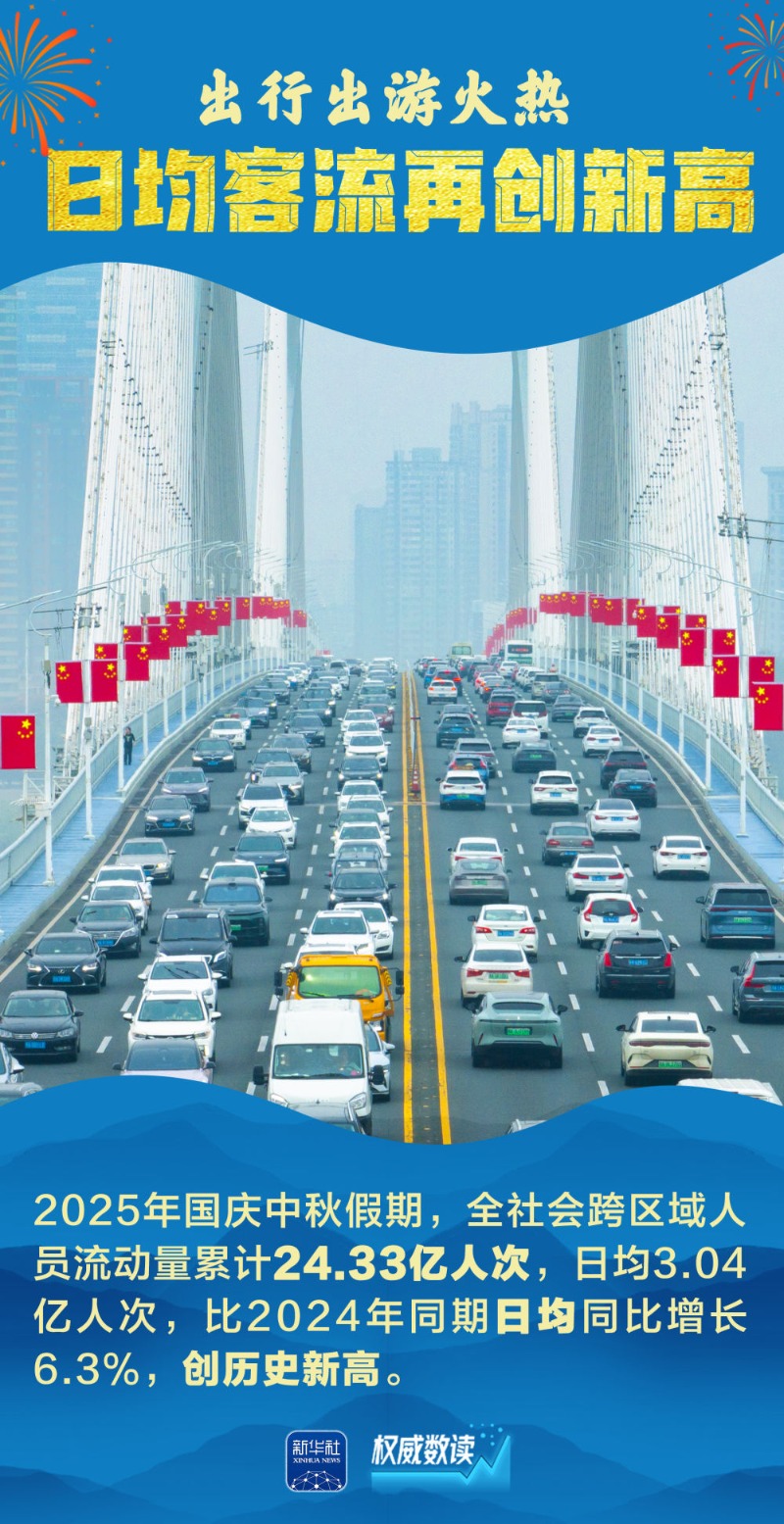
Core Insights - The recent National Day and Mid-Autumn Festival holiday period saw significant increases in travel and tourism activity across China, indicating a robust recovery in consumer behavior and economic activity [1][4][10] Group 1: Travel and Transportation - From October 1 to 8, a total of 2.433 billion people traveled across regions, averaging 304 million daily, which is a 6.3% increase compared to the same period in 2024 [1] - The holiday period recorded 888 million domestic trips, an increase of 123 million compared to the 7-day National Day holiday in 2024 [1] - The introduction of new transportation infrastructure, including highways and high-speed rail, has enhanced travel convenience, contributing to record-high traffic during the holiday [4] Group 2: Economic Impact - Domestic tourism spending reached 809 billion yuan, an increase of 108.2 billion yuan compared to the previous year [1] - The film industry also saw a boost, with box office revenues during the National Day period reaching 1.835 billion yuan, with 50.07 million moviegoers [1][10] - The "night economy" thrived, with night tourism searches on travel platforms increasing over 200%, and venues like museums experiencing a surge in nighttime visitors [6][10] Group 3: Cultural Significance - The holiday period was marked by a strong cultural engagement, with significant attendance at historical sites and cultural events, reflecting a blend of national pride and tourism [6][8] - Films released during the holiday resonated with themes of family and patriotism, driving both box office success and cultural engagement [8][10] - Family travel accounted for over 40% of holiday trips, with younger demographics showing the highest spending growth [10]
消费市场人气旺亮点多(锐财经)
Ren Min Ri Bao Hai Wai Ban· 2025-10-09 22:47
Core Insights - The overall consumption market in China showed a robust growth trend during the National Day and Mid-Autumn Festival holiday, with 888 million domestic trips and total spending reaching 809 billion CNY, indicating a solid recovery in consumer spending [4][5][9] Group 1: Tourism and Travel Trends - The "Wannan Fish Dragon Festival" in Wuhu City, Anhui Province, activated cultural tourism consumption through immersive experiences, making it a popular choice for visitors [4] - The travel consumption report from Tongcheng Travel highlighted a significant trend towards long-distance domestic and international travel, with increased efficiency due to new transportation routes and optimized visa policies [6] - Data from Tongcheng Travel indicated a 20% year-on-year increase in users booking trips to two or more cities, and a 52% increase in bookings for hotels with stays of two days or more [8] Group 2: Consumer Spending Patterns - Key retail and catering enterprises saw a 2.7% year-on-year increase in sales during the holiday, with foot traffic and sales in monitored pedestrian streets rising by 8.8% and 6.0%, respectively [5] - The consumption of green organic food surged by 27.9%, while smart home products and domestic fashion brands also saw significant growth, reflecting a shift towards healthier and more innovative consumer preferences [7] - The film industry experienced a boom, with box office revenues exceeding 1.79 billion CNY during the holiday period, driven by popular domestic films [7] Group 3: Government Initiatives and Support - Over 4.8 billion CNY in consumer subsidies were distributed during the holiday, alongside more than 29,000 cultural and tourism events organized nationwide [9] - Various regions implemented targeted consumption policies, such as issuing consumption vouchers and promoting local tourism resources, which effectively stimulated consumer spending [9] - Smart management systems were introduced in tourist attractions to enhance visitor experience and operational efficiency, showcasing a blend of technology and service improvement [9]
权威数读|这组数据 描绘出国庆中秋“火热奔腾”图景
Xin Hua She· 2025-10-09 14:40
Core Insights - The National Day and Mid-Autumn Festival holiday in 2025 saw a vibrant scene in transportation, cultural tourism, and consumer markets, reflecting the robust vitality of the economy [1] Travel and Tourism - During the holiday, a total of 163.43 million people crossed borders, averaging 20.43 million daily, which is an 11.5% increase compared to the same period last year [5] - Domestic travel reached 888 million trips over the 8-day holiday, an increase of 123 million trips compared to the 7-day holiday in 2024 [8] - Total domestic travel expenditure was 809 billion yuan, up by 108.19 billion yuan from the previous year [8] - Major cities like Beijing, Tianjin, and Shanghai reported significant increases in tourist numbers and spending, with Shanghai seeing a 19.74% year-on-year increase in visitors [10] Demographics and Trends - Data from Meituan indicates that individuals aged 20-30 accounted for over 50% of flight and train ticket orders during the holiday, highlighting the youth's role as the main consumer group for travel [12] - There was a 51% increase in booking volume for destinations in surrounding counties of major cities compared to the previous year [12] Night Economy - Ctrip reported that searches for "night tours" surged over 200% during the holiday, with some venues experiencing a more than fivefold increase in search interest year-on-year [16] Consumer Market - The average daily sales revenue in consumer-related industries grew by 4.5% year-on-year during the holiday, with goods and services consumption increasing by 3.9% and 7.6% respectively [20] - Key retail and catering enterprises saw a 2.7% year-on-year increase in sales during the holiday period [22] - Foot traffic and sales in monitored pedestrian streets increased by 8.8% and 6.0% respectively from October 1 to 7 [22] Entertainment Sector - The box office for the National Day film season reached 1.835 billion yuan, with 50.07 million attendees [23]
新华鲜报丨“双节”同辉!国庆中秋假期交出活力满满“成绩单”
Xin Hua Wang· 2025-10-09 14:37
Core Points - The recent National Day and Mid-Autumn Festival holiday period saw significant increases in travel and tourism activities across China, indicating a robust recovery in the domestic economy [1][3][8] Group 1: Travel and Transportation - From October 1 to 8, a total of 2.433 billion people traveled across regions, averaging 304 million daily, which is a 6.3% increase compared to the same period in 2024 [1] - During the 8-day holiday, domestic tourism reached 888 million trips, an increase of 123 million trips compared to the 7-day holiday in 2024, with total spending amounting to 809 billion yuan, up by 108.2 billion yuan [1][3] - The introduction of new transportation infrastructure, including highways and high-speed rail, has enhanced travel experiences, with a notable increase in traffic at key locations such as the Guizhou Huajiang Gorge Bridge [3][5] Group 2: Cultural and Economic Impact - The holiday period saw a surge in "night economy" activities, with searches for night tours on travel platforms increasing by over 200%, and venues like the Shanghai Pudong Art Museum experiencing a fivefold increase in night-time visitors [6][8] - The film industry also thrived during this period, with the National Day box office reaching 1.835 billion yuan and significant audience engagement with films that resonate with themes of family and patriotism [9][11] - Various regions have leveraged the film industry to boost local tourism, with some areas reporting over 50% increases in daily visitor numbers to film-related attractions [11]