太空经济

Search documents
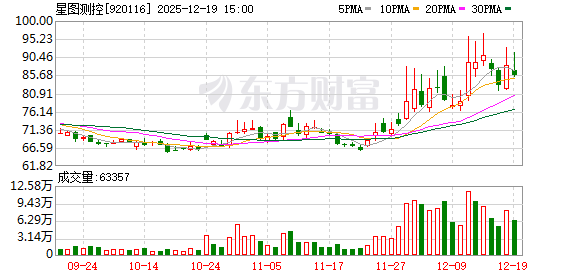
星图测控:做值得托付的“太空管家”
Zheng Quan Ri Bao· 2025-12-19 16:17
Core Viewpoint - The article highlights the advancements and strategic positioning of Xingtum Control Technology Co., Ltd. in the aerospace control sector, emphasizing its technological innovations and market strategies to address the growing demands of space traffic management and satellite monitoring [2][10]. Group 1: Technological Innovations - Xingtum Control has developed the "Insight" software system and ground control equipment, enabling precise command delivery to satellites hundreds of kilometers away, ensuring smooth operations and continuous data transmission [2]. - The company has achieved significant breakthroughs in aerospace control technology, supported by over 40 invention patents and more than 290 software copyrights [2]. - The "Insight" space information analysis system was launched in 2018, integrating hundreds of algorithms for orbital prediction and collision warning, which was a major challenge for the company [3][4]. Group 2: Market Strategy - The company focuses on establishing a strong foundation in specialized fields while expanding into commercial sectors, aiming to respond quickly to the explosive demand in commercial aerospace [6]. - From 2020 to 2024, Xingtum Control's revenue is expected to grow at a compound annual growth rate of over 80%, with a long-term gross margin exceeding 50% [6]. - The company has adapted its strategy to target the commercial space sector, recognizing the upcoming demand for low-orbit satellite constellations [6][7]. Group 3: Future Developments - Xingtum Control plans to launch the "Star Eye" space perception constellation, consisting of 156 satellites, to create a global monitoring network for near-Earth orbits [9]. - The "Star Eye" system aims to provide real-time tracking, orbit determination, and collision risk analysis, addressing the increasing congestion and debris risks in space [9]. - The company envisions a future where space services are data-driven, offering customized data services to governments and operators, thus opening broader market opportunities [10].

马斯克好友、美亿万富翁掌舵NASA,曾称目标是抢在中国前重返月球
Sou Hu Cai Jing· 2025-12-18 11:05
Core Viewpoint - The U.S. Senate has confirmed billionaire Jared Isaacman as the 15th Administrator of NASA, marking a significant shift in leadership style for the agency, which has traditionally been led by scientists or engineers [1][3]. Group 1: Background and Profile of Jared Isaacman - Jared Isaacman, aged 42, has a net worth of approximately $1.2 billion, primarily from his payment processing company and a pilot training business [3]. - He is the first NASA Administrator from outside the government, which has drawn both criticism and support; some believe he can bring necessary change to the agency [3]. - Isaacman has a close relationship with Elon Musk and has traveled to space twice using SpaceX rockets [3][5]. Group 2: Policy and Strategic Goals - Isaacman has expressed support for former President Trump's vision of establishing a permanent lunar base for resource extraction and as a stepping stone to Mars [4]. - He emphasized the need for NASA to accelerate its efforts to return to the Moon within ten years, aiming to outpace China [4]. - Isaacman plans to implement the "Athena Program," focusing on lunar, Martian, and deep space exploration, enhancing the space economy, and fostering collaborations with commercial entities and academia [4]. Group 3: Controversies and Challenges - Isaacman's proposals include restructuring NASA's workforce and reducing certain civil service positions, which have sparked controversy [6]. - Concerns have been raised regarding potential conflicts of interest due to his close ties with Musk and SpaceX, especially given that SpaceX holds contracts worth approximately $15 billion with NASA [6].

卫星产业链爆发,卫星ETF易方达、卫星ETF广发、卫星ETF、卫星产业ETF涨超3%
Ge Long Hui· 2025-12-18 08:42
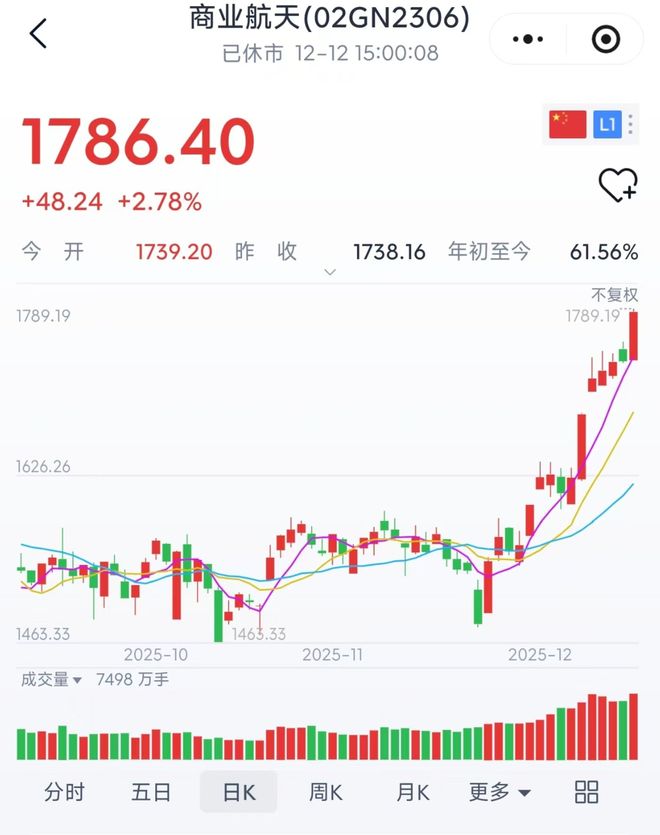
Core Viewpoint - The satellite industry is experiencing significant growth driven by policy and technological advancements, leading to a surge in related stocks and ETFs, with some increasing over 3% recently and over 13% this month [3]. Group 1: Market Performance - The A-share market showed mixed results, with the Shanghai Composite Index rising by 0.16% to 3876.37 points, while the Shenzhen Component and ChiNext Index fell by 1.29% and 2.17%, respectively [1]. - The overall market turnover was 16,722 billion, a decrease of 1,621 billion from the previous day, with over 2,800 stocks rising [1]. Group 2: Industry Catalysts - The commercial space industry is witnessing a wave of policy and technological catalysts, resulting in a surge of stocks reaching their daily limit [2]. - The satellite industry is set to benefit from several upcoming milestones, including the first flights of multiple private rockets by 2025, which are expected to break through existing capacity bottlenecks [3]. - The acceleration of satellite launches is evident, with the successful resumption of the G60 satellite constellation and new financing rounds being initiated [3]. Group 3: Industry Outlook - The satellite industry is projected to have a vast long-term market potential, with a compound annual growth rate (CAGR) of 15% expected in the domestic market by 2030 [3]. - The industry is seen as a crucial infrastructure for the future interconnected world, responsible for data and information transmission, with a pressing need for high-quality development due to limited global orbital resources [3]. Group 4: Investment Drivers - The satellite industry is characterized by a large market scale, driven by policy and technology, and expanding application scenarios [4]. - The low Earth orbit satellite constellation is becoming a new arena for major countries, with the market potential aiming for trillions [4]. - The industry is transitioning from an "investment incubation phase" to a "profit realization phase," with upstream satellite manufacturing and launch segments poised to benefit first [5].
特斯拉涨超3%创上市以来新高;航天科技集团大力培育以商业航天为代表的产业增长点;特斯拉自动驾驶汽车开始无人测试——《投资早参》
Mei Ri Jing Ji Xin Wen· 2025-12-17 00:36
Market News - The U.S. stock market closed mixed, with the Dow Jones down 0.63%, the Nasdaq up 0.23%, and the S&P 500 down 0.24%. Tesla rose over 3%, reaching a new high since its IPO, while Meta increased by over 1% [1] - International oil prices fell significantly, with U.S. crude oil down 2.99% at $55.12 per barrel and Brent crude down 2.86% at $58.83 per barrel. Gold prices also declined slightly [1] - European stock indices closed lower, with Germany's DAX down 0.68%, France's CAC40 down 0.23%, and the UK's FTSE 100 down 0.68% [1] Industry Insights - China's successful launch of the Resource No. 3 satellite marks a significant step in the space economy, which is expected to grow into a new industry involving satellite communication, navigation, and tourism. The satellite communication industry is projected to reach between 200 billion to 400 billion yuan by 2030, with a compound annual growth rate of 10% to 28% [2] - Tesla has begun testing autonomous taxis without safety drivers, while XPeng Motors has received a license for L3 autonomous driving tests in Guangzhou. This marks a critical step towards commercializing L3 autonomous driving in China, with the potential to generate significant economic value in the coming years [3] - SK Hynix's internal analysis indicates a severe imbalance in the storage market, predicting that DRAM supply shortages will persist until 2028, which is more severe than previous forecasts. This situation is expected to benefit companies in the storage industry as demand continues to rise, particularly driven by AI applications [4][5]


史上最大IPO要来了!估值10万亿
Sou Hu Cai Jing· 2025-12-16 14:54
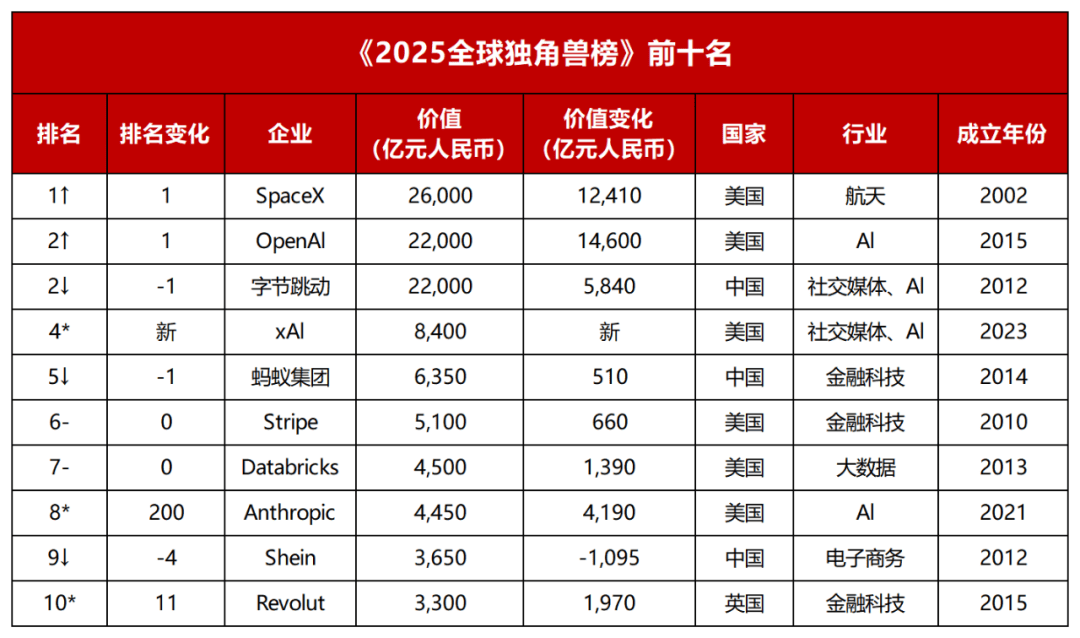
Core Insights - SpaceX plans to conduct an IPO with an estimated valuation of approximately $1.5 trillion, aiming to raise over $30 billion, which could become the largest IPO in history [1][3] - The company has recently topped the 2025 Global Unicorn List, with a valuation increase of 1.2 trillion yuan over the past year, reaching 2.6 trillion yuan [1][4] - Part of the funds raised from the IPO will be allocated to developing space data centers and acquiring necessary chips [1][3] Company Overview - Founded by Elon Musk in 2002, SpaceX is a leader in the commercial space sector, focusing on reusable rocket technology and reducing space travel costs [2] - The company’s Starlink project is the largest low Earth orbit satellite internet constellation, and its Starship rocket is currently the most powerful heavy-lift launch vehicle [2] IPO Details - SpaceX is working towards completing its IPO by mid to late 2026, although this timeline may be adjusted based on market conditions and regulatory approvals [2] - If SpaceX sells about 5% of its shares at the $1.5 trillion valuation, it could raise up to $40 billion, surpassing the previous record set by Saudi Aramco [3] Market Position - SpaceX's valuation has nearly doubled in the past year, significantly outpacing competitors like Blue Origin and DJI [5] - The company has established a strong market presence with its reusable rocket technology and the commercial success of its Starlink satellite network [5] Growth Drivers - The upcoming IPO is seen as an opportunity to leverage technological barriers and the growing space economy [6] - SpaceX plans to conduct 170 orbital launches in 2025, which would account for nearly 90% of global launch capacity, creating significant scale effects [6] Challenges Ahead - The company faces regulatory and governance challenges, particularly regarding information disclosure related to its military applications and rocket technology [7] - Competition from Blue Origin and Amazon's Kuiper project poses risks to SpaceX's market share in satellite internet [7] - Balancing shareholder interests with long-term exploration goals remains a critical challenge for SpaceX as it prepares for its IPO [7]
全球第一个:马斯克身家跃升至6770亿美元!5个月暴涨1680亿凭什么?2026年或破万亿?
Sou Hu Cai Jing· 2025-12-16 09:24
王爷说财经讯:全球第一个身价超过6000亿美元的富豪!马斯克再次创造历史! 12月16日,欢迎福布斯最新数据显示,马斯克身家飙升至6770亿美元,成为人类历史上首个突破6000亿美元大关的人! 你敢信?这比阿根廷全年GDP还高,相当于3个瑞士的经济总量,5个月时间就暴涨1680亿,平均每天赚11亿多! 6770亿美元是什么概念?分给全球79亿人,每人能分到85美元;普通人就算年薪百万,不吃不喝要赚67.7万年才能追上!可问题来了,半年前他身家才刚 破5000亿,短短5个月为何能狂揽1680亿?这波财富暴涨的核心密码是什么?SpaceX估值翻倍的背后,藏着怎样的赚钱逻辑? 01、马斯克5年缔造的财富神话 谁能想到,2020年3月马斯克身家还只有246亿,短短5年时间,他就完成了从百亿到6770亿的飞跃。 2021年登顶全球首富,2024年底破4000亿,2025年10月跨5000亿,如今直接冲到6770亿,财富增速比火箭还快。 更有意思的是,不同机构统计有差异,彭博数据显示他身家4700亿,核心差距就在SpaceX的估值——福布斯给到8000亿,而彭博还沿用2024年的3500亿旧 数据。 这意味着,真正撑起他 ...
中美卫星惊险“擦肩”,仅200米;SpaceX启动华尔街投行竞标,为潜在IPO甄选承销商;我国首批L3级自动驾驶车型产品获得准入许可——《投资早参》
Mei Ri Jing Ji Xin Wen· 2025-12-15 23:09
Key Market News - SpaceX's Starlink project faced a near-miss incident with a Chinese satellite, which SpaceX claims was uncoordinated, while the Chinese company stated all launches are conducted with collision avoidance protocols [1] - U.S. stock markets saw a collective decline, with the Dow down 0.09%, Nasdaq down 0.59%, and S&P 500 down 0.16%. Notable movements included iRobot's stock plummeting 72.69% after filing for bankruptcy, leaving its market cap at approximately $0.4 billion [2] - International oil prices fell, with WTI crude at $56.58 per barrel and Brent crude at $60.32 per barrel, while gold prices saw a slight increase [2] Industry Insights - SpaceX is reportedly initiating a selection process for investment banks to assist with its potential IPO, with expectations of raising significant funds if market conditions are favorable [3] - The satellite internet sector is projected to grow significantly, with the satellite-ground communication industry expected to exceed 200-400 billion yuan by 2030, driven by technological advancements and cost reductions [4] - China's Ministry of Industry and Information Technology granted approval for the first L3-level autonomous driving vehicles, marking a significant step towards commercial application in urban and highway settings [4][5] - The brain-computer interface market is anticipated to reach $40 billion by 2030 and $145 billion by 2040, with significant advancements in medical applications for neurological disorders [6] Stock Movements - Several companies announced share reduction plans, including De Mei Chemical, Huafeng Aluminum, and Kehua Holdings, with intentions to reduce their holdings by up to 3% of total shares [7]
[热闻寻踪]盈利还在地平线,资本为何抢先为商业航天“买单”?
Quan Jing Wang· 2025-12-15 13:34
Group 1: Industry Overview - The commercial aerospace sector has become a focal point in the A-share market, with related stocks experiencing a collective rise due to a combination of policy support, technological advancements, and market demand [1] - The establishment of the Commercial Aerospace Department by the National Space Administration and the release of the "Action Plan for Promoting High-Quality and Safe Development of Commercial Aerospace (2025-2027)" provide a clear policy framework, boosting market confidence [1] - Significant technological breakthroughs, such as the successful maiden flight of Blue Arrow Aerospace's "Zhuque-3" reusable rocket, mark substantial progress in reducing launch costs, indicating a potential surge in demand for satellite manufacturing and launch services [1] Group 2: Company Developments - Beichuang Technology has made progress in the development and manufacturing of precision displacement and optical platform products for commercial aerospace, although current order sizes are small [2] - Guojijiang Precision has a market share of over 90% in traditional aerospace bearings and serves several rocket companies in the commercial aerospace sector [2] - Jiuziyang has focused on developing core components for inter-satellite and ground communication, contributing to the national aerospace strategy [3] - Zhonghang Optoelectronics has successfully supported mainstream rocket models and is expanding cooperation with leading commercial rocket companies [3] - Chaojie Co. specializes in manufacturing large components for commercial rockets, with major clients among top commercial aerospace firms [4] - Huitian New Materials produces high-performance adhesives suitable for aerospace applications and is actively developing advanced materials for commercial aviation [5] - Haite High-tech is involved in satellite internet services and has developed an eVTOL simulator, contributing to the low-altitude economy [6] - Guangwei Composite Materials is a key supplier of carbon fiber materials for solid and liquid propulsion systems, with a significant role in the commercial aerospace supply chain [7] - Fuguang Co. has achieved batch production of arrow-mounted lenses and is developing various optical products for low-orbit satellites [10] Group 3: Market Potential and Future Outlook - The commercial aerospace market is expected to enter a rapid growth phase, with companies like Ruichuang Micro-Nano developing advanced satellite communication technologies [11] - The overall aerospace industry is projected to benefit from the establishment of dedicated regulatory bodies, which will promote high-quality development in the sector [6] - Companies are optimistic about the potential for significant market growth in commercial aerospace, with many actively pursuing partnerships and expanding their product offerings [12]
1.5万亿美元IPO要改写历史?SpaceX的太空帝国来了
Tai Mei Ti A P P· 2025-12-15 11:19
Core Insights - The global population has surpassed 8 billion, prompting a shift in focus from earthly pursuits to the vast resources and opportunities in space [1] - The capital market's response to SpaceX's potential IPO indicates a growing enthusiasm for the space economy, with its valuation soaring from $400 billion to $1.5 trillion [2][3] Company Overview - SpaceX's impending IPO signifies a pivotal moment in the commercial space industry, akin to the smartphone revolution for mobile internet [3] - The company has evolved from a rocket manufacturer to a leader in commercial space, with three main business pillars: Falcon rockets, Starlink satellite internet, and Starship [13][14] Financial Performance - SpaceX is projected to generate $15 billion in revenue by 2025, increasing to $22-24 billion by 2026, supported by its profitable satellite internet business [12] - The anticipated valuation of $1.5 trillion would challenge the record set by Saudi Aramco's $1.7 trillion IPO, despite SpaceX's revenue being significantly lower than that of Tesla [15] Market Dynamics - The commercial space sector is experiencing a surge, with companies like SpaceX leading the charge, while Chinese firms are also making significant advancements in space technology [16] - The market's optimism is reflected in the stock performance of related companies following the IPO announcement, indicating strong investor interest in the space economy [15] Strategic Positioning - SpaceX's unique position allows it to maintain control over its long-term vision without being overly influenced by short-term stock price fluctuations, a shift from Elon Musk's previous stance against going public [10][12] - The company has established a monopoly in several areas of commercial space, including rocket launches and low Earth orbit satellite networks, further solidifying its market dominance [12][13]
5个月翻倍:SpaceX估值飙升至8000亿美元!马斯克或成为全球首个身价万亿美元富豪?
Sou Hu Cai Jing· 2025-12-15 10:57
8000亿是什么概念?相当于5个特斯拉的市值,比阿根廷全年GDP还高!马斯克距离全球首个万亿富豪只剩一步之遥?这波估值狂欢到底靠的是技术硬实 力,还是资本讲故事? 王爷说财经讯:估值8000亿美元,全球最大规模IPO要来了! 2025年12月15日,全球财经圈被一则消息震翻:SpaceX估值飙升至8000亿美元!这一数字比半年前直接翻倍,远超OpenAI的5000亿估值,重夺全球最贵独 角兽宝座。 01、SpaceX估值8000亿美元:5个月翻倍的估值神话 谁能想到,2025年7月还只有4000亿估值的SpaceX,短短5个月就实现估值翻倍。 这波飙升的核心推手,是其最新敲定的内部股票交易——每股定价421美元,直接将公司估值锁定在8000亿美元。 更关键的是,SpaceX已明确2026年下半年IPO计划,此次估值调整正是为上市铺路。 要知道,这家成立近25年的航天公司,2025年预计营收仅155亿美元,却撑起了51倍的市销率——这是波音的12倍,更是科技行业平均水平的5倍以上。 一边是尚未盈利的业绩,一边是资本疯抢的热情,这场估值神话的背后藏着什么逻辑? 02、SpaceX估值飙升的4大核心逻辑 那么问题来 ...