
数字经济

Search documents
数据要素价值如何充分释放(高质量发展故事汇·第16期)
Ren Min Ri Bao· 2026-02-26 22:06
Core Viewpoint - The Chinese government emphasizes the importance of data as a fundamental resource and innovation engine, aiming to accelerate the development of a digital economy driven by innovation [1][2]. Group 1: Importance of Data - Data is becoming a key driving force for high-quality economic and social development, with historical shifts in production driven by key factors such as land, labor, capital, and technology [1]. - Data sovereignty is now a crucial aspect of national competitiveness, impacting a country's ability to gain advantages in the global competition [1]. - The integration of data into various economic processes is reshaping production methods, social structures, and governance models, serving as a vital tool for innovation and development [1]. Group 2: Institutional Framework - The release of data value is hindered by unclear ownership and lack of circulation rules, necessitating a robust institutional framework to facilitate data as an asset [3][4]. - The establishment of a data property rights system aims to clarify rights and encourage participation in data production and application, thus enhancing the efficiency of data transactions [4]. - A unified data market is essential for breaking down barriers to data circulation, improving resource allocation efficiency, and fostering innovation [5]. Group 3: Application and Impact - Data is rapidly integrated into all aspects of production, distribution, circulation, consumption, and social management, driving transformative changes in various sectors [6]. - In manufacturing, data serves as a new engine for quality and efficiency improvements, enabling real-time monitoring and intelligent analysis [7]. - In daily life, data enhances services such as navigation and healthcare, while also addressing information asymmetry in sectors like labor [7][8]. Group 4: Governance and Security - Data governance is crucial for modernizing governance capabilities, enabling seamless integration of information across various sectors for efficient service delivery [8]. - The relationship between data security and value release is interdependent, with security measures necessary for facilitating data circulation and ensuring trust [9]. - Establishing a comprehensive security framework for data circulation can expand the scope of data value release and promote the application of high-value data [9].
新春开局“用工忙” 新兴产业需求旺
Xin Lang Cai Jing· 2026-02-26 19:41
(来源:经济参考报) 开工首周,全国多地快马加鞭返岗复工,务工人员奔赴岗位、企业开足马力揽才、招聘市场供需两旺。 记者采访发现,多地人社部门主动作为、靠前服务,以跨省劳务协作等方式强化统筹保障。开年以来的 招聘热潮,显现出就业结构优化、用工需求升级的新趋势,折射出我国就业市场稳步向好的积极态势。 马年伊始,用工市场持续升温。日前,记者在甘肃省定西市陇西县人力资源市场看到,务工人员张小兵 正整装待发,即将搭乘"陇西-南京就业直通车"前往南京。 "此前我一直在老家打零工,收入很不稳定。前段时间村干部在微信群推送了招聘信息,一看是上汽大 通汽车有限公司南京分公司的岗位,薪资待遇十分优厚,我立刻就报了名。"张小兵告诉记者,这是他 首次赴南京务工,人力资源公司还安排了免费专车,"点对点"直达企业门口,出行便捷又省心。 定西优职招聘人力资源有限责任公司负责人雪辽军是此次行动的组织人。他介绍,当天这趟专车搭载了 52名陇西籍务工人员。截至目前,陇西县返岗复工保障行动已通过务工专列、务工大巴等"点对点,一 站式"方式输转655人,累计输转城乡富余劳动力4.6万人。 "在政府牵线搭桥下,我们与用工企业的劳务协作渠道不断拓宽,新 ...
民生福祉类指标占近30% 历届五年规划中数量最多一次
Xin Lang Cai Jing· 2026-02-26 18:39
Core Points - The article discusses the "15th Five-Year Plan" for Chongqing, outlining development goals and key tasks focused on improving people's livelihoods, industrial upgrades, and regional coordination [2][28]. Group 1: Livelihood Improvement - During the "15th Five-Year" period, Chongqing will prioritize people's well-being, with 7 livelihood indicators making up nearly 30% of all major indicators, the highest in any five-year plan [2][29]. - The city aims to add over 3.25 million urban jobs, focusing on supporting groups like college graduates and migrant workers while optimizing affordable housing supply [3][11]. Group 2: Industrial Upgrade - Chongqing will iterate the "33618" modern manufacturing cluster system, aiming to stabilize the manufacturing value-added share of GDP at around 25% [4][16]. - The city plans to develop two major industrial hubs: a globally influential smart connected vehicle city and a stronghold for low-altitude economy innovation [4][5]. Group 3: Youth Development - The plan emphasizes youth development, aiming to create a "Youth Dream City" by providing high-value job opportunities and supporting entrepreneurial initiatives [7][10]. - Chongqing will encourage the establishment of innovative platforms for youth entrepreneurship and implement support measures to reduce risks associated with starting businesses [10]. Group 4: Infrastructure Development - The city will enhance its infrastructure, including the construction of high-speed railways to connect more districts, aiming for a total high-speed rail mileage of 2,100 kilometers [25][26]. - Efforts will also focus on improving urban road and bridge efficiency and upgrading underground utility networks to ensure safety and reliability [26]. Group 5: Energy and Power Supply - Chongqing aims to transition from merely "using electricity" to "utilizing electricity effectively," focusing on stable, green, and affordable power supply [19][20]. - The city plans to increase its cross-provincial power import capacity to over 26 million kilowatts by 2030 and enhance local power generation capabilities [20][21]. Group 6: Economic Growth - The plan targets a total increase in the value added by the private economy to 2.5 trillion yuan by the end of the "15th Five-Year" period, emphasizing the importance of private sector growth [8][9]. - The government will implement reforms to improve the business environment and facilitate the free flow of resources, aiming to create a more efficient market [8][9].

安徽16个市全部达到“千兆城市”标准
Xin Lang Cai Jing· 2026-02-26 16:38
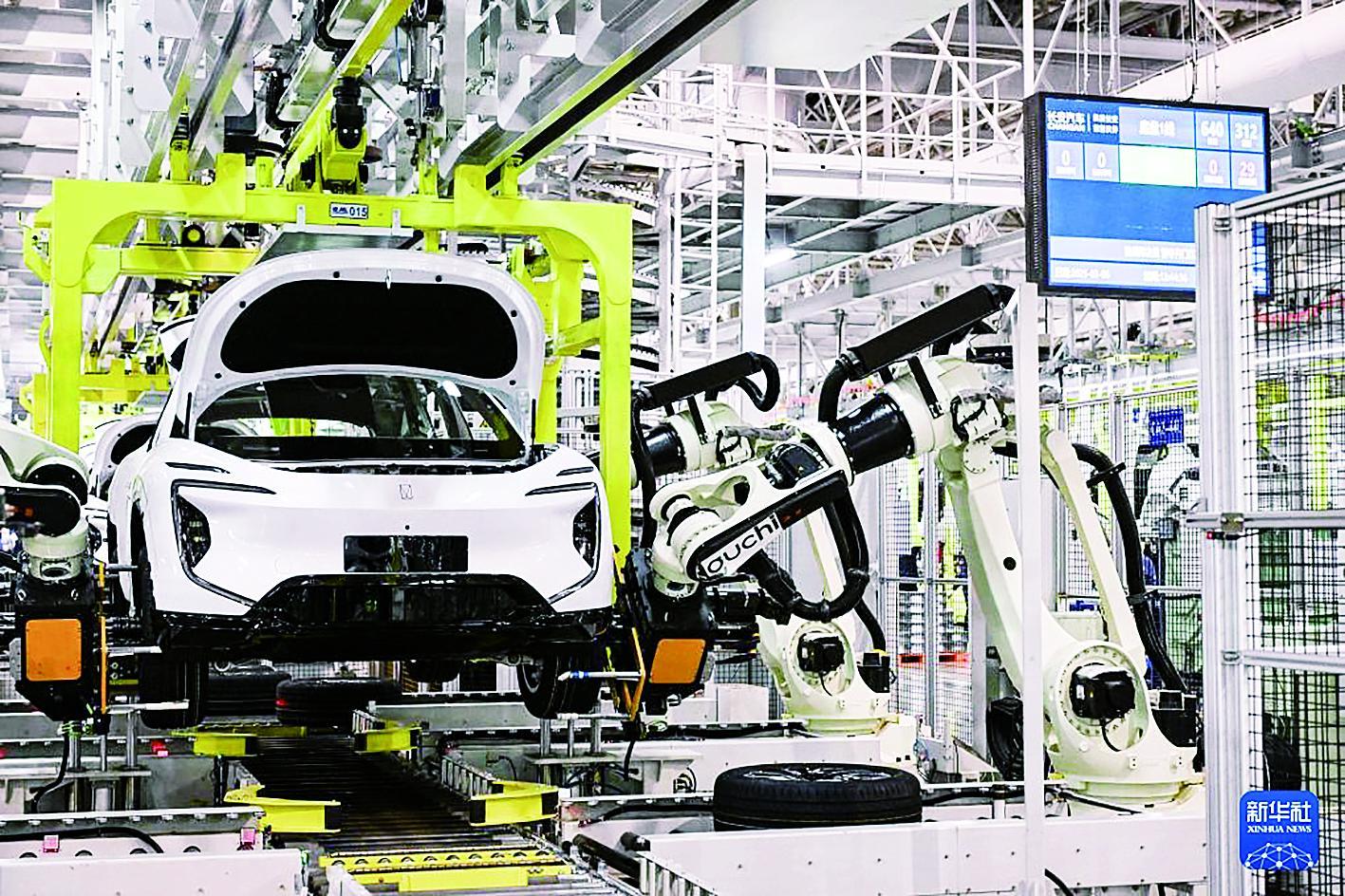
Group 1 - The digital economy in the province is experiencing significant growth, supported by enhanced digital infrastructure and technology applications, becoming a crucial pillar for high-quality economic development [1] - By 2025, the total telecommunications business volume in the province is projected to reach 66.92 billion yuan, with a growth rate of 9.8%, driven by mobile internet and IoT services, which are expected to grow by 15.9% and 20.4% respectively [1] - The province has achieved "Gigabit City" status across all 16 cities, indicating a robust digital infrastructure [1] Group 2 - By 2025, the core digital economy industries in the province are expected to generate operating income of 1,431.85 billion yuan, reflecting a year-on-year growth of 14.3%, which is 7.3 percentage points higher than the overall growth of "four above" enterprises [2] - The digital product manufacturing sector is projected to achieve operating income of 965.51 billion yuan, with a growth rate of 14.7% [2] - The software and service industry is also on a growth trajectory, with digital product services expected to reach operating income of 112.5 billion yuan, growing by 37.1% [2]
香港创新科技及工业局局长:紧抓AI机遇 建设智慧香港
Zhong Guo Xin Wen Wang· 2026-02-26 13:58
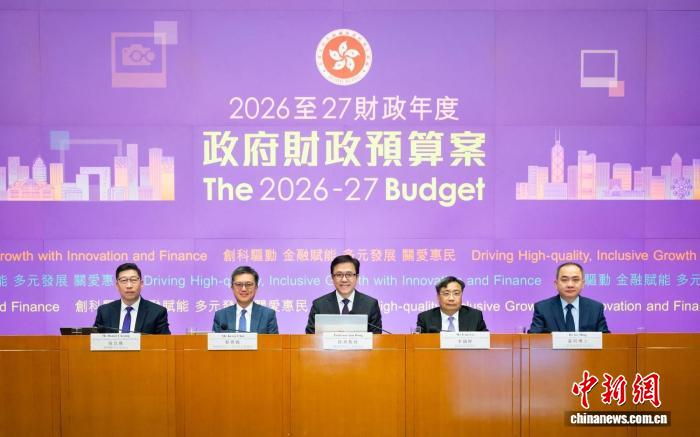
Group 1 - The Hong Kong government is focusing on three key areas for innovation and technology development: seizing AI opportunities, leveraging unique advantages to connect with the mainland and the world, and expanding the talent pool in the tech sector [1][3] - An "AI+ and Industry Development Strategy Committee" will be established, initially focusing on the health sector, with the aim of advancing Hong Kong's research in elderly health diagnostics and treatment [3] - A budget allocation of HKD 50 million for universal AI training has been proposed, aimed at enhancing citizens' capabilities to seize AI opportunities, with plans to scale up if initial results are positive [3] Group 2 - The Financial Secretary of Hong Kong outlined four main areas to enhance the city's role as an international financial center: promoting reforms, expanding infrastructure, increasing capacity, and building connections [3] - Key measures include optimizing the regulatory framework for listed companies, providing guidance for overseas companies seeking secondary listings, and exploring tax incentives for qualified institutions involved in gold trading and settlement in Hong Kong [3]
为新型案例入库设“快车道”背后,人大代表建议被最高法采纳
Nan Fang Du Shi Bao· 2026-02-26 12:34
Core Viewpoint - The upcoming National People's Congress (NPC) aims to gather public demands and suggestions from representatives to drive high-quality development and enhance people's democracy [1] Group 1: Case Library and Judicial Efficiency - The People's Court case library was officially launched on February 27, 2024, providing a practical resource for judges and the public, enhancing legal understanding and application [2][4] - Representative Li Hui proposed optimizing the case library's update mechanism to improve the efficiency and scope of case inclusion, particularly for new and emerging cases related to technology innovation and green economy [6][10] - The Supreme People's Court has responded to the suggestions by prioritizing the inclusion of new cases and ensuring timely updates to the case library, which now includes significant cases like the "invisible overtime" and "engagement rape" cases [8][10] Group 2: Importance of Representative Suggestions - The Supreme People's Court emphasizes the importance of addressing representative suggestions not just as formal responses but as substantial solutions to improve judicial efficiency [7][11] - The case library's development is seen as a public good that serves both judicial processes and public legal education, with over 5,300 cases included as of February 24, 2026, achieving comprehensive coverage of common legal issues [10][11] - The case library has gained significant attention, with over 43 million views, indicating its role as a vital resource for legal learning and public trust in the judicial system [10]
2026印度尼西亚电子商务行业报告
Dlightek· 2026-02-26 09:55
Investment Rating - The report indicates a positive outlook for the Indonesian e-commerce industry, projecting significant growth in Gross Merchandise Value (GMV) from $620 billion in 2024 to $710 billion in 2025, and potentially doubling to $1,400 billion by 2030 [2][31]. Core Insights - Indonesia, as the largest economy in ASEAN, contributes approximately 36% of the region's GDP and demonstrates a robust growth resilience of around 5% [2][8]. - The e-commerce sector is transitioning from traffic expansion to compliance development, supported by a young population and high internet penetration, with 80.66% of the population online [2][14]. - The competitive landscape is evolving, with Shopee leading the market with a 53.22% access rate, while TikTok Shop's merger with Tokopedia is reshaping the industry [2][31]. Summary by Sections Section 1: Overview of Indonesia - Indonesia's economy is characterized by a strong domestic market and resource advantages, with a projected middle class of 140 million by 2030 [8][10]. - The country has a young population with a median age of 30.4 years, contributing to the growth of the digital economy [12][14]. Section 2: Development of the E-commerce Industry - The e-commerce industry in Indonesia has evolved significantly since the late 1990s, with a notable shift towards mobile commerce and regulatory compliance [25][28]. - The government is implementing regulations to protect local SMEs and ensure compliance in the e-commerce sector [28][29]. Section 3: Trends in the E-commerce Industry - Content-driven shopping is becoming a prominent trend, with content e-commerce expected to account for 25% of total GMV by 2025 [47]. - Platforms are increasingly integrating content and shopping experiences to enhance user engagement and conversion rates [47][48]. Section 4: Opportunities and Challenges in the E-commerce Industry - The report highlights the significant potential in Indonesia's underserved markets, despite challenges such as logistics, product quality, and data privacy concerns [51][52]. - The e-commerce market is still concentrated in Java, but growth is accelerating in outer islands, indicating a need for improved logistics and infrastructure [51][52].

能科科技涨2.00%,成交额2.48亿元,主力资金净流出1148.02万元
Xin Lang Zheng Quan· 2026-02-26 05:28
Group 1 - The core viewpoint of the news is that Nengke Technology has shown a significant increase in stock price and trading activity, indicating investor interest and market performance [1][2]. - As of February 26, Nengke Technology's stock price rose by 2.00% to 48.41 CNY per share, with a total market capitalization of 11.846 billion CNY [1]. - The company has experienced a year-to-date stock price increase of 15.12%, with a recent five-day increase of 5.24% and a 60-day increase of 17.79% [1]. Group 2 - Nengke Technology, established on December 26, 2006, focuses on sectors such as national defense, high-tech electronics, 5G, automotive, and infrastructure, providing digital transformation solutions [2]. - The company's revenue composition includes cloud products and services (30.35%), industrial engineering and electrical products (30.24%), software systems and services (20.90%), and AI products and services (18.08%) [2]. - For the period from January to September 2025, Nengke Technology reported a revenue of 1.089 billion CNY, a year-on-year increase of 5.05%, and a net profit of 165 million CNY, a year-on-year increase of 40.34% [2]. Group 3 - Nengke Technology has distributed a total of 79.6501 million CNY in dividends since its A-share listing, with 21.4003 million CNY distributed in the last three years [3]. - As of September 30, 2025, the company had 35,500 shareholders, an increase of 36.38%, with an average of 6,902 circulating shares per shareholder, a decrease of 26.67% [2][3]. - New institutional shareholders include Hong Kong Central Clearing Limited and GuoShouAnBao Smart Life Stock A, which have entered the top ten circulating shareholders [3].

2025年Q4移动互联网行业数据研究报告
Sou Hu Cai Jing· 2026-02-26 04:48
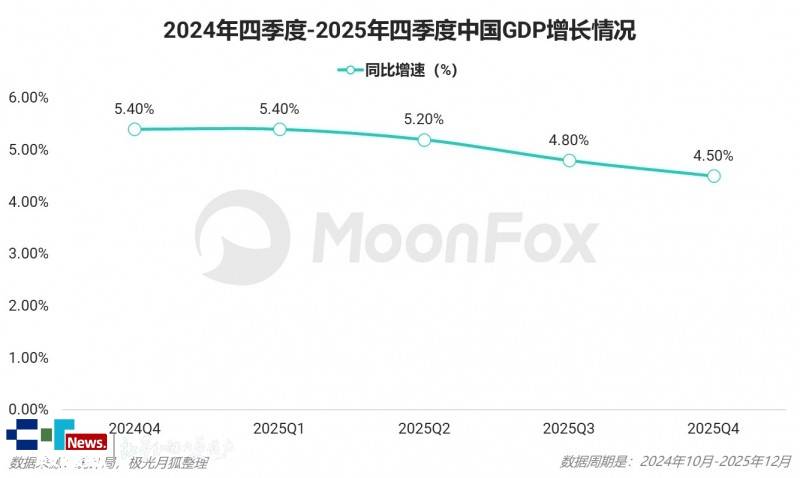
Macro Insights - In 2025, China's GDP surpassed 140 trillion yuan, reaching 1401879 billion yuan, with a year-on-year growth of 5.0% [1][6] - In Q4 2025, GDP was 387911 billion yuan, with a year-on-year growth of 4.5% [1][6] - The contribution of final consumption expenditure to economic growth was 52.0% in 2025, and 52.9% in Q4 [6] - The industrial sector showed stable growth, with a year-on-year increase of 5.0% in Q4, contributing 1.5 percentage points to economic growth [6][9] - Net exports demonstrated resilience, contributing 32.7% to economic growth in 2025 [9] Internet Sector Development Analysis AI Sector - The focus of the AI industry shifted from algorithm competition to deep exploration of commercial value and efficient realization [21][22] - AI technology integration into market applications is accelerating, with significant growth in smart terminal devices [22][25] - The AIGC application scenarios expanded, with notable growth in industrial and autonomous driving sectors [25][30] Video Sector - The online video industry experienced a seasonal decline in Q4 2025, with a slight year-on-year decrease of 0.9% [39] - Ten S+ series were launched in Q4, with overall video content showing a decline compared to the previous year [44][48] - Platforms are actively promoting high-quality content strategies, with significant successes in series like "反人类暴行" [49][66] E-commerce Sector - The e-commerce industry continued to grow, with user device coverage reaching 11.66 billion [75] - Regulatory policies are being optimized to promote healthy development in the e-commerce sector [73][74] - Major players like Alibaba and JD.com are deepening their integration into lifestyle services and enhancing AI applications [79][81] Tourism Sector - Winter tourism is becoming a new growth engine for the tourism industry, particularly during the traditional peak season [2] Short Drama Sector - The short drama industry is rapidly growing, with an estimated annual output value nearing 900 billion yuan in 2025 [1] Social Sector - The social media market remains stable, with vertical social platforms continuing to show significant potential [1]
A股午评:沪指微跌0.08%、创业板指跌0.39%,算力硬件、电力及燃气板块走高,小金属概念股活跃,影视院线概念股持续低迷
Jin Rong Jie· 2026-02-26 03:42
Market Overview - The A-share market showed a weak oscillating pattern on February 26, with major indices performing poorly. The Shanghai Composite Index fell by 0.08% to 4144.08 points, while the Shenzhen Component Index rose by 0.28% to 14516.11 points. The ChiNext Index decreased by 0.39% to 3341.74 points, and the STAR 50 Index increased by 0.12% to 1474.99 points. The total trading volume in the Shanghai and Shenzhen markets reached 1.64 trillion yuan, an increase of 117.3 billion yuan compared to the previous trading day, with over 2900 stocks declining [1]. Sector Performance Strengths - Computing hardware stocks remained active, with strong performances from PCB, CPO, and liquid-cooled server concepts. Notable stocks included Shenzhen South Circuit, Dazhu Laser, Huadian Electric, Guanghe Technology, and Chuanrun Co., all hitting the daily limit [1]. - The power sector continued its upward trend, with Ganneng Co. achieving two consecutive limit-ups and Huayin Electric hitting the daily limit. The gas turbine concept also saw collective gains, with Dongfang Electric and Changbao Co. reaching their daily limits [1]. - Lithium mining stocks emerged as a highlight, with Jin Yuan Co. hitting the daily limit and other stocks like Keli Yuan, Jiangte Electric, Dazhong Mining, and Rongjie Co. all rising over 6%. This surge was driven by a recent export ban on lithium from Zimbabwe, which is expected to tighten supply and push lithium prices significantly higher [2]. - The power sector's recent activity was supported by a report from the National Energy Administration, indicating that by 2025, the new installed capacity for renewable energy in China is expected to reach 452 million kilowatts, a 21% year-on-year increase, accounting for 83% of the country's new power installations [3]. - The superhard materials and phosphorus chemical sectors continued to show strength, with Huanghe Xuanfeng achieving two limit-ups in three days and Sifangda rising over 10%. The phosphorus chemical sector also saw gains, with Jinzhengda and Chengxing Co. achieving three consecutive limit-ups [5]. Weaknesses - The glass fiber, film and television, photovoltaic, and real estate sectors faced significant declines. Notably, Ningde Times saw a drop of over 5%, which negatively impacted the ChiNext Index [6]. - The lithium battery sector experienced volatility, with Penghui Energy falling over 9%. The film and television sector also saw a notable decline, with Bona Film Group suffering a significant drop [1][6]. Institutional Insights - Morgan Stanley's chief stock strategist indicated that the A-share market has entered a "slow bull" phase, characterized by a focus on earnings rather than just liquidity. The market is expected to see sustainable positive returns if net profit margins can be reasonably improved [7][8]. - According to a forecast by a fund manager, the A-share market is expected to transition to an "earnings-driven" phase by 2026, with the sustainability of market growth relying on substantial improvements in corporate profitability rather than mere valuation expansion [8].

