
数字赋能

Search documents
普惠贷款:滴灌实体经济,赋能民生发展
Qi Lu Wan Bao· 2025-11-26 15:32
Core Insights - Inclusive loans are becoming a vital tool for financial inclusion, effectively addressing financing challenges for small and micro enterprises, rural industries, and the livelihood sector, thereby contributing to high-quality economic development [1][2] Group 1: Policy and Mechanism Innovation - Financial management departments are optimizing structural monetary policy tools and establishing coordination mechanisms for small and micro enterprise financing, ensuring financial resources reach weaker segments [1] - By the end of September 2025, the balance of inclusive small and micro loans is expected to reach 36.1 trillion yuan, reflecting a year-on-year growth of 12.2%, significantly alleviating the "difficult and expensive financing" issues faced by small and micro enterprises [1] - Local governments are collaborating with banks and enterprises to identify demand and provide precise services, effectively bridging the "last mile" of financial inclusion [1] Group 2: Digital Empowerment and Product Innovation - Financial institutions are leveraging big data and artificial intelligence to optimize risk control systems, leading to an increase in the proportion of credit loans and enabling online loan applications and efficient approvals, with some loans disbursed on the same day [1] - Innovative products tailored to specific industry needs, such as "Liu Bian Loan" and "Greenhouse Loan," are being introduced to meet the financing requirements of different business entities, making financial services more aligned with industry realities [1] - The rural credit system is continuously improving, with assessments of "credit users" and "credit villages" providing support for financing in agricultural communities, thereby aiding rural revitalization [1] Group 3: Diverse Supply and Targeted Support - Large banks are playing a leading role, while small and medium financial institutions are focusing on regional economies, creating a differentiated service landscape [2] - Credit resources are primarily directed towards private small and micro enterprises and agricultural sectors, while also integrating insurance and other sectors to enhance the risk protection network [2] - Inclusive loans are nurturing thousands of enterprises and households, significantly enhancing the sense of gain among market participants and injecting lasting financial strength into the economy [2]
全球减贫事业的中国答卷成绩亮眼(国际论道)
Ren Min Ri Bao Hai Wai Ban· 2025-11-25 22:56
Core Insights - The article highlights China's significant achievements in poverty alleviation, emphasizing the effective transition from poverty alleviation to rural revitalization as part of the 14th Five-Year Plan, which culminates in 2025 [1][4][12]. Group 1: Poverty Alleviation Achievements - By July 2025, over 6 million at-risk individuals have been identified and assisted through a national dynamic monitoring system [1]. - Rural residents' income growth in poverty-stricken counties has outpaced the national average for four consecutive years [1]. - All 832 poverty-stricken counties have established characteristic industrial systems, contributing to sustainable economic development [1][4]. Group 2: Global Recognition and Impact - China's poverty alleviation efforts have been recognized globally, with foreign media describing them as unprecedented milestones in human history [2][12]. - The United Nations Secretary-General praised China's achievements for setting a benchmark for global poverty reduction efforts [2]. - China's experience serves as a model for developing countries, instilling hope and determination in the global fight against poverty [1][12]. Group 3: Mechanisms and Strategies - The establishment of a five-year transition period and a dynamic monitoring mechanism is seen as crucial for preventing a return to poverty [3][8]. - The integration of digital technology in agriculture has enhanced productivity and market access for rural farmers, contributing to poverty alleviation [6][12]. - The "precision poverty alleviation" strategy has been pivotal, focusing on tailored assistance for impoverished households based on specific needs [9][10]. Group 4: International Cooperation and Knowledge Sharing - China actively shares its poverty alleviation experiences with other developing countries, fostering international cooperation in poverty reduction [12][13]. - The establishment of a poverty reduction cooperation committee with Uzbekistan exemplifies China's commitment to global poverty alleviation efforts [12]. - Various initiatives, including the China-Central Asia Summit, aim to enhance collaboration in poverty alleviation and sustainable development [12][14].

报告着眼长三角地区国家级先进制造业集群:产业集聚协同效应显著
Zhong Guo Xin Wen Wang· 2025-11-25 17:39
Core Insights - The Yangtze River Delta region has formed 26 national-level advanced manufacturing clusters, demonstrating significant industrial agglomeration and synergy effects [1] - The report indicates that from 2020 to the first half of this year, financing events and amounts in the high-end equipment sector in the Yangtze River Delta accounted for nearly half of the national total, reflecting strong confidence from the capital market [1] - The region is recognized as a core agglomeration area for China's high-end equipment manufacturing, with a favorable pattern of collaboration among Shanghai, Jiangsu, Zhejiang, and Anhui under the strategic guidance of the G60 Science and Technology Innovation Corridor [1] Industry Overview - The report highlights the establishment of an internationally competitive high-end equipment manufacturing industry cluster in the Yangtze River Delta, leveraging industrial and innovation advantages [1] - The ranking aims to discover and recognize companies with outstanding innovation capabilities and market performance in the high-end equipment manufacturing sector, promoting the development of new productive forces and high-quality transformation of the manufacturing industry [1] Ranking Insights - The ranking focuses on five tracks: robotics, energy equipment, low-altitude economy, intelligent transportation equipment, and other emerging industrial technology equipment, evaluating participating companies based on core teams, technological and product leadership, market and business layout, financial health, market influence, and future planning [1] - Emerging industrial technology equipment accounts for 34.2% of the ranking, with companies focused on integrated circuit equipment research and production making up 10.5% of the total [2] - The robotics sector ranks second with a 31.6% share, indicating strong development momentum [2] Future Directions - The report emphasizes that the future of the high-end equipment industry lies not only in technological innovation but also in business model innovation, management capability enhancement, and international vision expansion [2] - It suggests that digital empowerment should be strengthened to assist companies in transitioning towards intelligent and green development, with industrial internet serving as a crucial engine for the transformation of the high-end equipment manufacturing industry [2]
北京15条举措打造医疗器械产业高地
Bei Jing Shang Bao· 2025-11-25 16:40
Core Viewpoint - The Beijing Municipal Bureau of Economy and Information Technology, along with five other departments, has issued measures to promote the high-quality development of the medical device industry, focusing on innovation and practical application to create an internationally influential high-end industry hub [1] Group 1: Policy Implementation - The measures consist of 15 specific policies across five dimensions: R&D registration, achievement landing, ecological aggregation, digital empowerment, and open cooperation, effective from November 24, 2025, to December 31, 2028 [1] - The measures aim to address key challenges faced by medical device companies, such as slow R&D, lengthy market entry, and difficulties in promotion, by establishing a comprehensive support system from source to terminal [1] Group 2: Innovation and Collaboration - The measures encourage the formation of cross-disciplinary innovation alliances between enterprises, research institutions, and medical organizations, promoting the landing of forward-looking innovative achievements through various initiatives [2] - To facilitate the integration of innovative medical devices into clinical settings, the measures propose the establishment of training and application demonstration centers in collaboration with medical enterprises [2] Group 3: Digital Empowerment - The measures recognize digital empowerment as a crucial engine for upgrading the medical device industry, proposing the acceleration of high-quality data set construction in the healthcare sector and supporting the development of data governance service platforms [3] - Financial support of up to 30 million yuan is available for enterprises developing industry-leading models, with a focus on enhancing data flow policies and collaboration with large model enterprises [3]
湖南五年累计完成公路水路投资5386亿元
Zhong Guo Xin Wen Wang· 2025-11-25 11:29
Core Viewpoint - Hunan Province has invested a total of 538.6 billion yuan in road and waterway infrastructure over the past five years, significantly enhancing its transportation network and logistics efficiency [1][3]. Investment and Infrastructure Development - The total investment in road and waterway infrastructure reached 538.6 billion yuan, averaging nearly 300 million yuan per day [1]. - The total length of roads will reach 270,000 kilometers, with highways accounting for 8,642 kilometers, ranking 9th in the country [1]. - The total navigable waterway length is 12,000 kilometers, ranking 3rd nationally, while the railway operating mileage is 6,079 kilometers, ranking 10th, including 2,501 kilometers of high-speed rail, ranking 5th [1]. Transportation Network Improvements - Hunan has achieved full high-speed rail connectivity between cities and a circular high-speed rail operation within the province [3]. - The provincial highway network now allows for direct access to all counties, with 31 expressway exit points facilitating interprovincial travel [3]. - The rural road network has expanded to 230,000 kilometers, ensuring connectivity to every town and important village [3]. Waterway and Logistics Enhancements - The province has developed 1,276 kilometers of Class I and above waterways, with the Xiang River's Class I waterway nearing full connectivity to the Yangtze River [4]. - The number of berths for vessels over 1,000 tons has reached 179, forming a modern inland waterway transport system centered around Dongting Lake [4]. - The total logistics costs as a percentage of GDP have decreased from 17.5% in 2015 to 14% in 2024, marking a continuous decline over ten years [3]. Service Quality and Digital Transformation - Hunan has shifted its transportation services from mere availability to quality, with 14,000 passenger vehicles serving rural areas [4]. - The province has implemented 12 multimodal transport routes, significantly reducing transportation costs for businesses [4]. - A total of 32,000 new energy or clean energy buses have been purchased, with green buses making up 97.5% of the fleet, the highest in the country [6]. Safety and Emergency Response - Hunan has completed a comprehensive risk assessment for natural disasters affecting road and waterway infrastructure, upgrading over 4,700 old bridges [6]. - The province has established a professional rescue force and a regional traffic equipment reserve center, achieving a 98.82% response rate for highway vehicle rescues within 30 minutes [7]. - Since the beginning of the "14th Five-Year Plan," traffic accidents and fatalities in the province have shown a continuous decline [7].
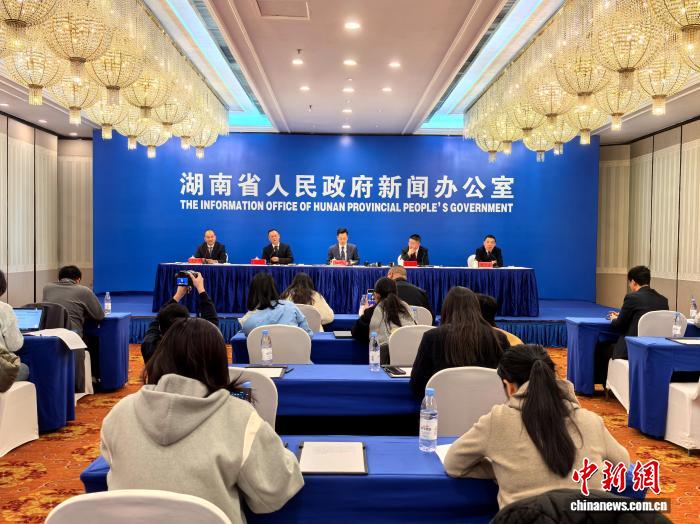
长三角高端装备产业标杆效应显现
Guo Ji Jin Rong Bao· 2025-11-25 00:52
Core Viewpoint - The high-end equipment manufacturing industry in China is experiencing significant growth driven by innovation, with a focus on advanced productivity and international competitiveness [1][2] Group 1: Industry Development - The high-end equipment manufacturing sector is witnessing a continuous increase in market size, improved industrial structure, and enhanced international competitiveness [1] - China has maintained its position as the world's largest industrial robot market for 12 consecutive years, with notable growth in collaborative and service robots [1] - The energy equipment sector is expanding but facing intense competition, prompting a shift towards demand-driven, quality-focused, and optimized structures [1] - The low-altitude economy is identified as a strategic emerging industry, with future commercialization focusing on urban air traffic, agricultural applications, and low-altitude tourism [1] - Intelligent transportation equipment is evolving around 5G, V2X, algorithms, big data, and autonomous driving technologies [1] Group 2: Regional Insights - The Yangtze River Delta has established 26 national-level advanced manufacturing clusters, accounting for 32.5% of the national total, showcasing significant industrial agglomeration and synergy [2] - Shanghai leads in the number of high-end equipment companies, supported by its strategic alignment with national policies and a mature industrial ecosystem [2] - Jiangsu, Zhejiang, and Anhui provinces collectively account for nearly 60% of the high-end equipment sector, demonstrating effective regional collaboration [2] Group 3: Capital Investment - Investment activities in the high-end equipment sector are rebounding, particularly in robotics and intelligent transportation, with a trend towards early-stage financing [3] - From 2020 to mid-2025, the Yangtze River Delta accounted for nearly half of the national financing events and amounts in the high-end equipment sector, indicating strong market confidence [3] - Shanghai's financing activities are particularly noteworthy, with 682 financing events totaling 119.2 billion yuan from 2020 to mid-2025 [3] - Shanghai benefits from over 500 effective industrial policies, the formation of four trillion-level core industrial clusters, and a high level of internationalization [3] Group 4: Future Opportunities and Challenges - Companies need to overcome critical technology bottlenecks and accelerate independent research and development while respecting industrial development laws [4] - Digital empowerment is essential for companies to transition towards intelligent and green development, with industrial internet playing a key role in transforming manufacturing and service systems [4] - Increased capital investment is necessary to enhance competitive advantages, encouraging companies to engage with multi-tiered capital markets [4] - The focus should shift from "single-point breakthroughs" to "full industrial chain collaborative innovation" to improve cooperation efficiency [4] - Companies should expedite their global expansion to enhance supply chain resilience and security [4]
用数字思维创新驱动生态环境治理——写在《湖南省数据条例》即将施行之际
Zhong Guo Huan Jing Bao· 2025-11-25 00:28
Core Viewpoint - The introduction of the "Hunan Data Regulation" marks a significant step towards the market-oriented allocation of data resources and the legal governance of data in Hunan Province, aiming to transform data from a "resource" to a "factor" and then to an "asset" [1] Group 1: Data Management and Governance - The regulation emphasizes the establishment of a provincial data property registration system to enhance data management and ensure high-quality data supply [2] - It highlights the need for ecological environment departments to utilize data as a responsibility carrier, integrating data collection and sharing into performance assessments [2] - The regulation aims to create a public data resource platform that consolidates various functions, facilitating data sharing across departments [2] Group 2: Digital Transformation and Data Utilization - The regulation proposes a data revenue distribution mechanism to clarify the benefits for stakeholders involved in the data value chain, encouraging participation in data market construction [3] - It identifies the necessity for digital transformation in ecological environment protection, addressing challenges such as limited funding and the need for high-quality data sources [3] - The establishment of a public data authorization operation mechanism is crucial for attracting third-party entities to enhance data governance and resource utilization [3] Group 3: Application Scenarios and Collaborative Governance - The regulation calls for innovative construction of data application scenarios, promoting the integration of data across various sectors and supporting the development of industry-specific databases [4] - It notes that while the ecological environment department has made progress in data integration, there is still limited participation from enterprises and research institutions [4] - The focus should be on developing typical data application scenarios that address fundamental ecological issues, fostering collaboration among enterprises, research institutions, and universities [4][5]
百余学者共议城市治理与新时代“枫桥经验”
Zhong Guo Xin Wen Wang· 2025-11-24 06:19
Core Viewpoint - The seminar on urban governance and the "Fengqiao Experience" in the new era emphasizes the importance of urban governance as a key component of national governance, aiming for high-quality development and meeting the needs of the people [1][2]. Group 1: Urban Governance - Urban governance is highlighted as a crucial part of national governance, essential for achieving high-quality development and fulfilling the people's aspirations for a better life [1]. - The "Fengqiao Experience" is recognized as a typical practice of the people's city concept and the Party's mass line in the new era, which should be further promoted [1]. Group 2: Implementation and Results - The "Fengqiao Experience" has evolved over decades, with continuous innovation in practice, theory, and systems being emphasized by local officials [1]. - Beijing's implementation of the 12345 citizen service hotline has led to significant improvements, with a total of 170 million public and enterprise requests processed since 2019, achieving a resolution rate increase from 53% to 97% and a satisfaction rate increase from 65% to 97% [1]. Group 3: Digital Empowerment - Digital empowerment is identified as a key growth point for innovating and deepening the urban practices of the "Fengqiao Experience," serving as an important method for advancing the people's line in the new era [2].
报告:长三角地区已形成26个国家级先进制造业集群 占全国约三分之一
Zheng Quan Shi Bao Wang· 2025-11-23 07:20
Core Insights - The Yangtze River Delta region has established 26 national-level advanced manufacturing clusters, accounting for 32.5% of the national total, demonstrating significant industrial agglomeration and synergy effects [1] - From 2020 to the first half of 2025, financing events and amounts in the high-end equipment sector in the Yangtze River Delta accounted for nearly half of the national total, indicating strong confidence from the capital market [1] - The region is recognized as the core cluster for high-end equipment manufacturing in China, benefiting from continuous policy support and strategic integration among Shanghai, Jiangsu, Zhejiang, and Anhui [2] Industry Development - The report highlights that China has maintained its position as the world's largest industrial robot market for 12 consecutive years, with significant growth in emerging categories such as collaborative and service robots [2] - The energy equipment sector is expanding but facing intense competition, with policies guiding the industry towards demand-driven, quality-focused, and structurally optimized development [2] - The low-altitude economy is identified as a strategic emerging industry, with future commercial development focusing on urban air transportation, agricultural applications, and low-altitude tourism [2] Strategic Recommendations - Companies are encouraged to overcome critical technology bottlenecks and achieve manufacturing autonomy while accelerating independent research and development [3] - Emphasis is placed on enhancing digital capabilities to support intelligent and green development, leveraging industrial internet connectivity across the entire value chain [3] - The industry should attract more capital investment and encourage companies to engage with multi-tiered capital markets for direct financing [3] - Companies are advised to expedite their international expansion and deepen global layouts to enhance supply chain resilience and security [3]
“连线”到“织网”,展开钢铁丝路的智慧棋局
Zhong Guo Jing Ji Wang· 2025-11-21 09:05
模式创新,让"枢纽对枢纽"接续重构。"织网结链"的结果,不仅是线路的增加,更是运营模式的根本变 革。在新疆阿拉山口和霍尔果斯口岸,返程班列换装平均2小时即可完成;在陕西的哈萨克斯坦西安码 头,口岸换装时效从以往的三四天压缩至3小时。效率跃升的背后,是"枢纽对枢纽"新模式的兴起。譬 如,2023年以来,中国与哈萨克斯坦相继在对方境内投运现代化物流场站,使得两国铁路和海关部门实 现在线协同办理业务,大幅压缩班列在口岸的停留时间;而在今年6月,随着哈萨克斯坦境内的中国.西 安哈萨克斯坦码头落成投用,"重箱去重箱回"的循环模式成为现实。 十多年前,首列"渝新欧"班列从重庆团结村站缓缓西行,在亚欧大陆上划下第一条连接东西的钢铁线 段。如今,这道线段已演化为一张覆盖亚欧26国232个城市的物流网络。从2011年的开行伊始,到如今 累计开行11.86万列的规模,中欧班列完成的不仅是数量的增长,更是一场从"连线成片"到"织网结链"的 系统性智慧跃迁。 通道升级,从线段到网络持续进化。中欧班列开行伊始,只是点对点的"连线"。2011年首列中欧班列从 重庆驶向德国杜伊斯堡,这条单一的"线段"便开启亚欧铁路运输新纪元。随着更多城市 ...