
日元贬值

Search documents
日媒:日本政府和日本央行同意密切关注金融市场
Xin Hua Cai Jing· 2025-11-20 13:52
Core Viewpoint - The Japanese Ministry of Finance and the Bank of Japan have agreed to remain vigilant regarding financial market developments amid yen depreciation and rising interest rates [1] Group 1: Economic and Monetary Policy - The meeting included discussions between Finance Minister Shunichi Suzuki and Bank of Japan Governor Kazuo Ueda, along with Minister of State for Economic and Fiscal Policy Shigeyuki Goto [1] - Both parties reaffirmed their commitment to closely coordinate policies to achieve sustained stable price increases and economic growth [1] - They agreed on the necessity of cautious communication with financial markets [1] Group 2: Currency Market Reactions - Minister Suzuki indicated that there were no specific discussions regarding exchange rate issues, which alleviated investor concerns about potential government and central bank intervention in the currency market [1] - The yen continued to be sold off in New York markets, reaching a 10-month low at around 157 yen [1] - Concerns over new economic measures potentially expanding government debt and worsening fiscal conditions contributed to the yen's depreciation [1] Group 3: Market Influences - Market sources indicated that speculation about the Federal Reserve not implementing interest rate cuts in December also prompted investors to sell yen and buy dollars [1]
政策博弈下的贬值压力与干预隐忧并存 日元贬至10个月新低
Xin Hua Cai Jing· 2025-11-20 09:11
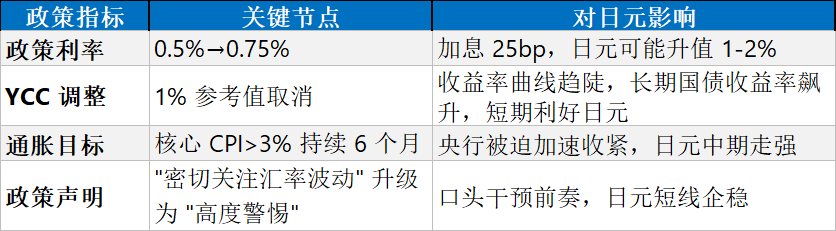
Core Viewpoint - The Japanese yen is experiencing significant depreciation against the US dollar, influenced by various factors including government fiscal expansion policies, the Bank of Japan's monetary policy normalization, and widening interest rate differentials between the US and Japan [1][2][3] Group 1: Currency Exchange Dynamics - The USD/JPY exchange rate reached 157.48, the highest level since January 2025, reflecting a 5% appreciation since October 4, 2023 [1] - The nominal effective exchange rate of the yen fell to 71.4, nearing the low point observed during the intervention in July 2024 [1] - The depreciation of the yen is coupled with rising Japanese government bond yields, with the 10-year yield hitting 1.825%, the highest since the 2008 financial crisis [1][2] Group 2: Fiscal Policy and Economic Impact - The Japanese government is pushing for a comprehensive economic strategy exceeding 20 trillion yen, which includes child subsidies and energy assistance, raising concerns about debt sustainability as the current debt-to-GDP ratio stands at 260% [2] - Japan's GDP contracted by 0.4% quarter-on-quarter in Q3, marking the end of six consecutive quarters of growth, indicating weak domestic and external demand [2] Group 3: Monetary Policy and Market Sentiment - The market's expectation for a rate hike by the Bank of Japan in December is only at 57%, as the central bank maintains a policy rate of 0.5% despite core CPI exceeding the 2% target for 36 consecutive months [2][3] - The Japanese government opposes interest rate hikes, arguing that inflation has not yet reached a sustainable level, which conflicts with the Bank of Japan's logic of a wage-price positive cycle [2][3] Group 4: Market Reactions and Predictions - Financial institutions have lowered their forecasts for the yen, with JPMorgan adjusting its prediction for the USD/JPY exchange rate to 156 by the end of 2025 [4] - Key upcoming events include the announcement of the stimulus plan on November 21 and the Bank of Japan's monetary policy meeting in December, which could significantly influence the yen's trajectory [4] Group 5: Policy Indicators and Potential Outcomes - A potential increase in the policy rate from 0.5% to 0.75% could lead to a 1-2% appreciation of the yen [5] - Continuous inflation above 3% for six months may force the Bank of Japan to tighten monetary policy, leading to a medium-term strengthening of the yen [5] - The government's focus on monitoring exchange rate fluctuations may signal a prelude to verbal interventions, potentially stabilizing the yen in the short term [5]

日本央行内部鹰派抬头!弱日元或成12月加息关键推手?
Jin Shi Shu Ju· 2025-11-20 05:11
Core Viewpoint - The Bank of Japan (BOJ) must continue to normalize its monetary policy by raising real interest rates to avoid unexpected market distortions, as stated by BOJ member Junko Koeda [1]. Group 1: Monetary Policy and Interest Rates - Junko Koeda indicated that if BOJ Governor Kazuo Ueda proposes a rate hike in the coming months, she would support it, emphasizing the need for policy rate adjustments based on economic activity and price improvements [1]. - The BOJ has maintained its policy rate at 0.5% despite core consumer inflation exceeding the 2% target for over three years, highlighting a cautious approach to interest rate changes [1]. - A survey revealed that 53% of economists expect the BOJ to raise the short-term interest rate from 0.50% to 0.75% in the upcoming December meeting, with a median forecast of 1.00% by the end of 2026 [3]. Group 2: Economic Conditions and Inflation - Koeda noted that corporate profits remain high, the economy shows resilience, and recent food price increases may affect inflation expectations [1]. - The Japanese yen has depreciated significantly, leading to concerns about imported inflation and price pressures, prompting expectations of early rate hikes by the BOJ [4]. - Economists believe that if wage growth momentum is confirmed and aligns with government coordination, the likelihood of a December rate hike is very high [4]. Group 3: Labor Market and Wage Growth - Koeda is monitoring Japan's minimum wage standards and the impact of increased employment mobility on wages, indicating that wage negotiations will be crucial for achieving inflation targets [2]. - A majority of economists (81%) expect that wage increases in the upcoming year will not exceed the previous year's 5.25%, suggesting a potential slowdown in wage growth [4]. - Despite a slight expected decline in overall corporate profits, strong corporate earnings are anticipated to support high wage growth rates through 2026 [5].
高市积极财政和货币宽松撞上日元贬值之墙
日经中文网· 2025-11-19 07:06
Group 1 - The core viewpoint of the article highlights the challenges faced by Japan's Prime Minister, Kishi Sanae, in balancing aggressive fiscal policies with a loose monetary environment, which may exacerbate inflation risks due to the continuous depreciation of the yen since her election [2][4] - Kishi has expressed concerns about the current inflation being cost-push and has shown caution towards hasty interest rate hikes, indicating a respect for the independence of the Bank of Japan (BOJ) [4][6] - The upcoming cabinet meeting on November 21 is expected to finalize Kishi's first comprehensive economic measures, focusing on expanding support for food purchases and local delivery funds [4][6] Group 2 - The depreciation of the yen has been significant, with the exchange rate moving from 147 yen per dollar before Kishi's election to around 155 yen currently, raising concerns about rising import prices [2][4] - The market has reacted to the potential for delayed interest rate hikes due to fiscal expansion, leading to a sell-off of the yen and an increase in bond yields, with the 20-year government bond yield reaching 2.810%, the highest in 26 years [6] - There is a growing consensus within the government and the BOJ that if inflation accelerates further, interest rate hikes may become unavoidable, with market expectations for rate increases in December and January reaching 70% [6]

日本当局再迎“日元保卫战”!升级口头干预成可能性最高选项
智通财经网· 2025-11-18 08:12
Core Viewpoint - The Japanese yen has been weakening due to market expectations that the newly elected Prime Minister, Sanna Takashi, will pressure the Bank of Japan to slow down interest rate hikes, with the USD/JPY exchange rate rising approximately 5% since October 4, reaching 155.00 [1] Group 1: Government Response to Yen Depreciation - Upgrading verbal intervention is highly likely, as the Japanese authorities are closely monitoring the yen's "one-sided and severe" fluctuations, with Finance Minister Satsuki Katayama expressing heightened vigilance against the yen's volatility [2] - There is a possibility of signaling recent interest rate hikes, as concerns over the yen's depreciation may prompt Prime Minister Takashi to support raising the policy rate to 0.75% [3] - The Bank of Japan may implement interest rate hikes, with indications from Governor Kazuo Ueda suggesting a gradual adjustment of monetary easing, potentially leading to a rate increase in December or January [4] Group 2: Market Intervention Considerations - The likelihood of direct market intervention is low, as the last intervention occurred in July 2024 when the yen hit a 38-year low against the dollar, and current government members do not show significant concern over yen depreciation [5]
刚刚,日本股汇“双杀”!
Shang Hai Zheng Quan Bao· 2025-11-18 04:26
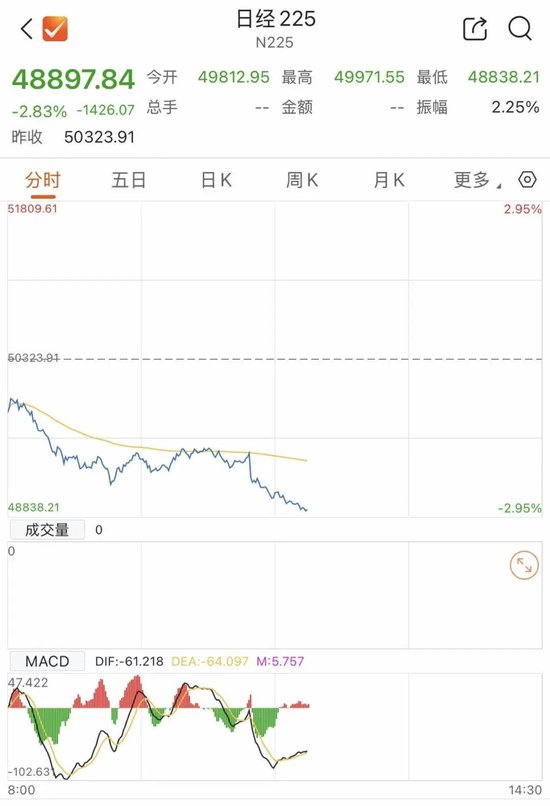
Group 1 - The Japanese stock market experienced a significant decline, with the Nikkei 225 index falling below 49,000 points, down over 1,400 points, representing a drop of 2.83% [1] - The Japanese yen continued its weakening trend, with the euro to yen exchange rate surpassing 180 for the first time since 1999, driven by concerns over Japan's deteriorating fiscal situation [3] - Political tensions arising from provocative statements by Japanese Prime Minister Suga Yoshihide regarding Taiwan have negatively impacted consumer sentiment, leading to declines in major companies such as SoftBank Group, Tokyo Electron, and Nintendo [5] Group 2 - Analysts express concerns that deteriorating Japan-China relations could further impact Japan's economy, which is already facing downward pressure, potentially leading to negative growth in the fourth quarter [7] - The South Korean stock market also saw a significant drop, with the KOSPI index declining over 3% [7]


日元独自走低,何时迎来干预节点?
日经中文网· 2025-11-14 08:00
Core Viewpoint - The Japanese yen has depreciated significantly, with a decline of 3% since the end of September, marking the largest drop among 10 major currencies, while the pace of this depreciation is slower compared to previous instances, reducing market concerns about currency intervention [2][4]. Summary by Sections - The yen's depreciation is ongoing, with the exchange rate reaching around 155 yen per dollar, influenced by the strong dollar and the Japanese government's expansionary fiscal policies [4][5]. - The Japanese government is leaning towards fiscal expansion and monetary easing, with discussions about increasing the supplementary budget for 2025 beyond the 13.9 trillion yen planned for 2024 [5]. - The Japanese authorities have not shown a strong intent to intervene in the currency market, with recent statements indicating a recognition of the negative impacts of yen depreciation but lacking urgency for intervention [5][7]. - Market analysts suggest that the authorities may tolerate a yen level around 161 per dollar before considering intervention, as the current volatility is relatively stable compared to past interventions [7][8]. - The market will closely monitor the statements from Japanese officials regarding currency intervention, as expectations of intervention may lead to increased volatility in the yen's exchange rate [8].
再触155关口!日元贬值魔咒难破 央行与政府政策分歧加剧市场疑虑
智通财经网· 2025-11-13 03:53
Core Viewpoint - The Japanese yen is experiencing significant depreciation, raising concerns about the new government's ability to intervene effectively to support the currency, especially in light of Prime Minister Kishida's signals of a potential slowdown in interest rate hikes [1][2][3] Currency Trends - The yen has depreciated approximately 4.5% against the US dollar this quarter, marking the largest decline among G10 currencies, with the exchange rate reaching around 154.73 [1][2] - The yen's rapid fluctuations have prompted warnings from Japanese officials, indicating a heightened urgency to monitor excessive volatility [1][2] Government and Central Bank Actions - Japan's Finance Ministry previously intervened in the market when the yen fell to around 160.17, with multiple interventions at various levels [2] - Current discussions suggest that if the yen surpasses 155 against the dollar, the likelihood of intervention will significantly increase [2][3] - The Bank of Japan maintained its interest rates in the last meeting, with a decision on the next policy expected on December 19, and a majority of economists anticipate a rate hike by January [2][4] Market Sentiment and Predictions - Analysts suggest that if the yen breaks the 155 mark, verbal intervention may intensify, and the probability of a rate hike by the Bank of Japan could also rise [3] - The market currently estimates a 40% chance of a rate hike by the end of the year, with full expectations for a rate increase not anticipated until April next year [4] Economic Implications - A weaker yen could benefit Japan's export sector by increasing the value of repatriated earnings, but it also raises import costs and inflationary pressures [2] - The potential for intervention may complicate Japan's $550 billion investment plan in the US, which is a key component of the US-Japan trade agreement [3]
日元跌至1美元兑155区间,创9个月来低点
日经中文网· 2025-11-13 02:46
Group 1 - The market generally believes that the downward pressure on the US economy will ease, leading to a stronger demand for the US dollar [2][4] - As of late September, the Japanese yen was trading around 147 yen per dollar, experiencing a significant depreciation of over 7 yen in just a month and a half [4] - On November 12, the yen fell to 155 yen per dollar, marking the first time it reached this level in about nine months since February 4 [2][6] Group 2 - The US Senate passed a temporary budget bill on the 10th to end the longest government shutdown in history, with expectations that the House will vote on it soon [4] - There are views that the new Japanese Prime Minister, Fumio Kishida, will implement expansionary fiscal policies, prompting investors to sell the yen against various currencies [4] - On November 12, the yen fell to 179 yen per euro, setting a record low since the euro's inception in 1999 [4] Group 3 - There is speculation that if the yen depreciates beyond 155 yen per dollar, the Japanese government and the Bank of Japan may intervene by buying yen [6] - Japan maintains the lowest policy interest rates among major economies, lacking factors to support yen buying [6] - Future focus may shift to whether Japanese Finance Minister Shunichi Suzuki will increase verbal interventions to curb yen depreciation [6]
暗示央行别加息?高市早苗疾呼:日本需要“薪资驱动”的健康通胀
智通财经网· 2025-11-12 12:04
Group 1 - Japanese Prime Minister Kishi Nobuo expressed a strong desire for the Bank of Japan to achieve inflation driven by wage growth rather than food price increases, indicating a preference for maintaining low interest rates [1] - Kishi highlighted the risk of returning to deflation, which could lead to delayed consumer spending, harm corporate profits, and suppress wage growth [1] - The government plans to implement a package of measures to alleviate the impact of rising living costs and increase investment in growth sectors to boost corporate profits and consumer confidence [1] Group 2 - The Bank of Japan maintained a 0.5% interest rate but Governor Ueda Kazuo signaled that a rate hike could occur as early as December if companies confirm sustained wage increases [2] - Analysts expect the next rate hike to occur in December or January, with potential delays possibly leading to further depreciation of the yen, increasing import costs and overall inflation [2] - The Japanese core consumer inflation rate reached 2.9% in September, remaining above the Bank of Japan's 2% target due to high food prices, putting pressure on the central bank to raise borrowing costs [2]