
汽车出海

Search documents
中信证券助力奇瑞汽车成功登陆港交所
Xin Lang Cai Jing· 2025-09-25 09:16
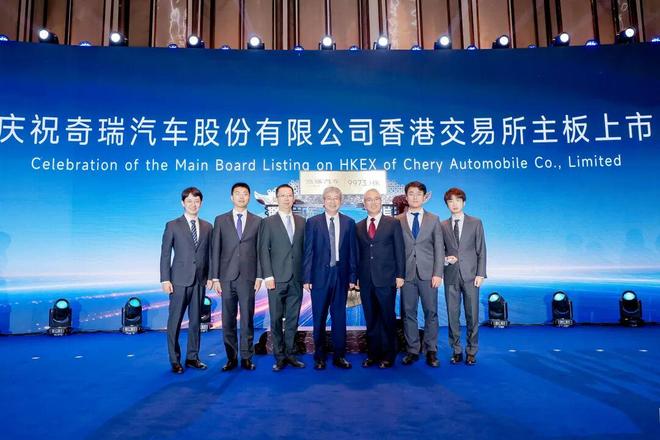
Group 1 - Chery Automobile successfully listed on the Hong Kong Stock Exchange on September 25, 2025, with a base issuance scale of $1.174 billion and a maximum issuance scale of $1.35 billion after the greenshoe option, attracting cornerstone investors with a total investment of $587 million [1][3] - The IPO is the largest in the domestic automotive industry since 2022, with a subscription multiple of 308.18 times for the Hong Kong public offering and 11.61 times for the international placement, successfully bringing in 13 well-known domestic and international investors [3][4] - Chery Automobile is the second largest independent passenger car company in China and the eleventh largest globally, with a global sales volume exceeding 13 million vehicles and a presence in over 100 countries and regions [3][4] Group 2 - Chery Automobile, founded in 1997 and headquartered in Wuhu, China, aims to become an innovative and trusted participant in the global smart mobility ecosystem, providing high-quality passenger vehicles and excellent travel experiences [4] - In 2024, Chery's global sales exceeded 2.295 million units, representing a year-on-year growth of 49.4%, leading the growth rate among the top twenty global passenger car companies [4]


今年最大造车IPO诞生了
投资界· 2025-09-25 03:51
Core Viewpoint - Chery Automobile has successfully completed its IPO on the Hong Kong Stock Exchange, marking the largest IPO in the automotive sector this year, with a market capitalization nearing 200 billion HKD and a share price of 30.75 HKD, reflecting strong investor confidence and growth potential [3][5]. Group 1: Company Position and Growth - Chery is the second largest independent passenger car brand in China and the eleventh largest globally, with significant growth in both new energy and traditional fuel vehicle sales, achieving over 25% growth across all categories [7]. - From 2022 to 2024, Chery's revenue is projected to grow from 92.618 billion RMB to 269.897 billion RMB, with a compound annual growth rate (CAGR) of 70.7%, while net profit is expected to rise from 5.806 billion RMB to 14.334 billion RMB, with a CAGR of 57.1% [8][9]. Group 2: Sales and Revenue Performance - In Q1 2025, Chery reported revenue of 68.223 billion RMB, a year-on-year increase of 24.2%, with net profit soaring over 90% [8]. - The sales of new energy vehicles (NEVs) have seen remarkable growth, with plug-in hybrid and range-extended electric vehicles generating 1.07 billion RMB in Q1 2025, a 314% increase year-on-year, while pure electric vehicle revenue reached 795.6 million RMB, up 295% [8][10]. Group 3: Research and Development - Chery has invested heavily in R&D, with over 14,400 R&D personnel, accounting for more than 50% of non-production staff. R&D expenditures have increased significantly, reaching 10.544 billion RMB in 2024 [10]. - The company has established a comprehensive R&D system with multiple centers globally, focusing on innovation and technology development, which has led to breakthroughs in hybrid and electric vehicle technologies [10]. Group 4: International Expansion - Chery has been a leader in exporting Chinese passenger vehicles, maintaining the highest export volume among independent brands for 22 consecutive years, with overseas revenue projected to grow significantly from 30.387 billion RMB in 2022 to 100.897 billion RMB in 2024 [21][22]. - The company has established a robust global dealer network and production bases, enhancing its competitive edge and enabling localized production, as seen with its joint venture in Spain [23]. Group 5: Future Outlook - The global automotive market is expected to grow, with a projected CAGR of 3.5% from 2025 to 2030, and Chery aims to capitalize on this by enhancing its presence in international markets, particularly in Europe and South America [20][21]. - Chery's strategic focus on new energy vehicles and technological innovation positions it well for future growth, with ambitious sales targets set for its iCAR and other brands [17][18].

中金:中国汽车已完成出口扩张 关注车企及零部件出海机遇
Zhi Tong Cai Jing· 2025-09-24 06:52
Core Insights - The global automotive industry is undergoing a restructuring phase, with Chinese automotive exports expected to accelerate by 2025, leading to a projected production scale of nearly 30 million vehicles by 2030 for Chinese brands [1][2] - The penetration rate of new energy vehicles (NEVs) in China is anticipated to exceed 50% by 2025, positioning Chinese brands as leaders in the domestic market [2] - Global consumer awareness of electric and intelligent technologies has been established, prompting a rapid transition to NEVs among European, American, and Japanese automakers [2] Industry Overview - The transformation towards electric and intelligent vehicles in China is nearly complete, with a significant market share achieved by local brands [2] - Chinese automotive exports are expected to maintain their position as the largest globally, with a shift towards deeper international expansion for domestic brands [2] - The demand for NEVs in non-Chinese markets is projected to increase, driven by both supply and demand dynamics, leading to a potential "Davis Double Play" opportunity for the Chinese supply chain [2] Company Recommendations - Recommended companies for investment include leading Chinese automakers with established export strategies such as BYD, Leap Motor, Great Wall Motors, Geely, and Xpeng [3] - International component suppliers with strong global presence and technological leadership, such as Minth Group, Fuyao Glass, Sanhua Intelligent Controls, Changshu Automotive Trim, and Coboda, are also highlighted as potential beneficiaries of the NEV transition [3]




21年IPO,即将七战上岸,奇瑞尹同跃:创新比利润更重要
Nan Fang Du Shi Bao· 2025-09-22 06:32
Core Viewpoint - Chery Automobile is set to go public on the Hong Kong Stock Exchange, marking its seventh attempt at an IPO after a long and challenging journey in the capital market. The focus will be on its performance in the transition to new energy vehicles and improving profitability [2][5][24]. Group 1: IPO Details - Chery plans to issue 297 million H-shares, with 10% allocated for Hong Kong and 90% for international sales, along with a 15% over-allotment option. The price range is set between HKD 27.75 and HKD 30.75 per share, with expected fundraising between HKD 8.241 billion and HKD 9.132 billion [5][18]. - The market capitalization post-IPO is projected to be between HKD 160 billion and HKD 177.3 billion (approximately RMB 146 billion), ranking Chery as the seventh largest among Chinese automakers [5][18]. - Thirteen cornerstone investors have committed approximately USD 587 million, including notable firms like Hillhouse Capital and Ginkgo Asset Management [5][18]. Group 2: Historical Context and Leadership - Chery's chairman, Yin Tongyue, has expressed a long-standing commitment to the IPO, having previously stated that the company would prioritize its listing as a key task [10][11]. - Over the years, Yin has shifted from skepticism about the benefits of an IPO to actively pursuing it, indicating a strategic evolution in Chery's approach to capital markets [7][9][10]. Group 3: Performance and Market Position - Chery has seen significant growth in retail sales, with a projected 2024 global sales volume of 2.6039 million vehicles, a 38.4% increase year-on-year, making it the second largest domestic independent brand [14][18]. - The company has maintained its position as the top exporter of Chinese independent brand passenger vehicles for 22 consecutive years, with overseas sales accounting for 44% of total sales in 2024 [14][20]. - Chery's diverse brand portfolio includes five major brands, catering to various market segments from budget to luxury [14]. Group 4: Challenges and Future Outlook - Despite its achievements, Chery faces challenges such as a high debt ratio of 89% as of Q3 2024, necessitating funds from the IPO to optimize its financial structure and support its transition to new energy vehicles [16][19]. - The company has a relatively low gross margin of 13.5% in 2024, with its new energy vehicle gross margin at only 5.7%, indicating a need for improvement in profitability [17][22]. - Chery's future success will depend on its ability to effectively utilize the raised funds for R&D, particularly in smart driving and high-end new energy vehicles, while enhancing its cost structure [19][23].
【新华财经调查】中国车企出海面临三大关口 本土化已成趋势
Xin Hua Cai Jing· 2025-09-16 01:35
Group 1: Industry Overview - The 2025 IAA in Germany showcased 748 exhibitors, with 116 from China, representing nearly one-third of overseas participants, surpassing local German companies [1] - Chinese automotive exports reached 3.083 million units in the first half of 2025, with a 75.2% increase in new energy vehicle exports [2] - BYD's sales in Europe exceeded 130,000 units in 2025, marking a 210% year-on-year growth [2] Group 2: Challenges and Strategies - Chinese automakers face significant entry costs, operational costs, and geopolitical challenges when entering the European market [4] - To address these challenges, companies like BYD plan to localize production in Europe, with a factory in Hungary expected to start production this year and another in Turkey by 2026 [4][5] - Other companies, such as Leap Motor and Xpeng, are also pursuing local production and establishing R&D centers in Europe [5] Group 3: Technological Advancements - Chinese companies are leading in technology development, with Momenta showcasing AI-driven Robotaxi technology at the IAA [3] - Partnerships with international giants like Bosch and Qualcomm are being formed to enhance technological integration within the German automotive ecosystem [6] Group 4: Data Compliance and Regulations - The EU's stringent data protection regulations, including GDPR and the upcoming AI Act, pose compliance challenges for Chinese companies [7][8] - Companies are advised to integrate data compliance into their strategic planning to navigate complex international regulations effectively [9] Group 5: Service Network Development - Establishing a robust service network is crucial for building consumer trust in Europe, as local service capabilities impact brand sustainability [10] - Leap Motor has established around 1,700 sales and service points globally, emphasizing the importance of local service networks for market penetration [10]

小鹏将在欧洲本土生产,和奔驰G级同工厂
Guan Cha Zhe Wang· 2025-09-15 07:02
Group 1 - The core point of the article is the successful local production of the first batches of Xiaopeng G6 and G9 at the Magna Graz factory, marking a significant step in Xiaopeng Motors' strategy for localizing electric vehicle production in Europe [1][3] - Xiaopeng Motors has officially announced its collaboration with Magna Steyr in Graz, Austria, to leverage existing production lines for accelerating the localization of electric vehicle manufacturing in Europe [1][6] - The Magna Graz factory, part of Magna International, is known for contract manufacturing and has produced over 4 million vehicles without having its own brand, indicating a strong capability in flexible manufacturing [3][5] Group 2 - Xiaopeng Motors is actively expanding its presence in Europe, having entered the market in 2021, with over 8,000 vehicle registrations in the first half of this year, where the G6 model contributed 67% of the sales [7][9] - The company’s overseas sales reached 18,701 units from January to July 2025, representing a year-on-year increase of 217%, highlighting the growing demand for its vehicles in international markets [9]

中国车企出海的第一大目标市场,把关税加到了50%
第一财经· 2025-09-12 15:27
Core Viewpoint - Mexico's government announced a comprehensive reform of import tariffs, raising tariffs on cars from China and other Asian countries to 50%, aimed at protecting domestic employment [3][10]. Group 1: Mexico's Automotive Market Dynamics - Mexico has become China's largest automotive export market, surpassing Russia, with 418,000 vehicles exported from China in the first seven months of 2025, a year-on-year increase of 20% [5][6]. - Chinese brands have gained a market share of 8.2% in Mexico, becoming the fifth-largest source of vehicles, with notable growth from brands like MG, JAC, Changan, Great Wall, and Chery [6][7]. - The Mexican automotive market is characterized by a diverse brand presence and competitive conditions, with a significant increase in sales for Changan, which saw over 150% growth [7]. Group 2: Impact of Tariff Changes - The proposed increase in tariffs will significantly raise the cost of exporting Chinese cars to Mexico, potentially weakening their price competitiveness and impacting sales [10]. - Chinese automakers are encouraged to diversify their markets beyond Mexico to mitigate risks associated with tariff changes, exploring regions like South America, Southeast Asia, and the Middle East [11][12]. - Localized production strategies are being considered by Chinese companies to reduce tariff costs and enhance market competitiveness, with plans for establishing manufacturing plants in Mexico [11][12]. Group 3: Future Trends and Challenges - Despite the current dominance of traditional fuel vehicles, the sales of new energy vehicles in Mexico are on the rise, with Chinese exports ranking third in the first seven months of 2025 [8]. - The overall automotive export landscape for China is uncertain, with a need for companies to adapt to changing global trade environments and localize operations to ensure sustainable growth [12].

中国车企出海的第一大目标市场 把关税加到了50%
Di Yi Cai Jing· 2025-09-12 14:39
Group 1 - Mexico announced a comprehensive reform of import tariffs, raising tariffs on cars from China and other Asian countries to 50% to protect domestic employment [1] - Previously, tariffs on Chinese light vehicles ranged from 15% to 20%, indicating a significant increase if the new tariffs are implemented [1] - The potential influence of the United States on Mexico's decision to impose these tariffs is highlighted [1] Group 2 - Mexico has become China's largest automotive export market, surpassing Russia, with 322,000 vehicles exported in the first seven months of 2025, a 20% year-on-year increase [2] - Chinese automakers are increasing exports to Mexico in anticipation of rising costs due to the proposed tariffs, leading to a surge in export volumes [2] - Major Chinese brands like BYD, Changan, and Great Wall are seeing rising export volumes to Mexico [2] Group 3 - Japanese brands dominate the Mexican market with a 42% share, followed by American (21.1%), German (11.9%), and Korean (11.1%) brands, while Chinese brands hold an 8.2% share [3] - Changan has seen over 150% growth in sales, making it the fastest-growing brand in Mexico, reflecting the competitive pricing and appealing designs of Chinese brands [3] - The Mexican light vehicle market is primarily fueled by traditional fuel vehicles, but hybrid vehicle sales are increasing, with SUVs and pickups being particularly popular [3] Group 4 - Mexico ranks third among the top ten countries for Chinese new energy vehicle exports, with 116,000 units exported in the first seven months of 2025 [4] - BYD plans to sell over 80,000 electric and hybrid vehicles in Mexico in 2025, having already established over 50 dealerships [4] Group 5 - High tariffs are expected to significantly increase the cost of exporting Chinese vehicles to Mexico, potentially reducing their price competitiveness and impacting sales [5] - The uncertainty in trade environments suggests that Chinese automakers should diversify their markets to mitigate risks associated with tariffs [6] Group 6 - The trend of localizing production in target markets is becoming essential for Chinese automakers to reduce tariff costs and enhance competitiveness [6] - Companies like BYD, SAIC MG, and Chery are reportedly planning to establish manufacturing plants in Mexico [6] Group 7 - China is the world's largest automotive exporter, with annual exports between 4 million to 5 million vehicles, accounting for about one-quarter of the industry's total [7] - The need for Chinese automakers to explore alternative markets due to instability in traditional markets like Russia is emphasized [7]
国产车加速“出海” 外高桥海通码头汽车滚装吞吐量持续领先
Zhong Guo Xin Wen Wang· 2025-09-12 09:21
Core Insights - The domestic automotive industry in China is rapidly expanding its global presence, with the Shanghai Waigaoqiao Haitong Terminal leading in vehicle roll-on/roll-off throughput [1] - The terminal's success is attributed to the strong growth of Chinese automotive brands such as SAIC, BYD, Chery, Geely, and Great Wall, which are increasing their overseas market presence [1] - The introduction of the first fully enclosed automated vehicle storage facility in China is enhancing the terminal's throughput capacity and operational efficiency [2] Group 1 - The Waigaoqiao Haitong Terminal is currently the largest port for automotive imports and exports in China, benefiting from innovative operational models [1] - The terminal has optimized its operational processes and improved customer service to maximize efficiency despite challenges such as limited shoreline resources [1] - The automated storage facility, covering 14,600 square meters, can accommodate up to 6,160 vehicles, significantly reducing the required storage area compared to traditional methods [2] Group 2 - The automated system can handle 160 vehicle entries and exits per hour, alleviating space constraints caused by rising automotive exports [2] - Since its launch, the facility has processed over 440,000 vehicles, maintaining an average inventory rate above 80% and serving 48 different brands [2] - The facility demonstrates outstanding performance in operational efficiency, cost management, energy conservation, and land utilization, providing a replicable solution for smart vehicle storage and transportation at ports [2]

零跑汽车前8月售车近33万辆领跑新势力 海外交付超3万辆拟在西班牙设厂
Chang Jiang Shang Bao· 2025-09-11 23:41
Core Viewpoint - Leap Motor has achieved significant sales growth and plans to establish a factory in Spain to enhance its presence in the European market, aiming to produce 6 to 7 models by 2026 [1][2][3] Group 1: Sales Performance - In August, Leap Motor delivered a record 57,100 vehicles, marking an over 88% year-on-year increase and maintaining its position as the leading new force brand for six consecutive months [1][6] - For the first eight months of 2025, the company delivered 328,900 vehicles, a 136.4% increase year-on-year, making it the top performer among new car manufacturers [1][6] - Leap Motor has set a new annual sales target of 580,000 to 650,000 vehicles for 2025, with a long-term goal of reaching one million vehicles by 2026 [7] Group 2: International Expansion - The company plans to establish a factory in Zaragoza, Spain, in response to the EU's high electric vehicle tariffs, with production expected to start in Q3 2026 [1][2] - The factory will initially focus on the B series products, including the B10 compact electric SUV, which is set to launch in April 2025 [2] - Leap Motor's international strategy emphasizes the importance of product and sales for successful market entry [2][3] Group 3: Financial Performance - In 2024, Leap Motor reported revenue of 32.16 billion yuan, a 92% increase from 2023, with a net loss of 2.82 billion yuan, narrowing by 33.18% [7][8] - The company achieved a net profit of 80 million yuan in Q4 2024, becoming the second new car manufacturer to report quarterly profitability [8] - For the first half of 2025, Leap Motor's revenue reached 24.25 billion yuan, a 174% year-on-year increase, marking its first half-year profit of 30 million yuan [8]