
脱碳

Search documents
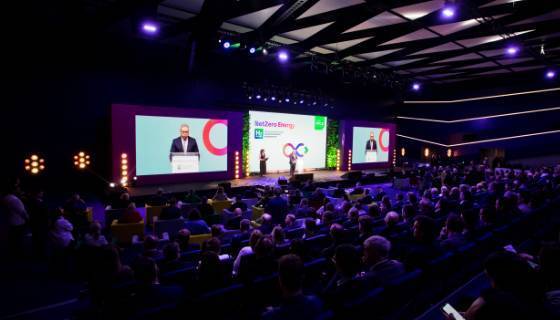
【盈拓展览】2025年波兰波兹南国际能源展览会:参展商Donaldson
Sou Hu Cai Jing· 2025-08-22 18:07
Group 1 - The H2POLAND exhibition is the first trade fair in Poland and Central Eastern Europe focused on hydrogen energy and decarbonization technologies [1] - The event features forums and discussions centered around decarbonization and the future of the European economy, playing a crucial role in these topics [1] - Tomasz Kobierski, CEO of MTP Group, emphasized that climate responsibility is becoming a necessity rather than a choice, and energy transition must involve technology, business, and social participation [3] Group 2 - The exhibition showcases advancements in renewable energy, energy storage, local energy networks, and low-carbon technologies, including hydrogen [3] - Donaldson, a participant in the exhibition, presented new products at NetZero Energy and H2POLAND 2025, leveraging over a century of filtration experience [5] - The company specializes in designing solutions for sustainable green hydrogen operations, focusing on removing residual particles, oil, oxygen, and moisture from production processes [6] Group 3 - The next H2POLAND exhibition is scheduled for March 25-26, 2026 [6]

共享中国经济高质量发展机遇
Ren Min Ri Bao· 2025-08-22 00:59
Group 1 - The core viewpoint is that China demonstrates resilience and adaptability in long-term investment, maintaining its leadership in global manufacturing and infrastructure development [1] - Fortescue Metals Group successfully completed a syndicated loan financing of 14.2 billion RMB, marking a significant breakthrough for Australian companies in obtaining RMB loans [1] - The company views China as its largest customer and a key partner in innovation, supply chain development, and decarbonization efforts [2][3] Group 2 - Since entering the Chinese market in 2007, Fortescue has maintained close cooperation with local partners, exporting over 2 billion tons of iron ore to China, which accounts for 90% of its global shipments [2] - The company has signed memorandums of understanding with major Chinese firms to explore carbon reduction in ironmaking and shipping, as well as green iron projects [2] - Fortescue is integrating advanced technologies into renewable energy and mining projects through strategic partnerships with leading Chinese manufacturers [2]
“共享中国经济高质量发展机遇”——访澳大利亚福德士河集团首席财务官梁婉心(见证·中国机遇)
Ren Min Ri Bao· 2025-08-21 21:59
Group 1 - The core viewpoint is that Australia’s Fortescue River Group demonstrates strong adaptability and long-term investment capabilities in China, maintaining its leadership in global manufacturing and infrastructure [1] - Fortescue River successfully completed a syndicated loan financing of 14.2 billion RMB, marking a significant breakthrough for Australian companies in obtaining RMB loans, reflecting foreign enterprises' recognition of China's economic resilience [1] - The company has established a wholly-owned subsidiary in the Shanghai Free Trade Zone, enabling local service provision to Chinese steel companies through RMB cross-border settlement, which mitigates profit impacts from exchange rate fluctuations [1] Group 2 - Since entering the Chinese market in 2007, Fortescue River has maintained close cooperation with local partners, exporting over 2 billion tons of iron ore to China, which accounts for 90% of its global iron ore shipments [2] - Fortescue River views China as its largest customer and a key partner in innovation, supply chain development, and decarbonization efforts, having signed memorandums of understanding with major Chinese companies to explore carbon reduction in ironmaking and shipping [2] - The company is integrating advanced technologies into projects related to wind, solar, energy storage, rail, and mining equipment through strategic partnerships with leading Chinese renewable energy manufacturers [2] Group 3 - The company recognizes the resilience and adaptability of the Chinese economy, which presents significant opportunities in clean energy, green iron production, and supply chain innovation, aligning with Fortescue River's investment focus [3] - Collaborating with Chinese institutions is seen as a key pillar for the company's long-term growth strategy and leadership in green industry transformation [3] - Fortescue River is actively exploring cooperation in supply chain decarbonization and green iron production, aiming to enhance collaboration levels further [3]
欢迎访问 韩国首尔国际电力和能源展2026:30000 专业观众共鉴能源行业新走向
Sou Hu Cai Jing· 2025-08-21 14:07
Group 1: Event Overview - The 22nd edition of the exhibition will take place in May 2026 at the COEX convention center in Seoul, South Korea [1] - The previous edition was held from May 14-16, 2025, indicating an annual cycle for the event [1] - The exhibition focuses on power, renewable energy, solar energy, and energy storage [1] Group 2: Venue Information - COEX is located in the Gangnam district of Seoul and is accessible via subway lines 2 and 9 [3] - The venue features a designated smoke-free pedestrian area extending 836 meters along Yongdong Avenue [3] Group 3: Energy Sector Insights - South Korea is heavily reliant on energy imports, with oil and liquefied natural gas being significant imports [8] - Traditional thermal power generation and nuclear energy dominate the country's electricity supply, accounting for over two-thirds of total generation [8] - The government has set ambitious decarbonization goals, aiming to increase the share of renewable energy in power generation from 6% in 2019 to 35% by 2030 [8] Group 4: Economic Context - South Korea has undergone significant economic transformation, with industrial sectors contributing 31.6% to GDP and employing 24% of the workforce [9] - The country is a global leader in various industries, including textiles, steel, automotive, shipbuilding, and electronics, particularly semiconductors [9] - The industrial production index is projected to grow by 1.7% in 2024, driven by increases in manufacturing output, particularly in chips and pharmaceuticals [9] Group 5: Agricultural Sector - The agricultural sector contributes minimally to GDP at 1.6% and employs only 5% of the labor force [10] - South Korea relies heavily on imports for food, with about 70% of agricultural products sourced from abroad [10] - In 2024, rice production is expected to decline by 3.2% to 3.585 million tons, while agricultural exports are projected to reach a record high of $13 billion, up 6.1% from the previous year [10] Group 6: Service Sector - The service sector is the largest and fastest-growing part of the economy, accounting for 58.4% of GDP and employing 71% of the workforce [11] - The tourism industry is a significant contributor, with foreign visitor numbers expected to reach 16.37 million in 2024, a 48.4% increase from 2023 [11] - Financial services are well-developed, with growth in transportation, warehousing, finance, and insurance sectors, although wholesale and retail sectors have seen declines [11]

AGL Energy (AGLX.Y) Update / Briefing Transcript
2025-08-21 06:02
AGL Energy (AGLX.Y) 2025 Climate Transition Action Plan Summary Company Overview - **Company**: AGL Energy (AGLX.Y) - **Event**: 2025 Climate Transition Action Plan Briefing - **Date**: August 21, 2025 Key Points Industry Context - AGL is committed to a multi-decade decarbonization strategy to enhance shareholder value and support customers during the energy transition [3][4] Core Commitments and Achievements - AGL aims to exit coal-fired generation by FY '35, a decade earlier than previously planned [4] - The company has invested over $3 billion in its decarbonization strategy [5] - AGL has reduced Scope 1 and 2 emissions by over 29% in FY '25 compared to FY '19 levels [5] - AGL's renewable and firming project pipeline has increased to 9.6 gigawatts since September 2022 [5] Future Targets - AGL plans to achieve net zero for Scope 1 and 2 emissions by 2050 and has set interim targets to reduce emissions by 19% annually from FY 2019 levels starting in 2027 [8] - The company aims for a 60% reduction in Scope 3 emissions from FY 2019 levels post coal closure [11] - AGL has set a target to install 300 megawatts of cumulative customer assets by FY '27 and aims to power over 1 million EVs by 2035 [15] Investment Strategy - AGL plans to allocate approximately $10 billion towards climate solutions over the next decade, with 67% of capital directed towards these initiatives [17] - The investment will focus on a mix of short and long-duration firming assets [18] Community and Employee Engagement - AGL has developed principles to support employees affected by site closures, including job placement services and well-being support [19] - The company is committed to engaging with community stakeholders and transforming existing thermal sites into integrated energy hubs [20] Policy Advocacy - AGL is advocating for frameworks and reforms to support a responsible energy transition, emphasizing the need for collaboration across the energy sector [22][23] - The company recognizes the importance of long-term policy certainty and effective market settings to achieve Australia's climate goals [23] Challenges and Risks - AGL acknowledges potential execution risks related to planning and connection processes for renewable projects, which can take several years [44] - The company is actively working to expedite these processes while maintaining community engagement [44] Questions and Clarifications - AGL confirmed a $10 billion investment plan with $3 to $4 billion expected to be spent between now and 2030 [27] - Discussions are ongoing with the South Australian government regarding the potential extension of the Torrens Island B power station for reliability purposes [30] Conclusion - AGL's 2025 Climate Transition Action Plan reflects its commitment to decarbonization and responsible energy transition, with clear targets and a focus on execution [24][25]
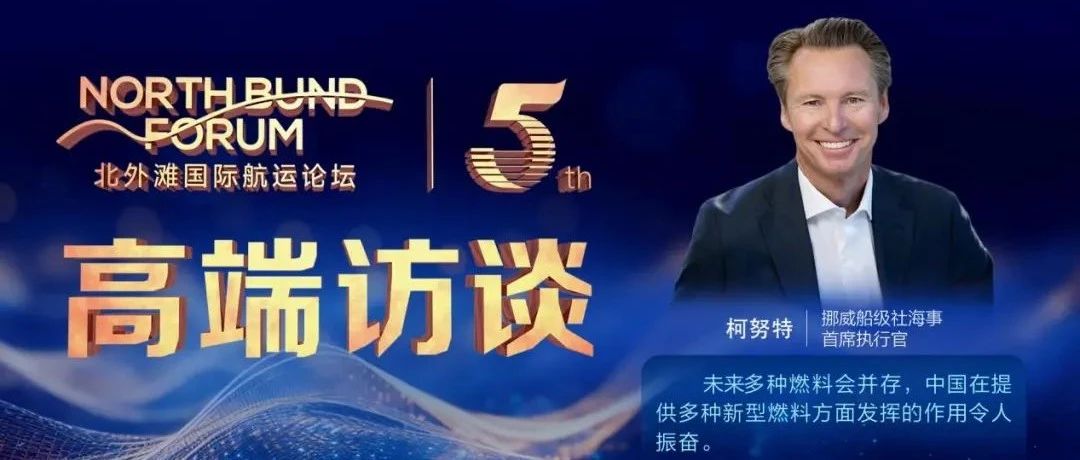
当全球最大造船国遇上全球第一船级社:航运业绿色转型如何提速?
第一财经· 2025-08-21 03:48
Core Viewpoint - The global shipping industry is facing the strictest carbon emission regulations in history, with the revised Annex VI of the International Convention for the Prevention of Pollution from Ships (MARPOL) coming into effect on August 1, 2023, prompting the need for new practices and technologies to meet stringent emission reduction requirements [1][3]. Group 1: Regulatory Changes and Industry Response - The revised MARPOL Annex VI is a new and very strict regulation that requires shipping companies to adopt new practices and technologies to comply with emission reduction targets [3]. - The Norwegian classification society is assisting clients in developing compliance strategies and understanding new regulations, while also providing technical advice on alternative fuels and energy-saving devices [3]. - The introduction of carbon taxes is expected to drive shipowners to invest in new technologies and improve energy efficiency, with financial institutions increasingly favoring green projects [3]. Group 2: Market Dynamics and Bilateral Trade - China is Norway's largest trading partner in Asia, with bilateral trade expected to reach $10.18 billion in 2024, a year-on-year increase of 31.7% [4]. - The Norwegian classification society has seen rapid growth in China, with its market share in the region accounting for approximately 28% of its global business [4]. - China's shipbuilding industry remains the largest globally, with completion, new orders, and backlog accounting for 51.7%, 68.3%, and 64.9% of the global total, respectively, as of the first half of 2025 [4]. Group 3: Decarbonization Challenges - The transition to decarbonization in shipping is a gradual process, with approximately 92% of the current fleet still using traditional fuels [6]. - The speed of transition depends on various factors, including infrastructure for new fuels, production scale, and the high costs associated with these transitions [6]. - Operational optimization measures, such as speed reduction and route optimization, can be implemented even for existing fleets using traditional fuels [6]. Group 4: Digitalization and Innovation - The Norwegian classification society emphasizes the importance of energy-saving technologies in reducing shipping emissions and achieving international maritime organization goals [11]. - Digital technologies are being utilized to monitor vessel operational data, allowing shipowners to better understand fuel consumption and improve operational efficiency [11][12]. - Collaborative efforts between Norwegian and Chinese teams are focused on advancing digitalization and smart technologies in the shipping industry [12]. Group 5: Future of Fuel and Shipbuilding - The future of shipping fuel will not rely on a single solution, but rather a mix of fuels depending on various factors such as vessel type and trade area [15]. - Norway has issued over 20 Approval in Principle (AiP) certificates to Chinese shipyards for various green fuel adaptation solutions and technologies [15]. - China's shipbuilding industry has evolved into a leader in high-end shipbuilding, with significant advancements in LNG carrier construction and other specialized vessels [16].
瑞士百达财富管理首席投资官办公室及宏观研究主管谭思德:全球经济结构性巨震 四大因素塑造未来十年格局
2 1 Shi Ji Jing Ji Bao Dao· 2025-08-19 23:11
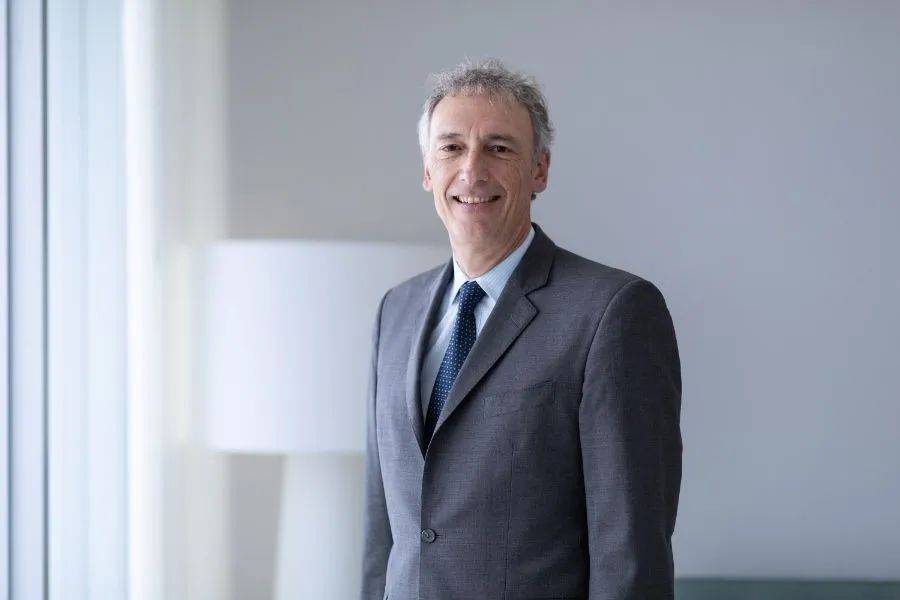
Group 1 - The concept of "long-term investment" is emphasized by the Swiss bank Pictet, which has a history of 220 years and focuses solely on asset and wealth management [1] - Alexandre Tavazzi, the head of macro research at Pictet, defines a long-term investment horizon as 10 years, guiding his team's annual economic outlook [1] Group 2 - The global economic landscape is undergoing "tectonic shifts," with structural impacts being more significant than cyclical ones [4][5] - The U.S. has historically provided three core supports to the global economy: economic stability, security guarantees, and attractive investment returns, but these are now being questioned [5][6] Group 3 - The attractiveness of U.S. long-term government bonds is declining, with a current yield curve that does not adequately compensate for risks, leading to a strategy of shortening duration [7] - Europe is seen as having a more optimistic outlook, particularly with Germany's shift in debt policy and increased investment in infrastructure and defense [8] Group 4 - Future economic growth predictions indicate a U.S. growth rate of 1.8% and a Eurozone growth rate of 1.5%, with Europe becoming more attractive for investment [9] - Key factors shaping the next decade include deglobalization, decarbonization, demographic changes, and dominance of fiscal policy, with inflation expected to remain elevated [9]
专访瑞士百达谭思德:全球经济结构性剧震,四大因素塑造未来十年格局
Sou Hu Cai Jing· 2025-08-19 16:14
Group 1 - The concept of "long-term investment" has gained significant attention in recent years, with policies being developed to support it from top-level design to operational details [1] - Swiss private partnership firm, Pictet, has a long-standing commitment to long-term investment, tracing its history back to 1805, and has evolved into Switzerland's second-largest international financial institution [1] - Alexandre Tavazzi, Chief Investment Officer at Pictet, defines long-term investment as a 10-year horizon, with his team analyzing economic conditions and asset class returns over this period [1] Group 2 - The global economic landscape is undergoing "tectonic shifts," with structural impacts being more critical than cyclical ones in the next decade [4][5] - Negative impacts from U.S. policies include tariffs that effectively tax consumers and a government efficiency initiative that has not yielded expected savings [3] - Positive aspects include regulatory relaxations in the financial sector, allowing banks to operate with lower capital ratios, potentially increasing lending [3] Group 3 - The U.S. economy's stability, security guarantees, and high-return assets are being questioned, with increasing policy uncertainty since the Trump administration [6] - The attractiveness of U.S. assets is declining, particularly as competition from emerging sectors in China grows [7] - The long-term U.S. Treasury yield is viewed negatively due to insufficient compensation for risks, leading to a strategy of shortening duration in bond investments [8] Group 4 - Europe is experiencing significant changes, with Germany planning to abolish its debt brake and invest heavily in military and infrastructure, potentially leading to faster growth in the next decade [9] - The forecast for economic growth over the next decade predicts a U.S. growth rate of 1.8% and a Eurozone growth rate of 1.5%, narrowing the gap between the two regions [10] - Key factors shaping the future include deglobalization, decarbonization, demographic changes, and dominance of fiscal policy, with inflation expected to remain elevated [10]
瑞士百达谭思德:全球经济结构性剧震,四大因素塑造未来十年格局
2 1 Shi Ji Jing Ji Bao Dao· 2025-08-19 05:18
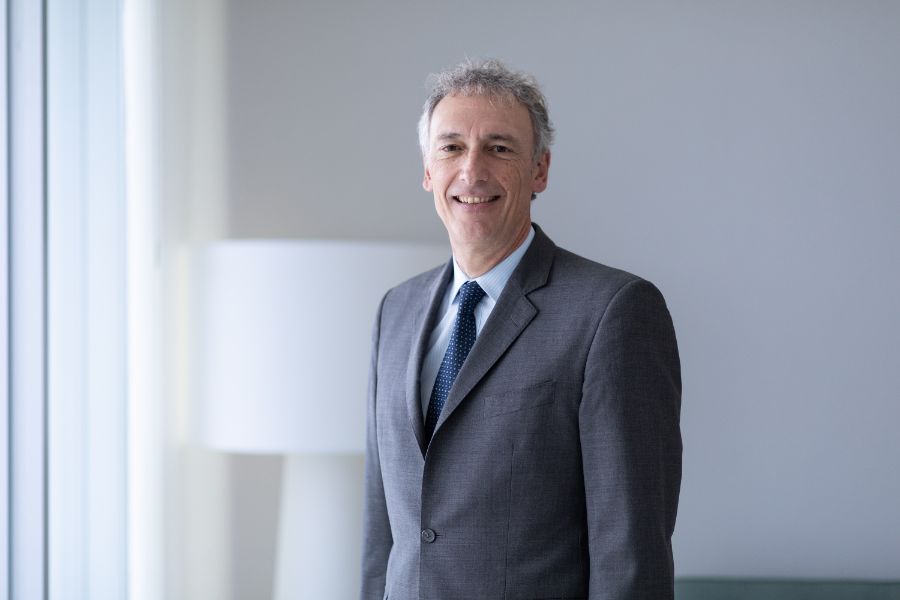
Group 1: Long-term Investment Perspective - The concept of long-term investment is emphasized by Swiss private partnership firm Pictet, which has a history dating back to 1805 and focuses solely on asset and wealth management [1] - Alexandre Tavazzi, Chief Investment Officer at Pictet, defines a long-term investment horizon as 10 years, with his team analyzing economic conditions and asset class returns over this period [1] Group 2: Global Economic Shifts - The global economy is experiencing "tectonic shifts," with structural impacts being more significant than cyclical ones [5][6] - The U.S. has historically provided three core supports to the global economy: economic stability, security guarantees, and attractive returns on safe assets, but these supports are now being questioned [6][7] Group 3: U.S. Debt and Investment Outlook - The attractiveness of U.S. long-term government bonds is declining, with the current term premium for 10-year bonds being low at 50 to 70 basis points, insufficient to compensate for long-term risks [8] - The U.S. fiscal deficit is approximately 7%, with half of this deficit attributed to interest payments, raising concerns about the sustainability of U.S. debt [8] Group 4: European Market Potential - There is a positive outlook for the European market, particularly with Germany's shift in debt policy, allowing for increased investment in infrastructure and defense [9] - The projected economic growth rates for the next decade indicate that Europe may experience faster growth compared to the U.S., making European assets more attractive [10] Group 5: Future Economic Growth Predictions - Economic growth predictions for the next decade show the U.S. at 1.8% and the Eurozone at 1.5%, with China expected to grow at 3.5% and India being the fastest-growing economy [10] - Four key factors—deglobalization, decarbonization, demographics, and dominance of fiscal policy—are expected to shape the economic landscape over the next ten years [10]
百亿级绿色甲醇项目,签约!
Zhong Guo Hua Gong Bao· 2025-08-11 13:27
Core Viewpoint - The signing of the green methanol project, with an investment of approximately 15 billion yuan, marks a significant step towards establishing a sustainable energy and chemical industry in Fujian's Gulei Development Zone [1] Group 1: Project Overview - The project aims to produce 1 million tons of green methanol annually, leveraging Gulei's offshore wind power resources and Charoen Pokphand Group's biomass resources [1] - The project will also extend to the production of green sustainable aviation fuel and downstream products like green jet fuel, creating a "green energy + green chemical" industrial chain [1] Group 2: Strategic Implications - The project is expected to accelerate the construction of a national-level zero-carbon park in Gulei and establish a world-class high-end smart green petrochemical base [1] - It will enhance Charoen Pokphand Group's investment layout in Fujian, facilitating the transition from decarbonized agriculture to decarbonized energy and chemicals [1]