
金融供给侧结构性改革

Search documents
助力中小企业更快更好获得融资 湖北新增一家AAA级担保公司
Sou Hu Cai Jing· 2025-12-10 06:06
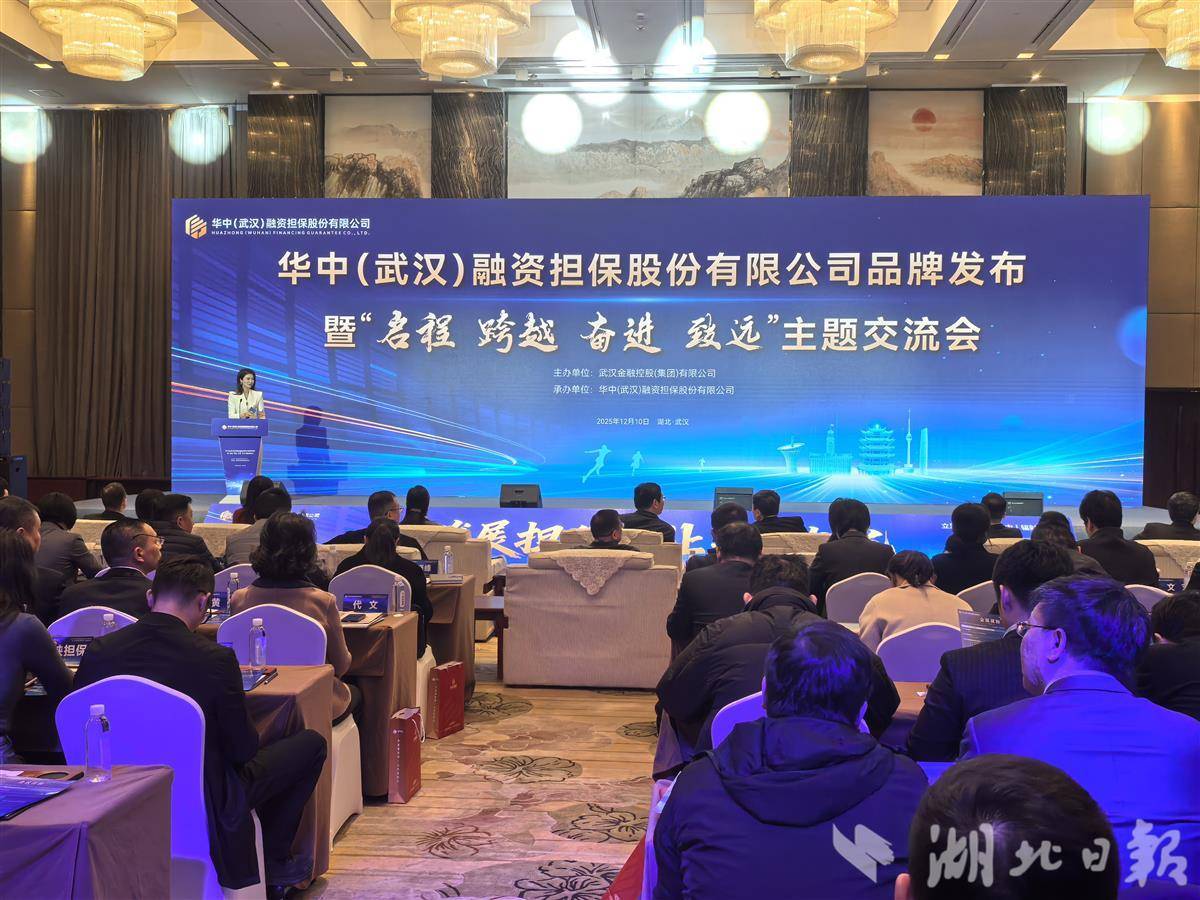
Core Viewpoint - The establishment of Huazhong (Wuhan) Financing Guarantee Co., Ltd. as a new AAA-rated financing guarantee institution in Hubei enhances market trust and reduces financing costs for small and medium-sized enterprises [5][6]. Group 1: Company Overview - Huazhong Guarantee is the first AAA-rated financing guarantee institution under Wuhan Financial Holding Group, marking a significant step in the group's comprehensive financial strategy [5]. - AAA-rated financing guarantee companies are recognized for their strong paid-in capital (typically over 1 billion), strict risk control systems, strong compensation capabilities, and excellent compliance records [5]. Group 2: Strategic Goals - Under the "14th Five-Year Plan," Huazhong Guarantee aims to transition from a single credit enhancement service provider to a comprehensive financial service platform, targeting a guarantee scale exceeding 60 billion by 2030 [5]. - The company plans to create a product matrix centered on financing guarantees, complemented by financing leasing and commercial factoring, with small loans and pawn services as additional offerings [5]. Group 3: Market Positioning - Huazhong Guarantee emphasizes a market-oriented approach, focusing on deep collaboration with securities firms and commercial banks to provide flexible and market-aligned comprehensive guarantee solutions for small and micro enterprises [6]. - The company will integrate into Hubei's "51020" modern industrial cluster and Wuhan's "965" modern industrial system, aiming to inject stronger financial momentum into the local economy [6]. Group 4: Partnerships and Collaborations - During the brand launch event, Huazhong Guarantee established strategic partnerships with several industry peers and rating agencies, including Zhongtoubao and Chongqing Three Gorges Guarantee [6]. - The company signed cooperation agreements with enterprises such as Yichang Chengfa and Hongshan Keti, enhancing its collaborative network [6].

公募REITs扩围,商业不动产入场激活存量资产
Huan Qiu Wang· 2025-12-07 03:18
Core Viewpoint - The introduction of commercial real estate investment trusts (REITs) in China is expected to enhance the capital market's ability to serve the real economy, providing a new financing channel for commercial real estate and promoting a diversified development of the REITs market [1][4]. Group 1: Market Development - The China Securities Regulatory Commission has released a consultation draft for the pilot program of commercial real estate REITs, indicating that the market is set to officially launch [1]. - As of November 27, 2023, there are 77 listed REITs in China, with a total financing scale exceeding 200 billion and a total market value surpassing 220 billion [2]. - The China Securities Index REITs total return index has increased by over 22% since the beginning of 2024, highlighting the growing investment value of REITs [2]. Group 2: Economic Impact - The launch of commercial real estate REITs is expected to activate existing commercial real estate assets, converting them into liquid capital, which will help stimulate consumption and expand effective investment [4]. - It will stabilize expectations in the real estate sector and facilitate a smooth transition to a new model of "rent and purchase coexistence" [4]. - The introduction of REITs will provide residents with an investment tool that combines stable cash flow and asset appreciation potential, thereby increasing property income [4]. Group 3: Strategic Transformation - The new financing channel will optimize the capital structure of companies holding substantial commercial real estate, encouraging a shift from a "heavy development, light operation" model to a "heavy management, heavy service" asset management strategy [4]. - The market-oriented pricing mechanism of REITs will incentivize companies to enhance operational management, improve asset quality, and boost profitability, fostering healthy competition in the commercial real estate market [4]. Group 4: Investor Opportunities - The establishment of commercial real estate REITs will enrich the asset allocation options for investors, allowing them to participate in high-quality commercial real estate projects with lower capital thresholds [4]. - Investors will have the opportunity to share in the stable rental income and potential asset appreciation generated by these projects, which is significant for optimizing both personal and institutional investment portfolios [4]. Group 5: Regulatory Framework - The Shanghai and Shenzhen stock exchanges are actively working on revising supporting rules, system upgrades, and pilot project reserves to ensure the smooth implementation of commercial real estate REITs [5]. - The focus will be on supporting high-quality projects with strong operational management capabilities and stable asset performance while ensuring effective risk prevention [5]. - The pilot program of commercial real estate REITs is seen as a significant achievement in China's financial supply-side structural reform, enhancing the efficiency of capital circulation in the commercial real estate sector [5].

中国邮政储蓄银行湖北省分行 信用生“金” 金融活水精准滴灌千企万户
2 1 Shi Ji Jing Ji Bao Dao· 2025-12-05 16:12
Core Viewpoint - The 20th Central Committee's Fourth Plenary Session emphasizes the importance of optimizing financing structures and enhancing financial services to the real economy, focusing on credit as a key resource allocation tool [1] Group 1: Financial Innovations in Hubei - Hubei Province has introduced three policy tools: "Knowledge Value Credit Loan for Technology Enterprises," "Commercial Value Credit Loan for SMEs," and "Credit Loans for Farmers' Personal and Rural Asset Value," aimed at directing financial resources to market entities lacking collateral but possessing genuine credit value [3][4] - Postal Savings Bank of China Hubei Branch has actively implemented these credit loan tools, resulting in nearly 130,000 loans amounting to over 45.4 billion yuan by the end of November 2025, significantly supporting the development of the local economy [3][4] Group 2: Impact on Agriculture - The "Credit Loan for Farmers' Personal and Rural Asset Value" has effectively addressed challenges in agricultural credit, allowing farmers to access loans without traditional collateral, thus revitalizing rural economies [4][5] - In Jia Yu County, the Postal Savings Bank has issued over 110 loans totaling nearly 30 million yuan to local farmers, enhancing agricultural productivity and supporting a vegetable industry with an annual output value exceeding 1 billion yuan [4] Group 3: Support for SMEs - The "Commercial Value Credit Loan for SMEs" aims to unlock the potential of intangible assets such as customer base and market reputation, which are often overlooked in traditional financing [6][7] - The Postal Savings Bank has issued nearly 1,100 commercial value credit loans amounting to 2 billion yuan since the program's launch, enabling SMEs to convert their commercial reputation into operational capital [6][7] Group 4: Financing for Technology Enterprises - The "Knowledge Value Credit Loan for Technology Enterprises" is designed to facilitate the conversion of technological assets into financial resources, addressing the unique needs of innovation-driven companies [8][9] - In 2023, the Postal Savings Bank provided knowledge value credit loans to 1,773 technology enterprises, totaling nearly 9.4 billion yuan, significantly promoting the transformation of technology into capital [9][10] Group 5: Future Outlook - The Postal Savings Bank of China Hubei Branch is committed to continuing its role as a key player in the financial supply-side structural reform, integrating provincial policies into practical financial services that support high-quality economic development in Hubei [10]

问道银行品牌“铸金之径”:信立根,行致远,新拓界
Zhong Guo Jing Ji Wang· 2025-12-04 07:17
Core Viewpoint - CITIC Bank has been awarded the title of "2025 China Annual Bank" by The Banker, recognizing its innovative practices in serving the real economy and contributing to the development of a financial powerhouse in China [1]. Group 1: Brand Development - The foundation of modern banking is built on trust, which is essential for both the bank's development and brand construction [2]. - CITIC Bank integrates the concept of trust into its brand DNA, emphasizing a commitment to serving the real economy and high-quality development [2][4]. - The bank's brand value has reached $16.95 billion, with a year-on-year increase of 27.23%, making it the financial institution with the highest brand value growth in mainland China [3]. Group 2: Financial Services and Innovations - CITIC Bank focuses on five key areas: technology finance, green finance, inclusive finance, pension finance, and digital finance, translating brand philosophy into tangible development and customer value [4]. - The bank has made significant investments in technology, with its technology expenditure as a percentage of revenue exceeding 5%, positioning it among industry leaders [7]. - CITIC Bank has received multiple awards for its innovative projects, including first place for its cloud-native financial technology platform [7]. Group 3: Customer-Centric Approach - The bank has developed a comprehensive product and service matrix that addresses the full lifecycle needs of customers, including tailored offerings for both elderly and young clients [8]. - CITIC Bank's initiatives include the "Latte Plan" for young customers and support for elderly clients through pension products, reflecting a deep understanding of societal changes [8]. Group 4: Strategic Vision - The bank's chairman emphasizes a philosophy of "planning for the long term, doing well, and acting quickly" to achieve high-quality development [5]. - As of the end of Q3 2025, CITIC Bank's total assets reached 9.898 trillion yuan, with a non-performing loan ratio of 1.16%, indicating stable asset quality [5].

金融高质量发展取得新成就
Jing Ji Ri Bao· 2025-11-30 22:39
Core Insights - The Chinese banking sector has achieved significant growth, with total assets nearing 470 trillion yuan, ranking first globally, and has maintained the world's largest foreign exchange reserves for 20 consecutive years [1][2] Group 1: Financial Sector Achievements - During the "14th Five-Year Plan" period, the financial sector has effectively supported the real economy, providing an additional 170 trillion yuan in funding through various means such as loans, bonds, and equity [1] - The stock and bond financing in the exchange market reached a total of 57.5 trillion yuan, with a steady increase in the proportion of direct financing [1] - Loans to the wholesale, retail, accommodation, and catering sectors have increased by 80% [1] Group 2: Support for Key Areas - The financial industry has focused on supporting major national strategies and key areas, particularly enhancing financial services for technological innovation, with annual growth rates for loans to tech SMEs, inclusive finance, and green loans exceeding 20% [2] - The market capitalization of the A-share technology sector now accounts for over 25% of the total market [2] Group 3: Internationalization and Openness - The financial market has seen significant internationalization, with the removal of foreign ownership limits in securities, funds, and futures institutions, and the optimization of investment mechanisms such as Stock Connect and Bond Connect [2] - As of the end of July, foreign institutions and individuals held over 10 trillion yuan in domestic stocks, bonds, and deposits, with 43 of the world's top 50 banks establishing a presence in China [2] Group 4: Risk Management and Stability - The financial regulatory framework has been continuously improved, enhancing regulatory effectiveness and maintaining key indicators such as non-performing loans and capital adequacy within healthy ranges [3] - The disposal of non-performing assets has increased by over 40% compared to the "13th Five-Year Plan" period, and the A-share market has shown improved resilience and risk management capabilities [3] - The annualized volatility of the Shanghai Composite Index has decreased by 2.8 percentage points to 15.9% compared to the previous five-year period [3] Group 5: Future Outlook - Looking ahead, the financial sector is positioned at a new historical starting point, with a focus on deepening supply-side structural reforms and advancing high-level financial openness [3] - The commitment to maintaining financial stability and security is emphasized, with expectations for the financial industry to contribute significantly to China's modernization efforts [3]
央行、科技部等部门,重磅会议
Zheng Quan Shi Bao· 2025-11-29 06:54
Core Points - The People's Bank of China and the Ministry of Science and Technology held the first meeting of the Science and Technology Finance Coordination Mechanism, emphasizing the strategic importance of technological innovation in national development [1][2] - The meeting highlighted the achievements made during the 14th Five-Year Plan period in financial support for technological innovation, with a focus on creating a multi-level financial service system [2] Group 1 - The meeting underscored the need for a financial system that aligns with technological innovation, aiming to deepen structural reforms in financial supply [1] - It was noted that various financial modalities, including direct and indirect financing, have played a significant role in supporting technological innovation [2] - The meeting called for enhanced inter-departmental policy coordination to foster a favorable environment for the development of science and technology finance [2] Group 2 - The upcoming year is identified as the starting point for the 15th Five-Year Plan, with a focus on implementing various tasks and maintaining the operation of the Science and Technology Finance Coordination Mechanism [2] - Emphasis was placed on the importance of high-quality development in technology insurance and the construction of a "technology board" in the bond market [2] - The meeting also discussed the need for effective evaluation of financial institutions' contributions to the "five major articles" and improving mechanisms for financing, information sharing, and intellectual property conversion [2]
水滴保“三好服务”全面升级 AI数字员工帮帮入职“帮帮赔服务工作室”
Sou Hu Cai Jing· 2025-11-28 10:12
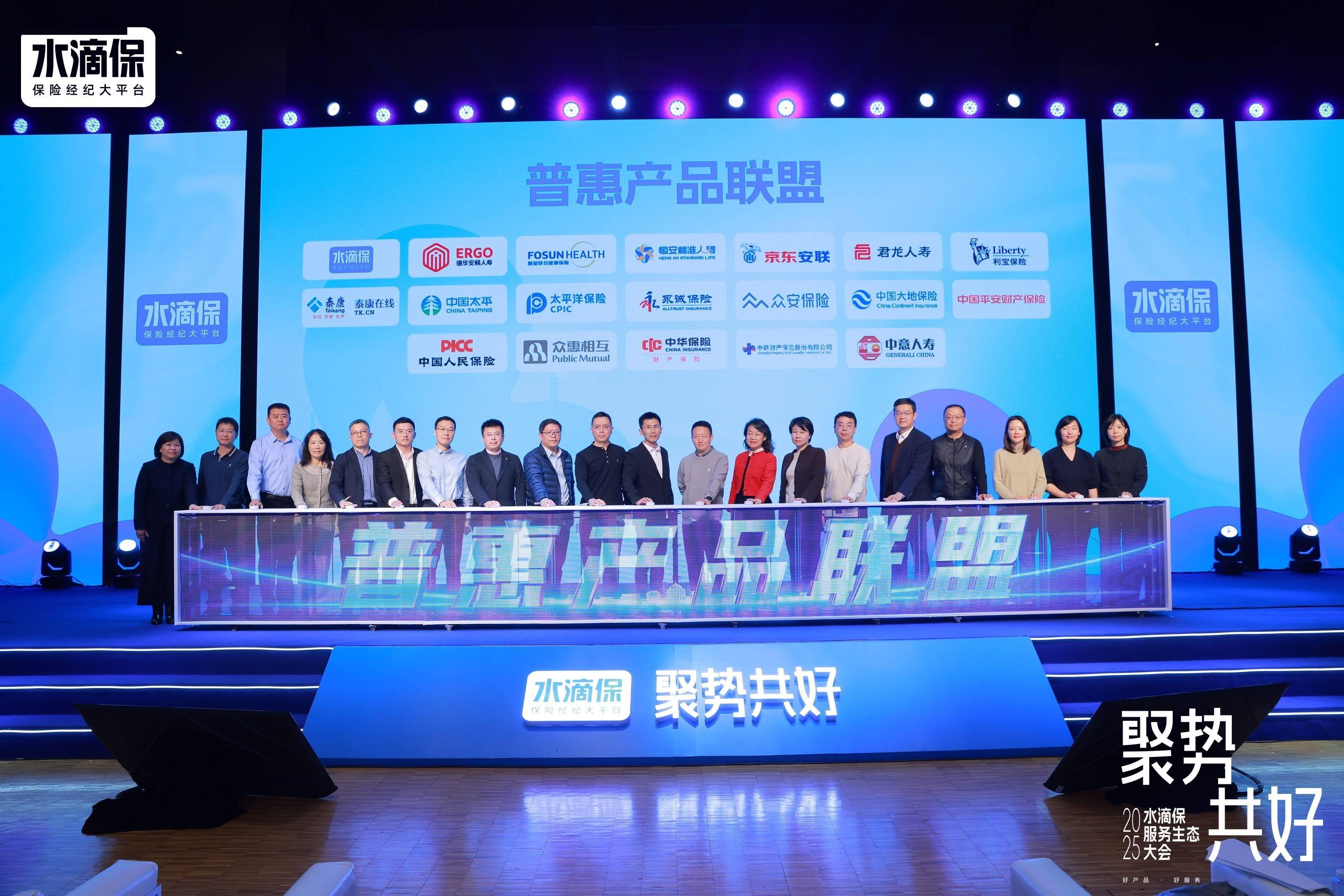
Core Insights - The second "Gathering Strength, Achieving Common Good" Waterdrop Insurance Service Ecosystem Conference was successfully held, where the "Research Report on Innovative Insurance for People with Pre-existing Conditions (2025)" was released, highlighting the protection status and demand pain points of the pre-existing condition population in China [1][5][12] - Waterdrop Insurance, in collaboration with 18 insurance companies, established the "Inclusive Product Alliance" to focus on the insurance needs of specific groups such as those with pre-existing conditions, the elderly, and mothers and infants, aiming to promote inclusive insurance services through AI empowerment and product co-creation [1][18] Group 1: Conference Highlights - The conference featured notable figures from the insurance industry, including former officials from the China Insurance Regulatory Commission and representatives from various insurance companies and media [4] - The development of insurance for people with pre-existing conditions is seen as a key measure for expanding coverage and serving public welfare, aligning with national development goals [5][7] Group 2: Research Findings - The average annual medical expenditure for individuals with pre-existing conditions is approximately 87,000 yuan, which is 2.1 times the average disposable income of residents, indicating a significant protection gap [12] - Over 60% of severe disease patients incur out-of-pocket expenses exceeding 100,000 yuan, highlighting the urgent need for better insurance solutions [12] - Young adults are experiencing a rising prevalence of sub-health and chronic diseases, with rates twice that of the elderly, necessitating innovative insurance products [12] Group 3: Product and Service Innovations - Waterdrop Insurance has launched 214 innovative insurance products for people with pre-existing conditions, with 34 being first-of-their-kind in the country, and an average of 1.14 days to launch a new product [14] - The introduction of AI-driven services, such as the AI customer service "Bao Xiaohui," has significantly improved service efficiency, achieving a response time of 1.5 seconds and a 40-fold increase in service capacity [17] - The establishment of the "Inclusive Product Alliance" aims to create affordable and accessible insurance products for the public, with participation from 18 insurance companies [18]

券商系期货公司转型发展迎来新机遇
Qi Huo Ri Bao Wang· 2025-11-28 02:43
Core Viewpoint - The wave of mergers and acquisitions in the securities industry is accelerating, leading to the emergence of "carrier-level" institutions, with significant implications for the development of futures companies under these brokerages [2][3]. Group 1: Mergers and Acquisitions - Several brokerages, including CICC, Dongxing Securities, and Xinda Securities, have announced a suspension of trading to plan a merger, indicating the creation of a brokerage with total assets exceeding 1 trillion yuan [2]. - The merger between Guotai Junan and Haitong Securities has resulted in a new entity with a capital increase of 1.5 billion yuan for Guotai Junan Futures, raising its registered capital to 7 billion yuan, making it the second-largest in the industry [2]. - The total asset scale of the merged CICC, Dongxing Securities, and Xinda Securities will reach 1,009.5 billion yuan, positioning it as the fourth-largest in the domestic securities industry [3]. Group 2: Policy and Economic Context - The acceleration of mergers and acquisitions is driven by macroeconomic conditions and policy support, as China aims to foster top-tier investment banks and institutions through structural reforms in the financial sector [3][4]. - The 2023 Central Financial Work Conference emphasized the goal of cultivating first-class investment banks, with the new "National Nine Articles" in 2024 detailing pathways for enhancing core competitiveness through mergers and acquisitions [3]. Group 3: Futures Companies Transformation - The merger wave presents unprecedented opportunities and challenges for futures companies with brokerage backgrounds, as they seek to restructure and integrate resources [5]. - The futures industry is characterized by high concentration, with the top ten companies holding nearly half of the industry's net assets and close to 60% of net profits [5]. - Futures companies are increasingly looking to expand internationally, moving away from traditional price competition to create greater value by tapping into global markets [5][6]. Group 4: Competitive Landscape and Strategic Shifts - The industry is shifting from a "land grab" approach to a focus on "precision farming," necessitating differentiation among futures companies within the same brokerage group [4][7]. - Regulatory bodies are emphasizing the need for integration among futures businesses to address competition issues, with clear requirements for the merger processes [8]. Group 5: Branding and Development Trends - The recent mergers have led to rebranding among futures companies, reflecting a strategic move to leverage the brand influence and resources of their parent brokerages [9]. - The future development of futures companies is expected to focus on differentiation, branding, and group integration, as they adapt to the evolving regulatory landscape and market demands [9]. Group 6: Global Opportunities and Challenges - The wave of mergers is enhancing the international competitiveness of China's futures industry, with a significant increase in foreign participation in the domestic market [10]. - The China Securities Regulatory Commission is committed to advancing high-level opening of the futures market, facilitating foreign investment and participation [10][11]. - Despite the opportunities, futures companies face challenges related to regulatory compliance and the need for robust systems to manage international operations effectively [11].

人民银行副行长陶玲:在法治轨道上推进金融高质量发展|宏观经济
清华金融评论· 2025-11-27 09:18
Core Viewpoint - The article emphasizes the importance of advancing financial legal development on the legal track to achieve high-quality financial growth in China, aligning with the goals set forth in the 15th Five-Year Plan [2][3]. Group 1: Financial Legal System Construction - The construction of a scientific and complete financial legal system is essential, focusing on foundational financial laws, central bank legal systems, financial stability laws, and financial regulatory laws [2][12]. - Strengthening the legal framework for financial stability is crucial, with ongoing efforts to draft a financial stability law aimed at comprehensive risk prevention and management [13][14]. Group 2: Financial Governance and Regulation - The article highlights the need for modernizing the financial governance system and enhancing governance capabilities, ensuring that financial institutions operate in compliance with laws and regulations [6][10]. - It stresses the importance of strict financial regulation and enforcement, advocating for the revision of existing laws to adapt to the evolving financial landscape [14][15]. Group 3: International Financial Law - Enhancing international financial legal frameworks is necessary for promoting high-level openness and addressing external risks, including money laundering and financial sanctions [14][10]. - The article calls for active participation in international rule-making and cooperation in law enforcement to safeguard national interests [14][15]. Group 4: Financial Legal Talent Development - Building a competent financial legal workforce is vital, focusing on training professionals who are well-versed in both finance and law [15]. - The article emphasizes the need for leadership in financial institutions to adopt a strong legal mindset and enhance their legal capabilities [15].

“十五五”金融法治建设聚焦七大重点方向
2 1 Shi Ji Jing Ji Bao Dao· 2025-11-27 04:47
Core Viewpoint - The article emphasizes the importance of advancing financial legal construction on the rule of law track to promote high-quality financial development in China, highlighting the need for a correct political direction and practical reforms [1][2]. Financial Legal Construction Challenges - Financial legal construction must focus on six key dimensions: maintaining a correct political direction, prioritizing the people, aiming for a strong financial nation, modernizing governance systems, deepening structural reforms, and ensuring financial stability [2][3]. - Historical practices have led to the establishment of a basic legal framework for financial operations, with significant laws enacted since 1995, including the People's Bank of China Law and the Securities Law [2][3]. Historical Experience in Financial Legal Construction - Four major experiences have shaped China's financial legal construction: 1. Legislative processes have accompanied financial reforms, ensuring laws support and regulate these changes [3]. 2. Financial operational rules have been codified into law, reflecting national conditions and international practices [3]. 3. The legal framework protects the rights of various financial entities while embodying the essence of a socialist market economy [3]. 4. A systemic view of financial work has been established, balancing central and local responsibilities [3]. Future Directions for Financial Legal Construction - The upcoming "15th Five-Year Plan" will address new challenges, including external pressures and the need for financial stability amid economic adjustments [4][5]. - Seven key focus areas for financial legal construction have been identified, including foundational financial laws, central bank legal systems, and financial stability laws, with significant legislative efforts underway [5][6]. Key Areas for Legal System Development - The construction of financial regulatory legal systems must adapt to the current regulatory framework involving multiple financial authorities, necessitating updates to various financial laws [6]. - Enhancing foreign financial legal frameworks is crucial for balancing development and security, as well as participating in international rule-making [6]. - Building enforcement capabilities and a skilled legal workforce is essential for effective financial law implementation [7].