能源转型

Search documents
光伏产业如何突围?大咖抛出“破内卷”方案
Nan Fang Du Shi Bao· 2025-11-20 23:12
Core Viewpoint - The photovoltaic industry is facing severe challenges, including price declines and profitability issues, despite significant growth in renewable energy generation in China and globally [2][4] Group 1: Industry Challenges - The photovoltaic industry is experiencing an "involution" competition, which harms sustainable development and innovation within the sector [2] - The production capacity of polysilicon has dramatically expanded, with output increasing from 67,400 tons in 2012 to 1,785,000 tons in 2024, a growth of over 25 times [2] - The production of photovoltaic silicon wafers has also surged, rising from 161.4 GW in 2020 to 775.8 GW in 2024, leading to oversupply and price drops below production costs [2] Group 2: Proposed Solutions - Liu Hanyuan suggests that the photovoltaic industry should learn from the OPEC model, which focuses on collective interest maximization and dynamic adjustment of production to stabilize prices [3] - With 90% of global polysilicon production capacity concentrated in China, the industry can leverage this concentration to regulate supply and restore price balance across the value chain [3] Group 3: Future Outlook - The most critical task for the industry is to combat "involution and excessive competition," aligning with recent government policies aimed at regulating the photovoltaic sector [4] - There is optimism for the future of the photovoltaic industry, with expectations of accelerated energy transition and high-quality development, provided that stakeholders adhere to principles of co-creation and shared growth [4] - Establishing industry self-regulation similar to OPEC could positively impact sustainable development and mitigate low-quality competition within the photovoltaic sector [5]

储能需求暴冲、电力瓶颈制约供给,大摩预测:铝将在明年提前陷入短缺!
美股IPO· 2025-11-20 16:07
需求端:储能成为"隐形巨兽" 摩根士丹利最新预测,全球铝市场将在2026年陷入供应短缺,这一时间点明显早于市场此前的普遍预期。核心驱动力来自于供需剪刀差的急剧扩大: 在需求端,储能系统(ESS)对铝的消耗呈现"暴冲"态势,完全抵消了其他板块的疲软;而在供给端,全球电力紧张正成为硬约束,AI算力对电力的争 夺正在挤压由于高耗能而脆弱的铝冶炼产能。 市场长期以来低估了能源转型对基础金属的消耗,尤其是储能领域。大摩的数据不仅令人惊讶,更是敲响了警钟: 华尔街正在修正对铝市场的预期。摩根士丹利在11月19日发布的最新重磅研报中指出,铝的基本面正在经历结构性逆转。 摩根士丹利最新报告指出全球铝市场将在2026年陷入供应短缺,这一时间点较市场预期提前至少一年。铝市场正面临结构性转变,核心驱动在于需求端 因储能系统爆发式增长,预计2026年仅该领域就将带来144万吨新增铝需求;而供应端受制于全球电力短缺,印尼新增产能投产延迟且AI算力中心争夺 电力资源,导致供需缺口持续扩大。 此前,市场主流观点较为保守。花旗分析师曾预测全球原铝供应缺口将从2027年开始出现,Wood Mackenzie则认为短缺将始于2028年。摩根士丹 ...
Northland Power (OTCPK:NPIC.F) 2025 Investor Day Transcript
2025-11-20 15:32
Northland Power 2025 Investor Day Summary Company Overview - **Company**: Northland Power (OTCPK: NPIC.F) - **Event**: 2025 Investor Day held on November 20, 2025 - **Key Participants**: Christine Healy (President and CEO), Ian Pierce (Board Chair), Jeff Hart (CFO), and other leadership team members Core Industry Insights - **Industry**: Renewable Energy and Power Generation - **Focus Areas**: Onshore and offshore wind, solar, natural gas-fired power, and grid-scale battery storage - **Current Operations**: 3.5 gigawatts in operation and 2.2 gigawatts under construction - **Revenue Stability**: Over 95% of revenue is contracted, providing a stable financial foundation [7][28] Strategic Initiatives - **Growth Target**: Aim to double operating capacity to 7 gigawatts by 2030, requiring 1.4-1.8 gigawatts of new projects [24][34] - **Investment Plan**: Approximately CAD 6 billion in total gross investment over the next five years [24] - **Financial Goals**: Targeting a 6% compound annual growth rate in free cash flow per share through 2030, projecting $1.55-$1.75 per share [25] Market Dynamics - **Electricity Demand Growth**: IEA projects a 34% increase in global electricity demand by 2035, driven by electrification across various sectors [21][22] - **Geopolitical Factors**: Increased focus on energy security and affordability, particularly in Canada and Europe [21][22] - **Decarbonization Policies**: Continued support for clean generation investments in Europe and Canada [22] Project Execution and Safety - **Project Delivery**: Successful completion of Oneida, Canada’s largest battery energy storage project, ahead of schedule and under budget [14] - **Safety Culture**: Emphasis on safety with awards received for safety performance in Colombia and Ontario [10][11] Financial Management - **Dividend Policy Adjustment**: Recent changes to the dividend policy to improve financial flexibility and align capital allocation with market conditions [16][18] - **Capital Allocation Strategy**: Focus on projects with levered after-tax returns of at least 12% [24] Regional Focus - **Core Markets**: Prioritizing Canada (Ontario, Alberta, Saskatchewan, Quebec) and Europe (Poland, Spain, UK) for growth opportunities [39][45] - **Poland**: Strong focus on energy security and decarbonization, with investments in offshore wind and battery storage projects [42][44] - **Canada**: Need for new electricity supply due to electrification and industrial growth, with significant opportunities in natural gas infrastructure [45][46] Organizational Changes - **Leadership Team**: New appointments to enhance execution and operational discipline [13][14] - **Structural Reorganization**: Transitioning from technology silos to regional hubs to improve efficiency and project delivery [30][29] Conclusion - **Long-term Vision**: Northland Power is committed to sustainable growth through disciplined capital management, focusing on high-return projects while maintaining a strong safety culture and operational excellence [16][25][27]
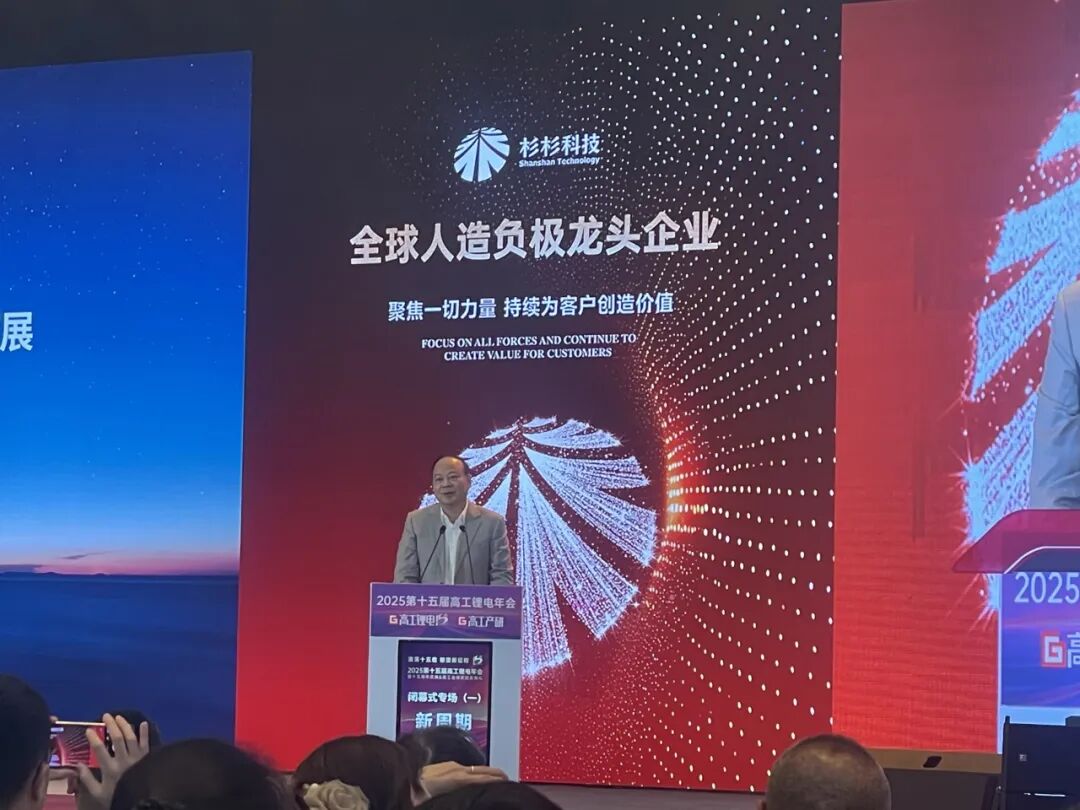
曾毓群:不仅要做世界第一 更要让世界尊重(附演讲实录)
Shang Hai Zheng Quan Bao· 2025-11-20 15:09
Core Viewpoint - The Chinese lithium battery industry aims not only to be the world leader but also to achieve high-quality development that earns global respect [1][18]. Group 1: Industry Challenges and Innovations - The lithium battery industry is entering the TWh era in 2024, a year earlier than previously predicted [3]. - There is a lack of genuine innovation in the industry, with many companies focusing on short-term profits and engaging in price wars rather than investing in R&D and quality [4][14]. - The industry must embrace long-termism to drive high-quality development over the next 15 years [4]. Group 2: Energy Transition Responsibility - Lithium batteries are now recognized as part of the energy sector, responsible for the transition to cleaner energy consumption and supply [6]. - The penetration rate of new energy vehicles in China has surpassed 50%, with significant growth in electric commercial vehicles and emerging sectors like electric aviation and marine [6]. - There is a strong demand for energy storage solutions, with electrochemical storage being the most economical and reliable option for short-duration needs [7]. Group 3: Technological Innovation - The lithium battery industry is technology-intensive, requiring continuous breakthroughs to unlock further development [10]. - The complexity of lithium battery technology is highlighted, with billions of particles involved in the battery's operation, making high-quality production challenging [11][12]. - The industry faces severe homogenization, and there is a pressing need for disruptive innovations to maintain competitive advantages [13][14]. Group 4: Manufacturing and Profitability - The lithium battery sector is part of the manufacturing industry, which typically does not allow for excessively high profits, especially in a low-price competitive environment [15]. - A reasonable profit expectation is essential for pursuing long-term, stable growth [15]. - The industry must focus on quality and technological iteration, ensuring that production lines align with technology cycles to maintain competitiveness [17]. Group 5: Industry Self-Regulation and Future Outlook - The industry is experiencing intense competition not only domestically but also in international markets, with some companies reducing prices by 30% while promising increased product lifespan [17]. - The Chinese lithium battery industry has achieved world leadership and must now focus on high-quality development to maintain this position [18]. - Establishing a high level of industry self-discipline and adhering to long-termism is crucial for building a responsible and respected lithium battery sector [17][18].

常宝股份:公司可生产超长、超薄、高钢级HRSG产品
Zheng Quan Ri Bao Wang· 2025-11-20 11:13
Core Viewpoint - The company has developed HRSG products as a key feature since its IPO in 2010, focusing on technology research and market expansion, leading to increased production and sales in recent years [1] Company Overview - The company produces ultra-long, ultra-thin, and high-strength HRSG products, establishing competitive advantages in quality, delivery speed, and variety [1] - The HRSG products are crucial components in gas turbine combined cycle power generation systems, effectively recovering exhaust heat for secondary power generation, thus enhancing energy efficiency [1] Market Dynamics - The demand for gas turbine generator sets is expected to grow due to the construction of AI data centers and energy transition in regions like North America and the Middle East, indicating a favorable market outlook in the coming years [1] - The company plans to continue expanding HRSG production capacity and upgrading product structures, while also developing stainless steel and nickel-based products to enhance competitiveness and value [1]

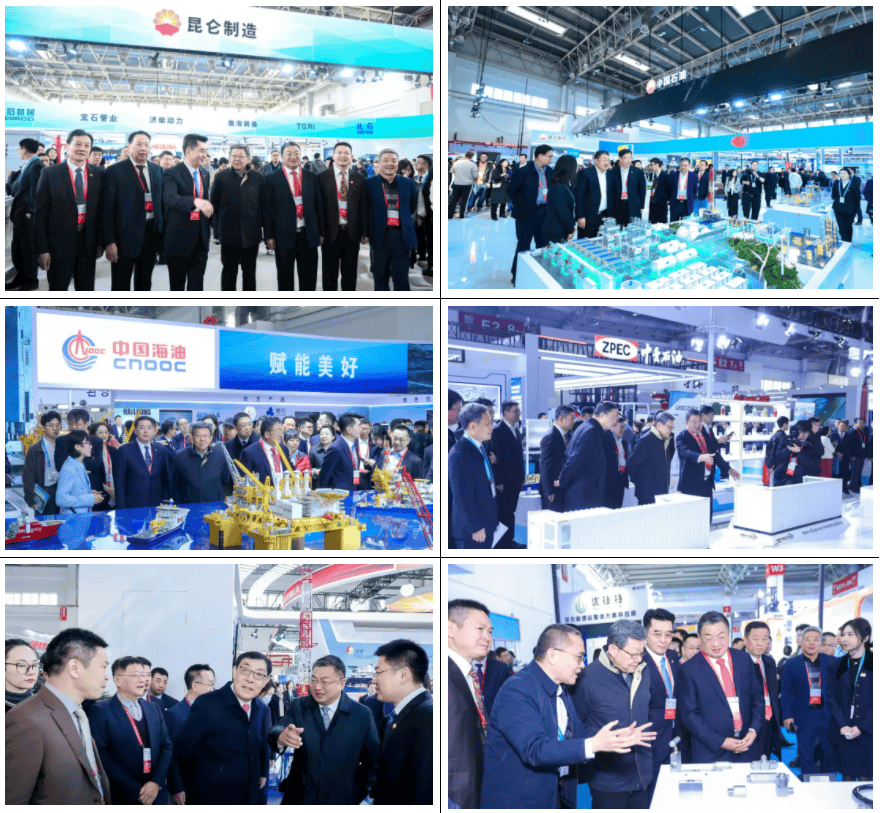
2025能源转型大会将于11月22日在未来科学城举办
Xin Jing Bao· 2025-11-20 10:13
Group 1 - The 2025 Energy Transition Conference will be held from November 22 to 24 in Changping District, Beijing, focusing on "Accelerating Collaborative Innovation between Enterprises and Regions for Green Transition Development" [1] - The conference will feature a variety of activities, including an opening ceremony, key events, exhibitions, and specialized meetings, along with site visits and project matchmaking [1][2] - Notable guests from various sectors, including government, industry, academia, and finance, will be invited to promote practical collaboration and innovation in the energy sector [2] Group 2 - This year's conference will emphasize the importance of energy storage and hydrogen energy as future industries, while also showcasing fossil energy and energy equipment as advantageous sectors [1][3] - The event will include significant policy announcements, project signings, and discussions on industry achievements, aiming to attract high-quality projects to the Energy Valley [3] - The Energy Valley, as a key platform for international scientific innovation in Beijing, has established numerous high-level research facilities and attracted a diverse range of enterprises and research talents [3]
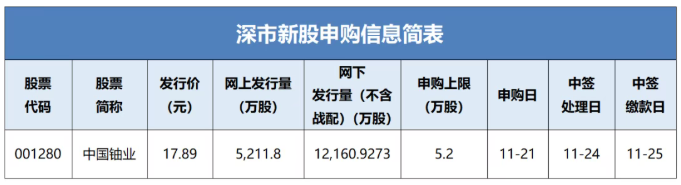
A股“铀业第一股”明日开启申购
Xin Hua Cai Jing· 2025-11-20 09:32
新华财经上海11月20日电 据深交所消息,11月21日,中国铀业股份有限公司(简称:中国铀业)将通 过深交所网下发行电子平台和交易系统发行新股,上市后将成为A股"铀业第一股"。 华金证券根据业务的相似性,选取了中广核矿业、洛阳钼业、北方稀土为中国铀业的可比上市公司。从 上述可比公司来看,2024年度可比公司的平均收入规模为848.73亿元,销售毛利率为8.68%;相较而 言,公司营收规模未及同业平均,销售毛利率则处于同业的中高位区间。 | | | | | 深市新股申购信息简表 | | | | | | --- | --- | --- | --- | --- | --- | --- | --- | --- | | 股票 | 股票 | 发行价 | 网上发行量 | 网下 发行量(不含 | 申购上限 | 申购日 | 中签 | 中签 | | 44583 | 简称 | (元) | (万股) | | (万股) | | 处理日 | 缴款日 | | | | | | 战配)(万股) | | | | | | 001280 | 中国铀业 | 17.89 | 5,211.8 | 12,160.9273 | 5.2 | 11-21 | 1 ...
成本高也签?乌克兰27年LNG协议,大国博弈下的无奈选择
Sou Hu Cai Jing· 2025-11-20 08:07
Core Viewpoint - Ukraine has signed a 27-year gas cooperation agreement with Greece's Atlantic-seeLNGTrade company to import liquefied natural gas (LNG) from the United States, potentially altering the energy landscape in Europe [1][8]. Group 1: Background and Context - Ukraine has historically relied heavily on Russian gas imports, which has raised significant energy security concerns [3]. - The ongoing conflict between Russia and Ukraine has intensified the need for Ukraine to accelerate its strategy to reduce dependence on Russian energy sources [5]. Group 2: Agreement Details - The agreement aims to establish a sustainable supply chain, including stable LNG supplies from the U.S. and the integration of infrastructure for energy logistics to Europe [6]. - Greece will play a crucial role as an energy hub, facilitating the efficient transfer of U.S. LNG to Ukraine, thus addressing Ukraine's lack of LNG receiving facilities [6]. Group 3: Implications for Stakeholders - The deal is seen as a win-win for all parties: Ukraine reduces its reliance on Russian gas, Greece activates its energy facilities, and the U.S. expands its market presence in Europe [10]. - The agreement represents a strategic move by the U.S. to diminish Russia's influence in the European energy market [8]. Group 4: Challenges and Risks - The long-term agreement may face challenges, particularly regarding the higher costs associated with U.S. LNG compared to Russian pipeline gas [10]. - Ukraine may encounter significant energy expenditure pressures similar to those faced by other countries importing U.S. LNG [11]. - Geopolitical changes could impact the execution of the agreement, given its 27-year duration and the potential for shifts in international relations [11][12]. Group 5: Future Outlook - The success of the agreement in providing stable energy supplies will require time to assess [14]. - The deal introduces new variables into the European energy landscape, suggesting that further changes in the market are likely in the coming years [14].
中国能源政策研究院院长林伯强:从能源制造强国迈向能源体系强国
2 1 Shi Ji Jing Ji Bao Dao· 2025-11-20 08:05
"十五五"规划建议提出,要加快建设新型能源体系,持续提高新能源供给比重,推进化石能源安全可靠 有序替代,着力构建新型电力系统,建设能源强国。 "十四五"时期,中国新能源产业在全球能源版图中实现了从追赶到引领的历史性跨越。无论是在光伏、 风电领域,还是储能和电动汽车领域,中国制造均已成为全球能源转型的重要支撑力量。但在设备制造 环节全面领先的同时,新型能源体系的配套支撑也有待提升。如何将强大的制造能力切实转化为系统高 效运行的整体实力,已成为"十五五"时期推动中国能源转型的关键任务。 储能、智能电网和微电网建设将成为"十五五"时期能源体系升级的核心突破点。"十五五"规划建议明确 强调,要科学布局抽水蓄能、大力发展新型储能,加快智能电网和微电网建设,这为解决新能源波动性 和间歇性问题提供了关键技术路径。在储能技术布局方面,应构建涵盖电化学储能、抽水蓄能,及探索 氢能、热储能等多元化技术形式的储能体系,实现不同时间和空间尺度下能源的灵活调节能力。智能电 网和微电网通过技术集成,可推动分布式能源高效消纳,显著提升能源系统整体响应速度,为新能源充 分发挥替代作用提供坚实技术支撑。 然而,制造端的全面领先并未完全转化为能 ...
HEIE2026|全球对标、双展联动,2026年3月北京启幕共聚氢能盛会
Sou Hu Cai Jing· 2025-11-20 07:43
Core Insights - HEIE2026 will be held from March 26 to 28, 2026, at the China International Exhibition Center in Beijing, focusing on hydrogen energy technology and equipment [1] - The event aims to create a high-end platform for technology exchange, business cooperation, and international dialogue, promoting energy technology innovation [1][3] Industry Overview - The hydrogen energy industry is rapidly developing, with Europe and Japan leading in exhibition systems and industrial ecosystems [2] - HEIE2026 is positioned as one of the world's top three hydrogen energy exhibitions, aiming to cover the entire hydrogen energy industry chain [2] Market Potential - The North China region accounts for 35% of the national hydrogen energy industry chain enterprises, with over 200 core companies in the Beijing-Tianjin-Hebei area [4] - HEIE2026 will showcase China's achievements in hydrogen technology research, equipment manufacturing, and demonstration applications during the 14th Five-Year Plan period [4] Event Highlights - The exhibition will feature over 2,000 companies from 81 countries, including 52 Fortune 500 companies, and is expected to attract 180,000 professional visitors [9] - The event will include a global hydrogen industry conference, facilitating discussions on international hydrogen policies and sharing cutting-edge information [3][21] Dual Exhibition Model - HEIE2026 will run concurrently with the 26th China International Petroleum and Petrochemical Technology Equipment Exhibition (cippe2026), promoting collaboration between traditional and renewable energy sectors [9][12] - This dual exhibition model aims to break down barriers between traditional and renewable energy industries, providing opportunities for cross-industry collaboration [12]