数字化转型

Search documents
保险业确立数字金融“双轮驱动”新航标
Jin Rong Shi Bao· 2025-12-31 01:54
Core Viewpoint - The implementation plan for high-quality development of digital finance in the banking and insurance sectors emphasizes a dual-driven approach of digital technology and data elements, aiming to enhance the integration of the insurance industry into the real economy and national strategies [1][2]. Group 1: Digital Financial Development Goals - The plan outlines major goals for the insurance industry's digital financial development over the next five years, focusing on significant progress in digital transformation and the enhancement of capabilities driven by digital technology and data elements [2]. - It encourages the exploration of innovative applications of digital technology and data elements, aiming to improve financial service quality in key areas such as technology, green finance, inclusive finance, and elderly care [2]. Group 2: Organizational Structure and Governance - The plan prioritizes establishing a robust governance mechanism for digital finance, requiring insurance institutions to strengthen top-level design and build a digital operation system [3]. - It mandates the formation of leadership groups or committees responsible for digital finance, emphasizing the need for unified metrics that align digitalization with business growth and service quality [3]. Group 3: Risk Management and Service Integration - The plan identifies eight key areas for digital financial empowerment, highlighting the evolution of insurance from post-event compensation to risk reduction and insurance protection [4][5]. - It proposes the development of insurance products that provide risk coverage for technology enterprises, focusing on network security and data asset risks, thereby opening new opportunities for the insurance sector [4]. Group 4: Enhancing Financial Services - The plan calls for the development of personalized digital financial products to improve financial services in healthcare and elderly care, while addressing the digital divide [6]. - It emphasizes the importance of data collaboration between insurance institutions and healthcare providers to enhance consumer experience and compliance with data protection regulations [6]. Group 5: Support for Rural Revitalization - The plan encourages the use of IoT and AI technologies to broaden the scope of agricultural insurance products, enhancing efficiency in loss assessment and reducing moral hazard [6]. - It aims to integrate remote sensing and mobile internet data into agricultural insurance, thereby improving the overall risk management capabilities of the insurance industry [6].
2026年“国补”政策来了;两部门明确个人销售住房增值税政策……盘前重要消息一览
Zheng Quan Shi Bao· 2025-12-31 00:55
Group 1 - The National Development and Reform Commission and the Ministry of Finance have allocated 62.5 billion yuan for the first batch of special bonds to support the consumption upgrade policy for old goods replacement in 2026 [6] - The new policy will expand support to include the installation of elevators in old residential areas, equipment updates in elderly care institutions, and facilities for fire rescue, among others, to better meet public needs [6] - The policy aims to optimize application conditions and review processes, lowering the investment threshold for equipment updates, and increasing support for small and medium-sized enterprises [6] Group 2 - The implementation regulations for the Value-Added Tax Law will take effect on January 1, 2026, detailing taxpayer and tax scope, applicable tax rates, and tax calculation methods [7] - Individuals selling residential properties purchased for less than two years will be subject to a 3% VAT, while those selling properties held for two years or more will be exempt from VAT starting January 1, 2026 [7] Group 3 - The Ministry of Industry and Information Technology has issued a digital transformation implementation plan for the automotive industry, aiming for significant improvements in smart manufacturing capabilities and digitalization by 2027 [8] - The plan includes enhancing labor productivity by 10% and reducing product development and delivery cycles by 20% by 2027 [8] Group 4 - Beijing's Health Commission has released measures to support the innovation and development of the artificial intelligence industry in healthcare, aiming to establish a comprehensive AI product development and application model by 2027 [9] - The goal is to create a support system for AI in healthcare that ensures precise demand matching, efficient data flow, rapid technology transfer, and collaborative ecosystem development [9]

2025·我的年度账本丨听针退休,AI上岗!山东海化靠“数字大脑”年产生效益2300多万
Da Zhong Ri Bao· 2025-12-31 00:01
Core Viewpoint - The article highlights the advancements in intelligent manufacturing at Shandong Haihua Group, showcasing the implementation of AI-driven predictive maintenance and process optimization, which significantly enhance operational efficiency and reduce costs [2][5][6]. Group 1: Intelligent Manufacturing and Efficiency - Shandong Haihua has developed a "zero manual" intelligent factory, which is expected to generate over 23 million yuan in benefits this year [2][5]. - The company has successfully reduced unplanned downtime of chlorine compressors from four times last year to zero, and maintenance costs have decreased from 800,000 yuan to 200,000 yuan annually [5][6]. - The implementation of AI has led to a 55% improvement in process stability and a 61% increase in key indicator automation rates, while manual operation frequency has decreased by 68% [5][6]. Group 2: Digital Transformation and Strategic Goals - The company aims to leverage AI to optimize three key areas: predictive maintenance, process optimization, and intelligent inspection, addressing core challenges in chemical production [5][6]. - Shandong Haihua has streamlined 1,803 business processes down to 400, achieving a 77.8% reduction, and has improved approval efficiency by 99.8% [6]. - The company plans to expand the application of mature technologies to other equipment and explore new areas such as intelligent management of salt wells, contributing to the broader digital transformation in the chemical industry [7].


山东铁投集团与华为签署战略合作协议
Qi Lu Wan Bao· 2025-12-30 23:55
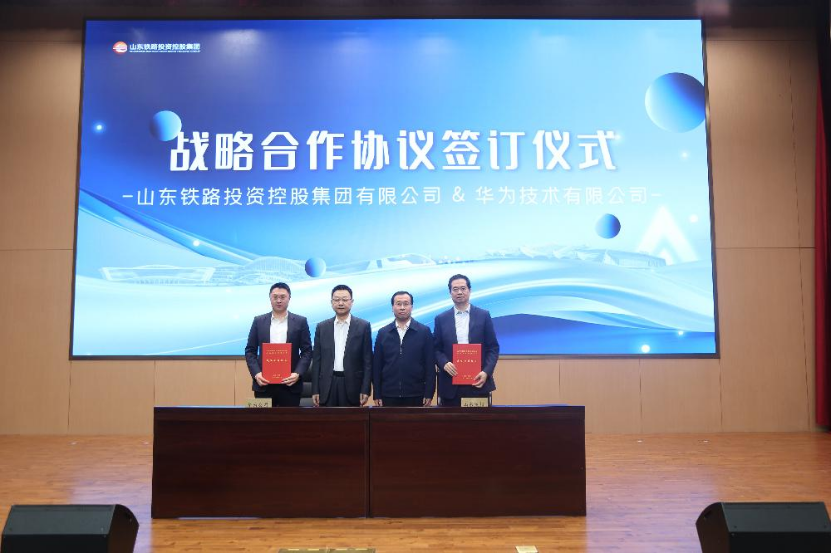
▲《创新突破,携手伙伴,助力铁路数智化转型》主题分享 会议期间,华为轨道智慧化军团总裁左萌做《创新突破,携手伙伴,助力铁路数智化转型》主题分享。他提到,华为 通过融合ICT技术与铁路行业深度结合,与合作伙伴共同努力,始终围绕行业场景的核心诉求,持续深化数智化转型 路径,推动铁路数智化转型,提升安全可靠性、运营/运维效率、客运提质/货运增量提效、并通过产业协同和区域协 同助力业主多元化发展,实现从传统铁路到智慧铁路的跨越。 未来,双方将凭借自身数字化转型积累的经验,通过先进的数字技术,提升铁路系统的整体效能和服务质量。双方还 将加强多维度、多层次的人才培养合作,构建核心的数字化创新力和竞争力,为山东铁投集团的持续增长蓄力新动 能。 ▲签署战略合作协议 12月30日,山东铁路投资控股集团有限公司(以下简称"山东铁投集团")与华为技术有限公司(以下简称"华为")在济南签 署战略合作协议。山东铁投集团党委副书记、总经理高立平,华为副总裁、交通智慧化军团CEO马悦出席活动并见证 签约。山东铁投集团党委副书记、董事乐江华与华为山东政企总经理李子绪分别代表双方签署协议。 根据协议,双方发挥各自优势,在人工智能、高速铁路和新 ...
早新闻|超长期特别国债提前下达
Zheng Quan Shi Bao· 2025-12-30 23:38
Macro Highlights - The implementation regulations for the Value-Added Tax Law of the People's Republic of China will take effect on January 1, 2026, aiming to improve tax incentives and clarify the standards for various VAT exemption projects [1] - The National Development and Reform Commission and the Ministry of Finance have issued a notice regarding the large-scale equipment update and old-for-new consumption policy to be implemented in 2026, detailing the support scope, subsidy standards, and work requirements [1] Subsidy Policies - Consumers purchasing energy-efficient home appliances such as refrigerators, washing machines, televisions, air conditioners, computers, and water heaters will receive a subsidy of 15% of the product price, capped at 1,500 yuan per item [2] - For digital and smart products like smartphones and smartwatches, a similar subsidy of 15% applies, with a maximum of 500 yuan per item [2] - Consumers who scrap their personal vehicles and purchase new energy vehicles or fuel vehicles with a displacement of 2.0 liters or less will receive subsidies of 12% (up to 20,000 yuan) and 10% (up to 15,000 yuan) respectively [2] Housing Tax Policy - Individuals selling homes purchased for less than two years will be subject to a 3% VAT, while those selling homes purchased for two years or more will be exempt from VAT starting January 1, 2026 [2] Special Bonds and Consumption Support - The National Development and Reform Commission and the Ministry of Finance have allocated 62.5 billion yuan in special bonds to support the old-for-new consumption policy, ensuring a smooth implementation and monitoring of subsidy funds [3] Automotive Industry Digital Transformation - A digital transformation implementation plan for the automotive industry aims to enhance smart manufacturing capabilities and digital levels of enterprises by 2027, with significant improvements in digital public service systems by 2030 [4] Company News - Zijin Mining expects a net profit increase of approximately 59%-62% for 2025 [5] - Tianpu Co., Ltd. has seen its stock price rise by 718.39% from August 22 to December 30, leading to a suspension for verification [5] - Daye Co., Ltd. has not yet achieved substantial revenue from its robotic tendon products, which are not in mass production [5] - Longjiang Power plans to distribute 2.1 yuan per 10 shares as a profit distribution for the first half of 2025 [5] - Zhejiang Rongtai intends to issue H-shares and list on the main board of the Hong Kong Stock Exchange [5]
财信证券晨会纪要-20251231
Caixin Securities· 2025-12-30 23:36
Market Strategy - The market opened lower but showed resilience, with the robotics sector gaining strength [5][7] - The overall A-share market saw a slight increase of 0.13%, closing at 6421.08 points, while the Shanghai Composite Index remained flat at 3965.12 points [7] - The hard technology sector, represented by the Sci-Tech 50 Index, rose by 1.01%, closing at 1359.87 points, indicating strong performance in this area [7] Industry Dynamics - JD Home Services launched a training base for elderly care services, investing 1 billion yuan over three years to develop high-standard elderly care courses [28][30] - From January to November 2025, motorcycle exports from China reached 16.67 million units, a year-on-year increase of 27.67%, with significant growth in exports to Latin America and Africa [31][32] - The online market for smart wearables saw a decline in sales, with November sales down 25.4% year-on-year, attributed to a lack of demand following earlier policy incentives [33][34] - The dairy product output from January to November 2025 was 26.85 million tons, a decrease of 1.2% year-on-year, reflecting challenges in the dairy sector [37][38] Company Updates - Haizhi Science (002653.SZ) received approval for clinical trials of its innovative drug HSK44459 for treating inflammatory bowel disease [41][42] - Aipeng Medical (300753.SZ) established a partnership for investment in brain-computer interface and neuroscience, with a fund size of 100 million yuan [43][44] - Changgao Electric (002452.SZ) announced that its subsidiaries won bids totaling 160.85 million yuan from the State Grid, which will positively impact future earnings [45][46]
新华财经早报:12月31日
Xin Hua Cai Jing· 2025-12-30 23:28
Group 1: Policy Changes and Economic Measures - The State Council of China announced the implementation of the VAT Law Regulations starting January 1, 2026, which includes tax incentives and requires timely public disclosure of VAT exemption standards and conditions [1] - The National Development and Reform Commission and the Ministry of Finance released a notice on the "Two New" policy for 2026, adjusting the subsidy for old-for-new vehicle exchanges to a percentage of the vehicle price, while maintaining the upper limit for automobile subsidies [1] - The Ministry of Finance and the State Taxation Administration confirmed a reduction in the VAT rate for individuals selling homes purchased for less than two years from 5% to 3%, effective January 1, 2026 [1] Group 2: Industry Developments - The automotive industry is set to receive support through a one-time subsidy for consumers who scrap older vehicles and purchase new energy vehicles or fuel-efficient cars, as outlined in the 2026 implementation details [1] - The Ministry of Industry and Information Technology announced a digital transformation plan for the automotive industry, aiming for over 95% adoption of design tools and a 10% increase in labor productivity by 2027 [1] - The securities and futures industry saw a significant increase in the number of private asset management products registered, with a 44.78% month-on-month increase and a 129.96% year-on-year increase in November 2025 [1] Group 3: Company Announcements - Zijin Mining announced an expected net profit increase of approximately 59%-62% for 2025, attributed to higher production and sales prices of key mineral products [1] - Sichuan Road and Bridge signed a highway construction contract worth 154.58 billion yuan [5] - Salt Lake Co. plans to acquire a 51% stake in Minmetals Salt Lake for 46.05 billion yuan [5]

盘前必读丨2026年首批“国补”资金已下达;个人销售住房增值税降了
Di Yi Cai Jing Zi Xun· 2025-12-30 23:25
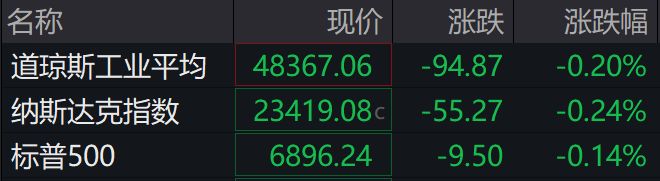
Group 1: Market Overview - The U.S. stock market indices closed lower, with the S&P 500 down by 0.14%, Nasdaq down by 0.24%, and Dow Jones down by 0.20% [1] - The communication services sector was boosted by a 1.1% increase in Meta Platforms, which announced the acquisition of AI startup Manus [1] - Notable movements in tech stocks included Tesla down by 1.13%, Nvidia down by 0.36%, and Amazon up by 0.20% [1] Group 2: Chinese Stocks Performance - The Nasdaq Golden Dragon China Index fell by 0.27%, with Alibaba down by 0.76% and JD.com down by 1.91% [2] - In contrast, Netease rose by 0.80% and Baidu increased by 4.39% [2] Group 3: Commodity Market - Light crude oil futures for February 2026 fell by $0.13, closing at $57.95 per barrel, a decrease of 0.22% [2] - Spot gold increased by 0.8%, reaching $4364.70 per ounce after a significant drop from a historical high of $4549.71 [2] Group 4: Automotive Industry Policies - The 2026 policy plan for "old-for-new" subsidies in consumer goods includes support for automobiles, home appliances, and digital products, with new subsidies for smart glasses and smart home products [3] - The implementation of the VAT law will begin on January 1, 2026, detailing taxpayer classifications and tax rate applications [3] Group 5: Automotive Digital Transformation - The automotive industry digital transformation plan aims for significant improvements by 2027, including a 10% increase in labor productivity and a 20% reduction in product development and delivery cycles [4][5] - The plan emphasizes the integration of AI in various operational aspects, including R&D and manufacturing [5] Group 6: Automotive Subsidy Implementation Details - The 2026 subsidy details specify that individuals scrapping eligible vehicles can receive up to 20,000 yuan for purchasing new energy vehicles [6][7] - Additional subsidies are available for consumers who sell their vehicles and purchase qualifying new energy or low-emission vehicles [7] Group 7: Corporate Announcements - Dongjie Intelligent has terminated its major asset restructuring plan and resumed trading [8] - Zijin Mining expects a net profit increase of approximately 59%-62% for 2025 [8] - China National Airlines plans to purchase 60 Airbus A320NEO aircraft, with a catalog price of about $9.53 billion [8]
大道如虹 “黔”程似锦
Xin Lang Cai Jing· 2025-12-30 22:18
Core Viewpoint - Guizhou Expressway Group has made significant strides in high-quality development during the "14th Five-Year Plan" period, focusing on infrastructure construction, technological innovation, and market-oriented reforms to enhance its role as a key player in regional development [6][8][9]. Group 1: Infrastructure Development - Over the past five years, Guizhou Expressway Group has invested over 103.2 billion yuan, accounting for 19.04% of the province's road and waterway investment plan, and completed 139 kilometers of new expressways, bringing the total to 4,215 kilometers, which is 44.08% of the province's total [8]. - The Jianhe to Liping Expressway, a PPP project, has reduced travel time between Jianhe County and Liping County from over three hours to about one hour, showcasing the group's commitment to improving regional connectivity [9][10]. Group 2: Technological Innovation - The group has adopted innovative construction techniques, such as the "bridge instead of road" method, to overcome significant geological challenges, exemplified by the construction of a 220-meter bridge within a giant karst cavity [10]. - Guizhou Expressway Group has developed standards and guidelines for smart highway construction, contributing to the transformation of the industry and enhancing its construction capabilities [10]. Group 3: Market-Oriented Reforms - The group has transitioned from being a government-funded entity to a market-oriented player, leading projects like the expansion of the G60 and G6002 highways, which reflects its new market-driven approach [11]. - The establishment of the "Guizhou Expressway VIP" travel product and the development of ethnic service areas illustrate the group's strategy to integrate transportation with local industries [11]. Group 4: Green Energy Initiatives - The group has launched 28 energy integration projects, including solar power and electric vehicle charging stations, with a total installed capacity of approximately 7.89 megawatts, significantly reducing carbon emissions [14]. - The Dalianhua service area has been recognized as the first "zero-carbon service area" in Guizhou, demonstrating the group's commitment to ecological sustainability [13][14]. Group 5: Digital Transformation - Guizhou Expressway Group has implemented a digital management system that enhances real-time monitoring and emergency response capabilities, significantly reducing the time to identify potential hazards [16]. - The group has transformed its data assets into a valuable resource, achieving a record financing of 100 million yuan based on bridge monitoring data [17]. Group 6: Party Leadership and Corporate Culture - The group emphasizes the importance of party leadership and has implemented a "First Agenda" system to ensure alignment with political directives, enhancing its operational effectiveness [19]. - The "H-type" career development pathway has been established to promote talent development, allowing technical personnel to advance alongside management roles [21]. Group 7: Future Outlook - Guizhou Expressway Group aims to continue its focus on high-quality infrastructure development and the integration of transportation with other industries, contributing to the modernization of transportation in Guizhou [23].

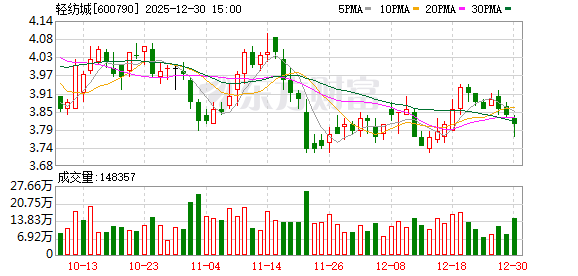
中国轻纺城 布行天下的“新生意经”
Shang Hai Zheng Quan Bao· 2025-12-30 19:23
Core Insights - The article highlights the transformation of China Textile City in Shaoxing, Zhejiang, into a global textile hub, emphasizing its role in connecting the textile industry worldwide [2][10] - The leadership of China Textile City is focused on evolving from a traditional rental model to a comprehensive service integrator that empowers the entire textile industry [3][4] Group 1: Market Position and Growth - China Textile City is the largest textile trading center globally, with over 30,000 merchants and a transaction volume exceeding 400 billion yuan, accounting for one-quarter of the world's fabric trade [2] - The market has undergone significant reforms since 2020, including the introduction of professional property management to enhance operational efficiency and market vitality [3][4] Group 2: Service and Operational Innovations - The implementation of a "24-hour flexible operation" mechanism allows merchants to adapt their business hours according to different time zones, enhancing customer engagement [3] - The introduction of outdoor specialty fabric zones and the integration of vertical elevators are part of the strategy to improve customer experience and market accessibility [4] Group 3: Digital Transformation - China Textile City is undergoing a digital upgrade, with smart management of utilities and real-time data collection on market traffic, transactions, and energy consumption [6] - The online marketplace, including "Online Textile City" and "Global Textile Network," has been developed to facilitate 24/7 trading and enhance cross-regional business operations [6][7] Group 4: International Expansion - The launch of the "Kexin Asia" cross-border logistics line aims to enhance the export of textiles to Central Asia, reflecting a strategic move to bring the market closer to international customers [8] - Plans are underway to establish 30 to 50 overseas exhibition and trading centers by 2026, with the first three centers in Bangladesh, Italy, and Egypt expected to be operational by the end of 2026 [9][10]