
新消费

Search documents
瑞银房东明:今年很可能是中国资产的大年|全球财经连线
2 1 Shi Ji Jing Ji Bao Dao· 2025-07-02 13:06
南方财经记者 施诗、李依农 天津、上海报道 在全球不确定性上升的背景下,中国经济在2025年上半年保持着稳中向好的发展态势,展现出不错的韧 性与动能。 瑞银全球金融市场部中国主管房东明在接受南方财经记者采访时表示,得益于去年底以来政策的有力转 向与持续发力,中国经济在第一季度延续强劲增长势头,二季度虽有分化迹象,但高频数据依然显示出 消费、投资与出口的稳健表现。 0:00 房东明还指出,中国资产从去年四季度开始已重新受到全球投资者关注,当前A股和港股估值仍处于折 价区间,不管从基本面还是全球配置的角度看,都具备"回到历史平均水平,甚至出现溢价"的可能性。 在他看来,随着政策持续发力和市场信心修复,中国资本市场有望成为国际资金多元配置下的重要增量 市场。 期待更多消费和需求领域政策出台 全球财经连线:我们现在处于年中阶段,是否可以请你回顾一下上半年中国经济的情况? 房东明:中国经济第一季度数据还是很亮眼的。这也是在去年第四季度,特别是九月份,政策转型和刺 激的大背景下,整个经济的动能还是非常强劲。 到第二季度就有一定的分化,特别是关税带来的一些不确定因素。但我们看到比较高频的数据,五月份 总体仍相对较有韧性。不 ...
几个河南人,拿捏时代情绪
Hua Er Jie Jian Wen· 2025-07-02 12:00
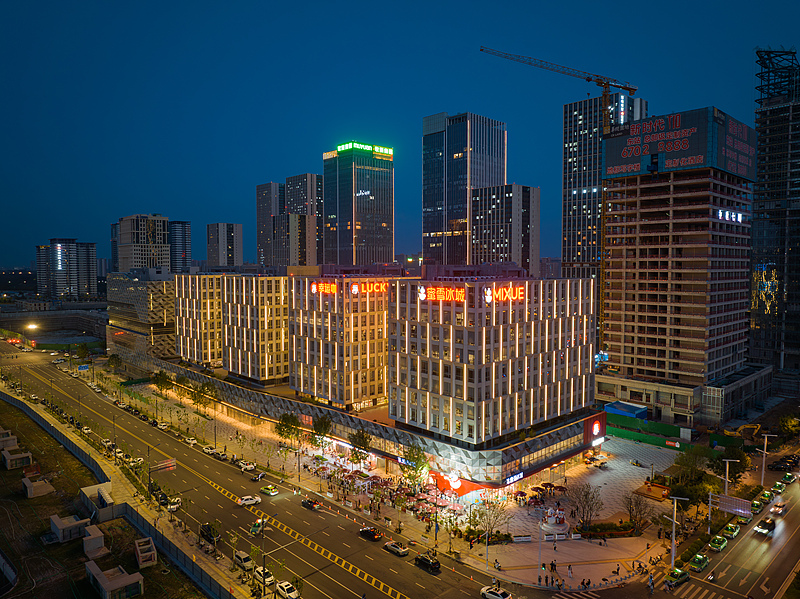
Core Insights - The article highlights the rise of a new wave of entrepreneurs from Henan, particularly focusing on the success of companies like Mixue Ice City, Pop Mart, and Pang Donglai, which have reshaped China's consumer landscape through innovative business models and deep understanding of consumer emotions [2][9]. Group 1: Key Companies and Their Strategies - Mixue Ice City, led by founders Zhang Hongchao and Zhang Hongfu, has become the richest in Henan with a net worth of 117.94 billion yuan, leveraging a supply chain model that allows for low-cost offerings while maintaining profitability [2][12]. - Pop Mart, known for its LABUBU toys, has successfully tapped into the global middle-class consumer market, with its stock price reaching new highs and creating social currency through its products [5][12]. - Pang Donglai stands out for its exceptional customer service and employee welfare, achieving nearly 17 billion yuan in sales in 2024, and is recognized for its unique shopping experience [8][11]. Group 2: Market Trends and Consumer Behavior - The emergence of these Henan-based companies signifies a shift in Chinese commerce towards a model that emphasizes supply chain efficiency, emotional connection with consumers, and a departure from traditional business narratives [2][9]. - Mixue Ice City has capitalized on the trend of "affordable luxury," appealing to younger consumers who prioritize value, while Pop Mart has created a sense of identity and belonging through its products [4][6]. - Pang Donglai's approach combines quality products with a focus on customer experience, offering unique services that cater to emotional needs, thus establishing a loyal customer base [7][8]. Group 3: Financial Performance and Market Position - As of July 2, Mixue Ice City's stock price was 533 HKD per share, with a market capitalization exceeding 200 billion HKD, while Pop Mart's stock was at 258.2 HKD, with a market cap nearing 350 billion HKD [12]. - The article notes that while Mixue Ice City and Pang Donglai have established stable reputations, Pop Mart's reliance on trending IPs poses a risk due to the unpredictable nature of consumer interest [13]. - The rise of these companies reflects a broader trend in the Chinese market, where traditional narratives are being replaced by stories of ordinary entrepreneurs achieving success, thus providing new investment opportunities [9][13].

100万亿元,历史性突破
Jin Rong Shi Bao· 2025-07-02 10:40
Group 1 - A-shares reached a historic milestone with a total market capitalization exceeding 100 trillion yuan, reflecting the acceleration of economic transformation, industrial upgrading, and institutional optimization in China [1] - In the first half of 2025, major A-share indices showed an upward trend, with the Shanghai Composite Index rising by 2.76% and the North Star 50 Index leading with a 39.45% increase [3][4] - The market exhibited a structural trend with notable performances in sectors such as non-ferrous metals, enterprise services, household goods, and banking, all exceeding 15% growth [1][3] Group 2 - The market is expected to continue a narrow fluctuation pattern until external uncertainties are resolved, with a potential "steady first, then rise" rhythm anticipated for the second half of the year [1][8] - Analysts suggest focusing on high-quality growth stocks and stable blue-chip companies, particularly in technology and consumer sectors driven by domestic demand [2] - The first half of 2025 saw a significant increase in trading activity, with daily average transactions exceeding 1.3 trillion yuan, and a net inflow of 16 billion yuan into stock ETFs [5][7] Group 3 - The market experienced a "N-shaped" trend, with a shift from technology narratives to defensive dividend assets amid rising external uncertainties [4][6] - Key investment themes identified include artificial intelligence (AI), dividends, innovative pharmaceuticals, and new consumption [3][4] - Major stocks like BYD and others saw substantial capital inflows, with BYD leading in net financing purchases at 4.934 billion yuan [6][7]

中国资产应该获得世界的平视!千亿景林高云程发声
证券时报· 2025-07-02 09:15
Core Viewpoint - The letter emphasizes the importance of identifying and holding onto the best businesses in a city, focusing on certainty and long-term value rather than chasing trends [2][4]. Summary by Sections Market Overview - The first half of 2025 is characterized by significant volatility and structural opportunities, with new consumption and innovative pharmaceuticals being highlighted as key investment areas [3]. - The development of AI is recognized as a major technological revolution, showing strong fundamentals and increasing revenue potential [3]. Investment Strategy - The strategy involves concentrating on a few high-quality businesses and undervalued assets, with free cash flow serving as the basis for returns [4]. - Historical data suggests that chasing popular assets often leads to negative returns in subsequent years [4]. Key Investment Directions 1. Social entertainment platforms evolving towards AI agents [5]. 2. Companies with strong pricing power in advanced chip design [6]. 3. Enterprises with scarce metal and copper resources amid a weakening dollar trend [7]. 4. Leading AI models and public cloud services in the AI era [8]. 5. Brands focused on sports and outdoor lifestyles, showing improved supply chain and brand management capabilities [8]. Market Sentiment - The Hong Kong market has become a leading venue for IPO financing, indicating a shift in international capital's perception of Chinese assets [9]. - The transition from a unipolar to a multipolar world is expected to provide additional rewards for investment portfolios [9].

社会服务行业2025年中期策略报告:新世代、新需求、新消费-20250702
Ping An Securities· 2025-07-02 08:30
Group 1: Core Insights - The new generation of consumers, raised in the internet and mobile internet era, emphasizes experiential consumption, authenticity, and personalization, driving changes in travel, retail, beauty, and pet sectors [3][12] - The tourism sector is expected to continue its recovery, with domestic travel projected to reach 5.75 trillion yuan in 2024, a 17.1% increase year-on-year, and 56.15 billion domestic trips anticipated, marking a 14.8% growth [18][21] - The retail sector is returning to consumer demand, with traditional retail showing growth in essential goods and cultural consumption, while e-commerce platforms are focusing on optimizing consumer experiences [42][45] Group 2: Tourism Sector - Domestic tourism is recovering, with urban residents expected to make 43.7 billion trips in 2024, a 16.3% increase, and rural residents 12.45 billion trips, a 9.9% increase [18] - International travel is rebounding, with 1.23 billion outbound trips in 2024, a 41% increase, and inbound tourism expected to grow by 60.8% to 1.32 billion visitors [21][26] - OTA platforms like Ctrip and Tongcheng are benefiting from the recovery in travel demand and are expanding their inbound tourism services [27] Group 3: Retail Sector - The retail market is experiencing steady growth, with social retail sales expected to rise, and online retail growth slowing down as platforms focus on consumer needs [42][45] - Traditional retailers like Yonghui Supermarket are undergoing significant transformations to meet consumer demands, with a focus on quality and customer experience [57] - The cross-border e-commerce sector is adapting to changing tariff policies, with companies like Yiwu Market playing a crucial role in global supply chains [58][62] Group 4: Beauty and Pet Industries - The beauty and pet sectors are witnessing rapid growth, with domestic brands achieving revenue growth rates of 20-30% in niche markets [68][72] - The pet industry in China has surpassed 300 billion yuan in market size, reflecting the growing trend of pet ownership and related consumption [68] - Companies in the beauty sector, such as Aimeike, are expected to see growth due to lower base effects and strategic acquisitions [75]
资讯日报-20250702
Guoxin Securities Hongkong· 2025-07-02 07:38
Hong Kong Market Overview - The Hang Seng Index closed at 24,072, down 0.87% for the day but up 20% year-to-date[3] - The Hang Seng China Enterprises Index fell 0.96% to 8,678, with a year-to-date increase of 19.05%[3] - The Hang Seng Tech Index decreased by 0.72% to 5,303, showing an 18.68% rise for the year[3] - In June, the Hang Seng Index, China Enterprises Index, and Tech Index rose by 3.36%, 2.92%, and 2.56% respectively[10] US Market Performance - The Dow Jones Industrial Average increased by 0.91% to 44,495, with a year-to-date gain of 4.59%[3] - The S&P 500 Index fell by 0.11% to 6,198, up 5.38% year-to-date[3] - The Nasdaq Composite dropped 0.82% to 20,203, with a year-to-date increase of 4.62%[3] - Major tech stocks showed mixed results, with Nvidia down 2.97% and Apple up 1.29%[10] Sector Trends - In the US, all sectors except Technology, Communications, and Semiconductors saw gains, with Materials up 2.59% and Healthcare up 1.42%[10] - In Hong Kong, new consumption and stablecoin concepts gained traction, while gold and precious metal stocks faced declines[10] Notable Stock Movements - Xiaomi and NetEase rose over 1%, while Meituan and Alibaba fell over 2%[10] - In the US, Tesla dropped 5.34%, while Amazon and Berkshire Hathaway saw slight increases[10] - Chinese electric vehicle manufacturers showed varied performance, with Li Auto down 1.03% and XPeng up 2.13%[11]
段永平再谈茅台:“大家在害怕什么?”
天天基金网· 2025-07-02 06:38
Group 1: Core Views on Guizhou Moutai - Guizhou Moutai's stock price has declined over 12% since May 15, raising concerns among investors, including notable investor Duan Yongping, who questions the market's fears [3] - Despite the downturn in the liquor sector, there is a notable influx of funds into liquor-related ETFs, indicating continued interest in the sector [3][4] - Public funds have a long-term heavy position in Guizhou Moutai, with 1,194 funds holding over 90 million shares as of the end of Q1 [4] Group 2: Market Trends and Consumer Sector Insights - The overall attention on the consumer sector has significantly increased, with public funds actively increasing their allocation to consumer-themed funds since Q2 [7] - The valuation of the liquor sector is currently at historically low levels, with strong cash flow and high ROE, suggesting potential for recovery as the macroeconomic environment stabilizes [5] - New consumption companies are attracting significant attention and capital, although many are currently at high valuations, indicating potential short-term adjustment risks [8]


财信证券晨会纪要-20250702
Caixin Securities· 2025-07-02 03:59
Market Overview - The A-share market experienced a positive start in July, with the Shanghai Composite Index closing at 3457.75, up by 0.39%, and the Shenzhen Component Index closing at 10476.29, up by 0.11% [4][7] - The overall market sentiment showed a divergence in performance among different sectors, with the banking sector performing strongly while hard technology sectors faced declines [9][10] Industry Dynamics - The National Healthcare Security Administration and the National Health Commission issued measures to support the high-quality development of innovative drugs, including 16 specific initiatives aimed at enhancing R&D support, improving access to insurance, and optimizing clinical application processes [27][28][30] - Shandong Province released an action plan for the high-quality development of the robotics industry, targeting a manufacturing scale exceeding 50 billion yuan by 2027 and focusing on key technology innovations [31][33] - Beijing's market regulators published guidelines for cosmetic advertising to ensure compliance and protect consumer rights, emphasizing the need for accurate and responsible advertising practices [34] Company Updates - Liyuanheng (688499.SH) is progressing with its sulfide solid-state battery project, expected to be delivered before Q3, with revenue recognition pending customer acceptance [38] - Weisheng Information (688100.SH) has repurchased 3.5864 million shares, totaling 128 million yuan, as part of its share buyback plan [40]
中国资产应该获得世界的平视!千亿景林高云程发声
券商中国· 2025-07-02 03:52
Core Viewpoint - The letter emphasizes the importance of identifying and holding the best businesses in a city, focusing on a few certainty opportunities for long-term investment success [2][3]. Summary by Sections Investment Strategy - The strategy involves concentrating on a limited number of high-quality businesses and low-valued assets, with the belief that fewer, well-chosen investments lead to better outcomes [4][10]. - The current market is characterized by significant volatility and structural opportunities, particularly in new consumption and innovative pharmaceuticals [3]. Market Observations - The stock market is divided between high-growth sectors like new consumption and innovative drugs, and a majority of companies that remain undervalued and face strong competition [4]. - The shift from a unipolar to a multipolar world is expected to provide additional rewards for Chinese assets as they gain equal footing globally [2][10]. Key Investment Areas - The portfolio includes several promising sectors: 1. Major entertainment and social platforms evolving towards AI agents [5]. 2. Companies with strong pricing power in advanced chip design [6]. 3. Firms possessing scarce copper and gold resources amid a weakening dollar trend [7]. 4. Leading AI models and public cloud services essential for businesses utilizing AI [8]. 5. Brands focused on sports and outdoor lifestyles, showing significant improvements in supply chain and brand management [9]. Market Dynamics - The Hong Kong market has emerged as a leading venue for IPO financing, signaling a shift in international capital's perception of Chinese assets [10]. - The influx of capital into Hong Kong is contributing to a vibrant and prosperous market environment [10].

金鹰基金:市场或将维持高位震荡 中报预报或成短期情绪风向标
Xin Lang Ji Jin· 2025-07-02 03:19
Group 1 - The domestic equity market showed an increase in risk appetite in June, with technology growth and large financial sectors performing well under external shocks [1] - The market is expected to maintain a high-level oscillation in July, with mid-year report forecasts becoming an important short-term sentiment indicator [1][2] - The upcoming July 9 deadline for the 90-day tariff suspension may impact the A-share market, with mixed negotiations ongoing between the US and other countries [1][2] Group 2 - The July Politburo meeting is anticipated to address short-term economic pressures, with expectations for fiscal policy to support the real estate market [2] - The July mid-year report preview season is approaching, with recent market sentiment being pessimistic despite structural improvements in corporate fundamentals [2] - The Federal Reserve's July meeting is expected to maintain a cautious stance on economic outlook and inflation, with a focus on the impact of tariffs on inflation in July and August [2][3] Group 3 - The consumption sector is expected to benefit from policies aimed at boosting demand, with strong expectations for structural opportunities in the consumer industry [3] - Dividend assets are likely to perform well due to low interest rates and stable fundamentals, attracting long-term capital [3] - Gold and defense-related assets remain attractive due to geopolitical uncertainties, with a focus on their defensive value [3] - The innovative pharmaceutical sector is poised for a catalytic period, benefiting from favorable policies and stronger support for high-quality development [3]