银发经济

Search documents
悦己、银发还是毛孩子?去进博会寻找下一个消费爆款
Di Yi Cai Jing· 2025-11-09 03:13
Group 1: Consumer Trends - The core consumer motivation has shifted from showcasing wealth to seeking personal happiness, with "self-pleasure" and emotional value becoming key drivers in purchasing decisions [2][3] - The pet economy is thriving, with the establishment of a dedicated pet-themed exhibition area at the expo, reflecting the growing demand for pet-related products and services [5] - The trend of "self-pleasure" and emotional value is also evident in the rise of immersive experiences and personalized products, as seen with brands like LEGO and Brother [4][6] Group 2: Health and Wellness - Consumers are increasingly proactive about health management, moving from passive responses to active engagement, as demonstrated by the success of innovative health products at the expo [7][8] - The demand for high-quality, effective health products is rising, with a notable increase in inquiries about clinical efficacy at the expo [7] - The introduction of new health products, such as liquid calcium for both mothers and infants, indicates a shift towards comprehensive health solutions [7] Group 3: Aging Population - The expo highlighted the "silver economy," showcasing products and services tailored for the aging population, including rehabilitation aids and home safety solutions [9][10] - Companies are focusing on personalized treatment options for age-related health issues, particularly in the field of cardiac care, to meet the unique needs of Chinese patients [10][11] - Innovations like interactive robots aimed at providing companionship and safety for the elderly reflect the growing attention to emotional and practical needs in the aging demographic [11]

让养老变“享老” 进博会解锁“银发经济”新场景
Zhong Guo Xin Wen Wang· 2025-11-09 01:57
Group 1: Innovations in Healthcare for the Elderly - The introduction of real-time AI hearing aids and rehabilitation aids that automatically identify muscle strength status highlights the growing focus on health solutions for the elderly as China's population aged 60 and above surpasses 300 million [1] - Boston Scientific's global debut of a "one-stop surgical solution for atrial fibrillation" combines two surgeries into one, minimizing trauma for elderly patients with low surgical tolerance [1] - BD Medical showcased several innovative products, including the PureWick non-invasive female urinary catheter and a hernia pant designed for post-operative home care for middle-aged and elderly men [1] Group 2: Comprehensive Healthcare Services - China Pacific Insurance made its debut at the expo, presenting the "Taibao Youhu 2.0" digital solution that integrates AI technology to enhance efficiency and accuracy in fund calculation and disability assessment [2] - Meituan Health independently exhibited a full-chain service capability from online consultations to home care, emphasizing a comprehensive approach to elderly care [2] Group 3: Nutritional Support and Future of Elderly Care - Abbott displayed new nutritional products tailored to the specific needs of the elderly, including the next-generation Abbott Ensure and dynamic blood glucose monitoring systems designed for diabetes management [3] - The expo serves as a window into the future of elderly care, emphasizing prevention over treatment and the importance of transforming innovations into marketable products [3]
城市养老财富储备再增13.8% “不差钱”前20城市出炉|进博会
Zhong Guo Jing Ying Bao· 2025-11-09 00:13
Core Insights - The report titled "China's Active Response to Population Aging Urban Capability Index Report (2025)" was released during the 8th China International Import Expo, marking the fourth consecutive year of this research output [2] Group 1: Urban Pension Wealth Reserve - China's urban pension wealth reserve has increased by 13.8% compared to 2024 [3] - The top three cities in urban pension wealth reserves are Beijing, Shanghai, and Shenzhen, with a total of 20 cities evaluated [4] Group 2: Evaluation Factors - The evaluation of urban pension wealth reserves considers factors such as urban employee medical insurance coverage, enterprise pension participation, savings levels, and public budget expenditures [4] - The report employs 49 specific indicators to quantitatively analyze the pension response capabilities of 337 cities [4] Group 3: Urban Capability Index - The average urban capability index has steadily increased, showing a year-on-year growth of 2.4% [5] - The index reflects a regional pattern of "Eastern leadership, Central advancement, and continuous improvement in Western and Northeastern regions" [5] Group 4: Silver Economy Development - The silver economy is entering a phase of comprehensive development, with traditional pension institutions optimizing and new business models like smart health care and home modifications emerging [6] - The report indicates that the silver economy is becoming a new driving force for economic growth due to sustained policy efforts and industry innovation [6]

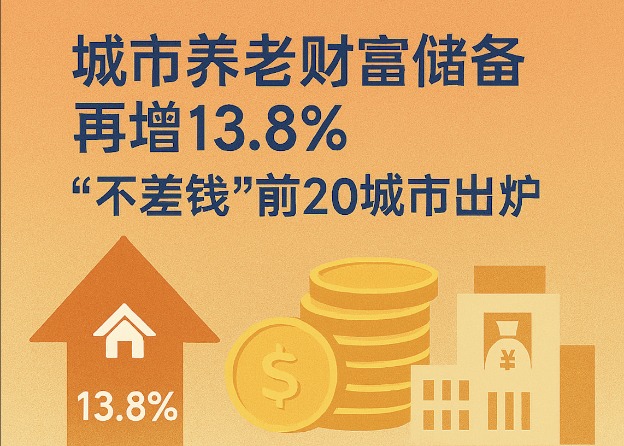
城市养老财富储备再增13.8% “不差钱”前20城市出炉 进博会
Zhong Guo Jing Ying Bao· 2025-11-09 00:07
Core Insights - The report titled "China's Active Response to Population Aging Urban Capability Index Report (2025)" was released during the 8th China International Import Expo, marking the fourth consecutive year of this research output [2] - Urban pension wealth reserves in China have increased by 13.8% compared to 2024 [3] Summary by Categories Urban Pension Wealth Reserves - The top three cities in urban pension wealth reserves are Beijing, Shanghai, and Shenzhen, with a total of 20 cities evaluated [4] - Evaluation factors for urban pension wealth reserves include medical insurance coverage, pension fund balance, savings levels, and public budget expenditures among others [4] Urban Capability Index - The average urban capability index has steadily increased, showing a year-on-year growth of 2.4% [5] - The index reflects a regional pattern of "Eastern leadership, Central advancement, and continuous improvement in Western and Northeastern regions" [6] Silver Economy Development - The silver economy in China has entered a phase of comprehensive development, with traditional sectors like nursing homes being optimized and new sectors such as smart health care and home modifications expanding [7] - Emerging technologies like anti-aging solutions and humanoid robots are being rapidly demonstrated [7] - The silver economy is becoming a new driving force for economic growth due to ongoing policy support and innovation in supply systems [7]
聚全球好物 享美好生活
Ren Min Ri Bao· 2025-11-08 22:11
Core Insights - The China International Import Expo (CIIE) serves as a platform for expanding imports of high-quality goods and services, creating new demand through new supply, and promoting consumption upgrades in the domestic market [3] - The expo facilitates precise matching between supply and demand, allowing global products to enter the Chinese market and meet consumer needs [3] Group 1: Health and Medical Innovations - The medical equipment and healthcare section of the expo showcased innovative products aimed at public health, including smart glasses from EssilorLuxottica that monitor usage time and help prevent myopia [4] - Dreamland's sleep system aims to improve sleep quality through innovative technology, addressing public health needs [4] - Eli Lilly presented several new innovative drugs, emphasizing their commitment to supporting health initiatives in China [5] Group 2: Global Food Offerings - The expo featured a variety of global food products, including organic blueberries from Peru and New Zealand's soft-shelled kiwifruit, enhancing the diversity of food available to Chinese consumers [5] - Metro brought 130 specialty products from 21 countries, with nearly 50% more new items introduced to the Chinese market compared to the previous year [5] Group 3: Smart Home and Consumer Electronics - The consumer goods section highlighted smart home devices that enhance safety and convenience, such as sensors that alert users to leaks or gas leaks [7] - Philips introduced a smart toothbrush that connects to an app to help users track their oral hygiene habits [7] - Air purification technology showcased by various companies emphasizes energy efficiency and user-friendly design [7] Group 4: Sports and Fitness Equipment - The expo featured interactive sports experiences, including VR skiing and fitness challenges, catering to the growing interest in sports and outdoor activities [9] - Nike and other brands presented innovative sports gear designed to enhance user experience and comfort [9] Group 5: Products for Elderly and Children - The expo introduced products aimed at the elderly and children, including dietary supplements and functional foods that cater to the needs of these demographics [11] - Panasonic showcased a shock-absorbing flooring material designed to reduce injury risk for seniors, reflecting a focus on human-centered design [11] - LEGO presented toys that incorporate traditional Chinese culture, promoting cultural education among children [12]

联合国人口基金驻华代表:中国银发市场潜力巨大
Yang Shi Xin Wen· 2025-11-08 14:24
Group 1 - The core issue of global aging population is highlighted, with the UN projecting that by 2035, the population aged 80 and above will reach 265 million, surpassing the number of infants [1] - The representative of the UN Population Fund in China emphasized the significant role of technological innovation in driving the development of the silver economy, showcasing China's substantial growth vitality and market potential in this sector [1]
浦东构建“大城养老”样板,加速释放万亿元级市场空间
Di Yi Cai Jing Zi Xun· 2025-11-08 11:49
Core Viewpoint - Pudong aims to attract more investment in the elderly care sector, establishing itself as a new highland for the silver economy in China [1] Group 1: Policy and Planning - Pudong will incorporate "promoting the development of the silver economy" into its 14th Five-Year Plan and elderly care service support policies [2] - The district has the largest elderly population in Shanghai, with 1.13 million registered elderly residents and an aging rate of 33.47% by 2024 [2] - A significant market potential of over one trillion yuan is being released as the elderly population becomes the primary demand group [2] Group 2: Infrastructure and Services - Pudong has established a comprehensive elderly care service network with 182 care institutions, over 36,000 beds, and more than 2,000 community care facilities [2] - The district has implemented innovative medical and elderly care integration practices, with 60 institutions having internal medical facilities [2] - Smart healthcare platforms have benefited over 3,600 elderly individuals, showcasing a leading model of integrated medical and elderly care [2] Group 3: Industry and Innovation - Pudong has formed a robust industrial foundation and innovative ecosystem for elderly care, supported by key industries like integrated circuits, biomedicine, and artificial intelligence [3] - Local chip companies are addressing challenges in smart elderly care products, enhancing the technological capabilities of the sector [3] - The district is home to pioneering health management products and companies that cater to chronic diseases and rehabilitation needs of the elderly [3] Group 4: Economic Development and Collaboration - Pudong has established the Zhangjiang Smart Elderly Care Industrial Park, gathering nearly 80 innovative companies to create a full-chain ecosystem [4] - The district has launched a recommended directory for age-friendly products, enhancing market recognition and accessibility [4] - Financial cooperation is being deepened to empower the entire elderly care industry chain, with strategic partnerships aimed at providing financial support and innovative insurance solutions [5]
毕马威专家:激活银发经济 康养产业要从“单一服务”走向“生态闭环”
Zheng Quan Shi Bao Wang· 2025-11-08 11:12
Core Insights - The eighth China International Import Expo (CIIE) highlighted the growing importance of the silver economy, health and wellness industry, and elder financial services, with KPMG China launching its inaugural "Health and Wellness 50" project evaluation [1] Group 1: Industry Trends - The domestic health and wellness industry is characterized by strong policy support, diverse and personalized demand, significant technological empowerment, competitive participation from multiple entities, and localization of international experiences [1] - The health and wellness sector is expected to transition from "elderly services" to "lifecycle health management," evolving from "single services" to an "ecosystem" approach [1] - The industry will increasingly break the narrow perception of being "elderly-exclusive," expanding to encompass health status, sub-health, and end-of-life care across the entire lifecycle [1] Group 2: Economic Challenges - The aging population presents both challenges and opportunities for the health and wellness and elder financial services sectors, with significant barriers to silver consumption, such as preventive savings, supply-demand mismatches, and consumption environment obstacles [2] - Elderly individuals exhibit a high preventive savings tendency, with a savings rate of 61%, nearly double that of the general population, indicating a strong inclination towards precautionary savings [2] Group 3: Solutions and Innovations - To address the high preventive savings and reluctance to consume, it is essential to establish a "safety support system" for the elderly, enhancing social security and expanding long-term care insurance trials [2] - Financial innovation is needed to reduce reliance on savings, introducing specialized financial products that combine "pension security and moderate consumption," and exploring diverse funding channels for elder care, such as "reverse mortgages" and "pension wealth management" [2] - The supply side must shift from "mass production" to "precise customization," with companies needing to conduct in-depth research on the real needs of the elderly [3] - There is a need to break the misconception that "silver consumption is low-end consumption," providing tiered offerings for different income levels among the elderly, including affordable products and high-end services like customized wellness tourism and professional chronic disease management plans [3]
银色进博:“银发经济”增进老年人福祉
Ren Min Wang· 2025-11-08 10:09
Group 1 - The eighth China International Import Expo (CIIE) showcases innovative products catering to the aging population, highlighting the intersection of technology and the silver economy [1][3] - Products such as electric toothbrushes designed for sensitive gums and AI massage chairs demonstrate how technology enhances the quality of life for the elderly [1][3] - The "silver economy" is identified as a significant growth area, with projections indicating that by 2030, the elderly population in China will reach 369 million, accounting for 26.4% of the total population [2] Group 2 - The forum on "Accelerating the Development of the Silver Economy" emphasizes the need for collaboration between health insurance and elderly care services to create a high-quality care ecosystem [2] - Companies like Bayer are focusing on innovative solutions to meet the rising health demands of consumers, particularly in the context of aging and climate change [2] - The importance of corporate social responsibility is highlighted through donations to elderly care facilities, reflecting a commitment to improving the well-being of the elderly [3]
日本银发经济,涌现出哪些一骑绝尘的大品牌?
创业家· 2025-11-08 09:58
Core Insights - Japan has entered a super-aged society, necessitating that all businesses address the silver economy or the needs of the elderly [2] - Companies, even those selling children's clothing, must focus on the demands of older consumers, as they often make purchases for their grandchildren [3][4] - The food industry in Japan is increasingly concentrating on meeting the needs of the elderly, with successful products like Yakult Y1000 that cater to common desires such as better sleep [5][6][10] Industry Trends - The Japanese market rarely sees blockbuster products, but Yakult Y1000 has gained popularity due to its sleep aid benefits, reflecting a universal need among older adults [9][10] - Suntory, a beverage company, is diversifying its offerings beyond alcoholic beverages to include health foods and nutritional products in response to the aging population [11] - Ajinomoto has also launched numerous products aimed at the elderly demographic [14] Strategic Insights - There is no distinct "silver economy" sector; instead, all businesses must prepare for and innovate in response to demographic changes [15] - As China approaches an aging society, businesses should prioritize this demographic in their future strategies [16] Learning Opportunities - A program is being offered to explore the operational strategies of Japanese brands that have thrived despite low growth, focusing on companies like Suntory, 7-Eleven, and others [17][18] - The program emphasizes understanding consumer needs through direct engagement and data-driven decision-making, rather than relying solely on management directives [22] Case Studies - 7-Eleven's approach involves regional supervisors working closely with franchisees to provide tailored solutions based on actual sales data [22] - Kobe Bussan utilizes a high proportion of private label products and focuses on efficient supply chain management to maintain low costs [23] - Workman has successfully transitioned from B2B to B2C by addressing the specific needs of blue-collar workers, filling market gaps rather than following trends [24] Product Development - Companies like Suntory emphasize the importance of sensory evaluation in product quality, with their master blender tasting over 200 original spirits daily to ensure quality [25][34] - FANCL focuses on health foods with no additives, adapting products to meet regional consumer preferences [26]