内卷

Search documents
想换城市的年轻人,第一步怎么走?
Hu Xiu· 2025-07-06 02:02
Group 1 - The article discusses the changing preferences of young people in China regarding city selection, moving away from traditional metropolises like Beijing, Shanghai, and Guangzhou due to high living costs and intense competition [2][3][11] - There is a growing trend of young individuals considering smaller cities as viable options for living and working, with some cities transforming from mere transit points to places where they can restart their lives [2][4][11] - The concept of "suitable cities for youth" is subjective and can vary based on individual needs, such as job opportunities, lifestyle preferences, and economic stability [4][5][11] Group 2 - The article highlights the importance of economic structures in cities, distinguishing between financially independent cities and those reliant on government support, which affects their attractiveness to young people [5][11][12] - It emphasizes that cities with a strong service industry and diverse economic opportunities are more appealing to the youth, as they provide both job security and leisure activities [11][14][25] - The discussion includes examples of cities like Lanzhou and Guiyang, which have unique cultural and economic characteristics that make them attractive to young migrants [13][14][15] Group 3 - The article notes that the trend of youth migration is influenced by government policies and economic conditions, with a shift towards more natural population movements as government cash flow tightens [9][10][11] - It also points out that cities with a high degree of bureaucratic control and limited economic diversity may not be as appealing to young people seeking autonomy and opportunities [11][12][25] - The narrative suggests that the ability of a city to adapt and provide a supportive environment for entrepreneurship and personal growth is crucial for attracting young talent [24][26][27]
从“卷王争霸”转向“协同共赢”
Zheng Quan Shi Bao· 2025-07-03 18:50
"内卷"本来指向精进之态,而今却成为部分产业陷入恶性竞争的写照:光伏组件价格持续下行,汽车市 场多车型扎堆降价,储能中标价屡创新低……当"价格修罗场"席卷光伏、水泥、钢铁、汽车等行业,企 业利润被极限压缩,行业生态在绞杀中恶化,经济循环在内耗中拖慢,高质量发展的根基亦受到影响。 形成"内卷"的因素很多,盲目招商、地方保护主义、退出机制缺失、企业差异化竞争手段匮乏,以及阶 段性供需错配……共同浇灌出这枚"苦果"。 "反内卷"绝非"躺平"或蛮干,而需系统重构竞争规则,在"卷"与"破"间开辟新路。 近期多个行业祭出"限产令",释放出行业自救的集体信号。不过,"反内卷"是一项系统工程。除了通过 行业自律,科学精准调节"产能水龙头",建立理性供给秩序之外,政府也应该当好"规则裁判"与"生态 园丁",根除地方保护顽疾,拆除市场"隐形篱笆",企业层面更应该坚定转型决心,告别"以价换量"的 路径依赖,专注技术突破、工艺优化与品牌增值。 仅从微观企业来看,"内卷"往往会形成"囚徒困境":不降价,订单流失;猛降价,利润归零甚至陷入亏 损。为保"牌桌"席位,"内卷式竞争"成为无奈之选。其代价则是研发投入削减,技术升级难以成行,长 ...
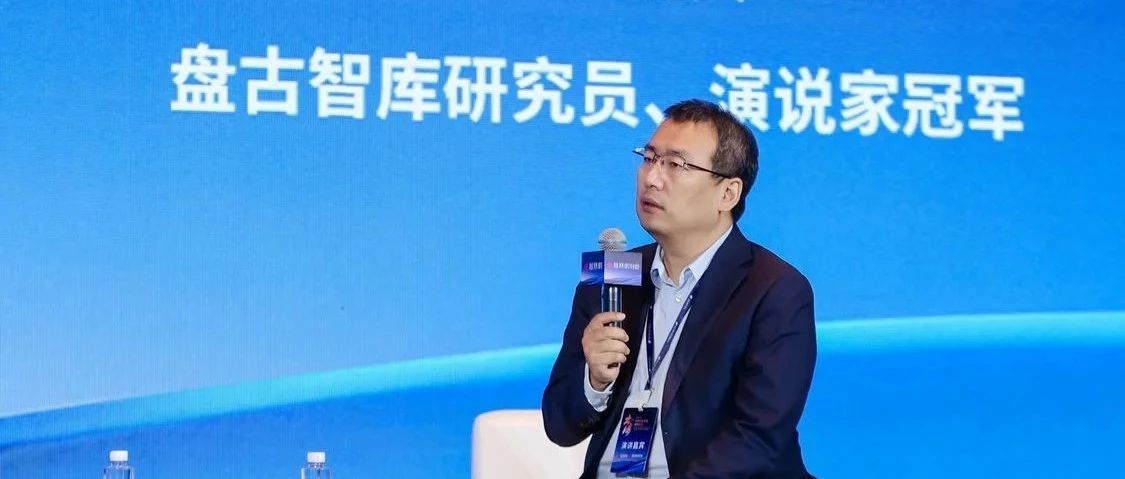
储殷:90后、00后成为市场主体后就不卷了,70后、80后不上班难受
凤凰网财经· 2025-07-01 13:09
Core Viewpoint - The "2025 China Enterprises Going Global Summit" held in Shenzhen aims to provide a high-end platform for Chinese companies to address challenges in globalization and explore paths for ecological win-win transformation [1]. Group 1: Event Overview - The summit was organized by Phoenix Finance and co-hosted by the Globalization Council of Chinese Enterprises, focusing on the theme "For an Open World" [1]. - The event seeks to facilitate thought exchange, resource connection, and regulatory dialogue amidst the deep restructuring of global industrial chains [1]. Group 2: Discussion Insights - During the closing dialogue, experts discussed the phenomenon of "involution" in enterprises going global, emphasizing that this is an inevitable law of market economy [1]. - Expert Shu Yin suggested that alleviating this phenomenon requires institutional design outside the market, such as enforcing an eight-hour workday and compensating for overtime [1]. - He noted that as the post-90s and post-00s generations become the mainstay of the market economy, the intense work culture may ease, contrasting with the work ethic of the 70s and 80s generations [1].

内卷时代,拼的是家长
Hu Xiu· 2025-06-29 02:47
Group 1 - The article discusses the phenomenon of "involution" in education, particularly in China, where competition for academic success has reached extreme levels, affecting both children and their parents [1][2] - It highlights that parental involvement is not only about financial investment but also about knowledge, perspective, and time spent with children, which is a common issue in competitive societies like the United States [2][3] - The concept of "educational capital" is introduced, which encompasses economic, cultural, and social capital, influencing children's educational outcomes and future social status [4][5] Group 2 - The book "Parental Disparity" emphasizes that a child's future is increasingly determined by their parents' resources and aspirations rather than their own efforts, reflecting a shift from meritocracy to a system where family background plays a crucial role [5][6] - The narrative includes contrasting stories of two children from different socioeconomic backgrounds in Japan, illustrating how family circumstances shape educational opportunities and aspirations [6][7] - The article notes that the trend of prioritizing private education over public schooling in Japan has led to a widening gap in educational quality and access, reinforcing social stratification [8][9] Group 3 - The concept of "double-peaked" learning ability distribution is introduced, indicating that children's learning capabilities are closely tied to their family backgrounds, with affluent families producing more successful students [9][10] - The article discusses the societal implications of this educational disparity, suggesting that the pursuit of elite status creates a competitive environment that ultimately benefits only a small fraction of students while leaving many behind [10][11] - It concludes that the entrenched nature of parental influence in education perpetuates social inequalities, making it difficult for individuals from lower socioeconomic backgrounds to change their circumstances [11][12]

雷军谈“内卷”:卷科技创新,卷品质,卷高端化能力
news flash· 2025-06-26 14:28
今日小米举行人车家全生态发布会,会后雷军接受了媒体采访。谈及汽车行业内卷,他表示,还是得卷 技术创新,还是得卷安全、品质、耐久度。比如说我们为什么要卷24小时的耐力测试,为什么要卷上千 万公里的道路测试,这些都是为了卷科技创新,卷品质。这里我还特别说一条,要卷高端化能力。(新 浪科技) ...

日本年轻人最爱逛的宝藏街区,不欢迎品牌连锁店
创业家· 2025-06-13 10:04
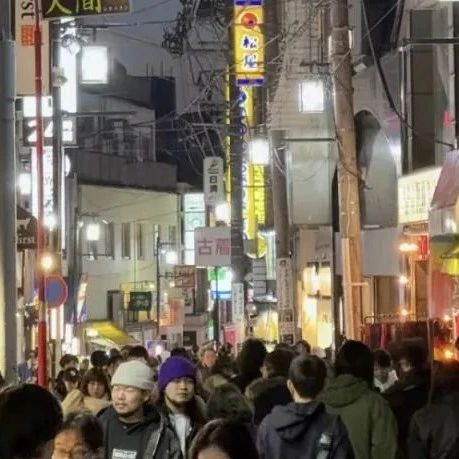
Core Viewpoint - The article discusses the phenomenon of "involution" in consumer culture, highlighting how similar offerings in various markets lead to a lack of uniqueness and excitement in shopping experiences [3][13]. Group 1: Examples of Involution - Many famous shopping streets in China have become homogenized, offering the same local snacks and souvenirs, which detracts from the authentic local experience [1]. - Major shopping centers also exhibit a lack of diversity, with similar luxury brands and products across different locations, making shopping feel monotonous [2]. Group 2: Causes of Involution - The primary reason for involution is that businesses tend to replicate each other's offerings, leading to a saturation of similar products and experiences [4][13]. - The case of Shimokitazawa in Tokyo illustrates this issue, where the influx of chain stores diminished the area's unique character and appeal [7][8]. Group 3: Solutions to Involution - To combat the loss of uniqueness, Shimokitazawa began to reject chain stores and instead welcomed distinctive small businesses, such as those selling organic vegetables or unique records [10][12]. - This strategy successfully revitalized the community, demonstrating that fostering uniqueness can restore vibrancy and consumer interest [12]. Group 4: Unique Business Strategies - The article highlights a flagship store of Tommy in Tokyo that offers exclusive clothing items not available in other locations, emphasizing the value of uniqueness in a saturated market [15][16]. - The concept of limited availability is compared to Michelin-starred restaurants, suggesting that uniqueness is a rare and valuable resource in today's consumer landscape [17].
日本年轻人最爱逛的宝藏街区,不欢迎品牌连锁店
创业家· 2025-06-13 10:01
Core Viewpoint - The article discusses the phenomenon of "involution" in consumer culture, highlighting how similar offerings in shopping and dining experiences lead to a lack of uniqueness and excitement in local markets [1][3][13]. Group 1: Examples of Involution - Many famous local streets in China have become homogenized, offering the same types of food and souvenirs, which detracts from the authentic local experience [1]. - Major shopping centers in China exhibit similar patterns, with identical luxury brands and products across different locations, making shopping a monotonous experience [2][3]. Group 2: Causes of Involution - Involution occurs because businesses tend to replicate successful models without differentiation, leading to a saturation of similar offerings [4][13]. - The example of Shimokitazawa in Tokyo illustrates how the influx of chain stores diminished the area's unique character, resulting in a decline in popularity [7][8]. Group 3: Solutions to Involution - To combat the loss of uniqueness, Shimokitazawa began to reject chain stores and instead welcomed distinctive local shops, such as those selling organic vegetables or unique records [10][12]. - This strategy successfully revitalized the community, demonstrating that embracing uniqueness can restore vibrancy and appeal [12]. Group 4: Unique Business Models - The article highlights a flagship store of Tommy in Tokyo that offers exclusive clothing items not available in other locations, emphasizing the value of uniqueness in a saturated market [15][16]. - The concept of limited availability is compared to Michelin-starred restaurants, suggesting that uniqueness is a rare and valuable resource in a world filled with sameness [17].
中国钢铁工业协会:车企“卷”价格严重冲击钢铁企业稳健经营
Xin Jing Bao· 2025-06-10 13:14
Core Viewpoint - The China Iron and Steel Association emphasizes the urgent need for collaboration between the steel and automotive industries to combat "involution" and promote healthy development across the supply chain [1][2] Group 1: Industry Challenges - Automotive companies are pressuring steel suppliers to lower prices, significantly impacting the stable operations of steel enterprises [1] - In 2024, key automotive companies are expected to produce approximately 40 million tons of automotive steel plates, with cold automotive plates accounting for about 29 million tons [1] - Some automotive manufacturers have demanded price reductions exceeding 10% from steel suppliers, which is beyond what steel companies can accept [1] Group 2: Financial Pressures - The current market environment has led to automotive steel plates having virtually no profit margin for steel manufacturers, while automotive companies continue to request price cuts [1] - Certain automotive firms are delaying payments to steel suppliers, extending payment terms through financial instruments, thereby increasing financial pressure on steel companies [1] Group 3: Innovation and Competition - The procurement model for automotive steel plates undermines previous R&D investments and service systems, negatively affecting the motivation for steel suppliers to innovate [2] - The association views "involution" as a detrimental force that disrupts fair competition, distorts resource allocation, and hinders innovation and advancement in the value chain [2] - The automotive industry is urged to adhere to fair competition principles and focus on technological advancement as a core competitive advantage [2]
去过日本才明白:内卷的尽头,不是拼低价,而是……
创业家· 2025-06-10 10:02
Core Viewpoint - The article discusses the phenomenon of "involution" in consumer culture, highlighting how similar offerings in shopping and dining experiences lead to a lack of uniqueness and excitement in local markets [1][3][4]. Group 1: Examples of Involution - Many famous local streets in China have become homogenized, offering the same types of food and souvenirs, which detracts from the authentic local experience [1]. - Major shopping centers in China exhibit similar patterns, with identical luxury brands and products across different locations, making shopping a monotonous experience [2][3]. Group 2: Causes of Involution - The primary reason for involution is that businesses tend to replicate each other's offerings, leading to a lack of differentiation in the market [4][8]. - The case of Shimokitazawa in Tokyo illustrates this issue, where the influx of chain stores diminished the area's unique character and appeal [5][7]. Group 3: Solutions to Involution - To combat the loss of uniqueness, Shimokitazawa began to reject chain stores and instead welcomed distinctive local shops, such as those selling organic vegetables and unique records [10][12]. - This strategy successfully revitalized the community, demonstrating that embracing uniqueness can restore vibrancy and interest [12]. Group 4: Unique Offerings as a Solution - The article emphasizes the importance of unique offerings, as seen in a flagship store of Tommy, which features exclusive items not available in other locations [13][14]. - The concept of limited availability enhances the value of products, suggesting that uniqueness is a scarce resource in a world of sameness [15].
王兴再次回应“外卖大战”:坚决反对内卷
第一财经· 2025-06-10 09:05
据澎湃新闻,6月9日,美团召开2025年股东周年大会。在谈到外卖行业的竞争时,美团CEO王兴表 示,第一是非常欢迎更多参与者入场;二是再次重申,美团坚决反对内卷;三是对长期发展有信心。王 兴表示,行业有很多玩家、有更多竞争都是正常的,但不健康的无效"内卷式"竞争,无论对平台还是商 家来说,长期都不可持续,对行业有负面影响,美团坚决反对内卷。 ...