
智能化

Search documents
【“十五五”开好局起好步】加快建设制造强国 壮大实体经济根基
中汽协会数据· 2026-03-02 04:23
Core Viewpoint - The article emphasizes the importance of advancing the manufacturing sector in China, focusing on high-end, intelligent, and green development as essential for economic growth and modernization [1][6][10]. Group 1: Manufacturing Development - The manufacturing industry is highlighted as a crucial pillar of the national economy, with a call for maintaining a reasonable proportion of manufacturing in the economy [3][6]. - The Luoyang Bearing Group has developed a 10-ton bearing for producing super-large, heavy-duty ring forgings, filling a gap in this field in China [1][3]. - The company has diversified its product range to over 30,000 specifications across nine categories, with high-end bearing products accounting for 70% of its output [3]. Group 2: Technological Innovation - The Luoyang Bearing Group is undergoing a comprehensive digital transformation and focusing on independent innovation to meet major national needs and advance the bearing industry [4][6]. - The article mentions the implementation of AI in manufacturing, with projects aimed at enhancing production efficiency and quality through automation [10][12]. - Various regions are launching initiatives to support technological upgrades and digital transformation in traditional manufacturing sectors, with plans for thousands of high-level technology renovation projects [10][12]. Group 3: Collaborative Efforts - The article discusses collaborative efforts among regions, such as the Beijing-Tianjin-Hebei area, to develop the Beidou space-time industry, aiming for a scale of over 200 billion yuan by 2027 [12]. - Jiangsu province plans to support the establishment of innovation alliances in high-end manufacturing and advanced materials to tackle technological challenges [12]. - The focus is on creating competitive advanced manufacturing clusters to support high-quality economic development [13].

家用电器行业:两轮车行业龙头集中,竞争从价格到产品
GF SECURITIES· 2026-03-02 01:34
Investment Rating - The industry investment rating is "Hold" [3] Core Insights - The electric two-wheeler industry is transitioning from price competition to product upgrades, with leading companies like Yadea, Aima, and Ninebot focusing on smart technology and high-end markets [2][7] - The market share of leading companies is expected to increase, with Yadea, Aima, and Ninebot projected to account for 71.7% of the market by 2025 [7][27] - The introduction of new national standards has significantly reshaped the competitive landscape, leading to a concentration of market share among top players [7][27] Summary by Sections Section 1: Electric Two-Wheeler Industry Overview - The electric two-wheeler industry is heavily influenced by policy changes, with the new national standards raising entry barriers and enhancing market concentration [17][27] - The industry has experienced four development phases: initial phase (1990s), rapid growth (2001-2014), bottleneck period (2014-2019), and a second growth phase post-2019 driven by new regulations [19][21] Section 2: Formation of Competitive Advantages - Leading companies have achieved higher return on equity (ROE) through improved profit margins and operational efficiencies [33][49] - The shift towards smart technology and high-end products is becoming a focal point for competition among leading firms [2][33] Section 3: Investment Recommendations - Current stock prices of Yadea, Aima, and Ninebot have significantly corrected from their peaks, indicating that their competitive advantages are not fully priced in [8] - Continuous market share growth and stable performance are expected to catalyze upward valuation adjustments for these companies [8]


工具行业专题-周期共振-成长可期
2026-03-01 17:23
Industry Research Summary: Tools Industry Industry Overview - The tools market has reached a scale of over $100 billion, with growth rates correlated to GDP, maintaining a steady mid-single-digit growth in stable conditions [1][3] - The U.S. is the largest single market, with key companies generating over 60% of their revenue from the Americas, indicating a high exposure to the U.S. market [1][4] Key Insights and Arguments - The demand for tools is highly correlated with the U.S. real estate cycle. Current high mortgage rates and bottoming out of existing home sales are expected to improve as interest rates decline, potentially driving tool demand [1][5] - The tools industry primarily relies on offline channels, which are influenced by the inventory cycles of distributors. The inventory destocking phase is nearing its end in the second half of 2024, with stable inventory growth expected in 2025 [1][6] - The industry is anticipated to enter a recovery phase in 2026, driven by a resonance between the real estate cycle and the inventory cycle [1][7] Competitive Landscape - Techtronic Industries has established itself as the global leader in the tools sector, with QEP and JiuStar Technology ranking second in the OPE and hand tools categories, respectively. These companies are expanding through both organic growth and acquisitions [1][8] - The trend towards lithium battery technology is significant, with electric tools achieving a penetration rate of 70%-80%, while OPE has substantial room for growth [1][10] Market Dynamics - The tools market is characterized by over 10,000 SKUs, with electric tools and smart technology being key evolution directions. The introduction of robotic lawn mowers is a notable segment, with QEP planning to launch a new product in Europe in 2026 [1][3][12] - Companies are responding to tariff impacts by shifting production overseas. Techtronic and JiuStar have established significant overseas operations, while QEP is accelerating its efforts to cover U.S. exposure by the end of 2026 [1][3][14] Financial Performance and Projections - The tools sector has experienced a painful destocking period from 2022 to 2023, but current inventory levels are at historical lows. The anticipated improvement in U.S. real estate is expected to drive demand recovery and strengthen inventory replenishment efforts [2][5] - QEP and JiuStar have provided double-digit revenue growth guidance for 2026, supported by current valuations below historical averages, indicating potential for valuation and performance recovery [2] Profitability and Margins - Techtronic demonstrates strong anti-cyclical capabilities, with a gross margin exceeding 40% and a stable net profit margin of 7%-8% [19] - JiuStar's gross margin has improved significantly from a low of 22% in late 2022 to 35% in the latest quarter, driven by structural optimization and overseas production ramp-up [19] - QEP's profitability is expected to improve as its high-end Ego brand continues to grow, with a projected net profit margin of around 10% [19] Strategic Differentiation - Companies are employing diverse channel strategies, with Techtronic heavily reliant on Home Depot, while JiuStar and QEP are diversifying their channels to include online platforms and direct-to-consumer sales [13] - The competitive landscape is evolving with a focus on battery platform universality, with Techtronic and QEP leading in this area [10][11] Conclusion - The tools industry is poised for recovery, driven by improving real estate conditions and inventory cycles. Key players are strategically positioned to capitalize on growth opportunities through innovation and market expansion. The focus on lithium battery technology and smart tools will likely shape the competitive dynamics in the coming years [1][2][20]


同力股份(920599)2025 业绩快报点评:受益矿山装备绿色智能转型结构性增量,全年业绩同比稳增 8%
Soochow Securities· 2026-03-01 00:45
Investment Rating - The investment rating for the company is "Buy" (maintained) [1] Core Views - The company achieved a steady annual revenue growth of 8% in 2025, driven by structural increases in green and intelligent mining equipment [7] - The growth is attributed to four strategic focuses: new energy, intelligence, large-scale production, and internationalization, with new energy products becoming the core revenue driver [7] - The company has a leading advantage in the non-road wide-body dump truck sector and is well-positioned for long-term growth through its advancements in new energy and autonomous driving technologies [7] Financial Summary - Total revenue for 2025 is projected at 65.97 billion yuan, a year-on-year increase of 7.37% [7] - The net profit attributable to shareholders is expected to be 8.58 billion yuan, reflecting an 8.19% increase year-on-year [7] - Earnings per share (EPS) for 2025 is estimated at 1.86 yuan, with a projected price-to-earnings (P/E) ratio of 11.49 [1][8] - The company anticipates continued revenue growth, with projections of 7.94 billion yuan in revenue and 1.12 billion yuan in net profit by 2027 [1][8]
广汽集团欲重返产销200万辆,如何做到?
Di Yi Cai Jing Zi Xun· 2026-02-28 08:09
Core Viewpoint - GAC Group aims to achieve a vehicle production and sales target of 2 million units in 2026, with a focus on improving operational efficiency and returning to profitability after a challenging 2025 [1] Group 1: 2025 Performance and Financial Outlook - In 2025, GAC Group achieved a total sales volume of 1.8135 million vehicles, with nearly 130,000 units exported under its own brands [1] - The company anticipates a net loss attributable to shareholders of the parent company between 8 billion to 9 billion yuan for 2025, and a net loss excluding non-recurring items between 8.9 billion to 9.9 billion yuan [1] Group 2: Strategic Initiatives and Transformation - GAC Group has established a "2+3+X" long-term transformation framework, completing the first phase of foundational tasks and gradually implementing the IPD product development system [1] - The company is focusing on three major tasks: stabilizing joint ventures, strengthening its own brands, and expanding its ecosystem, which aligns with its "14th Five-Year Plan" [2] Group 3: Sales Performance and Market Strategy - In January 2026, GAC Group's vehicle sales reached 116,600 units, marking an 18.47% year-on-year increase, with self-owned brand sales nearly reaching 50,000 units, up 87.58% [2] - The company plans to enhance its joint venture brands, particularly GAC Toyota and GAC Honda, while pushing for deeper integration of electric and intelligent technologies in its self-owned brands [2] Group 4: Focus on New Brands and Overseas Expansion - GAC Group is concentrating on the "Qijing" brand, a high-end smart electric vehicle brand co-created with Huawei, with plans to launch two new models in 2026 [3] - The company aims to significantly expand its overseas market presence, targeting a sales volume of 200,000 units abroad by optimizing channel structures and localizing production [3]

天娱数科拟更名“去地域化” 战略升级深度锚定数字化、智能化、全球化
Zheng Quan Ri Bao Wang· 2026-02-28 03:56
Core Viewpoint - Tianyu Digital Technology (Dalian) Group Co., Ltd. is changing its name and revising its articles of association to align with its new strategic focus on "digitalization, intelligence, and globalization" [1][2][5] Company Name Change - The company will change its name from "Tianyu Digital Technology (Dalian) Group Co., Ltd." to "Tianyu Digital Technology Group Co., Ltd." to better reflect its strategic upgrade and global ambitions [1][2] - This name change aims to enhance brand influence and eliminate regional labels that may hinder national and global expansion [1][2] Revision of Company Purpose - The original company purpose focused on internet cultural entertainment product development and emphasized Chinese cultural output; the revised purpose will focus on "digitalization, intelligence, and globalization" [2][5] - The new purpose aims to establish an innovative service platform centered on data flow, facilitating digital transformation and intelligent upgrades across various industries [2][5] Strategic Transition - Tianyu Digital has transitioned from a traditional entertainment company to a digital technology enterprise, with a new strategic direction proposed in early 2025 [3][4] - The company aims to integrate data elements with artificial intelligence, focusing on AI marketing, embodied intelligence, cross-border services, and data flow ecosystems [3][4] Business Capabilities - The company has developed a comprehensive capability matrix to support its new strategy, including operations in digital ecosystems and AI marketing [4] - It operates the Shanxi Data Flow Valley, aggregating nearly 800 enterprises, and has built a robust data system with over 150 million 3D data points and 650,000 multimodal data points [4] Global Expansion - Tianyu Digital has established a regional headquarters in Indonesia and obtained service provider qualifications in multiple regions, including Thailand, the U.S., Latin America, and the Middle East [4] - The company has transitioned from merely exporting products to exporting capabilities, achieving a significant upgrade in its global outreach [4][5]

研判2026!中国血液透析机行业发展背景、患者数量、市场规模、竞争格局、发展趋势分析:血液透析机行业规模持续增长,未来国产替代空间广阔[图]
Chan Ye Xin Xi Wang· 2026-02-28 01:14
Core Viewpoint - The blood dialysis machine market in China is experiencing rapid growth, with the market size expected to reach 4.131 billion yuan by 2025, reflecting a year-on-year increase of 6.4% [1][6]. Industry Overview - Blood dialysis machines, also known as artificial kidneys, are essential medical devices for treating renal failure and uremia, consisting of a blood monitoring alarm system and a dialysis liquid supply system [3][4]. - The increasing elderly population and rising prevalence of chronic kidney diseases are driving the demand for blood dialysis machines [5][6]. Market Size and Growth - The market size for blood dialysis machines in China is projected to grow significantly, driven by an aging population and an increasing number of patients requiring dialysis treatment [1][6]. - The number of patients undergoing dialysis in China is expected to rise from 385,100 in 2015 to 1,027,300 by 2024, with male patients making up a significant portion of this demographic [5][6]. Competitive Landscape - The Chinese blood dialysis machine industry is primarily dominated by foreign companies such as Fresenius Medical, B. Braun, Baxter, and Nipro, indicating substantial room for domestic companies to capture market share [7][8]. - Domestic companies are enhancing their R&D capabilities, leading to improvements in technology and product quality, which positions them to compete more effectively against international brands [7][8]. Industry Development Trends - The process of domestic substitution for blood dialysis machines is accelerating, with local companies focusing on core technology and key component development to reduce reliance on foreign brands [10][11]. - Future technological advancements in blood dialysis machines will focus on smart and precise upgrades, integrating IoT and AI for improved monitoring and safety [11][12]. - The application scenarios for blood dialysis machines are expanding beyond traditional hospitals to include community healthcare settings and home dialysis solutions, driven by the increasing demand for accessible and convenient treatment options [12].


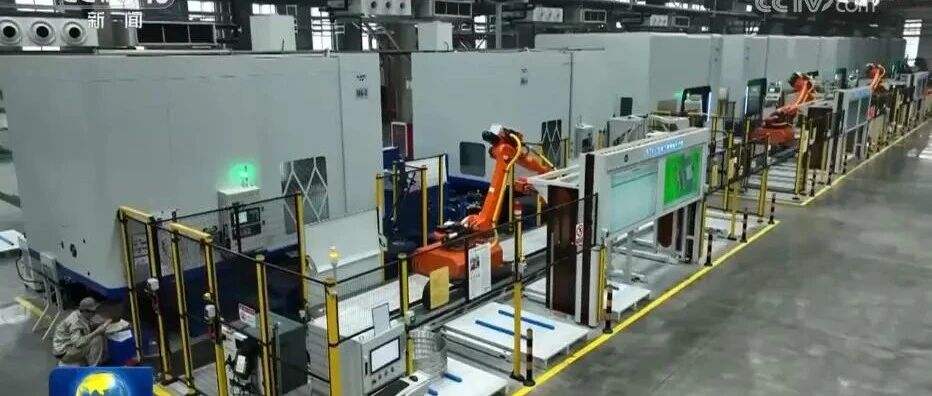
食品加工装备行业智能化提速
Zheng Quan Ri Bao· 2026-02-28 00:54
Group 1 - The food processing equipment industry is entering a critical phase of technological iteration and supply reconstruction, driven by the increasing demand for standardization, cleanliness, and flexibility in food production [1] - Ningbo Junpu Intelligent Manufacturing Co., Ltd. has successfully secured its first order in the food industry, creating a customized feeding and separation system for a subsidiary of a German food giant, focusing on the automation of baked goods processing [1] - Hangzhou Yongchuang Intelligent Equipment Co., Ltd. is advancing product iteration and capacity layout, providing high-speed packaging solutions for dairy and snack food sectors, with AI visual recognition technology ensuring high precision and stable operation [2] Group 2 - Yongchuang Intelligent has established a humanoid robot R&D department to accelerate the development of humanoid robots and their application in packaging technology [2] - Hangzhou Zhongya Machinery Co., Ltd. is making breakthroughs in high-end food packaging equipment, offering comprehensive automation solutions and successfully breaking the long-standing monopoly of foreign advanced enterprises [2] - The competition between cross-industry entrants and established companies is expected to drive technological integration and promote overall industry upgrades, while intensifying the competition in the mid-to-high-end market [2][3] Group 3 - The key for domestic companies to overcome bottlenecks and achieve globalization lies in implementing a dual circulation strategy, focusing on diverse consumer scenarios domestically and promoting overseas expansion through mergers and acquisitions [3]

开工看开局丨建得快,更要建得好
Xin Lang Cai Jing· 2026-02-28 00:40
Group 1 - The Qingdao Beer (Anshan) intelligent base has completed construction in 11 months, achieving the highest efficiency and speed among new factories of Qingdao Beer [1] - The base is expected to produce 2 million bottles of beer daily once fully operational [1] - The project leverages digital twin technology to monitor over 300 process parameters in real-time during beer production [1] Group 2 - The base features automated operations with AGV unmanned transport vehicles and an intelligent warehouse for raw material transfer and finished product storage [2] - The AI visual inspection system boasts a 99.7% defect recognition rate, enhancing quality control throughout the production process [2] - The project is a key step for Tai'an County in transitioning from a major grain-producing area to a stronghold in food manufacturing [2]

固本强基,做实做强实体经济
Xin Lang Cai Jing· 2026-02-27 23:36
Core Viewpoint - The emphasis on strengthening the real economy as the foundation for a strong nation is highlighted, with a focus on technological and industrial innovation to enhance competitiveness and sustainability [2][5][10]. Group 1: Real Economy Development - The importance of the real economy as the foundation of a major country is reiterated, with a call to focus on its development [1][2]. - In 2025, the contribution rate of industrial added value to economic growth reached 35%, with manufacturing added value maintaining the world's highest position for 16 consecutive years [5]. - The revenue of Luoyang Bearing Group exceeded 6 billion yuan in 2025, with products widely used in various sectors including new energy vehicles [4][5]. Group 2: Technological and Industrial Innovation - The integration of technological innovation and industrial innovation is emphasized as crucial for enhancing the real economy [7][8]. - The launch of the "land aircraft" by Guangdong Huitian Aerospace Technology Company represents a significant step in low-altitude economic development [6][7]. - The establishment of a comprehensive support system for the transformation of scientific research achievements into market products is underway, addressing challenges in the innovation chain [8]. Group 3: Smart, Green, and Integrated Development - The shift towards smart, green, and integrated development is identified as essential for the modernization of the industrial system [9][10]. - The production precision and stability at Benxi Steel's cold-rolled plant have significantly improved due to digital transformation, with automotive steel sales increasing by 49.2% year-on-year [9][11]. - Hydrogen metallurgy projects in Hebei are expected to reduce carbon emissions by over 50% compared to traditional methods, showcasing the integration of environmental sustainability in industrial practices [11].