
绿色消费

Search documents
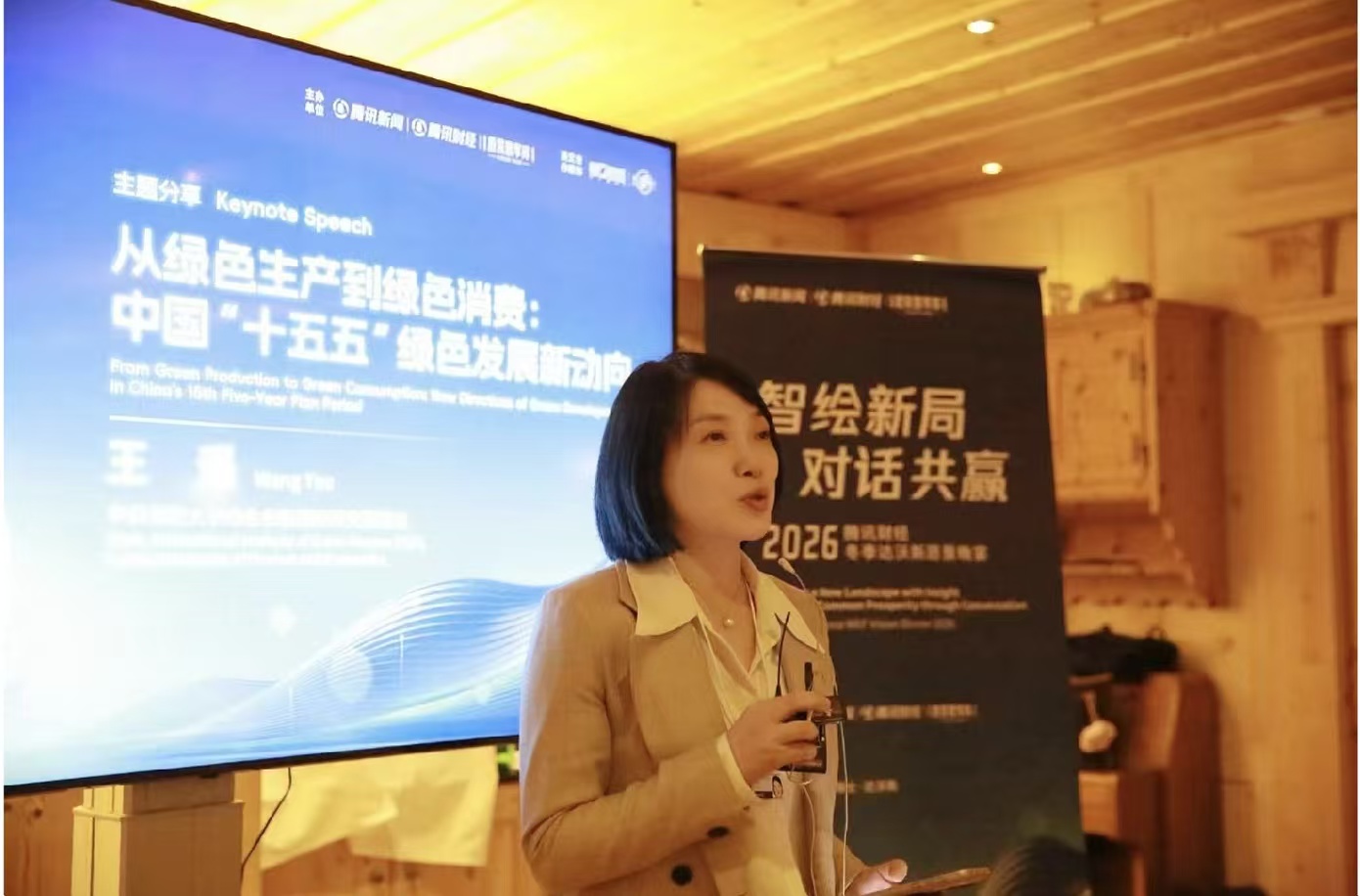
王遥:绿色发展进入新阶段,绿色消费成为经济发展的内生动力
Di Yi Cai Jing· 2026-01-22 09:19
中央财经大学绿色金融国际研究院院长王遥受邀出席,并围绕"从绿色生产到绿色消费——中国"十五五"时期绿色发展新动向"主题发表演讲。她认为,"十 五五"时期中国的绿色发展将从生产主导转向生产与消费双轮驱动的新阶段,绿色消费成为经济发展的内生动力和未来可持续发展的重要领域。 中央财经大学绿色金融国际研究院院长王遥并围绕"从绿色生产到绿色消费——中国"十五五"时期绿色发展新动向"主题发表演讲。 瑞士时间1月21日,在达沃斯举办的世界经济论坛2026年年会召开期间,由腾讯新闻、腾讯财经主办、第一财经Yicai Global作为独家英文合作媒体的2026冬 季达沃斯愿景晚宴在达沃斯当地举行。来自国内外30余位著名学者、商业精英和政界人士,围绕"智绘新局,对话共赢"这一主题,共同探讨AI发展新趋势, 寻找经济发展新动能。 在王遥看来,未来金融支持绿色消费方面有四大发了方向。 第一是强化政策引导与协同,弥补消费端金融支持短板,推动金融政策与其他政策(如产业、消费)结合。 第二是完善标准与定义(Taxonomy),明确"绿色消费金融"范畴,明确金融支持绿色消费的范围、场景、建立健全相关标准,引导资金精准流向。其次, 利用金融科 ...

商务部:截至去年底,每售出10辆乘用车就有6辆是新能源车
Nan Fang Du Shi Bao· 2026-01-22 08:43
Group 1 - The core viewpoint is that China's consumption market is expected to maintain stable growth in 2025, with both scale and quality improving, showcasing the advantages of a super-large market [1] Group 2 - The total retail sales of consumer goods are projected to exceed 50 trillion yuan for the first time, reaching 50.1 trillion yuan, a 3.7% increase from the previous year, with final consumption expenditure contributing 52% to economic growth [1] - The implementation of the old-for-new consumption policy led to sales in related categories reaching 2.61 trillion yuan, benefiting 366 million people [1] - Retail sales of household appliances, furniture, cultural office supplies, and communication equipment increased by 11%, 14.6%, 17.3%, and 20.9% respectively [1] Group 3 - New types of consumption, such as green and smart products, are thriving, with retail sales of new energy vehicles growing by 17.6%, and by the end of 2025, 6 out of every 10 passenger cars sold are expected to be new energy vehicles [1] - The number of consumers purchasing first-level energy-efficient or water-efficient appliances is expected to increase by 20% compared to the previous year, with smart glasses, smartwatches, and smart bands each growing over 40% [1] - Health-related consumption is expanding, with retail sales of sports and entertainment products increasing by 15.7% [1] Group 4 - The Ministry of Commerce will continue to combine benefits for the public and promote consumption through a dual approach of "policy + activities" to continuously unleash consumption potential [2]
2026北京青年经济:多元深耕科技赋能
Xin Lang Cai Jing· 2026-01-21 21:34
Core Insights - The economic life of Beijing youth in 2026 will be characterized by diversification, technological empowerment, and steady progress, with ten key themes identified through a survey [1] Group 1: New Occupations - The trend of "New Occupations Breaking Boundaries" reflects a shift towards proactive career choices among Beijing youth, with a focus on passion-driven professions [2] - By July 2025, China had released 110 new occupations across various fields, including AI and modern services, creating new employment opportunities for youth [2] Group 2: Steady Financial Management - The financial management approach of Beijing youth is becoming more rational, with 72.8% prioritizing "steady wealth accumulation" as their core goal [3] - A typical financial strategy among youth includes "forced savings + targeted allocation," with examples of individuals successfully managing their finances through automated systems [3] Group 3: Policy Dividends - Beijing has established a comprehensive policy support system covering employment, entrepreneurship, and living security, benefiting over 120,000 recent graduates [4][5] - Policies include relaxed employment criteria for recent graduates and low-interest loans for student entrepreneurs, enhancing youth confidence in their development [4][5] Group 4: Green Consumption - Green consumption has become a norm among Beijing youth, with 68% willing to pay a premium for environmentally friendly products [6] - The market for green products is expanding, supported by government initiatives and a growing awareness of sustainability among consumers [6] Group 5: Skill Development - Skill deepening is a key strategy for Beijing youth to adapt to structural changes in the job market, with a focus on high-demand fields like information technology [7][8] - The "Skills Beijing" initiative promotes collaboration between educational institutions and enterprises, enhancing the employability of graduates [7][8] Group 6: Cross-Regional Collaboration - The "Beijing-Tianjin-Hebei" collaborative development strategy is expanding employment and entrepreneurial opportunities for youth across regions [9][10] - Joint recruitment events and policy integration have facilitated a significant increase in job offerings and entrepreneurial support [9][10] Group 7: Light Asset Entrepreneurship - Light asset entrepreneurship is becoming the mainstream model for youth, characterized by low investment and high flexibility, particularly in AI and cultural sectors [11] - Government support and digital tools are enabling more youth to engage in low-cost, high-quality entrepreneurial ventures [11] Group 8: Health Consumption - Health consumption is increasingly integrated into the lifestyles of Beijing youth, with a significant growth in spending on health-related products and services [12] - The market for personalized health management solutions is expanding, driven by technological advancements and changing consumer preferences [12] Group 9: Embodied Intelligence - The development of embodied intelligence technologies is creating a substantial industry cluster in Beijing, providing numerous opportunities for youth talent [13][14] - The focus is shifting from research to practical applications in various sectors, including manufacturing and emergency services [13][14] Group 10: General Intelligence Applications - General intelligence applications are transitioning from experimental phases to real-world usage, enhancing efficiency and innovation for youth [15] - The integration of AI into daily life is expected to deepen, with youth playing dual roles as developers and users of these technologies [15]
1830万辆以旧换新!新能源占比近60%,绿色消费市场持续扩容
Zhong Guo Neng Yuan Wang· 2026-01-21 02:15
Core Viewpoint - The recent issuance of the "Notice on Implementing Green Consumption Promotion Actions" marks a new phase in promoting green consumption in China, emphasizing the need for coordinated efforts to address existing challenges in the green consumption sector [1] Group 1: Green Consumption Market Expansion - The green consumption market in China is steadily expanding, driven by policy guidance and market demand, becoming a crucial force for high-quality development and economic transformation [2] - The "14th Five-Year Plan" suggests improving the green consumption incentive mechanism and promoting low-carbon lifestyles [2] - Data indicates that from 2024 to 2025, China aims to achieve 18.3 million vehicle trade-ins, with nearly 60% being new energy vehicles, reflecting a significant growth in green product consumption [2] Group 2: Support for Green Products - The "Notice" supports consumers in purchasing new energy vehicles and promotes energy-saving facilities and equipment [3] - Encouragement is given to enterprises to prioritize the use of green electricity and optimize green building designs to reduce energy consumption [3] Group 3: Recycling System Development - The construction of a recycling system for renewable resources is a key focus of the "Notice," aimed at enhancing resource recycling and promoting a green lifestyle [4] - The goal is to achieve a total recycling volume of approximately 380 million tons by 2025, with support for high-value recycling projects and optimized sorting center construction [4] Group 4: "Zero Waste City" Initiative - The "Zero Waste City" initiative aims to transform waste into resources, with plans to expand the program to around 200 cities during the "14th Five-Year Plan" period [5] - The initiative includes promoting waste reduction at the source and enhancing resource utilization capabilities through innovative technologies [5] Group 5: Progress Evaluation - By early 2025, an evaluation method for "Zero Waste City" construction will be implemented, analyzing the progress of 109 cities, with notable reductions in industrial solid waste generation and improvements in agricultural waste utilization [6]
扩大内需战略实施方案即将出台,大消费相关行业直接受益
Jin Rong Jie· 2026-01-21 01:27
Group 1 - The National Development and Reform Commission (NDRC) plans to formulate an implementation plan for the expansion of domestic demand from 2026 to 2030, focusing on creating new demand through new supply and providing strong innovation measures and factor guarantees [1] - Recent policies include a large-scale equipment renewal and trade-in policy set to be implemented in 2026, covering categories such as home appliances and digital smart products, with subsidies for purchasing new energy vehicles and fuel vehicles [1] - The current economic situation shows a strong need to expand domestic demand, with final consumption expenditure expected to contribute 52.0% to GDP growth by 2025, highlighting the importance of supply-side innovation to stimulate potential demand [1] Group 2 - The Chinese consumer market is maintaining stable expansion under policy support, with service consumption and new business models becoming important growth points [2] - Future predictions indicate that the contribution of consumption to GDP will continue to increase, with retail sales growth expected to reach 4.5% in 2026 [2] - In the A-share market, sectors such as green and smart consumer goods (e.g., new energy vehicles, AI terminals) and service consumption (e.g., cultural tourism, elderly care) are expected to see both performance and valuation improvements [2]
中国商业联合会:预计今年社会消费品零售总额将增长约4.5%
Xin Lang Cai Jing· 2026-01-20 13:43
Group 1 - The report from the China Business Federation forecasts a stable growth of approximately 4.5% in China's retail sales of consumer goods by 2026, reinforcing the foundational role of consumption in economic development [1] - In 2025, China's total retail sales of consumer goods reached 50,120.2 billion yuan, marking a 3.7% increase from the previous year, while online retail sales amounted to 15,972.2 billion yuan, growing by 8.6% [1] - The contribution rate of final consumption to economic growth during the 14th Five-Year Plan period is around 60%, highlighting its ongoing significance as a main driver of economic expansion [1] Group 2 - The report indicates that the retail sales of goods in 2025 were 44,322.0 billion yuan, reflecting a 3.8% increase, while the catering revenue was 57.982 billion yuan, growing by 3.2% [2] - The catering market is expected to face operational challenges in 2025, with a trend towards more rational consumer spending and increased competitive pressure within the industry [2] - Green consumption is identified as a new driving force for economic growth, with expectations for it to enter a new phase of institutional and systematic development by 2026, characterized by market-driven dynamics and deep integration of digital and green initiatives [2]
52%的贡献率,我国消费市场交出亮眼答卷
Ren Min Wang· 2026-01-20 12:26
Group 1 - The core viewpoint of the articles highlights the significant role of consumption as the main engine of economic growth in China, with a notable increase in retail sales and consumer spending in 2025 [1][3] - In 2025, China's total retail sales of consumer goods exceeded 50 trillion yuan, reaching 50,120.2 billion yuan, with a year-on-year growth of 3.7%, accelerating by 0.2 percentage points compared to 2024 [1] - The contribution rate of final consumption expenditure to economic growth reached 52%, an increase of 5 percentage points from the previous year, indicating a solid foundation for the consumption market [1] Group 2 - New types of consumption are on the rise, with a clear trend of upgrading consumption structure, shifting from "goods-dominated" to a balance of "goods and services" [2] - In 2025, service retail sales grew by 5.5% year-on-year, outpacing goods retail sales by 1.7 percentage points, with a continuous increase in its share of overall retail sales [2] - Specific sectors such as tourism, cultural and recreational services, and the silver economy are experiencing robust growth, reflecting strong consumer demand for cultural and spiritual consumption [2] Group 3 - The policy support for replacing old consumer goods and the promotion of digital and green consumption are effectively stimulating the durable goods market [2] - In 2025, the retail sales of goods increased by 3.8% year-on-year, with a growth acceleration of 0.6 percentage points compared to the previous year, driven by substantial policy support [2] - The integration of online and offline consumption models, along with a focus on green and intelligent consumption, is injecting lasting momentum into economic growth [2]
人民财评:52%的贡献率,我国消费市场交出亮眼答卷
Ren Min Wang· 2026-01-20 00:56
Group 1 - The core viewpoint of the articles highlights the significant role of consumption as the main engine of economic growth in China, with a retail sales total exceeding 50 trillion yuan in 2025, reflecting a year-on-year growth of 3.7% [1] - Final consumption expenditure contributed 52% to economic growth in 2025, an increase of 5 percentage points from the previous year, indicating a robust support for economic expansion [1] - The per capita consumption expenditure reached 29,476 yuan, with a real growth of 4.4% after adjusting for price factors, showcasing the steady improvement in residents' consumption capacity [1] Group 2 - New types of consumption are on the rise, with a clear trend of upgrading consumption structure, shifting from a "goods-dominated" model to a balanced focus on both goods and services [2] - Service retail sales grew by 5.5% year-on-year, outpacing goods retail sales by 1.7 percentage points, with a continuous increase in its share of overall retail sales [2] - Specific sectors such as tourism, cultural and recreational services, and the silver economy are experiencing significant growth, reflecting strong consumer demand for cultural and spiritual consumption [2] Group 3 - The implementation of policies promoting the replacement of old goods and the push for digital and green consumption have effectively stimulated the durable goods market, with goods retail sales increasing by 3.8% year-on-year [2] - The sales volume of new energy vehicles has ranked first globally for 11 consecutive years, indicating a strong trend towards green consumption [2] - The integration of online and offline shopping, along with a focus on green and intelligent consumption models, is providing lasting momentum for economic growth [2] Group 4 - The vast scale of the consumption market serves as a strong foundation for addressing risks and challenges, ensuring that consumption continues to play a pivotal role in supporting high-quality economic development in China [3]
减塑不止步 增绿再提速
Xin Lang Cai Jing· 2026-01-19 22:17
Core Viewpoint - Plastic pollution management is a crucial aspect of promoting green consumption and ecological civilization, with the Chinese government implementing measures to strengthen regulatory frameworks, promote green alternatives, and deepen governance in key industries [2][3]. Group 1: Achievements in Plastic Pollution Management - Under the guidance of the "14th Five-Year Plan" for plastic pollution management, China has made significant progress in reducing the use of single-use plastic products and promoting alternative products [3]. - The Ministry of Commerce has established a nationwide reporting system for the use and recycling of single-use plastic products, creating a multi-faceted governance structure that includes source reduction, alternative promotion, and recycling supervision [3][4]. - In the first half of 2025, the use of environmentally friendly alternatives in the business sector increased by 26.31% compared to the previous period, while the intensity of single-use plastic products continued to decline [3]. Group 2: Promotion of Green Alternatives - The promotion of green alternative products has been notably successful, with initiatives such as the "Bamboo Instead of Plastic" campaign gaining consumer acceptance [4]. - The application of biodegradable plastic technology is expanding in areas like express packaging and dining utensils, creating a complementary relationship with bamboo products [4]. Group 3: Comprehensive Governance Framework - The government has identified three main directions for plastic pollution management, transitioning from a focus on bans to a more systematic governance approach [5]. - Continuous strengthening of regulatory frameworks and responsibility enforcement is planned, including the establishment of a "double random, one public" supervision mechanism to ensure compliance in retail, e-commerce, and dining sectors [6]. - Efforts will be made to promote green alternatives further, including expanding the supply of biodegradable plastics and plant fiber products while reducing their cost premium [6][7]. Group 4: Public Participation and Consensus - Experts emphasize the need for policy guidance, market-driven initiatives, and public participation to create a collaborative effort in plastic pollution management [8]. - Consumers are increasingly recognizing the benefits of plastic pollution management, as evidenced by their adoption of reusable bags and biodegradable products [8]. - The collaborative approach among multiple departments reflects a comprehensive strategy that focuses on source reduction, alternative supply, and recycling, aligning with the principles of reduction, resource utilization, and harmlessness [8][9]. Group 5: Future Directions - Recommendations include accelerating the establishment of standards for alternative products and creating incentives for plastic waste recycling to enhance industry regulation [9]. - The systematic and normalized approach to plastic pollution management is expected to facilitate a seamless "production-consumption-recycling-disposal" chain, promoting green consumption ideals [9].

2025年中国消费“账单”呈现新趋势
Zhong Guo Xin Wen Wang· 2026-01-19 14:09
Core Insights - In 2025, China's retail sales of consumer goods reached 50.12 trillion yuan, marking a 3.7% increase from the previous year, with final consumption expenditure contributing 52.0% to economic growth, up by 5 percentage points from the previous year [2][6] Group 1: Retail Sales Growth - The total retail sales of consumer goods surpassed 50 trillion yuan for the first time, indicating a significant expansion in market sales [2] - The growth rate of retail sales accelerated by 0.2 percentage points compared to 2024, positioning China among the top global retail markets [2] Group 2: Service Consumption - Service consumption showed a notable upward trend, with service retail sales growing by 5.5%, outpacing goods retail sales by 1.7 percentage points [3] - Service consumption accounted for 46.1% of per capita consumer spending, reflecting a shift towards a balanced consumption model between goods and services [3] Group 3: New Consumption Trends - Online retail sales increased by 8.6%, driven by e-commerce and live-streaming sales, while new retail models like unmanned stores and warehouse membership stores experienced double-digit growth [4] - The production and sales of new energy vehicles exceeded 16 million units, with their market share surpassing 50%, indicating a growing trend towards green consumption [4] Group 4: Policy Impact - The implementation of the "old for new" policy contributed to a significant increase in retail sales of cultural office supplies, furniture, and home appliances, with growth rates of 17.3%, 14.6%, and 11% respectively [5] - The upcoming "national subsidy" policy for 2026 aims to further stimulate consumer demand and support durable goods consumption [5] Group 5: Consumer Confidence and Future Outlook - Despite a slowdown in December, with retail sales growth at 0.9%, the overall consumer market is expected to stabilize in 2026 due to supportive policies and recovering consumer confidence [6] - The focus on boosting consumption among middle and low-income groups is essential for stimulating demand and enhancing overall economic stability [7]